13 String of Plants to Grow at Home
From string of hearts to turtles, compare trailing houseplants by appearance and care so you can choose one that fits your windows, watering habits, and space.
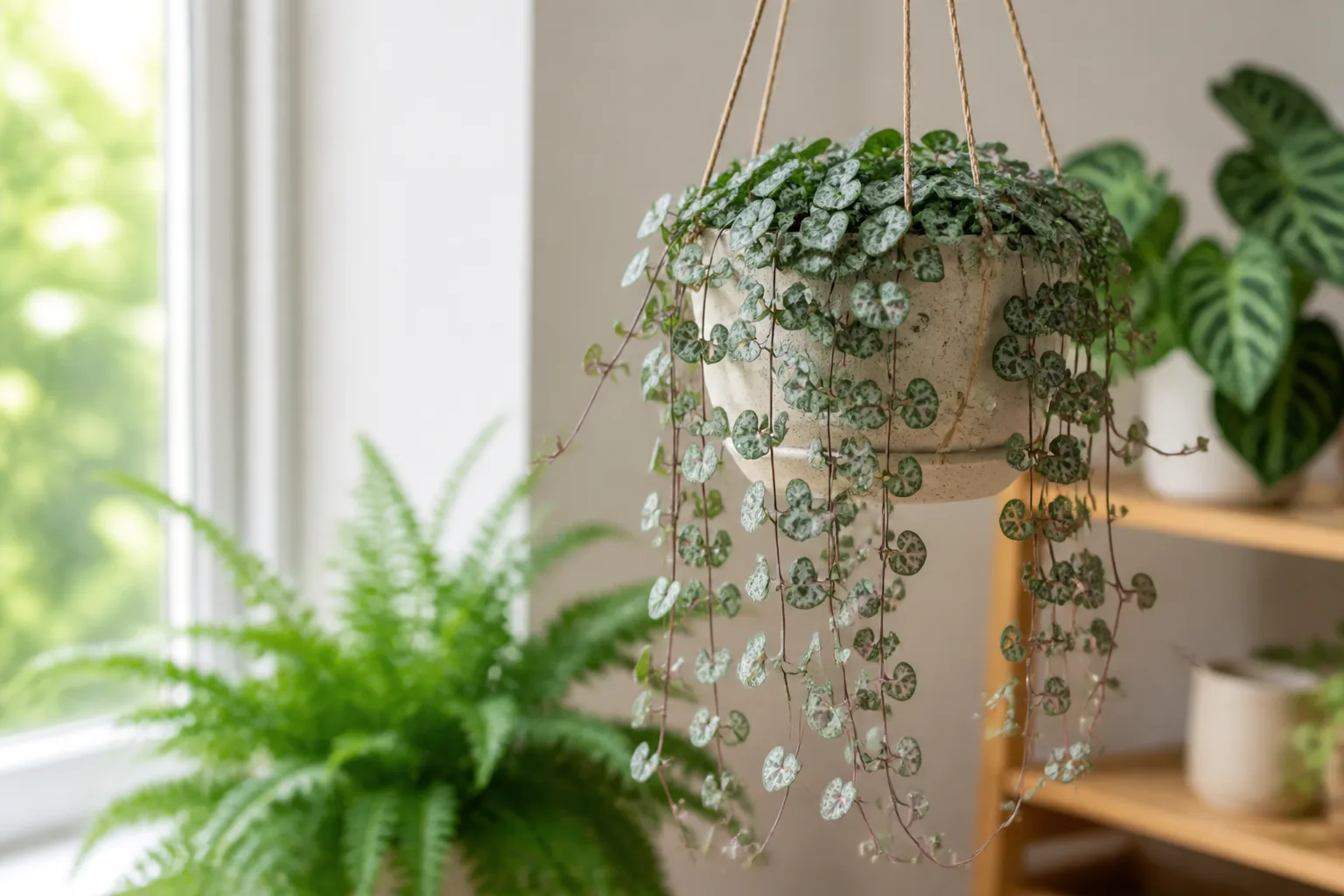
“String of” is one of the most useful names in the houseplant aisle: it tells you to expect a trailing plant, often with leaves arranged like beads, hearts, coins, or tiny animals. It does not tell you that the plant is a succulent, that it wants desert-dry soil, or that every plant with a similar name is a separate species. Those distinctions matter when you bring one home.
The plants below range from drought-tolerant vines to a patterned peperomia and an epiphytic Dischidia. Use the leaf shape and botanical label together when shopping, then match the plant to your light and watering habits. Several entries are varieties of the same species, and “string of raindrops” and “string of watermelons” may be used for overlapping plants in retail listings; treat the label as a clue, not a guarantee.
First, “String of” Is a Growth Habit, Not a Care Group
The names describe appearance, not a shared botanical family. String of hearts and string of needles belong to Ceropegia; strings of pearls, bananas, and several bead-leaved types are sold as Curio (many older labels still say Senecio); string of turtles is Peperomia prostrata; and string of nickels is Dischidia nummularia. They can all trail, but their leaf structure, native growing habits, and tolerance for drying are not identical.
That is why a single “water every two weeks” rule can fail. A pearl-leaved Curio stores water in its leaves and is vulnerable to prolonged wet soil, while string of turtles has thinner patterned leaves and should not be treated like a cactus. String of nickels is an epiphyte in nature, growing on other plants rather than in compact ground soil. A good label and a quick check of the plant’s actual leaves are more useful than the display card’s broad “easy succulent” claim.
Name changes add another complication. Botanical sources and nurseries do not always use the same genus names: for example, the Royal Horticultural Society lists Ceropegia linearis subsp. woodii and gives Ceropegia woodii as a synonym, while older labels commonly use Senecio for plants now sold as Curio. If two labels point to the same botanical name or synonym, you may be looking at the same plant under different names rather than two distinct species.
Match the Plant to Your Room Before You Buy
Start with the window, not the plant stand. Most of these vines look fuller with bright light, but strong direct sun through glass can scorch tender leaves, especially after a plant has spent weeks in a shaded nursery. An east-facing window or a position a short distance from a bright south- or west-facing window is a useful starting point; move the plant gradually if you want to test a sunnier spot.
Next, be honest about your watering habits. If you tend to water before checking the soil, choose a more forgiving plant and use a pot with drainage. If you are comfortable letting a fast-draining mix dry between thorough waterings, the bead-leaved Curios can work well. If you want a softer, patterned cascade rather than a desert-succulent look, string of turtles is a better candidate, but still avoid leaving its roots in saturated mix.
Also check where the vines will hang. Delicate stems can break when brushed by a doorway, pet, or curtain, and a high shelf can make it difficult to inspect soil moisture. A stable pot on a shelf with the vines supported over the edge is often easier to maintain than a basket swinging in a draft. Keep unidentified plants beyond the reach of pets and children until you confirm the botanical name and check a trusted poison-safety reference; NC State Extension marks string of pearls as toxic if ingested.
13 String Plants to Know
The entries are organized as 13 popular plants and retail forms, not 13 unrelated species. Read the botanical name on the pot where possible, especially for varieties with similar bead-shaped leaves.
1. String of Hearts
String of hearts (Ceropegia woodii, also listed by RHS as Ceropegia linearis subsp. woodii) has small heart-shaped leaves patterned with silver, usually on slender purple stems. It is the easiest place to start if you want a true cascading vine with recognizable foliage and the option to propagate from the beadlike tubers that form along mature stems. NC State Extension and UW–Madison Extension both describe its trailing habit, well-drained mix, and preference for bright light.
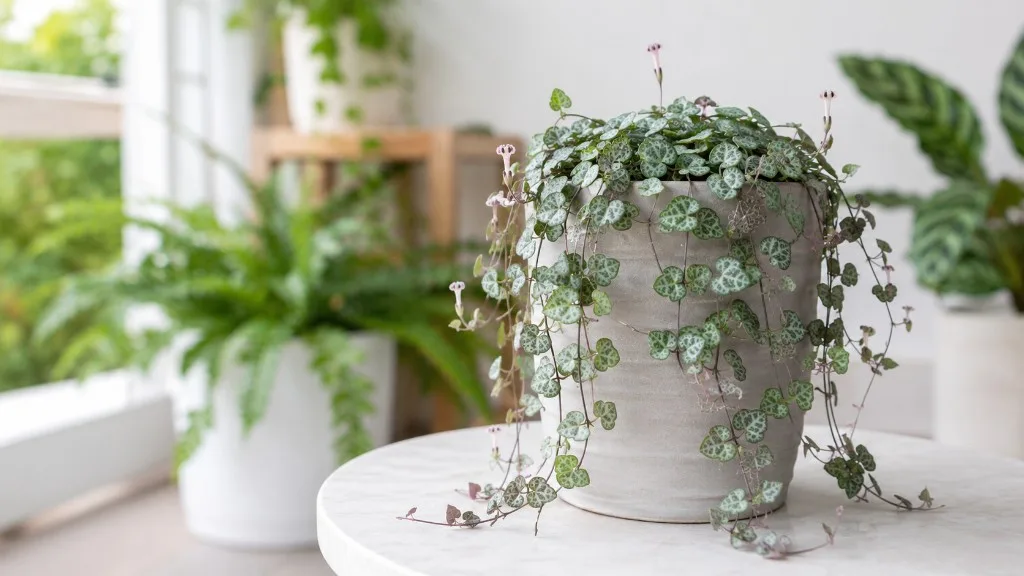
Give it bright indirect light and let the mix dry between thorough waterings. Aerial tubers can be pressed against potting mix to root while still attached to the vine; that layering method is often less fiddly than trying to root a very short cutting. The long stems are attractive but fragile, so avoid placing the pot where people regularly brush past it. NC State Extension notes that these tubers can root where the stem touches soil, and UW–Madison Extension describes the plant’s seasonal rest and propagation options.
2. Variegated String of Hearts
The variegated string of hearts is a foliage form of C. woodii, not a separate species. Cream and blush-pink patches interrupt the green and silver pattern, making the vines look brighter but also slowing growth compared with a vigorous all-green plant. The pale tissue has less chlorophyll, so dim conditions can cause weak, widely spaced leaves and less vivid variegation.
Keep it in bright indirect light, but acclimate it before giving it direct morning sun. Water only after the potting mix has dried well; variegation is not a reason to water more often. Because the stems are delicate and slower to replace lost leaves, buy a plant with several rooted vines and inspect their bases for firmness rather than paying a premium for a single long, sparsely rooted strand. NC State Extension lists cream-and-pink variegated forms among the cultivars and forms of C. woodii.
3. String of Dolphins
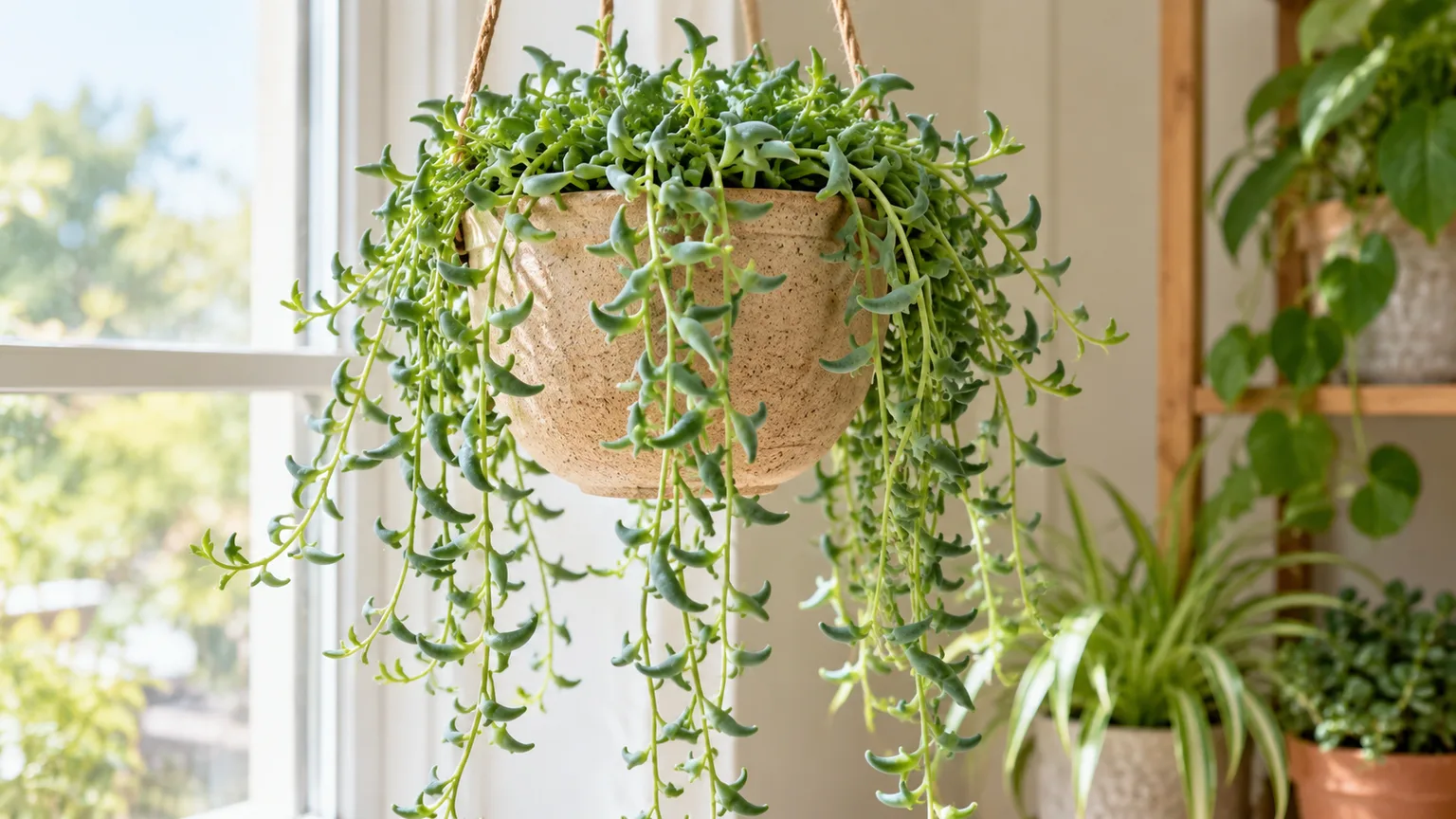
String of dolphins is commonly sold as Curio peregrinus (older tags may say Senecio peregrinus). Its curved, fleshy leaves suggest small dolphins, especially on new growth; the resemblance becomes less distinct when the plant is grown in low light and the leaves flatten or lose their shape. Treat the botanical label as important because common names can be applied inconsistently by sellers.
Choose a bright spot with filtered or indirect light and a quick-draining mix. Let the root zone dry substantially before watering again, then water thoroughly and empty any cachepot or saucer. The plant’s unusual leaves make it a good focal point on a shelf, but it is less forgiving of constantly damp mix than its playful name might imply. Buy a compact, branching plant rather than one long strand with bare sections if you want a fuller display quickly.
4. String of Raindrops
String of raindrops is often sold under Curio herreianus or a close variant of that spelling. It has plump, elongated leaves with a tapered point; depending on the plant and the label, you may also see names such as string of beads or string of watermelons. The subtle longitudinal window or stripe can be easier to see when a leaf is held toward the light, but the foliage should remain firm and evenly colored.
Grow it in bright indirect light and a porous mix, in a pot that drains freely. Do not confuse “slightly plumper leaves” with a request for frequent sips: consistently damp soil is still a rot risk. Since names overlap across shops, compare photographs and the botanical name before buying, and do not assume a string-of-raindrops listing is a different species from a string-of-watermelons listing just because the common names differ.
5. String of Bananas
String of bananas (Curio radicans, formerly Senecio radicans) has smooth, curved leaves that narrow at the tip, giving each one a little banana or fishhook shape. Its vigorous trailing stems can fill a basket faster than many of the more compact “string of” choices, so it is a practical pick if you want a fuller look without waiting years for a slow grower.
Give it bright light with some protection from harsh afternoon sun, and use a fast-draining succulent mix. Water when the mix has dried down, not merely because the leaves look slightly curved; leaf shape is normal and not automatically a sign of thirst. Trim long or bare stems with clean snips, then use healthy cuttings to fill gaps around the pot’s surface. Its speed is an advantage, but it also means a small pot may dry more quickly as the vine grows and roots fill the container.
6. String of Pearls
String of pearls (Curio rowleyanus, formerly Senecio rowleyanus) is the easiest to identify: nearly spherical green leaves line slender trailing stems, and each “pearl” has a small translucent window. The window helps light reach internal leaf tissue, while the rounded form limits exposed surface area. These adaptations help explain why the plant stores water and should not sit in wet soil.
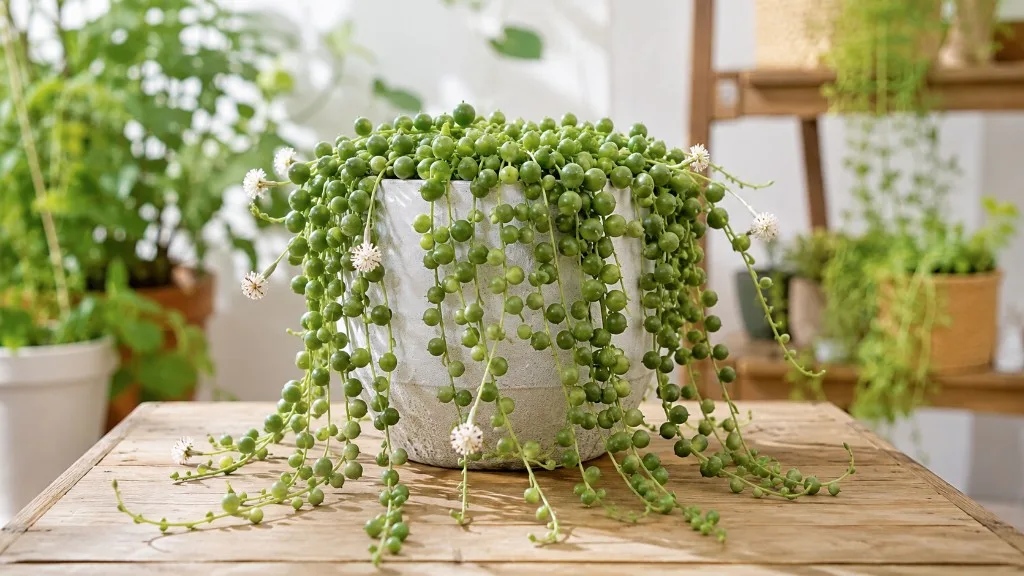
Place it near a bright window, out of scorching direct sun, in a small pot with drainage and an airy succulent mix. Water deeply once the mix has dried through much of the root zone; then allow excess water to escape. Shriveling pearls can indicate thirst, but yellow, soft leaves or pearls dropping from wet soil point toward overwatering or cold stress, so check the mix and roots before adding water. NC State Extension describes its leaf adaptations, light requirements, and susceptibility to both overwatering and underwatering; Epic Gardening also explains how to read common leaf and stem changes.
7. String of Needles
String of needles (Ceropegia linearis) has narrow, fleshy leaves rather than the hearts or rounded beads of its relatives. It gives a lighter, more linear cascade and can grow long stems, so it works well in a bright hanging position where the vine has room to descend. Do not confuse it with a generic “needle” succulent; check that the plant tag identifies the Ceropegia.
It prefers bright indirect light and a porous mix. Let the root zone dry between waterings, but do not leave a small, actively growing plant without water for so long that its slender leaves shrivel. Check the stems as well as the soil: healthy growth should be firm, while a few sparse gaps usually point to insufficient light or old growth rather than a need for more fertilizer. As with other Ceropegia, handle stems gently while moving or repotting it.
8. String of Turtles
String of turtles (Peperomia prostrata) is the clearest exception to the succulent stereotype. Its small rounded leaves carry a dark, shell-like network over lighter green, and the vine tends to remain more compact and slow-growing than a banana or heart vine. It belongs to the peperomia group, so it is a good choice when you want patterned foliage rather than an almost bead-only cascade.
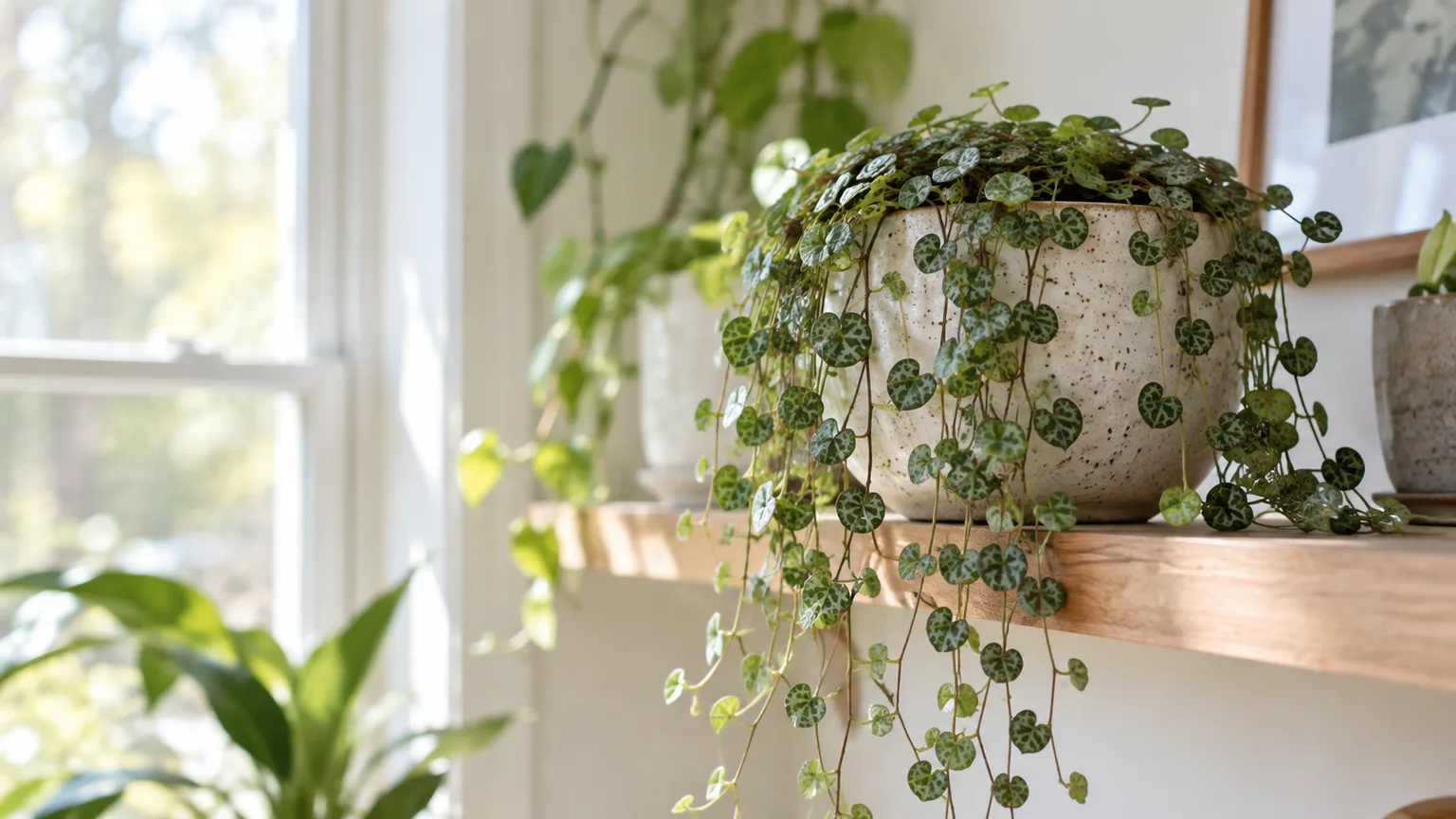
Give it bright indirect light and a well-aerated mix, but do not apply the strict drought routine used for string of pearls. Let the upper layer dry, then water before the entire root ball remains bone-dry for an extended period. Avoid a large pot that holds wet soil around its relatively small root system. This plant rewards steady observation: if the leaves wrinkle and the mix is dry, water; if leaves soften while the mix stays wet, improve drainage and allow the roots to recover before watering again.
9. String of Tears
String of tears is generally sold as Curio citriformis. Its blue-green leaves are elongated and teardrop-like, often with a small point at the tip. It is sometimes confused with string of raindrops because photographs and shop names overlap, but the label C. citriformis is a useful clue when you want the more compact lemon- or tear-shaped form.
This is a better choice for a small sill or shelf than a very long cascade, since its stems may stay short in a container. Provide bright filtered light, excellent drainage, and a real dry-down between waterings. Avoid frequent repotting just to encourage growth; a slow plant may simply be growing at its normal pace or receiving less light than it needs. When purchasing, look for several healthy tips rather than relying on a stated mature length that may reflect ideal outdoor conditions.
10. String of Watermelons
String of watermelons is another retail name often applied to striped, plump-leaved Curio herreianus. The leaves can show darker longitudinal markings that resemble miniature watermelon stripes, especially on well-grown plants. Because “string of watermelons” and “string of raindrops” can refer to overlapping material, do not count on the name alone to tell you that a pot contains a separate species.
Use the same cautious care you would give a bead-leaved Curio: bright light without sudden exposure to hot sun, a container with drainage, and a gritty, airy mix. If you are shopping online, compare the seller’s close-up leaf photos and listed botanical name, and ask for clarification when the listing uses only a common name. If you already own a similar-looking plant, you do not need to repot it or change its care simply because another seller uses a different label.
11. String of Arrows
String of arrows is a selected form of Ceropegia woodii with pointed, silvery leaves rather than the classic heart outline. NC State Extension includes ‘String of Arrows’ among the cultivars of C. woodii, so treat it as a variation of string of hearts rather than a separate genus. Its narrower leaves and compact vines make it an appealing option if you like the silver pattern but want a sharper leaf shape.
Care is close to standard string of hearts: bright filtered light, a quick-draining mix, and watering only after the potting medium has dried. Keep it away from cold windows and drafts in winter, and do not try to compensate for low light with extra fertilizer. When buying, look for the distinctive pointed leaves on several stems; a generic green heart vine may be mislabeled or may simply be a young plant whose pattern is not obvious yet.
12. String of Spades
String of spades is another trade name used for a leaf form of Ceropegia woodii. The leaves are elongated and pointed like a spade symbol, often with the familiar silver-green marbling and purple-toned undersides. Availability and naming are less consistent than for the standard form, so use a nursery’s botanical label and leaf photographs together rather than treating “spades” as a universally standardized cultivar name.
Grow it as you would other Ceropegia hearts: give it strong indirect light, allow the mix to dry between waterings, and handle the wiry vines with care. It suits a small hanging pot or a shelf where the stems can cascade without being tugged. If the leaves are spaced widely apart, move it closer to a brighter window gradually; if they turn pale or scorched, reduce direct exposure rather than watering more.
13. String of Nickels
String of nickels (Dischidia nummularia) has coin-shaped, waxy leaves set along thin vines. It is an epiphyte, which means it naturally grows on other plants or surfaces rather than rooting in dense garden soil. The name is shared with other “string of” plants in some shops, so check for the flat round leaves and the Dischidia label before buying.
Use an airy medium that drains quickly but does not behave like a compact desert-succulent mix; bark or a coarse component can help keep the roots oxygenated. Give it bright indirect light and water when the medium begins to dry, adjusting to how quickly your room and pot dry out. It appreciates a more humid growing environment than many Curio bead plants, but humidity cannot compensate for stagnant, waterlogged roots. A hanging pot or mounted display works well, provided you can still inspect and water the root zone evenly.
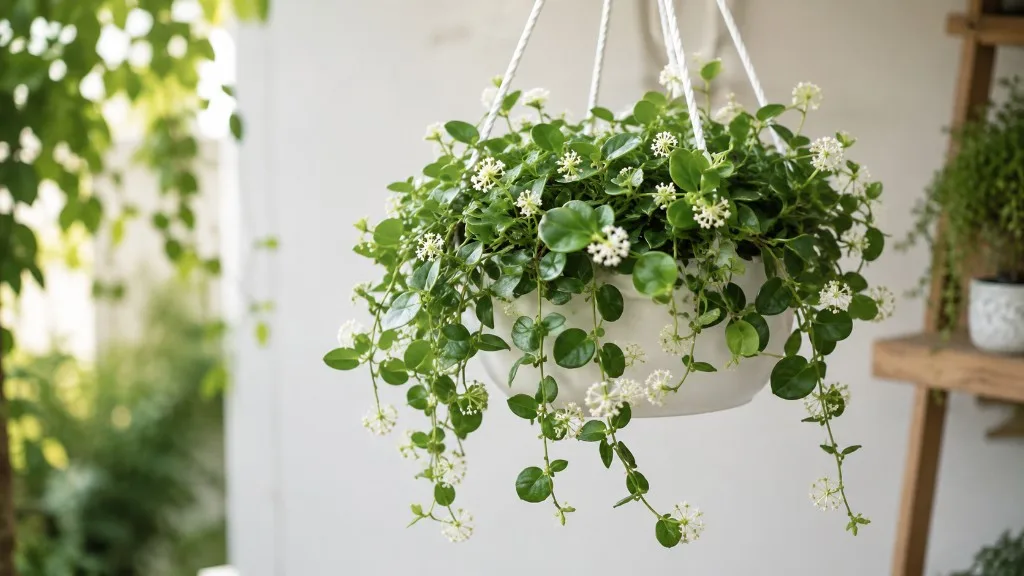
Choose by Light, Watering Style, and Available Space
| If you want… | Start with… | Why it may fit |
|---|---|---|
| A classic heart-patterned cascade | String of hearts | Readable leaf shape, tubers can root along the vine, easy to shape |
| Rounded beads and a succulent look | String of pearls | Distinctive leaves and a clear dry-down routine |
| A fast, full basket | String of bananas | Vigorous stems fill space more quickly |
| Patterned leaves on a shorter vine | String of turtles | Compact peperomia form and shell-like markings |
| Coins on a tropical-looking vine | String of nickels | Epiphytic habit and round, waxy foliage |
| A novelty leaf silhouette | Dolphins, tears, arrows, or spades | Choose from leaf shape, then verify the botanical label |
The table is a starting point, not a promise about how a plant will behave in every home. Light levels, pot size, mix, temperature, and plant maturity change how quickly a vine grows and dries. If your space is dim, none of these should be treated as a low-light plant; choose the brightest available indirect-light spot or add an appropriate grow light.
For new plants, inspect the underside of leaves and stem joints for pests, then keep the plant separate from your collection while you watch for hitchhikers. Check for a firm base and several rooted stems rather than buying only by the longest vine. A crowded-looking pot can often be made fuller by laying healthy stems on the soil surface so nodes can root; it does not require a much larger pot.
A Care Routine That Prevents the Usual Failures
Use drainage as your safety net. Choose a pot with a drainage hole and a mix suited to the plant’s growth habit. A standard cactus mix can be appropriate for many Ceropegia and Curio plants, but a more moisture-retentive yet airy mix may suit Peperomia and Dischidia better. Avoid garden soil in small indoor pots; it can pack tightly and hold water around roots.
Water from evidence, not the calendar. Feel the mix below the surface and lift the pot to learn its weight when dry and after watering. For bead-leaved Curio types, wait for a substantial dry-down, then soak the root ball and let it drain completely. For string of turtles and nickels, avoid leaving the mix saturated, but do not subject them to prolonged, repeated complete drying simply because a neighboring succulent is ready for water. Winter growth often slows, so reduce watering when the plant is using less water, not by following a fixed monthly schedule.
Make light changes gradually. A plant moved from a greenhouse bench to a sunny south-facing window can burn even if the species eventually tolerates some direct sun. Start farther from the glass or use morning light, then increase exposure over a week or two while watching the leaves. Long gaps between leaves usually mean the plant needs brighter conditions; bleached patches or dry, crisp areas on the window-facing side suggest too much sudden sun.
Prune to shape and propagate healthy material. Use clean, sharp scissors and cut just below a healthy node. For most trailing plants, lay a few nodes against the soil surface and secure them lightly so they can root; keep the surface barely moist during establishment, not soggy. String of hearts offers an additional method: press an aerial tuber into mix while it remains attached to its parent vine, then sever the connection after it roots. String of pearls can also be started from stem cuttings, a method described by Epic Gardening.
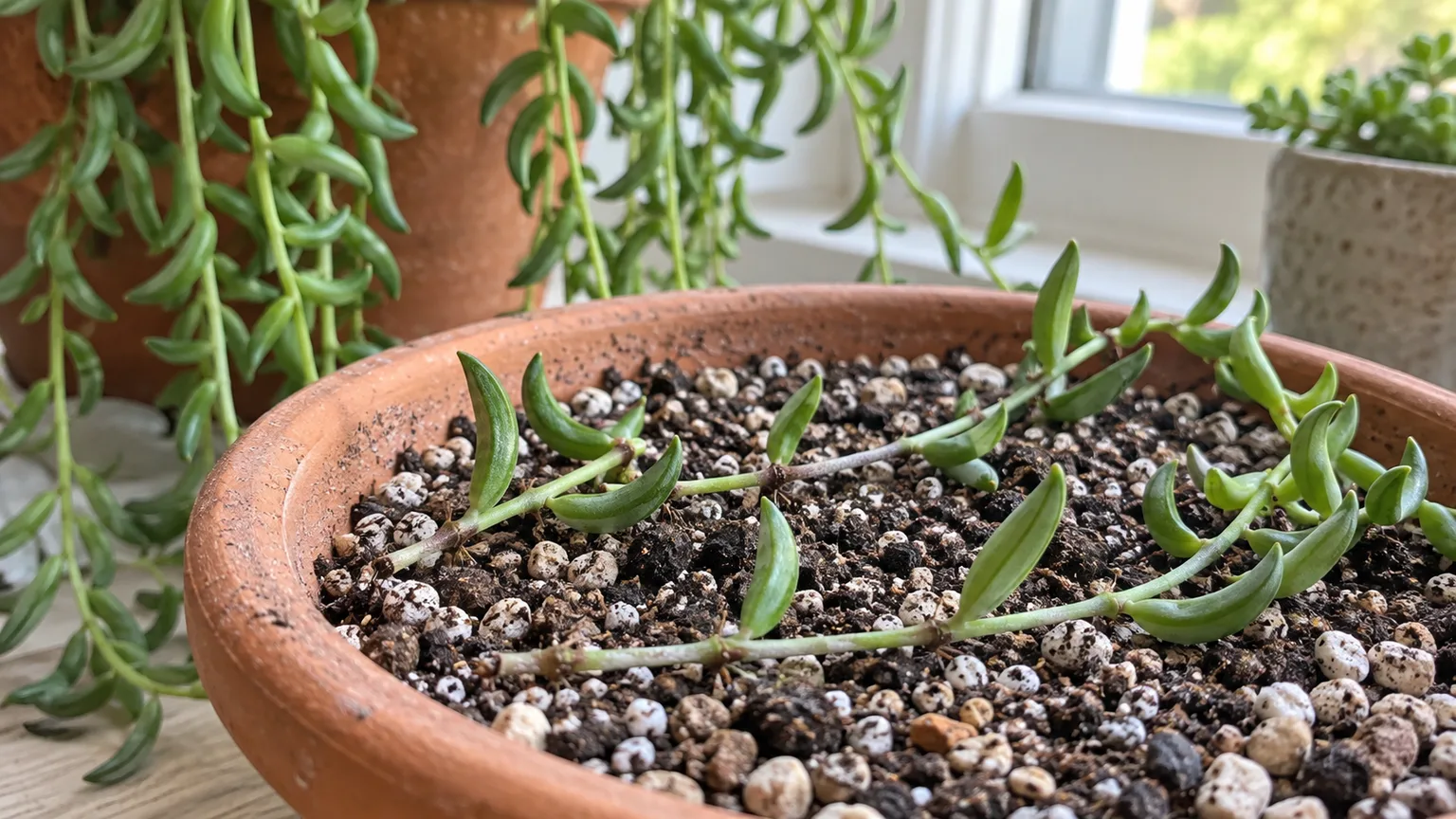
If the plant declines, diagnose the pattern before changing several things at once. Soft, yellowing leaves with wet mix call for checking drainage and roots, not more water. Shriveling leaves in a very dry, lightweight pot may need a thorough drink, but cold damage and intense sun can create similar symptoms. A few sparse or aging stems are often best replaced with rooted cuttings rather than rescued with a larger pot or heavy feeding.
Conclusion
“String of” plants are a diverse group of trailing houseplants, not a single set of interchangeable succulents. String of hearts, pearls, and bananas suit bright spaces and quick-draining mixes; string of turtles and nickels call for a less desert-like approach; and several novelty names refer to varieties or overlapping nursery labels rather than entirely separate species.
Choose by the leaves you like, the window you can provide, and how you actually water. Then confirm the botanical name, give the plant drainage and enough light, and watch how its own pot dries before setting a routine. Those simple checks make it much easier to enjoy the cascade without losing the plant to a generic care rule.