Why Ficus Trees Drop Leaves—and What to Check First
Keep a ficus tree healthy by matching light and watering to the season, spotting stress early, pruning safely, and choosing the right indoor or outdoor setup.
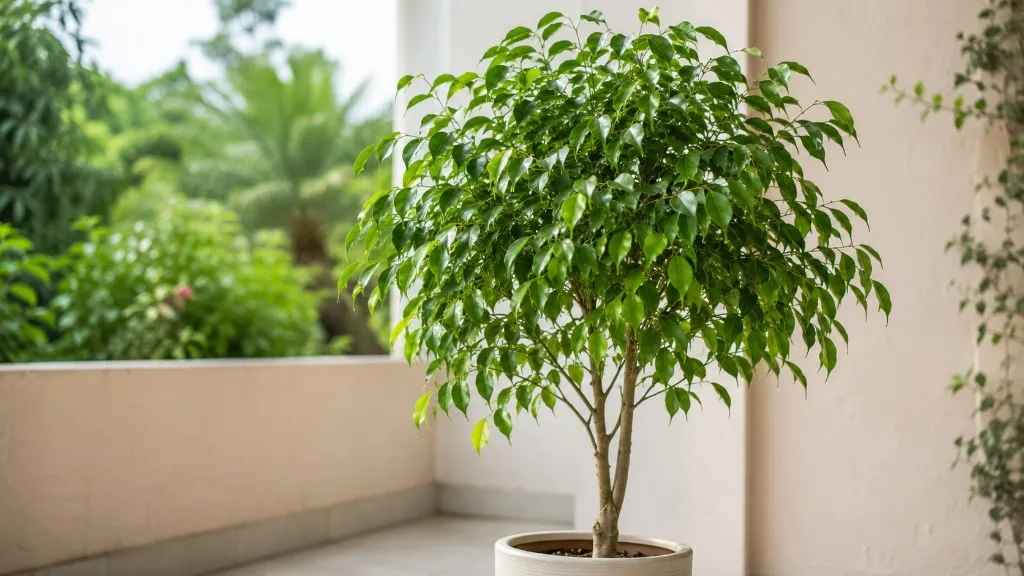
The ficus sold as an indoor tree is usually Ficus benjamina, or weeping fig: a woody evergreen with small, pointed leaves on arching branches. It can make a handsome floor plant for years, but it reacts to abrupt changes in light, temperature, and watering. Most leaf-drop problems become easier to solve when you first ask what changed around the plant and then check the soil before adjusting anything.
“Ficus” also names a large genus, not one identical plant. A rubber tree and a fiddle-leaf fig are ficuses too, but their leaf shapes, growth habits, and care tolerances differ. This guide centers on weeping fig, the narrow-leaved tree commonly braided or sold as a small indoor standard, and flags where outdoor growing calls for a different decision.
Start by Identifying Your Ficus
Look at the foliage and growth habit before following care advice. Weeping fig has slim, pointed leaves, flexible arching twigs, and often a braided or single woody trunk; mature trees can develop a dense canopy. In a pot, its height depends on the cultivar, age, pruning, and available root room. North Carolina State Extension notes that it can reach dozens of feet in a landscape but is commonly kept around 2 to 10 feet as a houseplant. (NC State Extension’s Ficus benjamina profile)
Why Different Ficuses Need Different Care
Do not assume every label that says “ficus tree” refers to weeping fig. Ficus elastica, the rubber plant, has thick, broad leaves; Ficus lyrata, the fiddle-leaf fig, has large violin-shaped leaves; and Ficus microcarpa is often sold as a bonsai or ginseng ficus. Each has its own pruning, light, and watering particulars. If the botanical name is missing, use the leaf shape and label photos from a reliable nursery or extension profile to confirm the plant before applying species-specific advice.
Weeping fig rarely flowers or sets fruit indoors, and it is not the edible fig tree, Ficus carica. They share a genus, but an indoor ficus should not be treated as a fruiting fig. Missouri Botanical Garden describes weeping fig as a broadleaf evergreen whose stems contain milky sap and whose indoor plants seldom flower. (Missouri Botanical Garden’s plant profile)
Choose a Bright, Stable Location
Give a weeping fig the brightest spot you can provide without exposing indoor-acclimated leaves to sudden harsh sun. Bright filtered light near an east-facing window or a few feet back from a bright south- or west-facing window is a useful starting point; the actual distance depends on window size, season, trees outside, and glazing. If growth is sparse or the plant leans toward the glass, it may need more light. If leaves bleach or scorch after a move into direct afternoon sun, pull it back and acclimate it more slowly.
Stability matters nearly as much as brightness. Choose a place away from exterior doors, heating vents, air-conditioning discharge, and cold window glass, then let the plant settle there. Turn the pot gradually if you want a more even canopy, but avoid repeatedly relocating it to chase small changes in appearance. A plant that loses a handful of older leaves after a one-time move may be adjusting; persistent shedding means you should inspect light, water, temperature, and pests rather than keep moving it.
Water by Soil Condition, Not Calendar
Water when the upper layer of mix has begun to dry, then soak the whole root ball and let the pot drain. Check with a finger or a wooden skewer several inches down, because the surface can look dry while the center remains wet. A small pot in bright warmth may dry quickly; a large pot in a cool, dim corner can stay damp much longer. For that reason, “once a week” is only a rough observation, not a dependable schedule.
Use the same check each time and notice how many days pass before the pot feels lighter after a full watering. That simple record, especially across a seasonal light change, gives you a better interval than a universal weekly rule.
When it is time to water, pour slowly over the soil until water runs from the drainage holes. Empty the saucer or decorative cachepot so the roots do not sit in runoff. In cooler, lower-light months, growth slows and the mix usually takes longer to dry, so check less often and reduce watering frequency rather than giving tiny sips on the old summer routine. Missouri Botanical Garden likewise advises regular water during active growth, drying between waterings, avoiding overwatering, and reducing water from fall into late winter.
Use the plant and the soil together to diagnose mistakes. Limp leaves with very dry mix and a light pot suggest thirst; yellowing leaves over persistently wet soil point toward excessive moisture or poor drainage. If the tree keeps dropping leaves despite a sensible moisture cycle, do not compensate by watering more. Check for a blocked drain hole, compacted mix, a pot that is too large, or damaged roots first.
Use an Airy Mix and a Drainage Pot
Choose a stable pot with at least one open drainage hole and a mix that holds some moisture without staying sodden. A quality indoor potting mix amended with a little fine bark or perlite can improve air space in a heavy, water-retentive blend. Do not put gravel at the bottom as a substitute for drainage; water still needs an unobstructed route out of the container. The decorative outer pot can be attractive, but the planted container should be able to drain freely.
Avoid garden soil in an indoor pot. It can compact in a container, dry unevenly, and make it hard to judge whether the root zone is wet. You also do not need to chase a precise pH number for an ordinary houseplant. If water runs straight down the sides while the root ball remains dry, rehydrate slowly in several passes and consider whether the old mix has become hydrophobic or crowded with roots.
Keep Temperatures Steady and Humidity Sensible
Weeping fig is tropical and cold-sensitive. Keep it in a comfortable, steady room and protect it from sudden blasts of cold or hot air. The commonly repeated daytime range of roughly 65 to 85°F is a practical houseplant target, not a guarantee that the plant will tolerate a sharp overnight drop or exposure beside a drafty window. The Indoor Nursery’s care guide also emphasizes stable warmth and keeping the tree away from vents and drafty windows. (The Indoor Nursery’s Ficus benjamina care guide)
Average indoor humidity is often adequate if the plant is growing well and its leaves are not crisping at the edges. If your home is very dry, a room humidifier can raise humidity more consistently than misting, which only wets leaves briefly. A pebble tray is not a substitute for a humid room and should never leave the pot standing in water. More humidity will not correct overwatering, root damage, or a chilly draft, so address the cause that fits the symptoms.
Feed Lightly During Active Growth
Fertilize only while the plant is actively producing growth, usually during spring and summer indoors. A balanced houseplant fertilizer diluted according to its label is safer than guessing a concentrated dose. If the plant is sitting in low light, has recently been repotted into fresh mix, or is dropping leaves from stress, pause feeding until conditions stabilize. Fertilizer does not compensate for insufficient light or damaged roots.
Do not increase the dose just because a ficus is slow. Growth naturally slows when days are short, temperatures are lower, or the plant has filled its current container. Excess fertilizer can leave salts in the soil and stress roots. If a crust forms on the potting mix or leaf tips brown after feeding, stop fertilizing and flush the mix with water only if the pot drains freely; resume at a lower label rate once active growth returns.
Prune for Shape Without Overreacting
Prune to remove dead or crossing branches, control height, or encourage a fuller outline. Use sharp, clean pruners and cut just beyond a leaf node or branch junction so the remaining stem has a natural endpoint. If you are shortening a tall indoor specimen, step back after each cut and view the canopy from several angles. A few well-placed cuts look more natural than shearing the whole crown into a tight ball.
The plant produces milky sap when cut. Wear gloves, avoid rubbing your eyes, keep children and pets clear of fresh clippings, and wipe sap from tools after pruning. Make structural cuts when the plant is healthy and actively able to respond, or in late winter before a spring growth flush if that timing suits your room. Avoid combining a hard prune with a move, repot, or major change in light; multiple stresses make it difficult to tell what caused renewed leaf loss.
Propagate Through Stem Cuttings
Stem cuttings are a straightforward way to try for another weeping fig, though not every cutting will root. Take a 4- to 6-inch piece from healthy, nonflowering growth with at least one node, using clean pruners. Remove leaves from the portion that will sit in the rooting medium, but leave a few leaves near the tip. The species is commonly propagated by stem cuttings, and practical houseplant guides recommend taking them in warm, bright conditions. (NC State Extension; The Indoor Nursery)
Set the cutting in a small pot of clean, lightly moist propagation mix, with the node below the surface. A loose clear cover can slow moisture loss, but leave an opening for air and remove the cover if condensation stays heavy or mold develops. Place it in bright indirect light and keep the medium gently moist, not waterlogged. A leaf staying green is not proof of roots; look for resistance to a very gentle tug or new growth before potting it on. Rooting in water is another option, but water-grown roots can need a gradual transition to potting mix. If the cutting wilts or rots, start again with a fresh piece and less moisture.
Repot Only When Roots Need Room
Repot when roots circle densely around the root ball, emerge through several drainage holes, or the mix dries unusually fast despite proper watering. A plant does not need a larger pot merely because a year has passed. If the roots still have room and water drains normally, leaving it in place avoids an unnecessary disturbance that can trigger leaf drop.
When repotting is warranted, choose a container only about 1 to 2 inches wider than the current root ball and use fresh, free-draining mix. Set the plant at the same soil depth; burying the trunk can encourage problems at the base. Water once to settle the mix, drain completely, and return the tree to a similar light and temperature. Do not immediately fertilize a stressed plant or place it in a much bigger pot, where excess wet soil can linger beyond the roots’ reach.
Choose the container for the root ball, not the height of the canopy. A tall tree in a lightweight pot may need a heavier outer cachepot for stability, but the inner pot still needs drainage and room for water to escape. If the root ball is only modestly crowded, gently loosen its outer roots; avoid aggressively tearing apart healthy roots simply to fit an oversized container.
After repotting, keep the tree in its familiar light and avoid changing its exposure or pruning it for a few weeks. Water according to the new mix’s drying rate rather than assuming it needs more because the pot is larger. If you had to remove damaged roots, protect the plant from harsh afternoon sun and skip fertilizer until it resumes growth. A short pause in top growth can be normal while disturbed roots re-establish.
Grow Ficus Outdoors Only Where Climate Allows
In warm climates, weeping fig can become a large landscape tree; in colder regions, treat it as a container plant that summers outdoors only after frost danger has passed. North Carolina State Extension and Missouri Botanical Garden place its outdoor hardiness around USDA Zones 10 to 12, but zone labels describe regional winter lows and do not remove the need to protect a potted plant from cold snaps. (NC State Extension; Missouri Botanical Garden)
Do not carry a tree from a dim indoor corner straight into full summer sun. Set it in bright shade first, then increase morning sun exposure over a week or two while watching for scorched leaves and drying soil. Bring it back inside before nights become cold, inspect the undersides of leaves and branches for pests, and avoid changing its indoor location at the same time if you can. Hunker’s outdoor ficus guidance also stresses gradual sun acclimation and careful site selection for the large tree. (Hunker’s outdoor ficus guide)
Give Outdoor Trees Space from Hardscape
Before planting in the ground, picture the mature tree rather than the nursery pot. A weeping fig can reach roughly 40 to 50 feet tall with a canopy 25 to 30 feet across in suitable conditions, according to Missouri Botanical Garden. Its strong, spreading roots need room away from foundations, paving, retaining walls, and buried utilities. Local soil and water conditions affect root behavior, so consult a local arborist or extension office before choosing a permanent spot near structures.
If you lack that space or live outside its warm range, keep the tree in a sturdy container with drainage and expect growth to be more restrained. Container culture reduces the footprint but does not make the tree frost-hardy, and a mature potted specimen can still become heavy and difficult to move. Decide whether you can bring it indoors safely before buying a large tree for seasonal outdoor display.
Diagnose Leaf Drop Before Changing Care
Leaf drop is a response, not a diagnosis. Weeping figs may shed foliage after a move, a sharp light change, repotting, a cold draft, or a swing between dry and wet soil. Missouri Botanical Garden specifically notes that foliage may fall when a plant is brought inside for winter or moved within the home. (Missouri Botanical Garden)
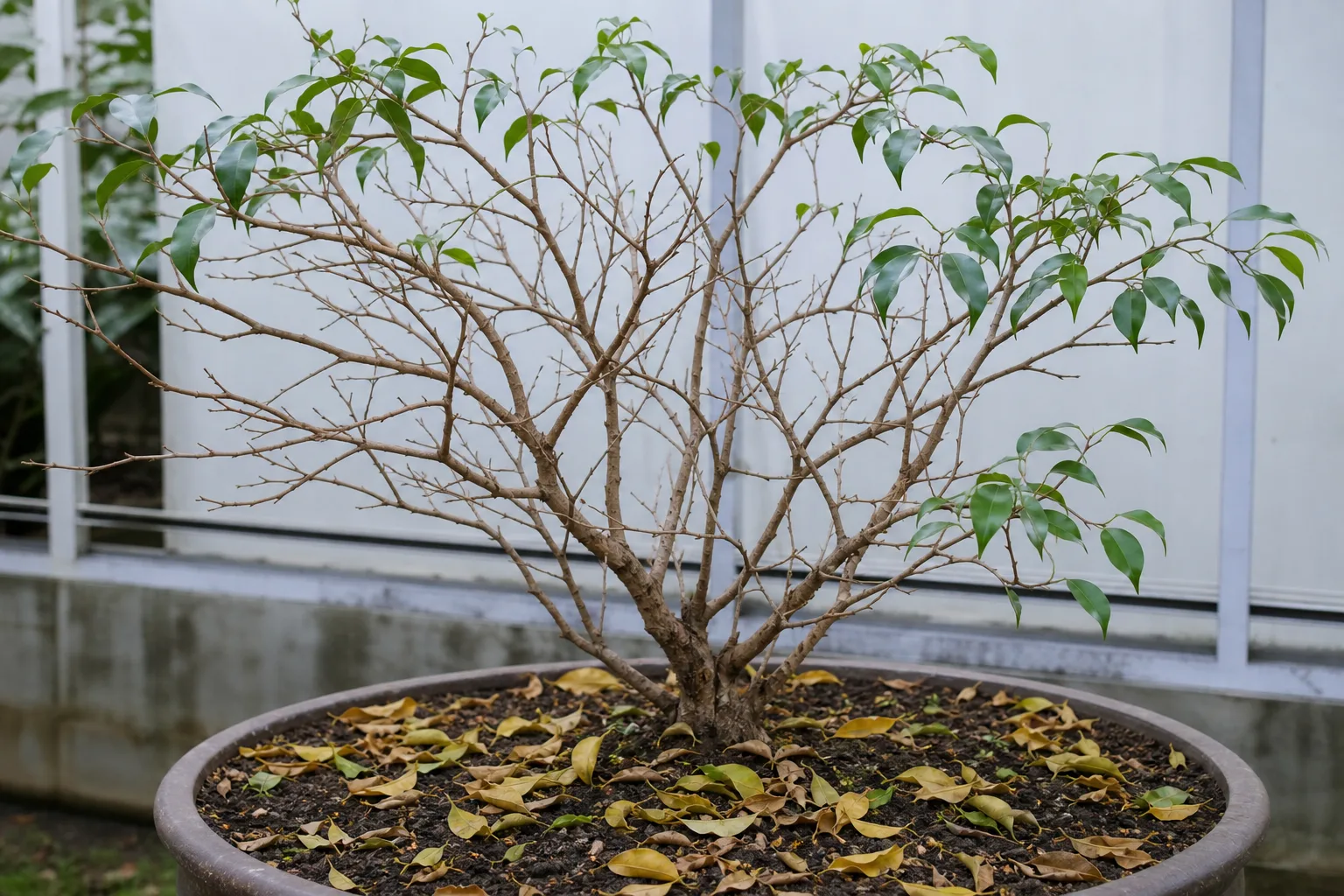
Start with the timeline. If shedding began soon after you moved the tree, keep it in a bright, stable place and avoid repotting or fertilizing while it adjusts. If leaves yellow and fall while the soil stays wet, inspect drainage and roots. If leaves dry, curl, or drop from a pot that feels very light, water thoroughly and reassess how quickly the mix dries. If the plant is losing leaves on one side, compare that side’s exposure to cold glass, a vent, or stronger direct sun.
Change one condition at a time and give the plant time to show a response. Do not strip off every remaining leaf or increase watering, fertilizer, humidity, and light all at once. If the ficus continues to decline for several weeks, check stems for live green tissue, inspect the root ball for mushy dark roots, and examine both leaf surfaces and branch joints for insects. New growth is a better sign of recovery than the absence of one day’s leaf drop.
Check for Pests and Leaf Spots
Inspect the plant weekly, especially after bringing it indoors from a patio or buying a new houseplant. Look along leaf undersides, midribs, and branch joints for fine webbing, tiny moving specks, cottony clusters, bumps that do not brush away, or sticky honeydew. Spider mites, scale, mealybugs, aphids, and thrips can all affect ficus. A close inspection often catches a small population before it spreads to nearby plants.
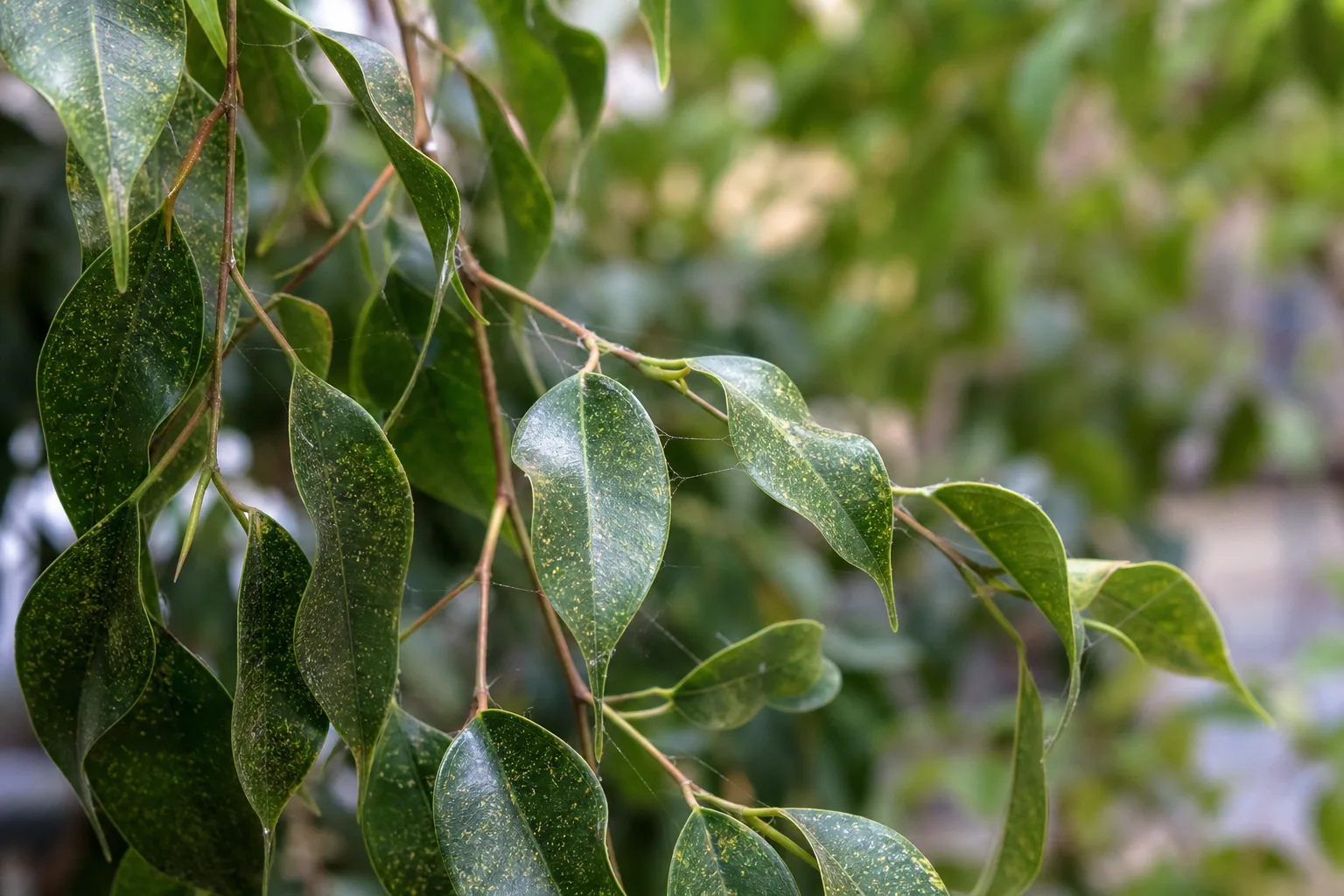
Isolate an infested plant, remove heavily affected leaves, and rinse or wipe foliage where practical. Recheck and repeat the cleaning because eggs or hidden insects can survive the first pass. If you use a pesticide or insecticidal soap, choose a product labeled for the plant and pest, follow its label exactly, and test a small area first; some products can mark foliage, especially in sun or heat. Brown spots may have several causes, including leaf wetness, sun scorch, or disease, so avoid treating spots as a fungus problem until you have checked the pattern and growing conditions.
Choose a Ficus Variety for Your Space
If you have not bought a plant yet, match the ficus to the room and the care you can sustain. Weeping fig offers a fine-textured, tree-like silhouette but is sensitive to abrupt environmental change. A rubber plant has bolder, thicker leaves and usually tolerates some variation in indoor conditions; a fiddle-leaf fig makes a strong vertical focal point but needs bright light and room for its broad leaves. A ginseng ficus is a compact bonsai-style plant, with a different pruning goal from a full-sized weeping fig.
Check the exact species or cultivar before buying, especially if you have pets, need a compact tree, or plan to grow it outdoors. Variegated weeping fig cultivars may need brighter light to maintain their pattern, while a standard green form can be a more forgiving choice in a bright home. Ask how the plant was grown and whether it has recently been moved; a stable, healthy specimen in an appropriate spot is usually a better purchase than a larger tree that will immediately face a drastic change.
Protect Pets and Handle Sap Carefully
ASPCA lists Ficus benjamina as toxic to dogs, cats, and horses; its profile identifies ficin and psoralen as toxic principles and gastrointestinal or skin irritation among possible signs. (ASPCA’s Fig plant safety entry) Keep leaves, pruning debris, and sap out of reach of animals and children, and wash skin after handling cut stems. If a pet chews the plant or develops symptoms, contact a veterinarian or animal poison-control service rather than waiting for the plant to cause a visible problem.
Conclusion
For a healthy weeping fig, prioritize bright light, a stable position, and a potting mix that drains well. Water when the root zone begins to dry, empty runoff, and reduce watering as growth slows; do not let a calendar or a single fallen leaf dictate the routine. When leaf loss starts, trace recent changes and check soil and pests before making another adjustment.
Keep the tree indoors in cold climates, acclimate it gradually to outdoor sun in warm weather, and plant it in the ground only where its eventual canopy and roots have room. With a suitable site and measured care, a ficus can become a long-lived indoor tree without turning every seasonal change into a crisis.