How to Grow Golden Barrel Cactus Indoors
Learn where to place a golden barrel cactus, how to check if its mix has dried fully, and which pot, soil, water, and winter choices reduce root-rot risk.
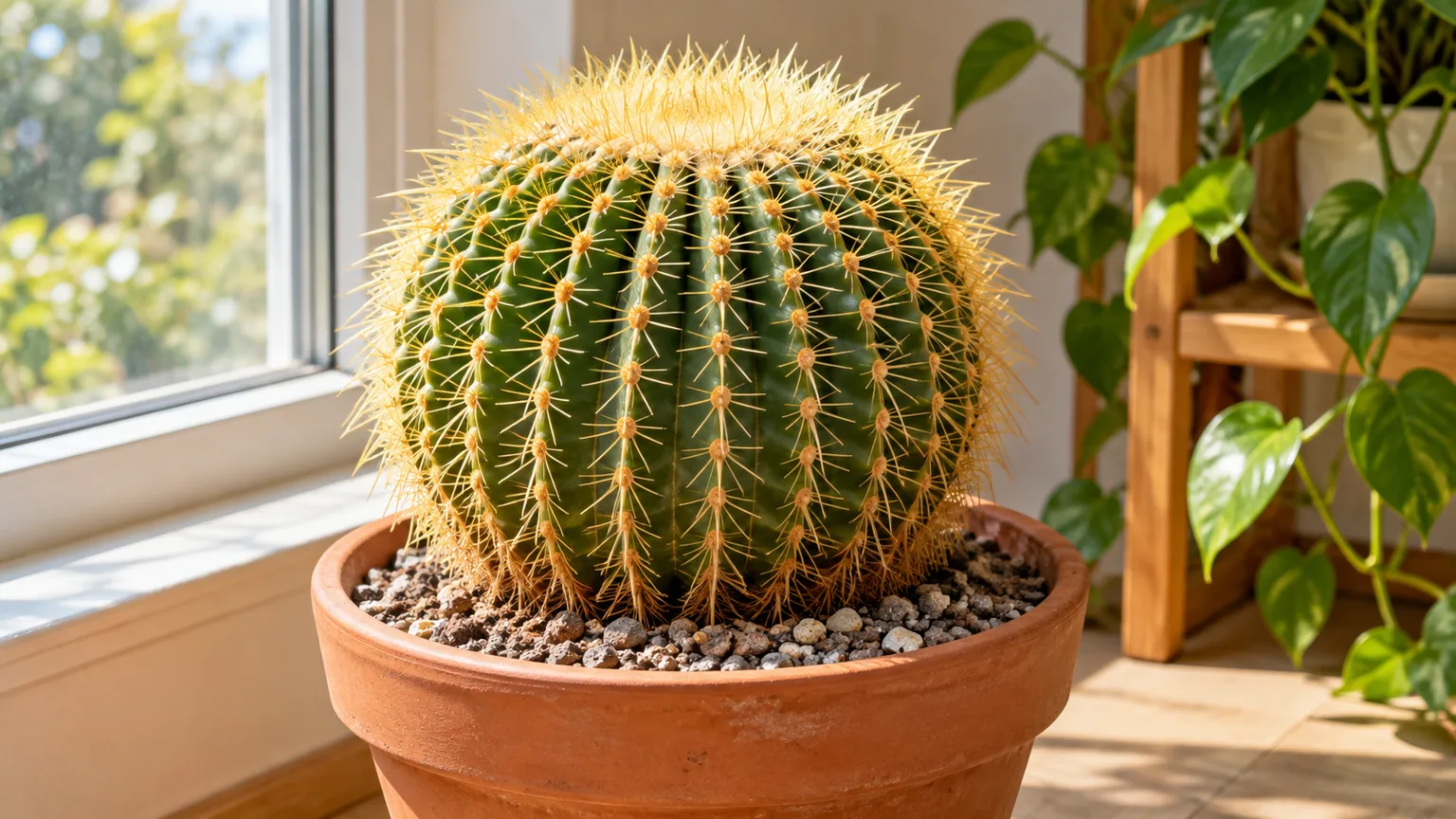
Yes, a golden barrel cactus can grow indoors, but it needs a genuinely bright position and a potting mix that dries between waterings. The hard part is not supplying frequent care; it is giving this desert cactus enough usable light while resisting the urge to water it on a houseplant schedule.
Golden barrel cactus is the familiar ribbed globe lined with golden spines. It grows slowly, tolerates dry indoor air, and is easier to keep alive than to persuade into a compact shape or flowers in a home. The practical goal for most growers is a firm, evenly colored plant that adds new growth at its crown without leaning toward the window.
Start with the right plant and a realistic indoor setup
Golden barrel cactus is commonly sold under the name Echinocactus grusonii. Taxonomic treatments have changed: NC State Extension notes that the species is now called Kroenleinia grusonii, while many garden centers and horticultural references still use Echinocactus grusonii. If both names appear on labels, they refer to the same recognizable species rather than two different care types. NC State Extension
A small nursery plant can live indoors for years, but the species is not a low-light desk cactus. Its round outline, strong spines, and slow growth make it a handsome specimen for a sunny sill, yet a dim room tends to produce a plant that stalls or reaches toward light. Oklahoma State University Extension lists full sun as its preferred exposure and very well-drained soil as its soil preference; indoors, those needs translate to the sunniest window you have and a mix that does not stay damp. Oklahoma State University Extension
Plan for the mature plant as well as the young one. The barrel can become broad and heavy, and its spines make it awkward to move through a doorway or place on a narrow shelf; leave room around it and keep it out of high-traffic paths, children’s reach, and areas where a pet could brush against it. A heavy plant on a light sill can become a tipping hazard even when the pot itself is stable.
The species is native to Mexico and is listed as endangered in the wild by educational greenhouse and campus-garden profiles. Buying a nursery-grown, propagated specimen rather than a wild-collected cactus supports responsible cultivation and avoids removing plants from their limited native populations. BYU Greenhouse and Kapiʻolani Community College
Give it the brightest usable window light
Light is the factor most likely to limit indoor growth. Place the cactus directly beside an unobstructed south-facing window in the Northern Hemisphere or a north-facing window in the Southern Hemisphere. A west-facing window can work if it receives several hours of direct sun; an east-facing window may be bright but often gives less total sun, especially during winter.
“Full sun” is commonly defined as at least six hours of direct sunlight outdoors, but window glass, latitude, season, nearby buildings, and the distance from the pane change what a plant actually receives indoors. Think of six hours as a useful target, not a guarantee that any bright-looking room is enough. If the cactus develops a narrow crown, increasingly wide gaps between ribs, or a noticeable lean, move it closer to the window or add a dedicated grow light rather than compensating with more fertilizer. NC State Extension
Acclimate a recently purchased plant before placing it in hours of hot midday sun. Greenhouse and shop plants may have grown under shade cloth, so begin in bright indirect light, then increase direct exposure over a week or two. A pale, bleached, or dry tan patch on the window-facing side can indicate sun scorch after an abrupt change; once tissue is damaged it will not turn green again, so increase exposure gradually and keep the plant stable while new growth forms.
In winter, check the light again rather than relying on its summer position. The sun sits lower, days shorten, and cold window glass may make the sill chilly at night. Move the cactus as close to the bright window as practical, but keep it from touching the pane; where natural light is very limited, a grow light can help maintain compact growth if you follow the light’s recommended distance and daily run time.
Water by root-zone dryness, not by the calendar
Golden barrel cactus stores water in its thick stem, so it handles dry intervals better than constantly damp soil. Water thoroughly during active growth, let excess drain freely, and wait until the mix is dry through the root zone before watering again. A greenhouse profile from BYU gives a monthly deep-watering benchmark, while the RHS recommends moderate watering in growth and none during dormancy; those differences show why a calendar interval should be adjusted to warmth, light, pot size, and how fast your mix dries. BYU Greenhouse and RHS
When it is time to water, pour slowly over the mix until water runs from the drainage hole. Empty the saucer after it has drained; do not leave the pot sitting in runoff, and do not mist the cactus as a substitute for watering its roots. Better Homes & Gardens describes this full soak-and-drain approach for container plants and notes that cacti and succulents need dry periods between waterings. Better Homes & Gardens
Check the whole mix before you water
The surface can dry while the lower half of a deep or dense pot stays wet. Check the pot’s weight, feel the mix near the drainage hole, or slide a clean wooden skewer down along the pot’s inside edge and see whether it comes out damp or soil-stained. A dry surface alone is not the signal; the lower root zone should also be dry before you give the plant another thorough drink.
A rough seasonal pattern can help you plan inspections, but treat it as a prompt to check, not a schedule:
| Situation | Watering decision |
|---|---|
| Warm, bright spring or summer with active growth | Water fully once the mix has dried throughout; drain the saucer. |
| Cool, cloudy weather or a room with weak light | Wait longer because the pot will dry more slowly. |
| Cool winter rest with little or no growth | Keep the mix dry; water only if the stem shows sustained shriveling and the roots are sound. |
| Newly repotted cactus with disturbed roots | Keep it dry until damaged roots have had time to heal, then resume cautiously. |
Wrinkling is not always proof that the cactus needs water. A dehydrated plant may look less plump, but overwatered roots can also fail to supply water, leaving the stem soft or shriveled while the mix remains wet. Check soil condition and the firmness of the base first; adding water to a plant with root rot can accelerate the damage.
Build a gritty, fast-drying soil mix
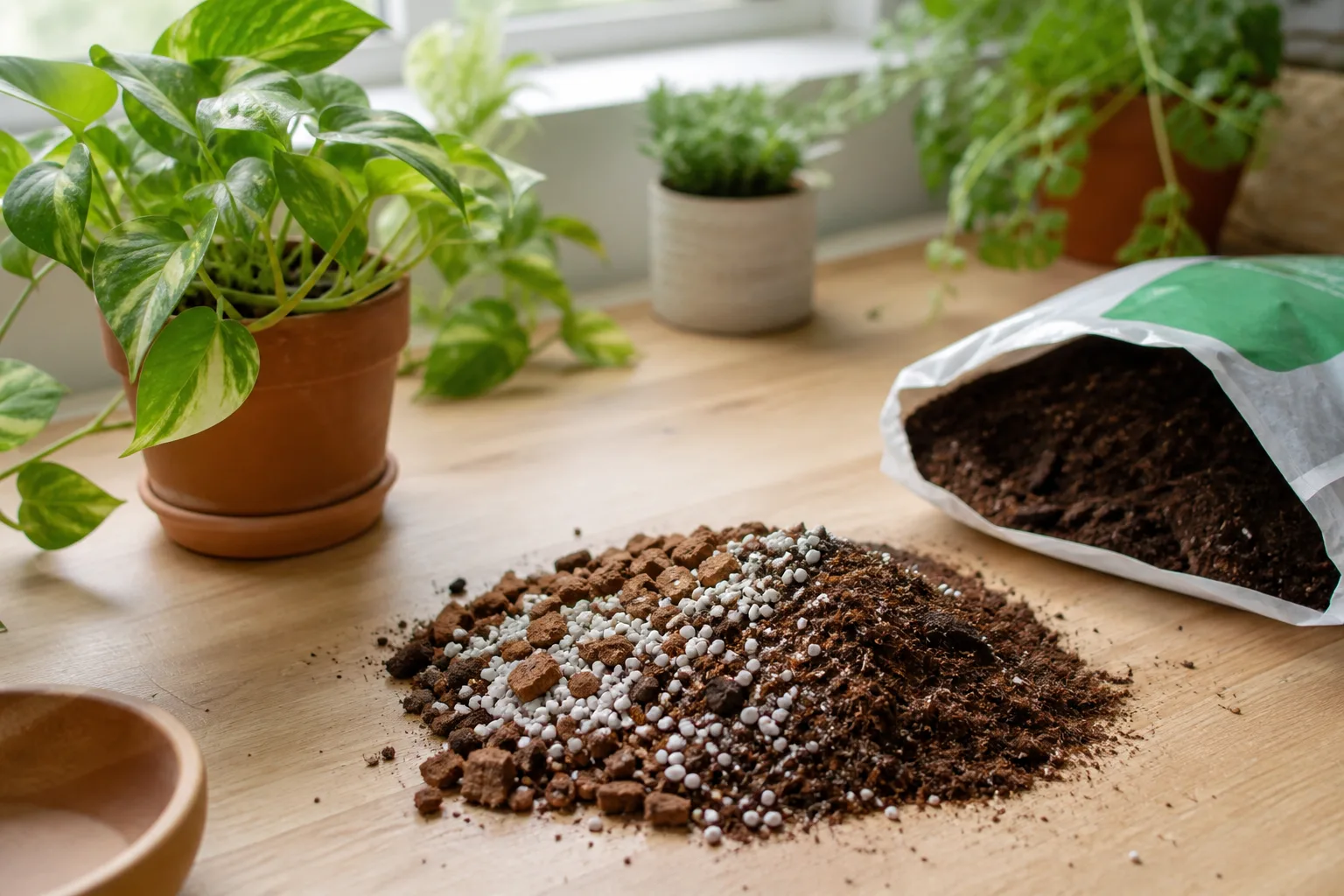
Choose a cactus mix that drains freely, then adjust it if it stays wet in your home. A useful starting blend is one part bagged cactus mix to one part pumice, perlite, or small horticultural lava rock; in a humid room, a cool home, or a pot that dries slowly, increase the mineral portion. The goal is a mix that wets when you water but releases excess quickly and then has air spaces around the roots. NC State Extension and Oklahoma State Extension both emphasize dry, well-drained conditions for barrel cactus. NC State Extension and Oklahoma State University Extension
Avoid ordinary garden soil, fine sand, and dense peat-heavy potting soil used straight from the bag. Fine particles can settle and compact around the roots; peat can hold moisture longer than a sunny, warm windowsill plant needs. If a commercial “cactus and succulent” mix remains damp for many days after a thorough watering, the label is not enough—add more pumice or perlite, use a shallower pot, or improve warmth and light so the root zone dries at a reasonable pace.
A shallow layer of gravel on top can keep loose mix from shifting, but gravel at the bottom of a pot cannot replace drainage holes or a suitable mix. Use a container that lets water escape, and cover an oversized drainage hole with mesh if needed so particles stay in place. The plant’s native habitats include rocky or sloping soils; a home mix should mimic the fast drainage, not attempt to copy a particular mountain’s mineral recipe. BYU Greenhouse
Choose a stable pot with an open drainage hole
A drainage hole is essential. If you like the look of a decorative cachepot without one, keep the cactus in a nursery pot with holes inside it, then remove that inner pot for watering and let it drain before returning it. Never let the hidden inner pot sit in water inside the outer container.
Choose a pot only modestly wider than the root ball, with enough weight and footprint to keep the top-heavy, spiny plant from wobbling. A pot one or two inches wider than the current root mass is usually plenty when repotting; jumping to a much larger container leaves a larger volume of mix that can stay damp long after the roots have used the water. The RHS lists the species as slow growing and gives a 10–20-year time to maturity, so there is no need to upsize every season. RHS
Unglazed terracotta is a practical option because its porous walls help the pot dry, though it also means you may need to check moisture more often in a hot, dry room. Plastic or glazed ceramic can work if the mix is open and the pot has a drainage hole; the material does not rescue a dense mix or an oversized container. Avoid a saucer that traps water against the base after you finish watering.
Follow the cactus through its active and resting seasons
Golden barrel cactus care changes with the light and temperature more than with a fixed date on the calendar. RHS cultivation guidance recommends watering while the plant is growing, withholding water when dormant in autumn and winter, and applying a balanced liquid fertilizer a few times during the growing season. A bright, warm house can keep a plant more active than a cool greenhouse, so observe its condition rather than forcing an indoor cactus into a strict outdoor calendar. RHS
Spring and summer growth
As days lengthen and the plant starts pushing fresh growth at the crown, water deeply when the mix is dry all the way through. If the cactus is outdoors for summer, rainfall can undo that plan: move it under a roof or bring it in during prolonged wet weather, then check the mix before watering again. Warmth and strong light support growth, but soggy roots do not become safer simply because it is summer.
Do not mistake every slow month for a problem. Golden barrel cactus is naturally slow growing, and a small plant may produce little visible change even when its ribs remain firm and its color is healthy. Compare the crown over several months, not a few days; a plant that holds its shape in a bright window may be doing exactly what a mature, slow-growing cactus does.
A cool, dry winter rest
When days are short and indoor temperatures are cooler, reduce watering sharply and stop feeding. If the cactus is in a cool, bright room and not growing, the safest default is to keep the mix dry through the rest period. If it remains in a heated room with active growth, do not water on a schedule; wait for the mix to dry and use less water than during the warm season.
Keep it away from cold drafts, heating vents, and damp window corners. A sudden move from a warm room to a freezing porch is not a useful rest period, and wet soil plus cold temperatures raises the risk of rot. When spring light returns and the cactus begins growing, resume a full watering only after the mix is already dry.
Keep temperatures warm and humidity low
Ordinary household humidity is usually acceptable; this is a desert cactus, not a plant that needs misting or a pebble tray. BYU’s greenhouse profile lists low relative humidity and well-drained soil among its cultural requirements, while the RHS recommends growing the plant under glass in cooler British conditions. Good air movement around the pot helps the mix dry evenly, but a constant cold draft can chill the root ball. BYU Greenhouse and RHS
Keep the cactus warm during active growth and protect it from frost indoors. Some outdoor plant references list brief cold tolerance around 20°F, but that landscape rating should not be used as a safe minimum for a small cactus in a pot. Container roots have less insulation than a plant in the ground, and cold, wet mix is especially risky; bring an indoor specimen inside well before frost or prolonged chill is forecast. BYU Greenhouse and Fine Gardening
Fertilize lightly only while it is growing
Fertilizer is optional when the cactus is healthy and the potting mix is fresh. If you feed it, use a balanced liquid fertilizer diluted according to the label or a cactus fertilizer with modest nitrogen, and apply it only during active spring or summer growth. RHS recommends a balanced liquid feed two or three times during the growing season; that is a useful upper limit for a slow-growing potted specimen, not a reason to fertilize every month. RHS
Apply fertilizer to already damp soil, not to a completely dry root ball, and never feed a dormant winter plant. Too much nitrogen can favor softer growth, while unused fertilizer salts can accumulate in a pot that is rarely watered. If a white crust forms on the soil or pot rim, pause feeding and review the water quality and drainage before adding more nutrients.
Repot only when the pot or mix gives you a reason
Repot when the plant has outgrown its pot, the mix has broken down and drains poorly, roots fill the container, or rot requires fresh medium—not simply because a year has passed. Slow growth means a golden barrel cactus may remain in the same pot for several seasons. The best time is when growth is resuming in warm, bright weather, so the plant has a chance to settle before the slower season.
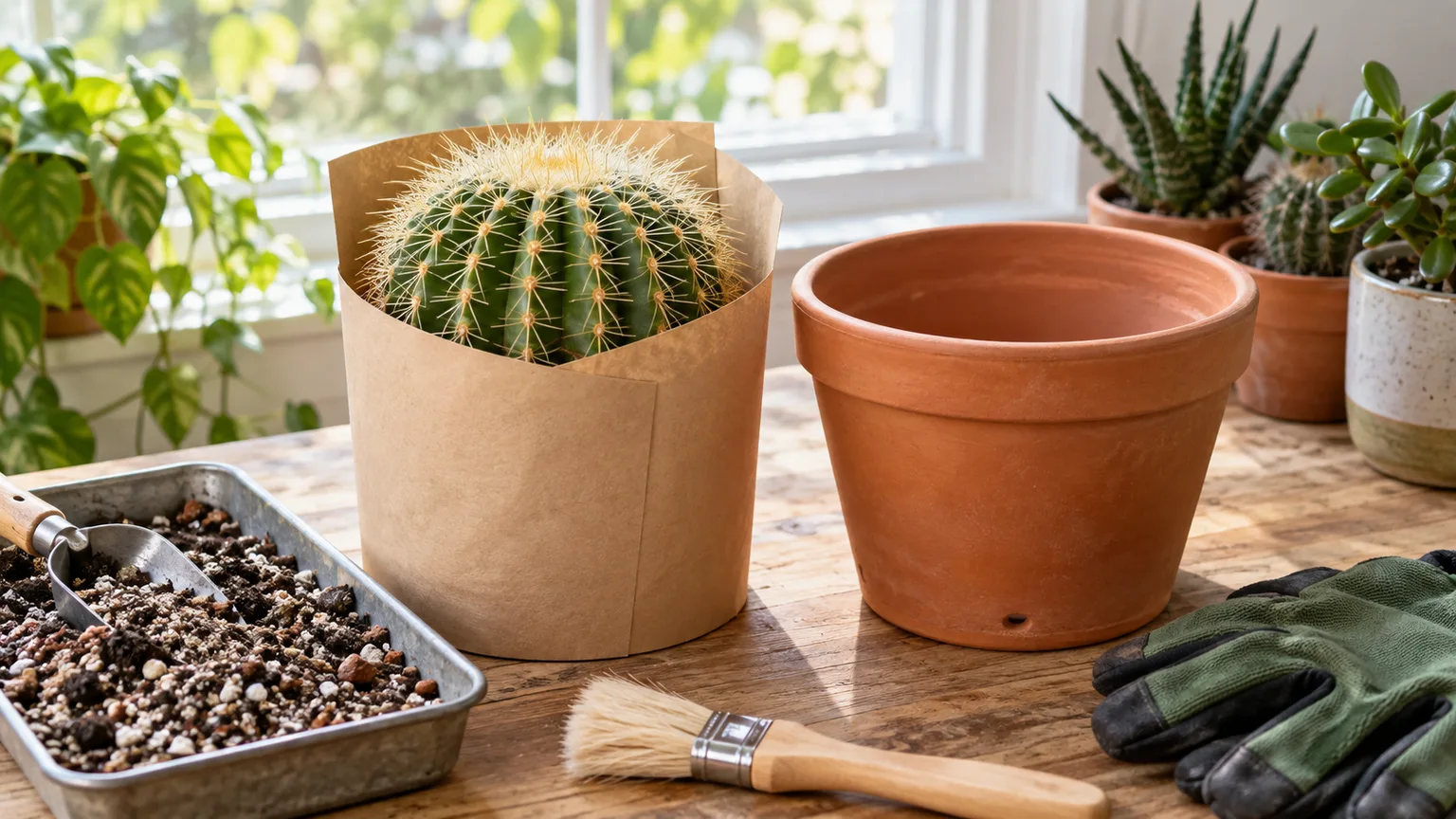
Start with dry soil and prepare the new pot, fresh mix, and a protected landing surface before lifting the plant. Gently tip the pot while supporting the cactus with a folded strip of cardboard or a thick paper sleeve; loosen the root ball rather than pulling on the spines. Remove loose, exhausted mix and any visibly dead, dark, mushy roots with clean tools, then set the cactus at its previous depth and firm the mix just enough to stabilize it.
After repotting, wait before watering so roots damaged during the move can heal. A week is a reasonable starting point for a healthy plant with little root disturbance; wait longer if you had to cut out rot or break roots. The plant should not be buried deeper to hide a scar or lean, because damp mix against the crown or stem base can invite decay.
Protect yourself from the spines
Long spines are sharp enough to puncture skin and catch in fabric, so thick gloves alone are not a guarantee of safe handling. Use a folded cardboard collar, several layers of newspaper, or a purpose-made cactus handling strap to grip the body without placing fingers between ribs; move a large specimen with another person and keep your face away from its crown. If the cactus is heavy or awkward, slide the pot rather than carrying the plant by its stem.
Set the work area on a stable surface and keep pets and children away until the plant is back in position. Do not use tongs that squeeze or crush the ribs, and do not balance the cactus on its spines while repotting. A small planning step—clearing the route from pot to workbench—prevents most rushed reaches.
Move it outdoors gradually, then bring it back before cold weather
A summer move outdoors can provide stronger light and better airflow, but a cactus that spent months behind glass is not ready for sudden full sun. Wait until frost is past and nights are reliably mild, begin in bright shade or morning sun, then add exposure over one to two weeks. Check the body for bleached patches and keep the pot protected from long, soaking rain.
Outdoor light, wind, and heat can dry a pot much faster than an indoor window, so reassess the mix rather than following the same watering interval. A light afternoon shower that dries quickly is different from a week of rain with cool nights; move the plant under cover before prolonged wet weather. A saucer filled with rainwater defeats the purpose of a well-drained mix.
Bring the cactus back inside before cold nights or frost threaten, and check for hitchhiking scale, mealybugs, or ants before placing it near houseplants. Acclimate it back to indoor conditions over several days when possible, especially if it has been in intense outdoor sun. Do not rely on a hardiness-zone label alone: a potted root ball is more exposed than the same cactus established in the ground.
Diagnose trouble before changing the care routine
A healthy barrel cactus should feel firm, keep an even shape, and develop a compact crown. Changes can be slow, so take a dated photo in similar light every month or two; it is easier to notice leaning or narrowing when you compare the outline than when you rely on memory. Before watering, fertilizing, or moving the cactus, check whether the mix is dry and whether the base is firm.
Soft, dark tissue points to root trouble
A dark, soft, or collapsing base is more urgent than mild wrinkling. Overwatering can lead to root rot in barrel cactus, and a soggy mix plus a musty smell strengthens that suspicion; NC State Extension lists root rot among the genus’s key problems. Stop watering, remove the plant from the pot if the base is soft or the soil smells sour, and inspect the roots rather than hoping dry air will fix decay. NC State Extension
Healthy roots are firm, while rotted roots are dark and mushy. If only a few roots are affected, remove the damaged tissue with a sterile blade, let cuts dry, and repot in fresh, dry, fast-draining mix; if rot has spread into the stem, recovery is less certain. Do not automatically water a shriveled cactus if its pot is still wet—the failed roots may be unable to take up water.
A firm plant with a naturally dry, corky patch near the base is not the same as active rot. Corking can develop as a cactus ages, but the tissue should remain hard and stable; softness, a widening black area, odor, or a quick change is a reason to inspect the roots.
Inspect between ribs for mealybugs and scale
Mealybugs and scale can hide near the crown, under wool, or where the ribs meet the potting surface. Look for cottony flecks, small immobile bumps, sticky residue, or a cluster of insects on one side rather than assuming every pale spot is mineral dust. NC State Extension lists mealybugs, scale, aphids, and whiteflies as possible pests of Echinocactus. NC State Extension
Isolate a new or infested cactus and inspect it in strong light with a flashlight. Remove small visible colonies with a cotton swab, then use a product labeled for the plant and pest if the infestation persists; test any contact treatment on a small area first because cactus skin can be sensitive. Repeat inspections after treatment, since one cleaning rarely catches every insect hidden among dense spines.
Pale or yellowing tissue also needs context. If the mix is wet, investigate roots; if it is dry and the plant has become narrow or lopsided, review light; if a single area turned pale soon after the plant moved into direct sun, suspect scorch. Change one condition at a time so you can tell whether the correction helped.
Set realistic expectations for flowers and propagation
Indoor flowering is possible but uncommon. Mature golden barrel cactus can produce yellow flowers, but it needs years of growth, strong light, and suitable seasonal conditions; the RHS describes flowers on mature plants and gives 10–20 years as a time to maturity. A young plant in a dim apartment may stay healthy without ever blooming, so treat flowers as a bonus rather than the measure of good care. RHS
Do not increase fertilizer or force a drought to make an immature cactus flower. Focus first on a stable root system, strong gradual light, and a winter period that is drier when the plant is not growing. Even with good care, maturity and indoor light limit the odds; a flowerless but firm, compact cactus can still be thriving.
The standard propagation method is seed, not taking a cutting from the single crown. Fine Gardening recommends sowing seed in spring, and the plant’s very slow growth means seedlings need patience rather than repeated repotting or heavy feeding. Use clean, sharply draining sowing mix and a warm, bright site, then keep the seed medium lightly moist until germination; once seedlings establish, reduce moisture so they do not remain saturated. Fine Gardening
Conclusion
Golden barrel cactus is manageable indoors when you solve the light and drainage questions first. Give it the brightest window available, acclimate it before increasing direct sun, and water thoroughly only after the mix dries through the root zone; cut back when growth and light slow.
Use an open mineral mix in a pot with drainage, protect yourself when moving the spiny body, and investigate softness before adding water. A golden barrel cactus grows slowly and may never bloom inside, but a firm shape and steady, compact crown are good signs that its indoor conditions are working.