Grow Bags: Pros, Cons, and How to Choose the Right Size
Choose whether grow bags fit your garden: learn what grows best, how often to water, and when a rigid pot or raised bed makes more sense for your space.

Grow bags make it possible to grow vegetables on a patio, balcony, driveway, or other hard surface without building a bed. Their breathable fabric helps roots avoid circling and lets excess water escape, but that same airflow dries the potting mix faster than it would in many plastic pots. They work best when you want a flexible growing space and can check moisture often; they are a poor shortcut if you need a container that buffers neglect.
The decision is less about whether fabric is universally better than plastic and more about fit: which crop will go in the bag, how large its root system will be, how hot and windy the site gets, and whether you can water consistently. Get those conditions right and grow bags can be a practical, reusable container. Miss them and the convenience can turn into daily watering, weak growth, or a bag that is too heavy to move.
What grow bags are (and what the name can mean)
A grow bag, in the sense used here, is a flexible container made from breathable fabric and filled with potting mix. Many are made from woven or nonwoven polypropylene or heavy-duty landscape fabric; they may have handles and come in different widths, depths, and capacities. Oklahoma State University Extension describes durable polypropylene and landscape-fabric bags as options that can last for several growing seasons, though the actual life depends on the bag and how it is used.
The phrase can mean something different in some British gardening advice: a long plastic sack that comes prefilled with compost, with planting holes cut into the top. That is a bag of growing medium rather than a reusable fabric pot, so its watering, reuse, and disposal instructions are different. If a product page describes a plastic sack of compost, follow that product’s directions instead of assuming the guidance for fabric pots applies. GrowVeg explains this alternate use of “grow bag” in its guide to reusing compost bags.
Fabric bags differ from hard pots in how water and air move through the container. A potting mix in a rigid, nonporous pot drains through bottom holes; in a fabric bag, moisture can also escape through the sides, and air can reach the root zone through the fabric. This changes the care routine, but it does not remove the need for enough root space, good potting mix, drainage, or regular watering.
Quick verdict: who benefits most from a grow bag
Grow bags are especially useful for renters and small-space gardeners who need a lightweight container while it is empty, want to avoid digging into poor native soil, or need to rearrange a garden before planting. They also suit gardeners who want a breathable pot for vegetables and herbs and are comfortable checking moisture more often than they would with a large plastic container. Oklahoma State University Extension highlights their convenience for patios, balconies, small spaces, and temporary housing.
They are less attractive if you travel often, forget to water, grow thirsty plants in a hot exposed spot, or need to move the container after it is filled. A large planted bag can be heavier than its empty shell suggests, and the fabric can drip onto a balcony or deck. If your main goal is low-maintenance moisture retention, a larger rigid pot, a self-watering container, or an in-ground bed may be a better match.
The advantages that matter in real gardens
The useful benefits are practical rather than magical: more airflow around roots, quick drainage, flexible placement, and a contained volume of fresh growing mix. Each can solve a real problem, but the benefit depends on the bag’s construction and on how you set it up. The same porous fabric that improves aeration is also why a grow bag needs closer attention to water.
Air-pruned roots limit circling
In a rigid pot, roots that reach the inside wall may turn and follow it, sometimes forming a dense circle. In a breathable fabric container, a root tip that reaches the edge encounters more air and a drier zone; it may stop extending there and branch farther back in the mix. Rutgers Master Gardeners describe this as air pruning, which can encourage a more branched root system rather than a root-bound coil.
That is a useful root-shape advantage, not a guarantee of a larger plant or heavier harvest. A bag that is too small can still restrict roots, and roots still need a suitable mix, water, nutrients, light, and enough time to grow. The point is that fabric changes what roots do at the container wall; it does not compensate for an undersized bag or poor care. Rutgers Cooperative Extension of Somerset County describes how air pruning works in grow bags, and Savvy Gardening shares a practical account of growing in fabric containers.
Fast drainage lowers one risk—but adds another
Fabric lets water drain readily, so roots are less likely to sit for long in a soggy mix than they might be in a pot with blocked drainage holes. That can help in rainy climates or for gardeners whose watering tends to be heavy. It is still possible to overwater a grow bag: a water-retentive mix, a bag resting in a full saucer, or repeated watering before the root zone has begun to dry can keep roots short of oxygen.
Think of drainage as a safety margin, not permission to water without checking. The bag should sit on a surface that lets water escape, and any tray used to protect a balcony should be emptied rather than left full. UConn Extension advises that containers need open drainage and warns against water collecting at the root level; a porous grow bag still benefits from that same basic setup.
A movable, space-saving setup
An empty bag folds flat, takes little storage space, and is easy to bring to a new home. A small, planted bag can also be repositioned to catch sun, receive afternoon shade, or make room for a project. Oklahoma State Extension notes that bags are lighter than clay or ceramic pots and can help gardeners who have limited space or mobility.
The real mobility window is usually before the bag is full. Wet potting mix, a mature plant, and a large container add up to a substantial load; handles are useful for repositioning, but they do not make every filled bag safe to lift. Choose the final location first for large bags, or plan for a stable plant dolly and a second person if you will need to move one. On a balcony or roof, consider the combined weight of wet bags and check any building guidance before setting up many large containers.
More control when your native soil is a problem
Because the plant grows in a separate mix, a bag can bypass compacted, contaminated, rocky, or otherwise unsuitable ground. That is a meaningful advantage on a paved space or where digging is not allowed. Separate bags can also make it easier to keep crops apart and rotate plant families, especially when you use clean mix and clean containers.
This is not the same as making a plant disease-proof. Wind, pests, contaminated tools, and infected seedlings can still bring problems, and water can carry material between nearby containers. But a grow bag gives you more control over the root environment than planting directly into poor soil, and you can remove or replace the mix without rebuilding a bed.
The trade-offs to plan for
Grow bags exchange some convenience for hands-on care. Their smaller, exposed root zone reacts faster to sun, wind, and missed watering; their contents may need regular feeding; and the soft sides can be harder to manage once planted. The downsides are manageable if you plan for them before filling the bag.
Watering becomes a routine
Fabric bags lose moisture through their sides as well as through the soil surface. A small bag in full sun or wind may dry much sooner than a large one in a sheltered spot, and a vigorous plant uses more water as it grows. Oklahoma State Extension notes that growers in hot Oklahoma summers may need to water daily; that is a regional example, not a universal schedule. Savvy Gardening likewise notes that exceptional heat can make more than one watering a day necessary.
Use the soil, not the calendar, as your signal. Check the upper inch or two and, with small bags, lift one before and after watering to learn how its weight changes. When the mix is drying at root depth, water slowly across the whole surface until it is evenly moist and some water drains below; a fast splash that runs down one side may not re-wet the root ball. In a hot, dry, windy spell, check again later in the day. In cool, cloudy weather, the same bag may need far less water.
The flip side matters: if you cannot reliably check containers during a heat wave, choose a larger bag, provide temporary shade in the hottest hours, group bags to reduce exposure, or use a watering system with a timer and still inspect it regularly. A layer of clean organic mulch over the potting mix can slow surface evaporation, but it will not stop water loss through the fabric walls. Colorado State University Extension explains why container gardens need more frequent watering and why larger volumes of mix buffer drying.
Fertility and soil volume need attention
The mix in a grow bag contains a limited reserve of nutrients. As the plant grows and water drains out, some soluble nutrients can leave with it, so a hungry crop may need feeding during the season. Use a potting mix meant for containers and follow the fertilizer label for the crop and container; adding extra fertilizer to compensate for fast drainage can burn roots or cause salt buildup.
Size helps here too. A larger volume of mix gives roots more room and generally holds moisture longer than a tiny bag, so a larger bag is often easier to manage even though it takes more mix and costs more to fill. Rutgers Cooperative Extension recommends a light mix that stays airy rather than compacting; a dense layer of garden soil can defeat the drainage and aeration advantages that prompted you to choose fabric in the first place.
Full bags become heavy, and access matters
An empty grow bag is portable; a full one may be essentially permanent for the season. Water, wet soil, plant supports, and mature crop growth all add weight, while flexible walls do not give you a rigid rim to grasp. Moving a loaded bag can strain the handles, spill mix, or damage the plant, so plan the layout, drain path, and access to the bag before planting.
Think about the surface underneath as carefully as the bag. On a balcony, water may drip to the space below; on a wooden deck, prolonged dampness and soil runoff can stain or hold moisture against the boards. A stable slatted platform or feet can keep the fabric base from sitting in puddles, while a low-profile tray can catch runoff if it is emptied after watering. Keep the bottom unobstructed enough for drainage.
Fabric wears out and raises end-of-season questions
Grow bags are reusable, but they are not usually lifetime containers. Oklahoma State Extension says some durable bags last three or four growing seasons and recommends emptying, washing, and drying them before storage; a thinner bag left outdoors year-round may not last that long. Seams, handles, UV exposure, rough surfaces, and repeated freezing while wet all affect how long a bag remains useful.
The cost comparison is therefore per season, not simply the price on the shelf. A cheap bag that splits after one crop may cost more over time than a sturdier bag used repeatedly, but an expensive bag is not automatically better if it is the wrong size or hard to store. If the label claims a bag will biodegrade, check the material and disposal instructions rather than assuming a synthetic fabric pot can be composted; many durable fabric bags are intended for reuse, not burial.
After harvest, shake out loose mix and brush away soil and roots. Wash the bag with soapy water, rinse it, and let it dry completely before folding it away in a clean, sheltered place. If a crop had a serious soil-borne disease, do not carry its old mix into a susceptible crop; follow local extension advice for the disease and product guidance for cleaning the container. A sound bag can often be reused even when its potting mix needs replacing or refreshing.
Which crops fit grow bags best?
Grow bags work well for many vegetables and herbs, but the crop has to match the bag’s usable depth and volume. Shallow-rooted greens and radishes are easy choices; larger fruiting crops need more mix, and sprawling vines may need so much space that a small bag offers little advantage. Think about mature plant size and water demand, not only whether a seed packet says “container friendly.”
Match volume, depth, and mature plant size
The following volumes are starting points from general container-gardening guidance, not a universal grow-bag standard. Bag dimensions vary by brand, and a broad, shallow bag with a given gallon capacity behaves differently from a narrow, tall one. Colorado State University Extension lists five-gallon minimum containers for tomatoes, eggplant, peppers, cucumbers, cabbage, and beans; it suggests three gallons for beets, carrots, lettuce, and green onions, and one gallon or less for many herbs and radishes.
| Crop or plant habit | Practical starting point | What to watch |
|---|---|---|
| Lettuce, salad greens, radishes, and many herbs | A wide, shallow bag; small capacities can work | Small bags dry quickly; sow or plant at the spacing on the seed packet |
| Carrots, beets, onions, and other roots | A bag at least as deep as the mature root; about 3 gallons for carrots and similar container crops | Choose a loose mix and avoid a short, wide bag if roots need depth |
| One tomato, pepper, eggplant, cucumber, or bean plant | At least 5 gallons as a general container baseline; choose more volume for a large or vigorous plant | Add a cage or trellis before the bag is filled, and expect steady watering and feeding |
| Potatoes | A deep bag with enough volume for the variety and room to add mix as stems grow | A harvest flap is optional; do not choose a tiny bag just because it is marketed for potatoes |
| Melons, parsnips, and winter squash | Usually a large bag, or a compact variety in a spacious one | Long roots, sprawling vines, and large water needs can make these poor fits for small spaces |
The “five gallons” guidance is a floor for many single-plant container crops, not a promise of the best result in every climate. A larger container is usually more forgiving because it holds more mix and dries more slowly, while a short-rooted leafy crop can make better use of a broad bag than a deep, narrow one. When in doubt, use the plant’s mature spacing and root depth to choose the bag, then leave enough room for airflow and access around it.
How to choose and set up a grow bag
The best bag is not necessarily the largest or most expensive. Look for a breathable fabric with reinforced seams, sturdy handles if you need them, and dimensions that match the crop; compare the width and depth as well as the stated capacity. If you will reuse it, check whether the manufacturer provides cleaning and storage instructions and whether the product is intended to stay outdoors between seasons.
Choose material, shape, and site before filling
Place the empty bag where it can receive the light the crop needs and where water can drain safely. Fruiting vegetables generally need a sunny site, while leafy crops tolerate less direct sun; in very hot climates, afternoon shade can reduce stress and slow drying. Rutgers Extension suggests choosing a sunny position in cool climates and providing shade in hot climates, which is a useful reminder that “full sun” and “hot container wall” are not the same problem.
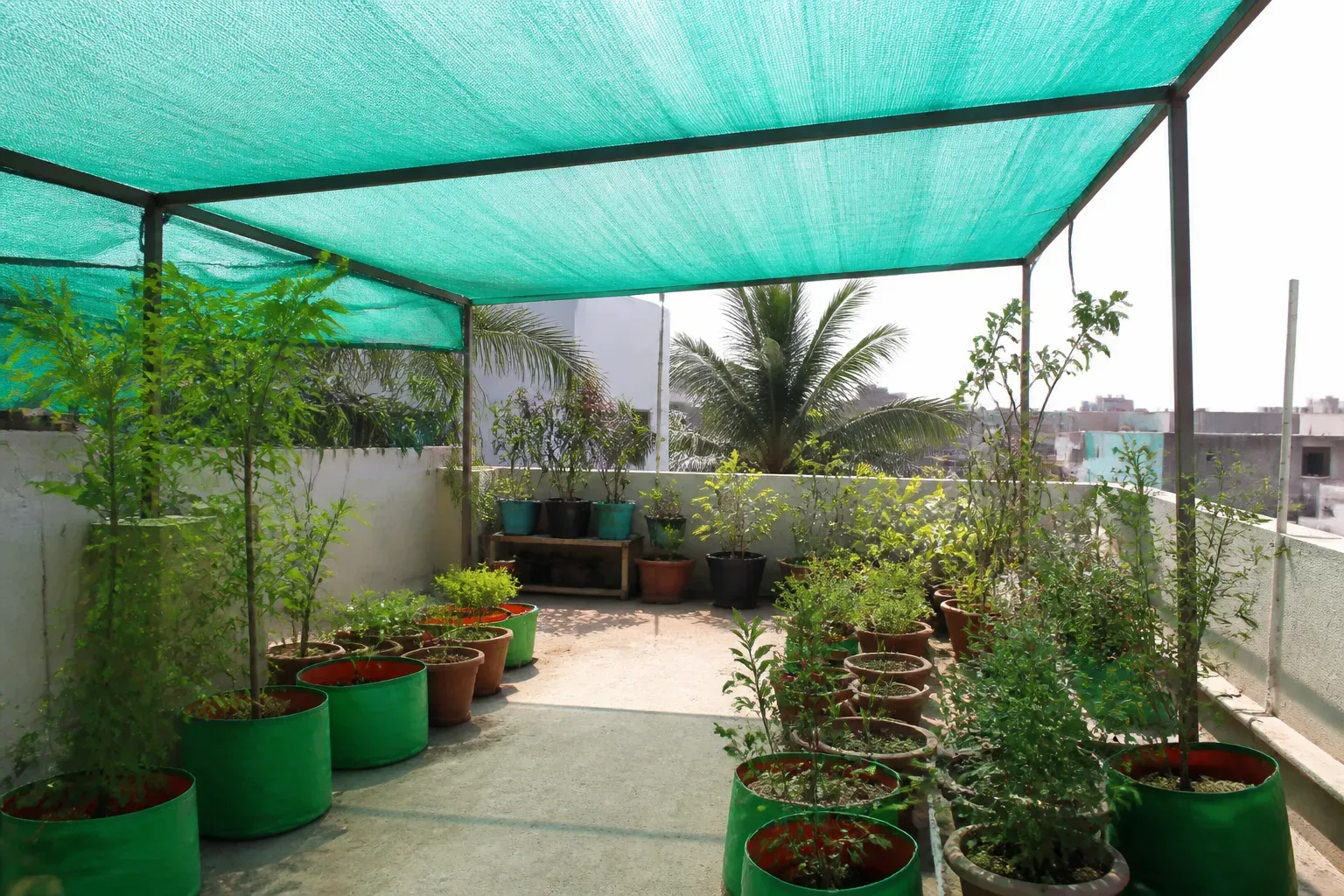
Set up supports, stakes, irrigation lines, and any runoff protection before the bag is full. For climbing beans, cucumbers, or tomatoes, install the support while the bag is light rather than pushing it through the root zone later. If you need a tray to protect a balcony, use one that lets the fabric drain and empty it after watering; constant standing water cancels much of the benefit of a fast-draining container.
Fill, water, feed, and reuse with care
Use a light, free-draining potting mix designed for containers, not unamended garden soil that may compact in a soft-sided pot. Fill the bag evenly to the usable height so roots have the space you paid for, and settle the mix with a thorough watering rather than packing it down hard. Do not add a layer of gravel at the bottom to “improve drainage”: UConn Extension explains that a coarse layer beneath finer mix can hold water above the layer rather than drawing it out.
At planting, water the whole root zone and confirm that the bag drains freely. For ongoing care, check moisture more frequently than you would with a rigid pot, water thoroughly when the mix is beginning to dry, and feed according to the crop and product directions. If the bag contains a healthy crop at season’s end, reuse the container after cleaning; reuse the potting mix only when its condition and disease history make that sensible. GrowVeg describes giving used compost a second crop of winter salads, while Oklahoma State Extension emphasizes cleaning and fully drying fabric bags before storage.
Grow bag vs. plastic pot vs. raised bed
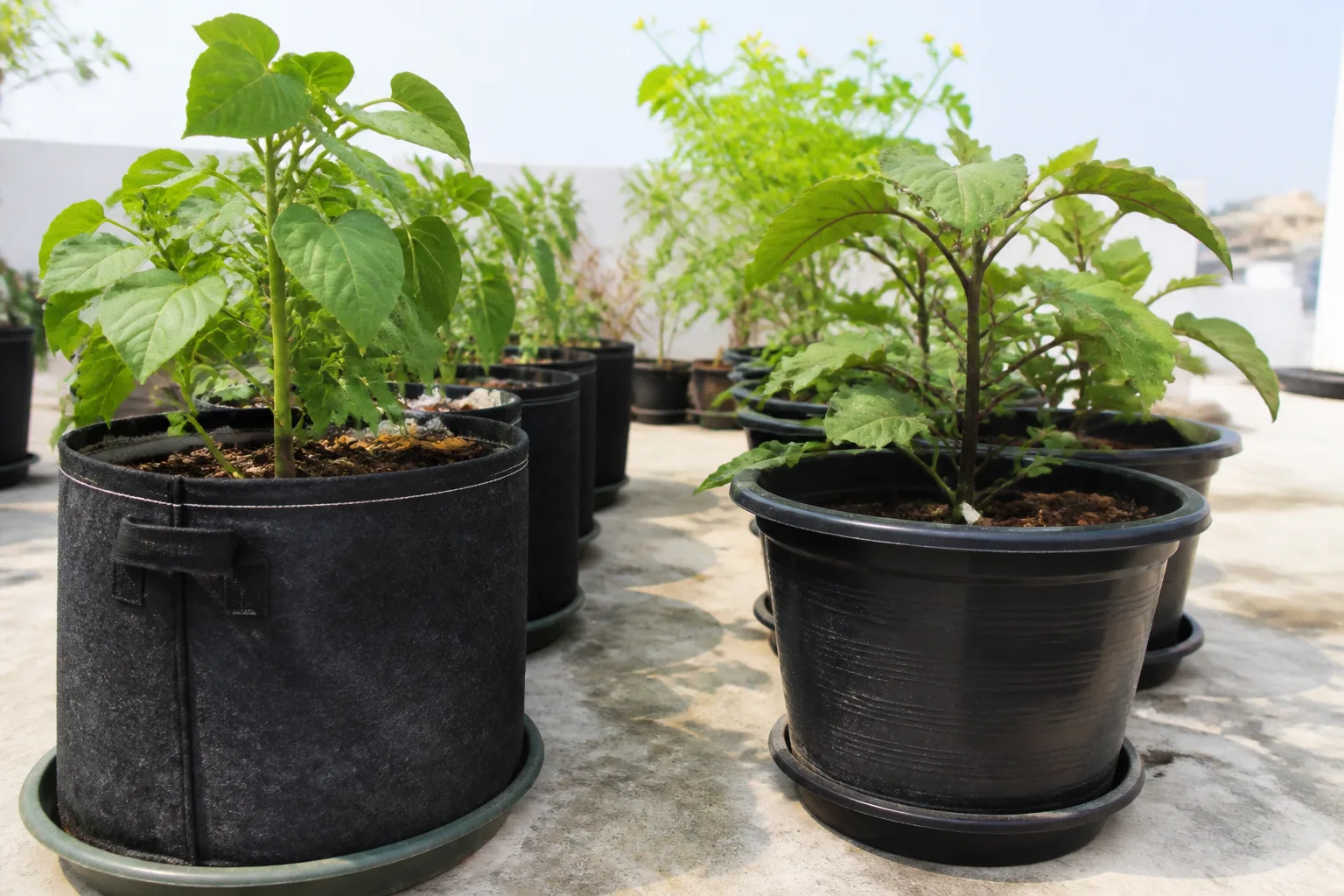
Choose a grow bag when its breathable walls and flexible, lightweight empty form solve a problem you actually have: no ground to plant in, poor native soil, or a need to store containers between seasons. Choose a rigid plastic pot when moisture retention, a neater shape, an integrated saucer, or repeated repositioning matters more. A raised bed is usually easier when you want a larger shared root area, less frequent watering, and a permanent garden footprint.
| Choose… | When it fits | Main trade-off |
|---|---|---|
| Fabric grow bag | Small paved spaces, temporary gardens, separate soil mixes, or crops that benefit from a breathable container | More frequent moisture checks; soft sides and a filled bag are awkward to move |
| Plastic pot | A set location, lower evaporation, tidy arrangement, or built-in saucer | Less side aeration; drainage holes still need to stay clear |
| Raised bed | Several crops together, a permanent garden, or easier access to a larger soil volume | Takes more space and initial setup; it is not portable |
The best container is the one that matches your maintenance habits as well as your plants. If the feature you value most is a breathable root zone, a grow bag is worth trying with one or two crops first. If the thought of checking and watering it on hot days already sounds like a chore, pick a larger plastic pot or a bed with more soil volume instead.
Conclusion: choose for your watering routine
Grow bags earn their place in gardens with limited ground space, poor native soil, or a real need for flexible containers. They can encourage branching roots, drain freely, and fold away when empty. Those are useful advantages, but none of them guarantees a bigger crop or makes a bag immune to overwatering, heat, or neglect.
Before buying, match the crop’s mature size to the bag’s depth and volume, choose a stable location with a clear drain path, and be honest about how often you can check moisture. Start with a sturdy bag for one plant, use container potting mix, and observe how quickly it dries in your own weather. If that routine works, add more; if it does not, a larger rigid pot or raised bed may give you the garden you want with less daily attention.