How to Grow and Care for Calathea Zebrina (Zebra Plant)
Learn Calathea zebrina care with clear advice on filtered light, watering, humidity, soil, feeding, and when to repot or divide this tropical houseplant.

Calathea zebrina grows best in bright, filtered light, warm rooms, and soil that stays lightly moist without remaining soggy. Check the potting mix before watering, keep the plant away from hot sun and cold drafts, and treat brown edges as a clue to investigate—not an automatic signal to add more water.
You may see this plant sold as Calathea zebrina or Goeppertia zebrina. Its velvety leaves carry alternating green stripes, often with a reddish-purple underside, and the clump can reach roughly 3 feet tall and wide indoors when conditions suit it. The care is manageable once you judge the plant by its soil and new growth rather than a calendar.
Calathea zebrina care at a glance
| Need | Practical starting point |
|---|---|
| Light | Bright, indirect or filtered light; no prolonged direct midday sun |
| Water | Water thoroughly when the upper layer of mix begins to dry; empty the saucer |
| Humidity | Aim for a consistently humid room; NC State lists a target above 60% |
| Temperature | Keep it warm and steady, around 65–75°F; protect it from cold drafts |
| Soil | Moisture-retentive but airy mix in a pot with drainage holes |
| Feeding | Balanced liquid fertilizer during active growth; pause when growth slows |
| Propagation | Divide a healthy, established clump rather than rooting a leaf |
| Repotting | Usually every few years, when the roots fill the pot or the mix no longer behaves well |
Use this as a starting point, not a strict schedule. A plant in a warm bright room dries faster than the same plant in a cool, dim corner, so check its conditions before repeating care.
Know which zebra plant you have
The botanical name used by North Carolina State Extension is Goeppertia zebrina, with Calathea zebrina listed as a former name. Garden centers still commonly use “Calathea zebrina,” so either label can refer to the striped prayer-plant relative; the distinctive velvety leaves and clumping growth help confirm it. The name “zebra plant” is also used for Aphelandra squarrosa, a different houseplant with different foliage and a showy yellow flower spike, so check the botanical name when buying. NC State Extension’s plant profile and Epic Gardening’s calathea guide distinguish the naming and look-alike common names.
In nature, this rhizomatous perennial grows in Brazil’s tropical forest understory, where taller vegetation filters the light and the air stays warm and humid. Indoors, it is grown for its patterned foliage; flowering is possible but uncommon in a typical home. Its leaves may fold upward in the evening and reopen later, a normal movement that is not by itself a sign of thirst. NC State Extension describes the plant’s native habitat, clumping habit, and daily leaf movement.
Give it bright, filtered light
Put the pot close enough to a bright window to receive plenty of ambient light, but shield it from prolonged direct sun. An east-facing window often works well; at a brighter south- or west-facing window, set the plant farther back or filter the strongest rays with a sheer curtain. A north-facing room can work if it is genuinely bright, though growth may be slower.
Watch the leaves and growth pattern. Pale or scorched patches on the window-facing side suggest too much direct light, while small new leaves, long gaps between stems, or a plant that steadily leans toward the window can point to too little. Move it a short distance at a time and give it a couple of weeks to respond rather than shuffling it daily. Both the RHS growing guide and NC State recommend bright indirect light or partial shade for calatheas and zebra plant.
Keep conditions warm and humid
Aim for stable warmth instead of a precise thermostat number that changes from source to source. NC State lists 65–75°F and humidity above 60% for G. zebrina; the RHS recommends a constant minimum of 16°C (about 61°F) for growing the plant under glass. For a home, a warm room away from chilly windows, exterior doors, air-conditioning vents, and radiators is a more useful rule than trying to recreate a rainforest. The RHS species profile describes the plant as a sheltered greenhouse or conservatory subject.
A small hygrometer tells you whether the air is actually dry. If humidity stays low and the leaves develop crisp edges, group plants together or run a clean room humidifier nearby; a bathroom can work when it has enough light and ventilation. A pebble tray is optional, but keep the pot above the waterline so its roots never sit in standing water. Misting may wet leaves briefly, but it is not a reliable way to hold room humidity steady; a humidifier gives you more control when dry air is persistent. The RHS calathea guide discusses humid locations, grouping, and pebble trays, while Epic Gardening’s troubleshooting guide recommends measuring humidity and using a humidifier when needed.

Water by checking the soil
Do not water on a fixed weekly date. Push a finger into the mix; when the surface and upper inch or so feel less damp but the root zone below is not bone dry, water slowly until some runs from the drainage holes. After several minutes, empty the saucer or cover pot so the roots are not left in standing water.
In spring and summer, the plant may need this check more often because it is actively producing leaves and the mix dries faster. In dim winter conditions, growth slows and the pot stays wet longer, so wait longer between waterings—but do not let the whole root ball become hard and dry. The RHS advises keeping calathea compost evenly moist in the growing season, then allowing the surface to dry before watering in autumn and winter; it also warns that prolonged waterlogging can rot roots.
Water quality can matter when the tips brown despite sensible watering. NC State notes that fluoride in tap water can damage leaf tips; the RHS also notes that mains water may contain lime and chlorine. If your water is hard or leaves have recurring tip burn or a pale crust on the soil, test rainwater, distilled water, or a low-mineral filtered source for several weeks; standing tap water does not remove dissolved minerals. Keep the water at room temperature to avoid chilling the roots.
Choose a mix that holds moisture but drains
The right mix feels slightly damp after watering but still contains air spaces and drains freely. A quality houseplant mix amended with perlite or pumice is a practical base; fine bark or coir can help a compact mix stay open while holding some moisture. The exact proportions depend on your room and pot: if the mix stays wet for days, increase aeration or light; if it dries almost immediately, use a more moisture-retentive base.
Use a pot with open drainage holes and avoid planting into garden soil or an oversized container. Dense, waterlogged mix deprives roots of air, while an excessively coarse mix can dry before the plant can use the water. The RHS recommends free-draining, moisture-retentive, peat-free compost for calatheas and a pot only one or two sizes larger when repotting.
Feed lightly while it is growing
When the plant is actively unfurling leaves in spring and summer, feed with a balanced liquid houseplant fertilizer at a conservative rate on the product label, roughly monthly as a starting point. Do not fertilize a dry root ball, a newly divided plant, or a plant that is already struggling with soggy soil; correct the root or watering issue first.
Skip feeding when growth slows in low winter light. Excess fertilizer leaves mineral salts in the mix and can contribute to brown tips, so do not compensate for weak growth by increasing the dose. The RHS suggests monthly balanced liquid fertilizer during active growth; if your plant has been recently repotted into enriched mix, wait and follow the compost or fertilizer label before adding more.
Use a simple seasonal routine
Once a week, inspect the undersides of the leaves, check the top layer of mix, and look for new growth or a change in leaf posture. Water only if the mix is beginning to dry; turn the pot a quarter turn if growth is leaning toward the window, and wipe dust from the broad leaves with a damp soft cloth rather than polishing them with household products.
In the brighter growing season, expect to check soil and feed more often. In fall and winter, reduce watering and stop routine fertilizer if growth pauses, but keep the plant warm and out of cold drafts. A brief care log—date watered, approximate room humidity, and what the leaves looked like—can reveal whether recurring damage follows dry air, a sunny window, or overwatering.
Troubleshoot symptoms before changing care
Several problems can produce similar-looking leaves, so start with the plant’s soil, location, and the pattern of damage. The table below is a triage guide, not a diagnosis based on one leaf.
| What you see | Check first | First useful adjustment |
|---|---|---|
| Dry brown margins | Soil moisture, humidity, window exposure, and mineral residue | Correct the confirmed cause; do not water a wet pot |
| Tight daytime curl | Dry root ball, hot sun, cold draft, or dry air | Check soil and temperature before adding humidity |
| One older lower leaf yellowing | Whether new leaves remain healthy | Remove the spent leaf if fully yellow; monitor the rest |
| Several leaves yellow with soft stems | Persistently wet mix and drainage | Inspect roots and correct waterlogged conditions |
| Fine stippling or webbing | Leaf undersides and petiole joints | Isolate the plant and identify the pest |
Brown tips and edges
Crisp brown margins often follow dry air, inconsistent watering, or mineral and fertilizer buildup; direct sun can also scorch the leaf surface. Look at the whole setup before treating: if the mix is dry, water thoroughly; if it is already wet, adding more water will not fix low humidity or poor drainage. Brown damage on only the sunny side points toward exposure, while a recurring pattern across several leaves despite stable moisture is a reason to test lower-mineral water and ease back on fertilizer. NC State Extension lists low humidity, fluoride, direct sun, and water stress among the causes of leaf damage.
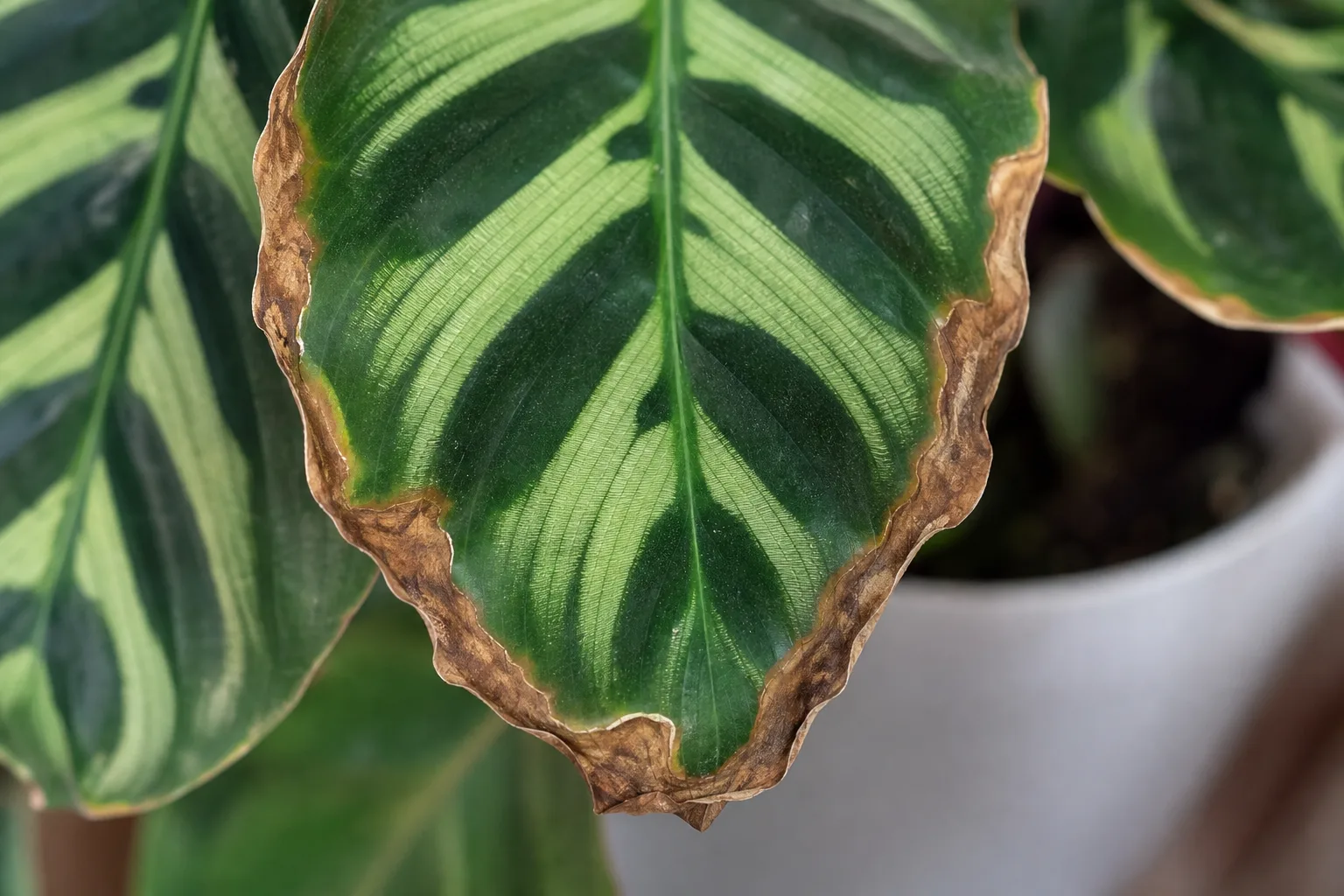
Old brown tissue will not turn green again. If the dry edge bothers you, use clean scissors to trim only the brown portion, following the leaf’s shape and leaving a narrow brown margin rather than cutting into healthy green tissue. Make one environmental change at a time and judge the next leaves; that is more informative than changing water, fertilizer, and light all at once. Horticulture’s calathea care guide also notes that brown edges can signal insufficient water or humidity.
Curled leaves and normal night movement
A zebra plant may raise or fold leaves in the evening and reopen them later; this normal daily movement can be subtle in a room with steady light. Do not treat the evening posture as a symptom if the leaf is otherwise firm and opens again. Persistent tight rolling during the day is different and can come from dry soil, dry air, excessive sun, heat, cold drafts, or damaged roots.
Check the soil first. If the root ball is dry, water it thoroughly and let it drain; if it is wet, do not add water, and look for a cold draft, hot window, poor drainage, or pest signs. If the environment is stable but new leaves keep emerging curled, inspect the undersides and growing points for mites. Epic Gardening’s troubleshooting guide describes low moisture and environmental stress as common reasons for curling; the NC State profile confirms that evening folding is normal for this species.
Yellow leaves, drooping, and mushy stems
One older leaf at the bottom of the clump may yellow as it ages, especially when the rest of the plant is producing healthy new leaves. Several leaves yellowing together, persistent droop despite moist soil, or stems that feel soft at the soil line are more concerning and often point to roots staying wet too long. Low light can slow water use, so a pot that used to dry in a few days may remain damp after the season or room changes.
If the mix smells sour or remains wet, slide the root ball out carefully and inspect it. Healthy roots are firm; rotted roots are usually dark, soft, and may smell unpleasant. Trim only dead, mushy tissue with clean shears, replace saturated mix, and use a correctly sized pot with drainage. Do not repot every drooping plant automatically: a dry plant can droop too, and a careful soil check should come first. The RHS identifies waterlogged winter compost as a risk for problems such as oedema and root damage.
Check for spider mites and other pests
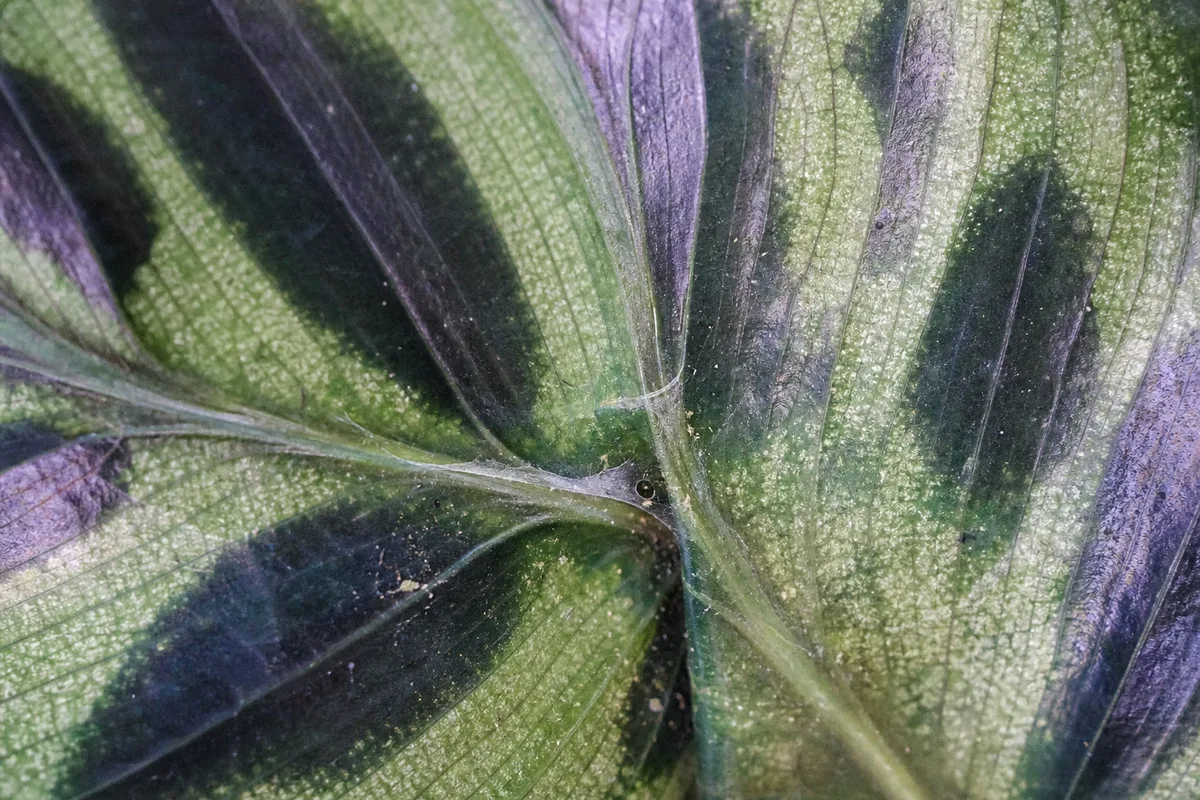
Look under leaves and around the petiole joints if you see fine pale stippling, silvery patches, tiny moving dots, or delicate webbing. Mealybugs look like small white cottony clusters, while scale appears as fixed bumps on stems or leaf ribs. NC State lists spider mites, mealybugs, aphids, and scale among pests to monitor on zebra plant.
Move an infested plant away from its neighbors, rinse or wipe the leaves, and recheck it over the next several days. If you use an insecticidal soap or horticultural product, confirm the pest and follow the label directions, including repeat timing; a one-time wipe may miss eggs or insects hidden in curled leaves. Keep leaves clean and inspect new plants before placing them beside an established collection.
Propagate by dividing the clump
Division is the practical way to propagate a mature zebra plant because new plants grow from the rhizome and roots at the base. Wait until the parent is healthy and has several established shoots; dividing a small, stressed plant sacrifices growth without giving either piece much reserve. Spring or early summer is a good time because warmth and increasing light support recovery. The RHS recommends dividing calatheas in late spring.
- Water the plant a day beforehand if the mix is dry, then ease the clump out of its pot.
- Find a natural separation between shoots and gently tease the roots apart; use a clean knife only where a rhizome needs cutting.
- Keep a substantial rooted section with several leaves on each division. Discard only damaged or rotten material.
- Pot each division at its former depth in a small container with drainage and fresh, lightly moist mix.
Place the new divisions in warm, bright indirect light and keep the mix lightly moist while they re-establish. High humidity can reduce stress, but do not seal a wet plant in an unventilated bag where leaves stay constantly damp. Hold fertilizer until the division shows new growth; recovery may take several weeks, and some older leaves can droop while the roots settle.
Repot when the roots or mix call for it
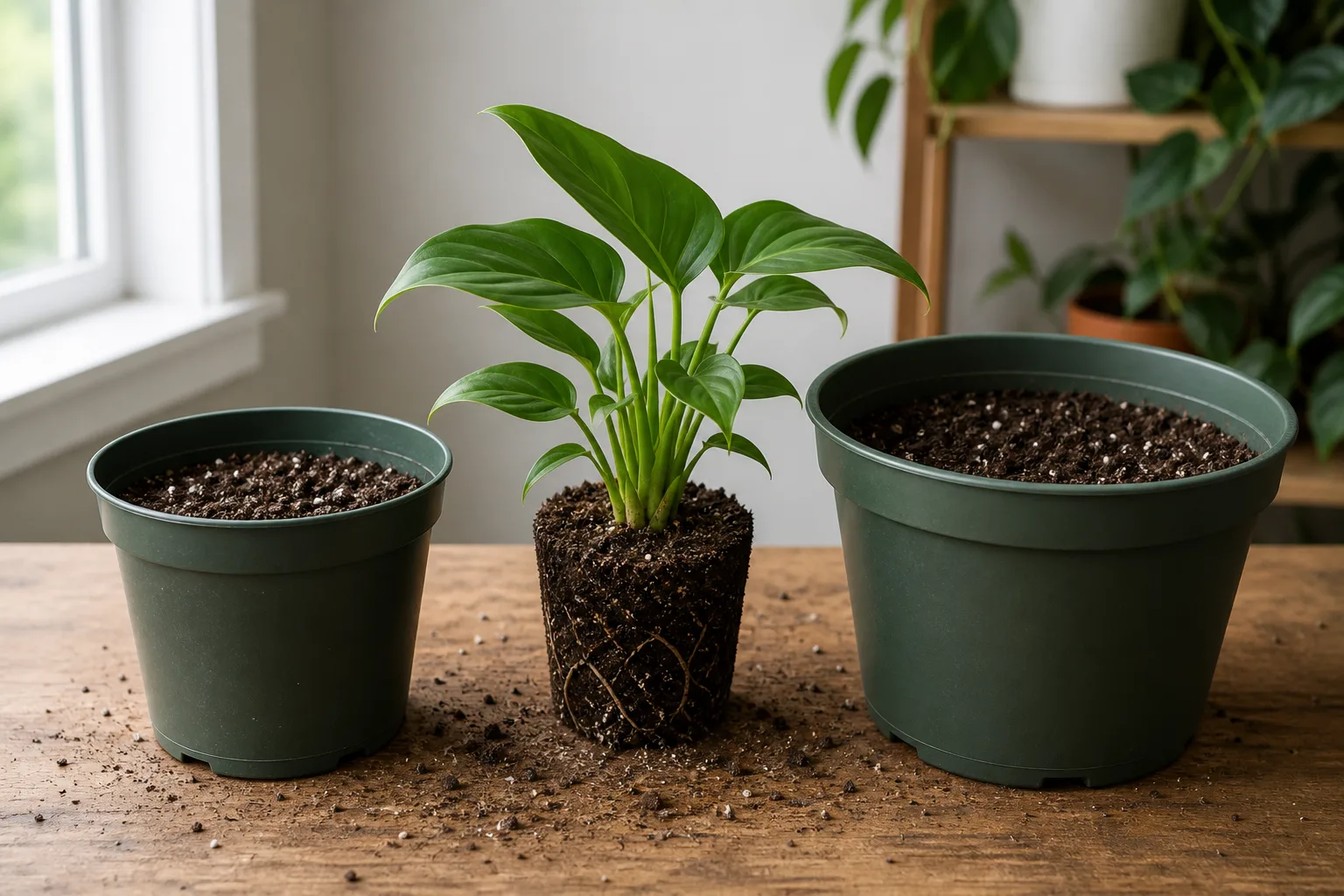
Calathea zebrina is not a fast-growing plant that needs annual pot changes. Repot when roots circle densely around the root ball, escape through drainage holes, the clump becomes unstable, or the mix has broken down and stays wet or dries unevenly; the RHS suggests repotting every few years once the clump fills its pot. A newly purchased plant can often stay in its nursery pot through its first growing season if it drains well and is not already severely root-bound.
Choose a container only one or two sizes wider than the current root ball, with drainage holes. Set the plant at the same soil depth, fill around the roots without packing the mix tightly, then water once to settle it and drain thoroughly. Do not use a very large pot to “give it room”: the extra wet mix can remain unused around the roots and raise the risk of rot. The RHS growing guide recommends a spring or summer repot into free-draining, moisture-retentive compost.
Grow it outdoors only in reliably warm weather
In a reliably warm, humid, frost-free climate, grow zebra plant in a sheltered spot with bright shade or filtered light. Protect it from wind, midday sun, heavy rain, and sudden temperature swings; a shaded porch or patio is safer than an exposed garden bed. In cooler climates, use outdoor placement as a temporary summer treat rather than treating it as a hardy landscape perennial.
Acclimate it gradually over several days, starting in deep shade and then moving it to the final filtered-light location. Bring it indoors before nights fall near 60°F (about 16°C), and inspect leaf undersides for pests before returning it to the rest of your houseplants. NC State advises bringing the plant inside before outdoor temperatures drop below 60°F, while the RHS calls for a constant minimum of 16°C under glass.
Conclusion
The most reliable Calathea zebrina routine is simple: give it bright filtered light, keep it warm and away from drafts, and water when the upper mix begins to dry rather than on a calendar. Use an airy but moisture-retentive mix, increase humidity only when the room is genuinely dry, and empty the saucer after watering.
When leaves change, check the soil and the pattern of damage before making a correction. Dry edges, daytime curl, widespread yellowing, and pest stippling each point to different possibilities; a measured first step is more likely to help than adding water or fertilizer automatically. With stable conditions, this striped tropical clump can produce fresh foliage for years and divide cleanly once it has grown into a healthy, established plant.