31 Vertical Garden Ideas for Walls, Balconies & Yards
Explore 31 vertical garden ideas for walls, balconies, fences, and patios, with practical advice on plant choices, mounting, drainage, light, watering, and upkeep.

A vertical garden can be a wall of herbs, a freestanding ladder of houseplants, or a trellis that lifts beans above a small bed. The best design is the one that fits the light, holds its fully watered weight, and lets you reach every plant without balancing a watering can on a chair.
The ideas below span indoors, rentals, balconies, fences, and productive beds. Before choosing a look, decide whether plants will grow in attached containers or climb from a pot or bed below. Those systems use vertical space in different ways and call for different supports, watering routines, and plant choices.
Start with the structure that fits your space
First, observe the site at the time you plan to use it. Note direct sun over a full day, reflected heat from glass or siding, wind exposure, nearby doors, and where runoff can go. A shaded wall may suit foliage houseplants, while herbs, strawberries, and most fruiting vegetables need a brighter location; a support can also cast shade over plants behind it.
Next choose the load path. A freestanding shelf or ladder transfers weight to the floor; a wall panel transfers it to fasteners and the wall; a railing planter loads the railing and can also be exposed to wind. A hanging row transfers weight to its ceiling or rod anchors. If you do not know whether the surface and hardware can take the filled, wet system, do not guess—ask the building manager or use a floor-supported design.
Virginia Cooperative Extension describes vertical gardening as using structures to elevate plant growth and identifies balconies, patios, windowsills, fences, and small gardens as possible sites. Its guidance also separates vining crops that climb a trellis from plants that need to be tied or otherwise trained, a useful distinction when choosing a design. (Virginia Cooperative Extension)
| Your space or goal | A sensible first design | Check before planting |
|---|---|---|
| Bright indoor wall | Removable pots on a slatted rail | Wall protection, anchor type, and a way to catch drips |
| Rental or narrow balcony | Floor-standing ladder or rolling cart | Stability, door clearance, and safe watering access |
| Sunny fence | Trellis or shallow troughs on a supported frame | Wind exposure, crop size, and runoff direction |
| Small vegetable bed | Tripod or trellis with roots at ground level | Whether mature vines and fruit fit the support |
This quick comparison can narrow the field before you shop. If you want harvests, prioritize root space and access; if you want a visual screen, think about how a mature canopy changes wind, shade, and pruning. A design that is easy to reposition or water is often more useful than a larger display that leaves plants out of reach.
Indoor vertical garden ideas
Inside, removable pots are usually easier than planting directly into a wall pocket. You can lift each plant to water it over a sink, replace one that outgrows its spot, and match its light more closely than you can in a permanently planted panel.
Wall planters, pocket panels, and plant art
1. Make a grid of individual wall pots. Arrange small planters as a loose grid or a single column, but use mounts designed for the pot and secure them to appropriate wall framing or masonry. The removable-pot version makes watering and seasonal rearranging less awkward than a sealed box fixed to drywall.
2. Build a slatted rail with clip-on cachepots. A horizontal wood or metal rail lets you slide containers along the wall as vines lengthen or light changes. Put nursery pots inside decorative sleeves and lift them out to water so moisture does not sit against the wall.
3. Use a fabric pocket panel for compact foliage. A pocket wall can hold small ferns, trailing plants, or herbs in a bright kitchen, and its soft surface works well in a tight nook. Pockets have limited root volume and can dry unevenly, so start with fewer plants and check both upper and lower pockets before watering.
4. Turn a shallow shadow box into a living plant picture. A framed succulent or air-plant display reads as wall art without requiring a deep shelf. Succulents need much brighter light and a longer dry-down than many leafy houseplants, so do not mix them in one panel with moisture-loving ferns.
5. Mount an epiphyte board as a focal point. A staghorn fern or other mountable epiphyte can be attached to a board with a removable support layer, then hung like a sculptural portrait. Choose a location where you can take the board down to soak or water it and where drips will not reach furniture or a painted wall.
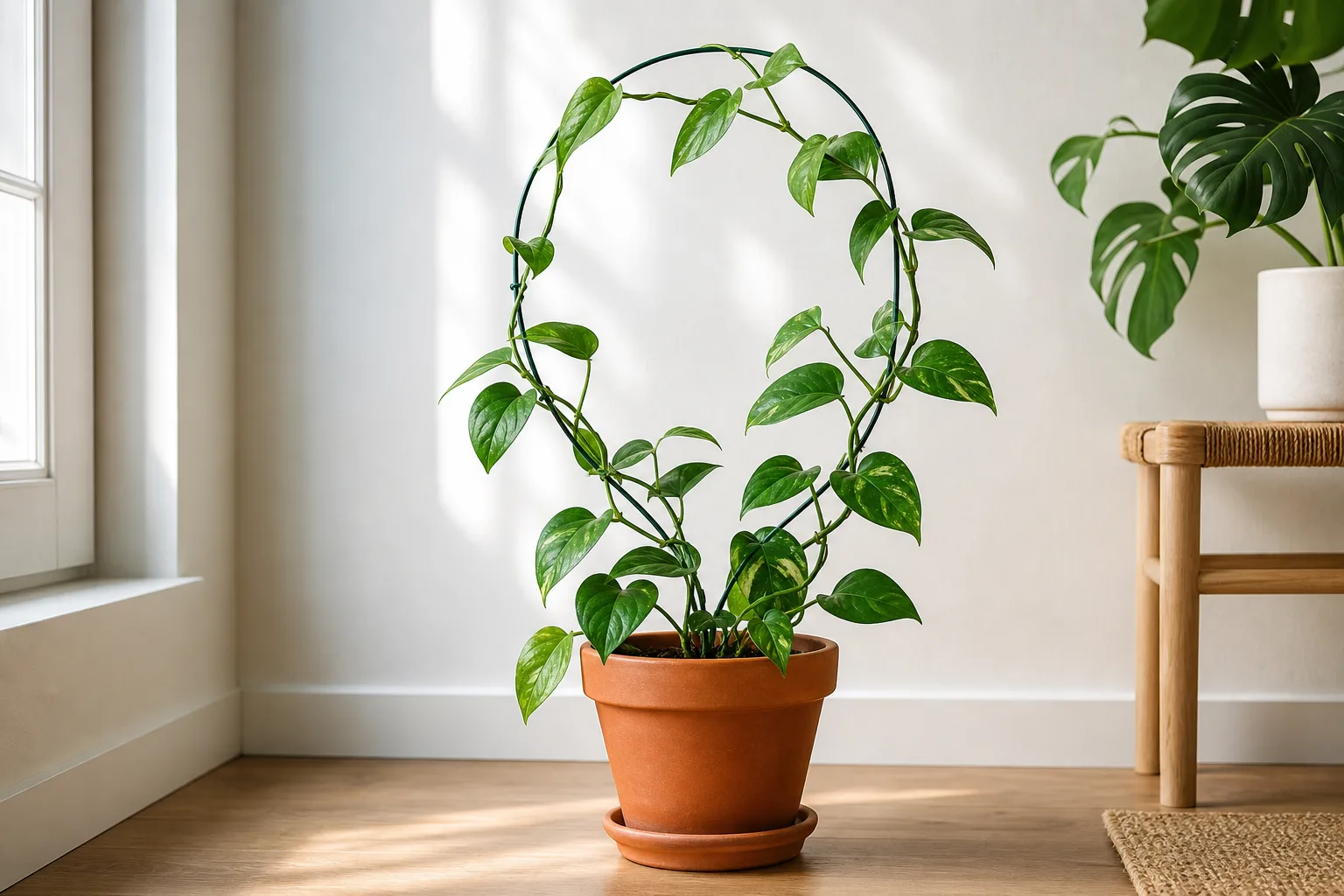
Shelves, rods, and propagation displays
6. Stagger floating shelves in a vertical column. Offset several short shelves rather than building one deep bookcase, leaving room for leaves to spread and for light to reach the lower plants. Use pots with saucers and keep the lowest shelf high enough that it does not block a door or a heater.
7. Fit a narrow plant etagere into an unused corner. A tiered stand uses the footprint of one large pot while creating several planting levels. Rotate the stand occasionally if light comes from one direction, and keep heavy pots on the lowest shelf for stability.
8. Create a living curtain on a sturdy window rod. Hang a few lightweight planters at different heights to frame, rather than cover, a bright window. Verify the rod and its brackets are rated for the combined wet weight; a row of pots is not a safe substitute for curtain hardware that was designed only for fabric.
9. Hang a short row of macramé planters from a rated rail. A grouped trio adds height without mounting separate hooks across a wall. Keep the plants small, leave room to lift each pot free for watering, and avoid placing a swinging planter above a bed, desk, or walkway.
10. Put a propagation station on a wall-mounted ledge. A slim rail can hold a few water jars or test tubes for cuttings while roots develop. Treat it as a temporary display, not a permanent hydroponic system: refresh the water, move rooted cuttings into suitable media, and do not place glass above a spot where a fall could hurt someone.
Renter-friendly and freestanding displays
When drilling is not allowed, pick a structure that stands on the floor or clamps only to a surface where the lease and hardware instructions permit it. “No-drill” does not mean “no load”: a filled planter can still tip, scratch a floor, or pull a door accessory loose.
Floor-supported ladders, racks, and carts
11. Lean a plant ladder against a wall. The angled shelves create a layered display and keep most weight on the floor. Add a discreet anti-tip strap only if the lease allows it, or choose a self-supporting A-frame when wall attachment is prohibited.
12. Repurpose a freestanding garment rack. Use its crossbar for a small number of hanging baskets and its lower area for heavier pots. Keep the rack inside its rated load and away from a window that can catch curtains or gusts.
13. Roll a tiered plant cart between windows. A wheeled cart helps you move plants to follow the sun or bring them away from a cold window. Lock the wheels while watering, and check that the shelves have lips or trays so pots do not slide when the cart moves.
14. Use an over-door pocket organizer for light, shallow-rooted plants. This works best outdoors on a sheltered door or on a freestanding frame, where drainage can escape without soaking the interior side of a door. Use small, removable pots in the pockets instead of filling fabric directly with wet mix, and confirm the door still closes freely.
Balcony, fence, and patio vertical gardens
Outdoor systems need to handle weather as well as plants. A location that is pleasant on a still morning may catch strong wind, bake against a sunny wall, or send water onto a lower balcony; build those conditions into the design before attaching anything.
Railing planters and balcony corners
15. Line a railing with long window boxes. A continuous planter gives a balcony a clean border and can grow compact annuals, herbs, or trailing flowers. Use a box made for that railing, secure it against lift and movement, and make sure drainage cannot drip onto people or neighboring property.
16. Alternate clamp-on pots along the rail. Individual pots make it easier to change plants and leave open stretches of railing for airflow. Check the clamps regularly for loosening, and follow building rules about attaching objects to guardrails.
17. Add a corner ladder shelf. The triangular footprint of a corner stand can turn a dead balcony corner into three or four planting levels. Put sun-hungry plants on the exposed side and shade-tolerant foliage lower down, then confirm the shelf will not obstruct the required path to the door.
18. Stack hanging baskets at different heights. A stepped grouping gives flowers or trailing herbs a layered look without building a wall. Put the thirstiest basket where you can reach it easily; upper baskets often receive more wind and dry first, while lower ones catch runoff.
Trellis screens, pallets, and gutter rows
19. Pair a floor planter with a trellis privacy screen. Grow a vine from a deep box at the base and let it climb a screen that is supported independently of the building. The structure can provide partial privacy, but a densely leafed screen catches more wind and casts more shade than a bare trellis.
20. Install a fence grid with removable pot hooks. A wire grid or slat board turns a plain fence into a flexible display for small containers. Leave enough space behind pots for air to move, and use the fence posts—not thin decorative boards—as the load-bearing points.
21. Make a pallet planter that leans on a stable base. A clean, known-history pallet can hold small pots or lined planting rows against a fence, with the freestanding version easier to move and inspect. If you cannot verify a salvaged pallet’s past use or treatment, reserve it for ornamentals and use new, known materials for edible crops.
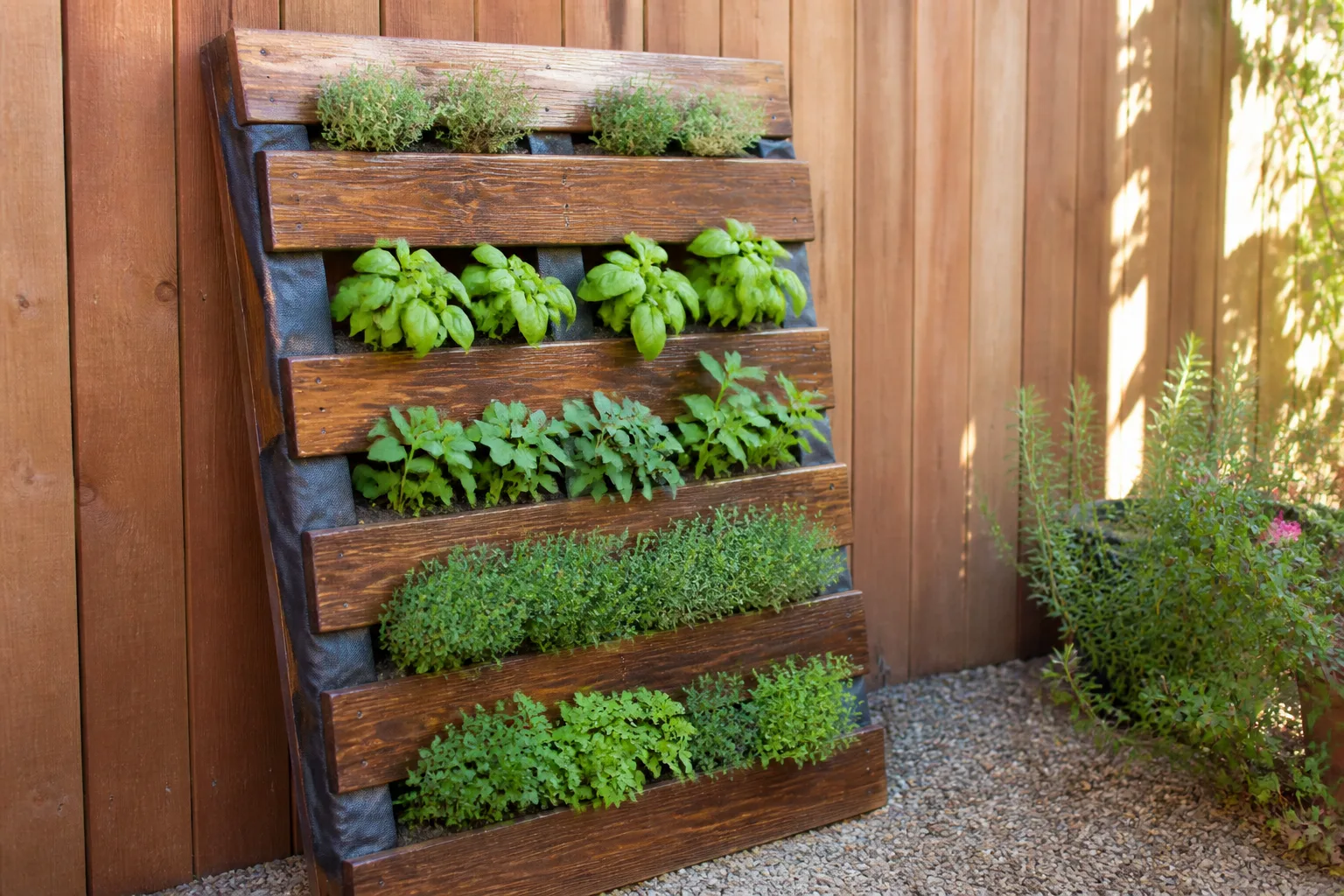
22. Arrange narrow gutter troughs in horizontal tiers. Short, securely supported troughs work for shallow-rooted salad leaves, compact herbs, or alpine strawberries. Drill drainage, use end caps that do not trap water, and plan a collection tray or safe runoff route before filling them.
Edible vertical garden ideas
Food gardens are most successful when the structure matches the mature crop. A compact green can thrive in a shallow cell, but a heavy fruiting vine needs a deeper root zone and a support designed for a full canopy and harvest.
Herbs, salad greens, and strawberries
23. Build a stair-step herb ladder. Plant frequently used herbs in separate pots on a tiered stand so each can have its own soil and watering rhythm. Put sun-loving basil, thyme, or rosemary where the light is strongest; keep mint in its own container so its roots cannot take over neighboring pots.
24. Grow a salad tower from a mesh cylinder. A sturdy vertical cylinder with a liner and planting openings can hold lettuce, arugula, spinach, or chard around its sides. Start with a manageable height, water slowly from the top until the mix is evenly moist, and check whether the center dries out or stays soggy before adding more plants.
25. Use a tiered strawberry pot or stackable tower. The side pockets display foliage and fruit while keeping berries off the soil. Make sure each pocket drains and receives light, and plant with the crown at the correct soil level rather than burying the growing point.
26. Make a modular wall of leafy greens. A row of removable pots or deep fabric cells can produce lettuce, spinach, or small Asian greens close to a kitchen. Harvest outer leaves regularly and leave enough room for each plant to mature; overcrowded pockets restrict air movement and make the center hard to water.
27. Set up a vertical hydroponic tower. A recirculating tower can fit many small crops in a compact footprint, but it requires a reservoir, pump, light plan, and routine checks of water and nutrients. Oklahoma State University Extension’s tower design explains the system as nutrient solution moving from the top and returning to a reservoir; it is a productive project, not the lowest-maintenance first garden. (Oklahoma State University Extension)

Climbers that benefit from strong support
28. Train pole beans up a tripod. Three or four poles tied at the top make a compact teepee that can stand in a bed or a large container. Plant the beans after setting the support so you do not disturb roots later, and leave an opening wide enough to reach in and harvest.
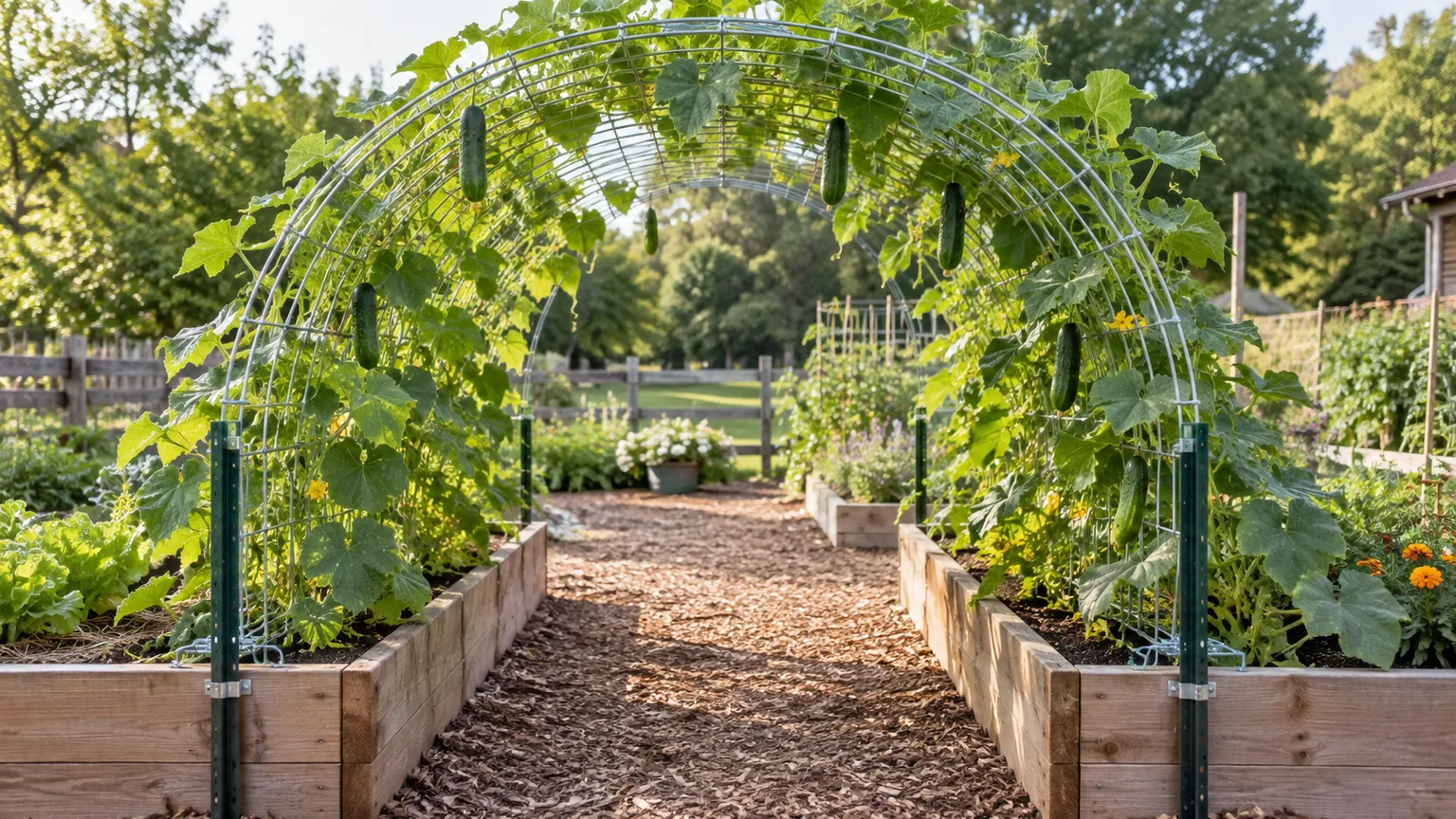
29. Make a cattle-panel arch between two beds. The arch gives cucumber or small-fruited squash vines room to climb while its footprint becomes a shaded walkway. Anchor the panel securely at both ends and check fruit as it grows; larger fruits may need a sling rather than hanging unsupported.
30. Use a stake-and-weave row for tomatoes. Set sturdy stakes along the row and weave durable garden twine around them as plants grow, keeping stems supported without a separate cage for every plant. Virginia Tech and Wisconsin Extension describe stake-and-weave and related trellis methods for tomatoes and other crops; the exact spacing and support strength should follow the crop and local conditions. (Virginia Tech; University of Wisconsin–Madison Extension)
31. Grow a flowering vine up an obelisk or narrow trellis. A freestanding obelisk gives a patio pot or garden bed a vertical focal point for a suitable climbing rose, clematis, or annual vine. Choose the plant for your climate and light, then check whether its mature size will fit the support instead of expecting every vine to stay compact.
Virginia Cooperative Extension notes that upright crops can free ground space and improve access, but they can also shade nearby plants; it recommends planning sun-loving and shade-tolerant crops around that effect. Fine Gardening and Savvy Gardening illustrate the range of small-footprint approaches—from hanging baskets and triangular trellises to salad towers, gutters, and pallet displays—while the crop and site determine which will actually perform well. (Virginia Cooperative Extension; Fine Gardening; Savvy Gardening)
Build for safe mounting, drainage, and care
A vertical garden is a series of containers and supports that you must inspect at eye level. Before planting, fill a test pot, wet the medium thoroughly, and see whether the shelf, hook, or panel remains stable and where the water goes.
Account for load and wind
Do not estimate weight from an empty planter. Wet growing media, the container, mature foliage, fruit, and retained water all add load, and several small pots can become a substantial combined weight. Use hardware with a stated rating suitable for the wall or frame, fasten only into an appropriate structural surface, and spread the load according to the mounting instructions.
For a rental, shared balcony, or uncertain wall, choose the ladder, rack, cart, or floor planter instead of improvising anchors. Outdoors, a trellis covered in leaves acts as a broad surface in wind, so use stable feet or ground anchors suited to the site, and take down seasonal displays before severe weather if their design allows it.
Route drainage before planting
Every soil-filled container needs a way for excess water to leave. Indoors, use removable pots with saucers or a waterproof catch tray that you can empty; outdoors, direct water away from siding and foot traffic. Do not seal drainage holes just to keep the wall dry—add a tray, gutter, or other collection method instead.
Felt pockets, gutters, and stacked planters often send water from upper levels to lower ones. That can help lower plants, but it also means the top may dry while the bottom stays wet. Test the system with water before planting, watch where the first overflow occurs, and make sure each level can drain freely.
Water and maintain each level
Small containers have little buffer when sun or wind increases evaporation. Check the growing medium rather than following a fixed calendar: touch or probe at root depth, then water slowly until the root zone is wet and excess drains. Recheck more often during heat, wind, or active fruiting, and less often in cool or humid conditions.
Top-to-bottom differences are normal in a wall or tower. The upper row is often more exposed, while lower pockets may collect runoff; group plants with similar moisture needs together, and make a separate dry zone for succulents rather than mixing them with thirsty herbs. Virginia Tech’s intensive-gardening guidance also notes that vertical plantings can dry more quickly because they are exposed, so a design should make watering easy enough to repeat. (Virginia Cooperative Extension)
Mistakes that make a vertical garden fail
The most attractive photograph may hide the work that happens after planting. Avoid these preventable problems, especially when a display combines several levels or attaches to a shared structure.
- Choosing plants before measuring light. Tall structures can shade neighboring containers, and an indoor wall may be bright to a person but too dim for a fruiting crop. Observe the site and match plants to the real conditions.
- Using one watering schedule for every level. Pocket size, wind, sun, and runoff differ across a structure. Check the top and bottom separately until you learn the pattern.
- Mounting into a finish surface alone. Drywall, siding, or a decorative fence slat may not be a load-bearing anchor. Use a properly rated attachment into an appropriate support or choose a freestanding display.
- Planting heavy crops in shallow cells. A large tomato, squash, or melon may outgrow its root space and overwhelm the support. Put it in a deeper pot or bed and train the vine up a strong trellis.
- Ignoring runoff and maintenance access. A planter that cannot be watered, pruned, or removed without moving furniture will become a chore. Leave room to lift pots out, collect drainage, and reach the back of the display.
Conclusion
The strongest vertical garden idea is not necessarily the most elaborate one. Start with the available light, choose a structure that carries its wet load safely, and plan drainage before adding plants; then select a design that you can water and reach comfortably. A small rail of removable pots, a sturdy trellis, or a simple ladder shelf can make vertical space useful without turning plant care into a daily repair project.



