How to Grow and Care for Agastache for Long Blooms
Choose an agastache for your climate, then plant, water, propagate, and overwinter it well. Learn how to manage self-seeding and prevent root and crown rot.
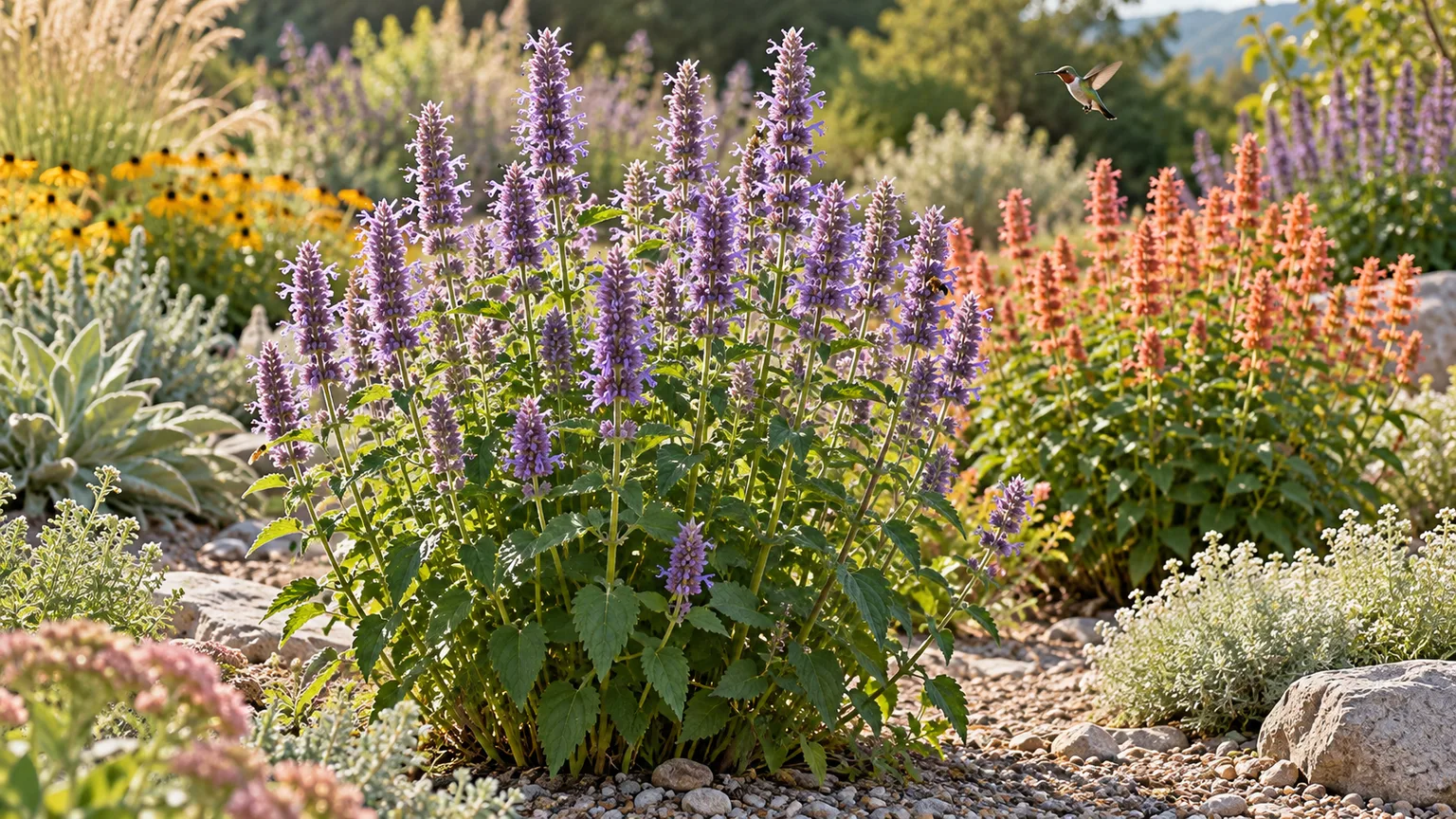
Agastache rewards a gardener who matches the plant to the site. Its aromatic leaves and upright flower spikes suit sunny borders, herb gardens, and pollinator plantings, but the genus includes species from different climates; a dry-site hummingbird mint can fail in wet winter soil even when anise hyssop would thrive nearby. Start by checking the botanical name on the plant tag, then make drainage and local hardiness the deciding factors.
The two most useful rules are simple: give most agastache plenty of sun, and do not let the crown sit in soggy soil. Water a new planting reliably while it establishes, but do not carry a frequent-watering routine into later years without checking the soil. That balance, plus choosing a species suited to your winters, matters more than fertilizer or fussy pruning.
Choose an Agastache That Fits Your Climate
“Agastache” is a genus, not one uniform garden plant. Some popular selections are prairie perennials adapted to colder winters, while others come from dry, high-elevation or southwestern habitats and resent heavy, humid conditions. Nursery labels may emphasize a colorful cultivar name, so look for the botanical name and its stated hardiness before you buy.
Anise hyssop, Agastache foeniculum, is a useful starting point for many temperate gardens. It is native to prairies and open areas of northern North America, grows as an upright clump, and typically reaches about 2 to 5 feet depending on conditions and selection. Extension sources differ slightly on its cold range: Wisconsin Extension lists zones 3a to 8b, while NC State lists 4a to 8b. That spread is a reminder to treat zone charts as a guide, not a guarantee; drainage, winter wet, snow cover, and the exact seed strain or cultivar also matter. Wisconsin Extension and NC State Extension provide useful region-specific profiles.
Anise Hyssop for Cooler Regions
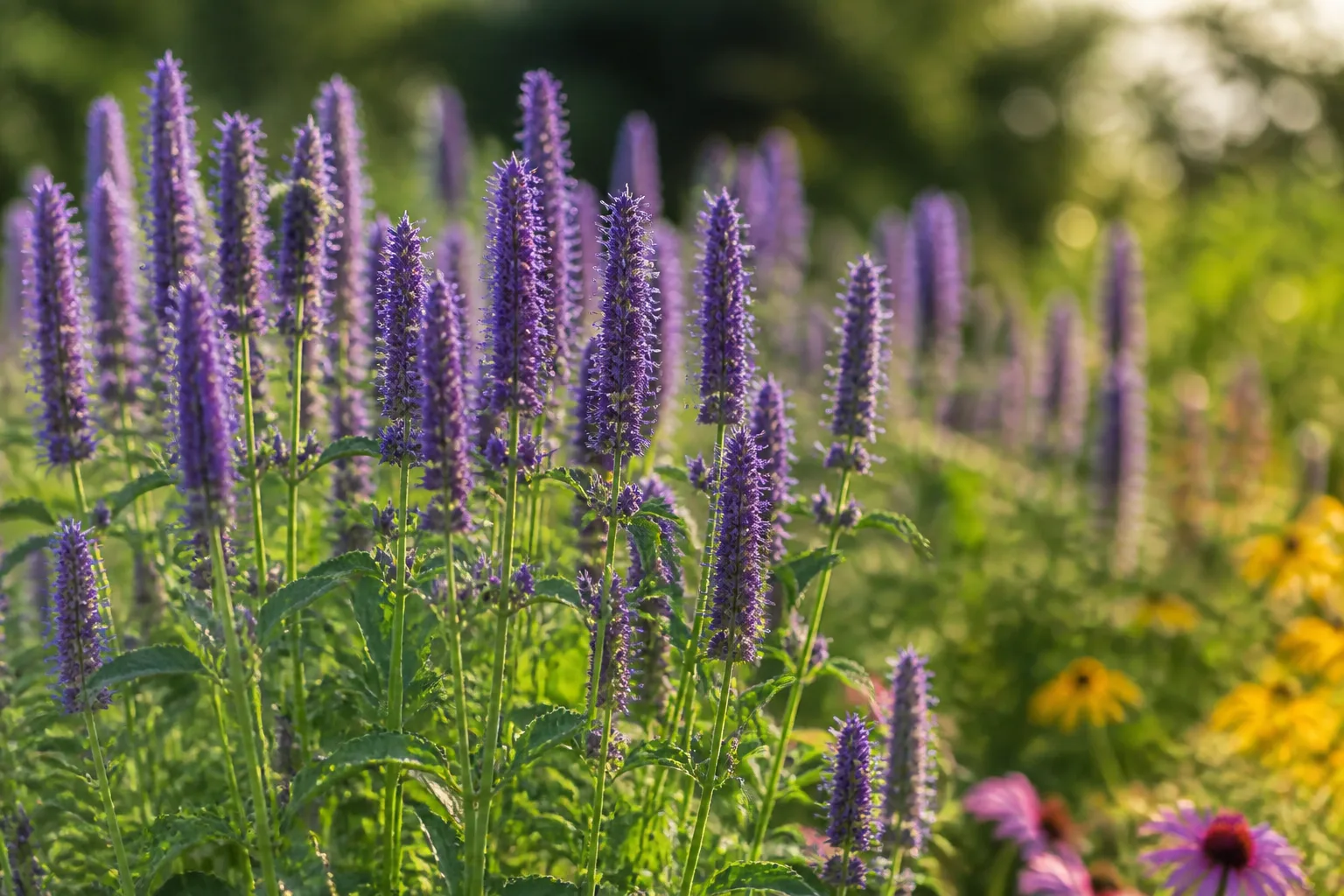
Anise hyssop has fragrant, toothed foliage with an anise or licorice scent and dense blue, violet, or lavender flower spikes. It works well in the middle or back of a perennial border, where its height can rise behind lower plants without blocking them. Give individual clumps room to widen; crowded plants are harder to inspect and dry more slowly after rain.
This species can reseed, which is helpful if you want a loose, naturalized patch and inconvenient if you want every plant in a precise spot. Seedlings can be moved while small, but they may wilt briefly after transplanting. A named hybrid may not reproduce its parent’s flower color or habit from seed, and some hybrids are sterile, so buy another plant or use a vegetative method if keeping that exact cultivar matters.
Sunset Hyssop for Hot, Dry Sites
Agastache rupestris, often called sunset hyssop or licorice mint hyssop, is a different choice: a compact, orange-flowered species native to the southwestern United States. NC State describes it as suited to drier climates and sandy or rocky, sharply drained soil; it also warns that high humidity and wet, heavy winter soil can cause problems. If your summers are humid or your bed stays wet after snowmelt, choose a more moisture-tolerant species or grow sunset hyssop in a raised, exceptionally free-draining spot rather than assuming all hummingbird mints share one care profile. NC State’s sunset hyssop profile details the difference.
Other species and hybrids vary in flower color, size, and cold tolerance. “Hummingbird mint” is used for several Agastache plants, and common names overlap; confirm the Latin name instead of using a common name alone to infer hardiness. A cultivar label from a local nursery can be more useful than a generic zone range if the nursery grows plants for your region.
Find the Right Sun and Site
Most agastache blooms best in full sun, which means roughly six or more hours of direct light. NC State lists anise hyssop for full sun to partial shade; Gardenia’s species profile also treats partial shade as acceptable, which supports giving a little relief in intense heat without moving the plant into deep shade. Deep shade usually produces looser stems and fewer flower spikes. Choose a location that receives strong morning light and still allows air to move between mature clumps.
Think about the plant’s final height, not the nursery-pot size. Taller anise hyssop belongs where it will not shade short herbs or spill across a narrow path, while compact selections can anchor the front or middle of a border. If the only available site is shaded for most of the day, select a different perennial rather than trying to compensate later with more fertilizer.
Place agastache where you can enjoy both flowers and fragrance: beside a path, in a sunny herb bed, or in a pollinator border. Its flowers can attract bees and butterflies, and tubular blooms are visited by hummingbirds. Avoid locating a tall clump where its seed heads will block a view you want to keep open, unless you plan to deadhead before seed dispersal.
Prioritize Drainage Over Soil Richness
Agastache is more likely to fail in waterlogged soil than in ordinary, moderately lean garden soil. Many forms tolerate sandy, gravelly, or average loam as long as excess water drains away. The crown—the point where stems meet roots—should not remain wet for days after rain, especially through winter when growth is dormant and the plant cannot use much water.
Before planting, observe the site after a heavy rain. If water ponds around the planting spot or the soil stays saturated, choose a raised bed, a gentle berm, or a different location; adding a small scoop of sand to a dense clay hole does not reliably fix drainage. Use a broad, well-drained planting area instead of creating a tiny amended pocket that holds water around the roots.
Do not try to make the soil “rich” by adding a thick layer of compost or manure. A modest amount of organic matter can improve structure in a poor bed, but excess fertility may push soft leafy growth at the expense of sturdier stems and flowers. If your soil is already reasonably fertile and drains well, plant into it without a special recipe.
Plant and Space Agastache for Airflow
Spring planting gives a nursery-grown plant time to establish before its first winter; early fall can also work where the soil remains workable and several weeks of root growth remain before hard freezes. In warm climates with wet winters, fall planting may leave a moisture-sensitive selection exposed before its roots settle, so favor spring or a protected raised site. Water the root ball before planting if it is dry, loosen circling roots gently, and set the crown level with the surrounding soil.
Space the plant according to its mature width rather than packing several pots tightly together for an instant display. NC State gives a broad 12- to 36-inch spacing range for anise hyssop, reflecting variation in size; smaller cultivars need less room than a tall, vigorous clump. When the label gives a mature width, use that as a starting point, leaving enough air between neighboring plants for rain or irrigation to dry from the foliage.
After planting, water slowly so the root ball and surrounding soil make contact. Keep the bed evenly moist while the plant is establishing, but let the surface begin to dry between waterings instead of treating it like a moisture-loving border perennial. A light, loose mulch can reduce weeds, but leave a gap around the crown so mulch does not trap water against the stems.
Water Deeply While Roots Establish
Water newly planted agastache when the root ball begins to dry, checking with a finger or trowel rather than following a fixed calendar. The original nursery mix can dry faster or slower than the surrounding soil, so check both; a moist bed with a dry root ball can still stress the plant. As new growth appears and the plant begins to root into the surrounding ground, gradually reduce watering frequency.
Established plants generally need supplemental water during prolonged heat or drought, but a brief dry spell is not a reason to keep the soil constantly wet. When you do water, soak the root zone thoroughly, then wait until the soil has begun to dry before watering again. Occasional deep irrigation encourages a broader root system; repeated shallow sprinkling keeps the surface damp without solving deeper dryness.
Use the plant’s condition together with the soil check. Midday droop in intense heat that recovers in the evening can be temporary, while persistent wilting in wet soil points toward root stress rather than thirst. If leaves yellow and stems droop while the soil is saturated, stop watering and inspect drainage before adding more.
Skip Routine Fertilizer
Agastache usually does not need a scheduled fertilizer program in an average garden bed. If stems are sturdy and the plant flowers normally, fertilizer adds little. In fertile soil, high-nitrogen feeding can encourage leafy, floppy growth and make the plant less resilient, so do not use fertilizer as a default response to a plant that is merely young or growing slowly in its first season.
If a plant remains weak after establishment, inspect the basics before feeding: light, drainage, root competition, and the plant’s identity. A shade-grown plant will not become a strong bloomer through added nutrients, and roots confined in wet soil cannot make good use of fertilizer. If a soil test or a clearly depleted bed points to a nutrient shortage, follow the test or product label conservatively rather than guessing at a heavy dose.
A thin surface layer of finished compost may suit a very poor bed, but keep it away from the crown and do not bury the stems. That small amendment is different from repeatedly enriching the entire planting area. For many agastache plants, restrained soil preparation leads to better stems than a rich, heavily amended bed.
Grow Agastache in a Container
A pot is useful when your garden soil drains poorly, you want to grow a dry-climate species in a humid region, or you need to move a tender cultivar to shelter for winter. Choose a container with several open drainage holes and enough volume to hold the mature root system; a very small pot dries quickly and gives a tall plant little weight against wind. Compact cultivars are generally easier to manage than the tallest species.
Use a free-draining potting mix, not dense garden soil. Do not put gravel at the bottom as a supposed drainage layer; keep the drain holes open and use pot feet if the container sits on a surface that would otherwise block runoff. The top of the root ball should remain level with the mix, and the crown should not be buried.
Container agastache dries faster than an in-ground plant, especially in a sunny, windy position, so check the mix more frequently during hot weather. Water thoroughly until excess drains, then wait until the upper portion of the mix begins to dry before watering again. A plant that wilts every afternoon may need a larger pot or a less exposed position, not a constant saucer of water.
Start Agastache From Seed
Seed is the economical way to grow a patch of anise hyssop, but it is also the least reliable way to preserve a named hybrid. The species may self-sow, while sterile or cross-pollinated selections can produce few seeds or seedlings that differ from the parent. If you care about a specific color or compact shape, check whether the cultivar is seed-stable and use a division or cutting when the plant can be propagated vegetatively.
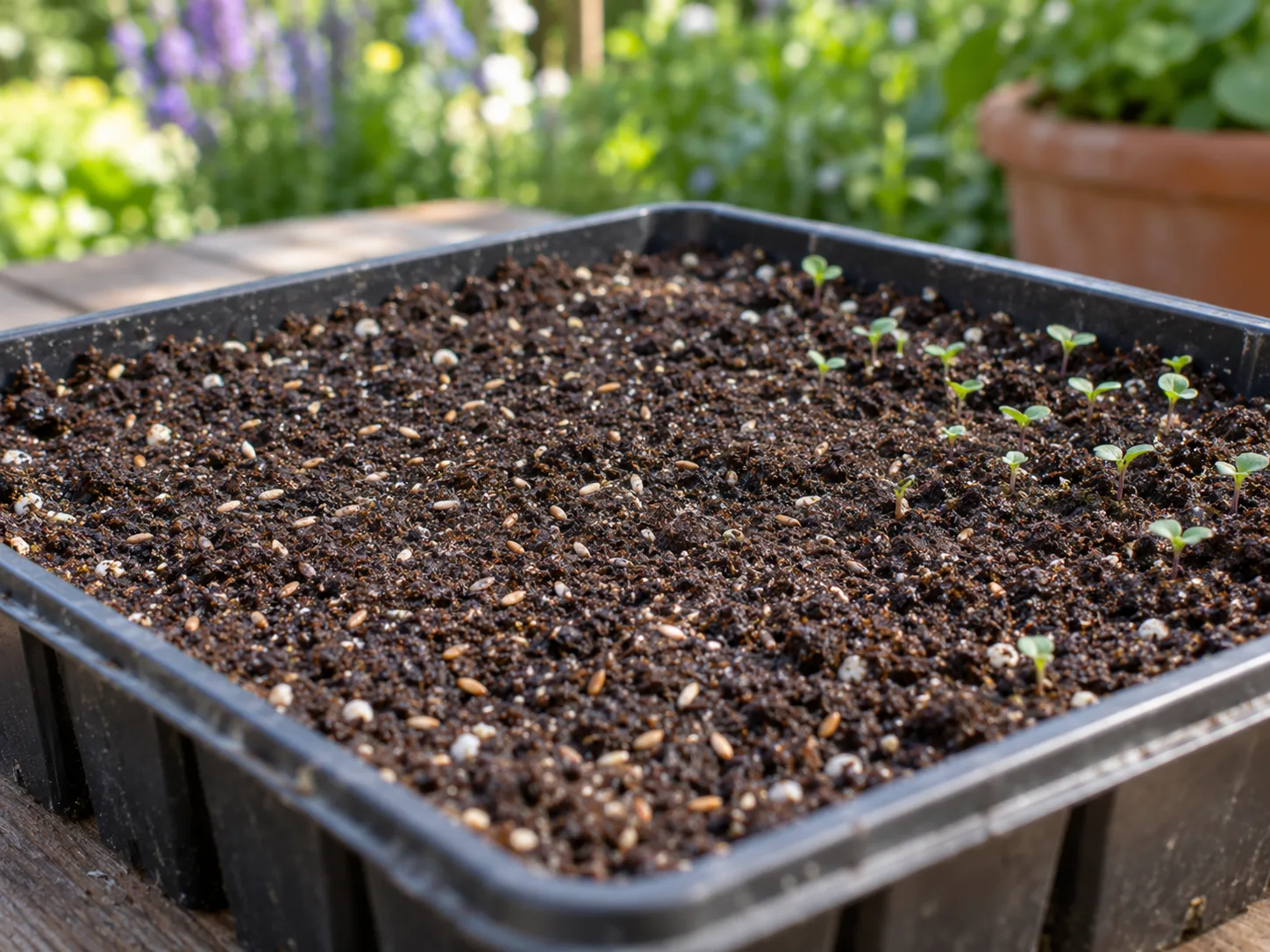
Agastache foeniculum seeds need light to germinate, so press them onto the moist surface instead of burying them under a thick layer of mix. Keep that surface evenly damp but not waterlogged; once seedlings emerge, provide bright light and airflow so they do not become weak or damp off. Wisconsin Extension reports germination in roughly one to four weeks and notes that cold, moist stratification improves germination. Gardener’s Path describes about a month of moist chilling as a practical indoor approach, while a South Dakota State University native-plant profile lists 60 days. Because seed lots and protocols differ, follow the packet when available; fall sowing lets winter provide natural chilling. Wisconsin Extension, Gardener’s Path, and South Dakota State University give these complementary methods.
Choose Fall Sowing or a Controlled Indoor Start
Fall sowing is simple if you can mark the spot and protect it from being disturbed. Scatter the seeds over a prepared, weed-free patch, press them into contact with the surface, and let seasonal weather provide the cold, moist period. This works best where winter moisture is adequate but the bed does not stay waterlogged; in very wet ground, start seeds in a tray instead.
For an indoor start, place the seed on damp sterile mix in a covered container and refrigerate it for about a month if your seed packet or supplier recommends chilling. Keep the mix damp rather than soaked, then move the tray to bright light and a cool-to-moderate indoor spot. Do not bury the seed after chilling, because covering it can block the light it needs to germinate.
Move seedlings outdoors after they have several true leaves and can be hardened off gradually. Give them increasing time outside over about a week, then transplant on a mild day and water them in. Young transplants may droop briefly; shade them from the harshest afternoon sun for a few days if needed, but do not respond to temporary transplant stress by keeping their roots soggy.
Divide Clumps or Root Cuttings
Division is a good way to renew a mature clump or reproduce a plant whose traits you want to keep. Work in spring as growth begins or in early fall while the soil is still workable. Lift a manageable section with roots and several shoots, replant it promptly at the same depth, and water it in; avoid dividing a small, newly planted specimen that has not developed a substantial root system.
Some agastache spread by short rhizomes, but they do not behave like an uncontrolled running mint in every garden. Still, division every few years can help when a clump becomes congested or declines in its center. If a plant’s crown is already soft or rotting, dividing it into wet soil will not fix the underlying drainage problem—move healthy divisions to a better-drained site instead.
Semi-ripe stem cuttings can preserve sterile hybrids that will not come true from seed. Take a healthy, nonflowering tip during active summer growth, remove the lower leaves, and place the bare lower stem in a clean, free-draining propagation mix. Keep it lightly moist and out of harsh direct sun until it roots; once new growth is steady, acclimate it and pot or plant it on.
Pinch, Deadhead, and Prune at the Right Time
Pinching is optional, not a requirement for bloom. If you want a shorter, bushier plant, pinch the growing tips of a young, vigorous plant once it has several inches of growth; it should branch below the cut, though flowering may start a little later. Skip pinching on a compact cultivar or on a plant that is already branching well.
Remove spent flower spikes during the season if you want a tidier look, less reseeding, or a chance of additional bloom. Cut each spike back to a healthy leaf node or side shoot rather than shearing the entire plant into a ball. Deadheading cannot force a second flush in every climate or cultivar, but it can redirect growth when the plant still has time and energy to make more flowers.
If you want seedlings or winter seed for birds, leave at least some flower heads standing. In late fall, resist cutting the whole plant to the ground; the stems provide structure and mark where a dormant crown sits. Remove dead stems in late winter or early spring just before fresh growth makes the old framework difficult to see.
Keep Flowers Available to Pollinators
Agastache is useful in a pollinator border because its flower spikes carry many small tubular blooms over an extended period. Anise hyssop flowers are visited by bees, butterflies, beetles, and hummingbirds; different species and flower colors may attract different visitors. Extension profiles from Wisconsin and North Carolina describe anise hyssop as a pollinator plant and note its long summer-to-fall flowering period.
For a steady succession of visitors, combine Agastache with other plants that flower before and after it rather than relying on one perennial to feed a garden all season. Wisconsin Extension suggests companions such as purple coneflower, bee balm, goldenrod, and native grasses. Give each plant enough space to form its mature shape and avoid spraying open flowers; if you need to manage a pest, first identify it and follow a product label that protects pollinators.
The seed heads have a second role after bloom. Goldfinches and other birds may feed on the dry seed, so a wildlife-focused garden does not need every spike removed as soon as its petals fade. Keep some stems standing through winter, then cut them back when spring growth is visible.
Help Agastache Survive Winter
Winter survival depends on the plant’s identity and, just as much, on winter moisture. A hardy anise hyssop in well-drained soil can overwinter reliably in climates within its range, while a dry-site species may struggle in a soggy bed even if the cold itself is not extreme. Check the cultivar’s label against your winter lows, and look for drainage notes as well as a hardiness-zone number.
Do not bury the crown under a thick, wet layer of mulch. A light, loose layer can moderate soil temperature, but keep it pulled away from the stem base and avoid using dense mulch where winter rain or snowmelt already lingers. In a cold-wet site, a raised bed or gravelly planting position is a more durable fix than wrapping the plant or watering it on a schedule.
Leave the stems through winter if you like their structure or want to preserve seed for birds. In spring, wait until you can see new shoots at the base, then cut back last year’s stems without damaging them. If no new growth appears, do not assume the plant is dead immediately; check the crown for firmness and give it time to break dormancy before digging.
Diagnose Weak Growth and Common Problems
Root or crown rot usually points to wet soil, not a need for more water. NC State notes that poorly drained soil can lead to crown or root rot, and Wisconsin Extension also flags rot in wet soils. If a plant wilts while the soil remains wet, check whether water drains, whether mulch is touching the crown, and whether a pot’s holes are blocked. Correct those conditions first; adding fertilizer or more irrigation makes the problem worse.
Powdery mildew, rust, and leaf spots are more likely where foliage stays damp and air movement is poor. Give plants their mature spacing, water the soil rather than repeatedly wetting leaves, and remove badly affected foliage rather than leaving infected debris packed around the crown. If symptoms return, compare the plant’s location with the species’ needs; a humid site may simply be a poor match for a dry-climate selection.
Browsing resistance needs a qualifier, too. NC State lists anise hyssop as rabbit-resistant, while Wisconsin Extension reports that rabbits may eat it; local pressure and plant age can change what you see. If rabbits visit your garden, protect new transplants with temporary mesh and reassess once the clump is established. NC State Extension and Wisconsin Extension reflect those different observations.
A young plant that droops after transplanting may be showing temporary shock rather than disease. Keep the root zone lightly moist while it re-establishes, give it a few days out of extreme afternoon heat, and avoid disturbing it again. If the stems continue to collapse, the crown darkens, or the soil stays saturated, inspect the roots and move only firm, healthy material to better-drained ground.
Manage Self-Seeding and Plant Longevity
Anise hyssop can leave seedlings around the parent plant, but it is usually manageable if you decide early whether you want a naturalized patch. For a tidy border, remove most flower heads as they fade and pull seedlings while they are small. For a meadow-like planting, let selected spikes mature, then thin the seedlings in spring so they do not crowd neighboring perennials.
The behavior differs by cultivar. Some hybrids self-seed less or are sterile, while open-pollinated plants may produce abundant seedlings; seedlings from mixed cultivars can vary in color and height. Deadheading controls seed dispersal but does not remove established rhizomes, so if a clump expands beyond its space, lift and divide the edge of the plant rather than relying on deadheading alone.
Anise hyssop is described as a short-lived perennial by several horticultural sources, so plan for renewal instead of expecting every original crown to last indefinitely. Wisconsin Extension notes that self-sown seedlings are easy to transplant; you can keep the strongest young plants and remove older, declining clumps over time. This staggered replacement keeps a border full without forcing you to replant the entire bed in one season.
Conclusion
Grow Agastache by matching the species to your climate, giving it sun, and making sure water can leave the root zone. Water new plants while they establish, then irrigate established clumps only when dry weather calls for it; routine fertilizer and constant moisture are rarely the answer.
Before buying, read the botanical name and cultivar hardiness, especially if winters are wet or summers are humid. Choose seed, division, or cuttings based on whether you want a varied patch or an exact cultivar, and decide whether to deadhead or save seed heads for birds. With those choices made deliberately, Agastache becomes a long-blooming, low-maintenance part of the garden rather than a plant you have to rescue each season.



