Hothouse Tomatoes: How Commercial Greenhouses Grow Them
Learn what hothouse tomatoes are, how greenhouse growers produce them, how hydroponics and vine-ripening fit in, and how to choose and safely handle fruit.
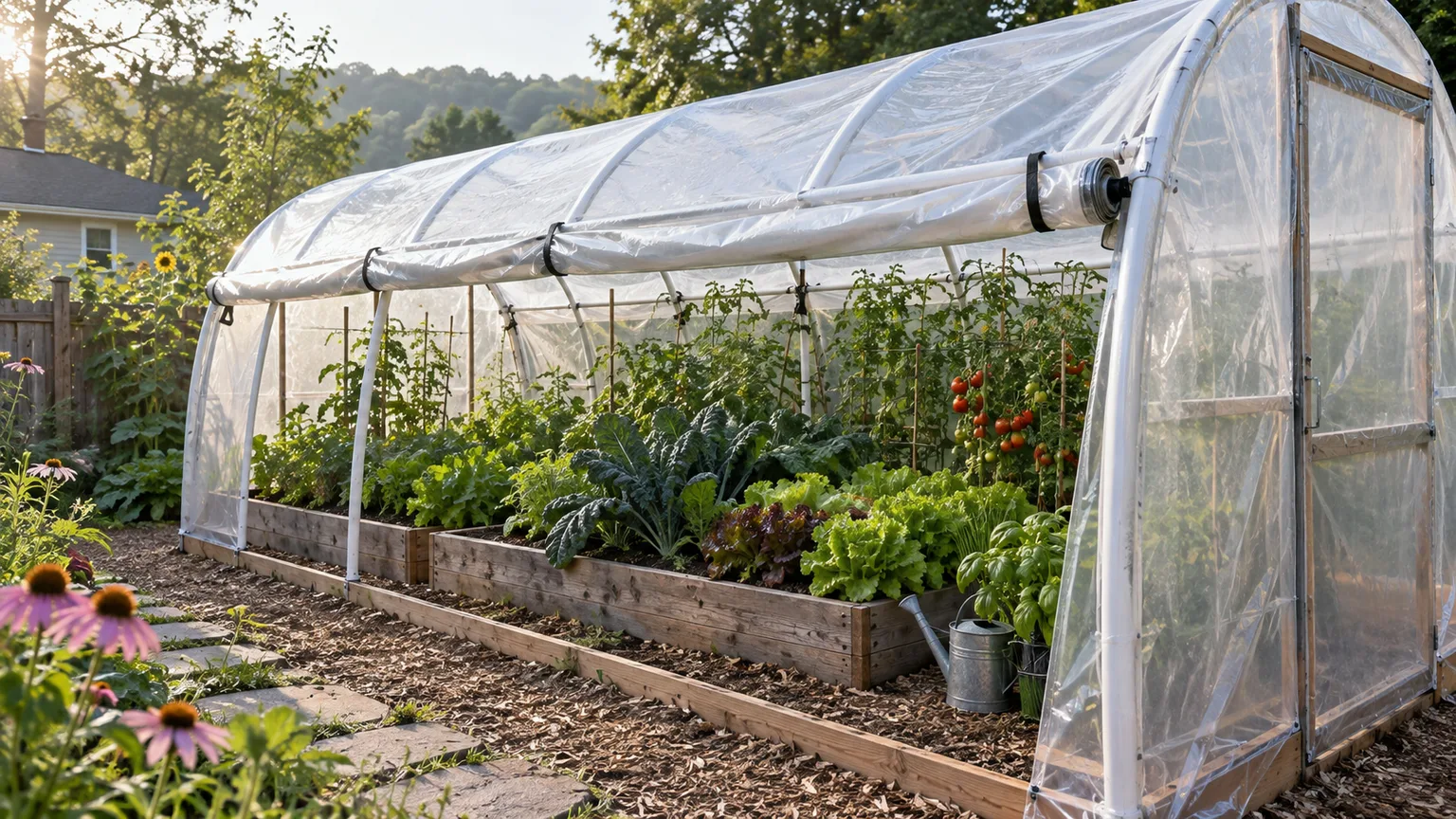
“Hothouse tomato” describes a tomato grown in a heated greenhouse, usually to supply fresh fruit when outdoor weather is too cold or unreliable. It is a production description, not a tomato variety. A hothouse tomato may be a cherry, grape, plum, or slicing type, and the term alone does not tell you whether it was grown in soil, a container substrate, or a hydroponic system.
That distinction helps explain why tomatoes sold under the same broad label can differ in taste, texture, price, and origin. A greenhouse gives a grower more control over weather and crop timing, but it cannot make every cultivar taste the same or erase the effects of harvest maturity and storage. Once you separate the growing environment from the variety and root system, the label becomes much easier to interpret.
What “hothouse” means on a tomato label
A hothouse is a greenhouse where heat is supplied to protect a crop or keep it growing through cold periods. In everyday produce use, “hothouse tomato” generally means greenhouse-grown tomato; Foodwise describes hothouses as heated greenhouses, while growers may use “greenhouse tomato” more broadly for protected crops that are heated only when needed. The term points to the production setting, not to a specific genetic type of tomato. (Foodwise)
Greenhouse production can extend a growing season, protect flowers and fruit from rain, wind, and sudden cold, and create a more consistent schedule for planting and harvest. It does not mean the plants are isolated from every pest or disease, nor does it guarantee that the fruit is local, organic, pesticide-free, perfectly ripe, or better tasting. Those are separate questions that require separate information from the grower or package.
The word “hothouse” can also sound like a claim about intense heat, but tomatoes are not meant to grow in an overheated building. Growers supply heat when nights or seasons are too cold and ventilate or cool the structure when solar gain pushes temperatures too high. A well-run greenhouse is a managed climate, not a permanently hot room.
How commercial greenhouse tomatoes are produced
Commercial production begins with a planned crop cycle and a cultivar selected for the intended system. Alabama Cooperative Extension notes that greenhouse tomatoes are commonly indeterminate: they keep growing and setting fruit along an extending stem, which suits long trellises and allows a crop to be harvested over a longer period. Growers start seed in propagation trays or blocks, raise transplants, and move them into beds, containers, bags, or substrate systems when the roots and leaves are established. (Alabama Cooperative Extension System)
The structure then lets the grower manage the variables that outdoor plants experience more unpredictably. Heat, ventilation, water, nutrition, light transmission, humidity, and sanitation all interact. A greenhouse can reduce exposure to rain and wind, but a crowded or poorly ventilated canopy can still trap humidity and create conditions for disease; pests such as whiteflies or aphids can also become persistent indoors if they enter and reproduce without timely monitoring.
Start with cultivars suited to protected growing
“Tomato” covers fruit with very different sizes, shapes, textures, and flavor profiles. Growers choose among cherry, grape, cocktail, plum, and larger slicing types based on customer demand, crop cycle, local climate, disease pressure, and whether the operation needs fruit that travels well. Seed catalogs may distinguish greenhouse-adapted cultivars from field types, but that is still a cultivar-selection decision; it does not make “hothouse” a cultivar name.
Protected-culture selections may be chosen for traits such as sustained production, uniform fruit set, disease resistance, or performance when light is limited. Those traits do not automatically mean blandness. A grower can prioritize yield, shelf life, flavor, or a balance among them, and two growers using the same structure may choose different varieties for different customers.
Manage the root zone, light, heat, and humidity
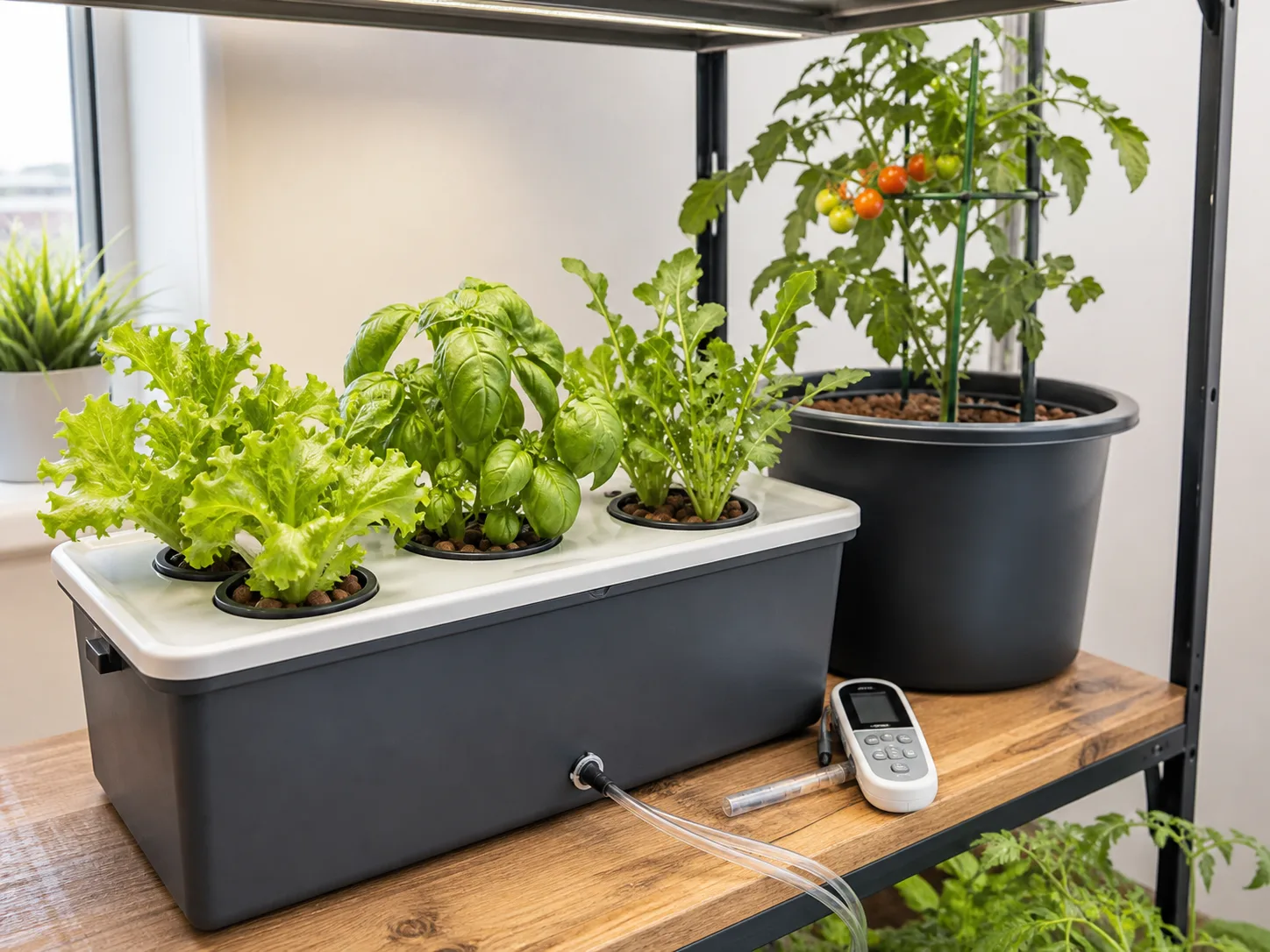
Greenhouse tomatoes are not all grown hydroponically. The roots may be in soil or a soil-based mix, or anchored in an inert substrate such as perlite, coconut coir, or rockwool and supplied with water and dissolved nutrients. In many commercial operations, irrigation also delivers fertilizer, a practice called fertigation. The exact system depends on scale, climate, disease management, labor, and the grower’s ability to monitor water and nutrient levels.
Hydroponics is a root-zone method: plants receive mineral nutrients through a solution, sometimes with a supporting medium. Oklahoma State University Extension explains that soil and hydroponic roots ultimately take up mineral nutrients in dissolved forms, and that a hydroponic system can use either a liquid solution or an aggregate medium. Thus, “greenhouse” answers where the plant grows, while “hydroponic” answers how its roots are supplied. (Oklahoma State University Extension)
Light and temperature influence how quickly plants grow, whether pollen functions well, and how fruit develops. Alabama Extension gives daytime greenhouse temperatures around 80 to 85°F as a production target in its Alabama guidance, while also warning that excessive heat can crack fruit and reduce fruit set. That is a regional commercial reference, not a universal thermostat setting: the cultivar, growth stage, nighttime temperature, humidity, ventilation, and local conditions matter. Growers adjust ventilation, shading, heating, and irrigation rather than relying on a single number for every greenhouse.
Train long-season vines for access and airflow
Because indeterminate vines keep extending, growers attach stems to twine or trellis wires and guide growth upward. Some commercial systems use “high-wire” training: as a stem reaches the top support, workers lower and lean the vine along the row so its active growing tip can continue upward. This makes long crops manageable, keeps fruit accessible, and allows older lower leaves to be removed in stages.
Pruning is not simply cosmetic. Removing selected side shoots can maintain a planned leader system and reduce crowding, while removing too many healthy leaves cuts the plant’s capacity to support fruit. Alabama Extension describes frequent, small maintenance tasks such as checking shoots, guiding vines, removing spent lower leaves, and harvesting on a schedule. For a home gardener, the useful lesson is to choose a training approach before plants become tangled; commercial high-wire layouts are not necessary for one or two backyard plants.
How greenhouse tomato flowers set fruit
Tomatoes have flowers with both male and female reproductive parts and can self-pollinate, but pollen still has to move from the anthers to the receptive part of the flower. Outdoors, wind and physical movement usually shake the flowers. In an enclosed greenhouse, especially where plants grow close together and air movement is limited, the pollen may not release reliably without vibration.
UConn Extension explains that insufficient pollination can reduce fruit set and lead to misshapen fruit. Commercial growers may use bumblebees, electric vibrators, or other mechanical methods; the scale and labor available help determine which method fits. Bumblebees vibrate flowers as they feed, while a small grower may tap or vibrate the flower cluster’s stem carefully. Avoid pressing or damaging the flower itself. (UConn Extension: Pollination of Greenhouse Tomatoes)
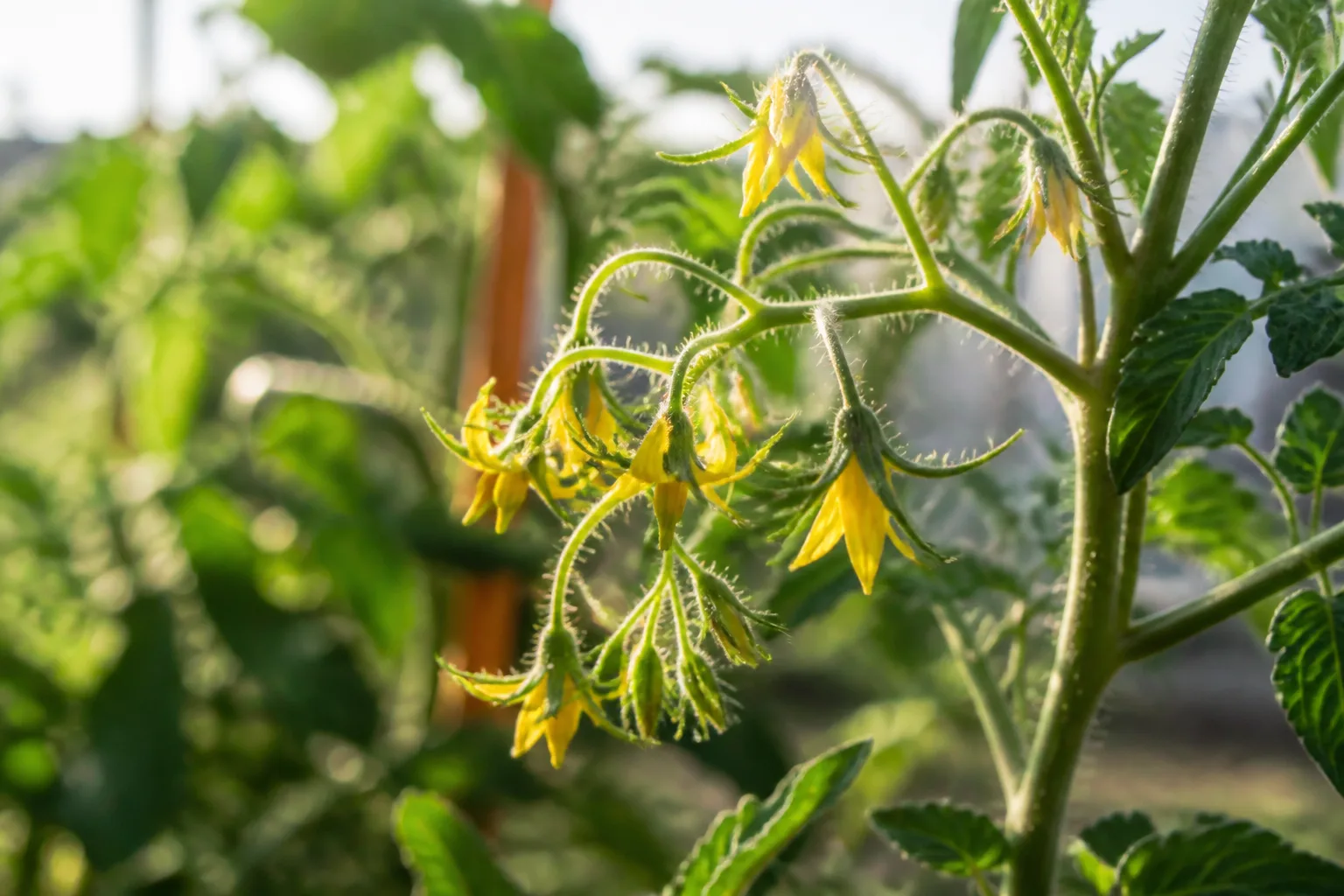
Temperature and humidity also affect pollen release and viability. UConn’s commercial guidance describes moderate humidity as helpful because very dry pollen may not move well, while overly sticky pollen can also be difficult to release; high heat can compound pollination problems. This is why “greenhouse” does not mean the grower can simply seal a structure and wait. Air movement and a suitable climate are part of fruit production.
Hothouse, field-grown, hydroponic, or vine-ripened?
These terms describe different attributes and can overlap on the same tomato. A greenhouse tomato can be grown hydroponically or in a soil-based mix. A field-grown tomato can use drip irrigation and trellising. “Vine-ripened” describes a stage or manner of harvest, while a cultivar name describes the plant’s genetic identity. None of these labels, by itself, is a complete rating of flavor or quality.
Compare the labels without mixing up the categories
| Term | What it describes | What it does not tell you by itself |
|---|---|---|
| Hothouse or greenhouse | A protected growing structure, often heated when needed | The cultivar, root medium, pesticide program, flavor, or exact harvest maturity |
| Field-grown | Production outdoors in open conditions | That the fruit was local, fully ripe when picked, or better tasting |
| Hydroponic | A root-zone system using nutrient solution, with or without inert support | Whether the crop was indoors, in a greenhouse, or grown under lights |
| Vine-ripened | Fruit allowed to mature or color on the plant before harvest, depending on the seller’s usage | A specific cultivar or proof that it was grown in a greenhouse |
| On the vine | Fruit sold attached to a stem or cluster | That every fruit on the cluster ripened at once or has a superior flavor |
| Cultivar name | The named genetic selection, such as a cherry or beefsteak cultivar | Its growing environment or the quality of a particular shipment |
The words printed on a package are most useful when paired with specifics: named cultivar, origin, harvest date or season, and a grower description. A farm or retailer may be able to say whether the fruit was grown in soil or in a substrate and whether it was picked ripe. If the label only says “hothouse,” treat that as a clue about production—not a promise about everything else.
Why hothouse tomatoes can taste different
Tomato flavor is a combination of sweetness, acidity, aroma, texture, and how ripe the fruit is when eaten. A tomato can be red and still taste flat if it has little aroma or an unbalanced sweet-sour profile. Cultivar, growing conditions, maturity at harvest, and time and temperature after harvest all contribute, so comparing “greenhouse” with “garden” without holding those factors steady can be misleading.
For example, a fully ripe garden tomato eaten warm from the vine may seem more fragrant than a firm greenhouse tomato that was picked to withstand packing and transport. That is a real eating experience, but it does not prove that every greenhouse tomato is inferior. A greenhouse grower selling ripe fruit locally may harvest at a different stage from a distributor supplying a long supply chain. Likewise, a flavorful cherry greenhouse cultivar may compare favorably with an out-of-season field tomato that endured weather and shipping.
Greenhouse coverings can change the amount and spectrum of light reaching plants, and growing temperature can affect the crop. But it is too simple to attribute every flavor difference to one factor such as reduced ultraviolet light. Cover materials vary, and light, cultivar, temperature, irrigation, maturity, and postharvest handling often change together. A careful comparison should name the cultivars, harvest stage, and storage conditions rather than treating the growing structure as the sole cause.
Foodwise’s profile of California hothouse farms illustrates why method and preference should be kept separate: the farms described in that report used soil-based mixes, while a farmer offered a personal view about the sweetness of soil-grown fruit. Other greenhouse growers use hydroponic substrates. The first is a report of how those farms worked; the sweetness comparison is an individual taste judgment, not a general rule that soil-grown tomatoes are always sweeter than hydroponic ones. (Foodwise)
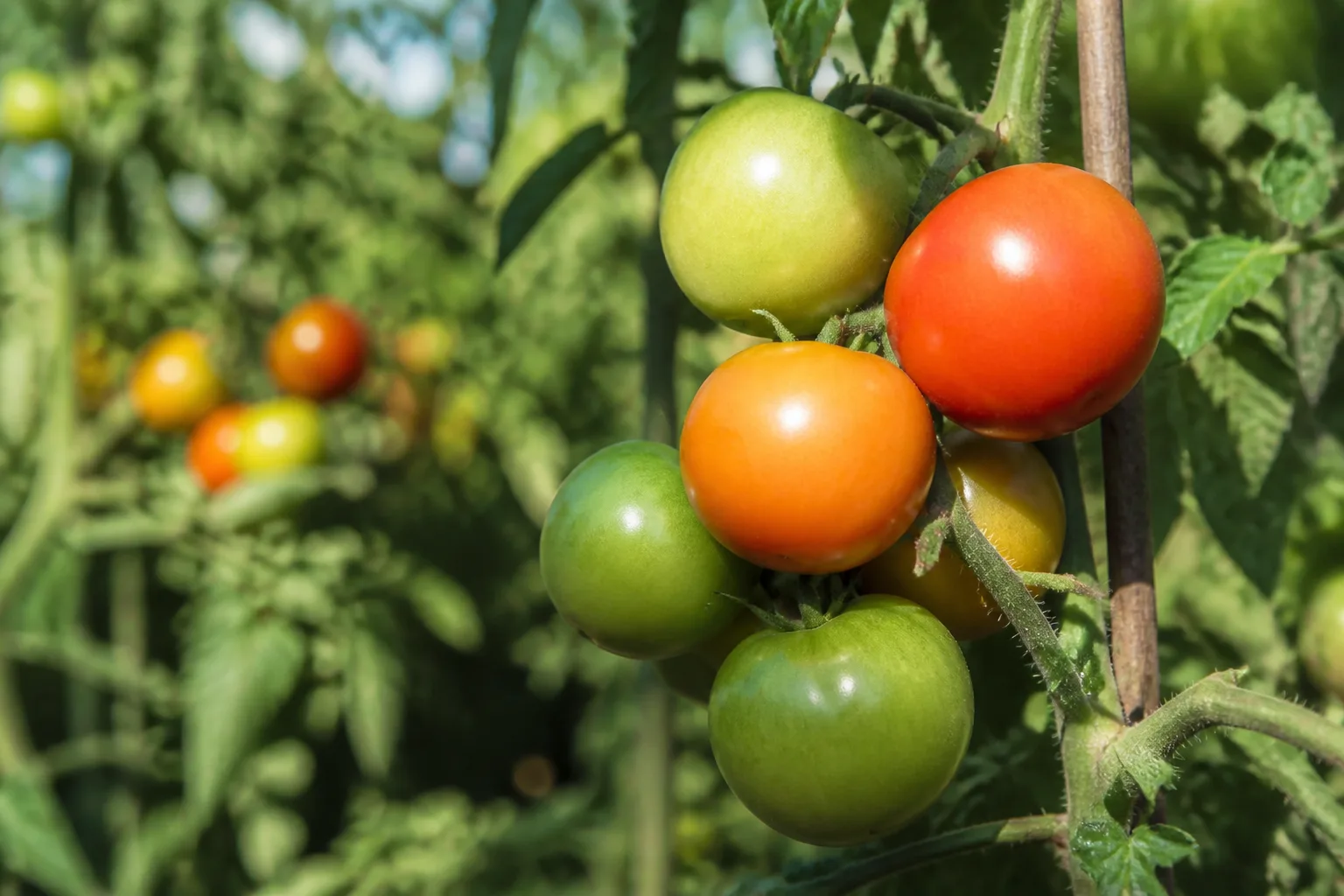
When flavor matters, compare tomatoes at similar ripeness and temperature. Let a refrigerated ripe fruit warm slightly before serving, then taste it raw with minimal seasoning; for a fair comparison, use the same meal and avoid comparing a cold tomato with a sun-warmed one. That simple tasting check is more useful than assuming the word “hothouse,” “local,” or “vine-ripened” predicts your preference.
Are greenhouse tomatoes as nutritious?
The greenhouse label does not tell you how many vitamins or minerals a tomato contains. Nutrient levels can vary with cultivar, ripeness, growing conditions, and storage, and a claim that all hothouse tomatoes are either more nutritious or less nutritious than field-grown fruit would need direct evidence about the fruit being compared.
The same caution applies to hydroponics. Oklahoma State University Extension says there is no conclusive evidence that hydroponically grown produce is inherently more nutritious or healthier than produce grown by other methods. Hydroponics changes how roots receive nutrients; it does not make a tomato a different species or automatically make the fruit healthier. Choose the fruit you enjoy and can obtain fresh rather than using the production term as a shortcut for nutritional quality.
How to choose good hothouse tomatoes at the store
Start with the use. For sandwiches and salads, select fruit that feels firm but not rock-hard, has intact skin, and gives slightly under gentle pressure without leaking or feeling bruised. For sauce, soup, or roasting, texture matters less than whether the tomato smells fresh and is free of soft, wet, or moldy spots. A green shoulder may reflect the cultivar or ripeness; it is not enough by itself to diagnose poor quality.
Look for the cultivar and origin when available. A named variety gives you more information than a generic “greenhouse” descriptor, and origin can help you estimate travel time—but neither guarantees flavor. If the retailer offers several types, small-fruited tomatoes often have a different balance of sweetness, acidity, and texture from large slicers, so choose by the dish rather than assuming one type is universally best.
“On the vine” can help explain the product presentation, but it is not a flavor score. Some clusters are harvested and sold attached to stems because that is how the product is marketed and handled. Check the tomatoes themselves for good color, firm flesh, and a fresh smell. If your priority is peak seasonal flavor, compare greenhouse fruit with local field tomatoes when the latter are in season instead of expecting the same experience in every month.
How to handle hothouse tomatoes safely
The greenhouse label does not change ordinary produce-safety steps. Virginia Cooperative Extension’s food-safety guidance recommends rinsing produce with clean, running water immediately before use, avoiding soap and cleaning solutions, and not rinsing fruit before storage because excess moisture can encourage spoilage. It also advises refrigerating precut produce and keeping fresh produce separate from raw meat, seafood, and poultry to reduce cross-contamination risk. (Virginia Cooperative Extension: Safe Handling and Storing of Raw Fruits and Vegetables)
For tomato shoppers, the practical version is simple: choose fruit without wet, moldy, or badly bruised areas; keep whole fruit dry; rinse it just before cutting or eating; and refrigerate cut tomatoes promptly. The production term “hothouse” does not certify that the fruit has been washed or that it can be handled differently from other fresh produce.
Can you grow hothouse tomatoes at home?
Yes, but a small hobby greenhouse is not automatically a commercial hothouse. A sunny, ventilated structure can extend the season and protect plants from rain or cool nights; supplying heat through a dark winter can be expensive and may still not provide enough light for vigorous growth or good fruit set. Decide whether your goal is an earlier or later harvest, protection from weather, or continuous winter production. The last goal requires much more control over heat, light, airflow, and water.
Prioritize ventilation and temperature control
Tomatoes need a bright site, but sunlight through glazing can raise the temperature quickly. Open vents or doors when the structure warms, use circulation fans where needed, and watch plants rather than relying only on the outdoor forecast. In a humid climate, morning ventilation and avoiding prolonged leaf wetness can reduce the conditions that favor fungal problems; in a cold climate, balance ventilation with protection from chilling nights.
RHS horticultural advisor Lenka Cooke describes using overhead strings to support tall greenhouse tomatoes and removing side shoots from single-stem cordon plants as they develop. That is a practical system for growers who want vertical plants and easy access, not a universal rule for every bush or compact tomato. If you are new to greenhouse growing, choose a cultivar that the seed supplier identifies as suitable for a protected environment and follow that cultivar’s growth habit. (Royal Horticultural Society)
Support the plant and pollinate flowers
Set the trellis or support before the plant becomes heavy. For a cordon type, loosely train the main stem to a sturdy stake or overhead string and check it regularly as it grows. Remove only shoots that conflict with the training plan; do not strip foliage indiscriminately. A bush or determinate cultivar may need a cage or stake instead of repeated side-shoot removal.
When flowers open, gently vibrate the flower truss or tap the support on a dry day to help release pollen if there is little airflow. A hobby gardener generally does not need to buy a commercial bee hive for a few plants. If flowers fall without setting fruit, first check heat, watering consistency, and whether pollen is being moved before adding fertilizer or pruning more aggressively. More fertilizer cannot correct failed pollination.
What to check when fruit quality drops
If flowers are abundant but fruit does not set, check whether the greenhouse is too hot or humid and whether flowers are receiving enough vibration. If fruit is cracking, review abrupt water changes and extreme heat; a greenhouse protects against rain but can still overheat. Misshapen fruit can follow incomplete pollination, while bland flavor is more likely to call for a closer look at cultivar, harvest maturity, and storage than an automatic switch from hydroponics to soil.
Make one change at a time and keep a short record of indoor temperatures, watering, flowering, and harvest dates. A week of notes can distinguish a pollination problem from a cultivar that simply ripens later or a greenhouse that heats too quickly on bright afternoons. For a home crop, it is usually more practical to improve ventilation, stabilize watering, and choose an appropriate variety than to copy every input from a commercial production schedule.
Conclusion
Hothouse tomatoes are tomatoes grown in a heated greenhouse, not a single variety or a synonym for hydroponics. The production setting can extend the season and give growers more control over weather, but the fruit’s flavor and quality still depend on cultivar, light and temperature, pollination, harvest maturity, and handling.
When shopping, read “hothouse” as useful context and look for more specific clues such as variety, origin, ripeness, and intended use. When growing at home, focus on light, ventilation, stable care, and a support plan that fits the tomato’s growth habit. Those practical details matter more than assuming that any one label predicts how a tomato will taste.