23 Small Flowering Trees for a Home Garden
Compare 23 small flowering trees by mature size, bloom season, light, and tradeoffs so you can choose one that fits your yard for the long term.
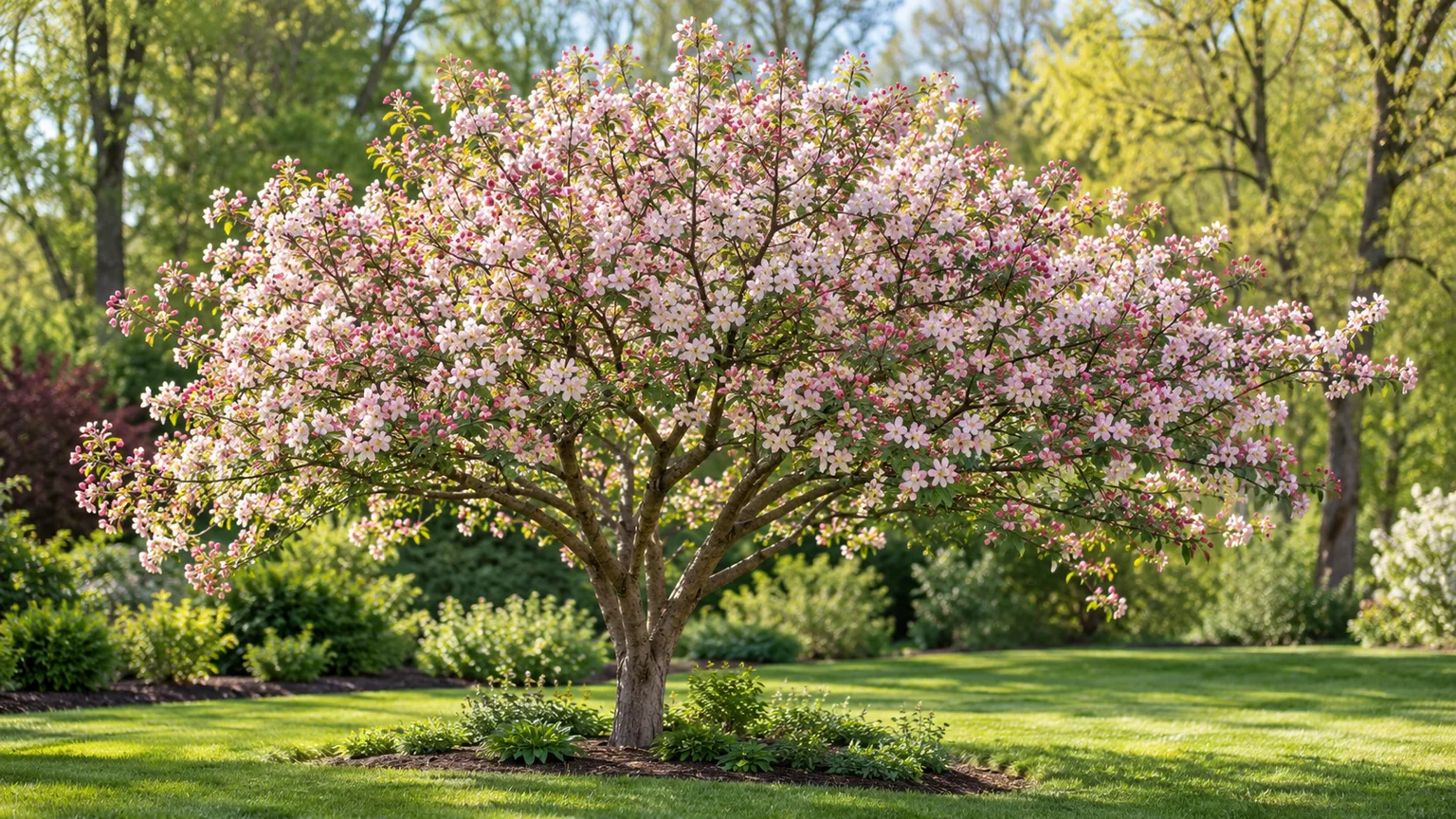
A flowering tree can make a small yard feel finished, but “small” is a moving target. A tree listed at 20 feet tall may spread just as wide, and several plants marketed for compact gardens are shrubs trained into tree form. Choose by the space the mature canopy will occupy, not by the pot size or the number printed on a short nursery tag.
This list groups 23 choices by bloom season and gives approximate mature dimensions, site fit, and tradeoffs. Sizes vary by species and cultivar, so confirm the exact name and expected spread with a local nursery before you buy.
Start with the mature footprint
For a genuinely tight site, look first at plants that naturally finish near 10 to 15 feet, including some flowering almonds, purpleleaf sand cherries, compact magnolias, and selected crabapples. A number of trees in this list can reach 20 to 30 feet. They may still suit a typical suburban yard, but they are not miniature trees and should not be forced into a narrow strip beside a wall.
The 2023 USDA Plant Hardiness Zone Map is useful for checking winter cold tolerance; it is based on average annual extreme minimum temperatures. A matching zone does not guarantee success in a hot, humid summer, a dry western garden, or waterlogged soil. Treat hardiness as one filter and check the plant’s heat, moisture, light, and soil requirements as separate questions.
Measure canopy room, not just height
Write down the available width, then compare it with the tree’s mature spread. Leave room for branches to grow without scraping siding, blocking a path, covering a neighbor’s windows, or rubbing on a roof. Don’t use trunk width as your clearance guide.
Before digging, locate underground utilities and look overhead for service wires. The University of Utah Extension’s small-tree guidance for planting near power lines stresses matching the tree’s mature height to the wire clearance. If the only way to make a tree fit is to plan years of aggressive trimming, choose a naturally smaller cultivar or a different plant.
A multi-stem tree and a single-trunk tree also use space differently. Serviceberry, redbud, and witch hazel may be sold in either form; decide which silhouette you want while the plant is young. As the Fine Gardening discussion of understory trees points out, a shrub-like nursery specimen is not always easy to turn later into a clean single-trunk tree.
Match climate, light, and soil
A label saying “full sun to part shade” does not mean the plant will bloom equally well in both. Redbud and dogwood can tolerate partial shade, while crape myrtle and chaste tree need a sunny site for the strongest flowering. In a hot-summer climate, afternoon shade can protect some understory trees from stress; in a cool climate, too much shade can leave a sun-loving tree sparse and flower-poor.
Check drainage before you plant. A moisture-loving tree can still fail in a low spot where water stands around its roots, while a tree adapted to dry soil may struggle if you water it every day. Read a plant label for the exact cultivar and ask how local heat, humidity, soil pH, and disease pressure affect it.
Bloom windows vary by latitude, elevation, cultivar, and spring temperatures, so use these seasons to compare options rather than as exact dates.
Early spring flowering trees
1. Flowering almond (Prunus glandulosa) is a compact choice, often only about 4 to 5 feet tall and wide, with double pink or white flowers before the leaves fill in. Despite its common name, it is generally a shrub, but a nursery may train or sell it as a small tree. Its early display suits a narrow border or patio edge; expect some maintenance and check local disease and pest pressure before choosing it.
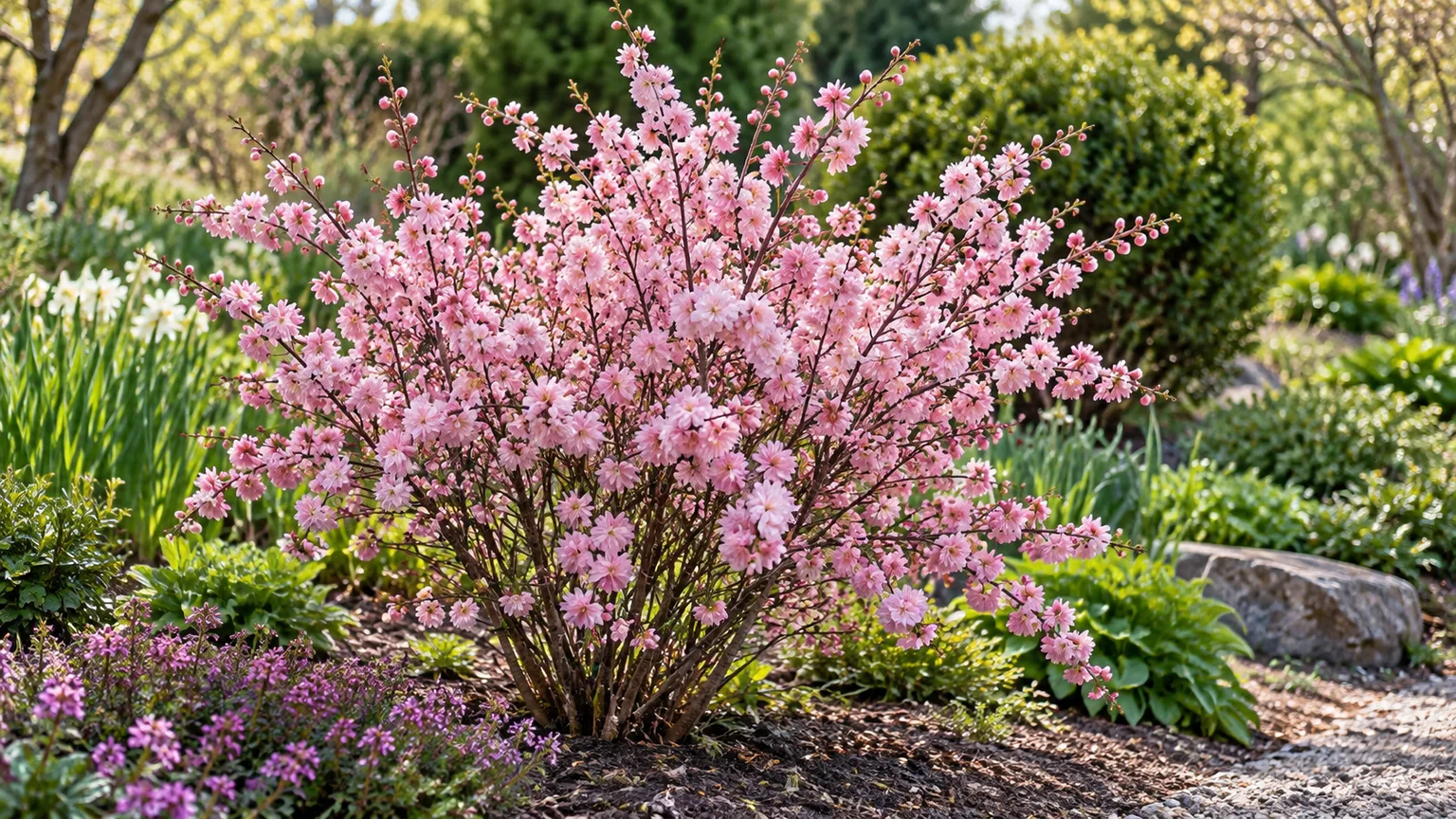
2. Purpleleaf plum (Prunus cerasifera) brings purple foliage as well as pale pink or white spring flowers, so it provides color after its brief bloom has passed. Many forms reach roughly 15 to 25 feet tall and wide, which is large for a tiny courtyard. Fruit can drop, and the species can be short-lived in stressful urban sites; place it where litter is manageable and avoid planting it simply because a young specimen looks small.
3. Purpleleaf sand cherry (Prunus × cistena) is usually a 6- to 10-foot shrub that can be trained into a short-trunked accent. Its pinkish-white flowers contrast with purple leaves, then small dark fruit may draw birds. Use it where foliage color matters as much as blossom, but remember that it is not a long-term shade tree and can need more pest monitoring than a low-maintenance native tree.
4. Little Girl magnolias are a group of compact hybrid magnolias rather than one uniform plant. Cultivars such as ‘Jane’ and ‘Ann’ commonly mature around 10 to 15 feet, with pink, purple, or white tulip-shaped flowers; check the individual tag because height and spread differ. Their later spring timing can reduce exposure to late frost compared with very early magnolias, though no cultivar can make a frost-proof bloom.
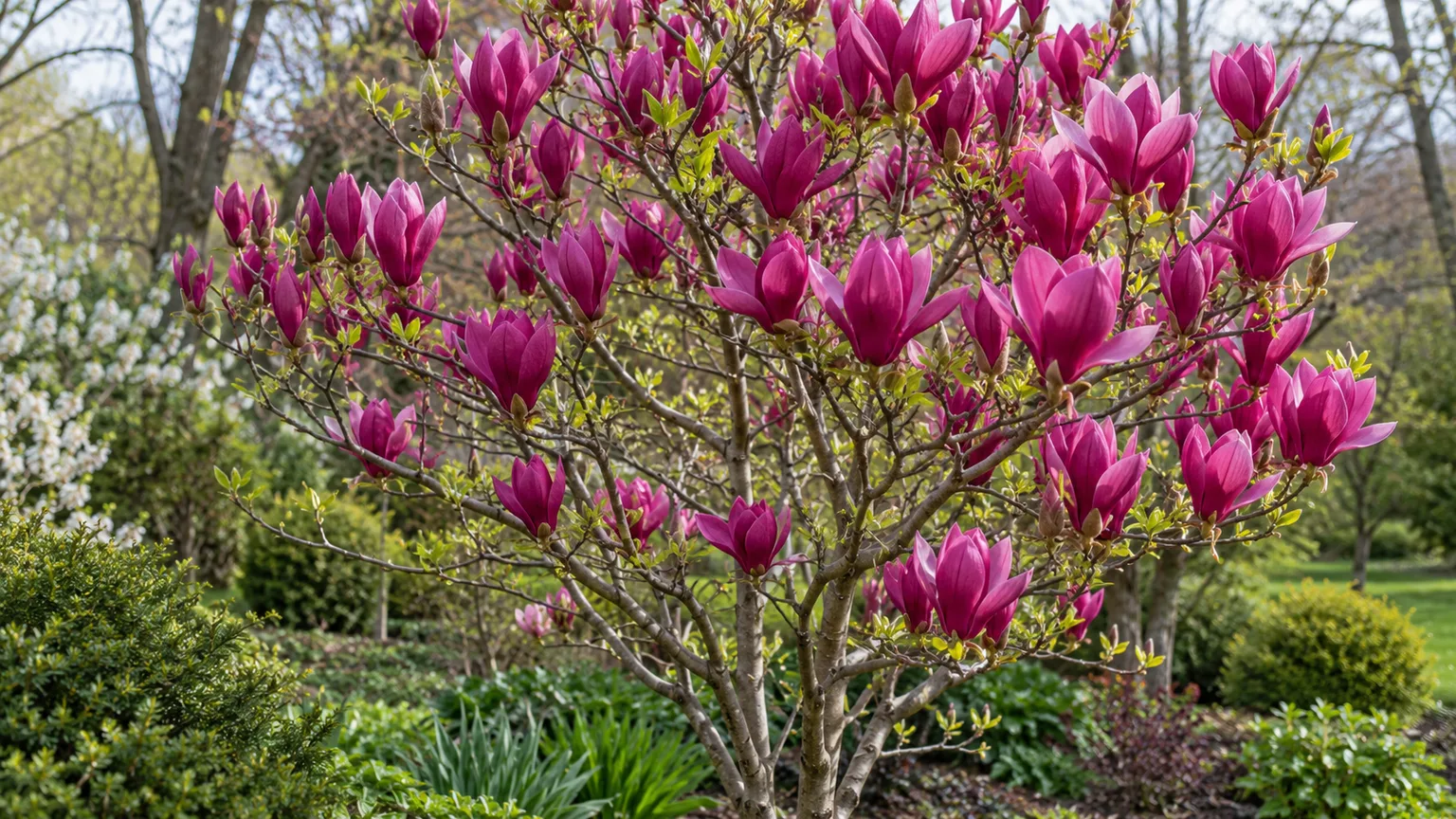
5. Eastern redbud (Cercis canadensis) covers bare branches with pink-purple, pea-shaped flowers before its heart-shaped leaves emerge. A typical tree may reach 20 to 30 feet high and spread as wide or wider, so it is best for a lawn edge or a modest garden rather than a tight foundation strip. It appreciates moisture and some protection from harsh afternoon sun in hot regions; Morton Arboretum’s redbud profile notes its understory origins and shallow-root care.
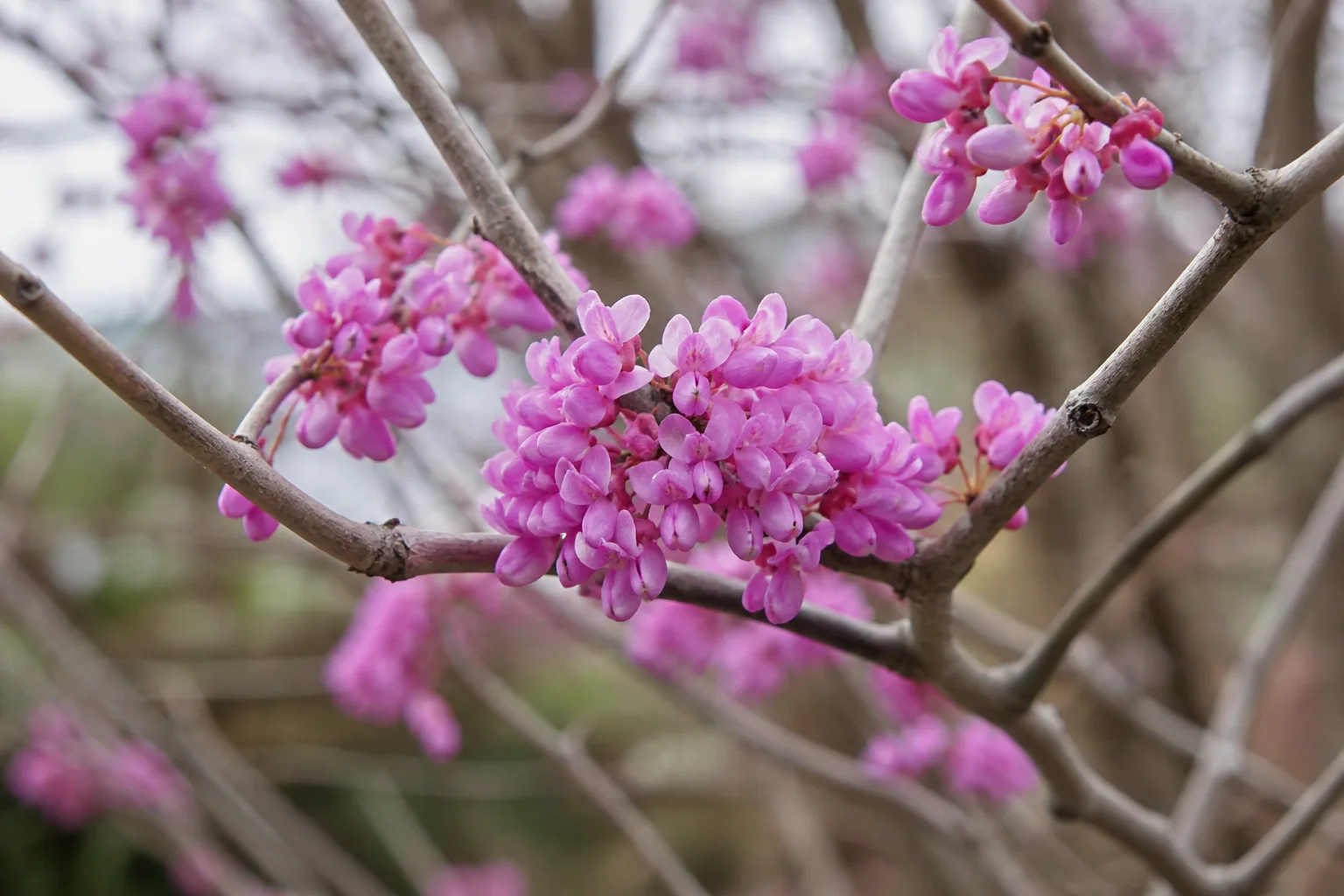
6. Japanese flowering cherry (Prunus serrulata) is a showpiece when clouds of white or pink blossoms open in spring. Cultivars vary in form and size, but many reach roughly 15 to 25 feet and need a broad, sunny spot. The display is short and weather-sensitive, and ornamental cherries can be vulnerable to disease and insect problems; choose a locally adapted cultivar and allow space for its natural form instead of treating it as a narrow hedge.

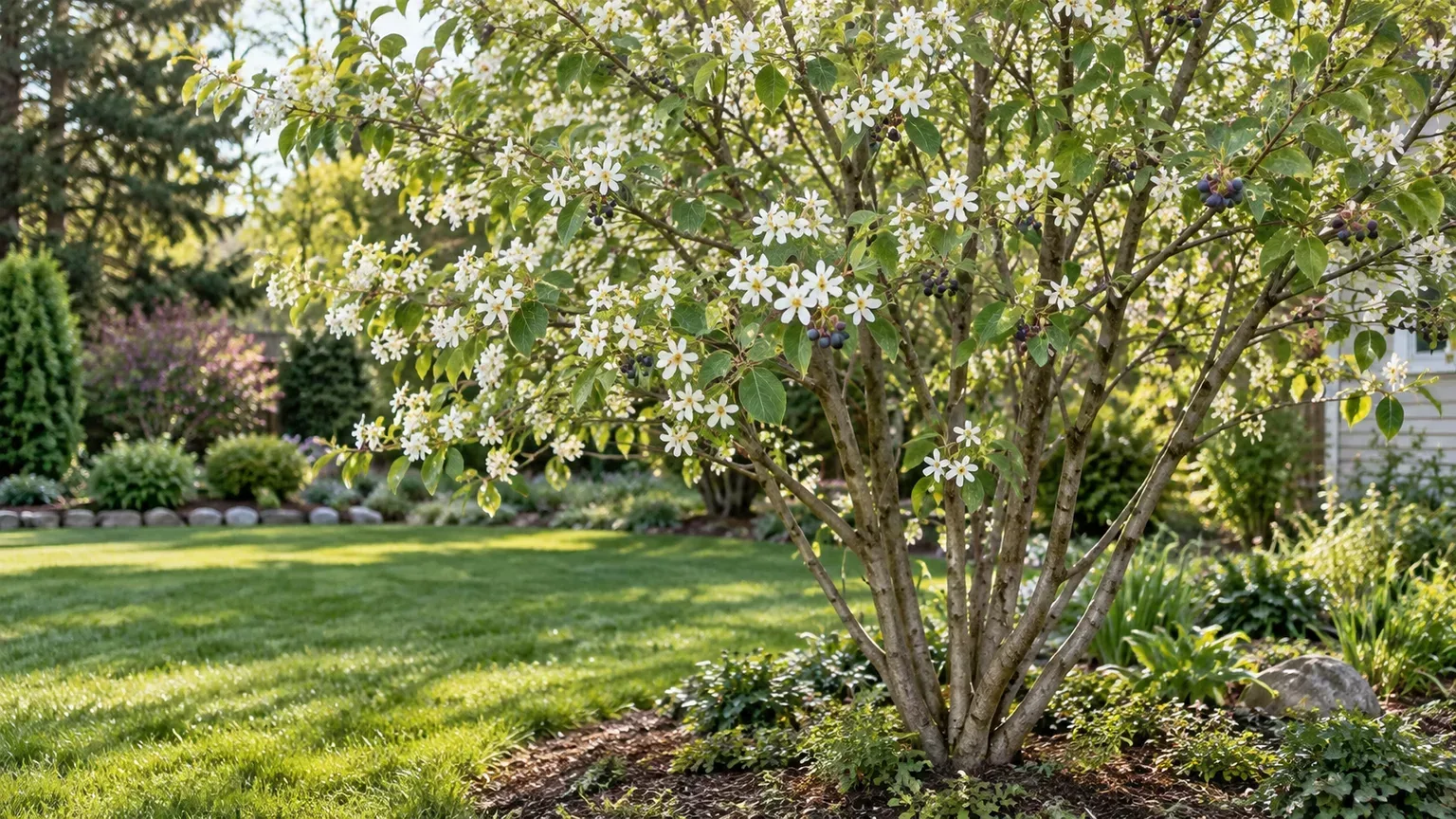
7. Serviceberry (Amelanchier species and hybrids) offers fragrant white spring flowers, edible blue-purple fruit, and often vivid fall foliage on a 15- to 25-foot tree. It can be multi-stemmed or single-trunked, but its natural width and tendency to sucker make the nursery form important. Birds often take ripe berries quickly, which is a benefit for wildlife and a tradeoff if you expect a large harvest. Fine Gardening’s spring-tree guide describes the multi-season value of serviceberry and other native small trees.
8. Red buckeye (Aesculus pavia) produces upright clusters of red tubular flowers that are especially visible before a mature canopy closes. It usually reaches about 10 to 20 feet and suits a partly shaded woodland edge in the Southeast and other suitable regions. It may look tired or lose leaves earlier in a hot, dry summer, so don’t expect a perfect all-season canopy. The seeds are poisonous if eaten; keep fallen seeds away from children and pets, as detailed by North Carolina State Extension.
Mid- to late-spring flowering trees
9. Flowering crabapple (Malus cultivars) ranges from small, weeping forms to rounded trees around 15 to 25 feet tall. Flowers can be white, pink, or red, and the fruit may persist into winter or fall quickly, depending on the variety. Choose a disease-resistant cultivar rather than selecting on bloom color alone: University of Minnesota Extension’s crabapple guidance lists cultivars with strong resistance to apple scab, a common source of summer leaf drop.
10. Flowering dogwood (Cornus florida) is an understory native that typically grows about 15 to 30 feet, with white or pink bracts around small true flowers. Give it dappled light or morning sun, moist but well-drained soil, and room for a layered crown. Kousa dogwood blooms later and differs in fruit and habit, so ask which species you are buying. The showy “petals” on dogwoods are bracts, a distinction explained by the Missouri Botanical Garden.
11. Carolina silverbell (Halesia carolina) carries dangling white bell flowers in spring, followed by winged fruits and yellow fall color. It can grow 20 to 30 feet, so treat it as a small-to-medium understory tree rather than a dwarf specimen. It does best with consistent moisture, acidic soil, and protection from the harshest afternoon sun; a dry, compacted site is a poor match. The tree is native to the southeastern United States and is most at home in a woodland-edge planting.
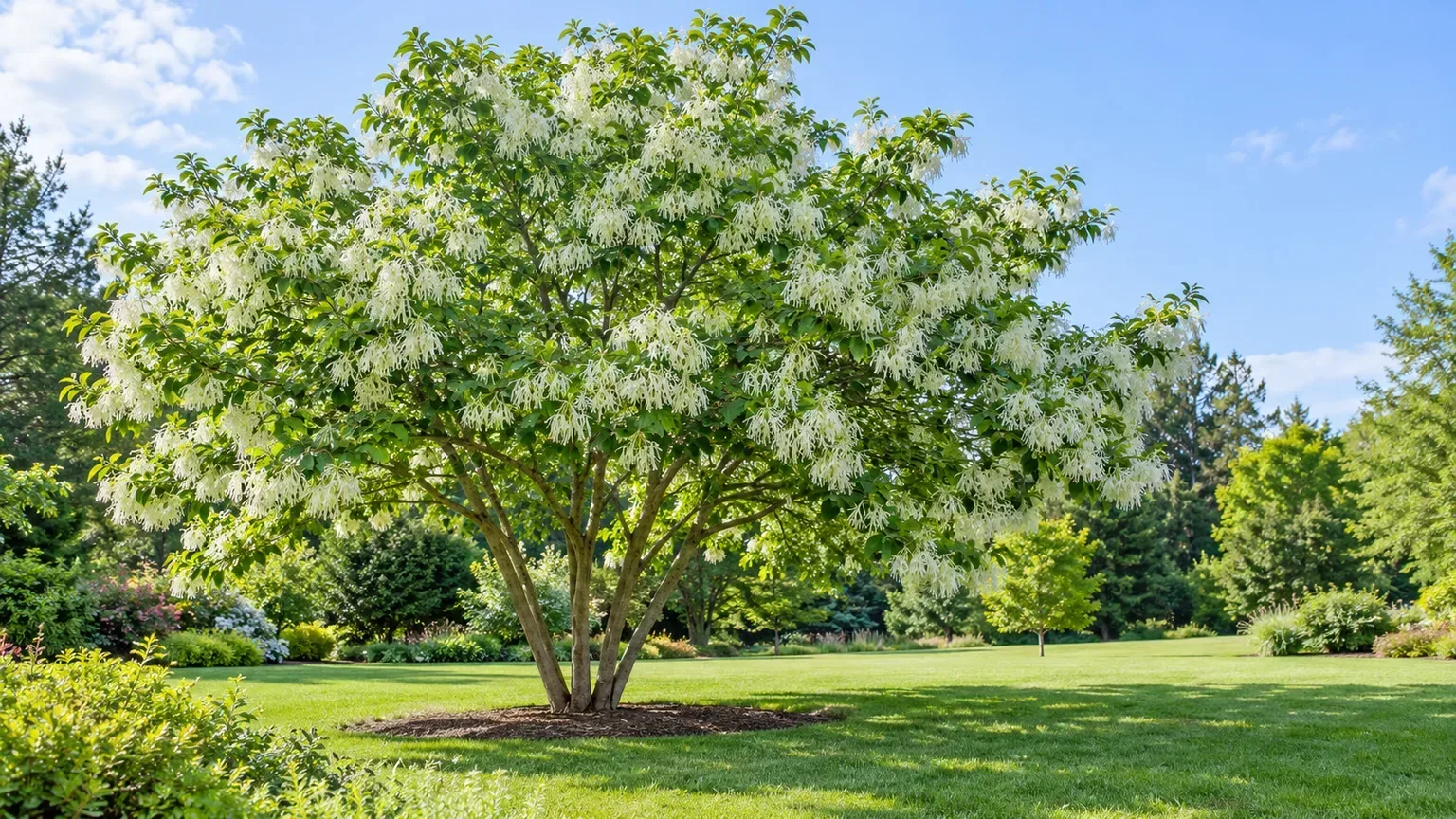
12. Fringetree (Chionanthus virginicus) has white, narrow-petaled flowers that hang from branches like soft fringe in late spring. This eastern North American native usually grows as a large shrub or small tree about 12 to 20 feet tall, and its eventual sex affects fruit: female plants produce blue-black drupes when a pollinating male is nearby. Give it full sun to part shade and reasonably moist soil. Fine Gardening’s spring-flowering tree article highlights its late bloom and variable natural form.
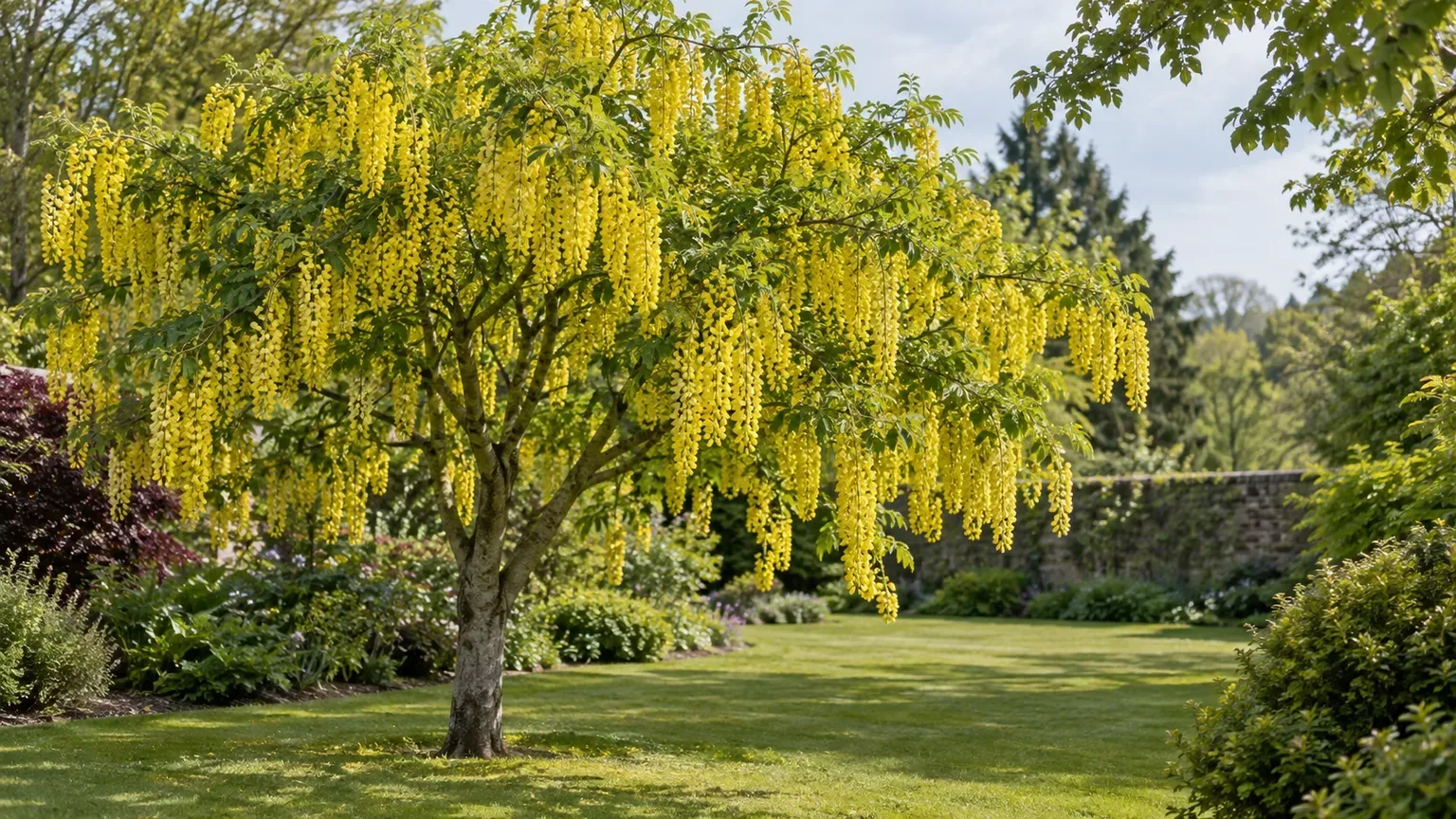
13. Golden chain tree (Laburnum × watereri) is memorable for long, hanging racemes of yellow flowers, but it is not a casual choice for a family garden. It may reach 15 to 30 feet and does best where summers are moderate and drainage is good. All parts are toxic if ingested, especially the seeds in its pods; skip it where children or pets may chew or handle fallen pods. North Carolina State Extension’s plant profile details both the climate limits and toxicity.
14. English hawthorn (Crataegus laevigata) can be a compact, thorny tree with white or pink spring flowers and red fruit, often reaching 15 to 25 feet. The thorns make it useful as a barrier but a poor choice beside a play area, gate, or frequently used path. Hawthorns also vary in fruiting and disease susceptibility; ask a local extension service whether a particular species or cultivar is a good fit for your region before you purchase.
15. Japanese tree lilac (Syringa reticulata) flowers later than common lilacs, with upright clusters of creamy white blooms in early summer. It can reach 20 to 30 feet tall and 15 to 25 feet wide, so its mature form needs more room than the phrase “small tree” may suggest. It tolerates urban conditions better than many lilacs, but full sun and good airflow support flowering and reduce stress. Consider it for a lawn or street-side planting with a clear canopy zone.
16. Japanese snowbell (Styrax japonicus) produces small, fragrant, bell-shaped white flowers that hang beneath the branches, often followed by gray-green fruit. Mature trees can reach 20 to 30 feet in both height and width; a weeping cultivar may look smaller, but check the actual cultivar dimensions rather than assuming its shape limits growth. Snowbell prefers moisture and can struggle in hot, dry conditions. North Carolina State Extension notes its broad mature size and need for consistent soil moisture.
Summer flowering trees and long-season color
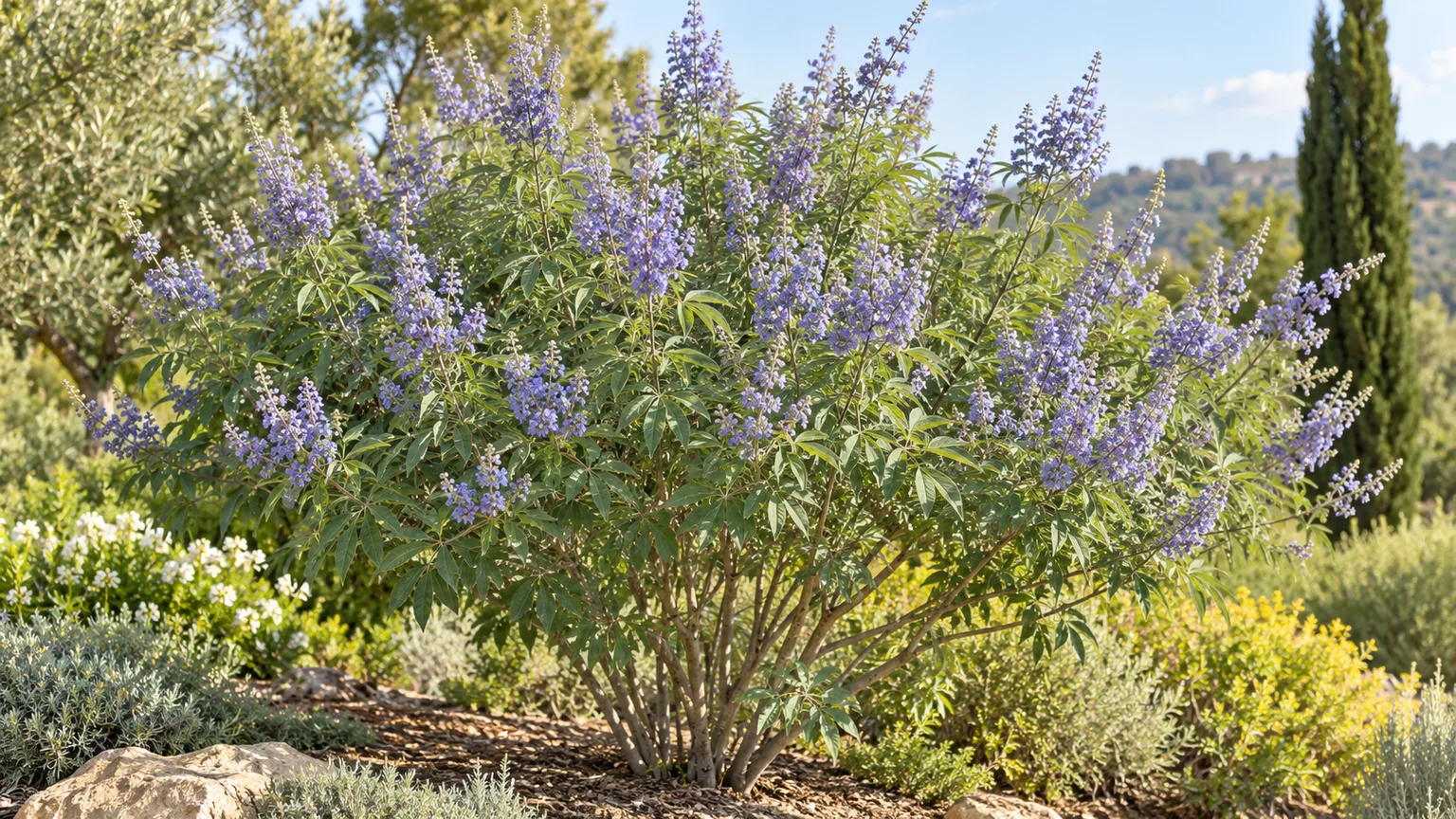
17. Chaste tree (Vitex agnus-castus) carries lavender, blue, pink, or white flower spikes in summer, when many spring-blooming trees have finished. It generally grows as a multi-stemmed tree or shrub around 10 to 20 feet, with full sun and well-drained soil producing the strongest display. It is a better choice for warm regions; in colder areas, winter dieback can reset its form, so confirm local hardiness and how the plant is grown.
18. Crape myrtle (Lagerstroemia species and hybrids) is one of the more dependable summer bloomers in hot, sunny climates, with cultivars ranging from small shrubs to trees 20 feet or taller. Select by the mature height and width printed for the named cultivar, not simply by the word “dwarf.” Flowers form on new growth, but routine topping is unnecessary and distorts the branching. University of Georgia Cooperative Extension’s crape myrtle guide recommends planting a variety that naturally fits the space.

19. Franklin tree (Franklinia alatamaha) is a rare nursery find with fragrant white flowers in late summer and red, orange, or purple autumn foliage. It can reach 10 to 25 feet but is slow-growing and particular about its site: provide acidic, moist, well-drained soil and avoid moving it after establishment. This is a rewarding collector’s tree for a gardener who can meet those conditions, not the easiest option for a dry or alkaline yard. North Carolina State Extension’s Franklin tree profile explains its dimensions and growing needs.
20. Mountain stewartia (Stewartia ovata) is a small southeastern native, generally around 10 to 15 feet tall, with white, camellia-like flowers in summer. Its modest scale suits a woodland garden or a sheltered border with moisture-retentive, acidic soil. It grows slowly and can be difficult to find, so check the botanical name: Japanese stewartia is another species with similar flowers but different mature dimensions and provenance.
21. Elderberry (Sambucus species) is often a large shrub, though it can be trained to a multi-stemmed small tree. American elderberry usually stays around 6 to 12 feet, with broad clusters of tiny white flowers in late spring or early summer followed by berries. It spreads by suckers, so allow space for new stems or plan to remove them. Choose a species suited to your region and consider whether you want the fruit, the wildlife value, or simply the flower display.
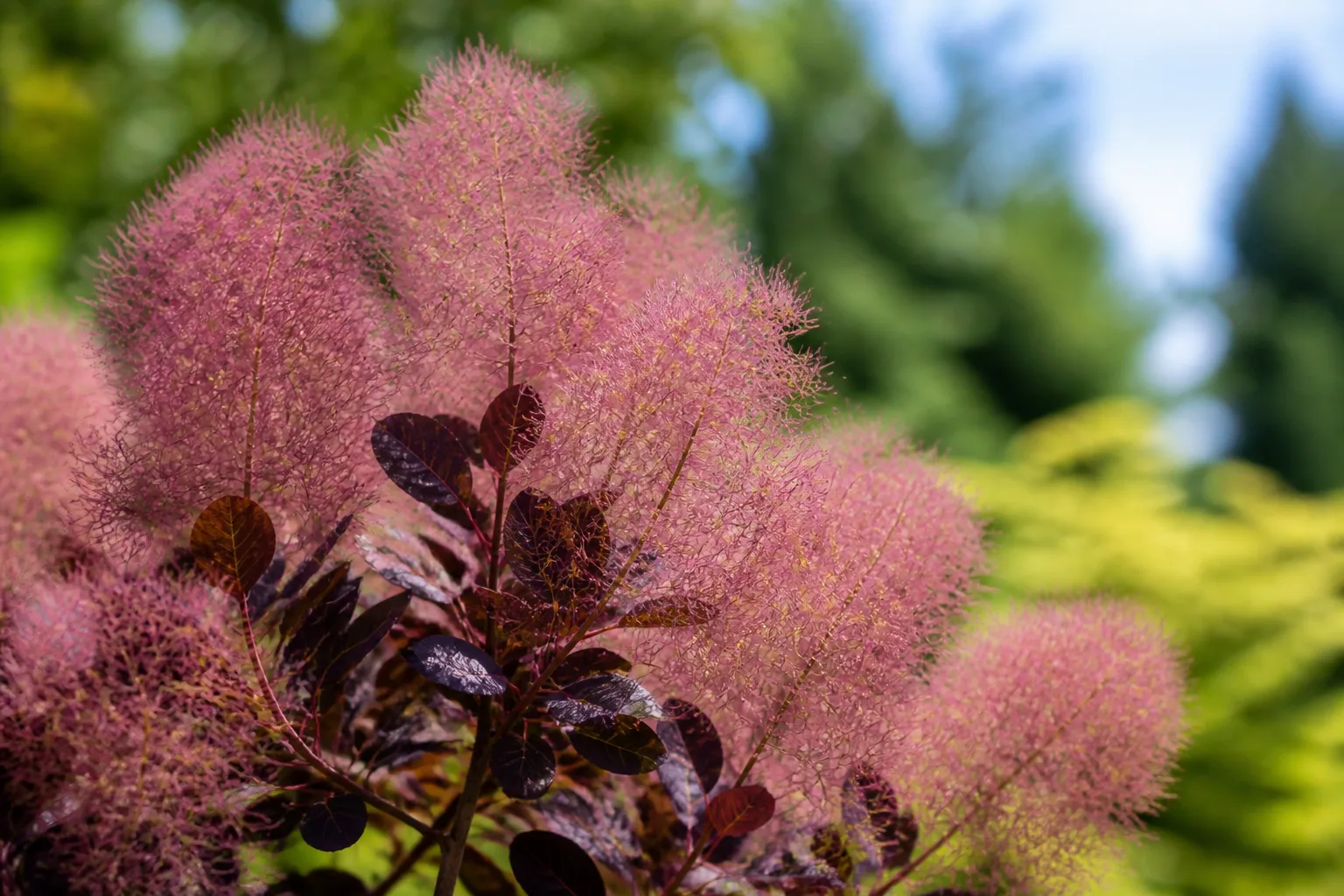
22. Smoke tree (Cotinus coggygria) is usually grown as a shrub but can be trained as a small multi-stemmed tree, often 10 to 15 feet tall and wide. Its airy summer flower clusters resemble colored smoke, while purple-leaved cultivars add contrast for months. It wants full sun and well-drained soil; pruning hard for foliage can remove the flowering wood, so decide whether bloom or leaf size is your priority. It is not a naturally narrow plant.
Fall and winter flowering trees
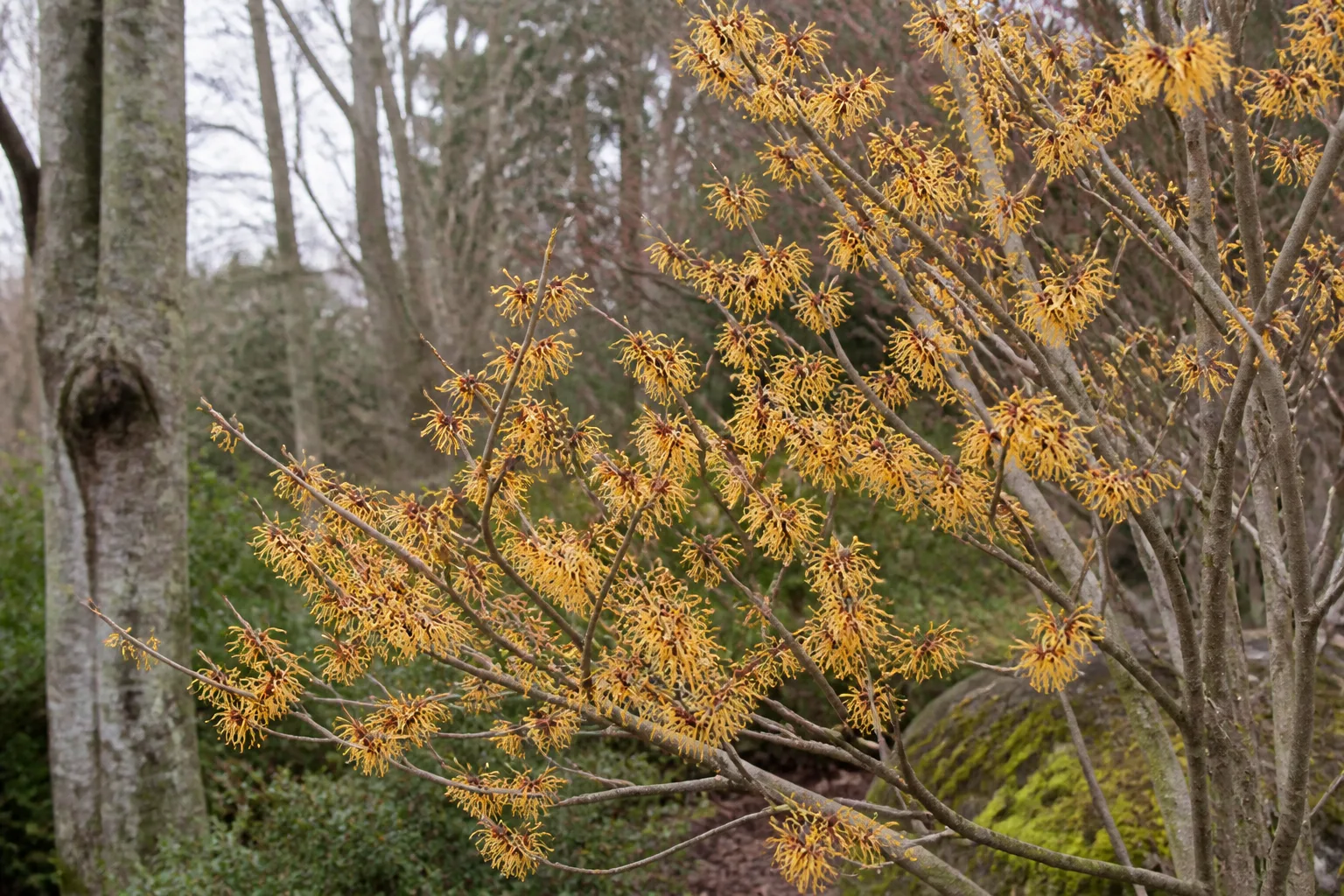
23. Witch hazel (Hamamelis virginiana and hybrids) brings color after most trees have dropped their leaves. The native common witch hazel flowers in fall, while Asian and hybrid witch hazels often bloom in winter or very early spring. Plants are often multi-stemmed shrubs, but can be trained into small trees; many eventually reach 10 to 20 feet or more. Give them space and moisture rather than pruning them into a tight shape. The North Carolina State Extension witch hazel profile explains its late-season bloom and old-wood flowering.
Which flowering tree fits your yard?
Use the site first, then choose a flower color. This short comparison helps narrow the list without treating every tree as equally compact or equally easy to grow.
| Yard condition or goal | Trees to consider | Main tradeoff |
|---|---|---|
| Small patio or front border | Compact magnolia cultivar, flowering almond, purpleleaf sand cherry, small crabapple | Check width and whether the plant is a shrub trained as a tree |
| Partial shade or woodland edge | Redbud, flowering dogwood, red buckeye, Carolina silverbell | These still need appropriate drainage and, for best bloom, enough light |
| Hot, sunny site | Crape myrtle or chaste tree where locally hardy | Cultivar size and winter hardiness vary; don’t use a generic name as a size guarantee |
| Wildlife fruit and seasonal interest | Serviceberry, elderberry, crabapple, fringetree | Fruit may be eaten by birds, drop on paving, or require cleanup |
| Fragrance or unusual flower shape | Fringetree, Japanese snowbell, Franklin tree, witch hazel | Fragrance and flowering dates vary by cultivar and weather |
| Winter color | Common witch hazel or a winter-blooming hybrid | “Witch hazel” covers species with different flowering seasons |
| No accessible toxic seeds | Avoid golden chain and red buckeye near children or pets | Identify the exact species and manage fallen seeds from any tree |
For partial shade and woodland edges
Redbud, flowering dogwood, Carolina silverbell, and red buckeye are the strongest candidates when a site has filtered light rather than all-day sun. Their woodland origins help them tolerate some shade, but they are not shade-proof: deep shade can reduce flowers and leave a crown thin. A moist, well-drained edge beneath taller trees is often a better fit than a dark corner between buildings.
If native habitat matters to you, choose a species native to your area rather than assuming every North American tree suits every region. Local extension programs and native plant societies can confirm regional provenance and identify alternatives that support local insects without introducing a plant that spreads aggressively.
For hot, sunny sites
Crape myrtle and chaste tree are natural candidates for bright, warm gardens, provided the selected cultivar is hardy where you live. Full sun helps both flower well, and drainage matters more than constant feeding. A hot, dry site can still stress a new tree, so consistent watering during establishment remains important.
Avoid planting a tree simply because it tolerates drought once mature. Young roots have not reached far into surrounding soil, and reflected heat from paving or a south-facing wall can make a site more demanding than the regional climate suggests. If the planting hole dries rapidly, plan a reliable watering method before choosing a moisture-loving magnolia, snowbell, or Franklin tree.
For a narrow yard or overhead wires
Start with the narrowest naturally compact cultivar you can verify, not a fast-growing tree you plan to prune down later. Some crabapples and magnolias have modest cultivars; flowering almond and purpleleaf sand cherry stay shorter but are shrub-like and offer less lasting shade. An upright form can reduce horizontal crowding, but it does not make utility clearance irrelevant.
The Royal Horticultural Society’s advice on trees for smaller gardens recommends considering the plant’s mature shape and its interest across seasons. That is sound advice in a small yard: a tree occupies space for decades, while its spring flowers may last only a few weeks. Before purchase, ask the nursery for the cultivar’s expected mature height and spread, and leave room for that outline.
For berries, wildlife, or lower cleanup
Serviceberry is a strong multi-season choice when you can share some fruit with birds and tolerate a little leaf and berry litter. Elderberry offers flowers and fruit but spreads by suckers. Fringetree may produce berries only when a female plant is pollinated, and crabapple cultivars vary greatly in fruit size and how long fruit stays on the tree.
For a patio or driveway, small fruit may be more of a maintenance job than a wildlife feature. Ask whether the cultivar drops fruit early, holds it through winter, or sets little fruit at all. If you want fewer fallen berries, select a low-fruiting or fruitless cultivar where available; avoid promising “mess-free” because weather, pollination, and plant age affect fruiting.
Plant for a healthy, lasting tree
A good tree can struggle if it is planted too deeply or its roots dry out in the first summer. Choose a planting time when the ground is workable and temperatures are moderate, then prepare the site before you bring the tree home.
Dig a hole at least as wide as the root ball and no deeper than the root system needs. Loosen circling roots on container-grown plants, set the root flare at or slightly above the surrounding soil level, and backfill with the original soil rather than creating a rich pocket that roots may not leave. The University of Minnesota Extension planting guide emphasizes planning for mature size and keeping the root flare visible.
Spread mulch over the root zone to conserve moisture, but keep it pulled back from the trunk. A deep pile against bark keeps the base wet and can hide root flare or encourage decay. Water thoroughly after planting so soil settles around the roots, and check that water drains rather than pooling for hours.
Set the root flare at the soil line
The root flare is where the trunk widens into its first major roots. If it is buried below the soil or mulch, correct the planting depth before you finish backfilling. Trees planted too deep may grow slowly, develop girdling roots, or show decline years later, when moving them becomes difficult.
Do not add fertilizer just to “help it get started” unless a soil test or local extension recommendation calls for it. A tree needs sound roots, adequate water, and correct depth before extra nutrients. Water and mulch are more reliable establishment tools than a quick dose of fertilizer.
Water through establishment
For the first growing season, check the root ball and nearby soil regularly, especially during dry or unusually hot weather. Water slowly and deeply enough to moisten the root zone, then let excess water drain. A small daily sprinkle wets only the surface; repeated saturation can deprive roots of oxygen.
Continue monitoring through the next growing seasons until the tree is established, with frequency adjusted for soil, rainfall, temperature, and tree size. Sandy soil may dry quickly, while clay stays wet longer. The goal is not a rigid weekly calendar but soil that does not swing from bone-dry to flooded.
Prune without sacrificing flowers
Prune to remove dead, damaged, rubbing, or poorly placed branches and to develop a strong structure while the tree is young. Avoid cutting off the natural crown just to keep an oversized species away from a roof or wire. Repeated severe reduction creates weak regrowth and often removes the very flowers you planted the tree to enjoy.
Timing depends on how the plant blooms. Many spring-flowering trees set flower buds on older growth, so major shaping is best done soon after flowering. Crape myrtle blooms on new growth and is generally pruned in late winter if it needs pruning at all; topping it is not required for bloom. University of Minnesota Extension’s pruning guide explains why flowering time should guide pruning windows.
Use clean, sharp tools and make cuts just outside the branch collar rather than leaving long stubs or cutting flush to the trunk. For large limbs, work near power lines, or a mature tree with structural problems, consult a qualified arborist.
Common small-tree selection mistakes
The first mistake is trusting the species name without checking the cultivar. “Crape myrtle,” “magnolia,” and “crabapple” cover plants with very different heights and widths. A nursery label that says “compact” is less useful than a named cultivar and a credible mature-size range.
The second is assuming a tree will bloom well in any exposure listed on a label. Shade-tolerant trees still need enough light for flowers, while a full-sun tree can suffer in a hot, dry planting strip. Match the plant to the actual conditions at the planting spot—not to the conditions you wish it had.
The third is trying to solve a space problem with repeated pruning. A naturally wide tree can become an ongoing chore if planted between a house and a sidewalk. Select a smaller cultivar, move the planting location, or choose a shrub; do not expect aggressive pruning to turn a large tree into a small one.
Finally, account for fruit, seed pods, thorns, and toxicity before choosing a location. Golden chain’s seeds and red buckeye seeds are toxic if eaten, while fruiting trees can leave litter on a walk or patio. These are manageable traits when you plan for them and avoidable surprises when you read the plant profile first.
Conclusion: choose for the full-grown tree
The best small flowering tree is the one whose mature canopy, seasonal display, and growing needs match the spot you have. Start with the available width and height, narrow the list by local hardiness and summer conditions, then choose a named cultivar with reliable size information. Redbud, serviceberry, compact magnolia, selected crabapple, and witch hazel cover different seasons and site types; none is right for every yard.
Before planting, confirm the botanical name and mature dimensions, inspect drainage, and plan how you will water the tree through establishment. Give it room to reach its natural shape and prune only for sound structure. A tree chosen for its full-grown form will reward you with flowers and foliage without turning a small yard into a long-running pruning project.



