How to Overwinter Tomato Plants: 3 Practical Methods
Learn how to overwinter tomato plants with a potted plant, outdoor protection, or rooted cuttings, plus realistic light needs and spring hardening steps.

You can keep a tomato alive through winter, but success depends on what you mean by “overwinter.” A frost-free climate may let an established plant remain outdoors; in a cold-winter region, the practical choices are carrying a potted plant inside or saving a small cutting. Neither method guarantees tomatoes in January. Keeping a vine alive and keeping it productive are different projects, with different light, heat, and space needs.
Tomatoes are tender plants. The Royal Horticultural Society’s tomato guide recommends frost protection, and Utah State University Extension’s growing guide advises waiting until frost danger has passed and soil is warm before planting them outside. In most temperate gardens, tomatoes are grown as annuals because freezing weather ends the season. If you want to save a favorite plant, start before the first frost forecast rather than trying to rescue a frost-damaged vine afterward.
The easiest method for most gardeners is rooting a few healthy cuttings. Choose a whole potted plant if you have a bright, warm place and want to preserve a mature vine; leave a plant outdoors only where hard freezes are genuinely rare. If your main goal is next summer’s harvest rather than preserving a particular cultivar, starting fresh seed or buying a seedling may take less room and effort.
First Decide What You Want to Keep
Before pruning or digging, decide whether you want to preserve the mature plant, keep the cultivar, or harvest fruit during winter. Those goals sound similar but lead to different setups. A mature indeterminate vine takes space and light; a cutting needs little room but must be potted up and grown on; a fruiting indoor plant needs much stronger light and steadier warmth than a plant merely resting through winter.
| Method | Best fit | What to expect | Main constraint |
|---|---|---|---|
| Bring a potted plant inside | A compact, healthy plant and a bright indoor space | Best chance of keeping a mature plant alive; fruit is uncertain | Space, light, and pest screening |
| Leave it outdoors | A site with reliably frost-free winters | A plant may continue or slow down seasonally | A hard freeze can end the experiment; mulch cannot protect the whole vine |
| Root cuttings | A favorite variety and limited indoor space | Several small plants can be carried into spring | Cuttings need clean water, light, and later potting |
Save the Plant, the Variety, or Winter Fruit?
If you want to preserve the exact plant you enjoyed this season, a cutting is a clone: it carries the parent plant’s characteristics without asking a seed to reproduce them. This can be useful for a named heirloom or a plant with unusually good flavor. A saved seed is inexpensive and often a sensible choice, but the resulting plant may differ, especially if the parent was a hybrid.
If you want tomatoes to eat during winter, treat that as indoor crop production rather than simple overwintering. The plant needs substantial light, room to grow, and enough warmth to flower and set fruit. A windowsill can help a plant survive, but it is not a reliable substitute for a productive indoor growing setup.
Prepare a Healthy Tomato Before Cold Weather
Begin several weeks before the usual first frost in your area. Watch the local forecast as the season changes, then select a compact, vigorous plant with unblemished stems and leaves. Dwarf and bush types are easier to fit indoors than a sprawling indeterminate vine; the RHS also notes that dwarf tomatoes suit smaller growing spaces.
Harvest ripe fruit and any fruit that is close to mature. Remove dead leaves, spent flowers, and damaged stems with clean pruners, but avoid stripping the plant bare. A plant with a smaller, balanced canopy is easier to move, while severe late pruning can add stress when light and growth are already declining.
If the tomato is growing in a container, clean the outside of the pot and check that drainage holes are open. If it is in the ground, consider whether lifting the root ball is worth the disturbance. A large plant may lose many fine roots when dug up, so a handful of cuttings is often the safer way to preserve it without moving garden soil into the house.
Inspect for Pests and Disease Before Bringing It Inside
Look under leaves and along stem joints for aphids, whiteflies, spider mites, eggs, webbing, and sticky residue. Remove a plant with widespread disease or an active pest infestation rather than carrying the problem to houseplants. Utah State University Extension notes that cool, wet conditions can promote tomato leaf blights and spots, while the RHS tomato guide describes outdoor tomatoes as susceptible to blight; late-season leaf damage deserves a closer look before you decide to keep a plant.
Rinse dust and loose debris from a healthy plant, allow the foliage to dry, then keep it apart from houseplants while you monitor it. Inspect it again over the next couple of weeks. If you find insects, identify them before choosing a treatment; do not spray an edible plant indoors with a product unless its label permits that crop, setting, and use.
Method 1: Keep a Compact Potted Tomato Indoors
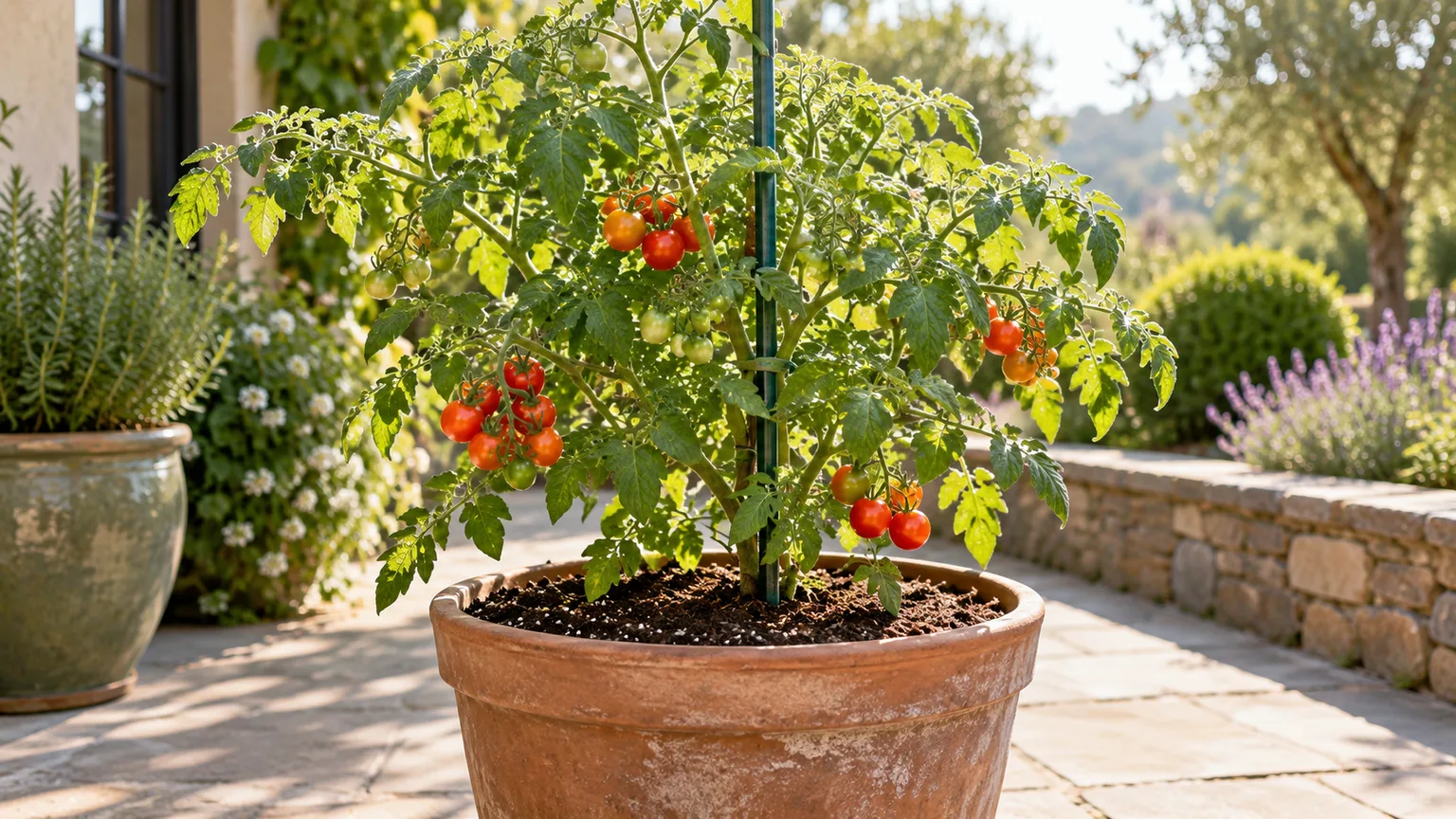
This method makes sense when you already have a manageable container plant or can lift a small, healthy plant with much of its root ball intact. It is less appealing for a tall, heavily fruited plant rooted in a garden bed. The transplant may be stressful, the canopy can occupy a large area, and pests may arrive with the foliage or soil.
Move It Before Frost and Reduce Its Size Carefully
Move the pot indoors before frost damages leaves. For an in-ground plant, dig a wide circle around the base and preserve as much root mass as you reasonably can. Set it in a clean container with drainage and fresh potting mix around the root ball; avoid packing the soil tightly or leaving the plant standing in a saucer of water.
Prune only enough to make the plant fit and remove damaged or crowded growth. Shorten long stems selectively, tie remaining stems to a small support, and remove flowers or tiny fruit if the plant is struggling to settle in. If the plant wilts for a few days after transplanting, keep it out of harsh direct sun while it recovers and check the potting mix before adding more water.
Acclimate a plant that has been outdoors by moving it into a sheltered, shaded spot for a few days before its permanent indoor location. This reduces the abrupt change in light and air movement. Keep the plant away from cold window glass, heating vents, radiators, and doors that open to freezing air; large temperature swings are harder to manage than a stable, frost-free room.
Match Light and Temperature to Your Goal
For survival, give the tomato the brightest practical location, water when the upper layer of mix begins to dry, and avoid encouraging soft growth with frequent fertilizer. A bright south-facing window may keep a compact plant alive, but winter sun varies by latitude, window exposure, and nearby shade. If stems stretch, leaves become unusually small, or new growth leans toward the glass, the plant is signaling that it needs more light.
A grow light can improve the odds, especially if you expect the plant to keep growing. Keep the fixture at the distance recommended by its maker and adjust its height as the canopy grows. Advice on winter light duration varies: Savvy Gardening’s tomato-overwintering guide describes a long daily light period for indoor tomatoes, while Homes & Gardens’ overwintering guide discusses supplemental light for plants intended to fruit. Because lamps differ in strength and distance, use a plant light on a timer and judge success by compact growth rather than copying a single hour count from a different setup.
Temperature advice also depends on the goal. Homes & Gardens quotes Texas A&M AgriLife Extension horticulturist Joe Masabni recommending at least 65°F for a tomato kept in a home, while Savvy Gardening describes a frost-free greenhouse as enough to preserve a plant when the goal is survival rather than winter fruit. Those targets describe different setups and aims, not a single guarantee: a plant protected just above freezing may remain alive without growing well, while fruiting requires considerably more light, warmth, and energy. For a home project, prioritize a stable frost-free position and accept that winter flowers may not set fruit.
Water by checking the mix instead of following a summer schedule. A smaller canopy and slower winter growth usually mean the pot dries more slowly, and persistently wet mix can suffocate roots. Empty the saucer after watering, provide gentle air movement, and hold fertilizer while the plant is nearly dormant; resume a light feeding routine only after active spring growth begins.
Method 2: Leave Tomatoes Outdoors Only in Frost-Free Climates
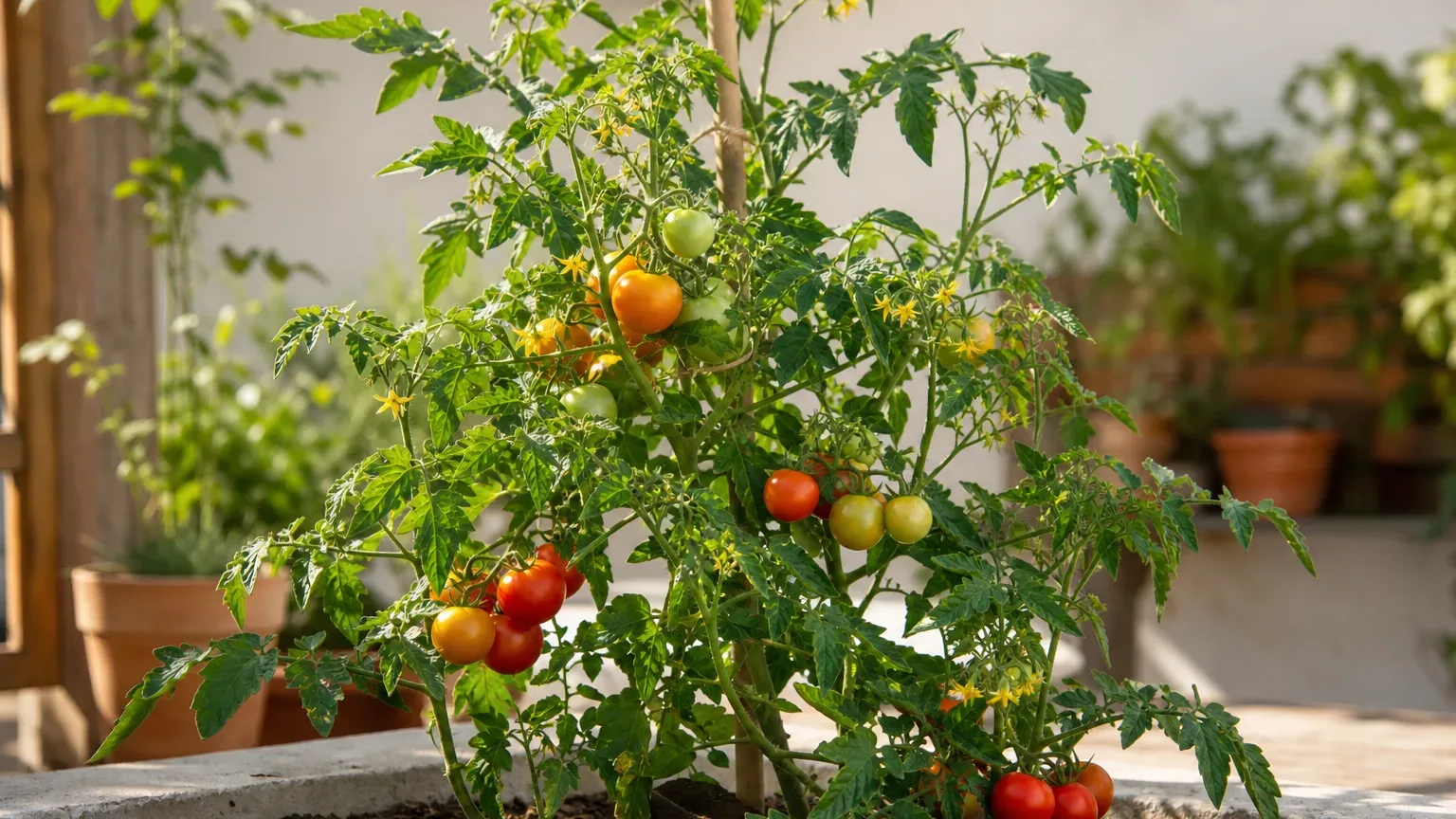
Outdoor overwintering is the lowest-effort option only where winter temperatures do not regularly freeze the plant. A protected courtyard or warm coastal garden may offer a mild microclimate, but a hardiness-zone label alone does not guarantee a frost-free winter at the exact planting site. If your garden sees repeated freezes, leaving a tomato in the bed is not a dependable way to keep the vine alive.
Use Mulch for Roots and Covers for Brief Cold Snaps
In a genuinely mild location, tidy the plant by removing diseased or spent foliage and loosely secure any stems that could be damaged by wind. A thin, breathable mulch over the root zone can moderate soil temperature and slow moisture loss. Keep mulch away from the stem base and avoid piling wet material against the crown.
A frost cloth or similar breathable cover can buffer a short cold snap, particularly if it is supported above the foliage and removed once the weather warms. Utah State University Extension describes row covers as protection for plants during cool conditions, not as a way to turn a freezing climate into a winter tomato house. A cover can buy time on a marginal night; it cannot guarantee a living plant through repeated freezes.
Know When Outdoor Protection Is Not Enough
Mulch insulates the soil more than the leaves and stems. If the above-ground plant freezes, a warm root zone does not mean the vine will recover in spring. Do not rely on a heavy plastic sheet touching foliage for prolonged protection; it can trap moisture, press against leaves, and heat up quickly when sun returns.
When the forecast predicts a freeze, harvest what you can and switch to an indoor pot or cuttings if you want to keep the cultivar. If the plant is already frost-damaged, blackened, or water-soaked, inspect it carefully and discard diseased material rather than trying to nurse a compromised vine indoors. The practical rule is simple: use outdoor protection to extend the season in mild weather, not to defy a climate that routinely freezes tomatoes.
Method 3: Root Cuttings for a Small-Space Backup
Cuttings are usually the best balance of space and effort for gardeners in cold regions. A few stems fit on a bright sill, preserve the parent plant’s identity, and avoid digging up a large root system. You can take more than one cutting because not every stem will root or make it through winter, then keep only the strongest plants.

Take Clean Suckers or Stem Tips
Choose a vigorous, disease-free side shoot or stem tip before frost arrives. Savvy Gardening’s tomato propagation instructions use short stem sections for winter propagation; a piece about 3 to 5 inches long is manageable in a jar. Cut just below a leaf joint with clean pruners, remove the lower leaves that would sit under water, and leave a small cluster of healthy leaves at the top.
Do not use a stem with dark lesions, yellowing that is spreading, insect eggs, or signs of rot. Label each cutting with the variety name before the label gets separated from the jar. If you are unsure whether the parent has a pest, keep the cutting isolated while it roots rather than placing it among houseplants.
Root, Pot, and Maintain the Cutting
Stand the cut end in a clean glass with enough room-temperature water to cover the bare lower stem while keeping leaves above the waterline. Set the jar in bright, indirect light and refresh the water when it becomes cloudy or slimy. Roots often appear within a couple of weeks, but timing varies with temperature, light, and the condition of the stem; discard cuttings that turn mushy rather than waiting for them to recover.
Once several roots are visible, pot the cutting into a small container with drainage and fresh potting mix. Water it in, then keep the mix lightly and evenly moist while new roots adjust from water to soil. Do not pot a tiny cutting into a huge container: excess wet mix around a small root system stays damp longer and raises the risk of rot.
As the cutting grows, pinch or prune lightly if it becomes lanky, rotate the pot so growth stays balanced, and give it more light before increasing fertilizer. A water-rooted cutting may droop briefly after potting; keep it in bright shade for a short adjustment period and avoid flooding it. Several small cuttings are easier to manage than one large vine, but do not overcrowd them or let leaves remain wet overnight.
This method preserves a tomato through winter, but it does not turn a cutting into a full spring transplant overnight. The young plant still needs time to branch, fill a suitable pot, and acclimate to outdoor sun. Start with one or two sturdy cuttings if your space is limited, and keep a seed packet as a backup if the cultivar is easy to replace.
Move Overwintered Tomatoes Back Outdoors in Spring
Do not move a tomato outside just because the calendar says spring. Wait until the danger of frost has passed for your location and the soil has warmed. Utah State University Extension recommends transplanting tomatoes when the soil is warmer than 60°F and frost danger has passed; the right date varies with local weather and garden exposure.
Harden Off and Replant at the Right Time
Overwintered plants have been sheltered from wind, direct sun, and fast temperature changes. Harden them off gradually over about one to two weeks: begin with a short stay in bright shade on a mild day, then add outdoor time and gentle morning sun. Bring them back inside if the night will be cold or if the first outing leaves them wilted, bleached, or scorched.
Before planting, check the plant again for pests and remove any weak or damaged growth. Pot it up if roots fill the container, or plant it deeply in a prepared bed; tomatoes can form roots along buried stems. Use a sturdy support before the plant becomes top-heavy, then water the root zone well and keep moisture steady as it establishes.
A cutting may need more growing time than a mature overwintered vine, so do not compare its size with a nursery transplant too early. If the old plant is diseased, badly rootbound, or repeatedly failing to push healthy growth, compost it and start a clean seedling. Preserving a plant is an experiment, not an obligation to carry a weak vine through another season.
Diagnose Common Winter Problems
Long, pale, leaning stems usually mean inadequate light. Move the plant closer to a bright window if it is not cold there, or add a grow light. Pruning the stretched growth can improve shape, but it will not fix the cause unless light also improves.
Yellow leaves with wet mix point to a watering or root problem. Let the pot drain, check that holes are open, and wait until the mix begins to dry before watering again. A few older leaves may yellow after a move, but rapid yellowing, a sour smell, or a soft stem base calls for a closer root inspection.
Sticky leaves, fine webbing, or clusters of insects suggest pests. Isolate the tomato, remove heavily affected leaves, and identify the insect before treatment. If you cannot control the infestation without exposing other plants, discard the tomato and keep a clean cutting or seedling for spring.
Blackened or translucent tissue after a cold night is frost injury. Move the plant to a frost-free place, wait for the damage to become clear, and prune back only dead tissue. If the main stem and growing tips are badly damaged, a healthy cutting taken before the cold snap would have been a better backup.
Flowers without fruit are not proof that the plant needs more fertilizer. Indoor light, temperature, and poor pollen movement can all limit fruit set. If you are deliberately growing for winter fruit, give the plant stronger light and warm, stable conditions; the RHS recommends gently tapping or shaking open tomato flowers to help pollen move when growing under cover. If you are only trying to preserve the plant, remove flowers and focus on healthy leaves and roots.
Conclusion
Choose the method that matches your winter, not the one that sounds most ambitious. Keep a compact potted tomato indoors if you have space and light, use outdoor protection only where freezes are exceptional, and root cuttings when you want a small, reliable way to carry a favorite cultivar into spring.
Start before frost, screen plants for disease and pests, and remember that winter survival does not guarantee winter tomatoes. Once spring brings frost-free nights and warm soil, harden the plant off gradually and decide honestly whether the old vine is still worth growing. A healthy cutting or a fresh seedling is often the better start than forcing a stressed plant through another year.