How to Treat Bed Bugs in Furniture: A Safe Plan
Treat bed bugs in furniture with a careful sequence: confirm signs, isolate items, vacuum and steam where safe, avoid risky sprays, and track follow-up.

A confirmed bed bug on a sofa is a reason to act, but it is not an automatic reason to haul the sofa to the curb. Most furniture can be treated when the insects are accessible and the work is coordinated with inspection and monitoring around the room. The important first moves are to confirm what you found, keep the item from spreading bugs, and choose a method that reaches hiding places without damaging the furniture or exposing people to an unsafe product.
Bed bugs are difficult to eliminate because they tuck into narrow seams and joints, and eggs can survive treatment that kills exposed insects. A single pass with a vacuum or steamer may reduce the number you see without clearing a whole infestation. Treat furniture as one part of an integrated plan, not as a stand-alone object.
The short answer: treat the furniture and the room around it
To treat bed bugs in furniture, first confirm the insect and inspect the piece and nearby resting areas. Keep the furniture in the affected room if possible, bag anything that must be moved, vacuum accessible seams and joints, and use steam only on surfaces and materials that can tolerate it. If you use a pesticide, its label must specifically allow use against bed bugs on that kind of furniture or surface. Then monitor and repeat according to a planned schedule; one cleaning session is rarely enough.
The reason for treating the surrounding area is simple: a couch may be the place where you noticed a bug, but it may not be the only hiding place. Bed bugs can shelter in nearby bed frames, baseboards, rugs, nightstands, and other cracks close to people. Penn State Extension recommends combining inspection, physical removal, steam or other appropriate treatments, and follow-up rather than relying on a single spray. In an apartment, the source may also be a neighboring unit, so notify the landlord or property manager promptly and ask for coordinated inspection.
Before starting, stop moving the sofa from room to room, avoid sleeping somewhere else in the home, and do not fog the room. Those moves can scatter the insects or make treatment harder. A small, controlled work area and a written map of where you found evidence are more useful than a frantic deep clean.
Confirm bed bugs before you start
Adult bed bugs are flat, oval, reddish brown, and roughly the size of an apple seed; younger nymphs are smaller and paler. The insects themselves may be difficult to spot. Look also for clusters of dark fecal dots, pale shed skins, tiny whitish eggs attached in crevices, or blood marks around seams and sleeping or resting areas. No single clue is conclusive in every case, and bites alone cannot identify the pest because different people react differently and other causes can look similar.
Check that a suspected bug has the right shape and location before treating. Carpet beetle larvae, cockroach nymphs, fleas, ticks, and other insects can be mistaken for bed bugs. If you can safely capture a specimen, seal it in a small clear container or bag and take a sharp photo beside a coin for scale. A local cooperative extension office, public health department, or licensed pest professional may be able to help confirm the identification. If you are not sure, skip insecticide until you know what you are treating.
On a sofa, inspect the actual hiding sites rather than judging by an itchy spot or one mark on the upholstery. A black dot may be a stain or dirt; repeated dots in sheltered seams, especially with shed skins or a live insect, are more concerning. Homes & Gardens’ homeowner guidance likewise calls attention to couch cushions, furniture joints, and narrow gaps, while extension recommendations add the need to map evidence across the room (Homes & Gardens).
Inspect the whole furniture zone
Use a bright flashlight and, if helpful, a magnifier. Start with the piece closest to where people sleep or sit for long stretches, but inspect nearby furniture too. Bed bugs tend to hide close to a host; they do not need to live inside a bed to feed there. A sofa used for naps, a guest chair, or a daybed can become an important harborage.
On an upholstered couch or chair, check each removable cushion on all sides, then inspect piping, seams, tufts, buttons, folds, zippers, labels, and the gap where upholstery meets the frame. Look below the cushions and under the furniture at the dust cover, staples, screw holes, legs, casters, and joints. If the bottom fabric is stapled on, do not tear it open casually; a professional can decide whether opening that cavity is appropriate. For a wooden or metal bed frame, look at joints, screw holes, slats, headboard attachments, and any crack that offers a protected gap.
Record findings by place and date: for example, “two dark fecal marks at the left rear cushion zipper” or “live insect at the underside staple line.” This makes the next inspection meaningful. It also helps a technician decide whether the infestation appears limited to one chair or has spread through the room. Penn State Extension and professional guidance both emphasize finding harborages before selecting treatment rather than spraying broadly.
Contain belongings before moving anything
Keep the infested furniture where it is while you inspect and treat it, unless a professional has directed another plan. Dragging a couch through hallways, stairwells, or a clean room can dislodge insects and introduce them to new hiding places. Do not move cushions, covers, blankets, or decorative pillows uncovered; place items in a sealed bag before carrying them to a dryer, laundry room, or treatment area.
Separate items into two clearly labeled groups: untreated and treated. Keep treated items sealed in fresh bags or closed plastic bins until the infestation is under control. Do not put a freshly dried blanket back on a sofa that still has untreated seams. If you vacuum, seal the vacuum contents immediately and dispose of them outdoors; clean the attachment and the vacuum’s exterior before moving it elsewhere.
If you live in an apartment or another multi-unit building, notify management before attempting a major move or treatment. Bed bugs may travel through shared walls or utility routes, and a single-unit effort can fail if connected areas remain untreated. If you rent, document where and when you found signs and follow local reporting requirements. Coordinating access is part of treatment, not paperwork to postpone until after the bugs spread.
Treat upholstered furniture in a safe sequence
A practical sequence is: contain washable items, inspect and vacuum the entire piece, apply steam only where the upholstery can tolerate it, then use a label-approved pesticide or professional treatment if needed. The sequence removes some exposed insects first, makes hiding places easier to see, and avoids applying chemicals over debris or into areas you have not inspected. It still does not guarantee that eggs hidden deep in a frame or neighboring harborage have been eliminated.
Before using any tool, read the furniture care label and the appliance instructions. A natural-fiber cushion, delicate velvet, foam-filled seat, leather chair, or glued veneer may react differently to heat and moisture. When you cannot identify a material or the infestation reaches an inaccessible interior, get a pest professional’s advice before testing an aggressive method on the whole piece.
1. Vacuum seams, cushions, and the frame
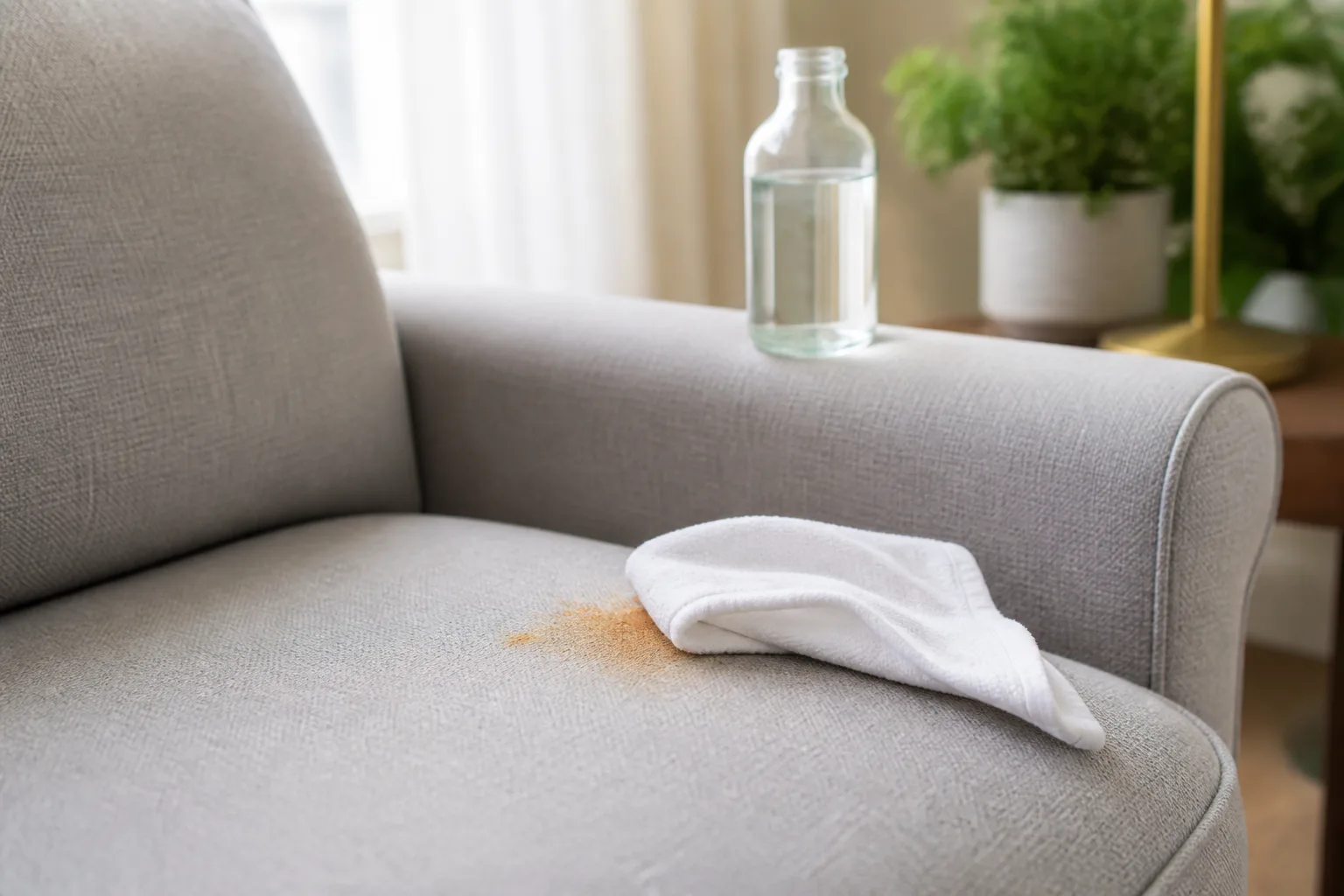
Use a vacuum with a crevice tool to work along seams, folds, cushion piping, zipper tracks, frame joints, and the underside. Move slowly enough to collect insects and debris, but do not scrub or scrape so hard that you tear fabric or drive bugs out of a crack. Vacuum every face of each cushion and the frame below it; a quick pass over the seat surface misses the protected edges where bed bugs hide.
Vacuuming is a population-reduction step, not proof of elimination. Eggs may be attached tightly to a surface, and an insect or egg can remain in a narrow gap the attachment cannot reach. Purdue Extension describes vacuuming as useful for exposed bugs and debris while noting that eggs can be difficult to remove. Follow vacuuming with another method that is appropriate for the furniture and the extent of the infestation.
As soon as you finish, remove the bag or empty the canister into a sealable plastic bag, close it, and take it to an outdoor trash container. Do not leave the canister full beside the sofa or empty it over an indoor bin. Check the vacuum’s instructions for cleaning the hose and filter; a vacuum is a tool, not a sealed bed bug treatment chamber. If your vacuum uses a reusable canister, empty and clean it outside or in a contained area, then seal the waste before disposal.
2. Steam only when the fabric and equipment allow it
Steam can kill bed bugs and eggs that receive direct, sustained heat, but steam does not penetrate every cushion or frame cavity. Penn State Extension advises using a diffuser and slow passes; its guidance specifies steam of at least 130°F and roughly 10 to 15 seconds per foot of surface. That is a treatment target, not a guarantee that a household steamer’s advertised boiler temperature reaches every seam at a lethal temperature. Purdue Extension notes that technique and equipment matter, and Rutgers research warns that steam can damage some fabrics and finished surfaces (Penn State Extension; Purdue Entomology Extension; Rutgers NJAES).
First test an inconspicuous area and let it dry to check for color change, shrinkage, water rings, or damage to adhesives and finishes. Use a broad diffuser or upholstery head with controlled, low airflow; a forceful narrow jet can blow insects away from the target. Move deliberately across the seam, fold, or joint rather than hovering in one spot long enough to soak the fabric. Treating a whole couch slowly can take time, and damp foam may take much longer to dry than the upholstery cover.
Do not steam leather, electronics, delicate fabrics, wood finishes, or areas where water could reach electrical parts. Avoid turning cushions into wet sponges: excess moisture can damage fillings, adhesives, and the frame and can create a separate mold problem. Keep children and pets out of the work area, wear shoes, and follow the steamer’s burn and electrical-safety instructions. If you cannot safely reach deep seams or control the moisture, skip DIY steaming and ask a qualified professional about a steamer or portable heat chamber designed for pest work.
3. Handle removable covers and small items separately
Remove a slipcover only if it is designed to come off and the care label allows washing or drying. Bag it while still in the affected room, carry the sealed bag directly to the laundry area, and transfer it straight into the machine. A hot wash can help, but drying on the hottest setting the item can tolerate is often the more dependable heat step; Penn State Extension recommends at least 30 minutes of high-heat drying for suitable fabrics. Do not overload the dryer, because a tightly packed load may not heat evenly.
After treatment, put the clean item in a fresh sealed bag or lidded bin. Keep it out of the room until the furniture and surrounding area have also been treated. If an item is labeled dry-clean-only, tell the cleaner about possible bed bugs before transporting it and ask how they want it contained. Do not quietly hand over a potentially infested item in an open basket.
Small non-washable belongings that can tolerate heat may be treated in a purpose-built portable heat chamber, following its operating instructions and the item’s own temperature limits. Do not assume that a black plastic bag left in the sun, a parked car, or a hair dryer will heat a cushion or object evenly enough to kill insects throughout it. Uneven heat leaves cool refuges, and improvised heating can damage belongings or create a fire hazard. Professional whole-room heat treatment is a different process with monitoring equipment and trained operators.
Treat wood, metal, and furniture interiors differently
Hard surfaces may be easier to inspect than upholstery, but their joints and hollow sections still provide hiding places. On a nightstand, bed frame, or wooden chair, remove drawers if possible and inspect the underside, screw holes, joints, and the seam where the back panel meets the frame. Vacuum accessible cracks and wipe only as appropriate for the finish. A smooth exterior does not mean the furniture interior is clear.
Do not pour liquid pesticide into a hollow furniture cavity or spray every surface just because it is hard. A wood finish, electrical component, fabric lining, or object stored in a drawer may be harmed by an unsuitable product. If the label allows a crack-and-crevice treatment in a specific location, follow its exact directions and do not treat a surface that people touch or sit on unless the label permits that use. Ask a licensed professional to assess cavities that cannot be inspected or reached safely.
Avoid bringing an infested bed frame or chair outside and leaving it there as a “heat treatment.” Sunlight and outdoor air do not guarantee the temperature needed inside joints or enclosed spaces. Likewise, freezing conditions outdoors fluctuate and do not equal a controlled freezer treatment. Treat the hiding places you can reach, then include the room perimeter and other furniture in the inspection plan.
Use pesticides only where the label allows
A pesticide is not a general upholstery cleaner. Before using one, check that the product is registered for bed bugs and that its label explicitly permits the target site and application method. Some products are labeled for cracks and crevices but not for broad application to a couch, mattress, bedding, or a surface that contacts skin. If the label does not name that use, do not improvise. EPA guidance says to follow product labels and use only legal, registered control methods (U.S. EPA).
The label controls how much to apply, where to apply it, whether a room must be vacated, how long people and animals must stay away, and when a treated surface can be used again. Do not combine pesticides, increase the dose, apply a product to clothing or skin, or spray cushions that will be used before the label permits it. A child’s room, a home with pets, or a resident with respiratory sensitivity is a reason to be especially careful and consider professional help.
Dust products require particular restraint. A pesticide-grade desiccant may be useful in a specifically labeled crack or void, but loose powder on a seat, mattress, or open floor can become airborne and be inhaled. Never substitute food-grade or pool-grade diatomaceous earth for a pesticide product. Ask a professional whether a treatment is appropriate for the furniture construction and occupants instead of spreading powder where people will sit.

Skip the shortcuts that fail or create new risks
Bug bombs and total-release foggers are poor substitutes for targeted treatment. Their droplets do not reliably reach insects tucked into seams, joints, and voids, and misuse can expose occupants or create fire and explosion hazards. Do not set off multiple foggers, close the room, and assume the furniture is treated. EPA and extension sources recommend a planned, targeted approach instead of relying on foggers alone.
Rubbing alcohol is especially risky around upholstered furniture because it is flammable and is not a dependable whole-infestation treatment. Rutgers Extension reports that direct application in lab testing killed at most about half of bed bugs, which is not enough to justify spraying a flammable liquid near lamps, outlets, smoking materials, or a steamer. Bleach, household cleaners, essential oils, and homemade mixtures also do not replace a proven treatment plan. Some may stain or weaken fabric while leaving insects hidden in the frame.
Do not use a hair dryer, heat gun, propane heater, or oven to force heat into furniture. These can scorch the upholstery, ignite dust or foam, or create hot spots while the interior remains cool. Do not carry the couch into a hot car, count on a sunny afternoon, or spray a product not labeled for furniture. Each shortcut can either fail silently or add a second problem—fire, chemical exposure, water damage, or bugs scattered into another room.
Decide whether infested furniture should be discarded
Most infested furniture does not need to be thrown away. The decision depends on whether the hiding places can be inspected and reached, how extensive the infestation is, whether the piece is damaged or heavily upholstered, and whether treatment costs more than replacement. A solid chair with accessible seams is usually a more manageable job than a deeply tufted, torn sofa with a loose dust cover and many inaccessible cavities. A professional can help assess a costly or complicated item before you make an irreversible decision.
Consider disposal when the furniture is already broken, has severe infestation in inaccessible areas, cannot safely tolerate any treatment that would reach its hiding places, or is not worth the labor of repeated inspection and treatment. Even then, throwing away one couch will not solve an infestation elsewhere in the room. Treat and monitor the surrounding area before bringing in replacement furniture, or the new piece may become infested too.
If you do discard it, contain it before moving it. Wrap or seal it so bugs cannot fall off along the way, label it clearly as infested, and arrange prompt pickup through your local waste service. Do not donate it, leave it intact by the curb, or let another person carry it home. Where safe and permitted, make it unusable so it is not mistaken for free furniture. Follow property rules and local disposal instructions rather than improvising a route through shared hallways.
Monitor, document, and repeat
Bed bug treatment is a process with follow-up, not a one-day cleanup. Eggs can survive some treatments, and bugs hidden in untreated cracks can reappear after the visible insects are gone. Keep a simple log with the date, furniture location, evidence found, method used, and next inspection. Repeat inspection at least weekly, and follow the timing set by a pest professional if one is involved. Penn State Extension notes that follow-up treatment may be needed; Purdue Extension describes follow-up inspections after control efforts to look for live bugs, cast skins, fecal spots, and eggs.
Use interceptor cups beneath furniture legs when the piece has legs and the cups fit securely. Pull the sofa slightly away from walls and keep blankets, skirts, cords, and nearby objects from bridging the floor to the furniture. If the sofa sits on a solid platform or has no usable legs, place suitable monitors nearby according to their directions and inspect the frame directly. Interceptors help detect movement; they do not kill every bug or prove an infestation is gone when they catch nothing.
Recheck the same seams, zippers, frame joints, dust cover, and nearby baseboards where you recorded evidence. A new live insect, fresh fecal spotting, or newly shed skin is a reason to repeat the inspection and revise the plan—not simply to spray more. If you used a pesticide, follow its retreatment interval and maximum-use directions; never reapply more often than the label allows. Continue monitoring after treatment rather than stopping at the first bug-free inspection.
Know when to call a pest professional
Call a licensed pest management professional if you confirm bed bugs in more than one room, find them in multiple pieces of furniture, live in a multi-unit building, cannot inspect the furniture’s interior, or continue finding new evidence after a careful first round. A professional is also the better choice when a household cannot safely use a steamer or pesticide, when an occupant has a health concern that changes exposure decisions, or when the treatment requires controlled heat or a pesticide application beyond your skill.
Ask the company to inspect before recommending a product, explain how it will treat the furniture’s specific material and construction, and identify what preparation you must do. Request the pesticide name and label use, re-entry instructions, follow-up visit schedule, and what counts as evidence of success. Ask whether the quote includes repeat visits; bed bug work often requires follow-up, so compare the full plan rather than only the first visit price. Verify that the company is licensed where required and carries appropriate insurance.
Be cautious of anyone promising that one spray or one visit will certainly eliminate every bed bug. A trustworthy provider should explain limitations, monitor after treatment, and tell you when to call back. If you rent, involve management early and keep a dated record of communication and findings so inspection can include connected units when appropriate.
Prevent bed bugs from returning to furniture
Prevention is mainly about not carrying bed bugs in and catching a new introduction early. Inspect used upholstered furniture outdoors or in a garage before bringing it inside, paying special attention to seams, undersides, joints, screw holes, and any dust cover. Avoid curbside furniture with an unknown history. If you do buy secondhand, plan a careful inspection and keep the item away from beds and other upholstered pieces until you are satisfied it is clear.
After travel, keep luggage off beds and upholstered furniture until you have checked it. Bag laundry before carrying it through the home, then dry suitable clothing on high heat and store treated items separately. These steps reduce the chance of hitchhiking bugs reaching a sofa or chair; they are more useful than routinely spraying furniture with a preventive product that may not be labeled for that use.
Keep furniture accessible enough to inspect. Reduce piles and stored items around beds and sofas, avoid pushing upholstered pieces tightly against cluttered walls, and repair loose dust covers or fabric tears that create protected cavities. If you live in an apartment building, report confirmed activity early because a neighbor’s infestation can undo careful treatment in your unit. Interceptors and periodic checks help spot a problem; they are monitoring tools rather than a substitute for treatment.
Conclusion
A bed bug in a couch does not mean the couch is doomed, but the entire room deserves attention. Confirm the insect, map its hiding places, contain anything you move, and use vacuuming, careful steaming, and pesticides only within their limits and directions. Track what you find after treatment, repeat as needed, and bring in a licensed professional when the infestation is widespread, difficult to reach, or not improving. That measured approach is safer and more effective than throwing furniture away or coating it with an unverified spray.