Fertilizer Dilution Calculator
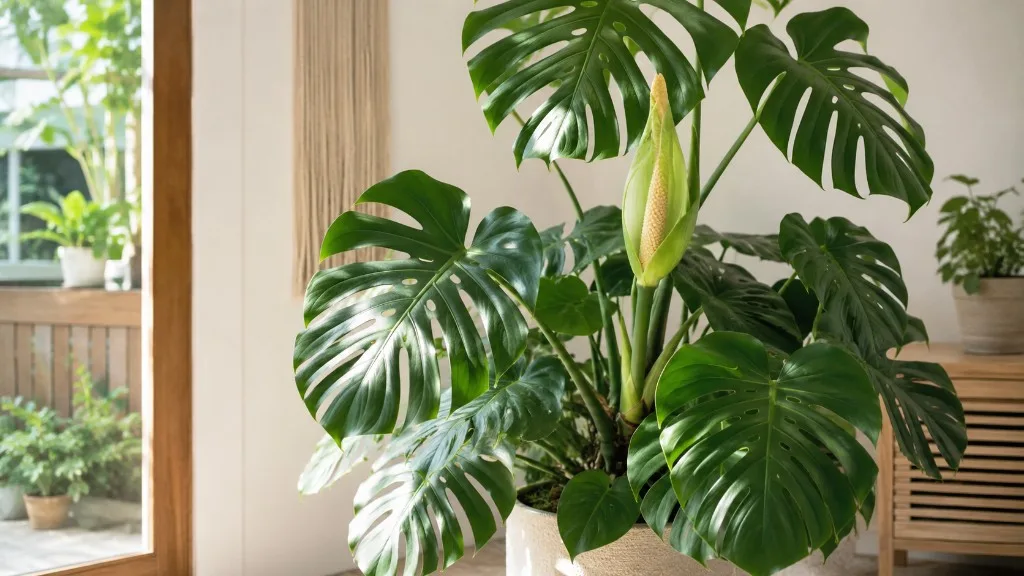
Liquid fertilizer labels are usually written for broad use, not for the exact pothos on your bookshelf, the orchid in bark, or the calathea recovering from a dry week. The Fertilizer Dilution Calculator turns the label dose into a weaker, more indoor-plant-friendly mix so you can feed with a clear number instead of guessing from “a splash in the watering can.”
The safest way to use it is simple: start with the product label, choose the fraction you actually want to apply, then mix only the amount of solution you need. Houseplants generally need modest nutrition, and the goal of fertilizing indoor plants is to support enough new growth to replace natural leaf loss, not to force oversized growth with heavy feeding University of Maryland Extension. That makes dilution a useful control, especially for plants in low light, small pots, slow-draining media, or cooler rooms.
Use this guide alongside the calculator when you want to understand the result, check the math, and decide whether half strength, quarter strength, or an even lighter dose makes sense for your plant.
What the Calculator Does
The calculator converts a fertilizer label instruction into a lower-strength dose for a specific volume of water. If the bottle says 1 teaspoon per quart and you want quarter strength, the calculator returns 0.25 teaspoon per quart. If you are filling a 2-liter watering can instead of a quart jar, it scales the dose to that water volume.
That is the core job: take the label rate, apply a dilution factor, and return a practical mixing amount. It does not diagnose nutrient deficiencies, replace a soil test, or decide whether your plant should be fertilized today. Those decisions depend on growth, light, season, potting mix, root condition, and recent care history.
The calculator is especially useful when a label gives a full-strength rate but your indoor plant situation calls for restraint. Many houseplant problems are caused by environmental or care issues, and brown tips or margins can come from overfertilization, salt buildup, uneven moisture, excess sun, heat, low humidity, or drafts UC IPM. A weaker mix reduces one avoidable stressor while you keep checking the rest of the growing setup.
The basic formula is:
final fertilizer amount = label amount x dilution fraction x water volume multiplier
The label amount is the manufacturer’s dose for a stated water volume. The dilution fraction is the strength you want to apply. Half strength is 0.5, quarter strength is 0.25, and one-eighth strength is 0.125. The water volume multiplier adjusts the label volume to your actual watering can.
Here is the plain version:
- Label says 1 teaspoon per gallon.
- You want half strength.
- You are mixing 2 gallons.
- 1 teaspoon x 0.5 x 2 = 1 teaspoon total fertilizer.
For a smaller batch:
- Label says 1 teaspoon per gallon.
- You want quarter strength.
- You are mixing 1 quart.
- 1 quart is one-quarter of a gallon.
- 1 teaspoon x 0.25 x 0.25 = 0.0625 teaspoon.
That last result is tiny, which is why measuring spoons often become the weak point. If your calculated amount is too small to measure cleanly, make a larger batch, use a syringe or pipette for liquid concentrates, or mix a stock solution only if the product label allows it. Do not assume every product stores well after dilution.
Reading the Fertilizer Label First
Start with the label rate, not with a rule you saw for a different product. Fertilizer products vary widely in concentration, and the three prominent numbers on many labels describe the guaranteed analysis: percentage by weight of nitrogen, phosphate, and potash, commonly expressed as N-P-K Clemson Cooperative Extension. A 20-20-20 product is not used in the same raw amount as a 2-2-2 product just because both are “balanced.”
The calculator needs the application instruction, not only the N-P-K number. Look for wording such as “mix 1 teaspoon per gallon,” “use 5 ml per liter,” or “add 1 pump per quart.” If the label gives different rates for outdoor containers, garden beds, foliar feeding, seedlings, or houseplants, use the rate closest to your actual use case.
If the label rate is already written for indoor plants, the calculator can still help you scale the batch size. If the label rate is written for general container plants or outdoor use, choose a weaker fraction for indoor plants unless the plant is actively growing in strong light and has handled that product before.
Choosing Half, Quarter, or Eighth Strength
Half strength is a common conservative starting point for healthy, actively growing foliage plants in decent light. Quarter strength is better when the plant is sensitive, newly purchased, recently repotted, recovering from stress, or growing in lower light. One-eighth strength is useful for a first test dose, for very small pots, or for plants that have shown leaf-tip burn after past feeding.
This is not about being timid. It is about matching nutrient supply to nutrient use. Indoor plants under reduced light and temperature grow more slowly, and University of Maryland Extension notes that indoor plants generally do not need fertilizer during winter because reduced light and temperature reduce growth University of Maryland Extension. University of Nebraska-Lincoln Extension gives the same caution from the symptom side: houseplants need less fertilizer under low light, and burned margins or wilt can indicate root damage from salt buildup Nebraska Extension.
Use a lower dilution fraction when you are unsure. You can feed again later during active growth, but you cannot instantly undo a strong fertilizer dose once soluble salts are in a small pot.
What to Enter in the Calculator
Enter the label dose exactly as written. If the product says 1 teaspoon per gallon, enter 1 teaspoon and 1 gallon. If it says 5 ml per liter, enter 5 ml and 1 liter. Mixing unit systems is where many errors happen, so keep the product’s unit until the calculator converts it.
Next, enter the water volume you plan to prepare. This should be the actual amount in your watering can, not the total size of the can. A 2-liter can filled halfway is a 1-liter batch.
Then choose the target strength. Use 0.5 for half strength, 0.25 for quarter strength, or 0.125 for one-eighth strength. If the interface offers buttons instead of decimals, choose the closest conservative option.
Finally, check whether the amount is measurable. A result such as 0.06 teaspoon is mathematically valid but awkward in a kitchen spoon set. In that case, change the batch volume, use milliliters, or skip feeding until you can measure accurately.
Worked Example: A Pothos in a 6-Inch Pot
Suppose a balanced liquid fertilizer label says 1 teaspoon per gallon. Your pothos is growing steadily in bright indirect light, the pot drains well, and you want a half-strength feed in a 1-quart batch.
The water volume multiplier is 0.25 because 1 quart is one-quarter of a gallon. The dilution fraction is 0.5. The math is:
1 teaspoon x 0.5 x 0.25 = 0.125 teaspoon
That equals one-eighth teaspoon in 1 quart of water. Water the pot only if the potting mix is already ready for water; do not fertilize a plant simply because the calendar says so. UConn’s houseplant fertilization guidance specifically cautions that more is not better and recommends applying fertilizer to already moist potting soil to avoid root damage University of Connecticut Home & Garden Education Center.
If the plant has been in low winter light, if the soil stays wet for a long time, or if the leaf tips are already brown, quarter strength or no fertilizer is the better test.
Worked Example: An Orchid in Bark
Now suppose an orchid fertilizer says 1/4 teaspoon per gallon. You want quarter strength in a 2-quart batch for a Phalaenopsis growing in bark.
The water volume multiplier is 0.5 because 2 quarts is half a gallon. The dilution fraction is 0.25. The math is:
0.25 teaspoon x 0.25 x 0.5 = 0.03125 teaspoon
That is too small for most measuring spoon sets. Instead of trying to eyeball a dusting of fertilizer, make a full gallon at quarter strength:
0.25 teaspoon x 0.25 x 1 = 0.0625 teaspoon
Even that is small, so a liquid product measured in milliliters may be easier. Orchids are often fed with weak, repeated doses rather than occasional heavy doses; the American Orchid Society discusses the “weakly, weekly” approach and notes that fertilizer choice and media behavior matter in orchid culture American Orchid Society. The calculator gives the arithmetic, but your measuring tool determines whether the number is usable.
Worked Example: Scaling a Label From Gallons to Liters
Labels in the United States often use teaspoons per gallon, while many watering cans are marked in liters. One U.S. gallon is about 3.785 liters. If a fertilizer label says 2 teaspoons per gallon and you want quarter strength in a 1-liter batch, the water multiplier is:
1 liter / 3.785 liters = 0.264
Then:
2 teaspoons x 0.25 x 0.264 = 0.132 teaspoon
That is a little more than one-eighth teaspoon. If you need a cleaner measurement, mix 2 liters:
2 teaspoons x 0.25 x 0.528 = 0.264 teaspoon
That is close to one-quarter teaspoon. The lesson is practical: sometimes the easiest way to get an accurate dose is to change the water volume, not to force an impossible measurement.
Why Indoor Plants Usually Need a Lighter Hand
Outdoor annuals in warm sun, greenhouse crops under managed light, and houseplants in a north-facing room do not use nutrients at the same pace. Container plants can lose nutrients through frequent watering, and NC State Extension describes liquid fertilizers as quick-release, water-soluble fertilizers that can quickly replace nutrients lost from potting mix NC State Extension. But in an indoor pot, unused dissolved salts can also remain behind as water evaporates.
That is why dilution matters. A plant using water slowly in low light may not use nutrients quickly either. A full-strength dose can sit in the potting mix longer than expected, especially when drainage is poor or the root system is small compared with the pot.
Use active growth as the green light. New leaves, firm roots, improving color, and a faster dry-down cycle suggest the plant can use a modest feed. A stalled plant in dim light, cold soil, or a soggy pot should not be pushed with fertilizer.
Salt Buildup and Fertilizer Burn
Most liquid and water-soluble fertilizers add dissolved mineral salts to the potting mix. Soluble salts are minerals dissolved in water, and University of Maryland Extension explains that they stay behind and become concentrated when water evaporates from potting mix University of Maryland Extension. As salts concentrate, plants can have a harder time taking up water even when the pot looks moist.
Visible symptoms can overlap with watering and light problems. Brown tips, burned margins, white crust on the soil surface, wilt despite moisture, and stalled growth can all point toward excess salts, though none of them prove it alone. UC Agriculture and Natural Resources notes that excessive salts can make water uptake harder, kill water-absorbing root tips, and contribute to tip burn, wilt, and leaf drop UC ANR.
If you suspect fertilizer burn, stop feeding. For larger pots with excessive salts, University of Maryland Extension recommends flushing or leaching with clear water and allowing water to run out of the bottom, while smaller pots with high salts may need fresh growing media University of Maryland Extension. The calculator helps prevent this situation by keeping the starting dose measured and conservative.
When Not to Fertilize
Skip fertilizer when the plant is not actively growing, when roots are damaged, when the potting mix is staying wet, or when you recently repotted into a mix that already contains controlled-release fertilizer. Also pause after pest treatment, heat stress, cold damage, drought collapse, or suspected root rot. Fertilizer is not medicine for a stressed root system.
Illinois Extension gives a useful broad schedule: most houseplants do not need fertilizer more than once every 1 to 3 months between March and September, and during short winter days they usually need very little or no added fertilizer Illinois Extension. That schedule is still a generalization, but it is a good reminder that indoor feeding should be tied to growth, not habit.
If your plant is yellowing, check the basics before feeding. Yellow leaves can come from overwatering, underwatering, low light, natural aging, root stress, pests, or nutrient issues. Use the calculator only after you have reason to believe the plant can use nutrients. If the symptom is unclear, compare with the LeafyPixels /symptoms/ guides before mixing fertilizer.
Adjusting for Plant Type
Fast-growing foliage plants such as pothos, philodendron, monstera, and many common dracaena types can usually handle a modest half-strength feed during active growth if the pot is healthy. Still, start lower after purchase because nursery conditions are brighter and more controlled than most homes.
Ferns, calatheas, marantas, many peperomias, orchids, and small-rooted plants deserve a lighter start. Quarter strength is often the smarter first test because leaf edges and fine roots can show stress quickly when salts rise. Succulents and cacti usually need much less frequent feeding indoors, especially when light is not intense.
Flowering houseplants are different again. They may need nutrients during bud and bloom cycles, but that does not mean more concentrate is better. Match the fertilizer type to the plant and use the calculator to control the dose. If you are comparing plants before choosing one, the LeafyPixels /plants/ library can help you check likely light, water, and care demands before you build a feeding routine.
Adjusting for Light, Season, and Growth
Light drives growth, and growth drives nutrient demand. A plant under a bright window or strong grow light may use a weak fertilizer dose well. The same plant on a dim shelf may accumulate salts because it is growing slowly and drying slowly.
Season matters because indoor light changes even when room temperature feels stable. In many homes, late fall and winter bring shorter days and weaker window light. Reduce strength, increase the interval, or pause feeding unless the plant is actively growing under reliable supplemental light.
Spring is a good time to restart gently. Iowa State University Extension recommends using general all-purpose fertilizers at half or quarter label strength for houseplants because they grow more slowly than outdoor plants, and fertilizing only when houseplants are actively growing Iowa State University Extension. Treat that as a conservative routine for healthy plants in good conditions, not a requirement for every pot.
Measuring Small Fertilizer Amounts
Dilution math is only useful if the final amount can be measured. Teaspoons work for larger batches, but milliliters are often easier for liquid concentrates. A 1 ml oral syringe or pipette can measure small liquid doses more accurately than a spoon when the calculator returns fractions such as 0.2 teaspoon.
For dry soluble fertilizer, avoid guessing from a pinch. Dry granules vary by density, and a casual pinch can double or triple a tiny target dose. If the product is dry and the target amount is very small, either mix a larger batch or choose a product with a lower concentration and clearer small-volume instructions.
Do not use kitchen measuring tools for food again after fertilizer use. Keep a dedicated spoon, syringe, or cup with your plant supplies, label it clearly, and rinse it after use. That habit prevents both dosing errors and household mix-ups.
Mixing and Applying the Solution
Add water first, then fertilizer, then stir or shake until the product is evenly distributed. For liquid concentrates, rinse the measuring syringe or spoon into the watering can so the full dose reaches the batch. For soluble powders, keep stirring until no visible crystals remain unless the label says the product has insoluble carriers.
Apply the diluted fertilizer as part of a normal watering, not as an extra heavy soak on a plant that is already wet. The pot should have drainage holes, and excess solution should be able to leave the pot. Rutgers guidance for container media explains that leaching with low-EC water can remove much of the soluble salts in the soil solution when salts become excessive Rutgers NJAES. That principle is one reason drainage matters in routine fertilizing: trapped solution leaves less margin for error.
Avoid fertilizing bone-dry roots with a strong solution. If the pot is extremely dry and pulling away from the sides, rehydrate it carefully first, let the root ball take up plain water, and fertilize another day if the plant still looks stable.
Common Dilution Mistakes
The most common mistake is confusing the label dose with the final dose. If the label says 1 teaspoon per gallon and you choose half strength, the final dose is 1/2 teaspoon per gallon, not 1 teaspoon in half a gallon.
The second mistake is doubling up because the first feeding did not create visible change. Fertilizer supports new growth; it does not repair old brown tips or instantly green up leaves damaged by root stress. Judge success by future growth, not by old tissue becoming perfect.
The third mistake is using fertilizer to solve every yellow leaf. Nutrient deficiency is only one possibility. If the plant is losing lower leaves in a soggy pot, more fertilizer may make the root problem worse. Use related LeafyPixels tools such as the /tools/water-amount-calculator/, /tools/plant-watering-calculator/, and /tools/npk-fertilizer-calculator/ when the feeding question is tangled with water volume, watering interval, or nutrient ratio.
Checking the Result Against the Plant
After feeding, watch the plant over the next few watering cycles. Good signs include steady new leaves, normal color in new growth, roots that stay firm, and no sudden increase in tip burn. Bad signs include fresh brown edges, wilt in moist soil, white crust, or a plant that declines soon after feeding.
If the result seems too strong, rerun the calculator at the next weaker setting. Half strength can become quarter strength. Quarter strength can become one-eighth strength. You can also keep the same dilution but lengthen the interval between feedings.
If the result seems too weak, do not jump straight to full strength. First check whether light, watering, pot size, or old potting mix is limiting growth. Fertilizer cannot compensate for a plant that lacks enough light to use the nutrients.
Use the Fertilizer Dilution Calculator when you already have a fertilizer product and need a safer mixing amount. Use the /tools/fertilizer-schedule-calculator/ when the harder question is timing. Use the /tools/npk-fertilizer-calculator/ when you are comparing fertilizer analyses or trying to understand nutrient proportions.
If feeding is part of a broader plant problem, start with symptoms. Brown tips, yellow leaves, drooping, black spots, and root rot risk each have several possible causes. The calculator is strongest when the plant is otherwise stable and you are fine-tuning routine care, not when the plant is crashing.
For plant-specific adjustments, check the individual plant profile before choosing a strength. A fast-growing vine, a high-light succulent, a thin-leaved prayer plant, and an orchid in bark should not all receive the same fertilizer routine just because they live in the same room.
Conclusion
The Fertilizer Dilution Calculator is a simple safeguard: it turns a fertilizer label into a measured, weaker indoor-plant dose. The math is straightforward, but the judgment around it matters. Start with the label rate, scale it to your actual water volume, choose a conservative strength, and make sure the final amount is something you can measure accurately.
For most houseplants, the safer mistake is feeding too lightly rather than too strongly. Fertilize only when the plant is actively growing, lower the dose in low light or cool seasons, and pause when roots or leaves are already stressed. A diluted fertilizer routine should support healthy new growth without adding avoidable salt stress to the pot.