How to Grow and Care for Summersweet
Learn how to grow summersweet in moist, acidic soil, choose sun or shade, water a new shrub, prune without losing flowers, and manage its suckering habit.
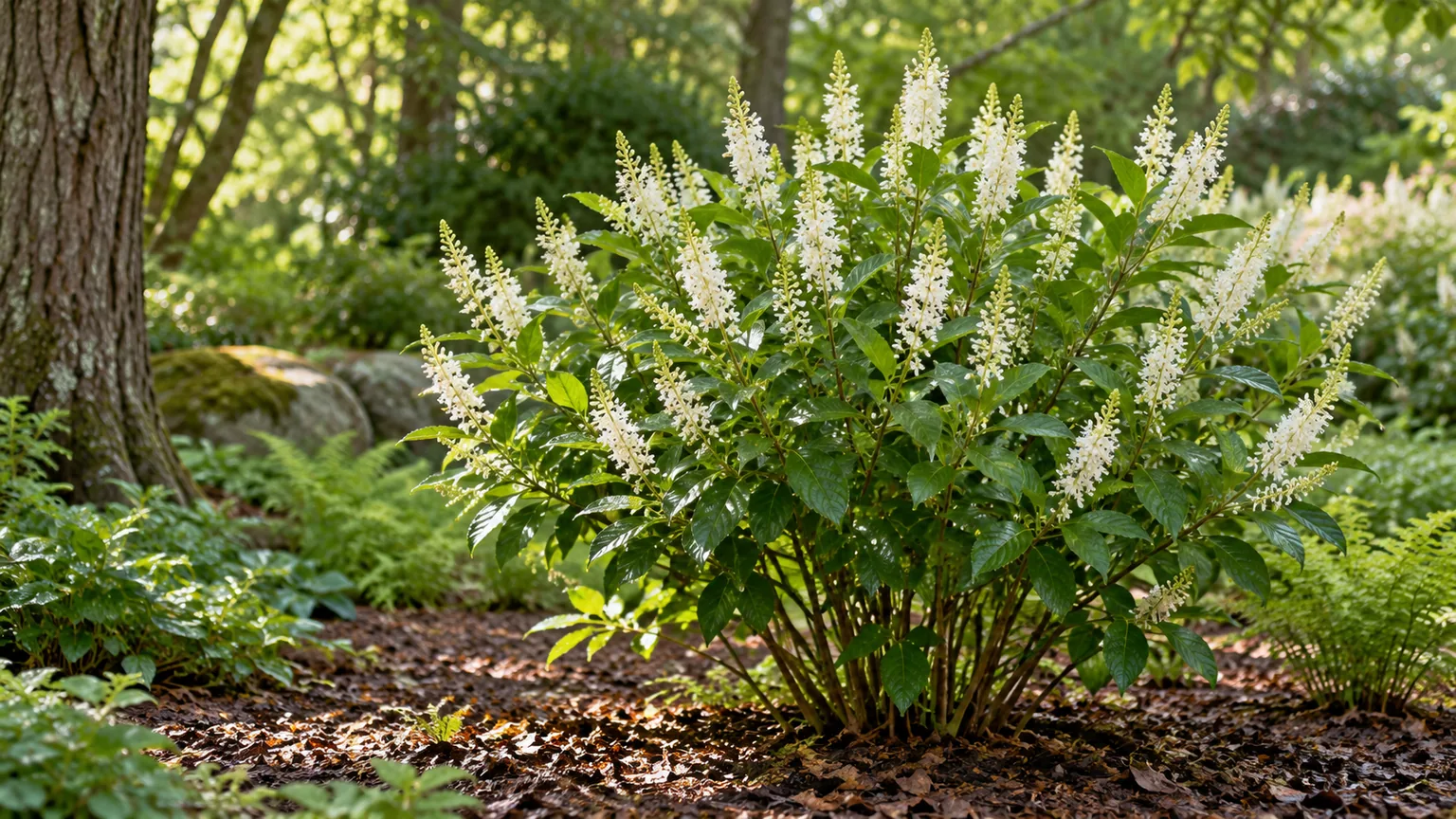
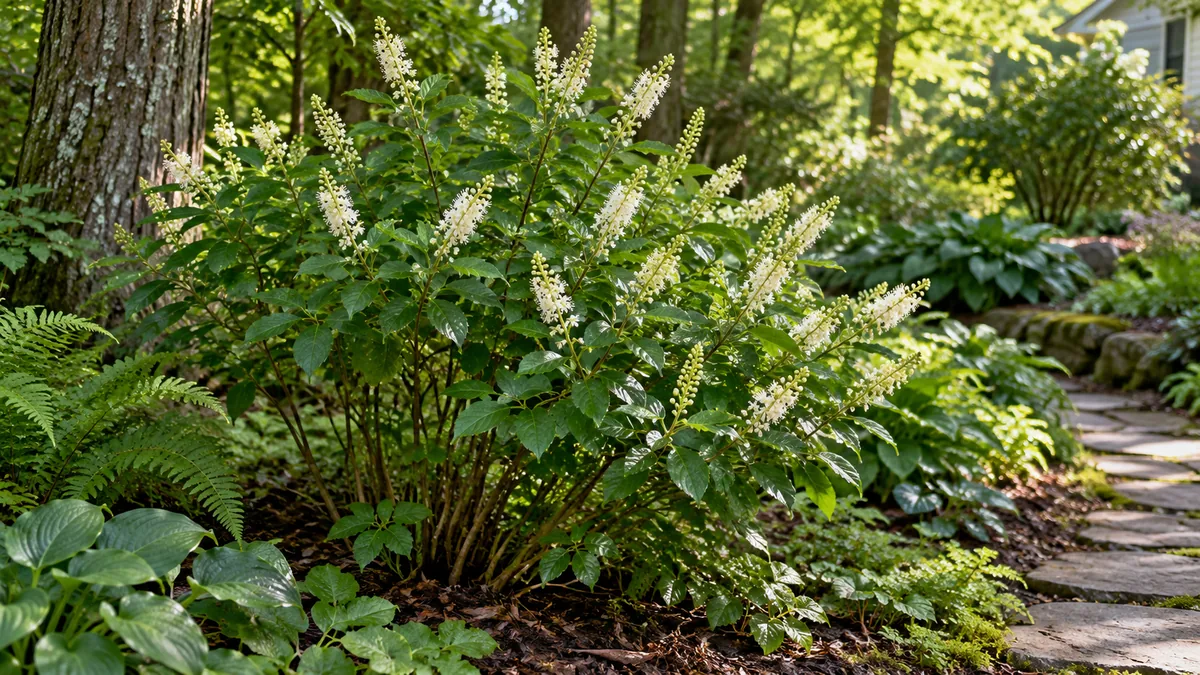
Summersweet (Clethra alnifolia), also called sweet pepperbush, is a deciduous native shrub for gardeners who need late-summer flowers in a bed that stays damp. Its upright white or pink flower spikes are fragrant, and the shrub can grow in partial shade where many flowering shrubs bloom less reliably. The same traits that make it useful—moisture tolerance and a tendency to send up root suckers—also determine where it belongs and how much room it needs.
For reliable establishment, match the plant to a spot with moist, preferably acidic soil, give it morning or filtered sun in hotter climates, and water the root ball before it dries during its first growing season. Choose a named compact cultivar if the bed is small. Prune in late winter or early spring, before growth begins, because summersweet flowers on new shoots.
Summersweet at a Glance
| Feature | What to expect |
|---|---|
| Botanical name | Clethra alnifolia |
| Habit | Multi-stemmed, deciduous shrub; may spread by suckers |
| Typical size | About 3 to 8 feet tall; width varies by cultivar and suckering |
| Light | Full sun to partial shade; afternoon shade helps in hot, dry climates |
| Soil | Moist, humus-rich soil; acidic conditions are preferred |
| Flowers | Fragrant white or pink upright spikes in mid- to late summer |
| Hardiness | Often listed around USDA Zones 4–9; verify the selected cultivar and local nursery guidance |
The range of mature sizes is real, not just a labeling inconsistency. The species can reach a large shrub size, while compact selections such as ‘Hummingbird’ and ‘Sixteen Candles’ are bred for smaller spaces. The University of Connecticut Plant Database describes the species as a 5- to 8-foot shrub with colonial, suckering growth, while Mt. Cuba Center’s profile lists ‘Hummingbird’ at about 3 to 4 feet. Use the cultivar’s stated mature width—not just the height on a tag—to set spacing.
What Makes Summersweet a Useful Garden Shrub
Summersweet is native to eastern North America, where it grows in moist woods, damp thickets, and wetland edges. It brings a particular combination to a home garden: late-season fragrance, tolerance for partial shade, and the ability to handle reliably moist ground. NC State Extension’s plant profile notes that its late-summer flowers provide nectar and pollen for pollinators; the dry capsules that follow can persist into winter and supply seeds for birds.
This shrub works well where you can appreciate its scent from a path, patio, or frequently used garden seat. A single plant can be a specimen, but several shrubs can also form a loose screen or a naturalized drift. Along a pond margin or rain-garden edge, suckering can help fill the space; next to a narrow walkway or a small foundation bed, that same habit may require regular removal of shoots.
Choose Light That Matches Your Climate
Summersweet grows in full sun to partial shade. More light can support heavier flowering, but direct afternoon sun is not an advantage if the root zone dries quickly. In a hot-summer region, morning sun with dappled shade later in the day is a useful compromise: the shrub still gets light, while its leaves and shallow feeder roots face less heat stress.
In cooler or naturally moist climates, the plant can tolerate more sun if the soil does not dry out. In deeper shade it may still grow, but expect fewer flowers and a looser or less evenly leafy shape, especially at the base. Before planting, watch the spot through part of a summer day; a place described as “part shade” can be very different depending on whether the shade falls at noon or during the hottest afternoon hours.
If the only available location is hot and dry, choose a different shrub or plan to irrigate consistently. NC State Extension cautions that summersweet does not tolerate a hot, dry site, even though established plants can endure brief dry spells. Drought tolerance is a survival buffer, not a reason to place it in a bed that bakes every afternoon.
Set Up Soil That Stays Moist
The best soil is moist, rich in organic matter, and on the acidic side. The shrub also tolerates a range of textures, including clay and sandy soil, as long as the root zone does not repeatedly swing from saturated to bone-dry. The University of Connecticut Plant Database and Oregon State University’s landscape profile both list moist, acidic soil as the preferred growing condition; NC State Extension also notes tolerance of occasionally wet ground and brief flooding once established.
“Wet-soil tolerant” does not mean every summersweet should sit in stagnant water. A streambank or pond edge that drains gradually differs from a sealed low spot where water remains for days after rain. If the site is waterlogged for long periods, plant on a slightly raised mound or choose a species adapted to permanent inundation; do not try to solve poor drainage by adding a little compost only to the planting hole.
A soil test is more useful than guessing the pH from nearby plants. If the result shows alkaline soil, follow local extension recommendations before adding sulfur or another acidifying product; amendments act slowly and the amount depends on the soil. For a normal garden bed, blend organic matter into a broad area rather than creating a rich pocket in an otherwise compacted or dry bed. That encourages roots to expand through a consistent moisture zone.
Pick a Site That Fits Its Mature Size and Spread
Plan for width as carefully as height. Standard summersweet often reaches several feet across, and a happy plant can send up new shoots around the original crown. A specimen can be given space to develop into a rounded multi-stem shrub; a colony can be allowed to naturalize along a stream or wet woodland edge. In a tight border, choose a compact cultivar and inspect the label for spread, not merely the attractive height figure.
Think about what will be around the shrub five years from now. Its roots should not be crowded against a hot paving edge, and suckers should not be allowed to disappear under a hedge or into a neighbor’s bed. If you want a screen, space plants according to the expected mature width and leave enough room to reach the base for pruning and sucker removal. Do not plant it solely as a quick privacy hedge if you need a narrow, evergreen screen; summersweet loses its foliage in winter and may not stay within a formal line without repeated shaping.
A location near a path makes the fragrance easier to notice, while a moist, shaded bed can turn an awkward site into a useful planting area. Look for a woodland-edge position where dappled light and steady soil moisture occur together.
Plant Summersweet Without Burying the Root Flare
Plant in spring or early fall when the weather is mild and the soil is workable; Harvest to Table’s growing profile also recommends spring or fall planting. Avoid setting out a newly purchased shrub during a heat wave unless you can keep the root ball consistently moist. Water the container before planting so the root mass is damp, then slide it out gently. If the roots circle tightly around the pot, tease the outer roots loose; do not tear apart the root ball unnecessarily.
Dig a hole about as deep as the root ball and wider than it. Set the shrub so the point where the stems meet the roots sits level with, or slightly above, the surrounding soil. Backfill with the excavated soil, firm it lightly to remove large air pockets, then water slowly so the soil settles around the roots. Planting too deep traps moisture against the crown and makes it harder to distinguish a water problem from transplant stress.
Apply a 2- to 3-inch layer of leaf mold, shredded bark, or another organic mulch over the root zone. Keep the mulch a few inches away from the stems so the crown is not buried. A broad mulch ring reduces evaporation and moderates soil temperature; piling mulch against the stems does not improve moisture and can keep the crown too wet.
For a row or grouping, allow for both the chosen cultivar’s mature spread and any suckers you plan to keep. A widely spaced planting takes longer to look full but needs less thinning later. If you are unsure how the shrub will behave in your yard, start with one plant, watch for suckers over a season, and expand the grouping only if the spread suits the space.
Water by Checking the Root Zone
During establishment, water deeply enough to moisten the original root ball and the soil just beyond it. Check the soil with a finger or narrow trowel rather than watering by day of the week: if the top couple of inches are beginning to dry and the root ball feels lighter or crumbly, water slowly; if the soil is still wet and cool, wait. The plant needs steady moisture, not a permanent puddle around its crown.
For the first growing season, check more often during hot or windy weather, especially if the shrub is planted in sand, a raised bed, or near pavement. A slow soak is more useful than a quick surface spray, which can wet the leaves while leaving much of the root ball dry. Mulch helps hold moisture, but it does not replace checking the soil during a long rain-free spell.
Once established in a suitable site, summersweet needs less supplemental watering than a new transplant. Still, a mature plant can show stress in prolonged drought, and dry conditions can make spider mites more likely. If leaves begin to droop or brown at the margins, check the soil moisture at root depth before assuming the problem is fertilizer or disease. Water when the soil is dry; do not automatically add more water to soil that is already saturated.
Fertilizer: Start With the Soil, Not the Bag
A shrub that is putting on steady growth and flowering does not need an automatic annual feed. Summersweet prefers organic, moist soil, so a thin layer of compost or refreshed mulch is often a more measured first step than a high-nitrogen fertilizer. Excess nitrogen can push leafy shoots that need pruning without fixing a dry, hot, or excessively shaded site.
If growth is weak or leaves are pale, look for a cause before feeding: check that the root ball is neither dry nor waterlogged, confirm that the plant receives enough light, and inspect the leaf undersides for mites. A soil test can determine whether pH or nutrients need adjustment. If a test or local extension recommendation supports fertilizer, apply a product labeled for woody shrubs at the stated rate and timing; do not double the dose to force flowers.
Flowers, Fragrance, and Seasonal Growth
Summersweet’s upright clusters of small flowers open in mid- to late summer, often when many spring-flowering shrubs are finished. The scent can be noticeable beyond the shrub itself, so placement matters: a specimen near a walkway or patio is easier to enjoy than one tucked behind a shed. Flower color is usually white, though several cultivars carry pink buds or flowers.
A young shrub may take time to settle before flowering heavily. It also blooms on current-season growth, so a plant that was cut back after spring growth began may have fewer flowers that year. Flower timing varies with climate, exposure, cultivar, and the season; a late cultivar such as ‘September Beauty’ may not open at the same time as an early selection in the same garden.
After flowering, the small dry capsules can stay on the branches through colder months. They add subtle winter texture and contain seed, so deadheading is optional. Remove spent spikes only if you prefer a tidier look; deadheading does not create a second flush of flowers.
Prune After Winter, Before Growth
Prune in late winter or early spring, while the shrub is dormant and before new shoots elongate. Because flowers form on new growth, pruning at this stage allows the branches time to produce flowering shoots in the coming season. If you wait until the shrub has leafed out or begun flowering, you may remove buds or reduce that summer’s bloom.
Most summersweet needs little routine shaping. Start by removing dead, broken, crossing, or unusually weak stems at their point of origin. To thin a crowded multi-stem shrub, take out a small number of the oldest stems near ground level rather than shearing every branch into a flat surface. This opens the plant while preserving its naturally rounded form and allowing new stems to replace old ones.
Use pruning to control size only when the selected cultivar and site cannot be changed. If a shrub is much too large for the bed, repeated severe cuts may keep it temporarily smaller but can produce a dense flush of stems and demand more work each year. A compact cultivar or a location where suckers can be managed is often a better long-term fix. NC State Extension and Mt. Cuba Center both place pruning in the dormant or late-winter period; the key is to finish before new growth begins.
You can also remove unwanted suckers when they are small. Cut them at the point where they emerge if you want the main plant to remain a specimen, or dig a rooted sucker if you want to propagate it. Do not mow or damage the crown while trying to keep a colony contained; clear identification of the main stems makes removal easier.
Choose a Cultivar for Your Space
Cultivar choice changes the mature scale, flower shade, and bloom schedule. The species itself can be a substantial shrub, while selected forms stay more compact. Descriptions vary by nursery and climate, so use the plant tag as a starting point and confirm the mature spread before buying several plants.
- ‘Hummingbird’ is a compact white-flowered selection, commonly described around 3 to 4 feet tall. It suits smaller borders better than the full-sized species, though it still appreciates moist soil and room for growth.
- ‘Sixteen Candles’ is another compact, white-flowering selection. The Morton Arboretum lists it at roughly 2 to 3 feet high and wide, making it useful where a low shrub is needed.
- ‘Ruby Spice’ is selected for pink flowers that hold their color better than some pink forms. It is a good choice when flower color matters, but do not assume every pink summersweet will remain deep pink as blooms age.
- ‘Pink Spires’ carries pink flowers and may grow taller than compact selections. It fits a larger border or loose screen where a taller form can be accommodated.
- ‘September Beauty’ is noted for flowering later than the species, which can extend the season in a mixed shrub planting.
- ‘Sugartina Crystalina’ is marketed as a small, compact plant with fragrant white flowers; check the current supplier’s dimensions because labeled mature size can differ among cultivars and production sources.
The point is not to find one universally “best” summersweet. Pick for the job: compact forms for small beds, a taller species or cultivar for a loose screen, and pink selections if color is a priority. When flowering overlap matters, compare expected bloom time with other shrubs in your local climate rather than relying on a calendar date from another region.
Propagate Summersweet by the Method That Fits Your Goal
There are three practical ways to increase summersweet: root a softwood cutting, separate a rooted sucker, or grow seedlings. A sucker or cutting preserves the characteristics of a named cultivar, while seedlings can vary. For the quickest, simplest result, buy a plant; for a free clone, a rooted sucker is usually the least equipment-intensive option if the parent plant is healthy and you can dig without damaging its roots.
Root Softwood Cuttings
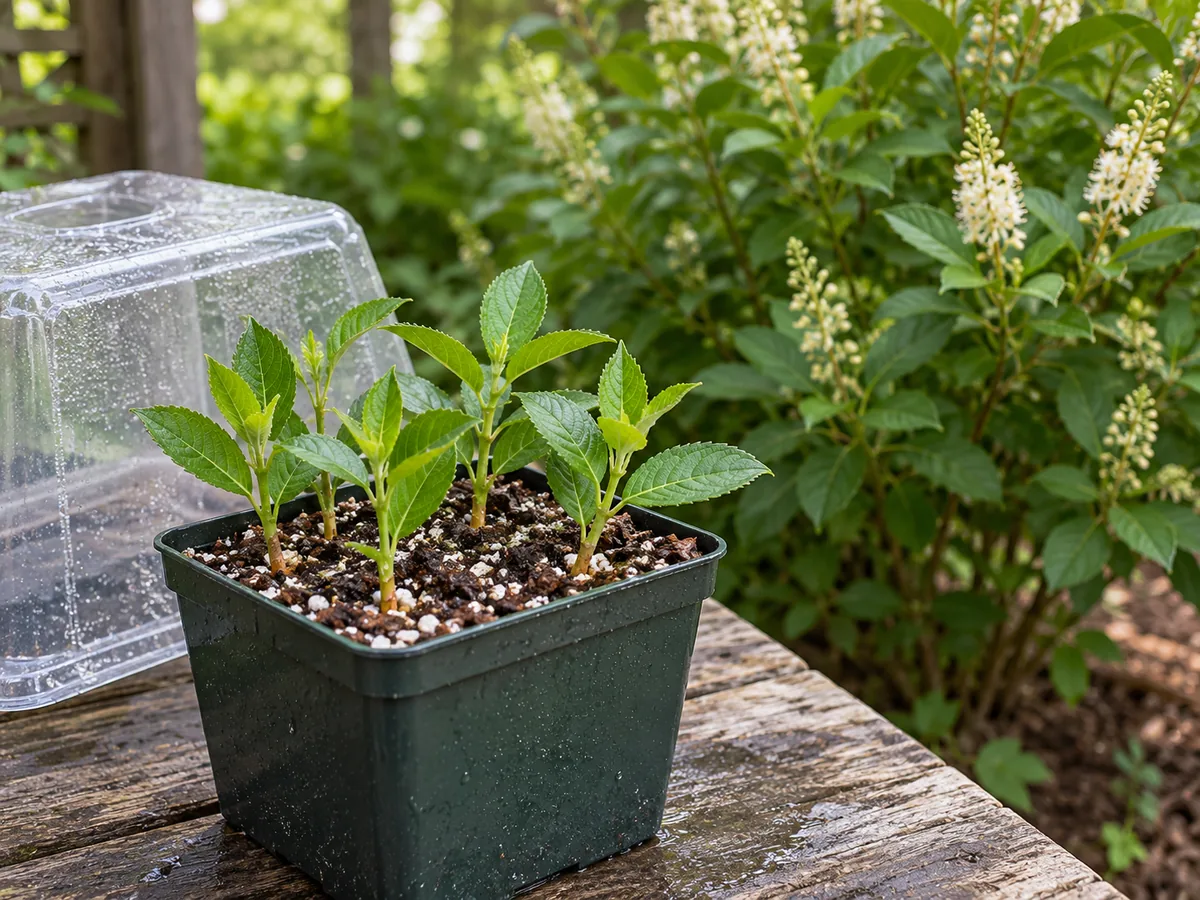
Take softwood cuttings in early summer when a new shoot is flexible but not limp; GardenersPath’s summersweet guide also identifies young softwood growth as the cutting material to use. Use clean, sharp pruners and select healthy, non-flowering tips from a vigorous branch. A cutting with a short, firm stem and several leaves is easier to handle than a long shoot that wilts as soon as it is removed.
Prepare a small pot with a moist, airy rooting mix and make a hole before inserting the cutting so the stem is not scraped. Remove leaves from the lower portion, dip the cut end in rooting hormone if desired, and insert the stem deeply enough to stand upright. Keep the remaining leaves above the mix. Cover the pot loosely with a clear humidity cover, but prevent the plastic from pressing against the leaves, and place it in bright shade rather than full sun.
Keep the mix damp, not waterlogged, and open the cover briefly if condensation stays heavy or mold appears. Check for roots after several weeks by watching for steady new growth and gently testing for resistance; avoid tugging repeatedly, which can break new roots. Once rooted, acclimate the cutting gradually to outdoor air and light before planting it in a permanent moist site. A new cutting is more vulnerable to drying than a mature shrub, so do not place it straight into a hot, exposed bed.
Separate a Rooted Sucker
A sucker is a new shoot connected to the parent plant by a spreading root. In early spring or fall, choose a small, healthy sucker that already has its own roots. Follow the connecting root into the soil, then sever it cleanly from the parent with a sharp spade. Keep as much of the sucker’s root system as you can, and lift it with a generous soil plug rather than pulling from the stem.
Replant it promptly at the same depth, water thoroughly, and shade it from intense sun while it re-establishes. If it wilts, check soil moisture first; a newly divided sucker has fewer roots than the parent and cannot search as widely for water. This method is especially useful when you want the same cultivar or need to move a shoot that is growing into a path. Avoid digging suckers from a stressed plant, because division adds another demand to a shrub already trying to recover.
Grow From Seed When Variation Is Acceptable
Seed is useful when you want several shrubs for a naturalized area and do not need each plant to match a named cultivar. Advice differs on whether a cold period is essential; UConn lists seed as a propagation method without prescribing pretreatment, while GardenersPath recommends letting collected seed experience natural winter conditions. A protected outdoor fall sowing is a low-effort option: collect mature, dry capsules, sow the small seeds in a labeled pot or tray, and let the container experience seasonal conditions. Keep the medium lightly moist and watch for seedlings as spring temperatures rise; germination can be uneven, and the young shrubs need time to become landscape-sized plants.
Do not assume seedlings will reproduce the parent’s flower color, compact habit, or precise bloom time. Named cultivars are selected and propagated to preserve specific traits, while seed-grown plants can vary. If you have one prized cultivar and want another identical shrub, use a rooted sucker or cutting instead.
Diagnose Common Summersweet Problems
Summersweet is generally trouble-free when its site is moist and not excessively hot. If the foliage looks poor, start with the root zone and exposure before adding fertilizer or spraying. Dry soil, an overly hot afternoon position, root disturbance, and competition from nearby trees can all create symptoms that resemble disease.
Spider mites are most likely during hot, dry weather, a pattern also noted by NC State Extension and GardenersPath. Look for fine stippling or a dusty, faded look on leaves, and inspect the undersides for tiny moving mites or fine webbing. First restore even moisture to the root zone and rinse the foliage, especially leaf undersides, with a firm but plant-safe stream of water. Recheck after several days. If the damage continues to spread, identify the pest and follow local extension advice and the label for any treatment; broad-spectrum insecticides can harm beneficial insects and may worsen mite problems by removing natural predators.
Leaf spots may appear during unusually wet periods, as described in GardenersPath’s care guide, but a few damaged leaves do not automatically call for a fungicide. Remove fallen, badly affected foliage, avoid keeping the shrub crowded against other plants, and water the soil rather than repeatedly soaking leaves late in the day. If symptoms progress despite improved airflow or appear on multiple plants, take clear photos and consult a local extension office for diagnosis rather than treating a guess.
Why Is Summersweet Not Blooming?
Check possible causes in this order:
- Pruning was too late. If you cut back stems after spring growth began, you may have removed the new shoots that would carry flowers. Wait until the next dormant pruning window and observe the following season.
- The site is too shady. Summersweet tolerates partial shade, but deep shade may reduce flowers. If practical, increase light by relocating the shrub during dormancy or thinning a nearby obstruction without damaging its roots.
- The root zone dried out. Hot, dry soil can slow growth and reduce flower production. Check moisture at root depth, especially near a wall, pavement, or large tree.
- The shrub is still establishing. A newly planted or recently divided plant may spend its energy rebuilding roots and stems. Give it consistent moisture and time before judging its mature bloom performance.
- The cultivar flowers later or less heavily in your climate. Compare the plant’s label and local timing with the rest of the garden; do not diagnose a failed shrub before its normal bloom window has passed.
A healthy plant with green foliage but no flowers usually needs a site or timing adjustment, not a stronger fertilizer dose. High nitrogen can encourage leafy growth without correcting shade, drought, or pruning mistakes. Change one factor at a time so you can see whether the shrub responds.
Protect the Roots Through Winter
A healthy, established summersweet is cold-hardy across a broad range, but newly planted shrubs benefit from stable soil moisture and a mulch layer. Before the ground freezes, refresh mulch over the root zone to about 2 to 3 inches, keeping it away from the stems. In windy or exposed locations, the mulch helps reduce rapid freeze-thaw changes and limits winter drying.
Do not wrap a hardy shrub in plastic or keep adding fertilizer in late summer to “prepare” it for winter. Late-season growth may not harden before cold weather, and excess fertilizer does not improve winter survival. In spring, pull mulch back from the crown if it has shifted inward, remove winter-damaged tips, and wait for buds to swell before deciding whether a stem is truly dead.
Conclusion
Summersweet is at its best where the soil stays moist, the light is bright but not punishingly hot, and there is enough room for its mature form or suckers. Choose a compact cultivar for a small border, keep the root ball evenly moist while a new shrub establishes, and use a soil test before trying to change pH or add fertilizer. Prune before spring growth, because flowers form on the new shoots you want to keep.
If the shrub does not bloom or its leaves look stressed, check exposure, moisture, pruning timing, and establishment before treating it as a pest or nutrient problem. With those decisions settled, summersweet can provide fragrant mid- to late-summer flowers, fall color, and winter seed capsules in a site that might otherwise remain difficult to plant.