12 Ground Cover Plants for Shade by Site and Spread
Find ground cover plants for shade that fit dry tree roots, moist woodland soil, or deep shade, with clear notes on regional fit and maintenance.
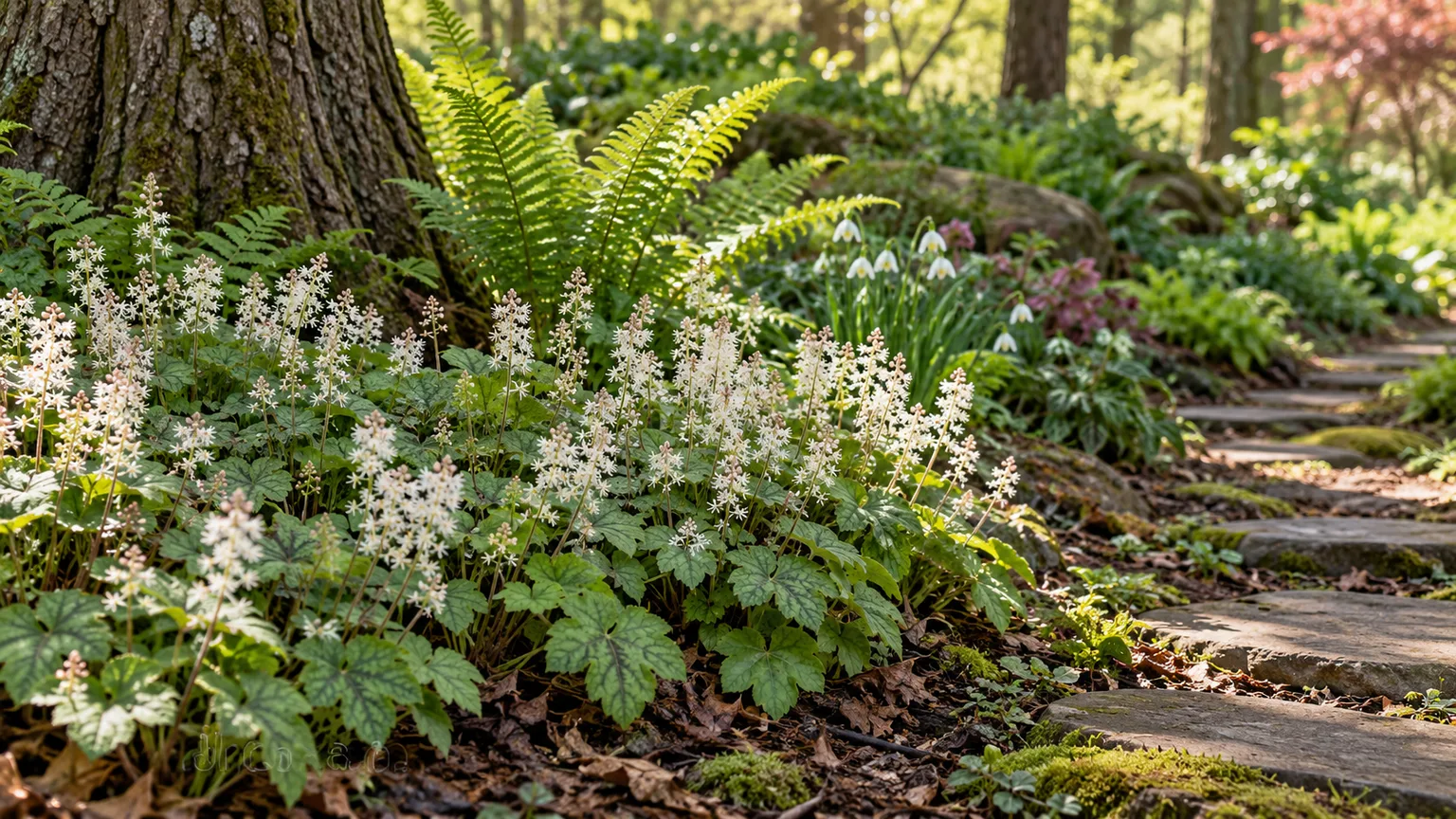
A bare patch under a tree looks like a light problem, but it is often a water and root problem too. The canopy blocks some rain, established tree roots compete for what reaches the soil, and the ground may be dry even when the rest of the garden is damp. A plant that thrives in a cool woodland bed can stall in that spot, while a vigorous runner may cover the patch and then move into lawn or neighboring planting beds.
The best ground cover plants for shade match the site’s moisture, climate, and acceptable spread. Below are 12 choices with those trade-offs made clear. Many of the strongest native options in this guide are eastern North American species, so treat the list as a starting point and check the plant’s native range and invasive status where you live.
Start with the site, not the plant tag
“Shade” can mean anything from bright open shade beside a building to deep shade below a mature evergreen. It does not tell you whether soil stays damp, dries quickly, or holds water after rain. Before buying plants, watch the spot through a typical day and check the soil a few inches below the surface after both dry and wet weather.
Separate low light from dry soil
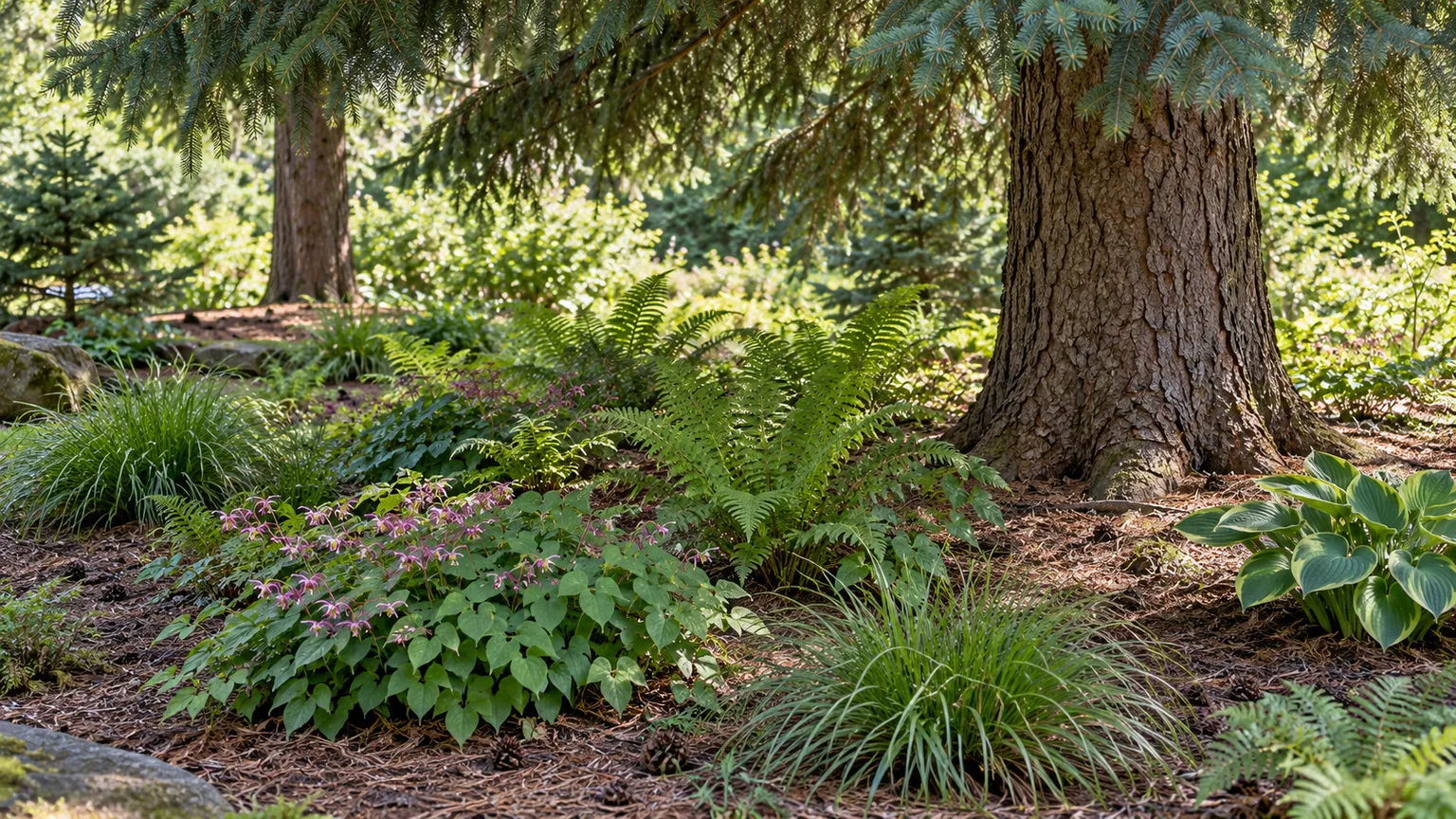
Dry shade is common beneath large trees and along roofed walls: little direct sun reaches the bed, and the soil dries between rains. In a woodland hollow, shade may instead come with moist, humus-rich soil. Those are different planting environments. Barrenwort, Allegheny spurge, and some wild gingers can cope with drier shade once established; foamflower and bunchberry need more reliable moisture and are poor choices for an exposed, baked root zone.
Also distinguish dappled shade from dense shade. A site under a deciduous tree may receive useful light before leaf-out and brief moving patches of sun in summer. Under a deep evergreen canopy, flowering can be reduced and the soil may be exceptionally dry. A shade-tolerant label does not mean “will grow in any dark, dry place.”
Decide how much spread you can manage
Groundcovers close gaps by different means. A clump-former such as hosta expands gradually from its crown; a stoloniferous plant sends surface runners; rhizomes spread below ground; and a self-seeder can appear beyond the original planting. The fast option fills space sooner but takes more boundary maintenance. For a small bed beside delicate perennials, prefer clumping or slow-spreading plants. For a large woodland edge, a faster native colony may be exactly what you want.
| Plant | Best fit | How it fills space | Main limitation |
|---|---|---|---|
| Allegheny spurge | Eastern woodland, dry to average shade | Slowly expanding clumps and rhizomes | Regional native; slow to knit |
| Foamflower | Cool, moist, humus-rich shade | Stolons and self-naturalizing growth | Does not like summer drought or winter saturation |
| Wild ginger | Part to full shade, woodland soil | Slow rhizomes | Needs local species selection and time |
| Green-and-gold | Eastern shade with average moisture | Stolons and seed | Can wander where conditions suit it |
| Bunchberry | Cool northern, acidic woodland | Rhizomes | Heat, alkaline soil, and clay are poor fits |
| Partridgeberry | Acidic woodland under shrubs or trees | Slow trailing stems | Too slow for quick coverage |
| Creeping phlox | Part shade with moist, drained soil | Spreading stems | Not the same plant as sun-loving moss phlox |
| Dwarf crested iris | Eastern woodland with medium moisture | Rhizomes | Spring flowers are brief; foliage is modest |
| Three-leaved stonecrop | Shaded, well-drained pockets | Creeping stems that root at nodes | Avoid waterlogged ground |
| Golden ragwort | Larger moist woodland beds | Roots and seed | Can be too vigorous for small borders |
| Hosta | Managed beds with average moisture | Expanding clumps | Deer often browse it; clumps leave gaps at first |
| Barrenwort | Dappled or deep shade, including dry shade | Slow rhizomes or clumps, by species | Takes patience to make a continuous carpet |
12 ground covers matched to shady sites
1. Allegheny spurge (Pachysandra procumbens)
Choose Allegheny spurge when you want the look of a low, leafy carpet in an eastern woodland garden and would rather avoid Japanese pachysandra. This southeastern and eastern North American native has attractive mottled leaves and early spring flowers; its growth is more restrained than the rapidly running Japanese species. The Brooklyn Botanic Garden describes it as a clumping plant that spreads steadily, and the South Carolina Native Plant Society recommends it for shaded gardens with well-drained, organic-rich soil. (Brooklyn Botanic Garden; South Carolina Native Plant Society)
Use it in dappled or full shade where the soil drains, including beneath deciduous trees after establishment. It is not an instant weed barrier: buy enough plants for the planned area, keep weeds out while the clumps expand, and allow several seasons for coverage. The native label applies to a particular region, not to every U.S. state.
2. Foamflower (Tiarella cordifolia)
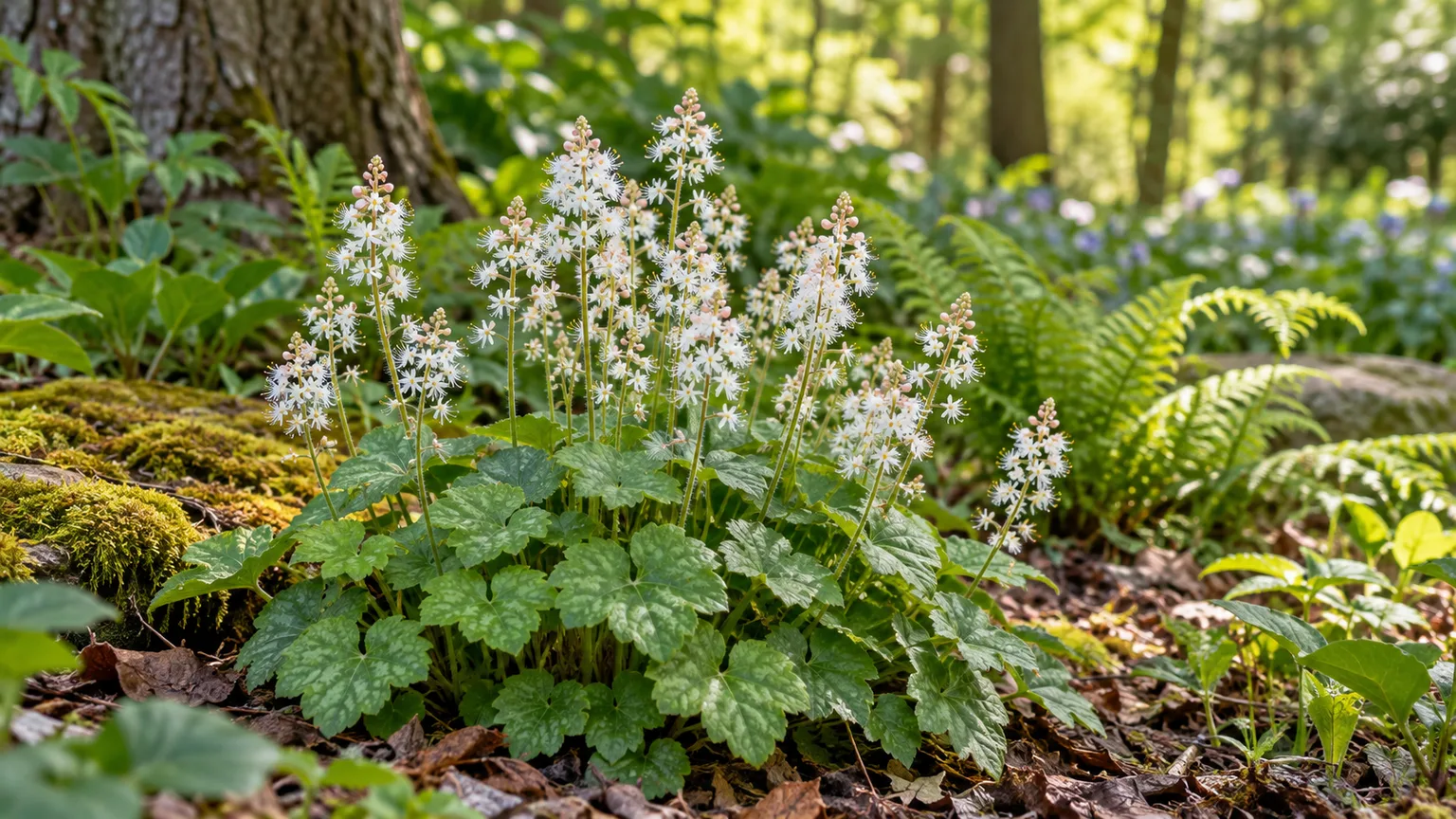
Foamflower earns its place in a shady bed for both its maple-like foliage and airy spring flower spikes. It is a better fit for a woodland border with humus-rich soil that stays evenly moist than for the dry soil directly below a thirsty maple. The species spreads by stolons and can form a colony, so it is useful where you want a connected patch rather than isolated rosettes. (South Carolina Native Plant Society)
Give it good drainage as well as moisture; “consistently damp” does not mean waterlogged. In hot-summer areas, watch it through the first dry spell and water deeply if the root zone dries. If your site regularly dries out in summer, choose barrenwort or Allegheny spurge instead. Some foamflower selections are clump-forming and do not cover ground as quickly, so check the cultivar’s habit before buying.
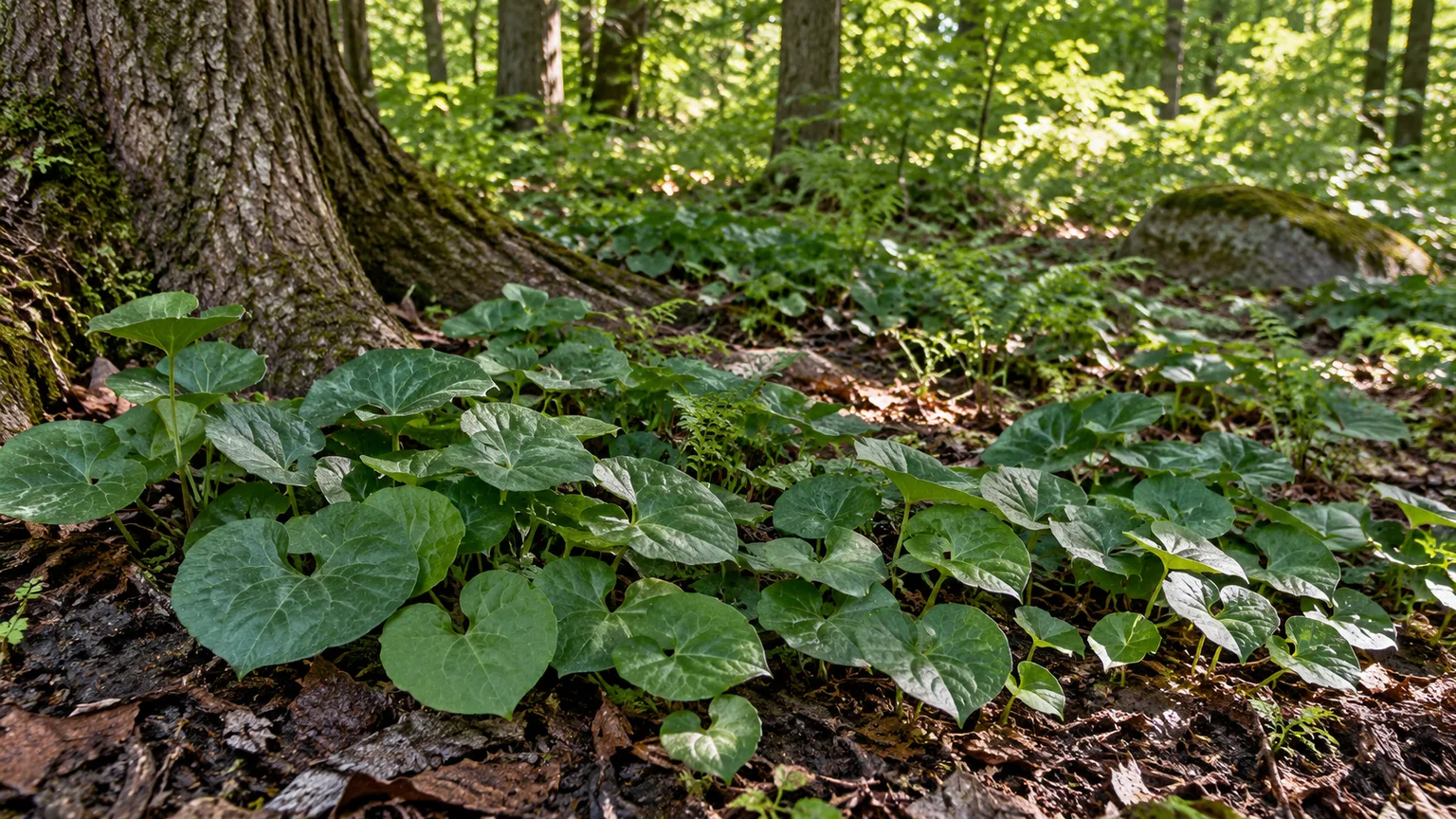
3. Wild ginger (Asarum canadense)
The broad, heart-shaped leaves of wild ginger make a calm, low layer under deciduous trees. Asarum canadense spreads by rhizomes, usually at a measured pace, and is suited to part or full shade. The South Carolina Native Plant Society describes it as a woodland groundcover that prefers acidic, well-drained soil with steady moisture; it also notes that slugs and snails may occasionally chew the foliage. (South Carolina Native Plant Society)
Do not confuse this eastern North American woodland plant with culinary ginger. It is not a quick-fill choice, and different Asarum species have different native ranges and tolerances. Choose the species native to your region when possible, then give it time to spread. Under a dense tree canopy, water it while it establishes instead of assuming that shade keeps the soil moist.
4. Green-and-gold (Chrysogonum virginianum)
If you want flowers as well as foliage, green-and-gold brings bright yellow blooms to part or full shade. This low eastern native spreads by stolons and seed. In South Carolina, the native plant society describes it as a quick mat-former, but recommends keeping it consistently moist while it establishes; moisture needs increase as the site gets sunnier. Established plants can fill irregular woodland edges more naturally than a rigid row of individual clumps. (South Carolina Native Plant Society)
Use it where some movement is welcome and edge the planting if you need a crisp line beside a path. It is not the choice for a nearly dry bed unless you can irrigate during establishment. Cultivars can vary in shape and spread, so check the mature habit if you need a very short, tidy carpet rather than a naturalized patch.
5. Bunchberry (Cornus canadensis)
Bunchberry looks like a miniature woodland dogwood, with whorled leaves, white bracts, and red berries, but its climate needs make it a specialist. Fine Gardening describes it as a groundcover for cool-summer climates and warns that hot southern conditions, clay, and even slightly alkaline soil can cause failure. It favors acidic, well-structured woodland soil that stays evenly moist. (Fine Gardening; RHS)
Plant it in northern or cool, high-elevation gardens where its natural conditions can be approximated. Do not choose it just because a catalog lists a hardiness zone that includes your location; winter cold tolerance does not guarantee tolerance of hot summers or unsuitable soil. If summers are hot or your soil is heavy clay, pick another option from this list.
6. Partridgeberry (Mitchella repens)
For a small patch of true woodland ground, partridgeberry offers evergreen leaves, fragrant white flowers, and red berries. It trails rather than climbs, and the South Carolina Native Plant Society recommends it particularly beneath acid-loving shrubs and trees in humus-rich soil. It is slow to establish, which makes it a poor bargain if you expect a bare slope to disappear by next summer. (South Carolina Native Plant Society)
Use it as an understated filler around larger woodland plants, or buy enough plugs to create the coverage you want without waiting for a few plants to travel across a large bed. It is a good example of why “groundcover” does not always mean fast-growing. Keep foot traffic off the area while stems settle in, and let fallen leaves contribute a natural woodland mulch.
7. Creeping phlox (Phlox stolonifera)
Creeping phlox is a good choice for part shade when the soil is moist but drains well. It spreads by above-ground runners and can make a loose mat with spring flowers. Do not confuse it with moss phlox (Phlox subulata), a different species commonly used in sunny, dry rock gardens. The Brooklyn Botanic Garden and South Carolina Native Plant Society both describe P. stolonifera as a shade-capable groundcover that spreads into colonies. (Brooklyn Botanic Garden; South Carolina Native Plant Society)
Give creeping phlox morning light or dappled shade if you want better flowering, but do not put it in a hot afternoon sun pocket and expect the same performance. Its foliage can remain attractive after bloom, yet it is not a deep, dark evergreen carpet in every climate. Place it where you can see the flowers and where its runners will not smother smaller neighbors.
8. Dwarf crested iris (Iris cristata)
Dwarf crested iris suits a woodland edge where you want a low spring-blooming plant among other perennials. It spreads by rhizomes, tolerates part to full shade, and prefers organically rich, well-drained soil with medium moisture. The South Carolina Native Plant Society notes that bloom can be lighter in full shade, so treat it as a foliage-and-seasonal-flower layer rather than a flower carpet all summer. (South Carolina Native Plant Society)
Plant it where the flowers can be appreciated and combine it with a longer-lived foliage groundcover if you need full soil coverage. This avoids a common design disappointment: a plant that is lovely for a few weeks but leaves visible gaps for the rest of the season. Confirm its local native range before using it in a restoration-style planting.
9. Three-leaved stonecrop (Sedum ternatum)
The native three-leaved stonecrop is a small, fleshy-leaved groundcover for shaded, well-drained places. Its creeping stems can root at nodes, which helps it occupy crevices and rocky edges without requiring a deep layer of rich soil. The South Carolina Native Plant Society describes it as drought resistant once established while also emphasizing shade and drainage; that balance makes it more useful in a partly shaded rock garden than in permanently wet ground. (South Carolina Native Plant Society)
Although it belongs to a genus associated with sun-loving succulents, do not transfer the care assumptions for a sunny sedum to every species. Give this one enough water to establish, and avoid waterlogged soil. It is a modest groundcover, not a substitute for a fast-growing weed barrier across a large bed.
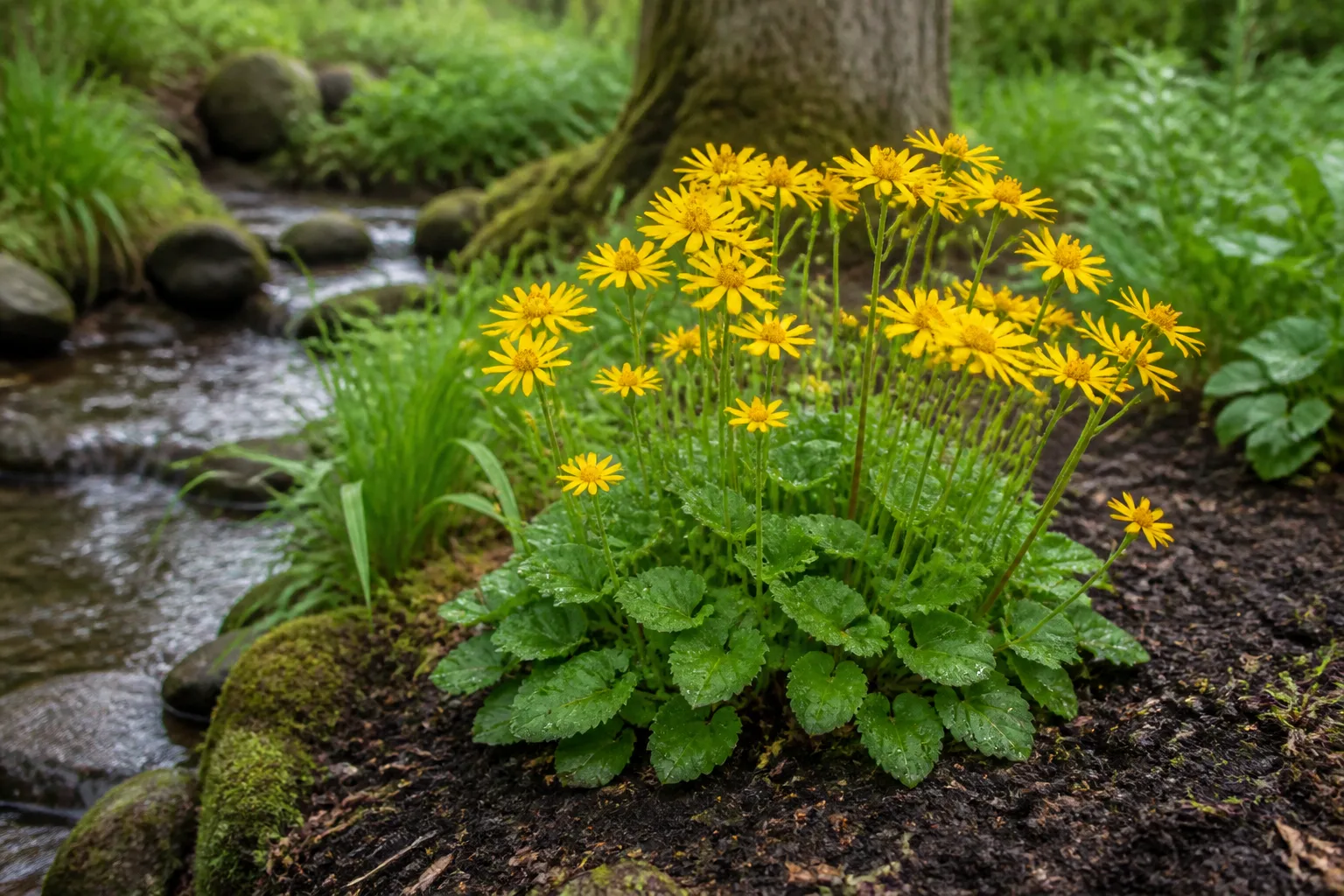
10. Golden ragwort (Packera aurea)
Golden ragwort is useful when you need a vigorous native cover for a larger, moist-to-average woodland area. Its yellow spring flowers brighten shade, and the plant spreads through underground growth and seed. The South Carolina Native Plant Society warns that it colonizes readily and has low drought tolerance. Those traits make it an asset on a generous woodland edge and a poor choice beside small, delicate perennials or in a dry tree well. (South Carolina Native Plant Society)
Before planting, decide where you want the colony to stop. Remove seedlings beyond that boundary while they are small, and do not place it in a bed where you expect every plant to remain in a precise footprint. If your patch is dry, use barrenwort or Allegheny spurge instead of trying to compensate with constant irrigation.
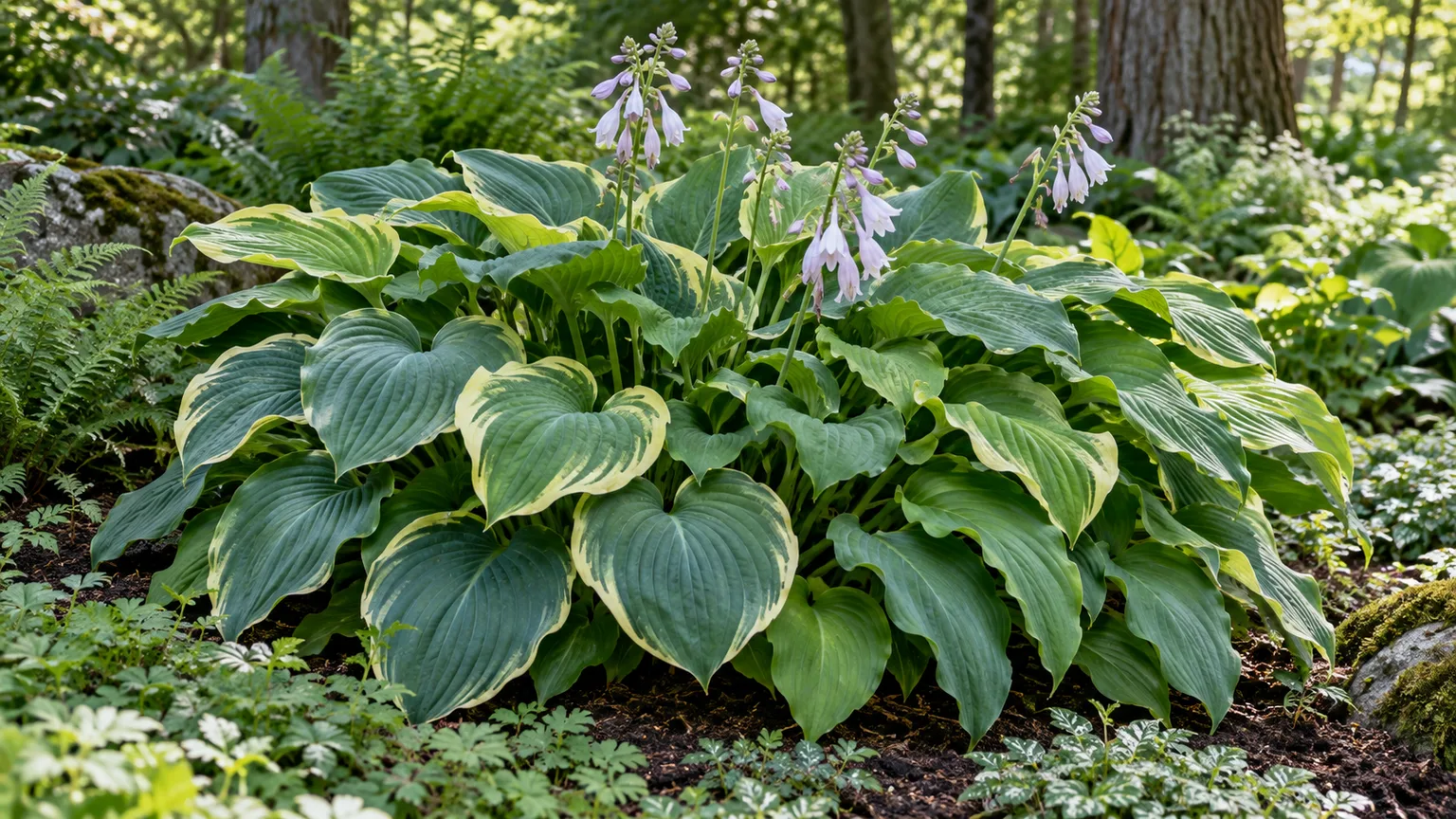
11. Hosta (Hosta spp.)
Hostas are a practical choice when you want reliable foliage and gradual, visible clumps rather than runners. Their leaves come in a wide range of sizes and colors, and many perform well in shade when the soil drains and receives enough moisture. The limitation is coverage speed: a small number of hostas will not quickly close every bare patch, so space them for their mature width and use a fine-textured mulch or another compatible plant between them while they grow. Gardening Know How includes hostas among shade groundcover choices but also stresses well-drained soil. (Gardening Know How)
Hostas work well in a bounded bed or where you can divide clumps after they mature. Deer may browse them heavily, so if deer visit your yard, decide on protection before planting a large mass. For dense shade, green-leaved types are generally a safer starting point than highly variegated or gold-leaved cultivars; check the cultivar tag for its actual light needs.
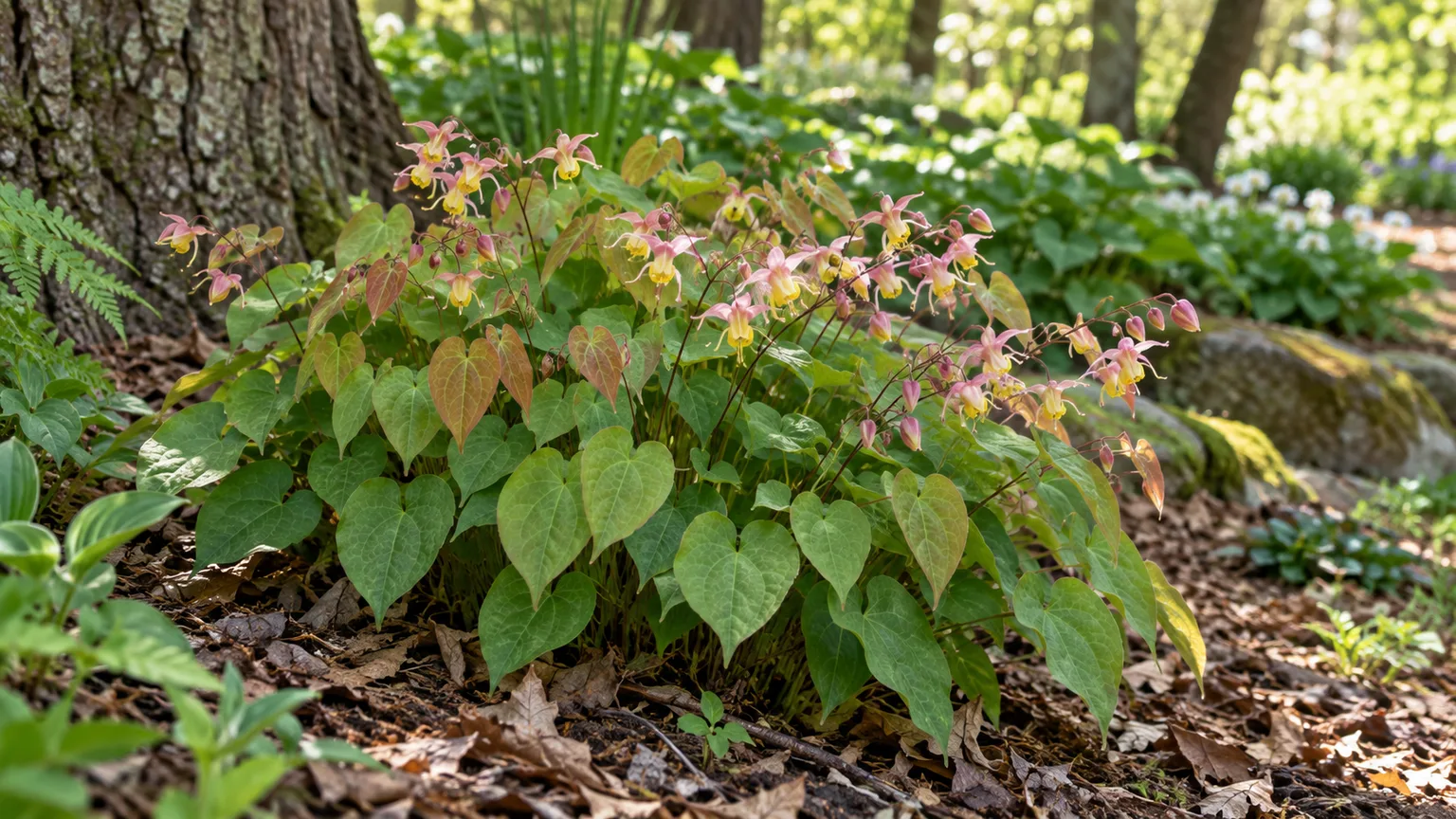
12. Barrenwort (Epimedium spp.)
Barrenwort, often sold as Epimedium, earns consideration for dappled or deep shade, including sites where the soil is on the dry side. The Royal Horticultural Society describes the genus as useful groundcover for shade, notes that species differ in moisture needs, and highlights some cultivars that can thrive beneath trees in dry shade. Its heart-shaped leaves add texture, and spring flowers rise above the foliage. (Royal Horticultural Society)
This is a patient choice, not a fast carpet. Select the species or cultivar for your climate and moisture, then allow it to expand over time. Some barrenworts are evergreen or semi-evergreen in mild conditions; others lose foliage in winter. If you need immediate soil coverage, combine it with leaf mulch while the plants establish instead of planting too few and expecting quick closure.
Plant for coverage without disturbing tree roots
Start by clearing weeds by hand and identifying large surface roots. Do not rototill, cut major roots, or pile deep soil over a tree’s root zone just to make planting easier. Set small plants into individual holes between roots, keep the root flare visible, and use a light layer of leaf mulch around—not over—the crowns. If a root occupies most of the space, plant around it rather than forcing a dense grid.
Choose spacing from the plant’s mature width and the coverage speed you can accept. Close spacing costs more and may shorten the time to a filled bed; wider spacing requires more weeding while plants knit together. There is no reliable universal distance for all shade groundcovers: a slow clump-former and a running stolonifer are not interchangeable. Follow the nursery label and adjust for the species’ mature habit.
Water each new planting thoroughly, then monitor the actual root zone through the first growing season. The RHS notes that groundcover plants need weed control until they establish and need water during dry spells in the first season or two, especially beneath trees. That is a useful expectation even when the eventual planting is intended to be low maintenance. (Royal Horticultural Society)
Keep weeds from reseeding into open soil, but do not fertilize heavily to force faster growth. Excess feeding can produce lush foliage without solving poor light, dry roots, or drainage. As the groundcover closes, remove mulch from directly against crowns and let leaves settle naturally in the bed. Expect occasional hand-weeding even in a mature planting; dense foliage reduces open germination space but cannot guarantee a weed-free garden.
Popular shade groundcovers to avoid or contain
Fast coverage is not automatically a good trade. English ivy and common periwinkle escape cultivation and can invade woodland in parts of the United States; the Brooklyn Botanic Garden identifies both as harmful invasive groundcovers in eastern and northwestern forests. Japanese pachysandra (Pachysandra terminalis) is also a poor default when a regionally appropriate native such as Allegheny spurge is available. (Brooklyn Botanic Garden)
Bugleweed (Ajuga reptans), yellow archangel (Lamium galeobdolon), sweet woodruff (Galium odoratum), and spotted deadnettle (Lamium maculatum) can spread beyond the patch in favorable conditions. Their local status varies, and even a plant that is not listed as invasive in your county may be too aggressive for a small mixed border. Fine Gardening specifically warns that sweet woodruff can run in moist, fertile soil and yellow archangel can be too rambunctious near delicate plants. (Fine Gardening)
Before planting any fast runner, check the invasive-plant list for your state or region and ask a local extension office or native plant society. If a groundcover is already escaping, stop its spread at the edge, remove runners and rooted nodes, and check again through the growing season. Avoid letting a contained planting climb fences, trees, or adjacent natural areas.
Conclusion
Match the plant to the shade and moisture you actually have. For an eastern woodland bed, Allegheny spurge, foamflower, wild ginger, green-and-gold, and partridgeberry offer distinct ways to cover soil; bunchberry belongs in cool, acidic conditions, while barrenwort is a useful candidate for drier shade. Use fast colonizers only where their boundaries are manageable, and verify native range and invasive status locally. A good shade groundcover still needs careful planting, first-year watering, and weeding until it closes—but the right match can turn a difficult patch into a durable, layered part of the garden.