29 Backyard Hammock Ideas for a Serene Space
Explore 29 backyard hammock ideas for trees, patios, decks, and small yards, plus practical advice on shade, materials, privacy, and safe supports.
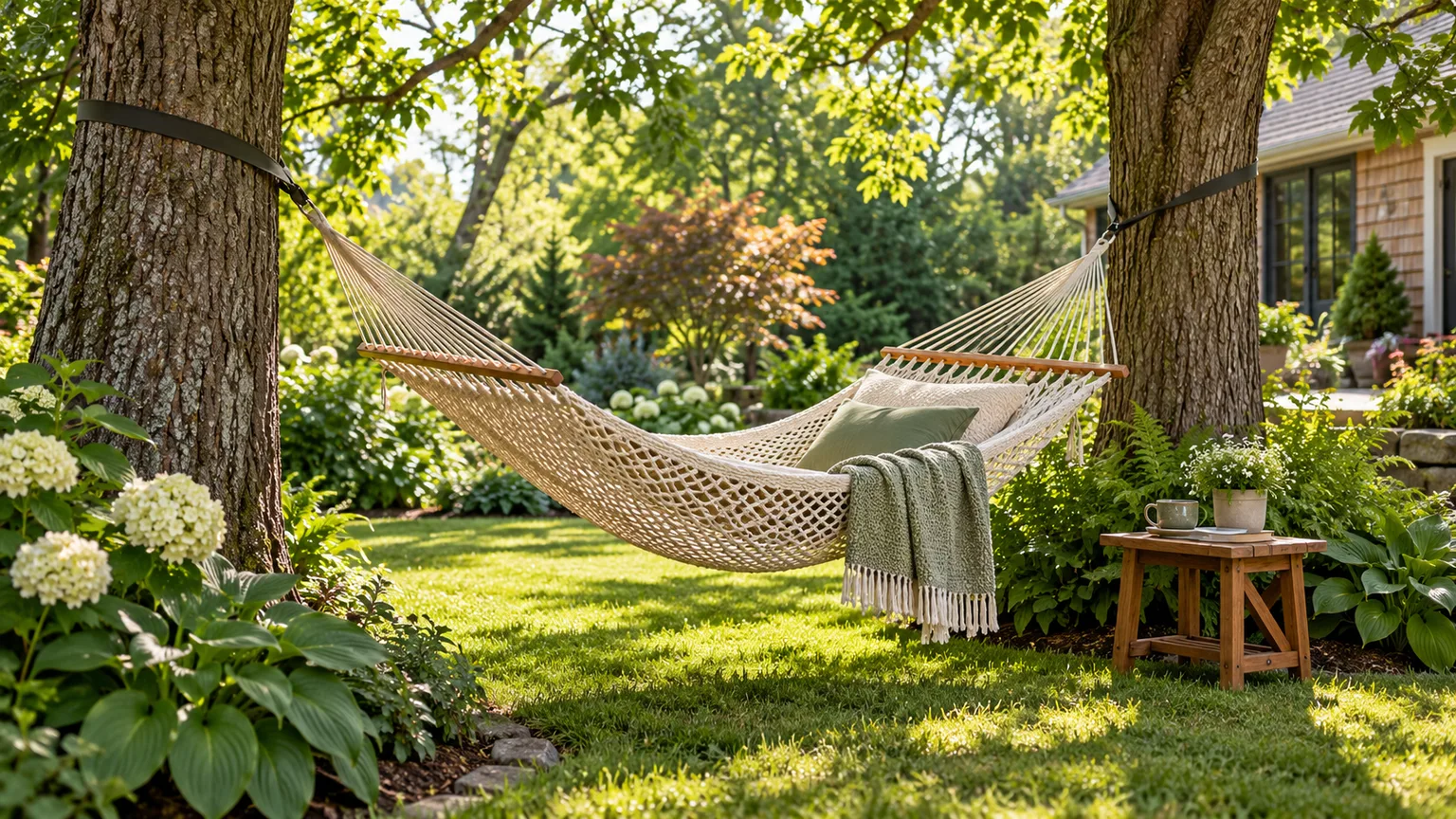
A hammock can make an overlooked corner feel like a destination, but the best-looking setup is not always the one you will use. It needs a sensible support system, a spot that is comfortable at the hour you are most likely to sit there, and enough room to get in and out without blocking a path.
Before choosing a color or adding pillows, look at the yard itself. UF/IFAS recommends planning around sun and shade, drainage, site conditions, how people will use the space, and the routes that connect outdoor areas. That advice matters for a hammock too: a shady nook beside the garden path may be perfect for a quick break, while a quiet lawn edge may suit a longer afternoon nap. UF/IFAS landscape planning guidance
Choose the Right Hammock for Your Yard
Start with the way you plan to relax. A full-length hammock is better for stretching out, a hanging chair fits a compact porch or deck, and a freestanding frame gives you the most placement flexibility. The right style depends just as much on your supports and storage habits as on its appearance.
Hammock Types: Fabric, Rope, Chair, or Bed
A traditional rope hammock looks airy and lets wind pass through, while a solid fabric sling provides a more contained feel. A spreader-bar model stays open and flat, which can make it easier to sit down or share, but it also takes up a wider footprint and can feel less cocoon-like. A hammock chair or hanging egg seat replaces the long diagonal span with one overhead suspension point, so it suits a porch corner better than a narrow strip of lawn.
Fabric changes how much care a hammock needs. Better Homes & Gardens’ hammock testing found that cotton can feel breathable and comfortable, but should be put away when wet and stored between uses; synthetic outdoor fabrics tend to dry faster and are often easier to leave set up for a short stretch. Those are general tendencies, not guarantees: check the fabric label, care instructions, and whether the product is rated for prolonged outdoor exposure. Better Homes & Gardens hammock testing
Think about how you will use it, not just the listed seating capacity. A “double” label does not automatically mean two adults will be comfortable, and a high weight rating does not tell you whether the bed shape will feel spacious. If two people will use it, check both the product’s stated capacity and dimensions; if it is mainly a reading spot, prioritize an easy entry, a stable surface nearby, and a place to set down a book or drink.
A Stand, Tree Pair, or Pergola Changes the Plan
A freestanding hammock stand works when the yard has no suitable pair of trees, or when you rent and cannot install permanent anchors. It also lets you try a spot before committing to posts or hardscape. Measure the full footprint of the stand—not just the fabric length—and leave open space at the ends so nobody walks into the frame.
A pergola can offer shade and define an outdoor room, but its presence alone does not prove that it can support a hammock. Hammock use pulls on the structure and attachments; only use a beam or mounting point when the structure’s plans, manufacturer, or a qualified professional confirms it is suitable for that load. Better Homes & Gardens lists a pergola or a hammock stand as alternatives when trees are not ideally spaced, but treat that as a design option, not a structural rating. BHG’s outdoor living ideas
29 Backyard Hammock Ideas
These ideas are grouped by the kind of space they suit. You do not need to recreate every detail in a photo: take the useful part—shade, privacy, color, or flexibility—and adapt it to the space and support you actually have.
Shaded Garden Corners
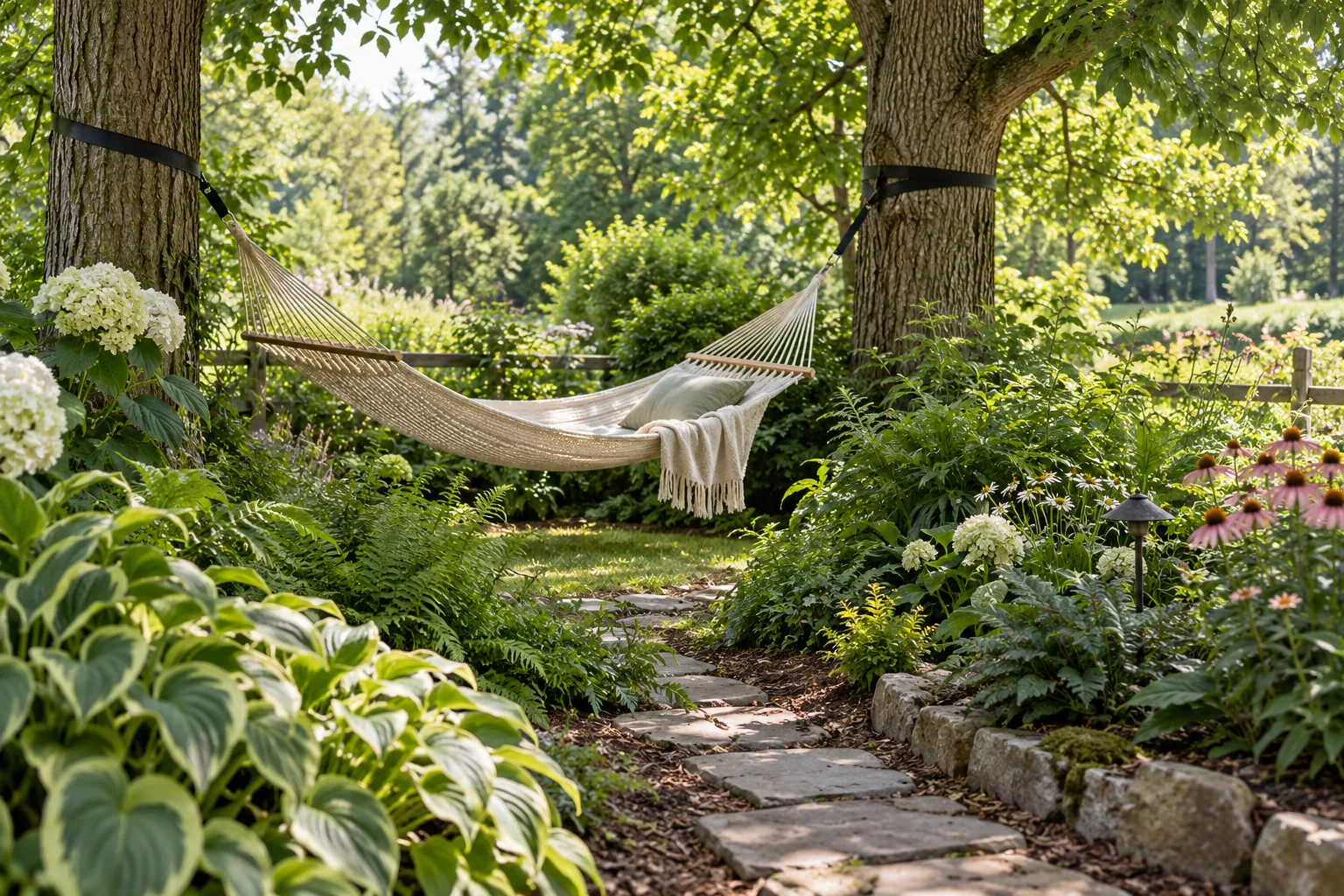
1. A quiet hammock beneath mature canopy. Place a hammock at the edge of a mature shade tree’s canopy, where filtered light makes a restful place without turning the bed into a dark tunnel. Orient it toward a flower border or a broad view rather than the fence. Keep the entry clear of low branches and avoid digging or compacting the root zone to make a pad.
2. A hammock aimed at the garden’s best view. If the yard has a pond, a tree-framed lawn, or a long border, place the hammock so the view is in front of you rather than directly overhead. A simple stand can make this possible when the existing trees face the wrong direction. Check the view while sitting down; a sightline that looks impressive standing may disappear once you recline.
3. An orchard-edge rest stop. Use the open space at the edge of an established orchard to create a pause between the house and the growing area. Keep the hammock outside the normal mowing and harvesting routes, and do not use young fruit trees or slender limbs as anchors. A portable frame lets the setup move as pruning, harvest access, and tree growth change the layout.
4. A hammock beside a kitchen garden. Set a small hammock nook just beyond a vegetable bed, where you can see the garden without having to step across it. A narrow gravel or stepping-stone approach keeps muddy shoes away from the fabric and gives you a dry place to stand. Avoid making the hammock the shortcut between beds; the plants and the relaxing spot work better when each has its own route.
5. A flower-border reading nook. Let a curved border form one side of the hammock area, then repeat one or two flower colors in a cushion or woven throw. Keep fragrant plants close enough to notice from the seat, but choose varieties suited to your climate and avoid placing thorny or strongly allergenic plants where they brush the hammock. The planting should frame the view, not crowd the entry.
6. A woodland-edge hideaway. Where a backyard meets a wooded edge, a hammock can make a natural transition between mown lawn and layered planting. Face it inward so you still feel connected to the yard, and use a stand if the trees are young, leaning, damaged, or otherwise uncertain. Keep the floor simple—mulch or a few stable stepping stones—so the corner remains easy to maintain.
Small Patios, Decks, and Balconies
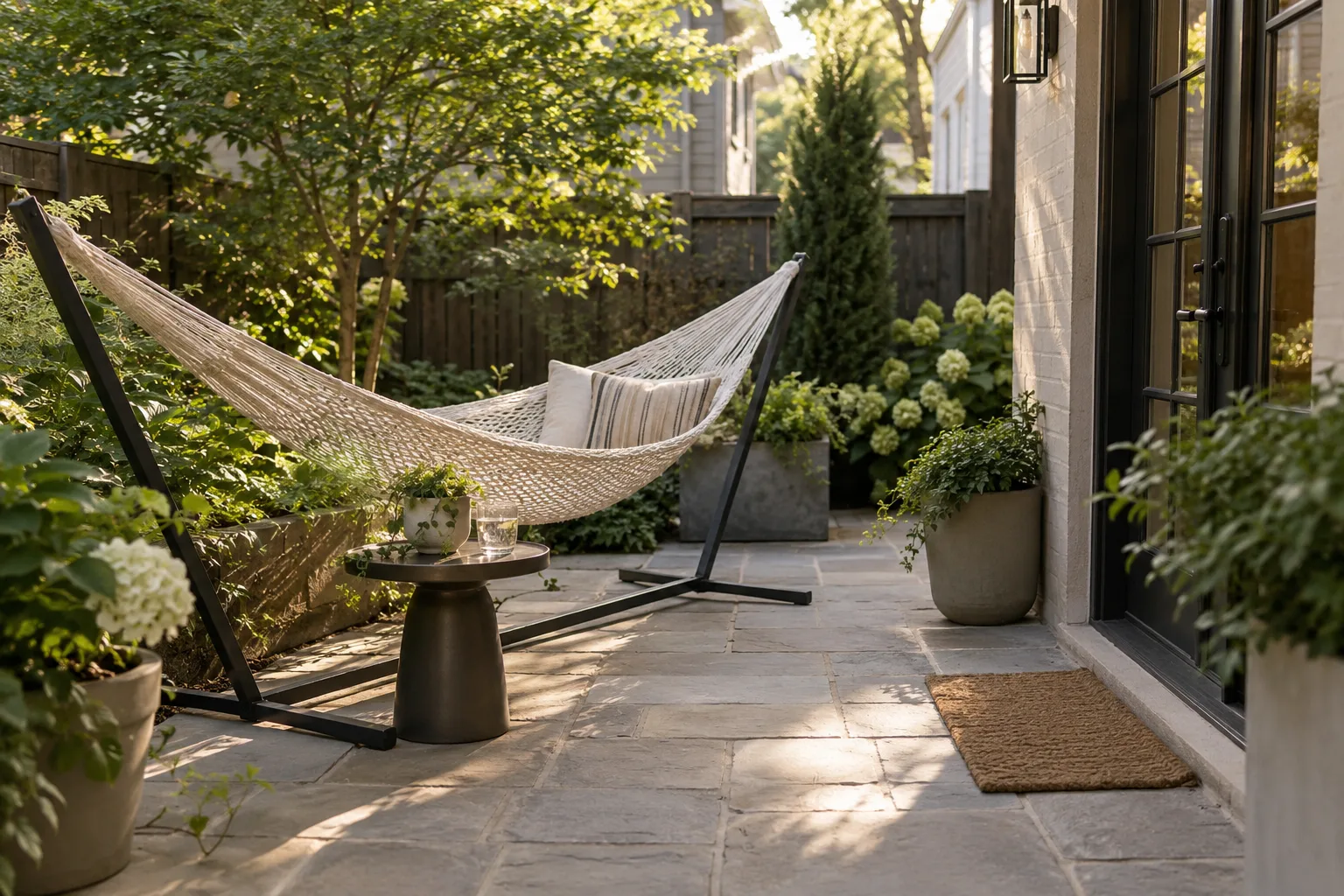
7. A portable stand on a small patio. A compact stand turns an open slab into a lounge zone without drilling into masonry or a wall. Choose a frame whose feet sit fully on the level surface and whose end bars do not intrude into the main walkway. A small outdoor side table beside one end is more useful than a cluster of accessories that eats up the remaining floor area.
8. A hammock chair in a tight corner. A chair-style hammock can give a small patio or porch the relaxed look of a hammock while using less floor length. It still needs a verified overhead anchor or a purpose-built stand, plus room for the seat to move. Add one cushion and a slender table; leaving the rest of the corner open makes a tiny outdoor room feel larger.
9. A long, narrow deck lounge. On a long deck, position the hammock along one side rather than across the route from the door to the stairs. Use floorboards or a slim outdoor rug to define the lounge area, and keep the swing path clear of the rail, grill, and dining chairs. If the deck is busy, a folding stand that can be moved after use may fit better than a permanent installation.
10. A balcony retreat with a folding frame. A compact folding hammock stand can work on a deep balcony where an ordinary recliner feels bulky. Measure doors, railings, and the clear floor area before buying, then check the stand’s stated footprint and load rating. Do not attach a hammock to a balcony railing or exterior wall simply because the hardware seems solid; the building may not be designed for that force.
11. A small gravel pad in an unused side yard. If a side yard is too narrow for a dining set but wide enough for the hammock and its frame, a small, well-drained gravel pad can give the space a purpose. Keep a walking strip along the house free of furniture so doors, hose bibs, and maintenance access remain usable. One tall planter or a trellis can soften a blank fence without adding another seat.
12. A renter-friendly hammock corner. Renters can bring in a stand, washable outdoor fabric, and a light side table rather than using screws in a fence or building a post pair. Position the stand where it can be moved indoors or out of the way when you need the patio for other uses. Use clip-on lanterns or a rechargeable lamp instead of wiring lights into a structure you do not own.
Pergolas, Porches, and Gazebos
13. A hammock beneath a pergola roof. A pergola can add shade and make the hammock feel like part of a defined outdoor room. Choose a canvas or synthetic bed that fits the space, then keep climbing vines and string lights separate from the suspension hardware. Before attaching any mount to a beam, verify that the specific structure is rated for it; a decorative pergola is not automatically a hammock frame.
14. A porch swing alternative. A hanging hammock chair gives a porch the casual comfort of a swing without taking up the entire length of a bench. Pick a neutral weave for a quiet porch or a stronger color if the chair is the focal point. Preserve a clear route to the door and do not use ceiling hooks unless the framing and hardware are designed for the chair and movement.
15. A sheltered gazebo daybed. In a large gazebo, a broad hammock or hammock bed can serve as the main lounging piece, with a chair or bench nearby for guests who want to sit upright. Add outdoor curtains only if they do not block ventilation or make the space awkward to enter. The frame and canopy should remain easy to inspect, and the hammock needs its own suitable support rather than being clipped to decorative trim.
16. A covered veranda with removable seating. A veranda can hold both a hammock chair and ordinary seats if the hammock sits at the edge rather than in the middle of the conversation area. Removable or stand-mounted seating preserves the floor for parties and makes seasonal storage easier. Repeat one color from the house exterior in the cushions, then use greenery to transition between the architecture and garden.
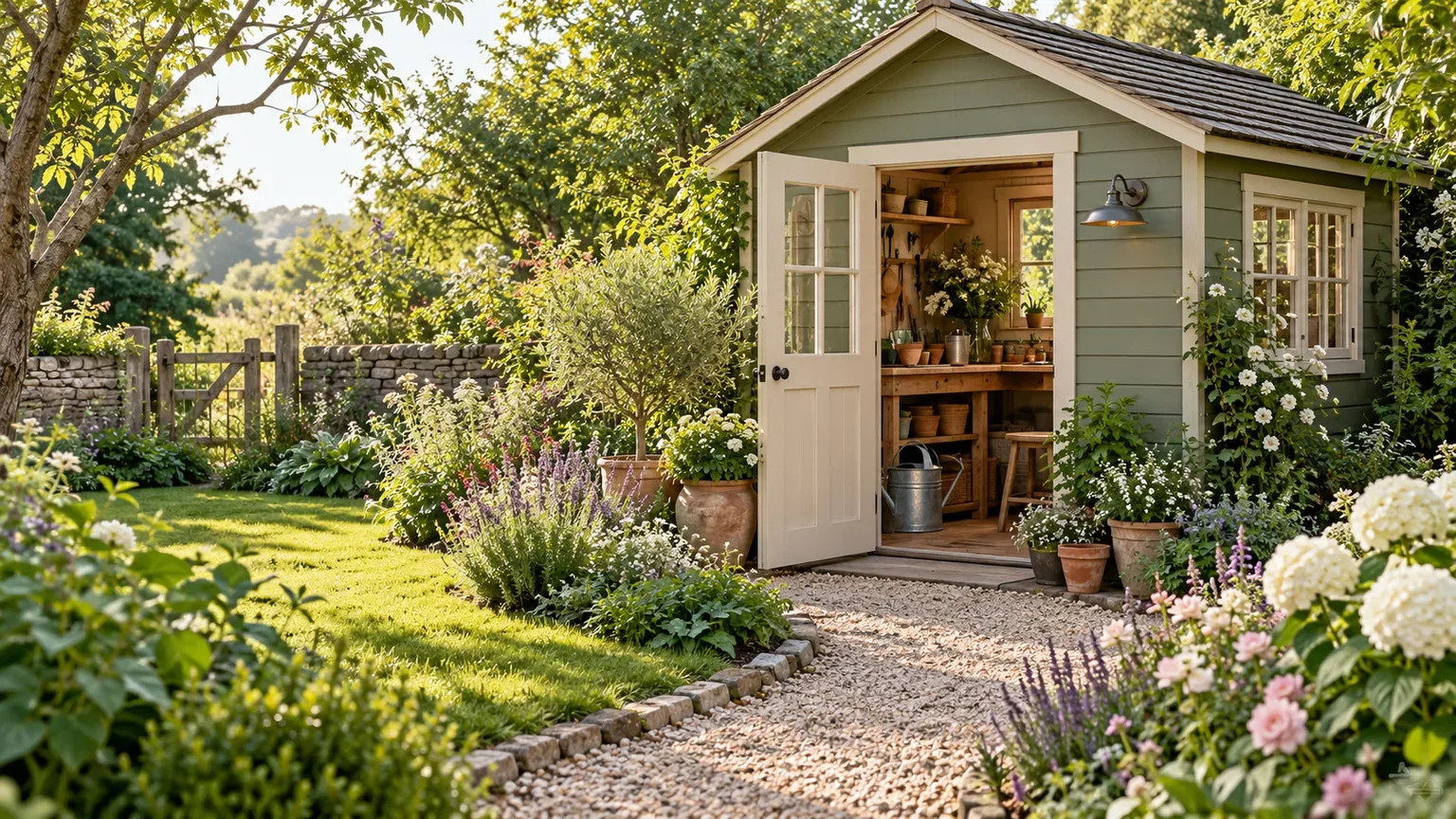
17. A garden-shed lounge. If a shed faces a deck or small paved area, treat the front as an outdoor room rather than a storage alley. Place the hammock in the shade of the building, then add a compact bench for shoes and a shelf or tray for gardening gloves and books. Keep the shed door, path, and any access to tools unobstructed.
18. A hammock under a treehouse or raised deck. The sheltered area beneath a raised structure can become a cool reading nook if there is enough headroom and the ground drains well. Use a freestanding frame unless the structure’s plans explicitly allow a hammock attachment. A weather-resistant rug or pavers can keep the space cleaner, while a low screen or tall container plants make it feel separate from the work area above.
Color, Comfort, and a Sense of Place
19. A restrained black-and-white scheme. A striped or solid black-and-white hammock can look crisp against green foliage and weathered wood. Repeat the pattern once—in a small pillow or outdoor rug—then keep the remaining textiles plain. The repeated detail makes the setup feel intentional without making the garden look busy.
20. A vintage woven hammock. A cotton or rope hammock with a softer, traditional look pairs well with a timber stand, terracotta pots, and a cottage-style border. Use it in a covered or reliably dry area, and store it between uses if the care label advises against leaving it damp. Older-looking materials can still be new; the goal is a relaxed palette, not a neglected or unsafe support.
21. A padded hammock for longer lounging. A quilted or cushioned hammock is a more comfortable choice for an hour-long nap than a thin sling, especially if you want a flat, spreader-bar shape. It also adds weight and takes longer to dry, so place it under cover or bring it in after rain. A weather-resistant cover can help between uses, but follow the maker’s guidance so moisture is not trapped underneath.
22. A cool-blue poolside pause. Echo the pool’s blue water in the hammock fabric, then keep the rest of the palette neutral with stone, pale wood, or green foliage. Place the hammock on a dry surface away from the pool edge and the main route to towels or changing areas. A stand is useful here because it can be repositioned as shade moves, without requiring pool fencing or deck railings to act as anchors.
23. A French-country garden palette. Muted sage, faded blue, warm cream, and natural wood suit a cottage or country-inspired garden without needing elaborate decoration. Use one soft pattern in the hammock and repeat a single color in nearby pots or cushions. A wicker basket can hold a throw when it is dry, but store textiles indoors during wet weather rather than assuming decorative baskets protect them.
24. A lush, layered planting frame. Place foliage at the edges of the hammock zone to make it feel enclosed, with taller shrubs behind and lower groundcover near the path. UF/IFAS notes that plants can help define landscape areas, block views, and alter light or wind conditions. Keep mature sizes in mind and leave clearance around the hammock so plants do not snag fabric or reduce the space needed to sit down. UF/IFAS on how plants function in a landscape
Flexible, Social, or Budget-Friendly Setups
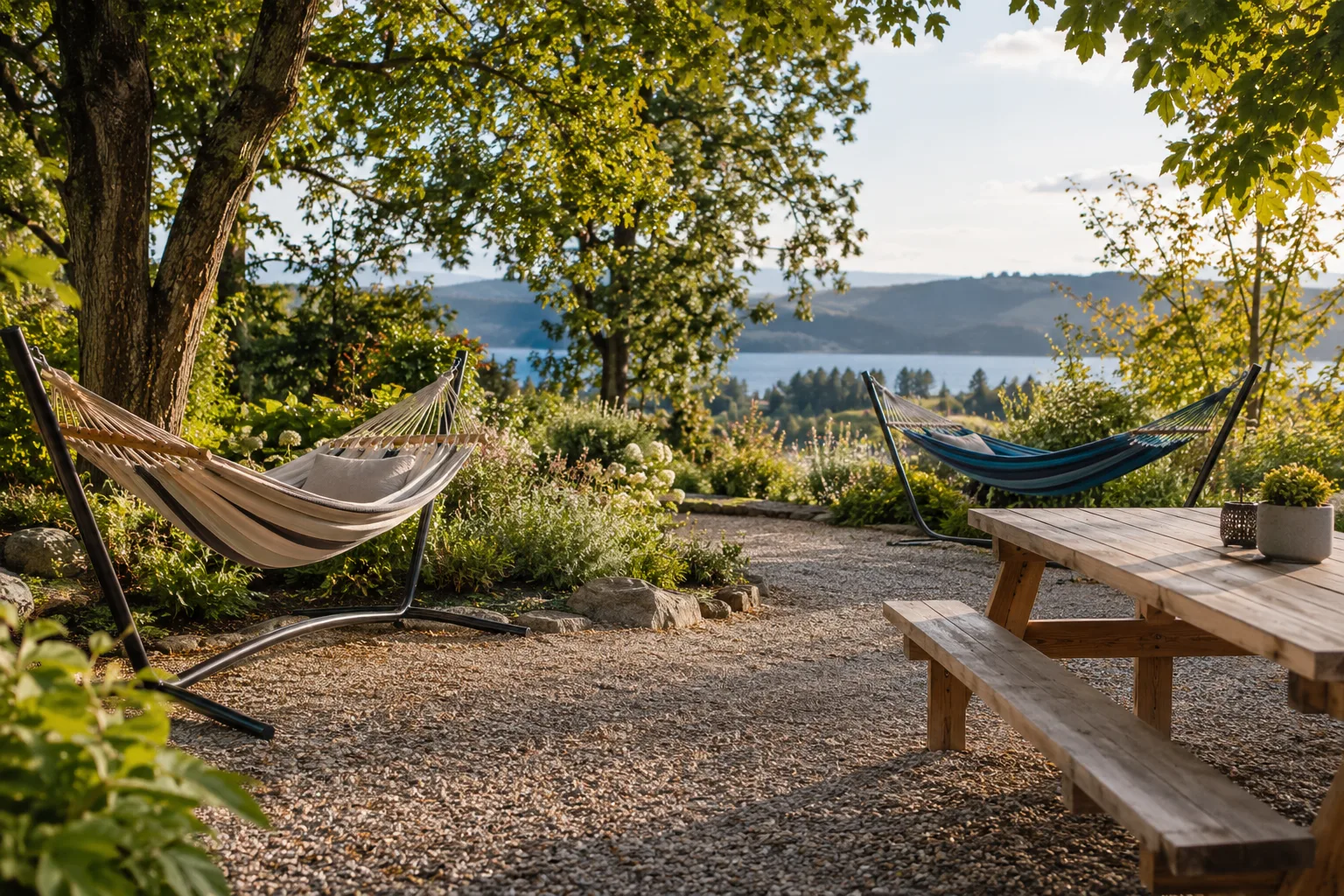
25. Two single hammocks facing a shared garden view. Two separate hammocks give each person room to settle in without forcing both bodies into one narrow sling. Angle the beds slightly toward a shared focal point and leave space between stands for a small table or an open path. Check the capacity of each hammock and frame individually; two single units are often easier to position than one extra-wide model.
26. A hammock beside a picnic table. If the backyard doubles as an entertaining area, place the hammock at the edge of the dining zone rather than behind a chair someone needs to pull out. A small tray table can hold a book or drink, while the picnic table handles meals. Store the hammock or stand when a large group needs the full space.
27. A hammock at the quiet edge of a pool garden. Put the hammock on the dry side of the pool area, with enough room for wet swimmers to pass without brushing against the fabric. A quick-drying synthetic bed is practical when splashes are common, but a stand should sit on stable, level ground and remain clear of the pool’s access route. Add a towel hook nearby instead of draping damp towels over the hammock.
28. A low-lit evening hammock nook. A warm lantern or a dim, downward-directed path light can make the area easier to approach after sunset without turning the whole garden bright. The RHS recommends keeping garden lighting low and focused on steps or paths, using warm tones, and limiting light that reaches the sky or neighbors’ windows. Turn decorative lights off when you are done; the hammock will still be inviting in daylight. RHS garden lighting guidance
29. A low-cost, movable setup using what you own. Start with a stand or safe existing supports, then use a clean outdoor blanket, one cushion, and a small table you already have. Try the arrangement for a week before buying more decor; you may discover that the best spot is different once you notice where shade falls or how people move through the yard. Keep indoor textiles dry and bring them inside after use.
Plan the Space Around the Hammock
A few small decisions make a hammock corner feel as though it belongs in the garden. Think about what the spot feels like when you lie down, how you will reach it, and what will happen to the fabric when the weather changes.
Read the Sun, Wind, View, and Drainage
Visit the candidate spot at the time you expect to use it. Morning sun may be welcome in a cool climate, while late-afternoon exposure can make a dark fabric bed uncomfortable in a hot yard. Existing tree canopy or a pergola gives more predictable shade than a parasol that must be repositioned, but you should still account for seasonal sun angles and local wind.
A hammock should not sit in the natural route between a door, steps, garden beds, and the shed. Stand where you would approach it and check that you can enter from the side without stepping over a bed or backing into furniture. UF/IFAS’s landscape-planning advice also emphasizes drainage: avoid low spots that stay muddy after rain, especially if a fabric hammock will hang close to the ground or its stand feet need a firm base. UF/IFAS planning tips
Layer Planting, Privacy, and Texture
Plants can screen a neighbor’s window, soften a fence, or make the hammock feel tucked into a garden room. A trellis with a vine, a pair of large planters, a low hedge, or a movable privacy screen can do that job without surrounding the hammock on every side. Leave enough airflow to dry cushions and fabric, and choose plants for your local climate and maintenance capacity.
Keep sharp foliage, thorns, and vigorous climbers away from the fabric and support points. A hammock woven through a vine-covered pergola may photograph beautifully, but plants can hide attachments and make seasonal inspection difficult. Repeat a small number of materials—such as timber, woven fabric, and one stone or gravel surface—so the nook reads as a place to rest instead of a storage corner for outdoor accessories. Better Homes & Gardens’ garden decor coverage similarly pairs functional seating with a few supporting details such as coordinated planters or lighting, rather than making every object compete for attention. BHG garden decor ideas
Make the Area Useful After Sunset
If you want to use the hammock in the evening, first make the approach safe. A small, low light aimed at a step or path is more useful than a bright fixture shining into the trees. The RHS advises using the least lighting needed, directing it onto paths and steps, and choosing warm colors to reduce disturbance to nighttime wildlife; it also suggests switching lights off rather than leaving them on all night. RHS lighting advice
For a rented yard or a layout you are still testing, use a rechargeable lantern or battery light rather than installing wiring. If permanent outdoor lighting is part of the project, use outdoor-rated equipment and have the installation checked by a qualified electrician. Keep string lights and cords away from the hammock’s ropes and swing path so they cannot tangle around a person or the support.
Hang It Safely and Care for It
A hammock is only as dependable as the complete setup: the bed, straps or hardware, stand or supports, and the ground beneath it. Use the installation instructions for the exact hammock and stand, and do not transfer a spacing rule from one model to another. Length, suspension style, and frame design differ, so the correct attachment height and distance are product-specific.
Choose Reliable Supports and Follow the Product Fit
Use a freestanding stand when tree spacing, tree condition, or structure strength is uncertain. For tree-mounted systems, use the manufacturer’s specified straps and attachment method, inspect the chosen trees and hardware before every season, and stop using the setup if a support is cracked, loose, or visibly deteriorating. Do not improvise with fence pickets, balcony rails, utility structures, decorative arbors, or pergola trim. A support can look sturdy and still be unsuitable for a moving load.
Keep the hammock low enough that getting in and out is easy, with an unobstructed area underneath and at both ends. Ask another adult to check the first installation while you load it gradually; do not jump, bounce, or let multiple people pile in to “test” the frame. Respect the printed capacity, remembering that the limit applies to the full setup, not simply the fabric. Children should use hammocks with adult supervision, and the hammock should not be treated like a high swing or climbing net.
Weather and storage matter as much as mounting. Cotton and natural rope can retain moisture, and cushions may stay damp at seams even when the surface feels dry. Let the fabric dry fully before packing it away, remove it ahead of strong wind or heavy rain if the instructions call for it, and check stitching, knots, straps, and metal hardware for wear before the next use. A cover helps only when it does not trap condensation; follow the product’s care label.
Conclusion
A serene backyard hammock spot starts with a setup that fits your space: a supported tree pair, a rated stand, or a structure confirmed for the job. From there, pick a location that has comfortable shade, a clear approach, and a view you enjoy, then use planting, textiles, and low-key lighting to make it feel intentional. Try a simple arrangement first, pay attention to how the yard behaves through the day, and add only the details that make you want to stay a little longer.