15 Ways to Decorate With Pampas Grass at Home
Use pampas grass in living rooms, bedrooms, entries, and tables. Learn how to balance height, pick a stable vase, and reduce shedding from dried plumes.
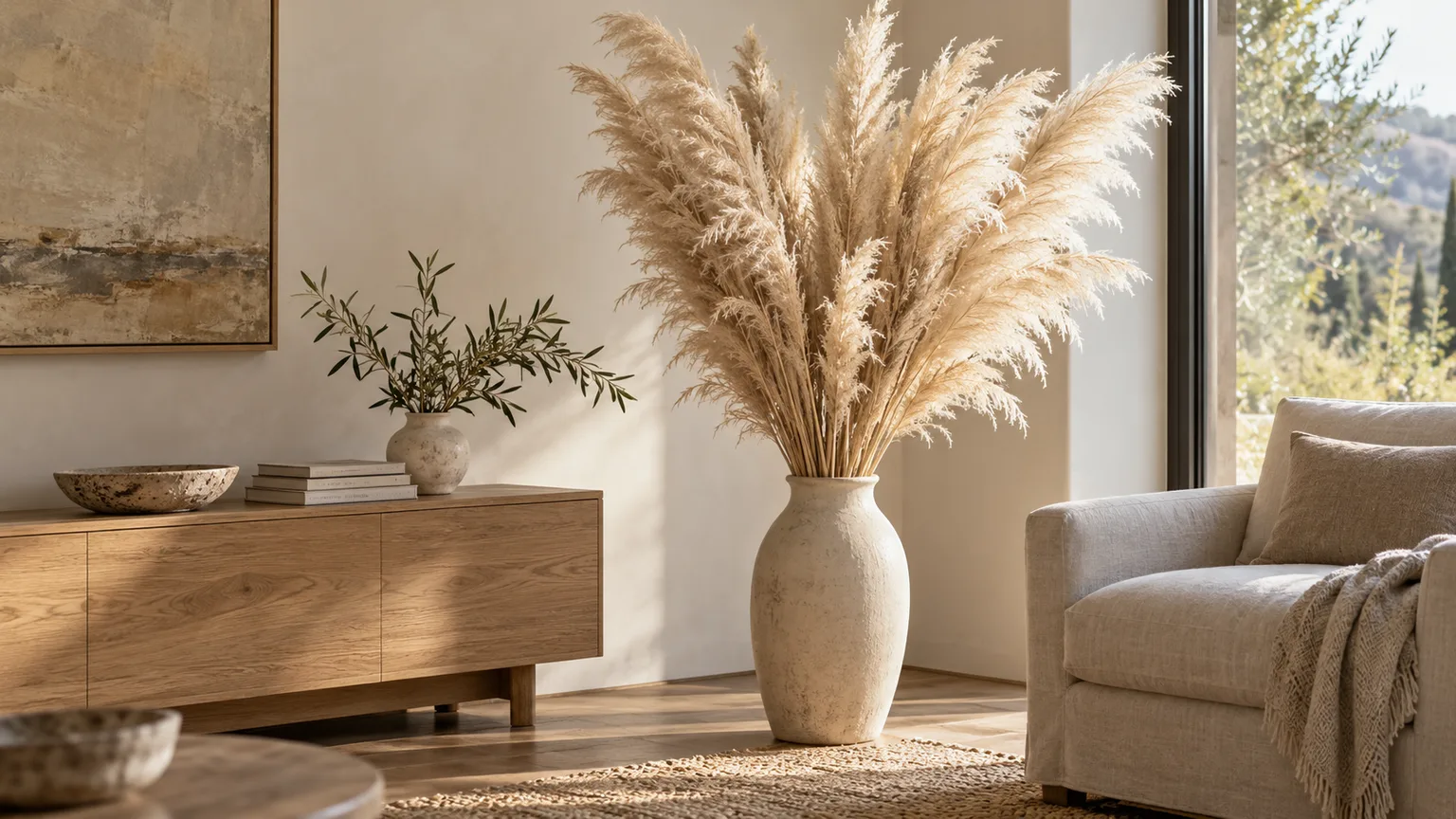
Pampas grass makes a room feel softer by adding a tall, feathery shape that most furniture and hard-surfaced accessories do not have. One stem can give a bare corner a focal point; an oversized bouquet can overwhelm the same corner if its height, vase, and visual weight are out of proportion. The best arrangement is the one that fits the room’s scale and the amount of attention you want it to draw.
These ideas focus on dried plumes, the form most often used indoors. You can also display fresh-cut plumes briefly, but they need no vase water and should be handled with care: the RHS pampas grass profile notes that its leaves are sharply edged and that seedlings can be invasive. Before cutting anything, check local guidance and use plumes from a known, permitted source.
Choose pampas grass that fits the room
Start with the place, not the bundle. A narrow entry table usually needs a restrained group in a vase that leaves space for keys or a lamp, while an empty floor corner can absorb a broader, taller arrangement. Measure the available height from the intended vase surface to the ceiling, shelf, or art above it, then leave visible breathing room so the plumes do not look wedged into the architecture.
Color is a second decision. Natural cream and straw tones blend easily with wood, linen, stone, and warm whites, but they can disappear against a similarly pale wall; a darker vessel or a contrasting wall gives the plume outline definition. Dyed stems make a more assertive accent, so repeat one of their colors elsewhere in a cushion, book spine, or artwork rather than introducing several unrelated hues.
The vase is part of the composition and part of its engineering. Pampas stems are light, but their spread can make a tall bundle top-heavy; choose a stable base, enough interior weight, and an opening that gathers the stems without crushing them. Floral designers quoted by Better Homes & Gardens emphasize a sturdy foundation and choosing a vessel in relation to the material, principles that matter even more when the arrangement has height but no water-weighted stems.
1. Display one stem in a narrow vase
A single plume is a useful option when you like the texture but do not want the full bohemian bouquet look. Set one strong, evenly shaped stem in a bud vase or a slim bottle on a bookshelf, side table, kitchen shelf, or bathroom vanity. The empty space around it makes its outline feel deliberate, so it can work in a small room where a cluster would crowd the surface.
Use a vase with a narrow neck or add a small piece of floral tape inside the mouth to keep the stem at the angle you want. If the plume leans toward a doorway or chair, rotate the vase rather than bending the fragile stem. A short stem in a small vessel reads as a punctuation mark; a long plume in a tiny, lightweight bottle can look unstable, so keep the proportions in balance.
2. Build a sculptural entryway vignette
An entryway is a natural place for a vertical arrangement because the door, console, and mirror already establish a strong up-and-down axis. Place a medium vase at one end of the console, then balance it with a shallow bowl or a short stack of books at the opposite end. The difference in height creates movement while preserving a clear landing space for everyday items.
Let the pampas be the tallest element only if it will not block the mirror or catch a coat sleeve. In a narrow hall, move the arrangement toward the wall and keep the plume width inside the console’s footprint; projecting stems can snag bags and brush against people passing. If the entry is dark, warm-toned plumes and a textured ceramic vessel add definition without depending on a strong color accent.
3. Add height beside a low piece of furniture
A tall floor vase beside a sofa, low credenza, or lounge chair can correct a room that feels visually bottom-heavy. The arrangement draws the eye upward and echoes a floor lamp’s vertical role, but it feels softer because the plume edges are irregular. Leave a little gap between vase and furniture so the stems are readable as their own shape rather than a fuzzy extension of the upholstery.
Use a wide-footed, weighty vessel if the floor is a busy path or if children and pets move through the room. Keep the stems inside the vase opening, and test the arrangement by gently nudging the furniture nearby; if the vase wobbles, add a hidden weight to its base or move it to a quieter corner. A wall-protected spot can preserve the plumes while still letting them frame the seating area.
4. Soften a living room’s hard lines
Glass, metal, straight-sided shelves, and clean-lined sofas can make a living room feel crisp but a little stark. Pampas grass adds a contrasting organic contour, especially when it sits near a square coffee table or a smooth stone fireplace surround. Repeat its pale tone in a small throw, woven basket, or natural wood detail so the arrangement belongs to the room rather than seeming like a one-off trend prop.
Keep the rest of the coffee table simple if a large bouquet is already the focal point. A good visual rhythm pairs one tall arrangement with lower, solid forms; several fluffy bouquets at equal height compete with one another and blur the room’s focal point. If you prefer a minimalist look, choose fewer stems with visible gaps instead of filling the vase until every plume forms one dense cloud.
5. Make a low dining-table centerpiece
A table arrangement should look attractive from both sides and leave people able to see one another. Choose a low, broad bowl or a short vase with a compact bundle, and keep the plumes below seated eye level. That horizontal profile still adds texture without creating a screen across the table or interfering with serving dishes.
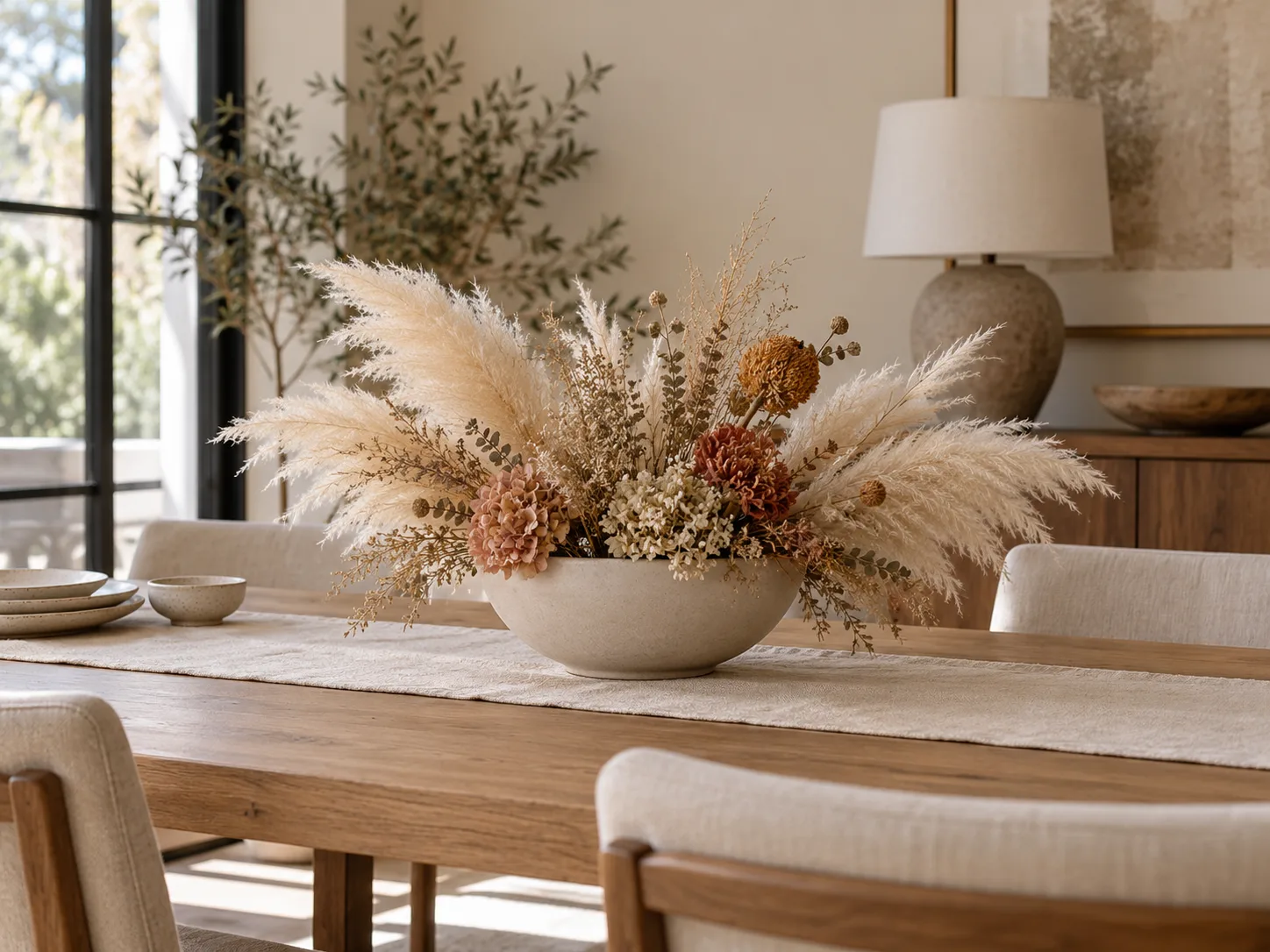
For a long table, one arrangement at the center often feels calmer than several competing bouquets. If you use a runner, position the vase on a stable, flat section and check that its base does not rock over a fold. Leave room around it for plates and glasses, and move the arrangement before a meal if its loose plumes brush food or shed onto place settings.
6. Give a bedroom a quieter natural accent
In a bedroom, a small arrangement on a dresser or vanity can echo the softness of bedding without adding another bulky textile. Choose a low number of plumes and an opaque vase in a finish that relates to the room’s wood, ceramic lamp, or hardware. The simplest way to keep the look restful is to let the arrangement occupy one surface, not every bedside table and shelf.
Avoid placing fragile dried stems where they can be brushed during sleep or dressing. A dresser away from a heater or sunny window is a better home than the narrow strip between a bed and a frequently opened closet. If you already use patterned bedding, let the pampas stay natural and neutral; if the room is mostly solid colors, a rust, muted rose, or brown plume can add controlled contrast.
7. Use a dry bathroom shelf selectively
Pampas can bring texture to a powder room or a well-ventilated bathroom, but a persistently steamy full bath is a poor place to keep delicate dried material. Humidity can soften the plumes, make them limp, and complicate dust control. Gardens Illustrated’s floral-artist advice on drying blooms recommends avoiding humid rooms such as kitchens and bathrooms; apply the same caution to a finished arrangement if the room stays damp after showers.
If you want the look, try a small stem in a guest powder room with reliable ventilation, away from the sink splash zone. A covered shelf or a dry corner outside the shower enclosure is preferable to a ledge above a tub. For a bathroom with recurring condensation, use a washable faux stem or choose a different accent rather than replacing softened plumes repeatedly.
8. Add layered texture to a mantel
A mantel can support a seasonal focal point, but it is easy to make the surface feel crowded. Keep the pampas arrangement to one side and use a low object or a short stack of books on the other, leaving a section of the mantel visible. If a mirror or artwork hangs above, keep the plume tips below the frame or offset them so the outline does not merge into it.
Treat dried grass as dry plant material and keep it well away from candles, fireplace openings, and other heat sources. A mantel above an unused fireplace can be a good display surface; a working fireplace requires enough clearance for the particular appliance and local fire-safety guidance, and an arrangement should never sit where it can drift into an opening. When there is doubt, move the vase to a console farther from the hearth.
9. Refresh an entry console by season
The same natural arrangement can move through the year if you change the smaller objects around it. In autumn, pair it with a warm-toned bowl or a few natural gourds; in winter, add evergreen clippings or a simple candle holder that remains well away from the plumes. As spring arrives, clear the seasonal props and let a ceramic vase and a fresh branch carry the scene.
This approach gives the arrangement a job in the composition instead of asking it to look festive by itself. Limit each refresh to a few pieces and vary their heights: pampas is already the tall element, so the other objects can stay low. Avoid putting the grass in a busy cluster of small trinkets, where every item asks for attention and the delicate stems become difficult to clean.
10. Make a pampas grass wreath
A wreath gives the plume texture a compact outline that works on a large wall, above a console, or on a sheltered interior door. Use a lightweight base, attach small bundles at the stem ends, and overlap them in one direction so the ties disappear beneath the next layer. An asymmetrical crescent uses fewer stems and leaves more negative space than a full, evenly padded ring.
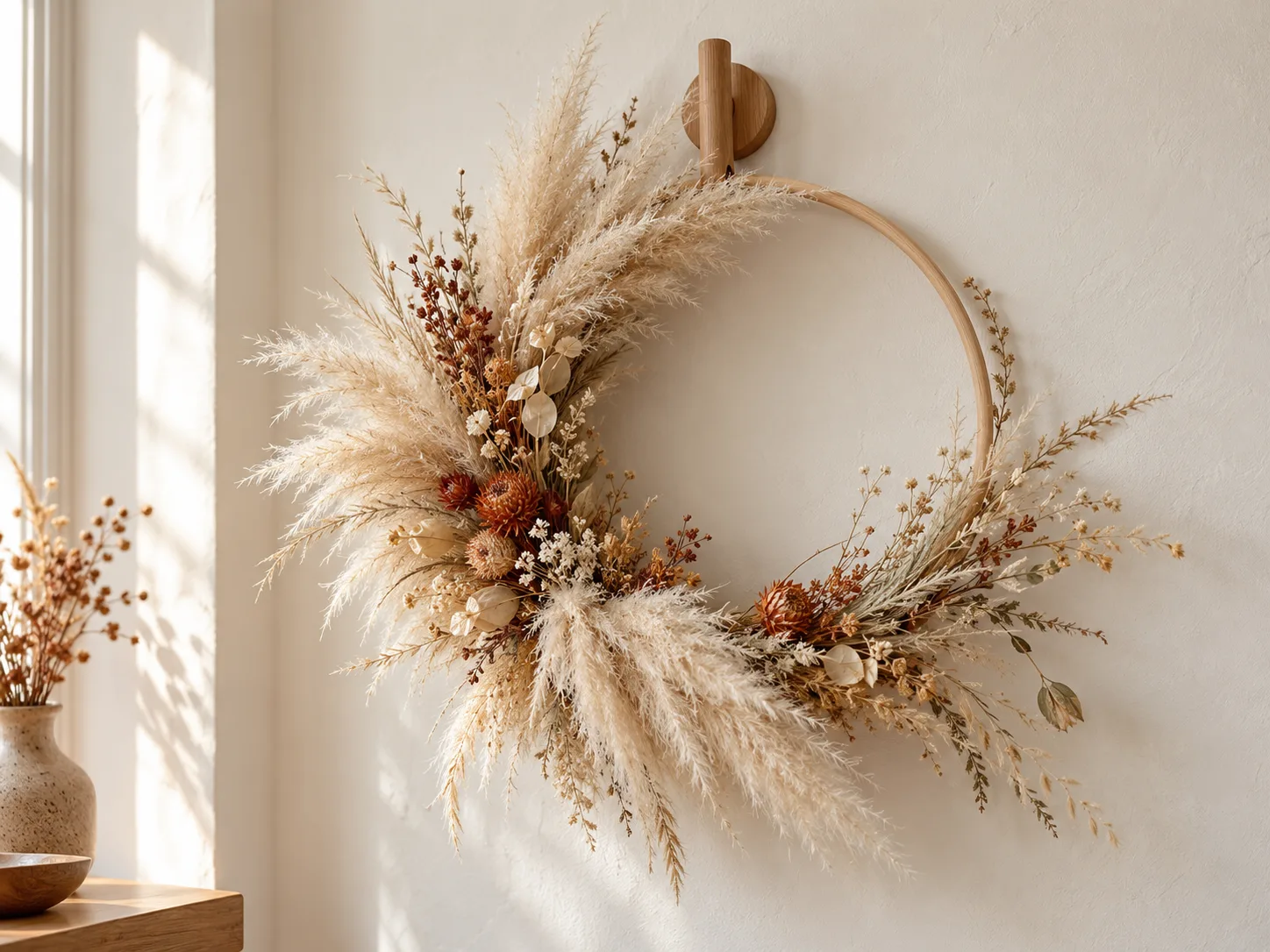
Test the finished piece on the wall before adding extra material. If it looks too dense from across the room, remove a few stems rather than adding more filler; the open base and exposed areas help its shape read clearly. Hang it where a passing shoulder, door edge, or curious pet will not knock the brittle plumes loose, and choose a sturdy hook that supports the frame rather than the grass itself.
11. Hang a light, asymmetrical wall piece
A pampas wall hanging can make a bedroom or dressing area feel softer without using floor space. Tie selected stems along a dowel or branch, keeping the heavier plume heads spread across the support so one side does not sag. An off-center arrangement often feels lighter and more contemporary than a perfectly symmetrical fan, especially over a dresser or at the edge of a gallery wall.
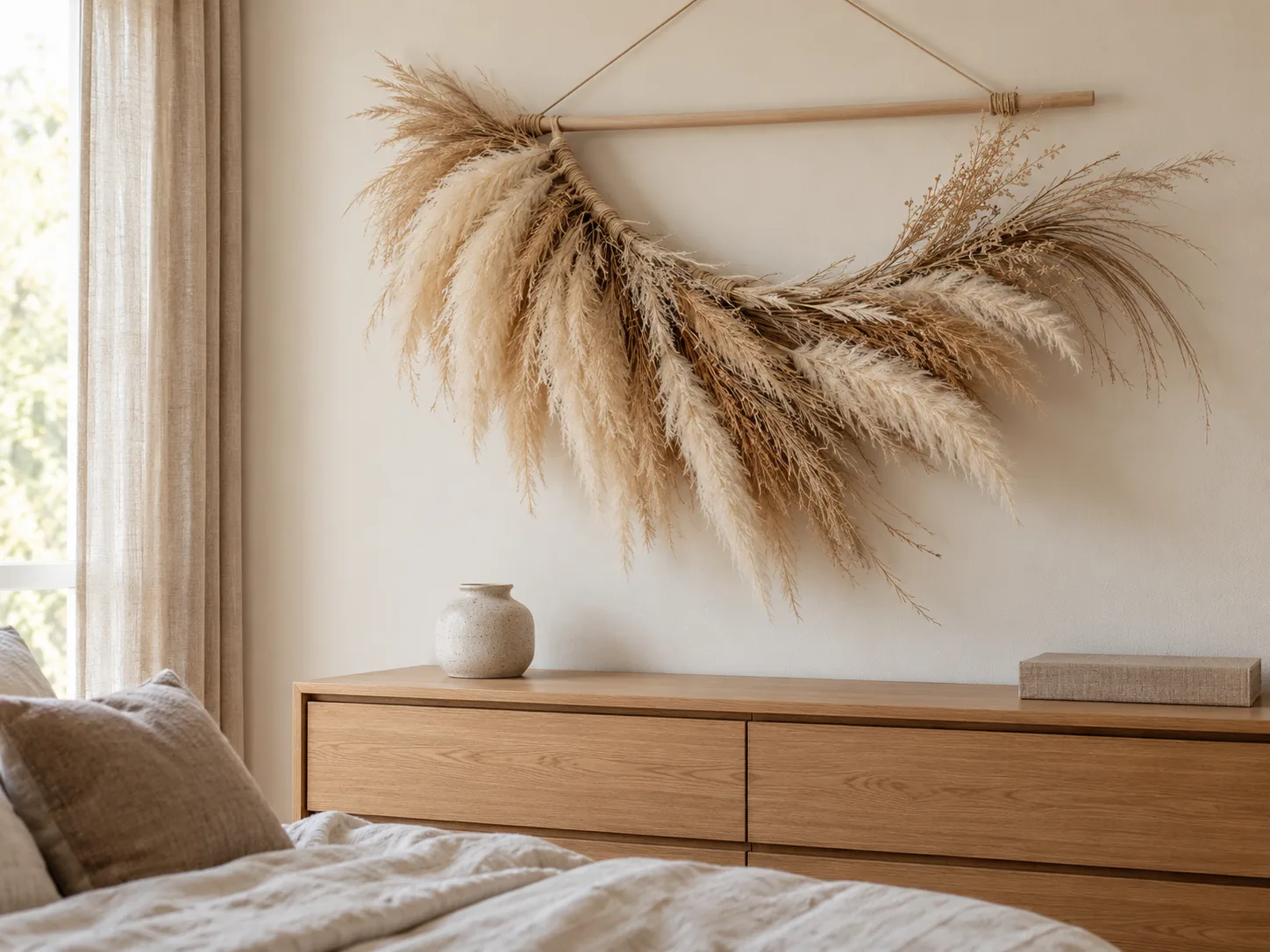
Use a secure hanging point and account for the entire piece’s weight, including any wooden support. Keep it clear of door swings and ceiling fans, which can catch the stems or disturb loose fibers. A wall piece is also harder to dust than a vase arrangement, so avoid mounting it directly above a cooktop, humidifier, or place where air currents constantly move the plumes.
12. Mix pampas with other dried flowers
Pampas works best as a structural accent in a mixed arrangement, not as filler for every open gap. Combine a few broad plumes with narrower seedheads, sturdy branches, or compact dried flowers, then vary the silhouettes rather than choosing several materials that all make the same fluffy shape. The contrast gives the eye a place to rest and helps the softer plumes remain recognizable.
Arrange by role: use one or two focal stems, add supporting stems lower in the vase, and leave some visible air between them. Better Homes & Gardens’ flower-arranging guidance recommends varying forms and clustering supporting material; with dried flowers, adapt that idea by first securing the lightweight stems in a dry vessel. Do not add water to a vase holding pampas or other fully dried flowers, because their job is to remain dry rather than hydrate like fresh-cut blooms.
13. Introduce a small dose of color
Dyed or naturally pink-tinged pampas can be an accent color without turning the room into a themed display. Try a small group of muted rose, terracotta, or charcoal-toned stems in a neutral vase, then repeat that shade once elsewhere in the room. A single color echo makes the choice feel intentional; several different dyed colors can make the arrangement look like party decor unless the room already has a playful palette.
You can also create contrast without dyed grass. Pair pale plumes with a dark vessel, a saturated wall, or greenery that has a distinct outline. This shifts the color relationship to the background and container, which is easier to update than replacing a large colored bouquet when the room changes.
14. Repeat plumes along a hallway or stair landing
A hallway can look long and empty when every object sits at the same height. A single floor vase at a wide landing or the end of a corridor creates a destination and softens the hard transition between rooms. Keep the arrangement narrow enough to preserve walking clearance, and position it outside the path of doors, handrails, and bags.
If the space is large, repeat a similar vessel at two points rather than lining the entire corridor with identical bouquets. Repetition creates rhythm, while spacing gives each arrangement its own breathing room. For a tight stair landing, skip the floor vase and use a wall-mounted wreath or small wall piece where it cannot be bumped during everyday movement.
15. Turn a holiday arrangement into a reusable display
A neutral pampas bundle can stay in place after a holiday if the seasonal pieces are removable. Add a few evergreen branches for winter, a fabric ribbon for a celebration, or metallic accents for a party, then remove those elements when the occasion passes. The underlying vase and stems remain a quiet year-round arrangement rather than becoming storage-bound decor after one month.
Do not weave lights or electrical cords into brittle stems. Keep any illuminated element separate, follow its manufacturer’s instructions, and avoid heat-producing bulbs near dried plant material. A safer seasonal update is to place the pampas beside a separate lamp or battery-powered accent at a distance, preserving the natural shape without turning the plume bundle into a wiring project.
Arrange and secure stems for a balanced silhouette
Before arranging, lay the stems on a large surface and sort them by height, plume fullness, and curvature. Put the strongest plume at the back or center, then add shorter or narrower stems around it; step back every few placements to judge the outline from the main doorway. A useful starting point is to use fewer stems than you think you need, because plumes widen after they are placed and can fill the mouth of a vase quickly.
For a vase with a wide opening, make a simple grid from floral tape across the mouth or use a clean, dry floral frog that fits securely inside. Insert each stem through the support, rotating the vase as you work so the arrangement has a pleasing profile from the room’s normal viewing angle. If the stems still shift, bundle them loosely with a soft tie at the hidden base; tight wire or string can crush brittle stalks and makes later reshaping harder.
If you are drying pampas from a permitted garden source, plan the work before cutting. The RHS profile notes pampas leaves have sharp edges and seedlings can be invasive; PlantRight’s California assessment specifically lists Cortaderia selloana as invasive in several California regions. That assessment should not be generalized to every location, but it is a good reason to check local plant and disposal guidance. Wear sturdy gloves and long sleeves, use clean pruners, avoid collecting from protected land or roadside stands, and do not cut plumes where local rules prohibit the plant.
For drying, remove loose foliage, tie a small number of stems together, and hang them plume-down in a dry space with airflow, away from direct sun and humidity. Gardens Illustrated shares floral artist Bex Partridge’s advice to keep drying flowers out of direct sun and humid rooms; Gardening Know How’s air-drying guide describes small upside-down bunches and notes air drying commonly takes two to three weeks, though species and conditions vary. Check the thickest parts for a papery feel before arranging, and handle the dried heads gently because mature material can shed during cutting and transport.
Care for the display and control shedding
Place the arrangement away from direct sun, strong air vents, cooking grease, and constant movement. Light can fade natural and dyed colors over time, while drafts and repeated brushing can loosen fibers. A dry, stable location generally protects the plumes better than a steamy bath or a spot over a radiator; there is no fixed lifespan because stem quality and exposure differ from home to home.
Some sellers recommend a light mist of floral protectant to reduce shedding, but products vary and a coating may alter the plume’s color or texture. If you choose to use one, read its label, test a hidden stem first, and let it dry completely in a ventilated area before placing it near people or pets. A coating is optional; moving the arrangement less and choosing a better-dried bundle are lower-effort first steps.
Dust gently and infrequently. Take a vase outdoors if possible and give it a small shake over a bag or open ground away from seed-sensitive garden areas; indoors, use a soft brush or a cool, low setting held at a distance rather than rubbing the plumes. If a stem is shedding heavily, remove it outside, wrap it before disposal, and clean nearby surfaces with a lint roller or vacuum attachment that will not pull against the remaining stems.
Conclusion
Pampas grass decor works when its airy outline has room to show and its container can support the spread. Start with one location, choose stems and a vase in proportion to that spot, and use the rest of the room to echo the texture or color without repeating the same fluffy shape everywhere.
A single plume, a low centerpiece, a wreath, and a tall floor bundle each solve a different design problem. Keep dried arrangements dry, stable, and away from heat; handle garden-cut stems carefully and check local guidance before sourcing them. With those choices in place, pampas can feel like a considered part of the room rather than a temporary trend.