24 Desert Landscaping Ideas for Hot, Dry Yards
Twenty-four desert landscaping ideas—from dry stream beds to fire pits—plus site-audit steps, plant picks, and front-yard vs backyard rules.
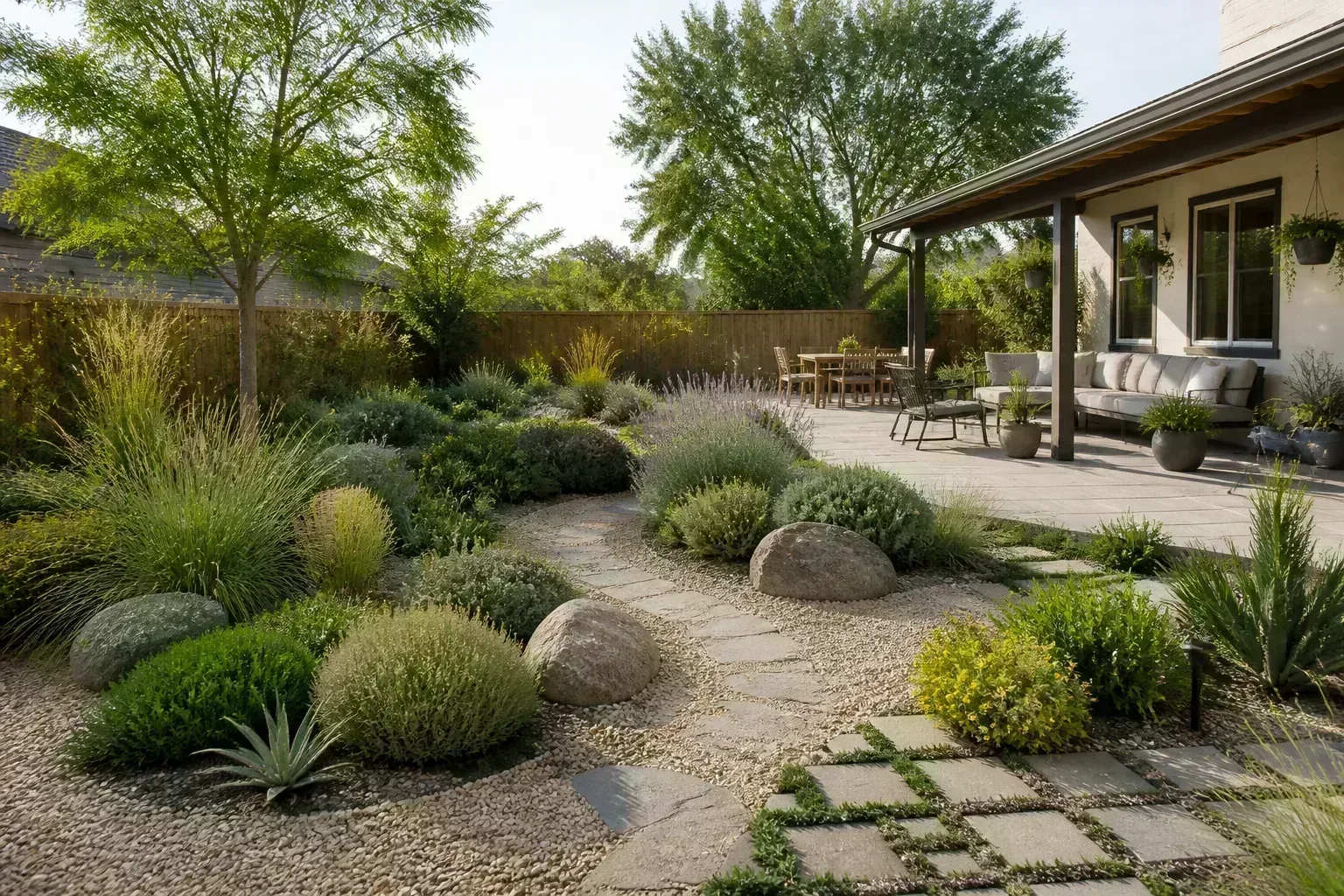
A desert landscape is not a rock pile with a lonely saguaro silhouette. It is a low-water outdoor system built from stone, gravel, drought-adapted plants, and hardscape that matches how sun, wind, and rain actually move across your lot. Done well, the yard looks intentional from the curb, stays cooler near the house, and uses a fraction of the water a traditional lawn drinks. Done poorly, you get scorched succulents in soggy clay, gravel that migrates downhill, and a “drought-tolerant” bed that still needs sprinkler-level irrigation because nobody grouped plants by water need.
The twenty-four ideas below are organized the way a landscape plan should unfold: audit the site, fix drainage and hardscape, then plant in hydrozones—groups that share the same watering schedule. That sequence is what separates a magazine photo from a yard that still looks good after your third August heat wave.
Audit Your Yard Before You Buy a Single Agave
Desert gardening still obeys basic horticulture. You need your USDA hardiness zone, a honest read of soil texture, and a map of where light and wind hit hardest. Plants native—or well adapted—to your regional desert will always be easier than forcing temperate perennials into 110°F afternoons.
UF/IFAS landscape planning guidance recommends starting with climate, topography, soil, sun and shade, and who uses each zone (UF/IFAS planning tips). In arid yards, add evaporation: south-facing walls and paved surfaces create heat islands that can bump effective temperature several degrees above the thermometer reading.
Map Sun, Slope, Wind, and Drainage
Walk the property at 9 a.m., noon, and 4 p.m. Label beds full sun, part shade, or dry shade under eaves and mature trees. Slope matters as much as sun—water and gravel both travel downhill without edging or a compacted base.
Dig a six-inch test hole after rain. If water sits for more than an hour, you do not have desert drainage; you have a future rot zone for lavender, agave, and most cacti. Fix grade first—away from the foundation, toward swales or dry stream beds—before buying stone. For sloped lots, see our hillside landscaping ideas guide for terracing strategies that still leave room for gravel paths.
Wind desiccates leaves and steals soil moisture. Note prevailing afternoon gusts and plan windbreaks (low walls, dense shrubs, or lattice) on the windward side of seating areas.
Xeriscaping and Water Zones Explained
Desert landscaping is also called xeriscaping—from the Greek xeros (dry). The term describes design that reduces or eliminates supplemental irrigation after establishment, not a single aesthetic. Utah State University Extension notes that well-designed xeriscapes can cut outdoor water use by nearly 60% compared with conventional turf-heavy yards (USU water-wise gardening).
The practical engine is hydrozoning: grouping plants with similar water needs and irrigating each zone on its own schedule (Gardening Know How on hydrozones). Typical desert zones look like this:
| Hydrozone | Examples | Irrigation after year 2 |
|---|---|---|
| Zone 0 – unirrigated | Native shrubs, established agave, gravel only | Rain only |
| Zone 1 – low | Sedum, yucca, Russian sage, ornamental grasses | Monthly soak in drought |
| Zone 2 – moderate | New trees, vegetable raised beds, container accents | Weekly to biweekly in heat |
| Zone 3 – oasis | Shade lawn strip, annual flowers, new transplants | Regular until established |
EPA WaterSense recommends choosing region-appropriate plants and matching irrigation to actual need (EPA WaterSense — what to plant). The most common desert-yard failure is running one sprinkler schedule for the whole yard—which either drowns succulents or starves a young desert willow.
Plan for establishment watering: even drought-tolerant species need deep, regular irrigation the first and often second summer while roots reach down. After that, cut back hard. Continuing lawn-frequency water into year three rots woody Mediterranean herbs and turns gravel beds into weed farms.
Desert Color Palettes That Hold Up in Harsh Light
Desert light is harsh and horizontal at dawn and dusk. The classic palette—warm terracotta, sand, rust, and ochre against cool blue-gray succulents, silver lavender, and purple salvia—reads clearly in that light better than saturated emerald lawn.
You can push accent color without breaking the scheme: cobalt glazed pots, yellow-flowering desert marigold (Baileya multiradiata), or red firecracker bush (Russelia equisetiformis) as a single focal spike. Stone choice does as much work as flowers—decomposed granite reads softer than stark white crushed marble, which can glare under midday sun.
Borrow the restrained repetition from Mediterranean garden design—three to five key plants echoed through the yard—without importing humidity-loving species that rot in your soil.
Cacti vs Succulents: What Changes Your Plant List
Every cactus is a succulent; not every succulent is a cactus. Succulents store water in leaves and stems—sedum, echeveria, aloe, agave. Cacti are succulents with areoles (bumps that sprout spines) and typically no true leaves.
That distinction changes placement and safety. Cacti need sharper drainage and wider spacing for airflow; they are poor choices along narrow paths where sleeves and pets brush past. Leafy succulents like aeonium and echeveria tolerate slightly more organic soil but fry if reflected heat off windows or pavement exceeds their limit.
For spiky structure without constant repotting, pair yucca and opuntia carefully—our spiky plants roundup covers heat-tolerant drama species. For agave specifics, see agave growing tips.
Ideas 1–8: Hardscape, Ground Covers, and Soil Fixes
Hardscape is not the background in desert design—it is half the design. Paths, patios, and gravel fields define where plants live and where water flows.
Gravel Gardens, River Rock, and When Organic Mulch Wins
Idea 1 – Gravel as living mulch. Replace thirsty turf with decomposed granite or pea gravel over weed barrier or thick cardboard, with planting pockets cut through. Gravel lets rain infiltrate, keeps crowns dry, and suppresses weeds once settled. It also stores heat—avoid wrapping tree trunks or crowding south walls without shade.
Idea 2 – River rock contrast. Rounded river rock beside spiky agave and yucca adds texture contrast. Use larger stones as anchors, smaller gravel as fill—same layering logic as a rock garden.
Idea 3 – Natural organic mulch under trees. Gravel dominates desert beds, but shredded bark or wood chips still help young trees and shrubs retain root-zone moisture. Keep mulch off trunks and away from succulent crowns. Our mulch guide compares gravel vs organic applications.

Idea 4 – Soil amendment where planting happens. Desert sand drains fast but holds few nutrients. Work compost into planting backfill only, not the entire yard—wide-amended bowls in pure sand can hold water against succulent roots. A jar test (soil jar test) clarifies sand vs clay before you buy pallets of stone.
Dry Stream Beds That Channel Rain Instead of Wasting It
Idea 5 – Dry creek bed. Dig a shallow swale along natural slope, line with permeable fabric, and fill with mixed gravel and larger cobbles. It turns runoff into infiltration, prevents erosion, and reads as a design feature in front yards. Curve the path—straight ditches look like drainage failures.
Idea 6 – Rock collection as sculpture. Existing boulders stay put; imported stone should match local geology so the yard does not look like a truck dumped Arizona flagstone in New Mexico caliche. Plant a single accent—golden barrel cactus or blue agave—beside a boulder rather than ringing every rock with six species.
Container Gardens for Rocky or Renters’ Yards
Idea 7 – Terracotta and glazed pots. When in-ground soil is pure caliche or you rent, containers buy flexibility. Unglazed terracotta breathes; glazed pots retain moisture longer—useful for herbs, risky for cacti unless drainage holes are generous. Avoid metal pots in full desert sun; they cook roots by afternoon and chill them at night.
Idea 8 – Elevated planters on patios. Large lightweight planters with cactus mix (potting soil plus coarse pumice or grit) host agave, sedum, and compact ornamental grasses. Water late afternoon in summer to reduce evaporation loss, but skip daily sprinkles—desert containers still want deep soaks on a schedule, not misting.

Ideas 9–16: Structural Plants, Texture, and Seasonal Color
Once ground plane and drainage are set, plant in odd-numbered drifts (three, five, seven) of the same species. Desert design rewards repetition more than collector gardens.
Agave, Yucca, and Spiky Focal Points
Idea 9 – Agave anchors. Blue agave (Agave tequilana), whale’s tongue agave (A. ovatifolia), and parry’s agave bring sculptural mass. One mature agave can carry an entire front corner—give it ten feet of clearance at maturity for leaf span.
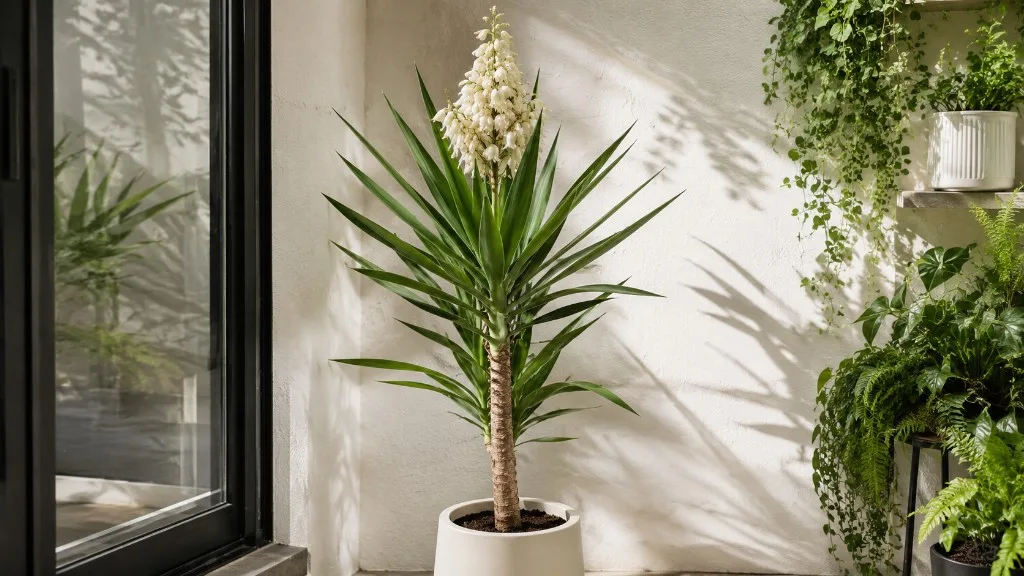
Idea 10 – Yucca columns. Variegated ‘Color Guard’ yucca pairs with low opuntia for vertical and horizontal contrast. Yucca blooms on multi-year cycles; foliage carries the design between flowers. See yucca care for drainage rules.
Idea 11 – Cactus punctuation. Golden barrel, hedgehog, and columnar trichocereus work as single exclamation points—not a dense forest against the sidewalk. Check cold hardiness; many columnar cacti need winter protection above zone 9.
Drought-Tolerant Perennials, Herbs, and Ornamental Grasses
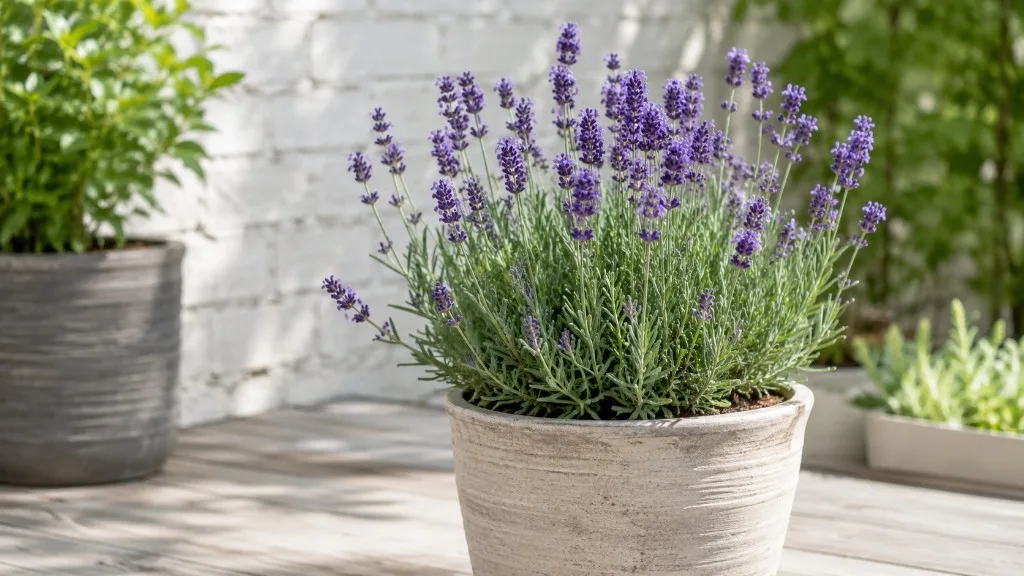
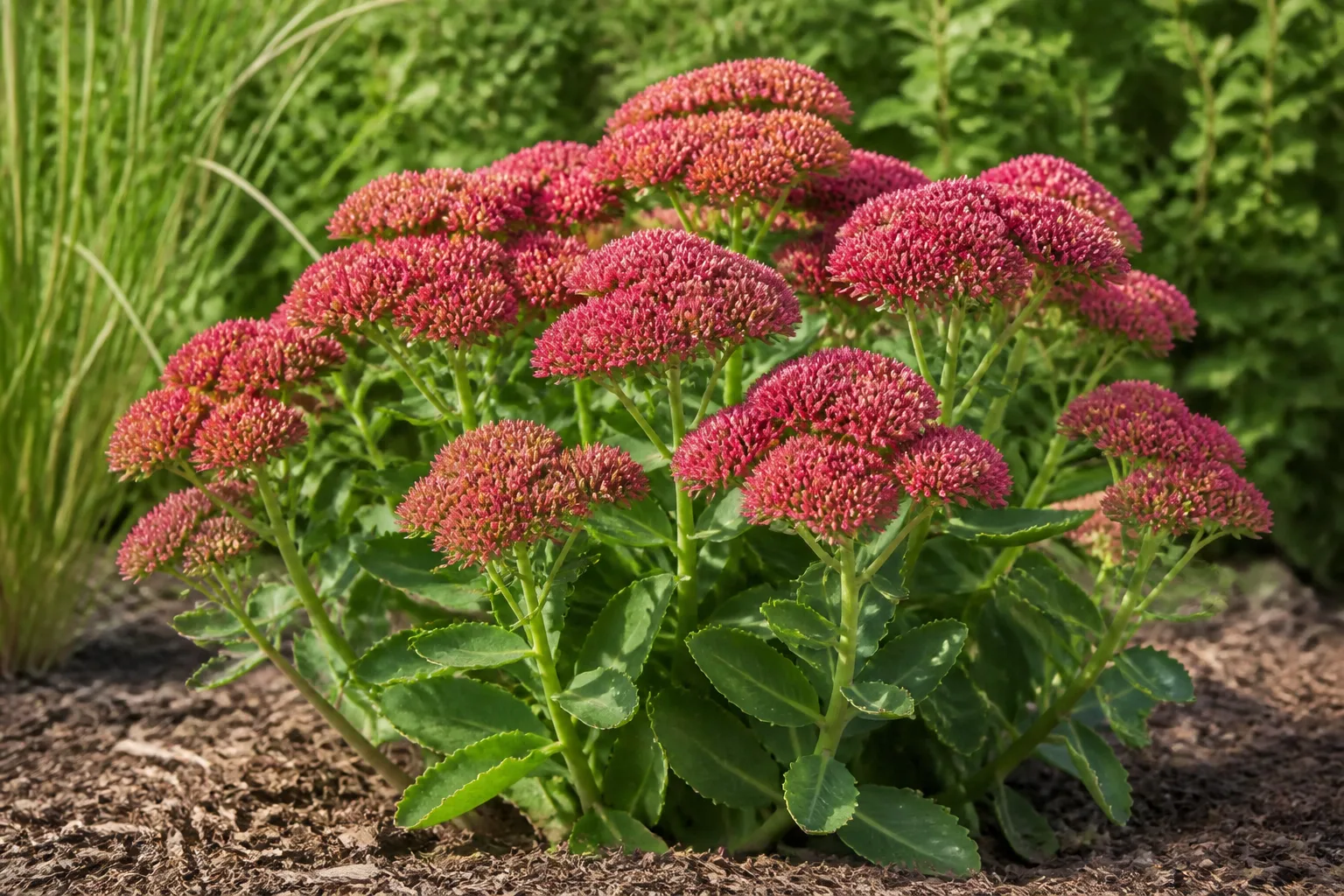
Idea 12 – Perennial backbone. Russian sage, sedum, agastache, salvia, rosemary, and lavender (where drainage is sharp) build long-season color. Lavender fails in heavy clay and humid summers—read where not to plant lavender before committing a front bed.
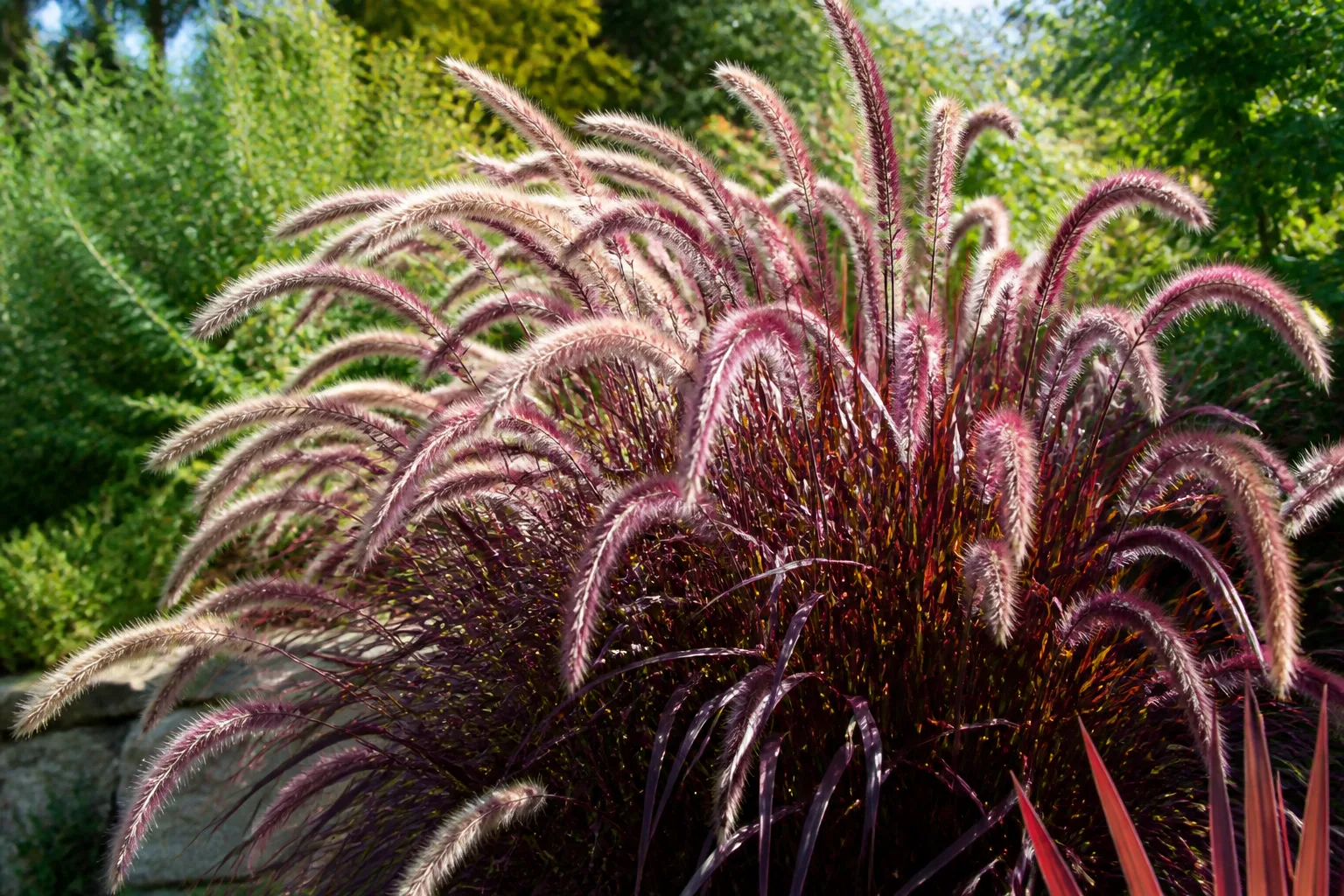
Idea 13 – Ornamental grasses for motion. Purple fountain grass, blue fescue, and deer grass add soft movement. Confirm invasiveness in your state—some fountain grass cultivars seed aggressively in the Southwest.
Idea 14 – Mediterranean crossover. Rosemary hedges, santolina, and thyme between pavers bridge desert and Mediterranean style where winters stay mild. Keep herbs on the moderate hydrozone until wood stems harden off.
Idea 15 – Close planting for soil shade. Tucking drought-tolerant perennials nearer than textbook spacing shades soil and cuts evaporation—almost cottage style, but with sedum, penstemon, and desert marigold instead of hydrangeas. Do not cram plants that need air circulation (lavender, agave) or mildew follows.
Native Wildflowers and Minimalist Three-Plant Compositions
Idea 16 – Wildflower washes. Mexican gold poppy, desert mallow (Sphaeralcea), penstemon, and firecracker bush deliver seasonal color from seed or plugs. Sow in fall where winters are mild; expect two seasons before self-sowing kicks in. More picks in our drought-resistant flowers guide.
Idea 17 – Palm Springs minimalism. Three species—smooth river rock, one agave, one opuntia, one mounding grass—can carry a entire front yard if spacing and rock size are intentional. Negative space is the design.
Ideas 17–24: Shade, Outdoor Living, and Water Features
Desert days bake; desert nights cool fast. Shade and heat sources are not luxuries—they extend usable hours outside.
Pergolas, Shade Trees, and Fire Pits for Cool Evenings
Idea 18 – Pergola or ramada. A timber or steel pergola with 30–50% shade cloth creates a patio room without blocking all breeze. Drought-tolerant vines—crossvine, pink trumpet vine, Lady Banks’ rose in mild climates—soften posts; skip thirsty wisteria.
Idea 19 – Shade trees with low water demand. Palo verde, desert willow (Chilopsis linearis), Arizona cypress, and Chinese pistache (where adapted) cool west-facing walls and patios. Plant on the sunniest side of outdoor seating, not in the middle of a gravel field where reflected heat stresses young bark.

Idea 20 – Fire pit or propane bowl. Cool evenings invite fire features—see backyard fire pit landscaping for clearance and hardscape integration. Propane bowls suit HOA rules and air-quality restrictions; wood pits need spark screens in windy deserts.
Idea 21 – Raised vegetable beds. Vegetables are not xeric, but raised beds in partial shade with hand watering beat sprinkling a full lawn for a few tomatoes. Line beds with gravel paths; keep edibles on their own hydrozone. Our no-grass backyard ideas guide covers patio-first layouts that tuck beds along fences.
Bubbling Fountains and Artificial Turf (With Honest Trade-offs)
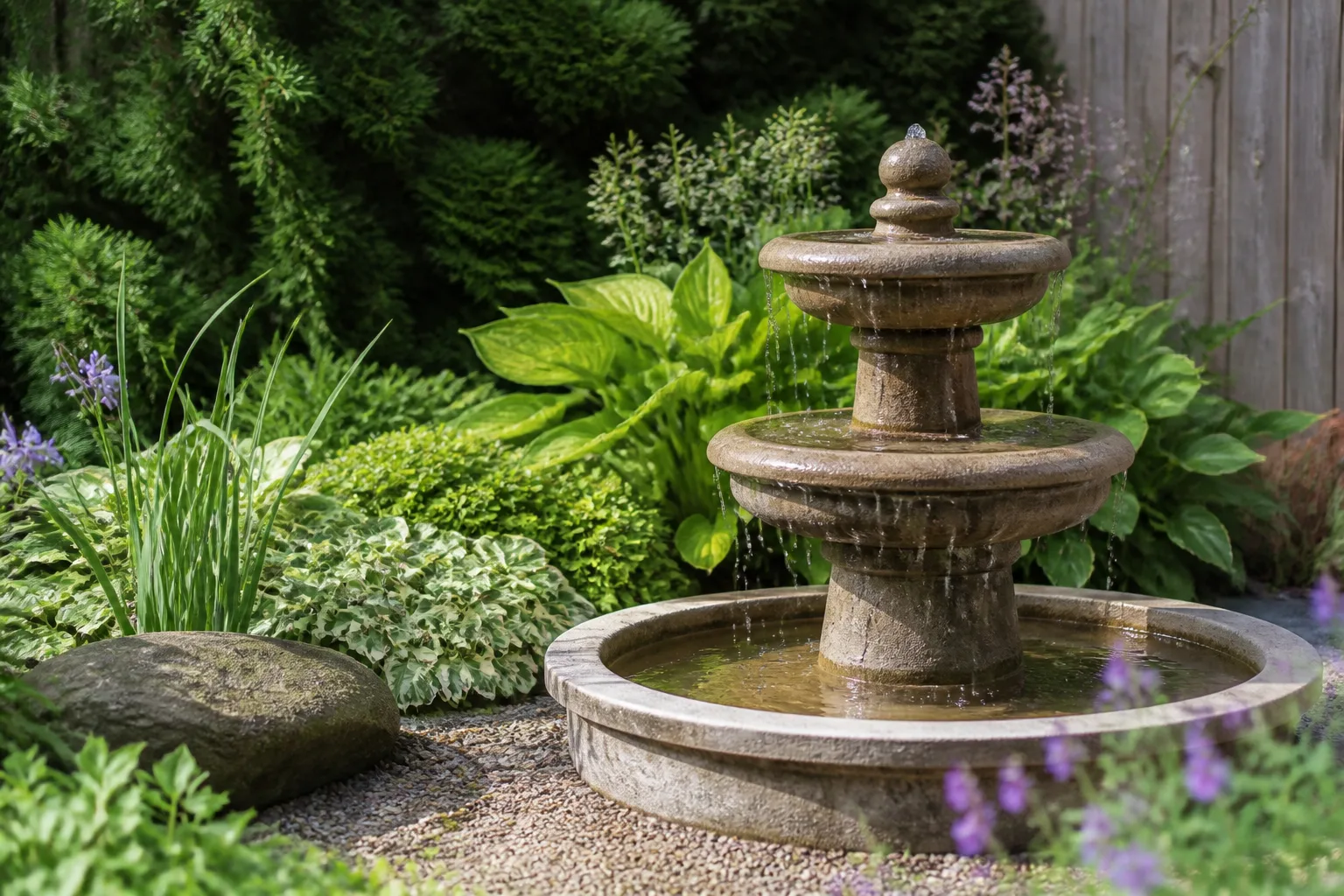
Idea 22 – Recirculating fountain. Moving water masks traffic noise and supports pollinators. Use a buried reservoir and small bubbler head—not an open pond—to limit evaporation and drowning hazards. A modest fountain uses far less water than maintaining turf.
Idea 23 – Artificial turf patches. Synthetic grass saves water where a small play or pet strip must stay green year-round—but surface heat, odor, and replacement cost are real. Read is artificial turf a smart choice before ripping out every blade of living groundcover. Hybrid yards—gravel plus a turf play zone—often outperform all-or-nothing installs.
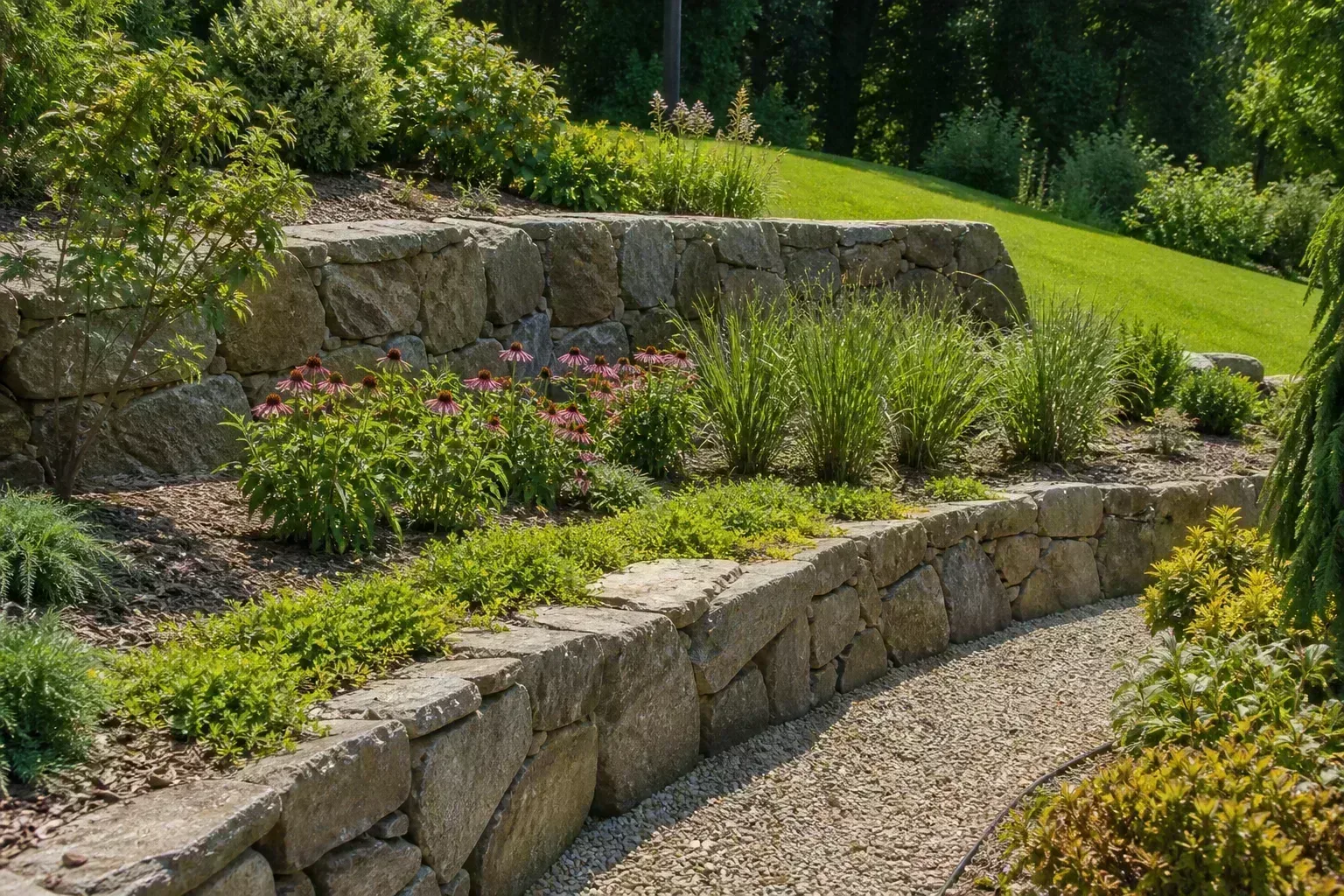
Idea 24 – Work with existing terrain. Slopes, outcrops, and native soil color are assets. Terraced gravel paths on grade change cost less than flattening a lot. Found desert driftwood, ironwood, or local stone make edging that imported lava rock cannot match.
Front Yard vs Backyard: Different Jobs, Different Plants
Front yard = curb appeal, simplicity, low litter. Prioritize clean lines, three to five repeated plants, visible paths, and species that look good from the street in winter (evergreen structure, gravel, boulders). Showpiece agave or golden barrel near the entry; skip spiny opuntia beside the mailbox path.
Backyard = privacy, comfort, function. Stack zones: dining patio under pergola, fire seating, hammock under desert willow, utility gravel for storage, optional small turf or play surface. Taller screening plants—hop bush, oleander where not invasive, or vertical reed fencing—belong here, not in the narrow front park strip.
Many municipalities offer turf-replacement rebates for front-yard conversions; check local water districts before demolition. Rebates often require a plan, photos, and post-inspection—design the front first if funding helps.
Mistakes That Kill Desert Landscapes Fast
Overwatering after establishment rots agave hearts and kills cacti faster than drought. When in doubt, skip a cycle and watch for leaf wrinkling before soaking.
Planting sun lovers in dry shade under mature trees fails predictably. USU Extension notes that drought-tolerant full-sun plants often struggle in shade, while true shade plants may need more moisture than bare soil under spruce provides (USU dry shade landscaping). Match the palette to the microclimate.
Gravel without edging on slopes sends stone into streets and neighbor lawns. Install metal or concrete edge restraints and a compacted base on paths.
One mulch type everywhere—wood against succulent crowns, or white gravel that blinds drivers at dusk—creates new problems. Split materials by zone like you split irrigation.
Ignoring hardscape first leaves plants as an afterthought around a patio poured in the wettest corner. Sketch hardscape and planting together using our landscape design for beginners sequence.
Conclusion
Desert landscaping rewards planners more than impulse buyers. Audit sun, slope, and drainage; divide the yard into hydrozones; build gravel paths and dry stream beds before you splurge on specimen cacti; then plant in repeated drifts of agave, yucca, sedum, native wildflowers, and shade trees that match your actual water budget. The twenty-four ideas above are interchangeable modules—gravel ground plane, spiky focal plants, wildflower color, pergola shade, fountain sound, fire-pit warmth—not a mandatory checklist.
Start with one visible zone—usually the front entry or main patio—and prove drainage and irrigation before scaling up. A desert yard should look sharper and need less water each year after install, not the other way around. For rock-and-mulch curb layouts, pair this guide with front yard landscaping with rocks and mulch and curb appeal landscaping ideas when you are ready to refine the street view.