33 Best Rock Garden Plants for Sun or Shade
Pick rock garden plants by light and drainage—not guesswork. Thirty-three sun and shade picks, layering tips, and planting rules for slopes and stone.
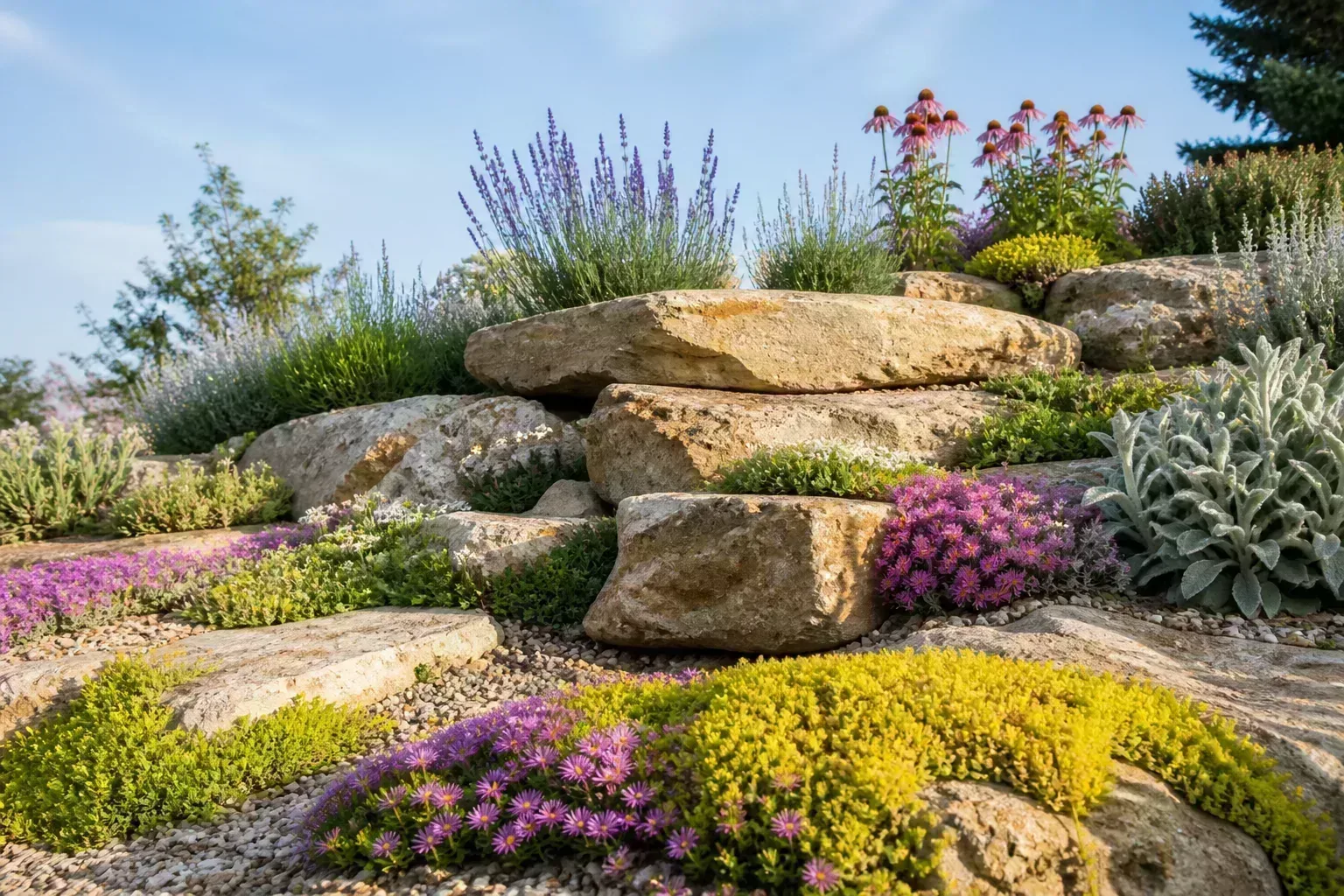
A rock garden is not a flower bed with gravel sprinkled on top. Stone changes everything: water runs off fast, soil heats and cools quickly, and the pockets between rocks create microclimates that favor some plants and punish others. The thirty-three species below are proven performers for rocky, well-drained beds—but only if you match each one to the light and moisture your site actually delivers.
What Makes a Rock Garden Plant Different
Rock garden plants—whether true alpines from high elevations or modest perennials that happen to love grit—share a few non-negotiable traits. They tolerate lean, fast-draining soil, recover from occasional drought, and stay compact enough to read well against stone without swallowing the rocks whole.
That does not mean every rock plant wants full baking sun. Some of the best performers nestle on north-facing stone where roots stay cool. Others need six or more hours of direct light to keep tight form and flower freely. The mistake most beginners make is buying pretty groundcovers first and only later discovering that their “rock garden” sits in heavy clay at the bottom of a downspout. Site beats species every time.
According to the RHS rock-garden design guidance, successful rockeries combine plants with similar requirements in pockets that mimic natural outcrops—sunny faces for sun lovers, shaded crevices for shade tolerators, and drainage that prevents the winter wet that kills more alpines than cold ever does.
Read Your Site Before You Shop for Plants
Walk the bed at three times of day and note where sun lasts longest and where stone stays damp after rain. A south-facing slope that dries by noon supports an entirely different palette than a north-facing wall that never sees midday sun.
Sun, Shade, and Drainage on Stone
Full sun in rock-garden terms means at least six hours of direct light on the planting face—not reflected glare from a window. Part shade (three to six hours, or bright shade with no hot afternoon sun) suits ajuga, columbine, pasque flower, reticulated iris, wood spurge, and catmint in hot climates. Dry shade under shallow-rooted trees is the hardest combination; stick to ajuga, lamium relatives, or shade-tolerant sedums rather than sun-hungry mats.
Drainage matters more than fertility. Dig a test hole six inches deep, fill it with water, and watch how fast it drains. If water sits for more than an hour, amend with coarse grit, raise the planting zone, or choose a different spot. Rock plants in soggy pockets rot from the crown outward—especially ice plant, sempervivum, and lavender.
Confirm your USDA hardiness zone and remember that stone elevates crowns above surrounding soil, which can shift effective zone by half a step colder on exposed north slopes. Purple fountain grass, for example, is a perennial only in zones 9–10; everywhere else, treat it as a seasonal accent.
How to Layer Plants for a Natural Rock Garden

Think in three bands so the planting reads from any angle. Front row (under six inches): creeping mats that spill over stone—yellow alyssum (Aurinia saxatilis), Angelina stonecrop (Sedum rupestre ‘Angelina’), dragon’s blood stonecrop (Sedum spurium), hens and chicks (Sempervivum tectorum), creeping thyme (Thymus serpyllum), snow-in-summer (Cerastium tomentosum), candytuft (Iberis sempervirens), and creeping phlox (Phlox subulata). Middle band (one to two feet): lavender, moonbeam coreopsis, spiked speedwell, perennial salvia, lamb’s ear, Shasta daisy, and black-eyed Susan. Back row (two feet and up): autumn joy sedum, yarrow, Russian sage, six hills giant catmint, maiden grass, mugo pine, rockspray cotoneaster, and rugosa rose.
Repeat each species in odd-numbered drifts of three or five rather than dotting singles. Odd groupings mimic how plants colonize cracks in natural rock.
Best Sun-Loving Groundcovers and Mats
These fifteen plants form the backbone of most sunny rock gardens. They knit soil between stones, suppress weeds once established, and carry color from early spring through late summer. Plant them on the south- and west-facing faces of your rockwork where stone dries fastest after rain.
| Plant | Bloom window | Height | USDA zones | Best placement |
|---|---|---|---|---|
| Yellow alyssum | April–May | 6–12 in | 3–7 | Top of sunny slopes |
| Ice plant | Summer | 3–6 in | 6–10 | Raised pockets only |
| Angelina stonecrop | Summer (yellow) | 4–6 in | 5–8 | Stone crevices, walls |
| Dragon’s blood stonecrop | Summer (pink) | 4–6 in | 4–9 | Between stepping stones |
| Hens and chicks | Summer (occasional) | 2–4 in | 3–8 | Vertical cracks, troughs |
| Creeping thyme | Summer (pink) | 2–4 in | 4–8 | Path edges, flagstones |
| Snow-in-summer | June | 4–6 in | 3–7 | Sharpest-drainage pockets |
| Candytuft | Spring | 6–12 in | 3–8 | Front border, wall caps |
| Creeping phlox | Spring | 4–6 in | 3–9 | Cascading over rock faces |
| Blue fescue | Summer (tan seed heads) | 8–12 in | 4–8 | Front edge accent tufts |
| Blue rug juniper | Nonflowering | 4–6 in | 3–9 | Slope stabilizer, rear mat |

Sedums, Ice Plant, and Other Succulent Spreaders
Yellow alyssum (Aurinia saxatilis) blankets slopes with chrome-yellow flowers in April and May on gray-green foliage. Zones 3–7; full sun; sandy, poor soil.
Ice plant (Delosperma cooperi) delivers magenta daisy flowers all summer on succulent leaves. It demands perfect drainage—winter wet kills it faster than frost. Zones 6–10; full sun. (See our ice plant growing guide for Delosperma vs invasive highway ice plant.)
Angelina stonecrop (Sedum rupestre ‘Angelina’) turns gold in full sun and stays under six inches. Dragon’s blood stonecrop (Sedum spurium) adds bronze foliage and pink summer blooms. Both tolerate drought and shallow soil; zones 4–9.
Hens and chicks (Sempervivum tectorum) rosettes multiply in wall crevices and stepping-stone gaps. Pull offsets to fill new pockets; parent “hens” die after flowering but chicks carry on.
Creeping thyme (Thymus serpyllum) releases fragrance when stepped on—ideal between flagstones. Pink summer flowers attract bees; zones 4–8. Shear lightly after bloom if mats become woody at the center; rooted stems replant easily into new pockets.
Pro tip for succulent mats: Plant sedums and sempervivum slightly above soil grade so crowns sit on a grit pillow. Even a quarter-inch depression collects splash water and invites rot during freeze-thaw cycles.
Flowering Groundcovers for Spring and Summer
Snow-in-summer (Cerastium tomentosum) lives up to its name with white June flowers on silvery mats. It hates humidity and wet winters; give it the sharpest drainage on the site.
Candytuft (Iberis sempervirens) offers crisp white (or pink) spring clusters on evergreen foliage. Flowers smell sharp to some noses, but pollinators disagree.
Creeping phlox (Phlox subulata) paints rock faces in magenta, pink, blue, or white each spring. It prefers humusy grit and tolerates heat better than taller garden phlox.
Blue fescue (Festuca glauca) is a grass, not a flower—but its blue tufts provide year-round texture at the front edge. Comb out dead blades in early spring.
Blue rug juniper (Juniperus horizontalis ‘Wiltonii’) is the evergreen anchor for sunny slopes: steel-blue needles, roots that stabilize soil, and tolerance for dry banks once established. Allow three to four feet of spread per plant.
Best Sun-Loving Perennials and Grasses
Twelve taller perennials and grasses add vertical rhythm and extend bloom past the spring groundcover flush.
Mid-Height Bloomers That Survive Lean Soil
Pasque flower (Pulsatilla vulgaris) is among the earliest spring color—purple or white blooms with fuzzy seed heads that follow. Light shade is fine; zones 4–8.
Reticulated iris (Iris reticulata) bulbs want dry summer dormancy in gritty pockets—perfect between rocks. Plant in fall masses for impact; zones 5–9.
Wood spurge (Euphorbia amygdaloides) brings chartreuse spring bracts and purple-tinged evergreen leaves. Afternoon shade prevents floppy growth in hot regions.
Moonbeam coreopsis (Coreopsis verticillata ‘Moonbeam’) threads fine foliage with pale yellow stars all summer. Poor sandy soil is an asset, not a problem.
Lavender (Lavandula spp.) needs alkaline, gravelly soil and air movement—never plant at the bottom of a wall where water collects. Zones 5–8 for English types.
Yarrow (Achillea millefolium) handles heat and neglect but spreads aggressively by seed and rhizome. Confine it to raised rock beds or plan to edit yearly.
Autumn joy sedum (Hylotelephium ‘Herbstfreude’, syn. Sedum ‘Autumn Joy’) is the late-season star: broccoli-like pink heads deepening to rust. Two feet tall; butterfly magnet.
Spiked speedwell (Veronica spicata ‘Royal Candles’) spikes blue-purple above compact foliage. It wants regular moisture during establishment but hates soggy crowns long term.
Columbine (Aquilegia spp.) self-sows in rocky soil; deadhead if you want fewer volunteers. Hummingbirds visit the spurred flowers in sun to part shade.
Coneflower (Echinacea spp.) adds three-foot daisies behind low mats. Sandy and rocky soil suit it; leave seed heads for winter birds.

Perennial salvia (Salvia spp., zone-dependent) delivers repeated blue or purple spikes if you shear after first bloom. ‘May Night’ and ‘Caradonna’ are rock-garden workhorses in zones 4–8.
Shasta daisy (Leucanthemum × superbum) and black-eyed Susan (Rudbeckia hirta) bring classic summer daisies. Both need drainage—wet clay kills Shasta daisy outright.
Ornamental Grasses and Vertical Accents
Purple fountain grass (Pennisetum setaceum ‘Rubrum’) is a one-season drama plant outside zones 9–10. Use it as a focal tuft in the center of a sun-baked island and replace yearly where it is not hardy.
Maiden grass (Miscanthus sinensis ‘Gracillimus’) arches four to seven feet with copper inflorescences. It needs space—do not cram it into a small alpine trough.
Russian sage (Perovskia atriplicifolia) and six hills giant catmint (Nepeta ‘Six Hills Giant’) share airy blue spikes and silvery foliage. Both spread by runners; pull suckers each spring or site them where colonizing is welcome.
Shrubs and Structural Plants for Rock Gardens
Six woody plants give winter skeleton and height when herbaceous mats die back.
Mugo pine (Pinus mugo) is the classic dwarf conifer for rockeries—slow enough to stay manageable for years if you buy a true cultivar labeled compact. Sandy, well-drained soil; zones 2–7.
Rockspray cotoneaster (Cotoneaster horizontalis) herringbones across stone with pink spring flowers and red fall berries. Birds spread seed; check regional invasiveness before planting.
Rugosa rose (Rosa rugosa) thrives in sandy, salty, windy sites where fussier roses fail. Expect thorns, fragrance, and a need for annual pruning to keep size in check. Zones 2–7.
These shrubs belong on the upper rear of the rock garden where roots can dive deep without competing with shallow mats in front.
Best Shade-Tolerant Rock Garden Plants
Seven species from the full list handle part shade or bright dry shade on north-facing stone. Shade rock gardens succeed when you treat north faces and east exposures as separate planting zones—not as “less sun” versions of the sunny palette.
Ajuga (Ajuga reptans) fills shady gaps with blue spring spikes on bronzy or green foliage. It runs aggressively in moist shade—keep it away from lawn edges and contain with paths or deep gravel barriers. ‘Black Scallop’ and ‘Chocolate Chip’ stay lower than species types and suit trough gardens.
Wood spurge, columbine, pasque flower, and reticulated iris (already described above) perform best with morning sun and afternoon protection in hot climates. In cool northern zones, many of these tolerate full sun on north-facing stone that never overheats.
Catmint and Russian sage tolerate light shade but flower less densely; give them sun if bloom is the priority.
For true dry shade under shallow-rooted trees, prioritize ajuga and sempervivum in raised pockets rather than sun-demanding mats like ice plant or creeping phlox. Compete with tree roots by amending pockets with extra grit and watering only until mats knit—then let rainfall carry the bed.
Plants to Use Carefully or Contain
Not every plant on a “best of” list belongs in every yard. Ajuga, yarrow, Russian sage, and rugosa rose spread beyond their intended footprint without yearly editing. Rockspray cotoneaster may self-seed where birds roam.
Purple fountain grass is not a permanent structural plant in most of the U.S.—budget for annual replacement or choose blue fescue or blue rug juniper for permanent blue-toned foliage.
Ice plant and sempervivum fail in low, water-collecting pockets. If a plant rots twice, move it higher on the stone face or add grit—do not keep replanting the same species in a sump.
Avoid moisture-loving perennials (astilbe, ligularia, hosta except in shade pockets) in open sunny rock— they belong in shade rock gardens or woodland edges, not on a baking south slope.
Planting Checklist for Rocky, Fast-Draining Soil

Build or refresh planting pockets before you set plants. The RHS recommends a base of coarse rubble, a separating layer of inverted turf or landscape fabric, and a top mix of one part loam, one part horticultural grit, and one part leaf mold or coir—adjusted per species.
Timing: Plant in spring when nursery stock peaks and roots have a full season to anchor before winter wet. Fall planting works in mild climates if drainage is excellent.
Steps:
- Water pots thoroughly an hour before planting.
- Set pots in place while still containerized; adjust for mature spread.
- Tease circling roots and plant so crowns sit at soil level—not buried under stone.
- Backfill with gritty mix; firm lightly without compressing pockets.
- Top-dress with gravel or grit to keep crowns dry and suppress splash.
- Water in once; then water weekly the first summer only if rain fails.
Established rock gardens rarely need supplemental irrigation except during prolonged drought the first two years.
Maintenance Mistakes That Kill Rock Garden Plants
Rock gardens look low-maintenance once established—and they are—but the first two years and a handful of recurring errors cause most failures.
Overwatering is the number-one killer. If foliage looks mushy at the base, stop watering and improve drainage before replanting. Drip irrigation on a timer set for lawn schedules will drown mats; use separate zones with longer intervals or hand-water only during drought.
Mulching with fine bark holds moisture against crowns—use gravel top-dress instead. Feeding heavily produces soft growth that flops and attracts aphids; a light spring sprinkle of balanced granular food is enough for most mats.
Ignoring winter wet: In climates with freeze-thaw cycles, ensure meltwater drains away from evergreen rosettes. A temporary clear plastic cover is worse than no cover—it steams plants. The RHS rock-garden guidance notes that winter wet—not cold alone—is the primary enemy of many alpines; tilt stones slightly backward so water sheds off planting pockets.
Letting trees overhang: Leaf litter packs into crowns and breeds rot. Rake pockets in late fall.
Skipping division: Creeping mats that meet in the middle compete for the same inch of soil. Divide thyme, phlox, and sedum every three to four years to keep vigor.
Weed trees and grass: A single quackgrass rhizome in a sedum mat becomes a multi-year war. Pull weeds while small; do not let maple seedlings root between stones for two seasons.
Expecting instant fill: Rock gardens look sparse the first year by design. Overplanting leads to crowding and disease by year three. Trust the spacing on the label and let mats meet gradually.
Conclusion
The best rock garden plants are not the ones with the prettiest catalog photo—they are the ones that match your stone’s light, drain in minutes after a downpour, and sit at the right height in the layer you actually have room for. Start with drainage and sun mapping, then choose from the thirty-three species above in grouped drifts: succulent mats and spring groundcovers in front, lavender and coneflowers in the middle, and mugo pine or rugosa rose anchoring the rear. Get those three decisions right and a rocky slope becomes a low-input garden that improves every year instead of a graveyard for plants that never belonged on stone.