24 Front Yard Landscaping Ideas for Curb Appeal
Twenty-four front-yard landscaping ideas — from mulch and edging to pollinator beds and solar lighting — ranked by impact so you know what to do first.
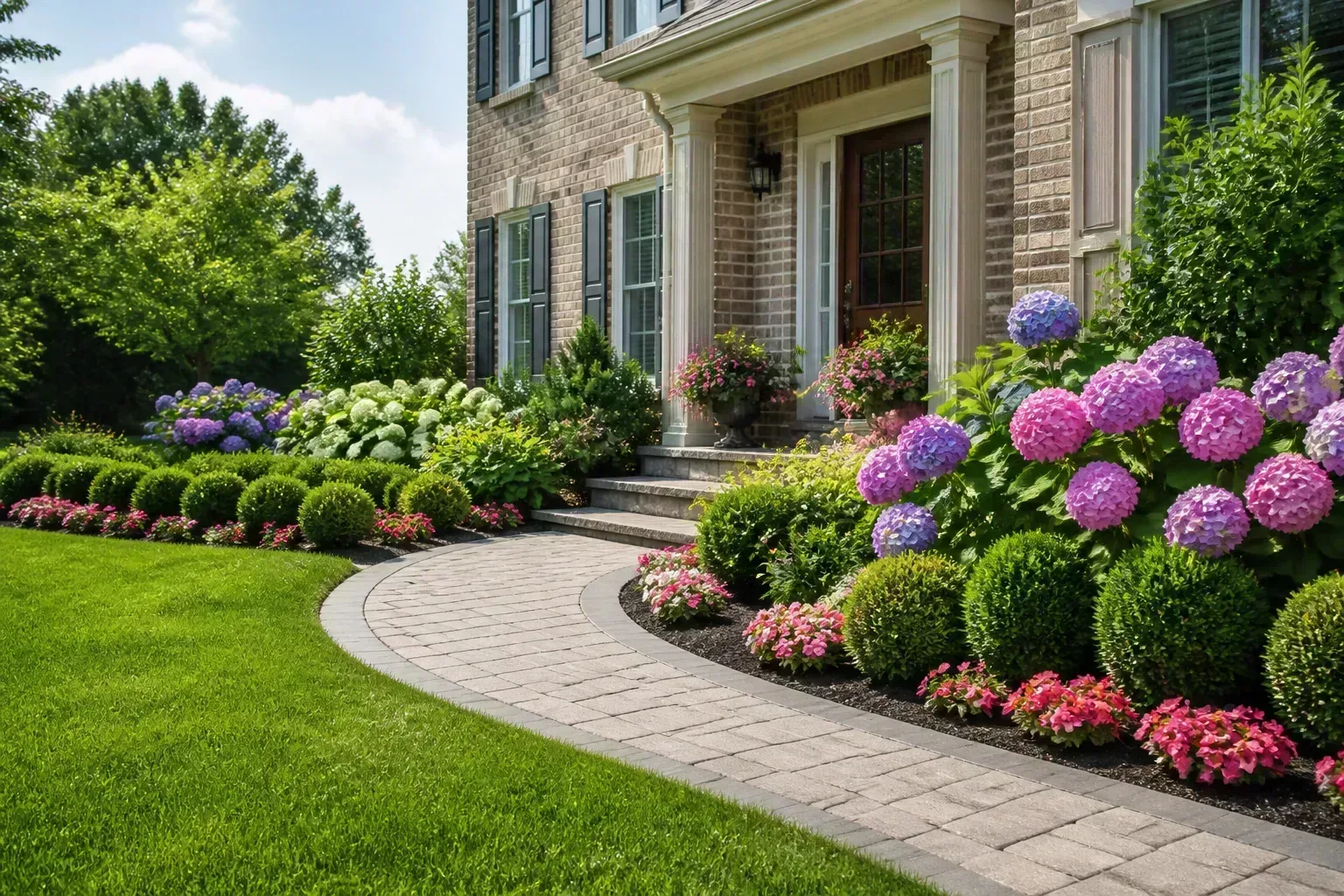
A front yard can be healthy and still look forgettable from the curb. The gap is usually not a missing $800 shrub — it is that the lawn, beds, walk, and porch do not yet tell one story. These curb appeal landscaping ideas work because they change the outline of the yard first, then the planting, then the small details that make the whole scene feel intentional.
Below are 24 upgrades grouped by what they actually do for your front yard — not in the order a photo gallery would suggest. Start with the tier that matches your weekend, then pick the plant and structure ideas that fit your sun, soil, and municipal rules.

Where to Start: Rank Upgrades by Impact, Not Instagram
Before you buy a flat of annuals, walk to the sidewalk and squint. What reads messy from 30 feet away? Almost always it is a soft lawn edge, thin mulch, and weeds breaking the bed line — not the specific cultivar in pot number three.
The three-tier weekend plan
Tier 1 — outline the yard (same weekend, under $100): Pull weeds, cut a crisp edge where lawn meets bed, refresh mulch where it has faded or thinned, and sweep the walk. EPA WaterSense landscape guidance groups mulch with edging because both reduce runoff and make planting zones obvious — which is exactly what curb appeal needs.
Tier 2 — planting and structure (this season): Add perennials or shrubs sized for mature width, install bed edging if grass keeps creeping in, and place one container or window box at the door. Our low-maintenance shrubs for curb appeal guide walks through foundation spacing if you are choosing woody plants.
Tier 3 — finishing touches (when Tier 2 is stable): Solar or low-voltage path lights, a mailbox garden, an arbor, or a birdbath. These amplify a yard that already has clean lines; they rarely rescue a bed that has no edge or mulch.
Do not install expensive hardscape or specimen trees until drainage and bed shape are solved. A weeping beech in a soggy, weed-filled oval still photographs like a weeping beech in a soggy, weed-filled oval. Fix the frame, then invest in the art.
Perennials, Pollinators, and Season-Long Color

Color is the fastest emotional upgrade — but one weekend of annuals is not a strategy. The strongest front yards mix repeat performers, pollinator magnets, and seasonal succession so something always looks alive without a monthly nursery run.
Swap some annuals for repeat performers
Annuals like pansies and impatiens are brilliant for instant porch pots. In ground beds, though, replacing them every year gets expensive and leaves bare soil each winter. Trade a portion of that annual budget for tough perennials: purple coneflower (Echinacea purpurea), black-eyed Susan (Rudbeckia), and yarrow (Achillea) handle sun, tolerate dry spells once established, and return with structure even before bloom. See our purple coneflower growing guide for spacing and division timing.
In part-shade foundation strips, hostas, coral bells (Heuchera), and foamflower (Tiarella) give foliage color when bloom is scarce. Match each plant to the actual light at the foundation — south-facing brick bakes; north-facing porches stay cool.
Plant pollinator flowers that read colorful from the curb
Pollinator plants are not just ecological virtue — they tend to bloom longer and draw movement (bees, butterflies, hummingbirds) that makes a static bed feel alive. Penn State Extension notes that native plants support the insect food web songbirds depend on, which is a practical reason to favor regional species over generic “butterfly mix” seed.
Front-yard winners with clear curb presence include bee balm (Monarda), foxglove (Digitalis — biennial but dramatic), pineapple sage (Salvia elegans), and native serviceberry (Amelanchier) as a small specimen tree with spring flowers and fall fruit. Our bee balm growing guide covers mildew-prone summers and air circulation — important when plants sit against a wall.

Check your state extension or a regional native-plant society list before shopping; a pollinator plant that thrives in Pennsylvania may fry in Arizona afternoon sun.
Single-season color is why many front yards look “done” by August. Layer bloom times on purpose: spring bulbs, creeping phlox, azalea, and serviceberry; summer coneflower, bee balm, daylily, and ornamental grasses; fall asters, sedum, viburnum foliage, and blueberry color; winter red-twig dogwood stems, winterberry holly fruit, grass silhouettes, and interesting bark on ninebark or paper birch. Leave seed heads standing until late winter if you want finches and winter texture — then cut back before spring growth.
Layered Beds, Specimens, and Foliage Texture
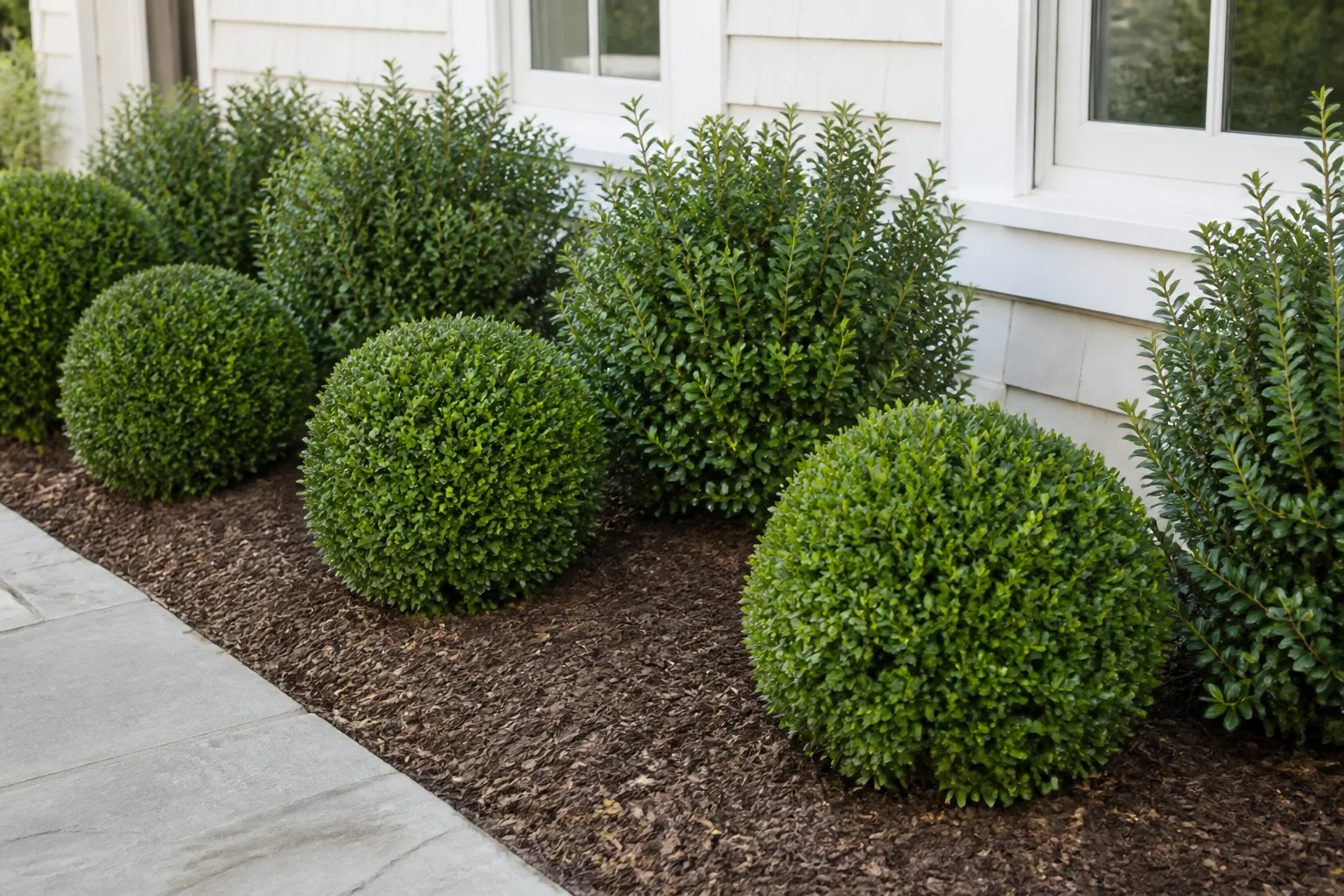
Flat beds read like afterthoughts. Depth — tall at the back, short at the front — is what makes a 6-foot-wide strip look designed from the street.
Tall in back, short in front — the street-view test
Place shrubs and tall perennials along the house or rear bed line. Step down to mid-height plants, then ground-hugging edging plants at the walk. The “street-view test” is simple: from the curb, you should see a smooth slope of height, not random spikes. This is the same layering logic Gardeners’ World design guidance uses for borders — scaled to a foundation strip.
Allow mature width, not nursery-tag height. A shrub labeled “6 ft” may mean 6 ft wide — plant its center at least 3 ft from the foundation plus walkway clearance.
A specimen plant is a single standout — weeping habit, bold foliage, or unusual bark — that gives the eye a destination. Weeping beech, contorted hazel, or a well-placed Japanese maple can do this in shade; in sun, consider a compact crepe myrtle cultivar or a sculptural ornamental grass like ‘Karl Foerster’ feather reed grass. One specimen is enough for most modest front yards; two competing focal points fight each other and make the house feel smaller.
Bright flowers help, but foliage plants carry curb appeal between blooms. Ornamental grasses add movement; variegated hosta and silver artemisia lighten shade; bronze coral bells echo brick or stained shutters. Pull color from fixed elements — shutter paint, front door, mailbox — into flowers and foliage accents. Cohesion beats maximum saturation.
Window Boxes, Planters, and Entryway Framing

Containers are the highest-impact planting zone because they sit at human height beside the door. They also fail fastest when drainage, soil volume, or watering rhythm is wrong.
Window box rules that survive summer heat
Mount boxes below the sill with room for air circulation — trapped moisture rots siding. Use lightweight potting mix, not garden soil, and confirm drainage holes are open. In hot climates, line boxes with coco fiber or plastic with holes; in cold climates, choose frost-proof boxes or bring them in for winter.
Trailers like creeping Jenny (Lysimachia nummularia) and sweet potato vine (Ipomoea batatas) soften the box edge; upright salvias or geraniums provide height. Swap cool-season fillers (pansies, snapdragons) for heat lovers (lantana, verbena) in June rather than fighting wilt all summer.
Large porch pots frame doors and walks when you follow thriller-spiller-filler: one upright “thriller” (dracaena spike, ornamental grass, tall coleus), trailing “spillers” at the rim, and mounding “fillers” between. Repeat the same pot style on both sides of a symmetrical porch; water containers when the top inch dries and fertilize lightly every two to three weeks.
Edging, Fresh Mulch, and Hellstrip Planting
Crisp edges and even mulch are the cheapest professional signals. They also protect plants from string trimmers — a hidden curb-appeal killer.
Bed edging that protects plants from mowers
Bed edging separates lawn from soil, blocks grass rhizomes, and gives trimmers a target so you are not scalping perennials. Plastic edging is fast; steel or aluminum lasts longer; stone and brick read more formal; woven wattle (flexible branches) suits cottage gardens.
Install edging so the top is flush with soil grade — proud edges become trip hazards and mower obstacles. Curve gentle sweeps rather than tight corners that are hard to mow around.
Mulch depth, refresh timing, and volcano mistakes
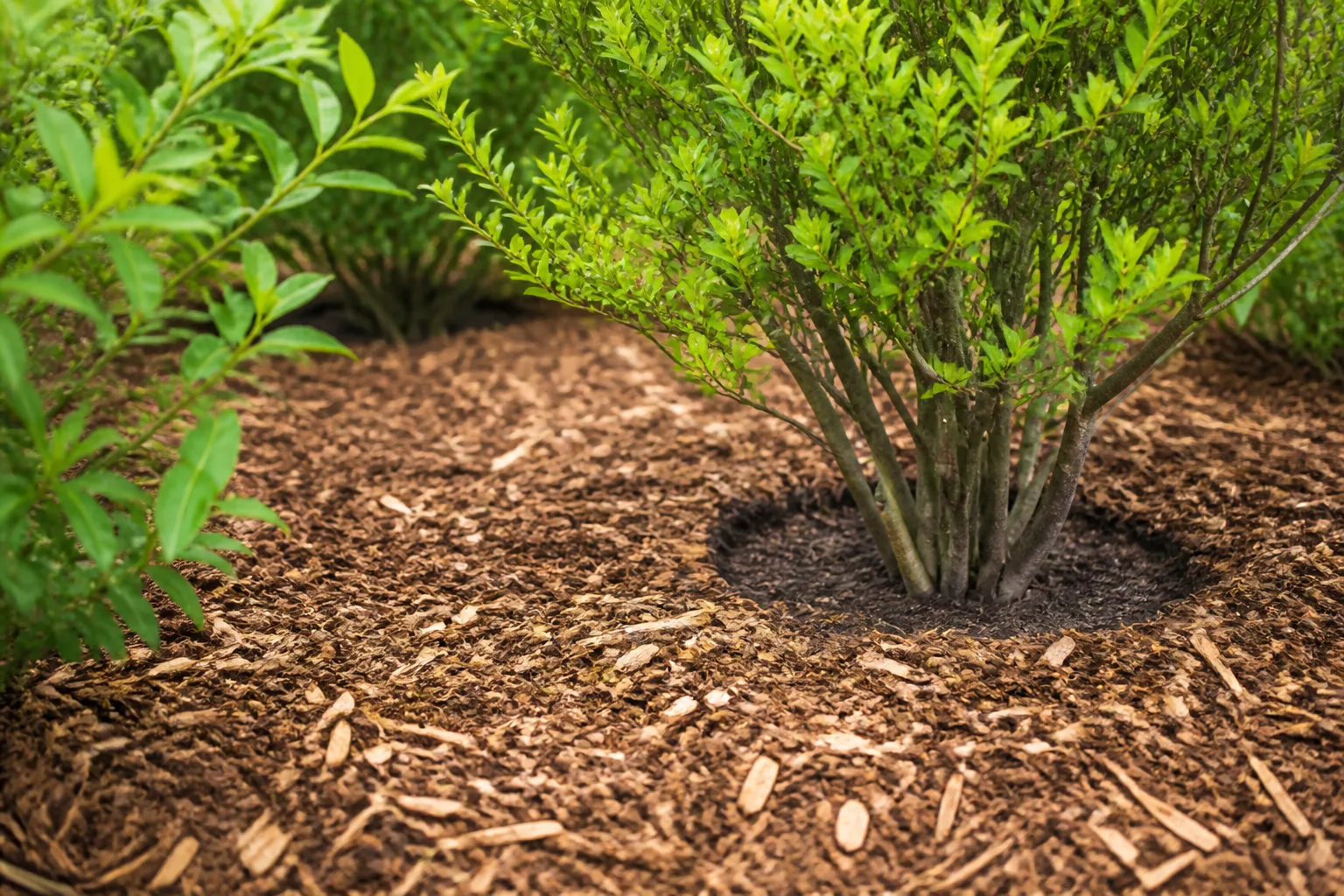
A fresh mulch layer makes beds look finished, suppresses weeds, and moderates soil temperature. Spread 1 to 3 inches of shredded bark or wood chips in ornamental beds; keep mulch several inches away from stems and trunks. Piled “mulch volcanoes” against tree trunks cause bark rot and are a common front-yard mistake. Our what is mulch guide compares organic types and refresh timing.
Refresh when color fades or depth drops below 2 inches — often annually in rainy climates, every other year where decomposition is slow. Pine needles and shredded leaves work in acidic beds and cost less if you have a source on-site.
The hellstrip — grass between sidewalk and street — is often municipally owned or subject to setback rules. Confirm ownership before planting. Where allowed, choose tough plants like creeping thyme, creeping phlox, and low sedums. A mailbox garden around the post, edged with brick or stone, repeats one or two plants from the main bed so the zone feels connected.
Groundcovers, Weeds, and Quiet Maintenance Wins
Bare soil invites weeds and looks unfinished. Groundcovers and consistent weeding are boring — and that is why they work.
Groundcovers that crowd out bare soil

Low mats reduce weeding and soften pavers. Shade: lily of the valley (Convallaria — toxic if ingested, so skip if toddlers graze the yard), wild ginger (Asarum), foamflower. Sun: creeping thyme, sedum, creeping juniper on slopes. Our creeping juniper plant profile notes drought tolerance once established — useful on sunny hellstrips and banks.
Leave stepping-stone paths through aggressive spreaders so maintenance access does not trample plants. Mulch is the first weed defense; for pavers, hand-pull while roots are small and never leave pulled weeds on top of beds where they can reroot or drop seed.
Vertical Interest, Hardscape, and Nighttime Curb Appeal
Height draws the eye up toward the door and breaks flat ranch-style facades. Hardscape and light extend that story after dark.
Arbors, trellises, and climbing plants
An arbor over a front walk signals entry — keep width proportional so it does not swallow a narrow path. Prefab arbors are fastest; a cattle-panel arch on T-posts is a budget DIY option described in many garden-structure tutorials such as Fine Gardening’s garden structures guide. Plant clematis, climbing hydrangea (Hydrangea anomala subsp. petiolaris), or annual sweet peas and morning glories at the base — match vigor to post strength.
Trellises on blank wall sections need standoff spacing for air circulation. Paint or stain wood before vines cover it; you will not get another chance for years.
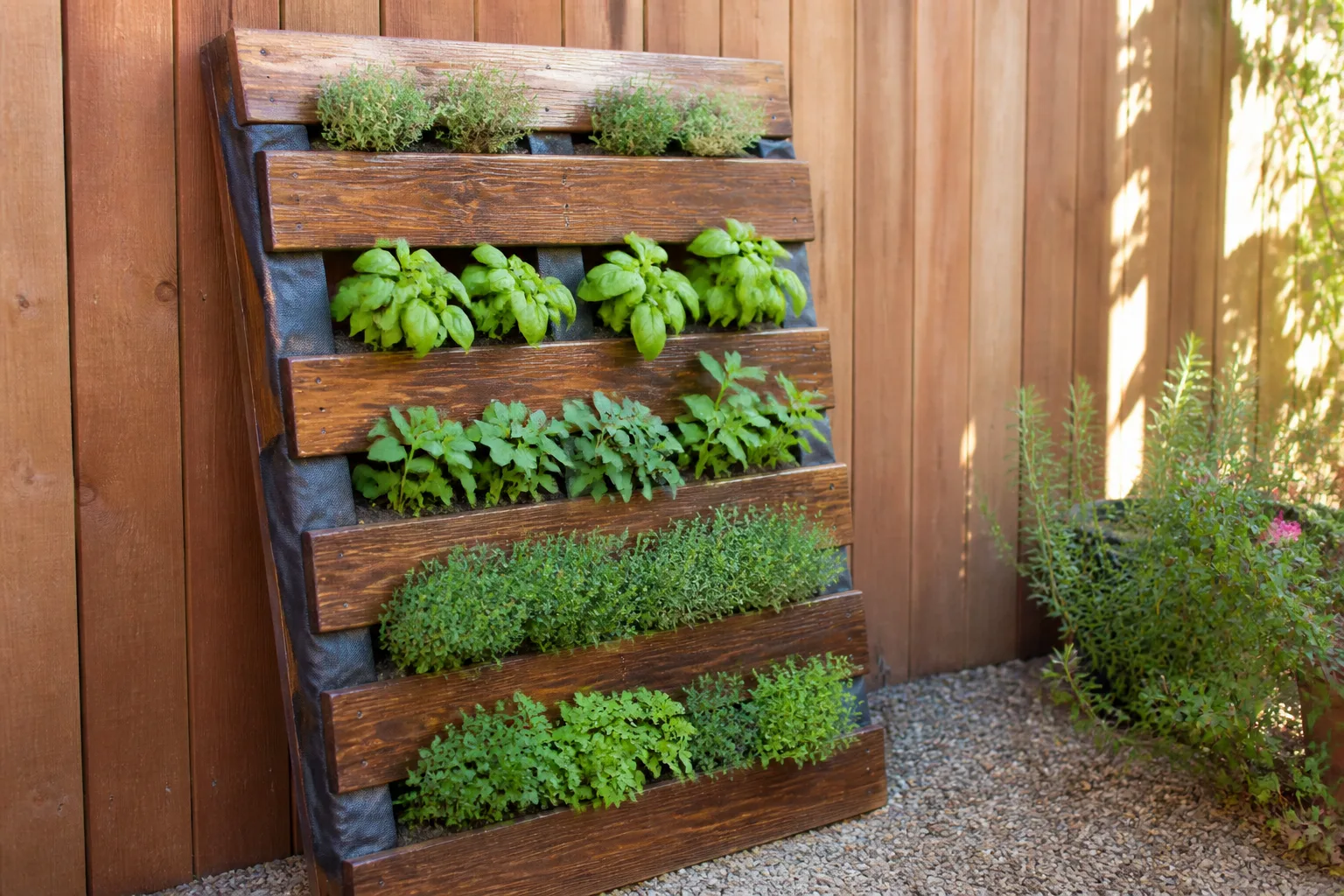
See our DIY vertical garden ideas for more vertical formats when an arbor is too large.
Hardscape accents and solar path lighting
Walkways and driveways already guide visitors; decorative hardscape — a birdbath, large specimen boulder, dry-stacked stone — gives pause points along the route. One strong piece beats three small ones competing for attention.
Solar path lights are easy to install and cost nothing to run, but they need several hours of direct sun on the panel and look dim compared with wired low-voltage fixtures. Use solar for short runs and accent; choose wired low-voltage systems for primary path safety and consistent brightness. DarkSky International recommends shielded, downward-facing fixtures to reduce glare for neighbors and migrating wildlife — aim lights at paving, not bedroom windows.
Scent, Edibles, Compost, and Pruning Rhythm
The best front yards reward more than one sense and improve soil year over year. These ideas are subtle — neighbors notice without knowing why.
Fragrant and edible front-yard plants
Scented plants near the walk — mock orange (Philadelphus), lilac, heliotrope, rosemary — make daily arrivals feel calmer. Place intense fragrance downwind of seating areas; too much lavender beside a hot south wall can overwhelm on humid evenings.
Edible ornamentals blur the line between kitchen and curb: tricolor sage, red shiso, flowering chives, kale with purple foliage, compact peppers in pots. Check HOA rules before replacing lawn with raised beds; containers often pass where in-ground veggies do not.
Top-dressing beds with sifted compost each spring or fall feeds soil gently and improves water retention. Pruning keeps shrubs shapely without constant shearing — research bloom time before cutting. For a broader low-cost refresh sequence, see our landscaping refresh ideas guide.
Conclusion
Curb appeal is not one heroic plant — it is alignment. Clean edges and fresh mulch make beds readable; layered perennials and one well-chosen specimen give depth; containers and lighting frame the door; groundcovers and compost keep the system low-drama over time.
Work the 24 ideas in impact order: outline first, planting second, accents last. Pick plants for your actual sun and mature size, confirm hellstrip rules before digging, and stop when the yard tells one coherent story from the sidewalk. That is the difference between a basic front yard and one that looks polished the day you finish — and still looks intentional next year without starting over.