DIY Vertical Garden Ideas for Small Yards and Balconies
DIY vertical garden ideas for walls, pallets, gutters, and trellises—plus weight limits, drainage rules, plant picks, and watering plans that keep small-space gardens alive.

A DIY vertical garden stacks growing space upward so a skinny balcony, fence line, or blank wall can hold herbs, salad greens, strawberries, or ornamentals without eating your entire yard. The mistake most beginners make is copying a pretty photo before answering three boring questions: how heavy the loaded structure will be, where water goes when it drains, and whether the plants you want can survive shallow soil that dries out in an afternoon.
This guide groups proven DIY vertical garden ideas by structure type, then pairs each with realistic plant picks, mounting rules, and watering habits. You will still get plenty of project inspiration—from felt pocket walls to pallet herb stations—but you will also get the engineering and horticulture details that keep those projects alive past the first heat wave.
What counts as a DIY vertical garden (and when to skip one)
A vertical garden is any setup that grows plants above ground level in stacked or wall-mounted containers, or trains vining crops up a support so they occupy airspace instead of bed space. Virginia Cooperative Extension describes vertical gardening as “gardening up” with trellises, stakes, cages, and repurposed materials that lift plant growth into unused vertical space on balconies, decks, patios, windowsills, and fence lines.
That definition matters because not every Pinterest “living wall” belongs on your house. Skip a wall-mounted soil column if you have less than four hours of direct sun, if your siding cannot handle repeated moisture, or if your balcony lease forbids drilling into railings. In those cases, a freestanding ladder planter or rolling gutter stand often succeeds where a permanent wall garden fails.
Vertical planters vs trellis-trained vines
Container vertical gardens hold soil in pockets, pots, gutters, or boxes mounted on a wall or frame. You are responsible for potting mix, drainage, and irrigation because roots cannot reach ground moisture.
Trellis vertical gardens keep roots in the ground or in large floor containers while stems climb a fence, cattle panel, or tripod. Virginia Tech notes that pole beans, peas, cucumbers, melons, and tomatoes are excellent candidates when trained to sturdy supports, with posts driven 18 to 24 inches into soil for stability.
Choose containers when you are gardening on concrete, a balcony, or rented siding. Choose trellises when you have in-ground beds or large patio planters and want maximum food yield per square foot. Many productive small yards combine both: a trellised cucumber at the bed edge and a wall of herbs above the patio table.
Choose your structure before you shop for plants
Plants are the fun part; structure is the part that prevents a Sunday project from pulling screws out of drywall. Before buying soil or seed, decide whether you need a wall-mounted, freestanding, or hanging system—and whether the finished unit must move when you mow, paint, or renew a lease.
Wall-mounted systems (felt pockets, slat panels with removable pots, mason jar frames) look seamless but concentrate weight and moisture on fasteners. Freestanding ladder shelves, pallet A-frames, and gutter stands spread load across the ground and are easier for renters to remove. Hanging bucket columns and suspended terra cotta towers create drama but swing in wind and dry unevenly from top to bottom.
Quick picker by space, budget, and skill level
Smallest footprint, lowest skill: prefabricated felt pocket panels screwed into masonry or fence posts; fill with herbs and lettuce. Expect to water every one to two days in summer.
Best budget upcycle: soda bottles or vinyl gutters on a railing frame—materials are cheap, but drill drainage holes and plan drip trays so downstairs neighbors stay friendly.
Best weekend wood project: ladder-style shelf planter or three-tier strawberry boxes. Use rot-resistant cedar or pressure-treated lumber rated for ground contact only where it touches soil; keep food-growing surfaces lined with landscape fabric.
Highest food yield per square foot: in-bed trellis or cattle-panel arch with roots in the ground or a 15–20 gallon container. Pair with our vegetable garden layout guide to place tall crops on the north side so they do not shade shorter plants.
Renter-safe: clamp-on railing boxes, freestanding gutter stands, or rolling shelf units that do not pierce the building envelope.
Weight, drainage, and mounting rules that save walls
Vertical gardens fail quietly at the hardware layer. A dozen 6-inch pots sounds light until each holds saturated potting mix weighing roughly 10–12 pounds. A full pocket panel can exceed 50–80 pounds when wet. Mount into studs, masonry anchors, or fence posts—not drywall alone—and spread load across multiple fasteners.
Every planting pocket needs drainage holes or an internal channel that delivers excess water to a bottom collection tray. Without drainage, roots suffocate and walls wick moisture into siding. With drainage but no tray, you risk staining stucco or dripping on a neighbor’s balcony—exactly the conflict that ends renter garden experiments.
Why wet soil weight matters more than empty pots
Use lightweight potting mix labeled for containers, not garden topsoil, which is heavier and compacts in shallow pockets. Mixes with perlite or coconut coir drain faster and shave dead load. For very shallow pockets under 4 inches deep, choose soilless mixes designed for green roofs or microgreens.
Angle wall panels slightly forward a few degrees when possible so water does not pool against the building. On wood fences, add a 1/2-inch air gap behind a slat panel so boards dry between waterings; constant dampness invites rot where screws penetrate.
Best plants for vertical containers by sun and root depth
Match plant ambition to pocket depth. Shallow systems under 4 inches suit lettuce, spinach, strawberries, sedums, and thyme. Medium pockets 6–8 inches deep handle basil, parsley, bush beans, and compact peppers. Deep boxes or floor containers at the base of a wall support tomatoes, dwarf bush varieties, or a single zucchini if you feed and water aggressively.
Full sun (6+ hours): basil, trailing nasturtium, strawberries, bush cherry tomatoes in the largest lowest pocket, compact marigolds, sedums, and most culinary herbs except cilantro in midsummer heat.
Part sun (3–5 hours): lettuce, spinach, mint, chard, coleus, fuchsia, and impatiens in bright shade. Our shade annuals guide helps if your vertical site sits under an overhang.
Vining crops on trellises: pole beans, peas, cucumbers, and indeterminate tomatoes need sturdy mesh with holes under 4 inches so tendrils can grip, per Virginia Tech guidance. Train stems early with soft ties; waiting until vines are long leads to snapped stems and uneven shade.
Avoid mixing drought-loving succulents with thirsty herbs in the same irrigated panel—the watering schedule that keeps basil happy will rot sedum roots. Split dry and wet zones onto separate structures or separate vertical columns.
Wall-mounted pockets, slat panels, and railing planters
Felt or fabric pocket panels are the fastest living-wall look: screw a rigid backing board to masonry or fence posts, mount the panel, fill pockets with mix, and plant. They excel for herbs and greens but dry from the top down. Rotate plantings so thirsty species sit in lower pockets where runoff collects, and check the top row twice daily during heat waves.
Slat walls with removable pots—galvanized buckets, tin cans, or standard nursery pots on hooks—let you swap seasonal color without rebuilding. This is the most flexible DIY vertical garden for renters: remove pots to repaint the wall or take the display when you move.
Railing planters clip or bolt to balcony rails. Confirm weight limits in your lease and use pot saucers or a drip mat beneath the outer rail. Herbs in railing boxes are the classic apartment-friendly kitchen garden when in-ground beds are not an option.
Mason jar or chicken-wire frames deliver farmhouse style indoors or on a covered porch. Use pebbles at the bottom of each jar for drainage, avoid direct afternoon sun on glass, and treat them as semi-hydro or short-term displays—roots overheat quickly in clear glass.
Pallet, ladder, and tiered shelf gardens you can build in a weekend
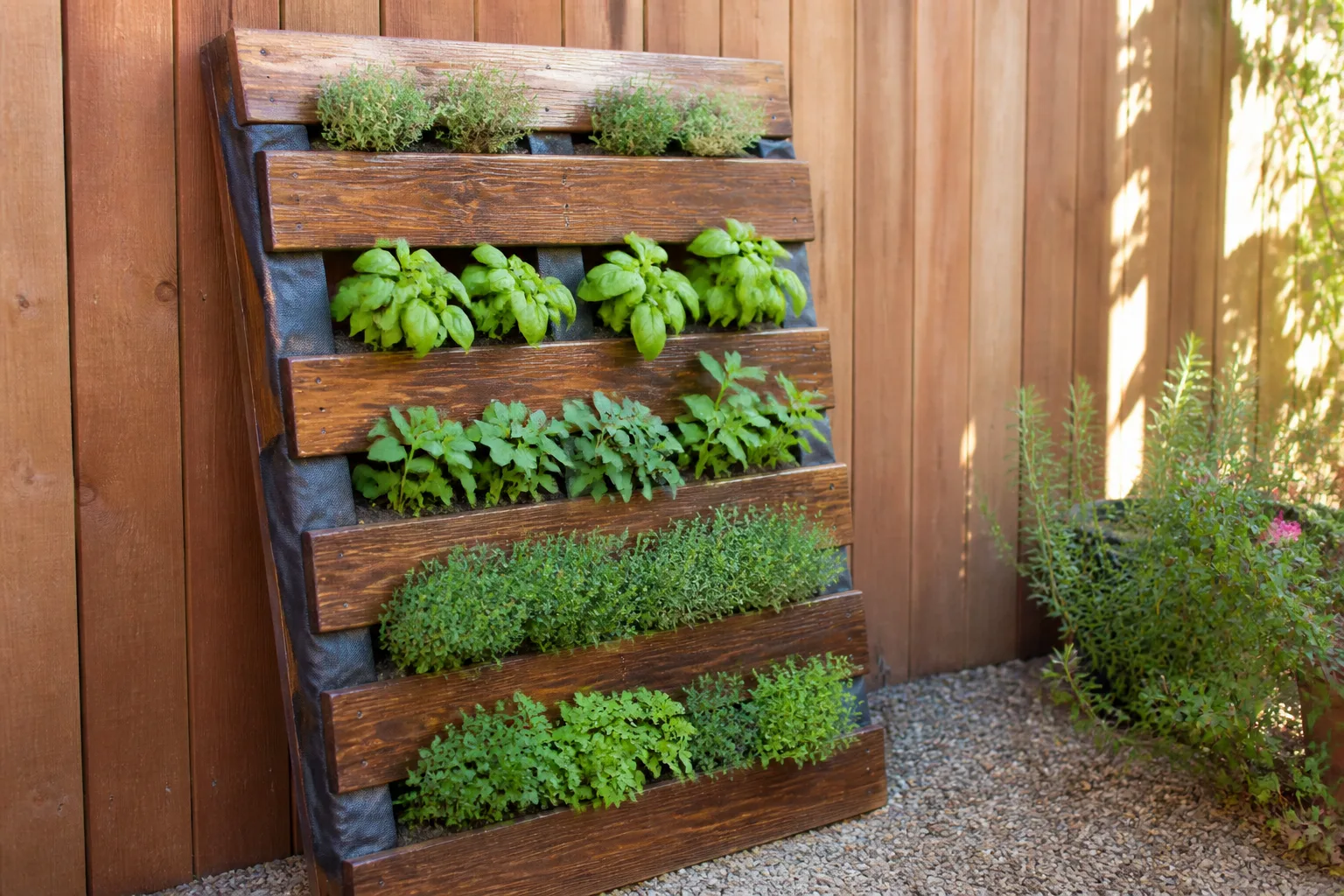
Vertical pallet gardens are popular because pallets are free and instantly rustic. Safety rule: use only heat-treated (HT) pallets, never methyl bromide (MB) stamped units, when growing food. Staple landscape fabric across the back and bottom to create planting slots, lean the pallet at a slight angle against a wall or fence, and fill with potting mix before planting. Water slowly so soil does not pour out the front slats on the first soak.
Ladder shelf planters stack boxes on angled rungs so each tier gets light. Build from cedar 1×6 boxes with drainage holes, sized so the ladder footprint fits your patio. This design shines for strawberries, herbs, and annual flowers because each box holds more soil than a pocket.
Tiered strawberry towers—three or more stacked boxes with soil-filled corners—can hold dozens of plants in a 2×2-foot footprint. Keep the center open as a watering chimney or install a perforated pipe down the middle so water reaches the lowest tier, not just the top.
Rainbow crate walls attach painted wooden crates to a fence in a grid. Line with plastic or fabric, drill drainage, and use them for annual flowers or trailing petunias. For vegetables, prefer deeper boxes than standard craft crates provide.
Gutter, bottle, and other upcycled vertical planters

Gutter gardens mount vinyl or aluminum rain gutters on a slight pitch so water flows to one end and exits into a bucket. End caps and drainage holes every 12 inches are mandatory. Gutters excel for lettuce, spinach, strawberries, and shallow-root herbs because depth is only 4–5 inches—do not expect tomatoes to thrive there.
Soda bottle columns strap cut bottles to a fence or post with the neck down and cap removed for drainage. They are nearly free and great for teaching kids, but plan to remount or replace bottles as UV makes plastic brittle after a season or two.
Suspended bucket or lampshade towers hang individual containers from chains at staggered heights. Wind moves them, so use on sheltered porches. Double-pot with an inner plastic liner so fabric or metal shades do not rust through.
Topsy-turvy terra cotta stacks thread rods through pot drainage holes at angles for a sculptural flower tower. Use only on calm patios; wind torque can crack unglazed terra cotta. Stick to annual flowers and succulents, not heavy fruiting crops.
Trellis and fence systems for climbing food and flowers
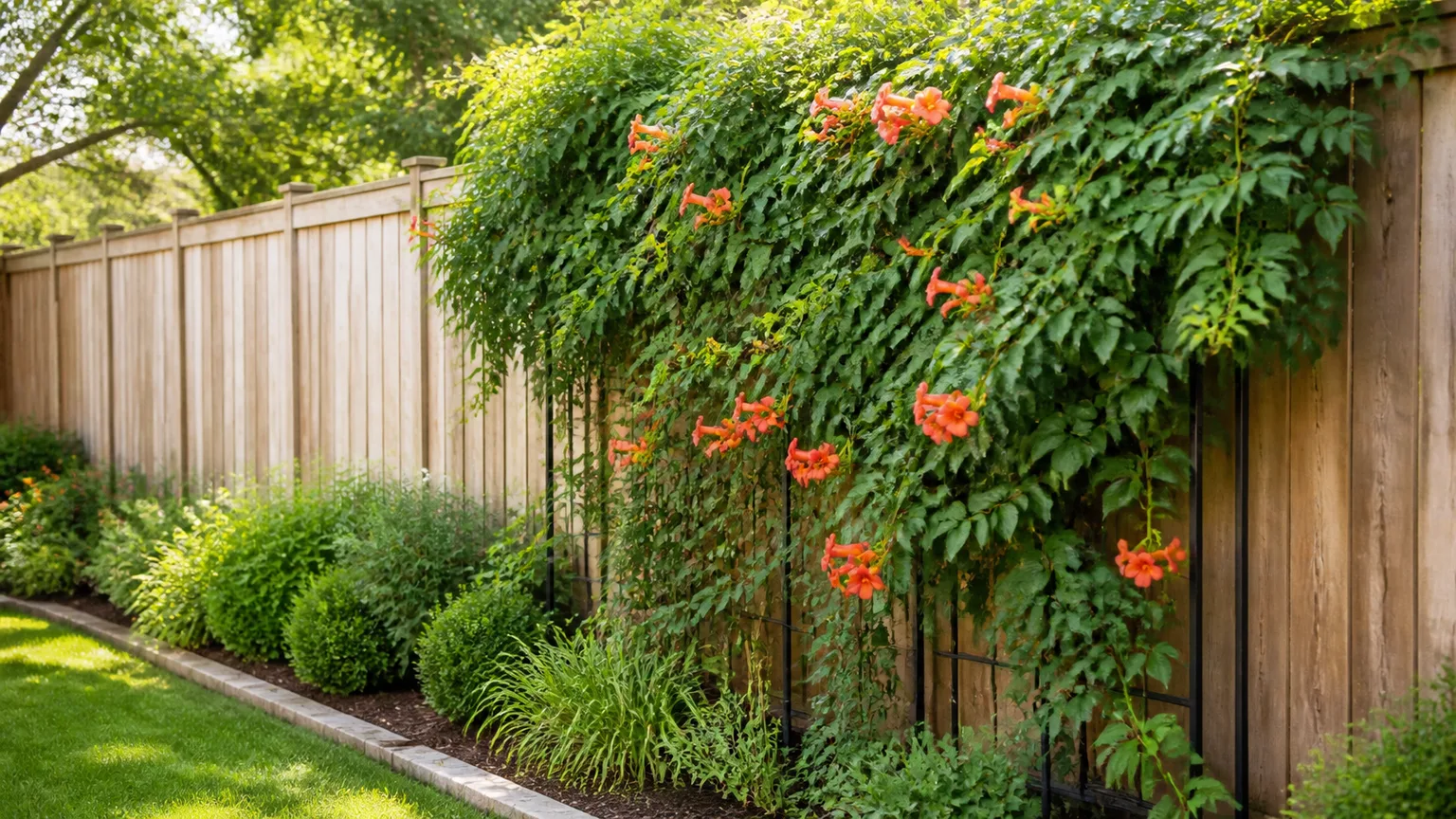
When your goal is cucumbers or pole beans—not just decor—train vines on a trellis, cattle panel, or tripod instead of a soil pocket. Drive posts 18–24 inches deep, use mesh openings under 4 inches, and guide young stems onto the support with loose ties.
A wood slat fence with bolt-on boxes doubles as privacy and planting space. Leave gaps between slats for airflow; solid walls behind planters trap heat and moisture. For long fence runs, see our heat-tolerant climbing plants for fences guide if you want permanent vines instead of annual containers.
Tripod bean teepees made from bamboo or 1-inch stakes create a playable fort for kids and a harvest column for pole beans. Plant around the perimeter, not inside the dense shade at the center.
Screen-door or pallet uprights with tin-can planters are charming cottage accents. Treat them as seasonal annual displays; winter snow load can warp lightweight doors.
Indoor herb walls and kitchen vertical gardens
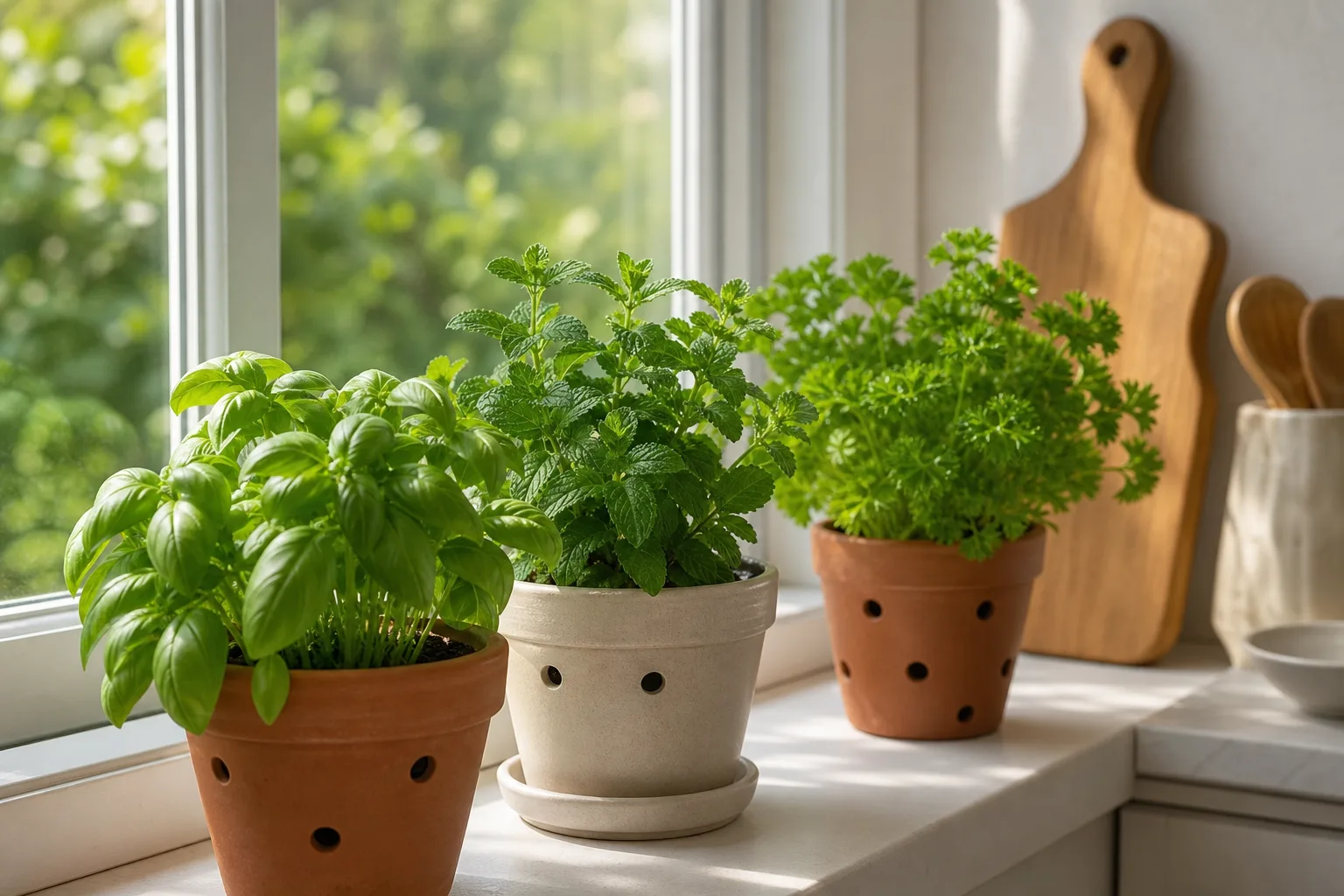
Indoor vertical gardens succeed when you respect light physics. Most culinary herbs need at least six hours of direct sun or equivalent full-spectrum grow lighting within 12 inches of foliage. A dark kitchen wall with only under-cabinet LEDs will produce leggy basil, not pesto.
Use felt pockets or narrow wall shelves with individual pots so you can rotate plants to the sunniest window weekly. Keep a saucer or waterproof backing behind any indoor panel—drywall repair costs more than the herbs.
Mint, chives, parsley, and thyme tolerate bright indirect light better than basil or cilantro. If your only spot is a north window, grow lettuce microgreens in shallow trays on a shelf rather than forcing sun-loving herbs. Pair structure choices with our should you grow herbs in pots or in-ground placement guide when deciding between a wall pocket and a windowsill pot.
Watering and drip irrigation without daily guesswork
Vertical gardens dry faster than ground beds because exposed pots lose moisture from all sides, and top rows shed heat quickly. In summer, expect to water daily for pocket panels and every two to three days for deep ladder boxes—adjust for rain, wind, and pot material. Dark plastic heats roots and speeds drying; glazed ceramic stays moist longer but is heavier.
Top-down dry-out is the classic failure: the bottom pocket is soggy while the top is crispy. Fix it by watering slowly in pulses, using a moisture meter at mid-height, or installing a simple drip line with adjustable emitters per row. A battery timer on a balcony spigot pays for itself after one vacation week.
Catch runoff in a bottom tray and empty it so roots do not reabsorb stale water. For fertilizer, use half-strength liquid feed every two weeks during active growth; salt buildup shows as white crust on pocket seams—flush with plain water monthly.
If containers dry out within hours, read our container plants dry in summer troubleshooting guide before buying a bigger structure.
Renters, HOAs, and neighbor-friendly vertical gardens
Read your lease before drilling into exterior walls, railings, or fences you do not own. Clamp-on and freestanding systems usually pass review when permanent anchors do not. Offer neighbors a drip plan: trays under the lowest tier, morning watering so surfaces dry by evening, and no fertilizer runoff onto their patio.
HOAs may restrict visible structures, paint colors, or heights above fence lines. A neutral slat panel with uniform pots often reads as “landscaping” rather than “construction,” but get written approval when rules are vague.
On shared fences, mount planters on your side only and use spacers so screws do not penetrate into a neighbor’s board. If the fence is rotted, fix or replace wood before hanging 40 pounds of wet soil—it is both a relationship issue and a liability issue.
Seasonal maintenance for vertical gardens
Spring: refresh the top third of potting mix or repot congested pockets; check anchors after freeze-thaw cycles; install drip lines before heat arrives.
Summer: harvest herbs often to prevent flowering and reduce water demand; rotate pots if one side bleaches in afternoon sun; watch for aphids and spider mites that spread quickly in dense walls.
Fall: swap heat-loving basil for kale, chard, or pansies in mild climates; detach irrigation and drain lines before first freeze.
Winter: store removable panels indoors; leave trellis vines to die back if perennial; empty pockets that hold water and crack when frozen.
Vertical gardening is not a set-and-forget trick—it is a compact version of container gardening with sharper drainage and drying risks. The payoff is herbs at arm’s reach, strawberries off the ground away from slugs, and flowers at eye level on a fence that used to be blank corrugated metal.
Conclusion
The best DIY vertical garden idea is the one that matches your sun, weight limit, and watering habits—not the one with the most repins. Start with structure: wall pockets for herbs on a sunny masonry wall, a freestanding ladder for strawberries on a rental patio, gutters for salad greens along a railing, or a trellis in a raised bed for pole beans. Drill drainage, anchor into real studs or posts, use lightweight mix, and plan irrigation before the July heat arrives.
Build one vertical zone this month, learn how fast it dries on your site, then expand. A single well-watered 4-foot herb panel outproduces three abandoned Pinterest towers every time.