23 Shade Annuals That Thrive Without Full Sun
Impatiens, begonias, coleus, and 20 more shade annuals for beds and containers. Learn which tolerate full shade, which need morning sun, and how to match plants to your yard.
A north-facing porch, a bed tucked under a maple, or the shadow line along a fence can feel like dead zones for flower color. They are not — if you choose shade annuals matched to the actual light your spot receives. The mistake most gardeners make is treating “shade” as one condition. A bed that gets two hours of direct morning sun behaves nothing like a dry strip under a dense evergreen canopy, and the annuals that thrive in each spot are different.
This guide covers 23 shade-tolerant annual flowers and foliage plants you can use in beds, borders, and containers. For each one you get the real light range, bloom season, best use case, and the practical caveats — pet toxicity, invasive risk, heat shutdown — that nursery tags rarely explain clearly.
What Shade Actually Means for Annual Flowers
Plant tags use terms like partial shade, full shade, and dappled light. Those labels only help if you translate them into hours and timing.
Full Shade, Partial Shade, and Dappled Light Defined
Full sun means six or more hours of direct sunlight on most days. Partial shade (also called part shade) typically means three to six hours of direct sun, often in the morning, with protection from harsh afternoon rays. Full shade does not mean zero light — almost no flowering plant survives in total darkness. It means fewer than four hours of direct sun, often filtered through tree canopies or blocked by structures, sometimes with bright indirect light the rest of the day. Dappled shade is the shifting light under deciduous trees: brighter in early spring before leaves expand, much dimmer by midsummer.
Before you buy a flat of impatiens, spend one sunny day noting when direct sun hits your planting area. Morning-only sun is gentler and supports a wider plant list than the same number of afternoon hours, which can scorch shade-adapted leaves even in a “shady” yard.
How to Match Shade Annuals to Your Yard
Start with light, then layer in moisture and root competition. Shade under thirsty tree roots is often drier than it looks, while a shaded foundation bed against a north wall may stay damp longer. Annuals in tree shade need more supplemental water than the same plants on an open north side.
Nursery tags list a light range, not a guarantee. A lobelia labeled “full sun to partial shade” will fry in hot afternoon sun in Zone 9 but perform beautifully with morning sun in Zone 5. When tags say “shade,” check whether they mean true full shade or the partial shade most suburban gardens actually have. Watch your spot for a full sunny day before you buy.
Group plants by similar needs in the same bed or container. Mixing thirsty impatiens with drought-tolerant Persian shield in one pot forces you to overwater one or underwater the other. Match water habits first, then color.
Shade Annuals at a Glance: Quick Reference by Light Level
| Light level | Best bloomers | Best foliage | Best trailers |
|---|---|---|---|
| Full shade (under 4 hrs direct sun) | Impatiens, wax begonias, browallia | Coleus, caladium, polka dot plant | Sweet potato vine (chartreuse types), dichondra |
| Partial shade (3–6 hrs, often morning) | Fuchsia, wishbone flower, nemesia, lobelia | Persian shield, beefsteak plant, coleus | Bacopa, lobelia, sweet alyssum |
| Cool-season partial shade | Viola, stock, snapdragon, cineraria | Ornamental kale companions | None primary — use as fillers |
Use this table as a starting filter, then read the sections below for the details that determine whether a plant merely survives or actually performs.
Best All-Summer Bloomers for Shady Beds
When gardeners ask for annuals that bloom all summer in shade, these three groups answer most requests. They handle heat better than cool-season picks and keep producing flowers without daily deadheading.
Impatiens, Rose Balsam, and Browallia
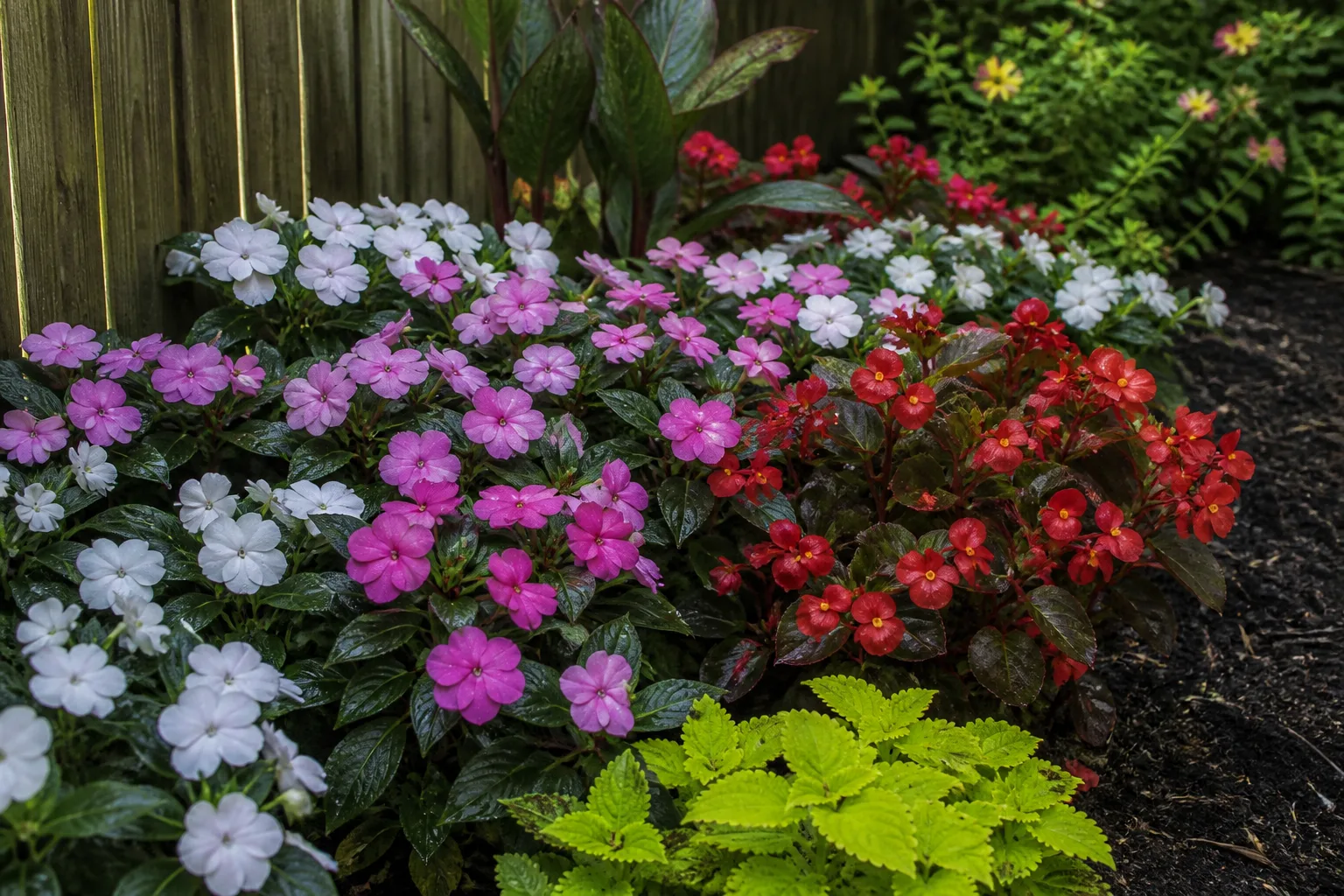
Impatiens (Impatiens walleriana) remain the most forgiving full-shade bloomer for warm weather. Mounded plants covered in flat, single or double flowers need consistently moist, well-drained soil and protection from hot afternoon sun. Pinch or shear leggy stems by one-third in midsummer to push bushier regrowth. Downy mildew devastated traditional impatiens in many regions during the 2010s; resistant series such as Beacon® and Imara™ are worth seeking where mildew pressure is high.
Rose balsam (Impatiens balsamina) is a taller cousin with cup-shaped flowers along upright stems. It tolerates partial shade and self-seeds readily in some gardens. Use it at the back of a shade border where impatiens would stay too low.
Browallia (Browallia speciosa) delivers blue, purple, and white star-shaped flowers on compact mounds without deadheading. It performs in partial or dappled shade and attracts hummingbirds. NC State Extension notes it is grown as an annual north of zone 10 (NC State Extension: Browallia speciosa). Browallia is toxic to cats and dogs if ingested.
Begonias: Wax, Rieger, and Dragon Wing Types
Begonias (Begonia spp.) are the most versatile shade annual group. Wax begonias (B. × semperflorens-cultorum) with waxy leaves and continuous small blooms handle partial to full shade and tolerate heat better than many shade annuals. Rieger begonias offer larger flowers for containers. Dragon Wing types trail slightly and work as short spillers.
Begonias need soil that stays evenly moist but never waterlogged. Overhead watering late in the day encourages powdery mildew on crowded plants. The ASPCA lists begonias as toxic to dogs, cats, and horses due to soluble calcium oxalates, with the most toxic parts underground (ASPCA: Begonia).
Cool-Season Shade Annuals for Spring and Fall Color
Several outstanding shade annuals shut down or fade once summer heat arrives. Plant them in early spring or again in late summer for fall display. In mild climates they bridge seasons; in hot-summer regions treat them as spring and autumn-only.
Violas, Stock, Snapdragons, and Cineraria
Violas (Viola spp.) — including pansy types — produce edible flowers and thrive in cool, partially shaded conditions. They fade in sustained heat above roughly 80°F (27°C) but rebound when temperatures drop in fall.
Stock (Matthiola incana) offers fragrant, hyacinth-like flower spikes in pink, purple, and white. It prefers cool weather and partial shade; hot summers shorten its show dramatically.
Snapdragons (Antirrhinum majus) bloom on tall spikes from bottom to top. Light afternoon shade helps them continue flowering through summer in hot climates if you keep soil moist.
Cineraria (Pericallis × hybrida) delivers daisy-like blooms in vivid purples, pinks, and blues. It is a cool-season specialist for partial to full shade and wilts quickly in heat. Treat it as a short-term spring pot plant unless you garden where summers stay mild.
Nemesia (Nemesia spp.) straddles seasons: it loves cool spring weather and partial shade, stalls in midsummer heat, and often reblooms in fall where nights cool down. In mild coastal climates it can flower near-continuously.
Foliage Annuals That Carry the Show Without Blooms
When bloom is unreliable, foliage carries shade beds. These plants often outperform flowers in the deepest shade.
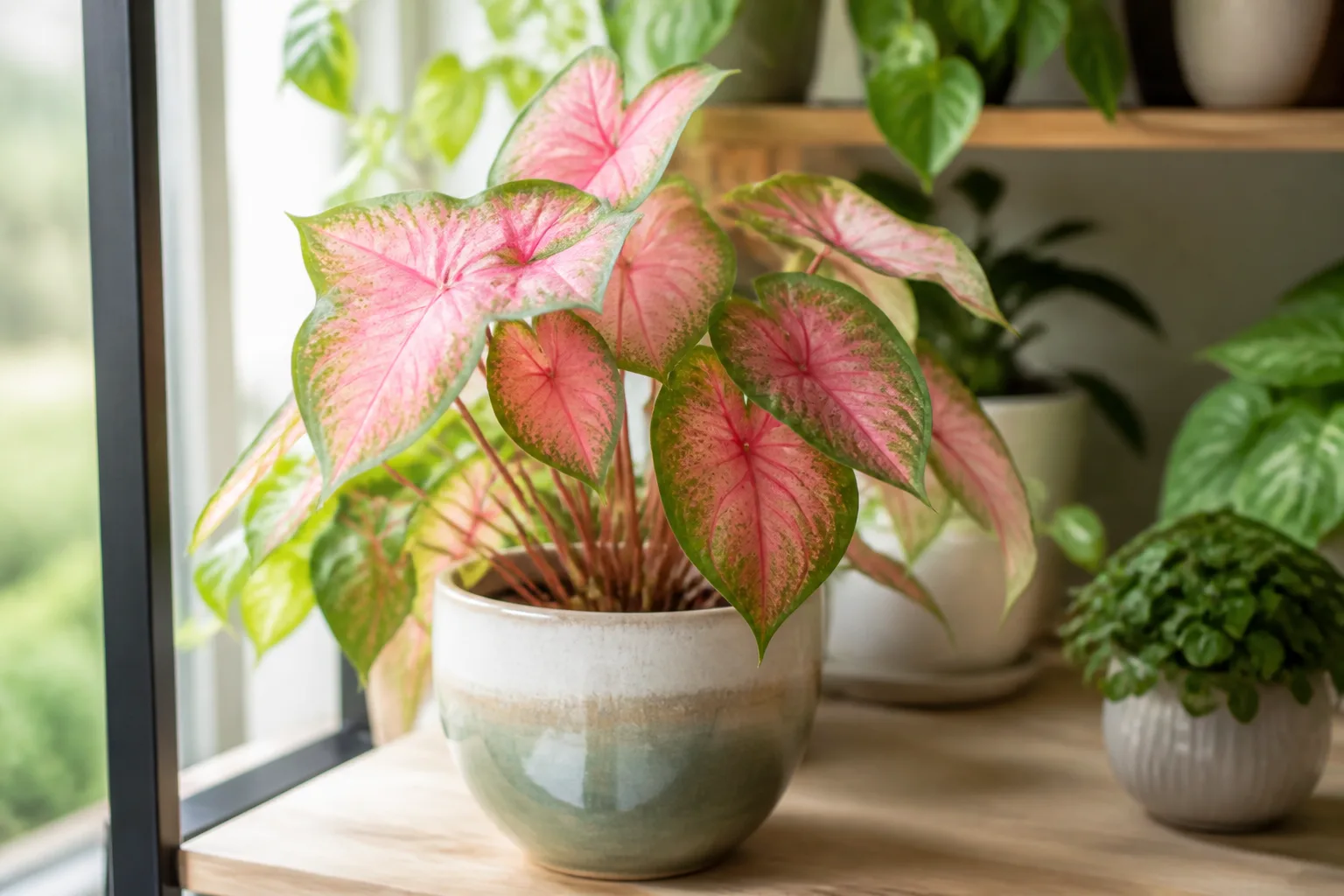
Coleus, Caladium, Persian Shield, and Polka Dot Plant
Coleus (Plectranthus scutellarioides) is the workhorse foliage annual for shade. Chartreuse, burgundy, pink, and multicolor leaves brighten beds where flowers struggle. Read tags carefully: some modern cultivars tolerate sun, but classic shade types color best with protection from afternoon rays. Pinch growing tips every few weeks to prevent legginess. Coleus is toxic to dogs, cats, and horses per ASPCA listings.
Caladium (Caladium spp.) produces arrow-shaped leaves in pink, red, white, and green combinations. It wants warm soil, high humidity, and partial to full shade. Tubers can be lifted and stored indoors in cold climates. All parts contain calcium oxalate crystals and are toxic to humans and pets if chewed (MedlinePlus: Caladium plant poisoning).
Persian shield (Strobilanthes dyerianus) adds metallic purple-green leaves that look almost iridescent in dappled light. It sulks in deep shade — give it bright indirect light or a few hours of morning sun for best color.
Polka dot plant (Hypoestes phyllostachya) offers speckled pink, red, or white leaves on compact plants. It is slow-growing and works best as a filler in containers rather than a mass groundcover.
Trailing Shade Annuals for Baskets, Window Boxes, and Edges
Shade containers fail when every plant competes for the same upright space. Trailers soften edges and add depth.
Lobelia, Bacopa, Sweet Potato Vine, and Dichondra
Lobelia (Lobelia erinus) cascades in blue, purple, pink, and white. NC State Extension notes it performs best in organically rich, moist soil in full sun to part shade, with a cutback after summer fade to encourage rebloom (NC State Extension: Lobelia erinus). Lobelia is toxic to humans and animals if ingested in quantity.
Bacopa (Sutera cordata) trails with small white, pink, or lavender flowers and needs no deadheading. It wants bright indirect light or morning sun — too much shade reduces flowering; too much afternoon sun wilts it. Finding the balance is the whole game with bacopa.
Sweet potato vine (Ipomoea batatas) grows fast in chartreuse, purple, or nearly black foliage. It tolerates a remarkable range from full sun to full shade, though color intensity drops in the deepest shade. It can overwhelm slower companions — use one slip per large container.
Dichondra (Dichondra spp.), especially silver-leaved cultivars, makes a fine-textured trailer for partial shade. It spreads aggressively in favorable conditions; treat it as a container plant if you do not want it wandering through the bed.
Statement Plants and Pollinator Magnets for Partial Shade
These annuals need a bit more light — typically morning sun or bright dappled shade — but reward you with structure, fragrance, or hummingbird traffic.
Fuchsia, Flowering Tobacco, Nemesia, and Sweet Alyssum
Fuchsia (Fuchsia spp.) hangs beautifully in baskets with pendant red, pink, and purple flowers that hummingbirds visit constantly. Plants need cool roots, steady moisture, and protection from hot afternoon sun. Remove developing seed pods after petals drop to keep flowers coming. Fuchsias are frost-tender perennials often grown as annuals.
Flowering tobacco (Nicotiana alata and N. sylvestris) adds height and evening fragrance. The RHS notes N. sylvestris prefers partial or dappled shade, while N. alata wants sun but benefits from afternoon shade in hot gardens (RHS: Nicotiana). All parts are toxic to humans and pets.
Sweet alyssum (Lobularia maritima) forms low carpets of honey-scented white, pink, or purple flowers. It wants partial shade in hot climates and blooms heaviest in cool weather. The Invasive Plant Atlas of the United States flags sweet alyssum as invasive in parts of California (Invasive Plant Atlas: sweet alyssum) — check local guidance before planting near wild areas.
Wishbone Flower, Beefsteak Plant, and Purple Heart
Wishbone flower (Torenia fournieri) earns its name from the paired stamens inside snapdragon-like blooms. It flowers prolifically in partial shade, trails slightly, and needs no deadheading. Excellent container edge plant.
Beefsteak plant (Iresine herbstii) supplies burgundy or green-red foliage on upright stems. It tolerates partial shade but colors deepest with a few hours of morning sun. Use it as a vertical accent in shade pots.
Purple heart (Tradescantia pallida) sprawls as a groundcover with purple foliage intensifying in brighter light. In deeper shade stems green up. Tiny pink flowers appear in spring. Hardy as a perennial in zones 7–10; grown as an annual elsewhere.
Designing Shade Containers That Actually Look Full
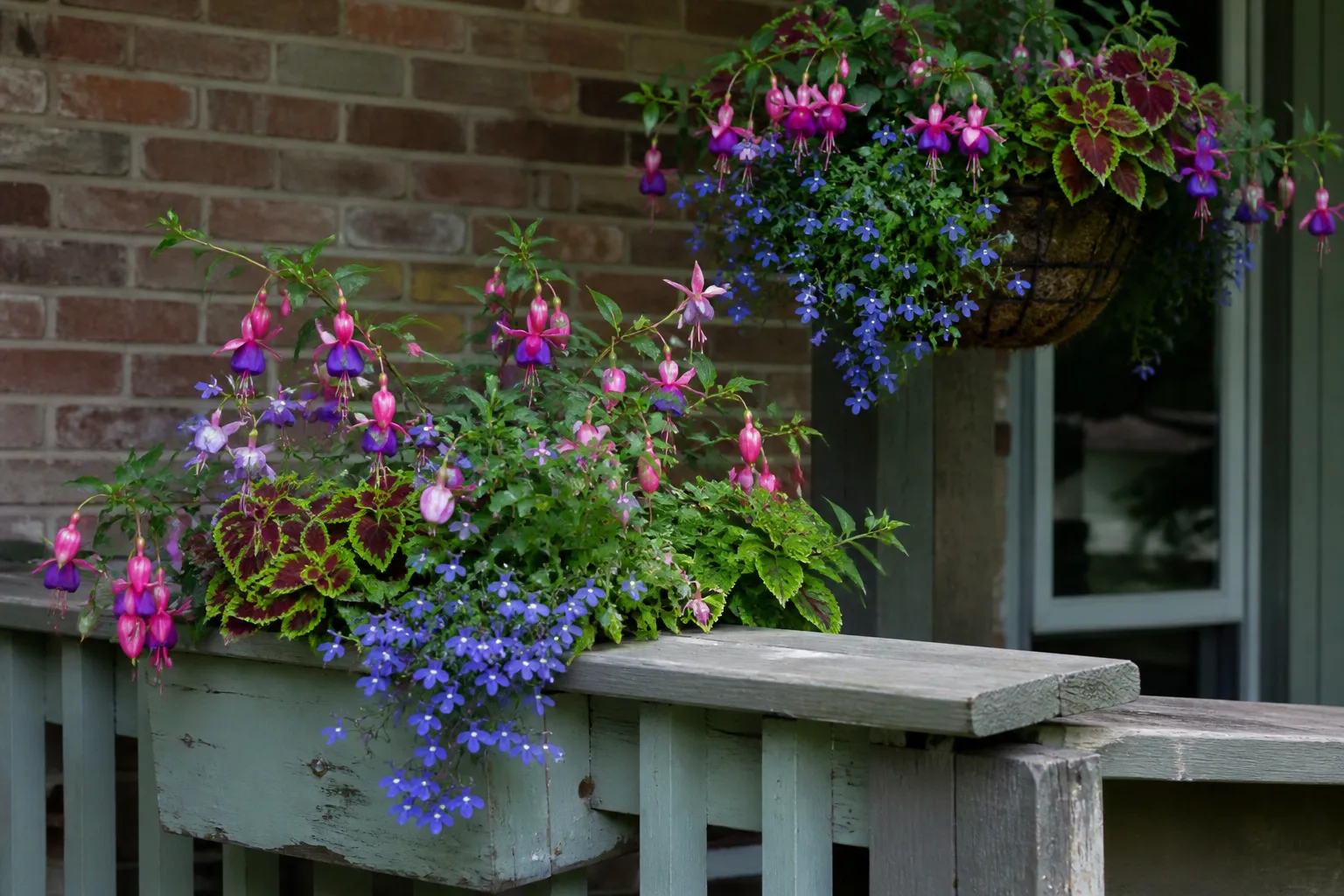
Use the thriller-filler-spiller framework adapted for low light. One upright focal plant (thriller) — fuchsia, flowering tobacco, or beefsteak plant — anchors the center. Mounding fillers such as impatiens, begonias, or coleus surround it. Trailers — lobelia, bacopa, or sweet potato vine — soften the rim.
Leave air space between plants at planting time. Shade plus overcrowding equals mildew. Use fresh potting mix with slow-release fertilizer rather than garden soil, which compacts in pots. Water when the top inch of mix feels dry; shade pots under eaves dry out slower than you expect but still need drainage holes.
A reliable partial-shade recipe: Dragon Wing begonia (thriller) + wishbone flower (filler) + lobelia (spiller). For full-shade porches: wax begonia + coleus + sweet potato vine ‘Margarita’.
Pet-Toxic and Invasive Shade Annuals to Know Before You Plant
Several top shade performers are toxic to pets if chewed. Begonias, coleus, caladium, lobelia, browallia, and flowering tobacco appear on ASPCA or university poison-plant lists. Toxicity ranges from mild mouth irritation to more serious signs if large quantities are eaten. If you garden with curious dogs or outdoor cats, elevate containers, fence beds, or choose safer options like impatiens (not toxic to dogs or cats per ASPCA) and violas (edible for humans; generally safe around pets in typical garden exposure).
Sweet alyssum carries invasive risk in some western states. Rose balsam and flowering tobacco self-seed freely — fine in controlled beds, problematic if seedlings escape into natural areas.
Troubleshooting: Leggy Plants, Mid-Summer Stall, and Mildew
Leggy stems and few flowers usually mean too little light, even for shade plants. Move containers to a brighter spot or thin overhead branches to admit more morning sun. Pinch or shear back by one-third and fertilize lightly with a balanced liquid feed.
Mid-summer stall hits cool-season picks (viola, stock, cineraria) and sometimes nemesia. Pull them and swap in heat-tolerant impatiens or begonias, or wait for fall rebloom.
Powdery mildew appears on crowded impatiens and begonias in humid shade. Increase spacing, water at soil level in morning, and choose mildew-resistant impatiens series where the disease is common.
Wilting despite moist soil under trees often signals root competition. Create a raised bed or use containers rather than fighting maple roots for water.
Conclusion
Shade does not sentence you to a summer of plain green. The 23 shade annuals in this guide — from bulletproof impatiens and begonias to dramatic caladium and fuchsia — give you flowers and foliage for every degree of shade, every season slot, and every container size. Match light level first, group by water needs second, and plan cool-season and warm-season swaps if you want color from spring frost through fall. Walk your yard, count your sun hours, and plant accordingly. The right annual in the right shade spot will outperform a sun-loving flower fighting for light it cannot use.