How to Grow and Care for Celosia
Celosia comes in plumed, crested, and wheat forms. Learn which type fits your garden, when to start seeds, how to water in heat, and how to dry blooms for arrangements.
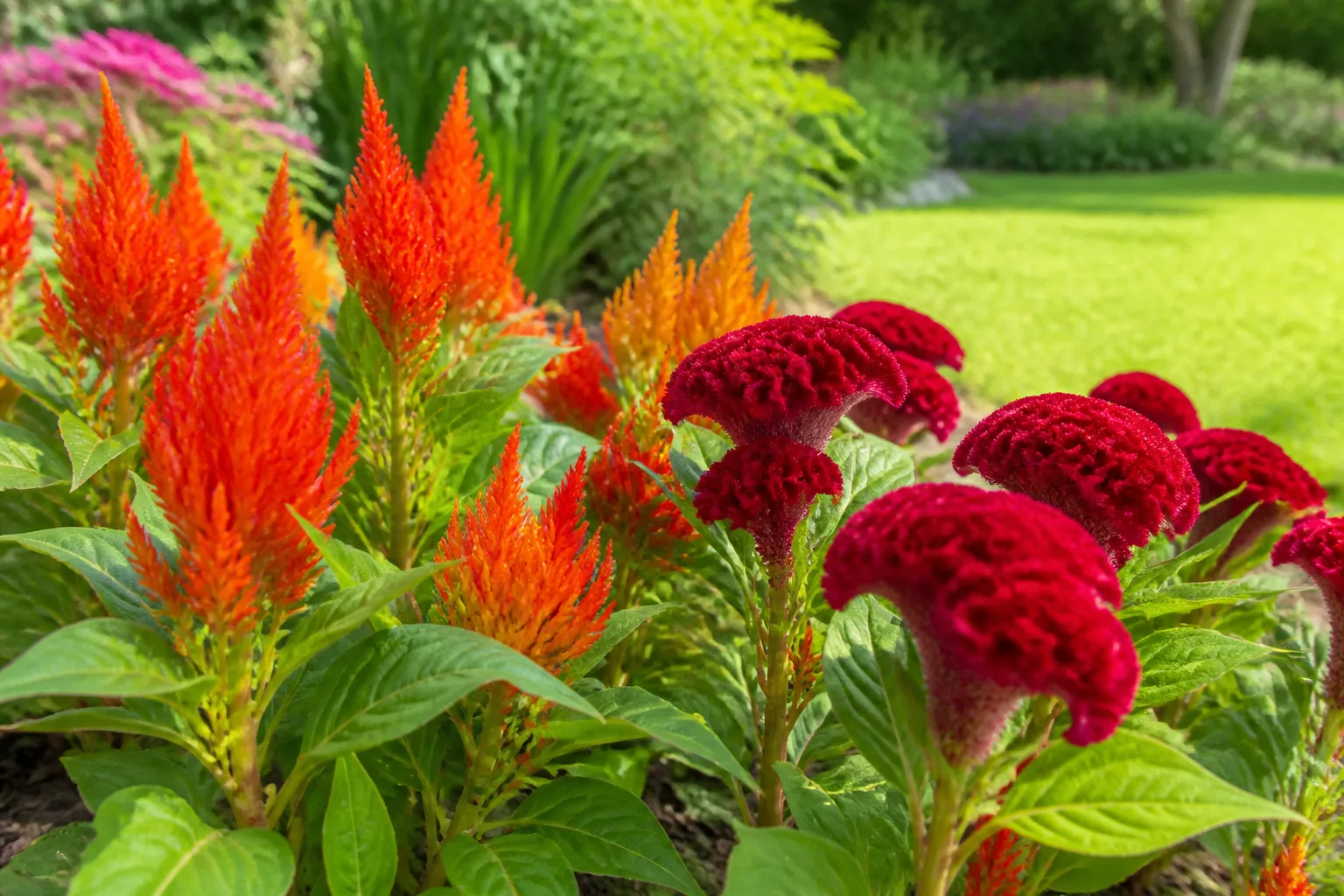
Celosia — cockscomb, woolflower, or flame flower depending on who you ask — is the annual that looks like it belongs in a tropical greenhouse but actually thrives in ordinary summer heat. Velvety crests, feathery plumes, and wheat-like spikes hold their color from June through the first frost, and most varieties shrug off the dry spells that flatten softer annuals. The catch is that celosia is not one plant with one set of rules. Plumed types behave differently from brain-shaped cockscombs and upright wheat spikes, and buying the wrong form for your space produces either a floppy mess or a dwarf that disappears behind taller neighbors.
This guide starts with which celosia type you actually want, then covers seed timing, watering in humid summers, reseeding control, and the cut-flower tricks that make celosia worth growing in quantity.
Why Celosia Belongs in a Heat-Proof Summer Garden
Celosia is a genus of roughly 45 species in the amaranth family (Amaranthaceae), native to Africa and the Americas. The name comes from the Greek word kḗleos, meaning burning — a reference to flame-shaped flower heads that look lit from within in red, orange, and yellow. Garden hybrids are showy, long-blooming annuals (or tender perennials in the warmest zones) that add saturated color to borders, containers, and cutting rows without demanding daily attention.
What sets celosia apart from other hot-weather annuals is texture. Where zinnias offer daisy-like disks and marigolds bring citrus pom-poms, celosia contributes velvety ridges, soft feathers, and bristly spikes that hold up in arrangements long after softer flowers fade. NC State Extension notes celosia attracts bees and butterflies, resists deer browsing, and performs well in children’s gardens, pollinator beds, and edible plantings where young leaves can be harvested like spinach.
If your summer garden struggles in July and August heat, celosia is one of the annuals that actually prefers those conditions — provided drainage is good and nights stay warm.
Celosia at a Glance
| Feature | Details |
|---|---|
| Common names | Celosia, cockscomb, woolflower, prince’s feather |
| Botanical name | Celosia spp. (Amaranthaceae) |
| Plant type | Annual in most zones; tender perennial in USDA 10a–11b |
| Height | 6 in. to 3 ft depending on variety |
| Width | 12–24 in. |
| Sun | Full sun (6+ hours direct light daily) |
| Soil | Well-drained loam or sandy loam; high organic matter helps |
| Soil pH | Acidic to alkaline (roughly 6.0–7.5) |
| Bloom time | Summer through first frost |
| Flower colors | Red, orange, yellow, pink, purple, white, bicolor |
| Hardiness | Grown as annual zones 3–9; overwinter in zones 10–11 |
| Toxicity | Non-toxic to dogs, cats, and horses (ASPCA) |
| Edibility | Young leaves, stems, and flower buds edible; mature leaves turn bitter |
| Reseeding | Readily self-sows if spent flowers are left on the plant |
One honest caveat up front: celosia tolerates most soils except heavy clay and does not tolerate wet feet. The biggest failures I see are not heat or sun — they are cold, soggy soil at planting and overwatering during humid stretches.
Three Celosia Types: Pick Your Form Before You Buy

Before you grab the brightest flat at the nursery, identify which of the three main flower forms you are looking at. Most garden celosia falls under Celosia argentea (plumed and crested types) or Celosia spicata (wheat types). Shape drives height, spacing, staking needs, and how the plant reads in a vase.
Plumed Celosia (Feather Types)
Plumed types — often labeled C. argentea var. plumosa — produce soft, flame-like feathers in red, orange, yellow, pink, and purple. Heights range from compact 10- to 14-inch bedding plants (Fresh Look series) to 2- to 3-foot background plants like ‘Flamingo Feather’. Plumes are the most common seed-starting type and the easiest form for mixed borders because they fill space without the top-heavy weight of large cockscombs.
Choose plumed celosia when you want continuous color in a pollinator bed, a medium-height filler behind low edging plants, or a reliable cut flower with a soft silhouette.
Cockscomb / Crested Celosia
Crested types — C. argentea var. cristata — produce the brain-like, folded ridges that give cockscomb its name. Blooms can reach 6 to 12 inches across on tall stems, making them showstoppers in isolation and slightly awkward in tight rows. Tall cockscombs like the Bombay series (30 to 40 inches) need sheltered sites or staking in open, windy gardens.
Choose crested celosia for specimen plantings, children’s gardens, dried-flower projects, and containers where one dramatic bloom carries the design.
Wheat or Spike Celosia
Wheat types — chiefly C. spicata — send up narrow, bristly spikes in coral, rose, red, and burgundy. They read more vertically than plumes and often have a slightly looser, airier habit. Some wheat types produce seed heads used as pseudo-cereals in certain regions, though most American gardeners grow them strictly as ornamentals.
Choose wheat celosia for cottage-garden texture, mixed cutting rows, and plantings where you want height without the bulk of a cockscomb crest.
Best Celosia Varieties for Beds, Pots, and Cutting Rows
| Variety / Series | Form | Height | Best use |
|---|---|---|---|
| Fresh Look (Gold, Red, Yellow, Orange, Plum) | Plume | 12–14 in. | Heat-tolerant bedding, containers, wet/dry swings |
| Sunday Gold | Plume | 24–30 in. | Mid-border gold plumes with dark foliage contrast |
| ’Flamingo Feather’ | Plume | Up to 4 ft | Back-of-border vertical accent, tall cutting stems |
| Bombay (Pink, Firosa, Fisal, Candy) | Cockscomb | 30–40 in. | Specimen cockscombs; stake in wind |
| Castle Scarlet | Plume | 16–20 in. | Intense crimson for red-themed beds |
| Chief Mix | Cockscomb | 12–16 in. | Compact crested types for pots and edging |
| ’Asian Garden’ | Wheat spike | 18–24 in. | Coral-pink spikes for cutting gardens |
| Intenz (Classic, Lipstick) | Plume | 16–20 in. | Retail bedding with saturated color |
When buying nursery packs, check the label for series name and mature height — not just flower color. A 14-inch Fresh Look and a 40-inch Bombay both say “celosia” on the tag but need completely different spacing.
Light and Location: Full Sun Is Non-Negotiable
Celosia needs at least six hours of direct sun daily for dense blooms and strong stems. NC State Extension lists full sun as a core requirement, and partial shade produces leggy plants with fewer, smaller flowers. If your garden offers only part-day sun, give celosia the sunniest block — morning sun plus afternoon sun beats shade until noon.
Site selection matters as much as hours on a compass. Tall cockscombs and 3-foot plumes benefit from a sheltered position behind a low wall, fence, or shrub line that blocks gusty wind. Open, exposed beds are fine for compact types under 18 inches but risky for top-heavy crests after summer storms.
Heat is an asset, not a problem. Celosia thrives in hot, humid summers that stress cooler-season annuals. In desert climates with intense afternoon sun, a light shade cloth during peak July heat can prevent leaf scorch on dark-foliage varieties — but this is the exception, not the default rule.
Soil, Water, and Heat Tolerance
Celosia grows best in well-drained soil with good organic matter. Sandy loam and loam are ideal. The genus tolerates a range of pH from acidic to alkaline, but it struggles in heavy clay that holds water — especially during cool, wet springs when seedlings are establishing.
Watering rule: let the top inch of soil dry between waterings, then soak thoroughly. In containers, this may mean every day during a heat wave; in an in-ground bed with mulch, every two to three days is often enough. Celosia wilts dramatically when dry — do not mistake midday limpness in extreme heat for drought if soil is still moist at root depth. Check 2 inches down before adding more water.
Overwatering is the more common killer. Soggy soil triggers stem rot and root decline, especially in humid weather when surface soil stays damp overnight. In containers, use pots with drainage holes and avoid saucers that hold standing water. In garden beds, raise planting areas or amend clay with compost and coarse sand before setting out plants.
During humid stretches, keep mulch pulled back slightly from crown level on dense cockscombs to improve air circulation. Good spacing (covered below) matters more than any fungicide spray for preventing leaf spot.
Fertilizer: When to Feed and When to Stop
Celosia is not a heavy feeder. Rich soil amended with compost at planting often supplies enough nutrition for the entire season. If plants look pale or growth stalls by midsummer, apply a balanced water-soluble fertilizer (such as 10-10-10) every three to four weeks, or a light dose of fish emulsion or seaweed extract for trace nutrients.
Avoid high-nitrogen feeds late in summer — they push foliage at the expense of flowers and make tall types even more prone to flopping. Apply liquid fertilizer to moist soil around the drip line, not directly against the stem, to reduce salt burn on roots.
In containers, where nutrients leach faster, a slow-release granular fertilizer mixed into potting medium at planting plus one midseason liquid boost is usually sufficient.
Planting Celosia: Timing, Spacing, and Transplant Rules
Plant celosia outdoors after all danger of frost has passed and soil has warmed to roughly 60°F (16°C) at planting depth. Cold, wet soil stalls root growth and invites damping-off on young plants. In most temperate zones, that means late April through May — or whenever you set out tomatoes and basil.
Spacing by form:
- Compact plumes (under 16 in.): 8–10 inches apart
- Mid-height types (16–24 in.): 12–14 inches apart
- Tall plumes and cockscombs (24 in.+): 14–18 inches apart
Set transplants at the same depth they grew in the pot. Celosia dislikes root disturbance — handle seedlings gently and transplant once to their permanent spot. If you buy packs at the nursery, plant them within a few days; stressed, root-bound starts recover slowly.
For in-ground beds, work compost into the top 6 to 8 inches and rake smooth. In containers, use a quality potting mix — not garden soil — and choose a pot at least 10 inches wide for one plant or 14 inches for two compact varieties.
Growing Celosia from Seed

Celosia is easy from seed and often self-sows in warm climates, but controlled sowing gives you variety choice and earlier blooms.
Indoor start: Sow seeds six weeks before your average last frost date. Use a sterile seed-starting mix, press seeds lightly into the surface (they need light to germinate), and mist rather than bury them. Maintain soil temperature between 70 and 80°F (21–27°C) — a heat mat helps enormously and reduces damping-off risk on cool windowsills.
Germination typically occurs in 7 to 14 days. Grow seedlings under bright light (a sunny south window or grow lights 4 inches above leaves) and thin or pot up once true leaves appear. Harden off for a week before planting out: gradually expose trays to outdoor sun and wind so stems toughen.
Direct sow: In warm zones, sow outdoors after soil warms in late spring. Scatter seeds thinly, barely cover with a dusting of fine soil, and keep evenly moist until seedlings emerge. Thin to proper spacing when plants reach 3 inches tall.
Expect first flowers roughly 90 days after germination — another reason to start indoors in short-season climates.
Propagating Celosia from Stem Cuttings
Stem cuttings are a reliable backup when you want to clone a favorite color without buying new plants. Take cuttings in summer from healthy, non-flowering side shoots or just below a spent bloom.
- Cut a 4- to 6-inch section from the tip of a stem.
- Strip leaves from the bottom half of the cutting.
- Place in a jar of clean water with the leafless nodes submerged.
- Refresh water weekly. Roots usually appear within two to three weeks.
- Pot into moist potting mix once roots reach 1 to 2 inches, then grow on in bright light until ready to plant out (or overwinter indoors in cold zones).
Cuttings root faster in warm weather. A rooting hormone dip is optional but speeds the process if you plant directly into moist perlite or vermiculite instead of water.
Containers, Staking, and Deadheading
Celosia performs well in containers when drainage is excellent and the pot is large enough to buffer daily heat swings. Group one tall cockscomb as a thriller with trailing verbena or sweet potato vine, or mass three compact plumes in a window box for continuous color facing a sunny porch.
Staking: Tall cockscombs and 3-foot plumes may need a bamboo cane or discreet grow-through support if your site is windy. Install stakes at planting time to avoid spearing roots later.
Pinching: Pinch growing tips when seedlings reach 6 inches to encourage branching and more flower heads on plumed types. Crested types branch less predictably — pinch only if you want a bushier, shorter plant.
Deadheading: Snip spent blooms when color fades or heads droop and brown. Regular deadheading keeps plants tidy and encourages repeat flowering. If you want volunteer seedlings next year, leave a few spent heads on the plant in fall — celosia drops abundant seed. Otherwise, remove flowers before seed matures to prevent surprise patches in paths and cracks.
Pests, Diseases, and Common Problems
Celosia is generally trouble-free, especially modern hybrid series bred for disease resistance. Problems usually trace back to culture, not mysterious plagues.
Spider mites appear during hot, dry spells, showing stippled yellow leaves and fine webbing on undersides. Blast plants with a strong water spray in early morning, increase humidity around containers, or apply insecticidal soap on heavily infested leaves. Mites spread fast in greenhouses — isolate affected pots.
Leaf spot (fungal) shows as brown or tan spots on foliage during humid weather. Remove affected leaves, improve spacing for airflow, and avoid overhead watering late in the day. Severe cases may need a copper-based fungicide — rotate beds next year.
Stem rot develops when soil stays waterlogged. Lower stems turn mushy and plants collapse. There is no cure — remove affected plants, improve drainage, and do not replant celosia in the same soggy pocket.
Yellowing, Curling, or Drooping Leaves
These symptoms look similar but point to different fixes:
- Yellow lower leaves with dry soil: underwatering or nitrogen deficiency. Water deeply and consider a light balanced feed.
- Yellowing with wet soil and limp stems: overwatering or root rot beginning. Let soil dry, reduce irrigation, check drainage.
- Curling leaves with stippling: spider mites — inspect undersides.
- Midday droop on hot days with moist soil: heat stress, not drought. Plants usually recover by evening; do not drown them.
Matching the fix to the cause beats spraying randomly.
Cut Flowers, Drying, and Edible Uses
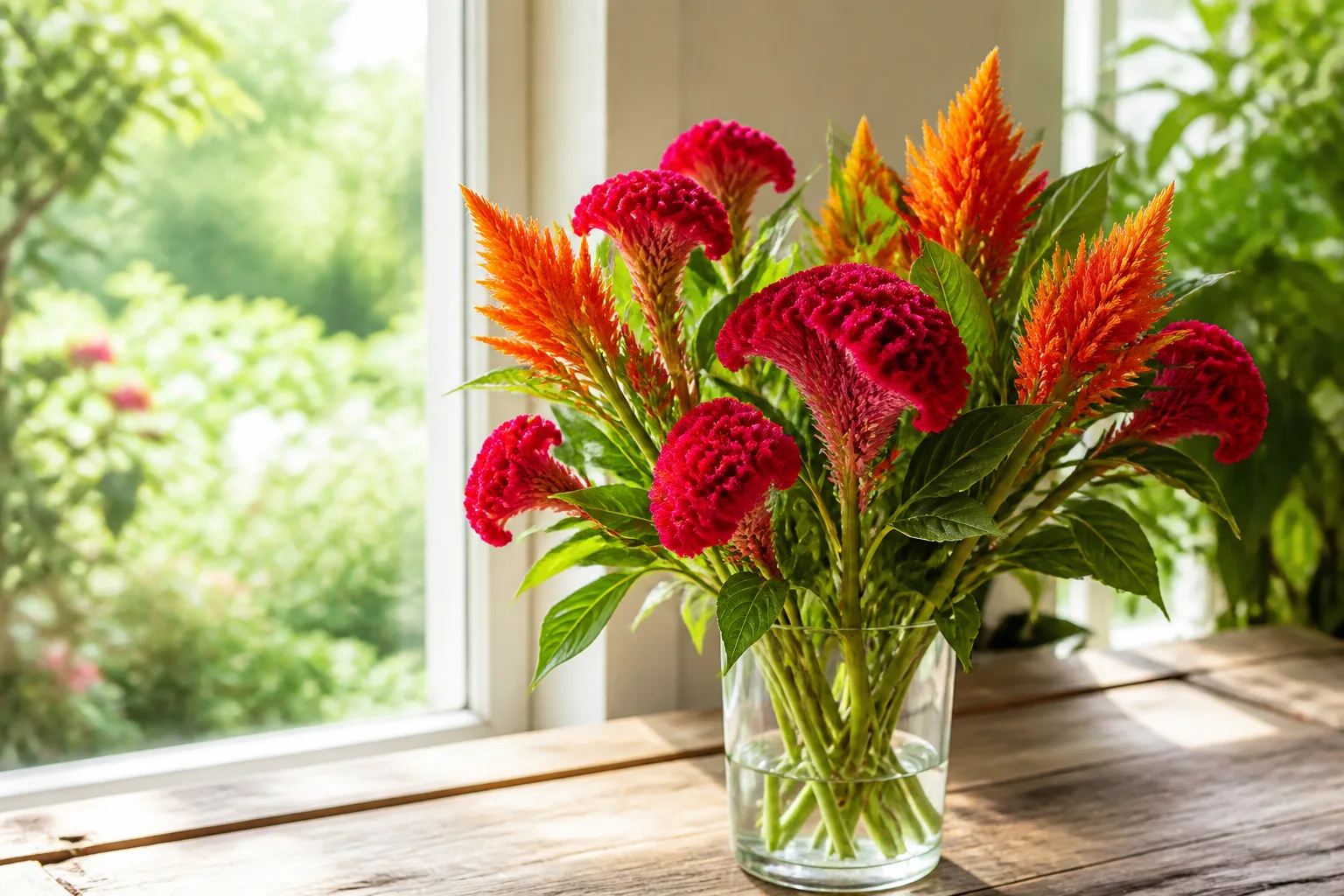
Celosia is a standout cut flower. Harvest stems in the morning when heads are fully colored but before pollen sheds. Strip lower leaves, recut stems underwater, and place in clean vase water with floral preservative. Plumes and wheat spikes last 10 to 14 days fresh; large cockscombs last slightly less but add unmatched texture.
Drying: Hang harvested stems upside down in a warm, dark, airy space for two to three weeks. Crested types and plumes retain color well for wreaths and dried arrangements. Wheat spikes dry almost effortlessly on the stalk if left in the garden until papery.
Edible uses: NC State Extension notes that young celosia leaves taste spinach-like, while mature leaves turn bitter. Young stems and flower buds can go into stews in regions where celosia is grown as a leaf crop. If you are growing ornamentally, treat edibility as a bonus — harvest only from plants grown without systemic pesticides and wash thoroughly.
Landscape Pairings and Companion Plants
Celosia shines in mass plantings where repeated texture reads from a distance — think a ribbon of red plumes along a walkway or a block of gold cockscombs behind low white edging. It also works as an accent in mixed annual beds where you need one saturated focal point.
Strong companions share full sun and moderate water needs:
- Zinnias — overlapping bloom season, complementary daisy form against celosia texture
- Marigolds — low edging in gold and orange that frames taller celosia
- Gomphrena — another amaranth cousin with clover-like blooms that dries equally well
- Mexican sunflowers and tall sunflowers — background height for mid-height plumes
- Ornamental grasses — fine-textured contrast behind wheat-type spikes
Avoid pairing celosia with shade-loving annuals like impatiens or heavy feeders that demand constant moisture — their watering schedules conflict. For a broader sun-loving palette, see plants that love full sun and heat.
In cutting gardens, plant celosia in rows behind shorter california poppies or in front of gladiolus spikes for a full summer harvest sequence.
Conclusion
Celosia rewards gardeners who match form to site: compact plumes for beds and boxes, crested cockscombs for drama, wheat spikes for vertical texture. Give it full sun, well-drained soil, and the discipline to let containers dry slightly between waterings, and it will bloom from summer through frost with minimal fuss. Start seeds indoors six weeks before last frost if you want variety choice; deadhead for continuous color or leave a few heads if you welcome volunteers. Whether you grow it for vases, dried wreaths, pollinator traffic, or edible young greens, celosia earns its place as one of the most heat-proof annuals in the summer garden.