How to Grow and Care for Purple Fountain Grass
Purple fountain grass (Pennisetum setaceum 'Rubrum') needs full sun and sharp drainage. Learn planting, pruning, overwintering, and invasive risk by zone.
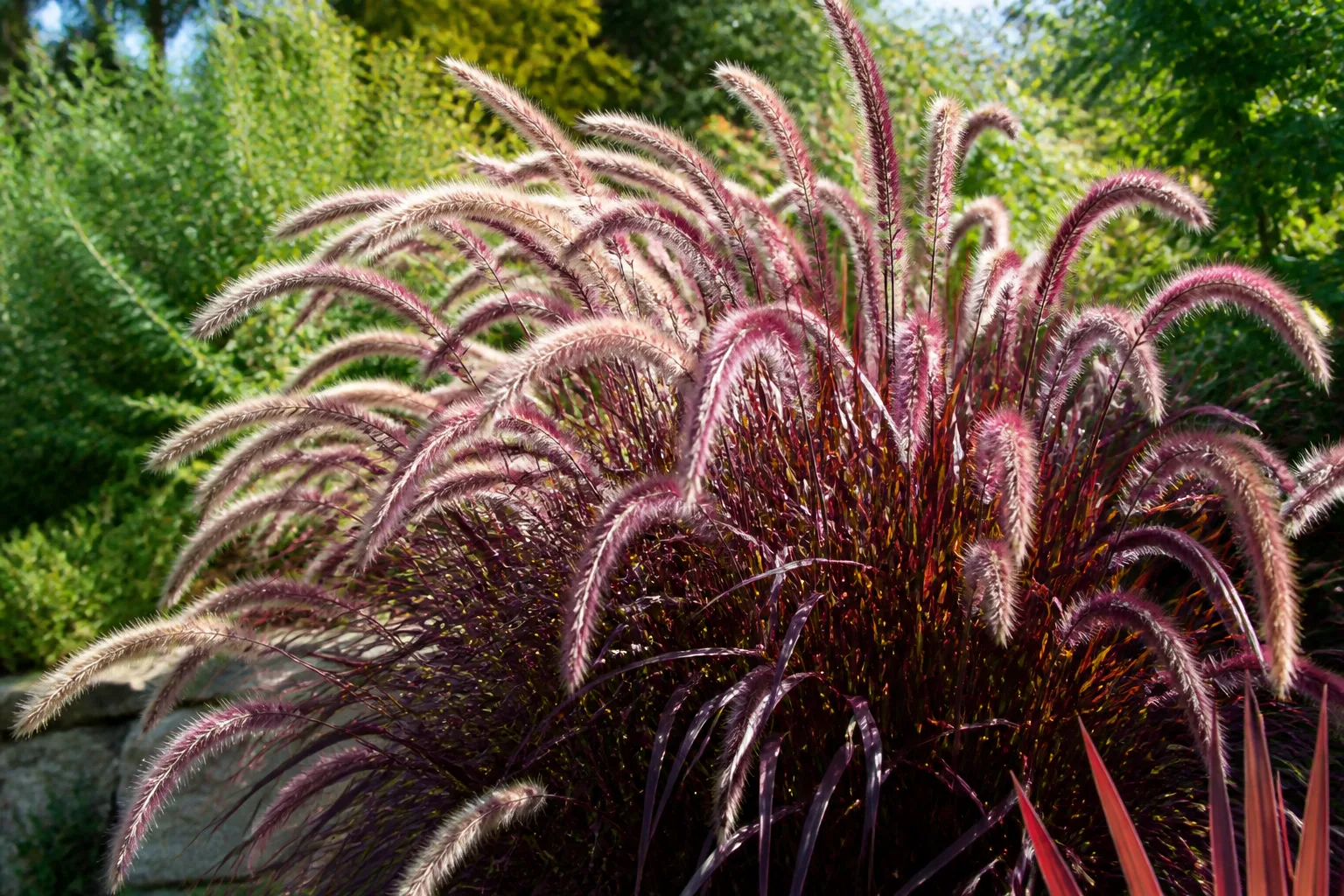
Purple fountain grass (Pennisetum setaceum ‘Rubrum’, increasingly listed as Cenchrus setaceus ‘Rubrum’) is the burgundy-leaved ornamental grass that shows up in every summer container recipe and sunny border photo. Arching maroon blades and fuzzy bottlebrush plumes catch light from across the yard, and the plant grows fast enough to feel like an instant upgrade the same season you install it. The catch is that most of the United States treats it as a tender annual, not a permanent landscape grass — and in a few warm, dry regions the species itself has escaped cultivation.
This guide covers how to grow ‘Rubrum’ well when it fits your climate, how to overwinter it in pots if you are north of its hardiness range, and when a cold-hardy fountain grass or native substitute is the smarter long-term choice.
Why Purple Fountain Grass Earns Attention — and Regional Scrutiny
Purple fountain grass is a warm-season clumping grass: it waits for soil to warm in spring, then pushes rigid, linear leaves that NC State Extension describes as often burgundy to reddish-purple and up to about a foot long (NC State Extension: Cenchrus setaceus). By mid- to late summer, terminal racemes of reddish-purple spikelets rise above the foliage like soft foxtails. Songbirds visit the seed heads, and the plumes hold up in fresh or dried arrangements.
What makes the plant controversial is not its beauty but its biology. NC State tags the species as weedy, self-seeding, and high maintenance in the sense that volunteers and seed cleanup require attention. The same profile notes it is considered invasive in some southern West Coast states and spreads readily by seed. That does not mean every gardener should avoid it — but it does mean you should verify local guidance before mass-planting near open land, roadsides, or wildland interfaces.
Purple Fountain Grass at a Glance
| Feature | Details |
|---|---|
| Common names | Purple fountain grass, red fountain grass, crimson fountain grass, tender fountain grass |
| Botanical name | Pennisetum setaceum ‘Rubrum’ (syn. Cenchrus setaceus ‘Rubrum’) |
| Plant type | Tender perennial ornamental grass; grown as annual in most of the U.S. |
| Mature size | 3–5 ft tall, 2–4 ft wide (plumes may add height) |
| Sun | Full sun; tolerates light shade with weaker color and fewer plumes |
| Soil | Average to lean, well-drained; tolerates clay, sand, and drought once established |
| Soil pH | Roughly neutral to slightly acidic |
| Bloom time | Summer into fall |
| Flower/plume color | Red, burgundy, purple bottlebrush spikes |
| Hardiness | USDA zones 9–11 (perennial); annual or container plant elsewhere |
| Native range | Cultivar; species native to northern and eastern Africa and parts of Asia |
| Deer resistance | Generally deer resistant |
| Main cautions | Self-seeding; invasive risk in some western states; frost-sensitive |
Quick ID: look for a mounding, clumping habit; narrow rough leaves with a burgundy cast; and feathery terminal plumes that age toward tan. Fall foliage often shifts gold before frost browns the clump.

Annual or Perennial? Hardiness and What to Expect in Your Zone
Gardeners routinely call purple fountain grass a perennial because nurseries sell it alongside hardy grasses. Botanically it is a tender perennial hardy only where winters stay mild. NC State lists USDA hardiness zones 9a through 11b for Cenchrus setaceus (NC State Extension: Cenchrus setaceus). Gardening Know How notes it survives outdoors year-round in zones 9 and warmer, while gardeners in zone 8 or below should expect to replace plants annually unless they overwinter containers indoors (Gardening Know How: Grow Purple Fountain Grass).
Use this simple decision rule before you buy:
- Zones 9–11 (frost-free or mild winters): Grow in ground as a perennial. Cut back in late winter, divide every few years, and monitor for self-seeding volunteers.
- Zones 7–8 (occasional hard frosts): Treat as a seasonal accent unless you have a reliably warm microclimate (south-facing wall, reflected heat). Do not count on overwinter survival in open beds.
- Zones 6 and colder: Plan on annual replacement or grow in containers you move to a cool, bright indoor space before the first hard freeze.
Trying to stretch hardiness with heavy mulch in zone 6 usually wastes money. The plant’s crown and shallow roots freeze quickly once soil temperatures drop into the 20s °F for sustained periods.
Should You Plant It? Invasive Risk and Safer Alternatives
Purple fountain grass is not equally risky everywhere. In managed suburban beds with pavement on all sides, occasional self-seeding is a nuisance — not an ecological crisis. Near deserts, grasslands, or coastal scrub where the species has already naturalized, planting it can contribute to a known problem.
Where Cenchrus setaceus Becomes Problematic
NC State Extension flags the species as weedy, notes aggressive self-seeding, and states it is invasive in some southern West Coast states (NC State Extension: Cenchrus setaceus). The parent species Pennisetum setaceum (green fountain grass) has a longer invasion history in Hawaii, California, Arizona, and parts of the South. The purple cultivar ‘Rubrum’ sets seed less reliably than the green species — Gardenia’s profile notes it rarely sets seeds in cool climates — but “rarely” is not “never,” especially in warm, arid regions with long growing seasons.
Before planting, check your state or county invasive-plant list. If the species is restricted, choose a substitute. If it is allowed but you garden adjacent to undeveloped land, deadhead plumes before they shatter seed or skip the plant entirely.
Cold-Hardy Fountain Grass and Native Substitutes
When you want a similar fountain effect without tender hardiness or seed escape, shift to a different species:
- Chinese fountain grass (Pennisetum alopecuroides, now Cenchrus alopecuroides) and cultivars like ‘Hameln’, ‘Little Bunny’, and ‘Burgundy Bunny’ survive much colder winters (often zones 5–9 depending on cultivar) and stay clumping. Read labels carefully — some fountain grasses in this group can still seed aggressively in parts of the country.
- Pink muhly grass (Muhlenbergia capillaris) delivers a different color (pink haze rather than burgundy leaves) but thrives in heat and poor soil with far less invasion baggage in most regions.
- Switchgrass (Panicum virgatum) and little bluestem (Schizachyrium scoparium) are native warm-season grasses NC State lists as alternatives in the same niche (NC State Extension: Cenchrus setaceus).
If you love the purple foliage specifically, treat ‘Rubrum’ as a seasonal container star rather than a permanent hedge.
Choosing the Right Site: Light, Soil, and Spacing
Purple fountain grass wants full sun — at least six hours of direct light daily, and more is better for the deepest maroon leaf color and the heaviest plume production. NC State lists full sun to partial shade tolerance, but partial shade produces greener, weaker growth and sparse flowering (NC State Extension: Cenchrus setaceus). In hot desert climates, light afternoon shade can reduce tip scorch on foliage, but deep shade is unsuitable.
This grass is not fussy about soil texture. NC State notes tolerance for clay, loam, sand, and shallow rocky soils so long as drainage is good (NC State Extension: Cenchrus setaceus). It prefers average moisture during establishment and handles drought afterward — a useful trait for sunny borders and containers.
Two siting details matter more than perfect soil:
- Space for size. Mature clumps reach 3–5 feet tall and nearly as wide. Allow at least 3 feet between plants so air can move through foliage — crowded clumps invite rust.
- Wind exposure. Plumes and tall foliage look best with slight protection from constant gusts. A low fence, shrub backdrop, or stake on exposed corners keeps the vase shape intact.
Planting Purple Fountain Grass Step by Step
Spring planting after the last frost gives the fastest establishment, though garden centers sell pots all summer in warm regions.
- Choose the site using the sun and spacing rules above.
- Dig a hole as deep as the root ball and twice as wide. Purple fountain grass does not need a deep planting pit — crown rot follows buried stems.
- Set the plant so the crown sits at or slightly above grade. Fan roots outward in loosened soil.
- Backfill with native soil; skip heavy compost in the hole unless you garden in pure sand.
- Water deeply immediately, then mulch with 2 inches of shredded bark — keep mulch off the crown.
- Stake if needed on windy sites using a bamboo cane tied loosely to the clump base, not the plumes.
In mixed beds, plant purple fountain grass behind lower annuals and in front of evergreens so the burgundy silhouette reads clearly.
Watering, Mulching, and Fertilizing
During the first six to eight weeks after planting, water when the top inch of soil dries — roughly once or twice weekly depending on heat and container size. Aim for moist, not soggy, soil. Established plants tolerate occasional dry spells; chronic overwatering causes yellowing and crown decline.
Mulch conserves moisture and suppresses weeds, but pull mulch back in spring so the crown warms quickly. Warm-season grasses stall in cold, wet soil.
Fertilizer is optional. Purple fountain grass grows well in lean soil. If plumes look pale or growth is slow on sandy sites, apply a balanced slow-release fertilizer once in late spring and optionally again in midsummer. Avoid heavy nitrogen late in the season — it pushes soft foliage that flops before frost.
Pruning and Seasonal Cleanup
The standard maintenance cut for ornamental grasses applies here: prune in late winter or early spring before new shoots emerge. In perennial zones, gather the dried blades into a bundle with twine or a bungee cord and cut straight across 4 to 6 inches above the crown with sharp shears or hedge trimmers. Comb out dead material by hand afterward.
You may selectively remove browned leaf tips during summer for appearance, but avoid shearing the whole clump midseason unless you are willing to lose plumes.
In annual zones, pull or compost the entire plant after frost kills foliage, or leave standing through winter if you enjoy the tan silhouette — just replace in spring.

Dividing and Propagating Purple Fountain Grass
Division is faster and more reliable than seed for preserving ‘Rubrum’ traits. Divide in early spring in perennial zones, or in early fall after flowering when the plant is heading dormant in mild climates.
- Water the clump the day before.
- Dig the entire root mass with a spade, keeping as many roots intact as possible.
- Split the crown with a sharp spade or serrated knife into sections with both roots and living shoots.
- Discard mushy or hollow centers.
- Replant divisions immediately at the same depth, water well, and shade lightly for a week if sun is intense.
Each division should be at least 8 to 12 inches across to recover quickly.
Growing Purple Fountain Grass From Seed
Seed propagation works for species forms; cultivar seedlings may not match parent color. If you collect seed, harvest plumes when they feel dry and bristly in fall. Strip spikelets into a paper bag and store in a cool, dry place.
To sow:
- Surface-sow on moist seed-starting mix in late winter indoors.
- Press seeds lightly into the mix; do not bury deeply — light aids germination.
- Cover the tray with a humidity dome or plastic bag vented with slits.
- Keep at 70–75 °F until seedlings emerge in two to three weeks.
- Transplant into individual pots at the two-leaf stage.
- Harden off outdoors for seven to ten days before planting after frost.
Expect seed-grown plants to stay smaller the first year than nursery divisions.
Container Planting and Repotting
Purple fountain grass is a natural container focal point — one plant can anchor a mixed summer pot with trailing verbena, silver artemisia, or orange marigolds. Choose a pot at least 16 to 20 inches wide with multiple drainage holes. Use a well-draining potting mix, not garden soil.
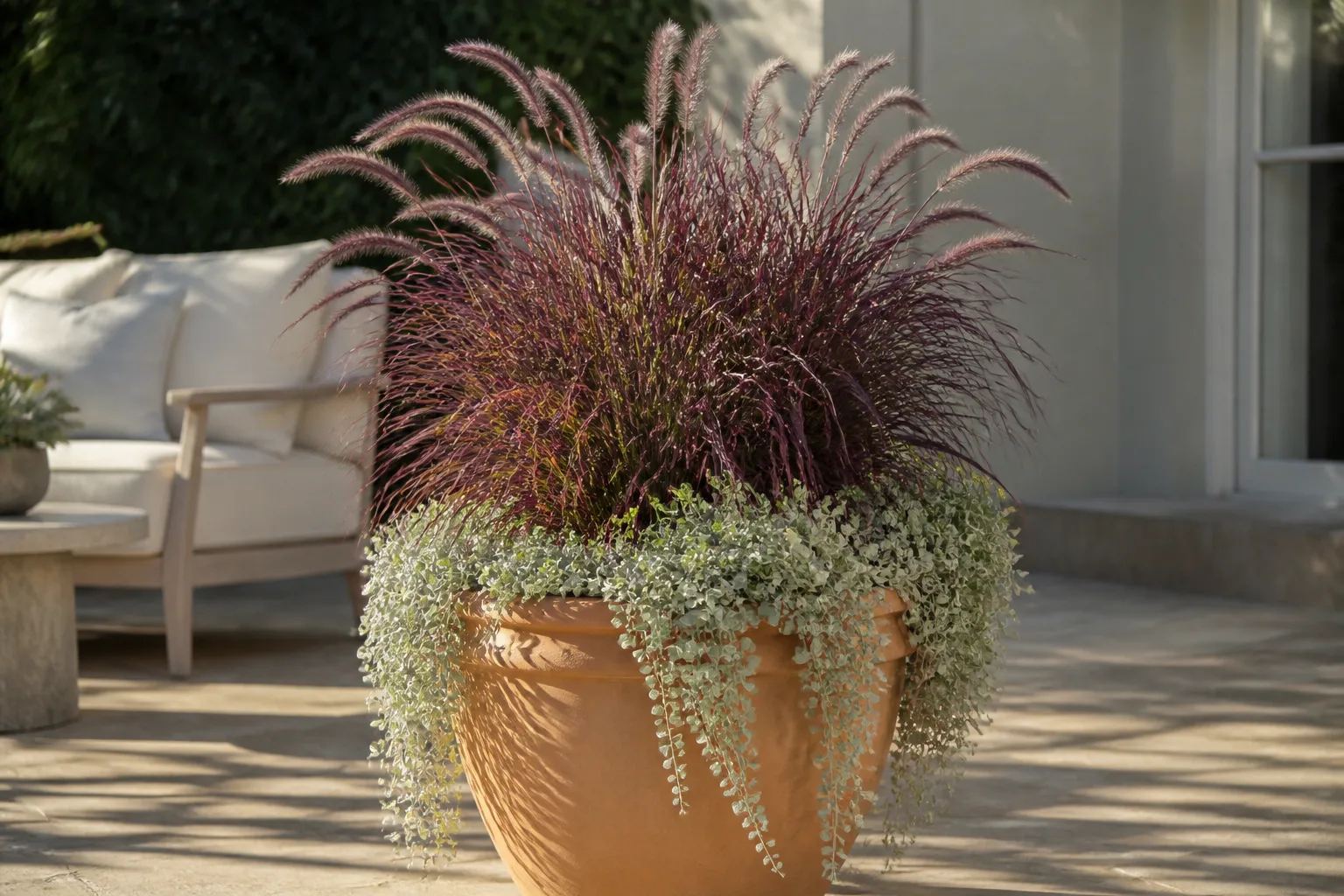
Container plants need more frequent watering than in-ground specimens — often daily in midsummer heat. Fertilize lightly every four to six weeks because leaching removes nutrients faster.
Repot or divide when roots circle the pot surface or water runs straight through without absorbing — typically every two years in perennial zones.
Overwintering Potted Purple Fountain Grass Indoors
If you garden north of zone 9 and refuse to buy new plants each spring, containers are your path to keeping the same clump.
About two weeks before the first hard frost:
- Cut foliage back to 3 inches above the crown to reduce indoor leaf drop.
- Move the pot to a cool room with bright light — 45–60 °F is ideal. A south-facing window in an unheated sunroom works; a warm dark basement does not.
- Water sparingly — soil should stay barely moist, never wet. Roots rot quickly in cold, saturated mix.
- Skip fertilizer until spring growth resumes.
In spring, harden the plant off over seven to ten days: a few hours outdoors on mild days, back inside at night, gradually extending time outside. Resume normal watering once nights stay above 50 °F.
Gardening Know How notes you can also store dormant potted grass in a cool basement with moderate light if you accept that it will look scruffy all winter (Gardening Know How: Grow Purple Fountain Grass). The goal is survival, not beauty, until warm weather returns.
Using Purple Fountain Grass in the Landscape
Use purple fountain grass wherever you need height, movement, and contrast:
- Thriller in containers on patios and pool decks — pair with silver foliage and hot-colored flowers.
- Mid-border anchor behind low perennials; the burgundy reads against lime green or silver plants.
- Mass planting for a cohesive screen — space 3 feet on center and keep rows staggered.
- Entry framing in frost-free climates where plants persist year-round.
Avoid planting as a fire-prone monoculture against wooden structures in dry climates. Ornamental grasses carry dry fuel; defensible-space guidelines in wildfire regions may recommend keeping tall grasses away from structures.
Encouraging Plumes and Using Cut Flowers
Plumes appear when day length and warmth trigger flowering — typically mid- to late summer in most regions, continuing into fall. Full sun and moderate fertility produce the heaviest show. Too much shade or excess nitrogen yields foliage at the expense of blooms.
Harvest plumes for vases when they are fully colored but before seeds shatter. Strip lower leaves from stems and place in water immediately. For dried arrangements, hang bundles upside down in a dark, airy room for two to three weeks.
Deadheading spent plumes in invasive-risk regions reduces volunteer seedlings the following year.
Pests, Diseases, and Common Growth Problems
Purple fountain grass is relatively trouble-free. The issues you are most likely to see:
Slugs and snails chew irregular holes in low foliage, especially in damp, shaded edges. UC IPM notes that while slugs can damage leaves, they rarely kill established ornamental grasses (UC IPM: Snails and Slugs). Hand-pick at night, use iron-phosphate baits if needed, and improve air circulation.
Rust fungus shows as orange powdery pustules on leaves when humidity stays high and plants are crowded. Remove affected foliage, space plants farther apart, and avoid overhead watering late in the day.
Browning leaf tips often mean drought stress, salt buildup in containers, or reflected heat — not disease. Trim tips and adjust watering.
Yellowing foliage may indicate overwatering, poor drainage, or nitrogen deficiency on very sandy soil. Fix drainage first; then apply a light balanced fertilizer if needed.
Flopping clumps usually trace back to too much shade, too much fertilizer, or insufficient spacing — not a mysterious pest.
Purple Fountain Grass Cultivars and Look-Alikes
Several named selections expand the color range beyond straight ‘Rubrum’:
- ‘Fireworks’ — variegated pink, burgundy, and green striped leaves; same tender hardiness as ‘Rubrum’.
- ‘Vertigo’ — very dark purple, nearly black foliage; slightly more upright habit.
- ‘Red Riding Hood’ and ‘Rubrum Dwarf’ — compact forms for small pots and edging.
- ‘Cupreum’ and ‘Purpureum’ — copper- to purple-toned selections with similar culture.
Do not confuse these tender P. setaceum cultivars with Chinese fountain grass (P. alopecuroides), which includes cold-hardy dwarf forms like ‘Little Bunny’ and red-tinted fall foliage on ‘Burgundy Bunny’. Chinese fountain grass survives winters far north of purple fountain grass but carries its own seed-spread cautions in some states. Match the plant to your hardiness zone first, then to leaf color second.
Conclusion
Purple fountain grass rewards sunny sites with fast growth, burgundy foliage, and soft plumes that look as good in the garden as in a vase. Treat it as a perennial only in zones 9–11, as a seasonal star or container plant everywhere else, and as a plant to research carefully if you live where Cenchrus setaceus has invasive history. Give it full sun, sharp drainage, room to breathe, and a late-winter haircut in warm climates — or a cool indoor rest if you overwinter pots. When hardiness or seed escape is a dealbreaker, cold-hardy fountain grasses and native warm-season grasses deliver movement without the same frost gamble.