Free Low Light Plant Finder for Houseplants
Find plants that can tolerate low-light rooms, offices, and shaded corners.
Low Light Plant Finder
Find low-light plants
Find plants that genuinely thrive in low-light rooms without a grow light.
Free Low Light Plant Finder for Houseplants
Find plants that can tolerate low-light rooms, offices, and shaded corners.
Find plants that genuinely thrive in low-light rooms without a grow light.
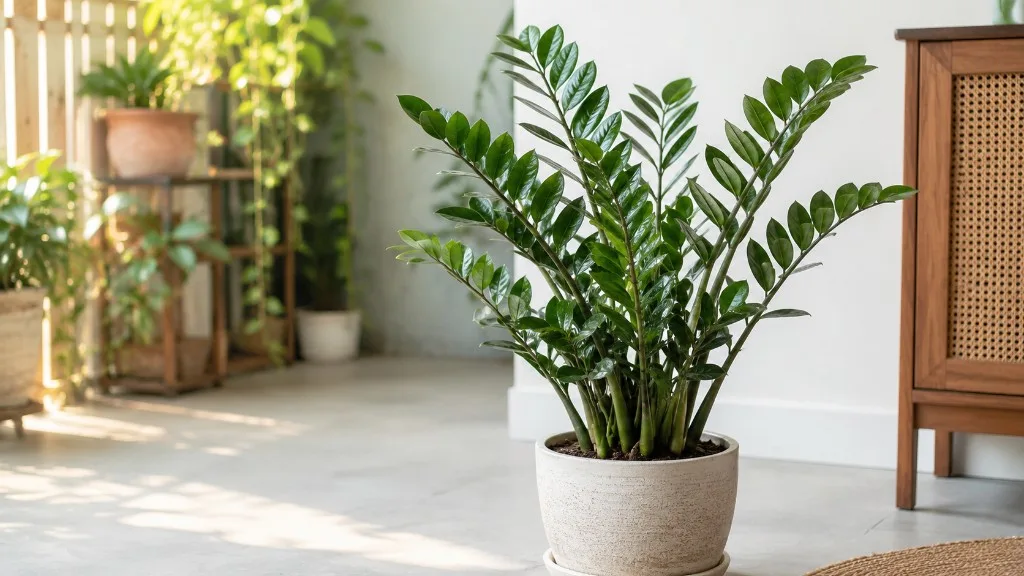
Low-light plant shopping is easy to get wrong because human eyes adjust faster than plants do. A room can feel bright enough for reading, video calls, and daily life while still giving a houseplant only a thin fraction of the light it would receive near an unobstructed window. The result is familiar: a plant looks good for a month, then growth stalls, leaves thin out, variegation fades, soil stays wet too long, and the owner assumes they bought a “bad” plant.
The Low Light Plant Finder is built to prevent that mismatch. It helps you compare plants by the conditions you can actually provide: room brightness, distance from a window, pet safety, care difficulty, humidity, placement, and tolerance for slow growth. The useful answer is rarely “the most beautiful low-light plant.” It is the plant that can live in your room without needing constant rescue.
The finder narrows a broad houseplant list into practical candidates for shaded rooms, offices, shelves, hallways, bathrooms, bedrooms, and other spots where direct sun is absent. It treats “low light” as a constraint, not a style preference. That matters because low light affects growth speed, watering demand, pest resilience, leaf color, and the plant’s ability to recover from stress.
Use the result as a shortlist. A good match means the plant is more likely to tolerate the light level you describe, fit the room, and suit the care routine you can sustain. It does not mean the plant will thrive in darkness, ignore bad watering, or stay healthy with no adjustment period.
The tool works best when you use it before buying. It is also useful when you already own a struggling plant and want to decide whether to move it, replace it with a more tolerant species, or add a grow light.
No finder can promise that a plant will thrive in a dim room. Light is the energy source for photosynthesis, and indoor shade-tolerant plants are still plants, not decor. A low-light-tolerant species can survive and look acceptable in reduced light, but many will grow more slowly, produce smaller leaves, need less frequent watering, and become less forgiving if other conditions are poor.
The tool also does not inspect your exact room. Window direction, nearby buildings, trees, overhangs, curtains, tinted glass, shelf height, wall color, and seasonal day length can change the light a plant receives. A desk three feet from a bright window and a bookshelf eight feet from the same window are very different plant environments.
Treat the recommendation as a decision aid. If the result is borderline, choose the tougher plant, move the plant closer to available light, or plan for supplemental lighting.
For houseplants, low light usually means bright enough for people to use the room but weak enough that the plant receives no direct sun and limited indirect light. Clemson Extension lists low-light indoor plants around 100 foot-candles in its indoor plant light guidance, while medium and high categories rise above that range low-light indoor plants. That number is a useful anchor because it separates “dim but plant-usable” from “nearly no plant light.”
The University of Minnesota Extension also groups several common foliage plants as suitable for low-light indoor conditions, including Chinese evergreen, cast iron plant, parlor palm, pothos, philodendron, snake plant, peace lily, and ZZ plant low-light plants. Those lists are helpful, but they should not be read as permission to place any of those plants in a windowless corner indefinitely.
If you want a quick practical check, stand where the plant will sit during the brightest part of the day. If you cannot comfortably read small print there without turning on a lamp, the spot is very low light. If shadows are soft or absent but the room still feels clearly illuminated, many shade-tolerant foliage plants may cope. If the place is always dark unless artificial lights are on, the tool should steer you toward the most tolerant plants or a grow-light plan.
The finder is a scoring tool, not a popularity contest. It weighs the limiting conditions first. For a low-light room, the limiting condition is usually available light. After that, the important filters are pet safety, watering tolerance, mature size, room humidity, and how much maintenance the owner is willing to do.
The logic is intentionally conservative. A plant that prefers bright indirect light but merely tolerates low light should rank below a plant known for handling dim interiors when both are placed far from a window. A plant that needs evenly moist soil should be treated with more caution in a dim room because soil dries more slowly when plant growth and evaporation are reduced. A plant that is toxic to cats or dogs should be filtered out when pets can reach the leaves, even if it is otherwise an excellent low-light candidate.
The tool also treats “beginner-friendly” as a package of traits. A forgiving low-light plant should tolerate occasional missed watering, recover from normal home humidity, resist rapid collapse, and give visible warning signs before serious decline. That is why ZZ plant, snake plant, pothos, cast iron plant, parlor palm, and Chinese evergreen often appear in low-light conversations, while many flowering plants, succulents, and variegated collector plants are weaker fits.
Start with light level. Choose the dimmer answer if you are unsure. People routinely overestimate indoor light because eyes adapt, walls reflect light, and a room can feel brighter than a plant experiences it. The difference between next to a north window and across the room from a north window is large enough to change the recommendation.
Next, be strict about pets. If a cat or dog can chew leaves, pull trailing stems, or knock over a pot, use the pet-safe filter. The ASPCA toxic and non-toxic plant database is a practical cross-check for household plant safety because it lists many common houseplants by pet species and plant name toxic and non-toxic plants. Do not rely on “my pet never chews plants” if the plant will trail, shed, or sit at floor level.
Then choose the room type and care level. Bathrooms may have better humidity but weaker windows. Offices may have consistent temperatures but long weekends with lights off. Bedrooms often have curtains closed for part of the day. Hallways and shelves are convenient for styling but often poor for light. These details affect whether the best answer is a plant, a placement change, or a grow light.
Imagine a north-facing bedroom with no direct sun. The plant would sit six feet from the window on a dresser. The owner travels occasionally, has no pets, and wants a plant that can handle missed watering. The finder should favor tough foliage plants over plants that need steady moisture or brighter leaf color maintenance.
In that situation, a ZZ plant or snake plant is usually a better starting point than a fern or a flowering plant. Penn State Extension describes snake plant as tolerant of low-light areas while noting that it grows best in bright indirect light tolerates low-light areas. That distinction is exactly how to read the tool’s output: tolerance is not the same as peak performance.
Now change one input. Move the same plant to a desk two feet from an unobstructed north window. The recommendation can widen because the plant receives more usable indirect light. Pothos, philodendron, peace lily, Chinese evergreen, or parlor palm may become more reasonable depending on pet access and watering habits. Change the input again by adding a cat that chews leaves, and the shortlist should narrow sharply toward pet-safer options or unreachable placement.
The best low-light plants are usually foliage plants with green leaves, modest growth expectations, and a reputation for tolerating indoor shade. Cast iron plant is slow and durable. ZZ plant stores water in thick rhizomes and handles neglect better than many soft-leaved tropicals. Snake plant tolerates low light and dry intervals. Pothos and heartleaf philodendron adapt well to ordinary homes, though they may thin out or lose color quality in deeper shade.
Peace lily deserves a careful note. Clemson Extension says peace lilies tolerate low light and are one of the few foliage plants that can flower in low light, but they grow best in bright indirect light and should be kept out of direct sun peace lilies tolerate low light. That makes peace lily a good candidate for a bright low-light room, not a magic solution for a dark shelf.
Chinese evergreen is another strong candidate because many types tolerate lower light while offering patterned foliage. Choose greener cultivars for the dimmest spots. Highly variegated forms often need more light to keep their color and growth quality.
Many plants sold as houseplants are poor choices for truly dim rooms. Succulents, cacti, citrus, most herbs, many flowering plants, fiddle-leaf fig, croton, and many variegated tropicals generally want more light than a shaded corner provides. They may survive for a while on stored energy, then decline slowly enough that the problem is blamed on watering or fertilizer.
Variegated plants need special caution. White, cream, yellow, and pale green areas have less chlorophyll than solid green tissue, so the plant has less photosynthetic capacity in the same light. In low light, variegated pothos, variegated peperomia, variegated philodendron, and variegated dracaena may produce greener new growth or weaker leaves. Penn State Extension notes that pothos can survive low light for some time but may eventually lose desirable leaf qualities such as variegation or leaf size lose desirable leaf qualities.
Do not use fertilizer to compensate for low light. Fertilizer supplies nutrients, not energy. When a plant lacks light, pushing more fertilizer can create salt buildup or weak growth instead of solving the real limitation.
Pet safety is not a minor preference. Several famous low-light plants are not good choices where cats or dogs can chew them. Pothos, peace lily, philodendron, dieffenbachia, and many aroids are commonly flagged in pet-toxicity databases. Snake plant also appears on ASPCA pet toxicity lists for cats snake plant listing.
That does not mean every home with pets must avoid every non-pet-safe plant. Placement matters. A hanging basket in a closed room is different from a floor pot beside a food bowl. But the finder should treat accessible leaves as a real risk, especially with trailing plants and curious cats.
If pets are part of the household, favor pet-safer candidates, use sturdy stands, avoid trailing stems at bite height, and check the plant guide before buying. For any suspected ingestion, rely on a veterinarian or animal poison control service rather than a plant-care article.
The label “low light” is less important than the actual placement. A plant on a windowsill with no direct sun may receive far more light than a plant across the room. A shelf that looks attractive in a photo may be too dim because the shelf above blocks light. A bathroom may be humid but still fail if the window is small, frosted, or shaded.
Run the finder for the exact spot, not the room as a whole. If you are deciding between two locations, run both. The best result may reveal that you do not need a different plant; you need to move the plant three feet closer to a window.
Rotating the pot can help even out leaning when light comes from one side, but rotation does not solve insufficient light. If stems stretch, leaves angle strongly toward the window, new growth gets smaller, or variegation fades, the plant is asking for more usable light.
Low-light plants usually need less frequent watering than the same plant in brighter light. Growth slows, water use drops, and potting mix stays wet longer. This is one of the biggest reasons low-light plants fail: the owner waters by calendar instead of checking the pot.
Before watering, check more than the surface. Lift the pot, feel the mix through the drainage hole if possible, or use a wooden skewer to see whether the lower root zone is still damp. A plant in a dim corner can have a dry top layer while the lower root ball remains wet.
The University of Minnesota Extension advises matching indoor plants to growing requirements such as humidity, light, and temperature, and notes that plants struggling in poor conditions are less able to deal with pest pressure best possible conditions. That is a useful reminder that watering, light, and pest prevention are connected. A dim, wet plant is not just overwatered; it is living in a setup that makes recovery harder.
Light is the main filter, but it is not the only one. Bathrooms can help humidity-sensitive plants, but only if they have usable light. Offices can be stable, but air conditioning, heating vents, and weekend darkness can create stress. Bedrooms can be calm, but closed curtains may reduce already-limited light.
Avoid placing low-light plants directly in hot or cold drafts. Many tropical foliage plants tolerate ordinary room temperatures, but sudden cold near exterior doors or dry heat from vents can cause leaf edge damage, drooping, or faster soil drying on one side of the pot. The finder can help narrow the plant list, but the final placement still has to protect the plant from environmental extremes.
Airflow matters most when soil stays wet. Stagnant air, dense potting mix, oversized pots, and low light create a root-zone problem before leaves show dramatic symptoms. Choose pots with drainage, avoid heavy decorative containers without inner nursery pots, and let the plant’s actual water use guide the interval.
Sometimes the correct low-light plant match is not a plant at all. It is a light. If the room has no window, if office lights turn off for long stretches, or if every plant you place there slowly thins out, supplemental lighting can turn a poor plant location into a workable one.
The University of Minnesota Extension notes that supplemental light may be needed for houseplants in winter and gives a practical target of about 12 to 14 hours of light per day when using an added lamp supplemental lighting. That does not mean every low-light plant needs a dedicated grow setup, but it gives you a realistic option when the room itself cannot support the plant you want.
Choose a full-spectrum LED grow light, place it close enough to be useful without heating or bleaching leaves, and use a timer. A weak bulb across the room is mood lighting, not plant lighting. The more demanding the plant, the more important distance, duration, and intensity become.
The finder gives the shortlist. The plant guides help you choose between close matches. If the result includes pothos, ZZ plant, snake plant, peace lily, Chinese evergreen, or philodendron, open the relevant guide under /plants/ before buying. Look at mature size, toxicity, watering rhythm, soil preference, and common symptoms.
If you already have a plant in low light and it is declining, pair this tool with symptom guides under /symptoms/. Yellow leaves, drooping leaves, brown tips, curling leaves, soft stems, fungus gnats, and root rot all become more likely to overlap when low light slows drying and weakens growth. A symptom guide can help you decide whether the issue is light, water, pests, disease, or a combination.
Related tools can also sharpen the decision. Use /tools/pet-safe-plant-checker/ when pet access is the deciding factor. Use /tools/grow-light-distance-calculator/ if the plant needs supplemental light. Use /tools/watering-frequency-calculator/ after placement, because the same plant may need different watering in a bright window and a shaded shelf.
The first mistake is treating “low light” as “no light.” No common houseplant is a permanent no-light object. If the space has no natural light and no reliable artificial light, the better answer is a grow light or a different display idea.
The second mistake is choosing the most dramatic plant in the shortlist. In a low-light room, plain green foliage often performs better than rare variegation, large white sectors, or flowering expectations. The plant that looks less exciting on day one may still look healthy six months later.
The third mistake is buying a plant at the wrong size. A small nursery plant may fit a shelf now but outgrow the spot once it settles in. Check mature size before choosing floor plants, palms, vining plants, or anything with long arching leaves.
The fourth mistake is watering on the same schedule used in brighter rooms. Low light changes the water budget. If the pot stays heavy, the soil smells sour, or leaves yellow while the mix is still wet, the problem may be the combination of dim light and excess moisture.
A borderline result is useful. It tells you the plant might work if you improve one condition. That condition might be light, distance from the window, pet access, pot size, soil drainage, or watering discipline.
If the finder gives a plant you love but marks it as a weaker fit, do not force the match in the worst spot. Test a brighter placement, choose a smaller specimen, add a grow light, or pick a tougher plant for the original location. This is especially important for expensive plants. A collector plant that needs bright indirect light is not a good experiment for a dim hallway.
If the result recommends plants that feel too plain, take that seriously. The tool is prioritizing long-term fit over novelty. You can still make a low-light corner look intentional with pot choice, plant stand height, grouped foliage textures, and a healthy specimen rather than a stressed showpiece.
The Low Light Plant Finder is most useful when you treat it as a reality check. It helps you match plants to the light, pets, room type, care routine, and space you actually have, not the brighter version of the room you wish you had.
Start with the dimmest honest light rating, apply the pet filter strictly, and compare two or three placements before buying. If the shortlist feels narrow, that is useful information. It means the room is asking for tougher foliage plants, better placement, or supplemental light. A plant that fits those limits will be easier to care for, easier to troubleshoot, and more likely to stay attractive after the first month.
This Low Light Plant Finder was researched and written by . Logic, safety notes, and result copy for Low Light Plant are reviewed against LeafyPixels plant-care data, extension references, and veterinary toxicity sources where pet safety is involved.
We prioritize sources that hold up under scrutiny:
The LeafyPixels editorial team then reviews the draft for clarity, step-by-step usefulness, and fit with real apartment and home conditions-not ideal greenhouse setups. When guidance changes materially, we update the page and note the revision date.
The long-form review for this page covers Low Light Plant Finder. Its bottom source list includes 9 external citations pulled from the long-form guide, then deduplicated with the tool’s frontmatter sources.
Several popular houseplants genuinely tolerate low-light environments, including pothos, ZZ plant, cast iron plant, snake plant, peace lily, Chinese evergreen, and philodendrons. These plants have adapted to the shaded forest floors of their native habitats, where direct sunlight rarely penetrates. While they will grow more slowly in low light than in brighter conditions, they can maintain their health and foliage in dimly lit rooms.
Low light means a location that does not receive any direct sunlight and is far enough from windows that reading without artificial lighting would be uncomfortable. This describes areas like north-facing rooms, interior office spaces, hallways, and spots more than six to eight feet from a window. True low light is challenging even for shade-tolerant plants, so a grow light supplement can help them thrive rather than merely survive.
No plant can survive indefinitely without some form of light - either natural or artificial - as light is essential for photosynthesis. However, with a full-spectrum LED grow light running for 12 to 16 hours per day, even high-light plants can thrive in rooms with no windows. Without any supplemental lighting, only the most shade-tolerant plants can survive in very low natural light, and even they will slowly decline without some light reaching them.
Generally yes - plants in low-light conditions photosynthesize and transpire more slowly, which means they absorb and use water at a slower rate and their soil stays moist for longer. Overwatering is an especially common problem with low-light plants because owners water on a fixed schedule without accounting for the slower drying time. Always check soil moisture before watering low-light plants, as they are particularly prone to root rot from excess moisture.
Variegated plants require more light than their solid-green counterparts to maintain their white, yellow, or cream-colored patterns. In low-light conditions, variegated plants often revert to all-green leaves as the plant maximizes chlorophyll production to compensate for the reduced light. Moving a variegated pothos, monstera, or aglaonema to a brighter spot usually encourages the return of variegated patterns in new growth.