Yellow Leaves on Syngonium Pink: Causes, Checks & Fixes
Quick answer
On Syngonium Pink, dull salmon new leaves and a heavy wet pot often appear before full yellowing-pink wash fade is an early stress signal, not hunger. First step: lift the pot and probe moisture an inch deep before you water, fertilize, or repot.
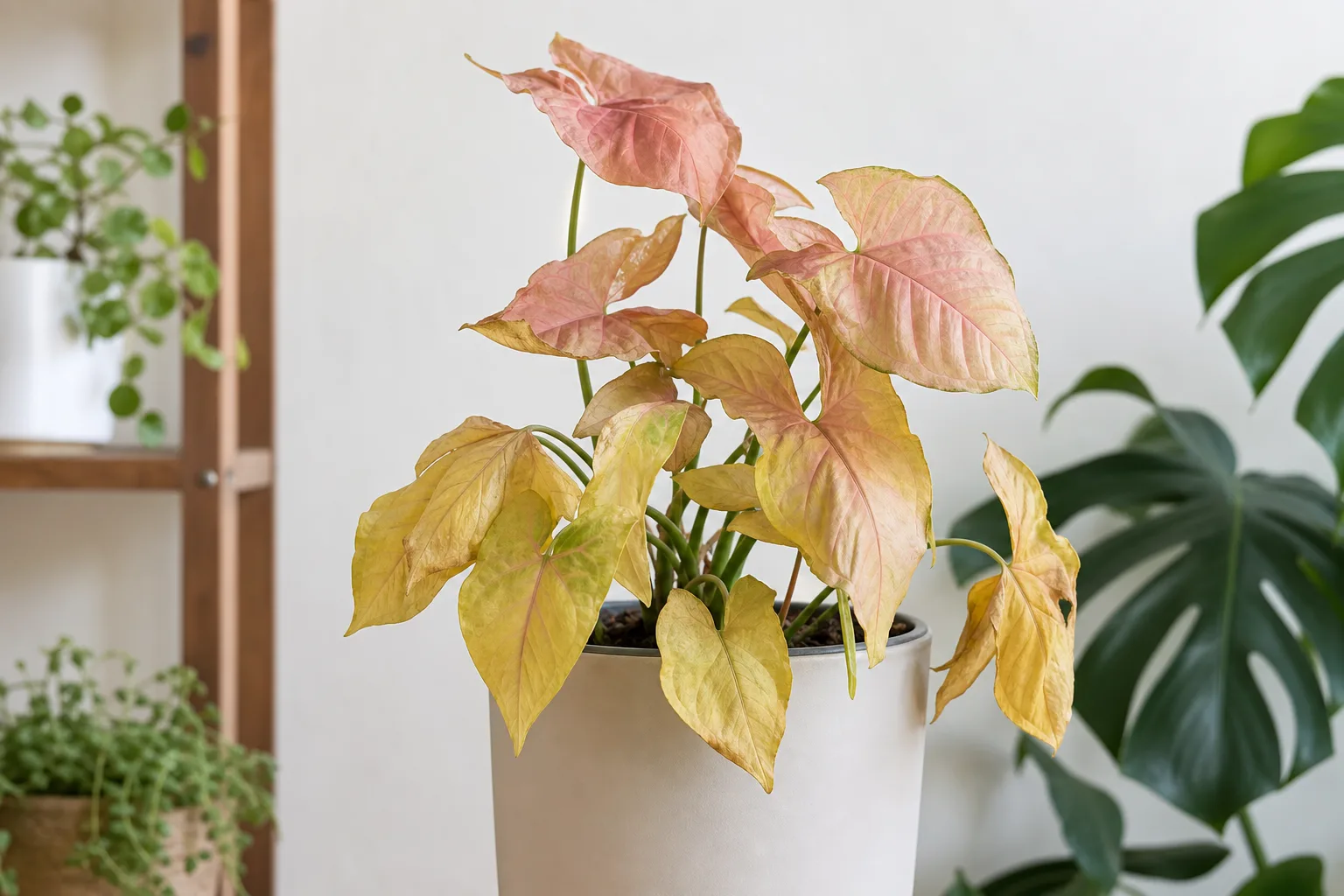
Yellow Leaves on Syngonium Pink: Causes, Checks & Fixes
This guide covers yellow leaves on Syngonium Pink. See also the general Yellow Leaves guide, watering, and light pages for this plant.
Yellow Leaves on Syngonium Pink: Causes, Checks & Fixes
Quick answer
If your Pink Syngonium is losing its blush on new arrowhead leaves before older ones turn fully yellow, treat that as an early stress signal-not a fertilizer shortage. Syngonium podophyllum ‘Pink’ carries less chlorophyll in pink tissue than solid green arrowhead forms, so stress often shows as dull salmon or washed-out pink on the newest leaves while the pot still feels heavy and the top inch of mix stays damp for days.
Yellow leaves on Syngonium Pink are most often a root-zone moisture problem, not hunger. As an Araceae aroid with soft foliage, it rots quickly when mix stays saturated-especially in low light when the plant uses water slowly. Chronic wet soil also fades pink pigment on new leaves as stressed foliage yellows from the bottom up
First step: lift the pot and probe moisture an inch deep before you change anything. A heavy, cool, wet pot means pause watering and inspect roots-not another soak. A light, dry pot with crisp yellow edges means thirst. Getting wet versus dry wrong is the fastest way to lose more pink leaves.
Yellow leaves vs. other Pink Syngonium stress pages: This URL is a multi-cause diagnostic hub for chlorosis patterns, pink-wash fade, and wet-soil checks. If your main symptom is chronic soggy mix, see overwatering on Syngonium Pink. For stretch and color fade in a dim corner, start with not enough light. For limp petioles without full yellowing yet, see drooping leaves.
What yellow leaves look like on Syngonium Pink
Yellowing on Pink Syngonium follows patterns you can match at the pot-not a single universal blemish.
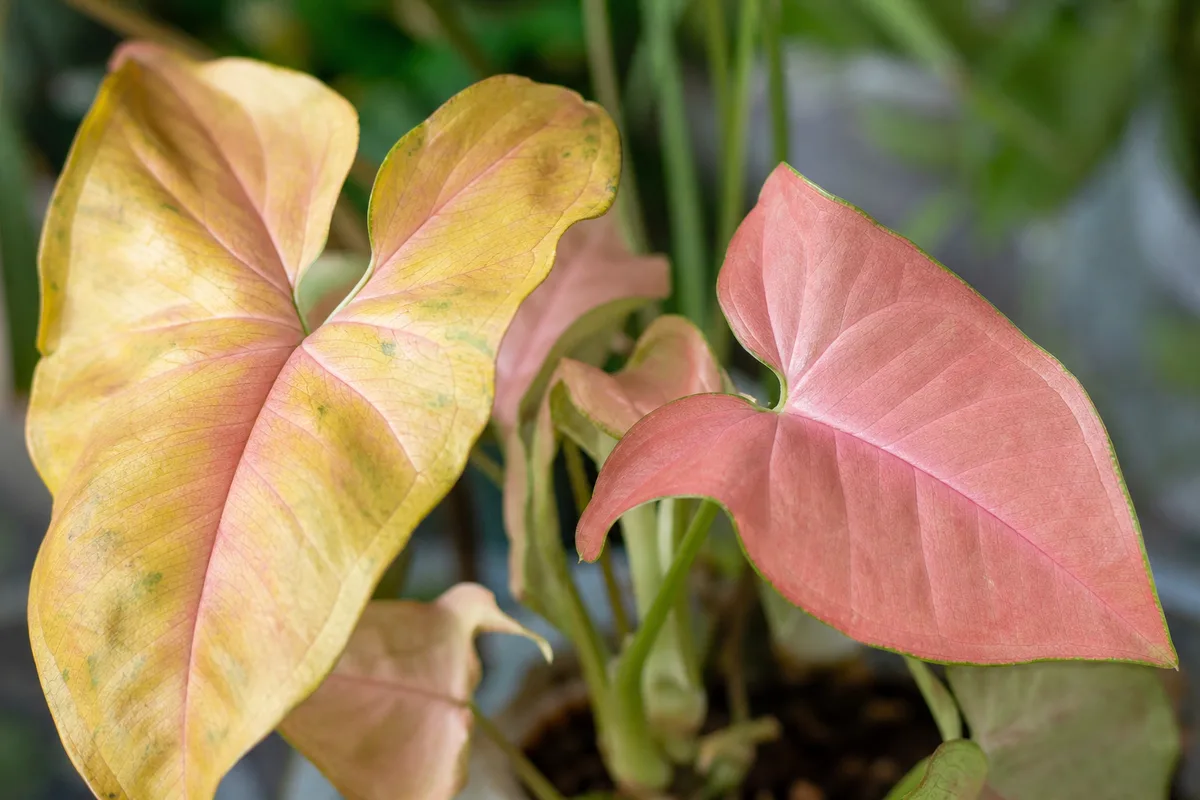
Yellow Leaves symptoms on Syngonium Pink - compare with healthy tissue on the same plant.
Pink-wash fade before full yellow
- Newest leaves open pale green, dull salmon, or flat pink instead of the bold blush you bought the plant for
- Pink wash dulls on active tips while lower leaves are still green-this often precedes full yellowing by one to two flushes
- Long bare gaps between nodes on the same stem suggest low light is slowing dry-down, not just a watering miss
Wet-soil yellowing
- Multiple lower leaves turn soft yellow while mix stays damp and the pot feels heavy for days
- Limp petioles hang despite wet soil-the wilt paradox when rotting roots cannot take up water
- Sour smell, fungus gnats after watering, or water sitting in the saucer confirm chronic saturation-see fungus gnats on Syngonium Pink when gnats are the first clue
Dry-soil yellowing
- Crisp yellow or brown edges on leaves that feel papery; pot lifts light and top inch is bone dry
- New growth may still show pink but smaller and slower-underwatering lookalike covered in our underwatering guide
Normal lower-leaf aging
- One firm yellow leaf at the very base on an otherwise bushy plant with strong pink new growth
- Leaf yellows slowly over weeks without spreading up the stem or softening the crown
Pest and shock patterns
- Fine stippling, webbing, or sticky residue on undersides-possible spider mites, aphids, or mealybugs rather than root stress alone
- Sudden yellowing one to two weeks after repotting or a room move-environmental shock plus changed dry-down rhythm
Compare new growth to new growth, not the oldest nursery leaf in the pot. A single pale leaf after shipping is less telling than three consecutive washed-out leaves in a stable spot.
Annotated example
A Pink Syngonium on a dim bookshelf was watered every Sunday on schedule. Over four weeks, new leaves opened dull salmon instead of pink; two lower leaves yellowed with limp petioles while the pot stayed heavy. The grower paused watering until the top inch dried, moved the pot to filtered east-window light within one metre of glass, and emptied the saucer after every future soak. Strong pink returned on the next two arrowhead leaves about three weeks later-judged by new tissue, not the old yellow leaves that eventually dropped.
Why Syngonium Pink gets yellow leaves
Chronic overwatering - the top cause
Missouri Botanical Garden lists overwatering among the most common causes of houseplant decline because wet soil excludes oxygen. University of Wisconsin-Madison Extension notes root rots develop when soil remains too wet too long-Syngonium fits that pattern closely. Cool dim rooms, oversized pots, dense peat-heavy mix, and cachepots without drainage all keep roots wet longer than this species tolerates.
Low light slowing dry-down
Pink cultivars need brighter filtered light than green arrowhead forms because pink tissue carries less chlorophyll. Ohio State Extension notes that all-green portions of variegated plants are often more vigorous in marginal light-dim conditions favor green growth over pink pigment. When light drops, transpiration slows, mix stays wet, and the same calendar watering that worked in summer becomes overwatering in a north-facing winter corner. Full pink-fade biology lives on not enough light on Syngonium Pink.
Underwatering
Less common than wet-soil yellowing but real in bright windows and small pots. Syngoniums visibly droop when thirsty and older leaves can yellow after repeated drought cycles. Dry pot weight and crisp tissue confirm thirst-not root rot.
Normal senescence
Self-branching arrowhead plants shed the oldest leaves at the base as they mature. One lower leaf fading over months on firm stems with healthy pink new growth is expected renewal.
Pests
Sap-sucking insects stress foliage and can yellow or stipple leaves while soil moisture looks normal. Hot dry indoor air favors spider mites on Syngonium. Inspect undersides before assuming fertilizer or watering alone will fix yellowing.
Environmental shock
Repotting, relocation, or a sudden move to a darker room changes root activity and dry-down speed. Temporary yellowing on lower leaves after a stable-care disruption often resolves once moisture rhythm and light match the new spot-without stacking repot, prune, and feed on the same day.
Lookalike symptoms to rule out
| Pattern | Key signs | Likely cause | Next step |
|---|---|---|---|
| Overwatering | Heavy wet pot, soft yellow lower leaves, limp petioles on damp mix, sour smell, gnats | Root stress from saturated mix | Overwatering guide - pause water, inspect roots |
| Underwatering | Light dry pot, crisp yellow or brown edges, rapid perk-up after soak | Thirst in bright or small pots | Underwatering guide - deep soak, then rhythm |
| Low light + wet soil | Dull salmon new leaves, long internodes, mix wet 5+ days, pink fade before yellow | Slow growth trapping moisture | Not enough light first, then adjust water |
| Normal aging | One firm base leaf yellowing slowly; strong pink new growth; soil neither chronically wet nor bone dry | Natural lower-leaf drop | No rescue needed-watch next flush |
| Pests | Stippling, webbing, honeydew; soil moisture normal | Mites, aphids, mealybugs | Spider mites or related pest page |
| Environmental shock | Yellowing 1–2 weeks after repot or room move; stems still firm | Changed light/moisture at roots | Stabilize placement; one change at a time |
Unlike nitrogen deficiency, uniform yellowing on older leaves with good spacing and dry appropriate soil is less common on Pink Syngonium in dim light-the plant usually stretches and greens first. Fix light and moisture before fertilizing a stressed plant.
How to confirm the cause
Work through these six checks in order. Each step narrows the diagnosis before you treat.
- Pink-wash trend on new leaves - Are the last two or three leaves progressively duller, greener, or more salmon than the batch before? Fading pink on active tips plus a heavy pot strongly suggests moisture or light stress, not hunger.
- Pot weight - Lift the pot now versus right after your last thorough watering. Heavy and cool for many days points to excess moisture. Light and dry points to thirst.
- Moisture at depth - Push a finger or wooden skewer one inch into the mix. Clinging wet soil with yellowing lower leaves treats overwatering as likely. Dry at that depth with a light pot confirms underwatering.
- Stem and root check - Pinch the base of a yellowing petiole and the main stem. Firm tissue with wet soil still warrants an unpot if yellowing spreads-firm white roots versus brown mushy tissue settles root rot versus aging. Escalate to root rot on Syngonium Pink when roots are mushy or soil smells sour.
- Light and placement - Note distance from glass, season, and whether internodes are stretching. Dim corners that keep mix wet for a week after one watering need light correction per our light guide before more water changes.
- Pest and recent-change scan - Inspect leaf undersides for webbing, clusters, or stippling. Recall repotting, moves, or AC drafts within the past two weeks that could explain shock yellowing without root failure.
If checks 2 and 3 show wet heavy soil with multiple soft yellow leaves, overwatering or root stress is confirmed-do not fertilize or repot on impulse. If the pot is light and dry with crisp yellow edges, underwatering is confirmed. If three or more checks point to insufficient light with wet slow dry-down, fix placement before adjusting feed.
First fix for Syngonium Pink
Match one action to what you confirmed-do not stack repot, fertilizer, and heavy pruning the same day.
If overwatering or wet-soil root stress is confirmed
Pause watering until the top inch of mix dries. Move the plant to bright indirect light so the root zone dries predictably without scorching pink tissue. Empty saucers after every future soak. If yellowing continues with sour smell or soft stems, gently unpot, trim mushy roots, repot into fresh chunky aroid mix, and wait a week before a moderate soak-full sequence on root rot.
If underwatering is confirmed
Water thoroughly until runoff drains from the bottom, then empty the saucer. For hydrophobic dry mix, bottom-soak twenty to thirty minutes, then drain fully. Resume the watering rhythm when the top inch dries again-not on a fixed calendar.
If low light plus wet soil is confirmed
Move to brighter filtered light within one to two metres of east or sheer-filtered south glass first. Do not increase watering because leaves look pale in the dim corner-see not enough light for acclimation and grow-lamp options.
If normal aging is confirmed
No rescue needed. Let the single yellow leaf drop naturally. Keep your existing watering checkpoint and judge health by the next two pink leaves.
If pests are confirmed
Isolate, rinse undersides, and follow the relevant pest guide-spider mites, mealybugs, or aphids. Do not fertilize while insects are active on stressed tissue.
If environmental shock is confirmed
Hold placement steady, let the top inch approach your normal dry point, and avoid repotting again for at least four weeks unless roots are actively rotting.
Recovery timeline
Expect direction change within one to two weeks after correcting the dominant cause-yellowing should stop spreading up the plant, and new buds should push.
Pink color and firm new leaves usually improve on foliage that opens two to four weeks after a meaningful light or dry-down fix, depending on season. Winter recovery is slower than spring and summer growth.
Fully yellow leaves do not re-green. They drop and are replaced by new growth. Judge success by strong pink on the newest arrowhead leaves and firm stems-not by repairing every old yellow blade.
Root-trim repots may need three to six weeks before compact pink new growth looks normal again. If soil stays sour or stems soften at the base after six weeks in corrected care, re-inspect roots rather than watering more.
Old dull salmon leaves at the tips do not revert to bold pink-they age off or get pruned once tighter new growth appears.
What not to do
Do not increase watering because leaves look pale or pink washed out-especially in a dim corner. Fix light first.
Do not fertilize while soil is soggy or while yellowing is still spreading. UF/IFAS production data ties stretched weak growth to low light level, not automatic nutrient shortage in typical potting mix.
Do not pull yellow leaves forcefully-let them drop naturally to avoid wounding petioles.
Do not assume fertilizer will restore pink color-bright filtered light is the primary driver for this cultivar.
Do not repot, prune heavily, and feed on the same day after you notice yellowing-stacking stress worsens root recovery.
Keep away from pets when removing fallen yellow leaves; arrowhead vine is toxic if chewed and cats may investigate dropped foliage on the floor.
How to prevent yellow leaves next time
Water when the top inch of well-drained potting mix dries-details in our Syngonium Pink watering guide. Match frequency to season and light; winter in a dim room needs longer dry-down than summer in a bright window.
Site Pink Syngonium where bright indirect light is realistic most of the day so the pot dries predictably and pink pigment stays strong. UF/IFAS recommends 65°F to 80°F to maintain leaf colorings indoors.
Use chunky aroid mix with perlite or bark, a pot with drainage holes, and no standing water in saucers. Inspect roots when repotting every one to two years.
Scout undersides monthly in hot dry air. Empty saucers after every watering. If fungus gnats appear, treat chronic wetness-not just the adults.
When to worry
Act quickly when yellowing spreads rapidly with sour-smelling soil, soft stems at the base, or collapsed new growth-that pattern can precede advanced root rot.
Treat as urgent when multiple leaves yellow within a week on a heavy wet pot despite pausing water-inspect roots before another soak.
Yellowing after a move to a darker room plus continued calendar watering is a common escalation path-fix light and dry-down within days, not weeks.
Mild one lower leaf yellowing on firm stems with strong pink new growth is not an emergency.
Contact a veterinarian or ASPCA Poison Control at (888) 426-4435 if a pet chews yellow leaves you removed-calcium oxalate irritation is possible even on fallen tissue.
Related Pink Syngonium guides
- Syngonium Pink care overview - General care entry and hub FAQ
- Overwatering on Syngonium Pink - Chronic wet mix, sour soil, gnats
- Root rot on Syngonium Pink - Mushy roots and trim-and-repot sequence
- Underwatering on Syngonium Pink - Dry pot lookalike
- Not enough light on Syngonium Pink - Pink fade, stretch, dim-wet combo
- Drooping leaves on Syngonium Pink - Pot-weight diagnostic overlap
- Syngonium Pink watering - Dry-down rhythm and prevention
- Syngonium Pink light - Keeping pink color long term
Conclusion
Yellow leaves on Syngonium Pink reward pattern matching before treatment: dull salmon on new growth plus a heavy wet pot means root-zone stress-not feed; one firm base leaf on an otherwise pink bush means aging; crisp yellow on a light dry pot means thirst; stippling with webbing means pests. Lift the pot, probe an inch deep, read the newest leaves for pink intensity, then fix one dominant cause. Old yellow tissue rarely re-greens-watch the next two arrowhead leaves for proof your Pink Syngonium is recovering.