Slugs and Snails on Pothos: Causes, Checks & Fixes
Quick answer
Slugs and snails chew irregular holes in pothos heart-shaped leaves overnight and leave silvery slime trails on foliage, pot rims, and saucers. First step: go out after dark with a flashlight and hand-pick every slug on the plant, pot, and nearby floor before baiting or moving the pot.
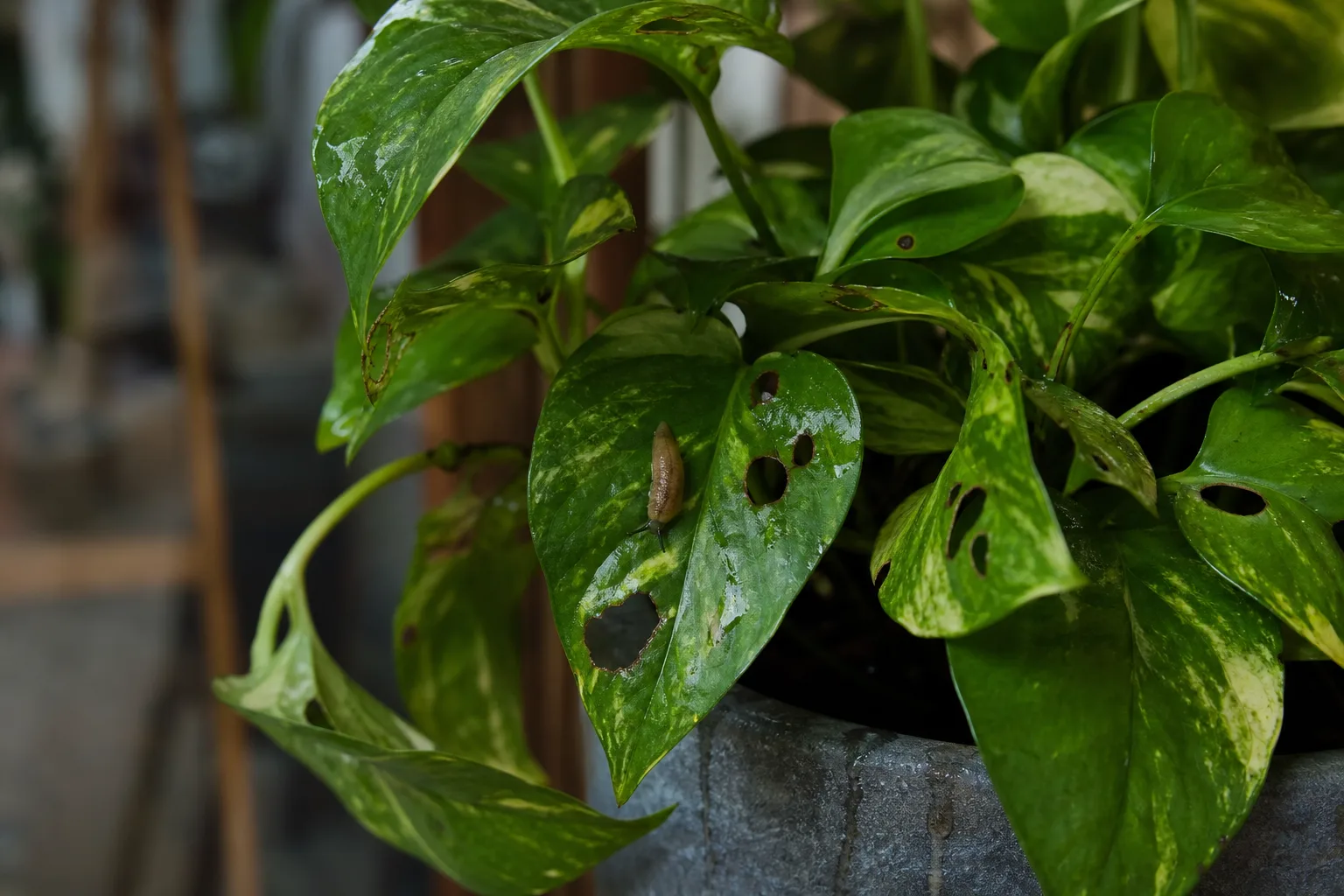
Slugs and Snails on Pothos: Causes, Checks & Fixes
This guide covers slugs and snails on Pothos. See also the general Slugs and Snails guide, watering, and light pages for this plant.
Slugs and Snails on Pothos: Causes, Checks & Fixes
Quick answer
Slugs and snails on pothos (Epipremnum aureum) are uncommon on plants that stay indoors year-round, but they show up fast when a pothos summered on a patio, arrived from an outdoor nursery bench, or sits with trailing vines touching a damp floor. They chew large, ragged holes in leaves overnight and leave silvery mucus trails on heart-shaped foliage, pot rims, and saucers-not the cottony wax or honeydew mealybugs leave in leaf axils.
First step: after dark, inspect the pothos with a flashlight and hand-pick every slug or snail on the plant, pot, saucer, and nearby floor. Drop them into soapy water or relocate them far from your collection. Confirm active feeders before scattering bait or rearranging the whole display.
Why pothos gets slugs and snails
Pothos is not a slug magnet like hostas or lettuce, and Wisconsin Extension lists mealybugs and scale-not slugs-as the usual insect pests on indoor pothos. Slug problems on pothos almost always trace to introduction or placement, not the species itself.
Outdoor summer time. Pothos handles warm patios and shaded porches, but slugs and snails feed from spring through frost and hide under pots during the day. Bringing a patio pothos indoors in fall without inspecting the pot base is the classic way slugs enter a clean room.
Hitchhiking on new plants. Nursery stock kept outdoors can carry slugs under the rim or in saucer water. Clemson HGIC notes pothos is generally pest-free indoors until common houseplant pests arrive on stressed or newly introduced plants-slugs fit that hitchhiker pattern even though they are mollusks, not insects.
Trailing vines as bridges. Pothos is a vining plant whose stems drape from hanging baskets and shelves. Runners that rest on carpet, tile, or a constantly wet saucer sit in the zone slugs cross after dark. Aerial roots on nodes are for climbing, not slug food-but the soft heart-shaped leaves along those same nodes are easy targets when a slug climbs the pot from below.
Damp, sheltered microclimates. Slugs need moisture to survive and seek cool, damp hiding spots under pots, mulch, and debris during the day. Overwatered pothos keeps saucers and cache-pot bottoms wet longer than the plant needs. Pothos prefers letting the top 2 inches of mix dry between waterings; a soggy surface invites slugs without helping the vine.
Ground-floor entry. Open doors, damp weather, and pots on the floor near entryways give slugs a path inside-especially in humid seasons when they feed on foggy or rainy days as well as at night.
What slug damage looks like on pothos
Slug and snail feeding is mechanical and overnight. On pothos, expect:
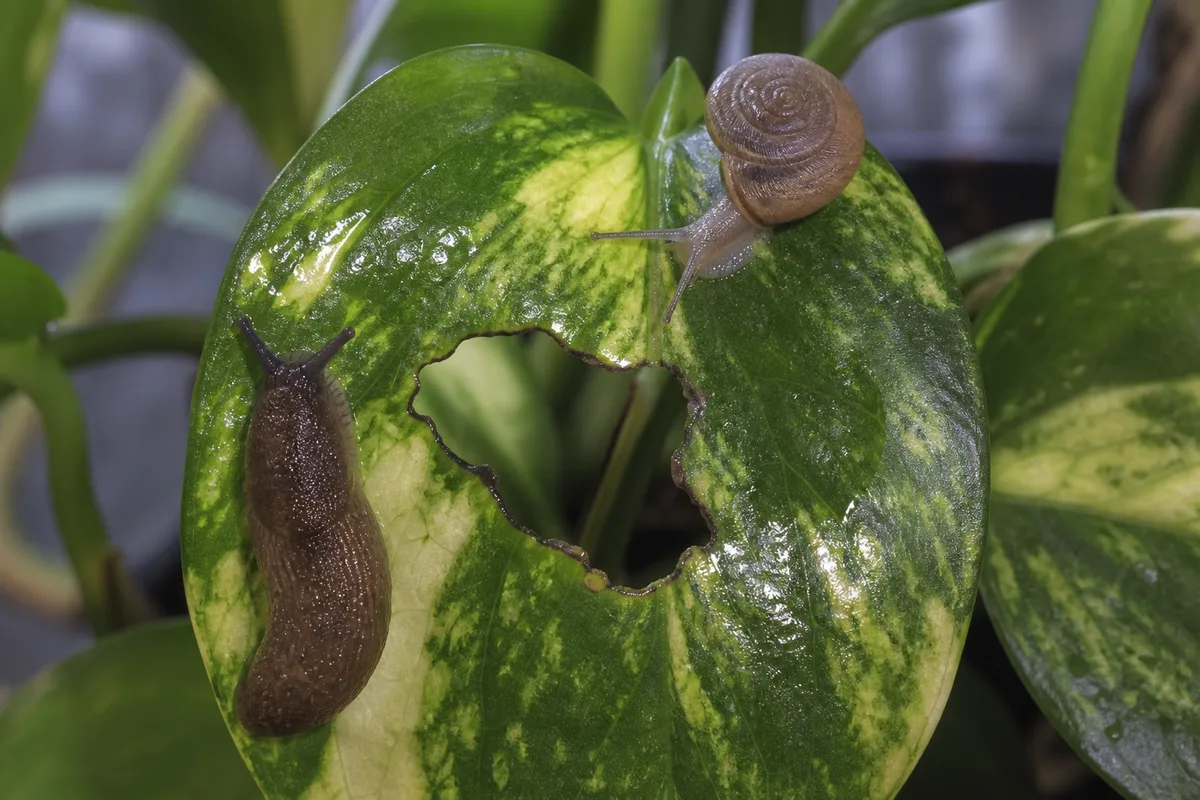
Slugs and Snails symptoms on Pothos - compare with healthy tissue on the same plant.
- Irregular holes with ragged edges in heart-shaped leaves-often lower leaves and outer runners on trailing stems, not neat edge-notching alone.
- Silvery slime trails on leaf surfaces, pot rims, hangers, and floors- the clearest slug signature.
- Chewed new leaves still unfurling at vine tips when slugs reach hanging sections.
- Damage clustered along one side of a basket where a vine touches the ground or a wet saucer.
- Visible slugs or snails under the pot, inside a cache pot, or on stems during a dusk check.
Unlike mealybugs, you will not see cottony wax in leaf axils or sticky honeydew. Unlike caterpillars, there are no frass pellets on leaves below the holes. Unlike fungus gnats, the problem is not tiny flies at the soil surface-it is mucus and chewed foliage.
How to confirm the cause
Slime trails plus ragged holes confirm slugs faster than any single torn leaf.
Check in this order:
- Morning slime scan - Follow shiny trails from chewed leaves to the pot base, saucer, cache pot, or floor.
- Lift the pot - Slugs hide under flower pots and in thick groundcovers during the day. Turn the pot slightly and inspect the underside and any standing saucer water.
- Dusk inspection - Slugs and snails feed primarily at night. A flashlight after sunset often reveals them on pothos stems and leaf edges.
- Trace recent history - Did this pothos summer outdoors, arrive from a nursery, or move from a ground-level shelf in the last two weeks? That timing supports slugs over chronic indoor pests.
- Rule out mealybugs and scale - Inspect nodes and leaf axils for white cottony masses or hard bumps. Wisconsin Extension describes mealybugs and scale as the common pothos pests with honeydew and stunting-not slime trails.
- Rule out physical damage - Pets, vacuum cords, and dragging a trailing vine can tear leaves without mucus. Check whether holes align with traffic paths.
If you find slugs under the pot but no slime on foliage yet, keep watching-another pest may be chewing while slugs use the area for shelter.
Lookalike symptoms on pothos
Mealybugs leave white cottony clusters in leaf axils and sticky honeydew-not ragged holes with slime on the floor.
Caterpillars chew holes too but leave frass pellets on leaves below damaged tissue and no mucus trails.
Mechanical tears from moving a heavy hanging basket or catching a vine in a door match torn tissue without silvery trails.
Low-light yellowing drops older leaves cleanly; slugs punch holes through otherwise green, firm leaves.
root rot on Pothos from overwatering shows yellowing, soft stems, and sour soil-not isolated ragged holes with slug mucus on the pot rim.
First fix for pothos
Hand-pick at dusk before anything else. Removing active feeders tonight stops damage faster than bait alone, which takes time after slugs consume it.
After picking:
- Inspect every pothos and neighbor plant that shared the shelf, patio, or propagation station.
- Move the pot onto a stand or hanger so trailing vines no longer rest on damp carpet or a full saucer.
- Scatter iron phosphate bait per label around the base of the pot and along floor edges where slime trails lead-not on pothos leaves. Iron phosphate stops feeding quickly and is safer around pets and wildlife than older metaldehyde products.
- For hanging baskets, consider copper tape on the hanger hook or pot rim to block slugs climbing from below.
Repeat the dusk pick for several nights in a row-handpick slugs at night until slime trails and fresh holes stop appearing.
Do not spray insecticidal soap or horticultural oil for slug holes-those target soft-bodied insects, not mollusks. Do not pour salt on soil or slugs; salt harms pothos roots and potting mix.
What not to do
Do not pile bait on foliage or nodes-it belongs on the ground near slug travel routes. Do not assume every hole is a slug without checking for mealybugs at axils and frass from caterpillars.
Do not overwater to “wash slugs off.” Wet saucers and soggy surface mix keep the habitat slugs prefer and raise root rot risk on pothos at the same time.
Do not return a patio pothos to a shared plant shelf after one hand-pick-check under the rim and quarantine for two weeks.
Avoid metaldehyde baits if pets or children access the area; iron phosphate is the better default for indoor-adjacent pothos displays. Pothos contains calcium oxalate crystals toxic to cats and dogs if chewed-keep bait and chewed debris where pets cannot reach them, and wash hands after handling damaged leaves.
Recovery timeline
Chewed pothos leaves do not heal. Judge success by what happens next: new leaves at vine tips should open without fresh holes within one to two weeks once nightly feeding stops. Pothos often pushes new growth from nodes below damage when light and watering stay steady.
A mature golden or marble queen pothos with a few torn lower leaves usually keeps vining once slugs are gone. Small starter pots or freshly rooted cuttings stripped to stubs may not recover if the crown was chewed-protect young plants with copper barriers and quarantine before damage, not after.
How to prevent slugs and snails on pothos
Prevention combines inspection with habitat changes:
- Quarantine new pothos for two to three weeks before grouping with other plants-check pot undersides and saucers, not just leaves.
- Inspect before indoor move-in - When patio season ends, hand-pick and bait around outdoor pots before they cross the threshold.
- Elevate trailing vines - Hang baskets high enough that runners do not touch floors; use stands for floor pots so vines drape inward, not onto carpet.
- Dry the saucer - Empty standing water after every drink so the pot base is not a slug spa.
- Water on pothos rhythm - Let the top 2 inches of mix dry between waterings so the surface is less attractive overnight.
- Remove daytime shelter - Clear stacked pots, damp cardboard, and debris under plant shelves where slugs hide by day.
- Repeat dusk picks after rainy spells or when doors stay open on humid evenings.
When to worry
Cosmetic holes on a few lower leaves of one pothos that recently came indoors are annoying, not fatal-hand-pick, bait the floor route, and elevate the pot. Treat as urgent when slugs appear on multiple plants, stems are chewed through at soil level, or new propagation cuttings lose all foliage overnight.
If hand-picking and iron phosphate for two weeks fail and slime trails keep appearing, look for a persistent moisture source-a leaking saucer, always-wet cache pot, or pothos sitting directly on a damp bathroom floor-and fix placement before switching to stronger controls.
Pothos care cross-check
Slug damage sometimes overlaps with care that keeps pothos weak. Confirm the mix drains well, the top 2 inches dry between waterings, and the plant gets Pothos light guide so new nodes push cleanly. Fixing chronic overwatering helps both slug prevention and root health on the same vine.
Conclusion
Slugs on pothos are a placement and introduction problem more than a chronic indoor pest. Slime trails plus ragged overnight holes tell you what you are fighting; mealybugs, scale, and gnats do not. Pick feeders after dark, keep trailing vines off damp floors, bait slug routes-not foliage-and quarantine anything that summered outside. Once feeding stops, watch new leaves at the vine tips-that is where recovery shows on pothos.
When to use this page vs other Pothos guides
- Pothos watering guide - Use for routine moisture checks before assuming slugs and snails is the main issue.
- Pothos problems hub - Browse all 39 common issues on this species.