Pot Too Small on Pothos: Causes, Checks & Fixes
Quick answer
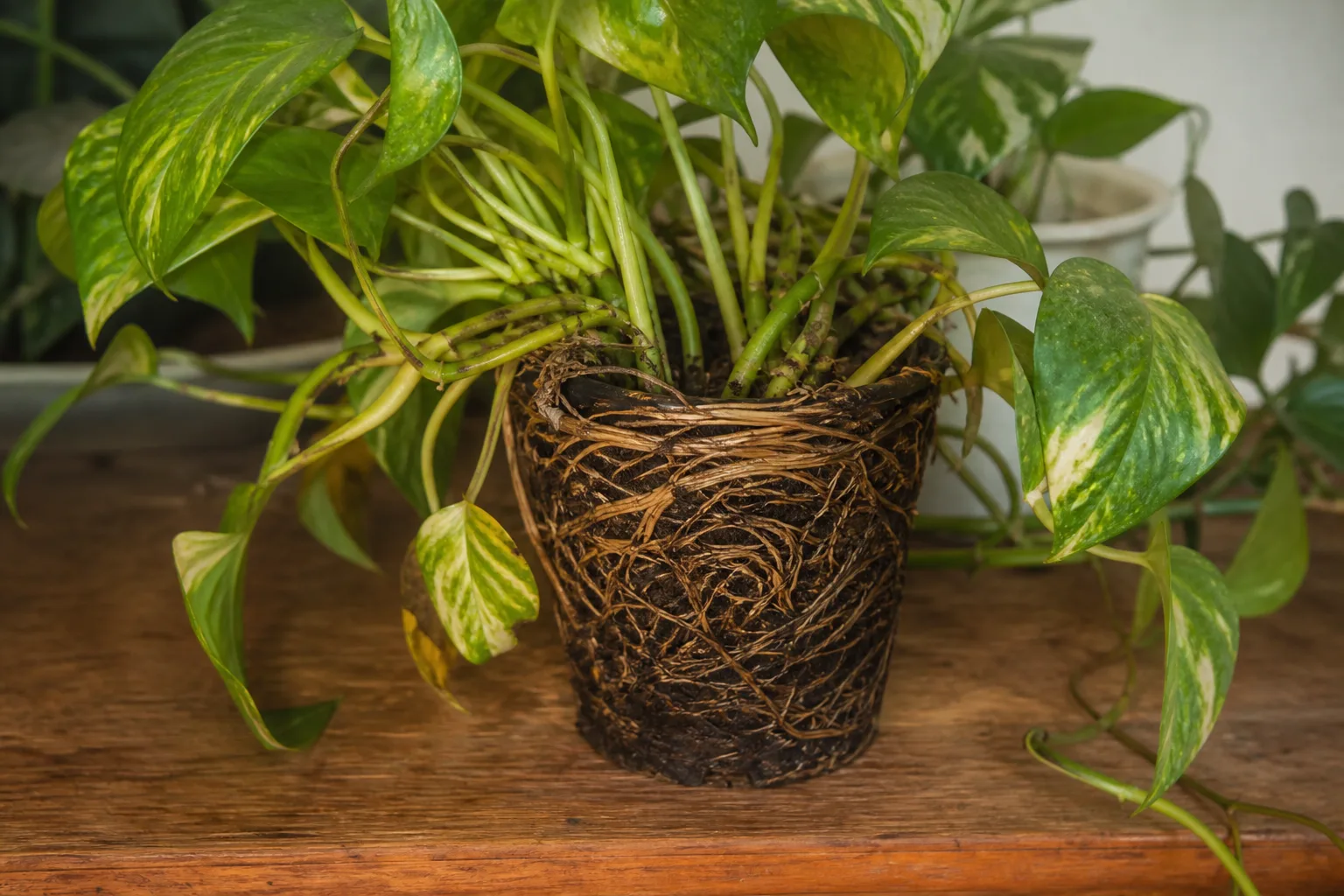
A pot too small on pothos usually means roots have filled the container-soil dries within hours and new leaves stall. First step: slide the plant from its pot and check whether white roots circle the walls or poke through drainage holes.
Pot Too Small on Pothos: Causes, Checks & Fixes
This guide covers pot too small on Pothos. See also the general Pot Too Small guide, watering, and light pages for this plant.
Pot Too Small on Pothos: Causes, Checks & Fixes
Quick answer
A pot too small on pothos usually means roots have filled the container-soil dries within hours and new leaves stall. First step: slide the plant from its pot and check whether white roots circle the walls or poke through drainage holes.
Pothos (Epipremnum aureum) is a vigorous, fast-growing tropical vine that can outgrow a nursery pot within a year indoors. It tolerates a slightly snug container better than many houseplants, but severe crowding limits water storage, nutrient uptake, and new root tips. The fix is almost always a properly sized repot-not more fertilizer or daily watering.
What a pot too small looks like on Pothos
Root-bound pothos often looks thirsty even when you water faithfully. Watch for this pattern:
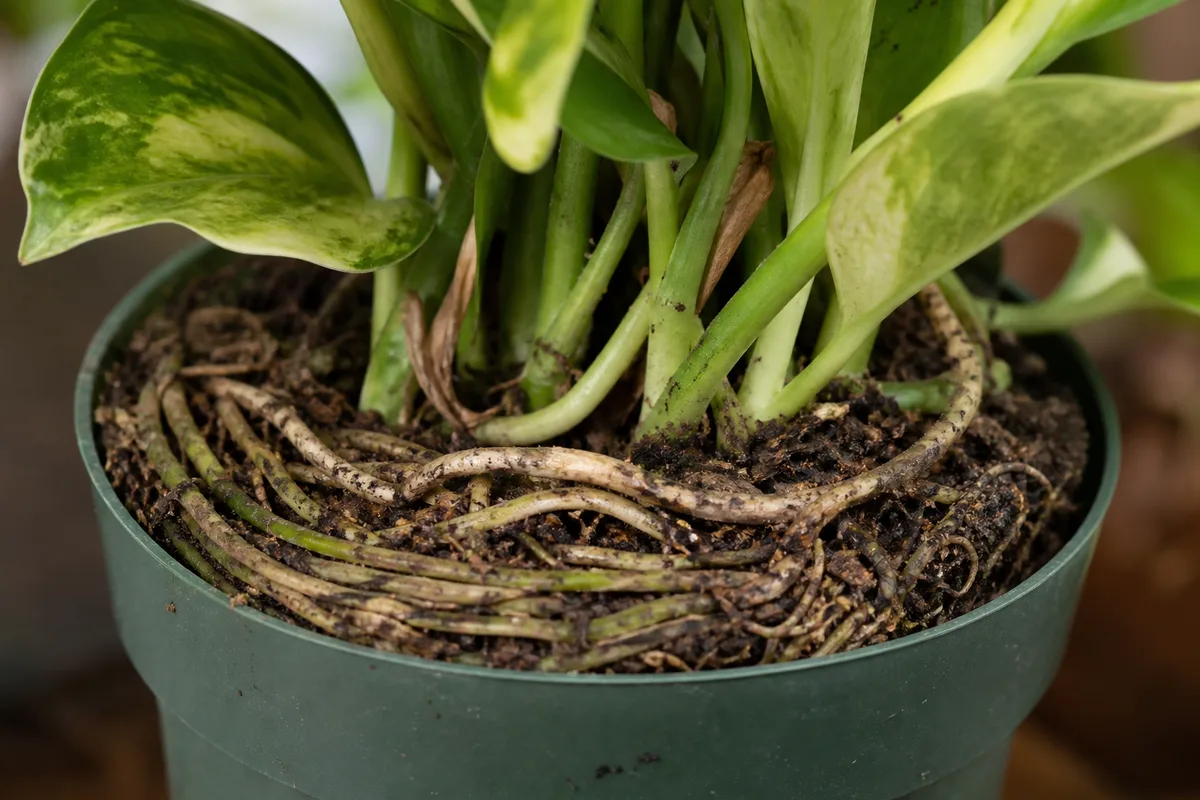
Pot Too Small symptoms on Pothos - compare with healthy tissue on the same plant.
- Roots visible through drainage holes or circling tightly when you unpot
- Soil dries within hours after a thorough soak-sometimes the same day in warm rooms
- Water runs straight through the pot without soaking in, leaving the center dry
- Mix pulls away from the pot walls, creating a gap between soil and container
- Stalled new leaves on trailing stems during spring and summer while older foliage stays green
- Smaller new leaves than baseline foliage on the same vine
- Pot feels light soon after watering because little mix remains around the root mass
- Plastic grow pot bulging or cracking from internal root pressure
- Drooping leaves that perk up briefly after water but wilt again quickly
Normal, not root-bound: A pothos in an appropriately sized pot dries when the top one to two inches of mix are dry-roughly every seven to ten days in summer for most homes. Slow winter growth with firm stems and reasonable dry-down is seasonal rest, not crowding.
Not a small pot: Yellow leaves on soil that stays wet for days, soft stems at the base, or sour-smelling mix point to overwatering or root rot on Pothos. A larger pot alone will not fix rotting tissue.
Why Pothos outgrows its pot
Fast vining habit fills containers quickly. Pothos adds nodes along trailing stems and develops adventitious roots at each node. Under good light, a single season can produce enough root and stem mass to dominate a four- or six-inch nursery pot.
Roots prefer room but tolerate slight snugness. Pothos handles a slightly tight pot better than moisture-loving ferns, yet Clemson Extension recommends repotting when roots show through drainage holes or the plant becomes overcrowded and root-bound. Past that point, circling roots choke out fresh mix and the plant loses buffer against drought.
Crowded roots change Pothos watering guide. When roots occupy most of the pot volume, water channels through the outer root ring and exits fast. The plant wilts because the limited soil mass cannot hold moisture between waterings. Missouri Extension notes that pot-bound plants may need watering too frequently and grow poorly.
Depleted soil in an old pot compacts after years without refresh. Even if the container diameter were adequate, exhausted mix plus dense roots stall growth and yellow lower leaves from low fertility.
Staying in the original nursery pot too long is the most common setup mistake. Decorative cache pots without drainage hide the problem until roots escape through hidden holes or the inner pot lifts from soil shrinkage.
How to confirm the cause
Work through these checks before repotting:
- Slide the plant out - Grasp the base and lift. If the rootball holds the pot shape and white roots wrap the outside, crowding is confirmed. A few surface roots are normal; a solid root mat with little visible mix is not.
- Drainage hole inspection - Peer underneath. Roots poking out are a clear repot signal per Clemson repotting guidance.
- Dry-down speed test - Water thoroughly and note how long the pot stays heavy. Drying within four to six hours on a mild day strongly suggests root-bound stress, not normal pothos rhythm.
- New growth check - Mark a stem tip. No new nodes for four or more weeks during warm months while light is adequate points to root limitation.
- Pot-to-plant scale - A mature trailing pothos with three-foot vines in a four-inch pot is almost certainly overdue regardless of leaf color.
- Rule out underwatering alone - If roots are sparse and soil pulls away because you rarely water, the fix is watering habit-not necessarily a bigger pot. Root-bound pots dry fast after you water; chronic underwatering leaves mix shrunken and dusty throughout.
- Smell and stem firmness - Sour odor or mushy roots mean rot. Do not repot into a larger container with wet rotting roots-trim and dry out first.
If roots circle densely and the pot dries abnormally fast, a too-small container is confirmed. If roots are healthy but sparse, look at watering and light before sizing up.
First fix for Pothos
Slide the plant from its pot and inspect the rootball. If roots circle the walls or exit drainage holes, plan a repot into a container only one to two inches wider with drainage holes.
Do not repot blindly on day one without looking. Confirmation takes thirty seconds and prevents unnecessary disturbance when the real issue is underwatering or low light. Once crowding is verified, gather a slightly larger pot, fresh airy mix, and repot during spring or early summer when the plant is actively growing.
Do not jump to a huge decorative pot. Penn State Extension recommends potting up annually in spring into a slightly larger container-emphasis on slightly. Oversizing holds excess wet soil around a small root ball and invites rot.
Do not fertilize a crowded, stressed pothos before repotting. Fresh mix and root space matter first.
Step-by-step repotting recovery
After confirming root-bound status:
- Water lightly the day before - Moist roots are more flexible and less likely to snap during handling.
- Choose the next pot size - One to two inches wider in diameter than the current container. Ensure drainage holes are open.
- Prepare mix - Use light, well-draining potting mix with perlite. Pothos needs airy soil, not heavy garden dirt.
- Loosen circling roots - Gently tease the outer root mat so tips can grow into fresh mix. Trim only dark, mushy roots; healthy white roots can stay.
- Plant at the same depth - Set the rootball so the stem sits at the same soil line as before. Backfill and firm lightly without compacting.
- Water once thoroughly - Let excess drain fully. Empty the saucer within thirty minutes.
- Place in Pothos light guide - Avoid direct sun through glass while the plant settles. Hold fertilizer for four to six weeks until new growth appears.
- Optional same-pot refresh - If you want to keep the same container, Penn State notes you can trim some roots and cut up to one-third of vining stem length, then add fresh mix. Do not overwater after this trim.
Skip repotting if you moved the plant within the past three weeks unless roots are rotting. Fresh repots need settle time.
Recovery timeline
Immediately after repot: Expect mild wilt or droop for a few days while roots adjust-normal transplant response if stems stay firm.
Two to four weeks: Root establishment phase. New growth may pause briefly. Keep watering when the top one to two inches of mix dry.
Four to eight weeks: First new leaves on trailing stems in active season. Vine lengthening resumes once roots colonize fresh mix.
Full recovery: A previously stalled pothos in good light often produces new nodes every one to two weeks through spring and summer after repotting. Oklahoma State Extension links relief from pale foliage and stunted growth once pot-bound stress is corrected.
Old yellow or crispy leaves from crowding stress do not green up. Judge success by new leaf size, frequency, and firm stems-not by reversing old damage.
Lookalike symptoms to rule out
Underwatering also causes wilt and dry soil, but roots are sparse and soil shrinks away from the pot because it was never soaked-not because roots filled the space. Soak test: if water runs off a hydrophobic surface without penetrating, refresh the top inch of mix or repot; if roots are not crowded, fix watering rhythm first.
Overwatering in an oversized pot produces yellow leaves on persistently wet mix-the opposite container mistake. Root-bound pothos dries fast; overpotted pothos stays wet. Check pot size relative to rootball before adding water.
Low light stall mimics slow growth without visible roots at holes. A bright, crowded pothos still needs repotting; a dark, uncrowded pothos needs light before a bigger pot.
Repotting stress causes temporary droop for two to four weeks after a recent move-even into the correct size. Do not repot again during this window.
Seasonal winter pause slows all pothos growth when light is weak. Crowded roots plus winter rest compound the stall; spring repotting is ideal.
Mistakes to avoid
Do not repot into a container ten inches wide when the rootball fits a six-inch pot. Excess soil stays wet and invites root rot in pothos.
Do not compensate for a tight pot by watering daily without repotting. Chronic wet-dry swings stress roots and do not replace lost soil volume.
Do not leave pothos in a sealed decorative pot with no drainage exit. Cache pots are fine only if you remove the inner pot to drain after every watering.
Do not fertilize immediately after repotting hoping to force growth. Roots need time to establish in fresh mix.
Do not tear or aggressively break a dense rootball without reason-gentle loosening is enough for pothos. Reserve hard pruning for mushy rot.
Do not repot on the same day you also prune heavily, move windows, and fertilize. Change one stressor at a time.
How to prevent pothos from becoming root-bound
Repot every one to two years depending on growth rate, or when roots emerge from drainage holes. Fast-growing Golden and Neon pothos in bright light may need annual spring repotting; slower cultivars like Manjula may go two years.
Size up gradually-one to two inches in diameter per repot. Refresh mix even when trimming roots to remain in the same decorative container.
Use pots with open drainage and empty saucers after watering. Match watering to dry-down: when the top one to two inches of mix are dry.
Give bright indirect light so the plant uses water at a predictable pace. Leggy, slow vines in dim corners still outgrow pots eventually, but growth checks are harder to read.
Prune long bare vines periodically. Heavy top growth accelerates root demand in a small pot.
When to worry
A root-bound pothos is medium urgency-not an emergency if stems are firm and roots are white. Escalate when:
- Stems soften at the soil line or the pot smells sour-suspect rot, not just crowding
- Yellow leaves spread while soil stays wet for days after you sized up too aggressively
- Wilting persists after repotting more than two weeks with firm roots-possible hidden rot or severe root damage during handling
- No new growth through an entire warm season after repotting into appropriate size and light
- Pot cracks or lifts from root pressure-repot before roots air-dry and desiccate at exposed splits
A droopy but firm pothos that dries fast in a small pot is uncomfortable, not dying. Repot within the next week during active growth and recovery is usually straightforward.
Conclusion
Pothos outgrows pots faster than many beginners expect because it is a vigorous vine with aggressive roots. Slide the plant out, confirm circling roots or fast dry-down, then repot one size up with fresh airy mix-not a giant decorative container. Most stalled pothos resume pushing new leaves within weeks once root room and watering rhythm align. Schedule spring repot checks every year or two and treat visible roots at drainage holes as a calendar reminder, not a crisis.
When to use this page vs other Pothos guides
- Pothos watering guide - Use for routine moisture checks before assuming pot too small is the main issue.
- Pothos problems hub - Browse all 39 common issues on this species.