Yellow Leaves on Neon Pothos: Causes, Checks & Fixes
Quick answer
Yellow leaves on Neon Pothos are a symptom, not a diagnosis. Chartreuse often dulls to olive-green before full yellowing when light is weak; soft yellow leaves on a heavy wet pot point to overwatering; crisp yellow on a light dry pot suggests drought. First step: check soil moisture at 1–2 inches depth and pot weight before changing fertilizer or repotting.
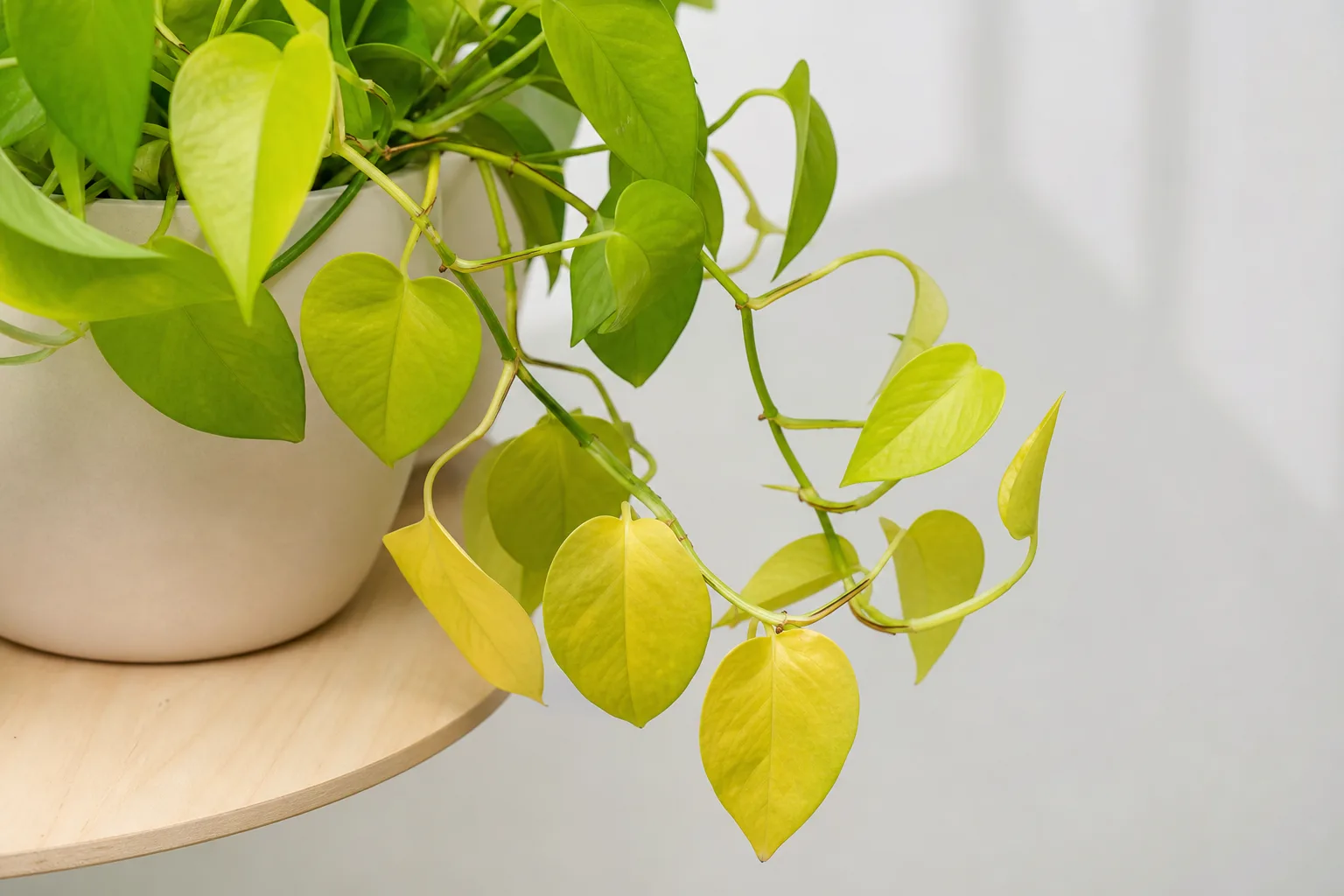
Yellow Leaves on Neon Pothos: Causes, Checks & Fixes
This guide covers yellow leaves on Neon Pothos. See also the general Yellow Leaves guide, watering, and light pages for this plant.
Yellow Leaves on Neon Pothos: Causes, Checks & Fixes
Quick answer
Yellow leaves on Neon Pothos (Epipremnum aureum ‘Neon’) are a symptom, not a diagnosis. This fast-trailing vine yellows for different reasons than compact upright houseplants-and the chartreuse pigment gives you an earlier warning than on Jade or Golden Pothos.
First step: probe the top 1–2 inches of mix and lift the pot. A heavy, wet container with soft yellow lower leaves and limp vines points to overwatering or root stress. A light, dry pot with crisp yellow leaves points to underwatering. Dull olive new growth at the apical nodes with long internodes points to not enough light-chartreuse fade often precedes full yellowing by weeks. One yellow leaf at the oldest node on an otherwise firm trailing vine is often normal nodal senescence.
Do not fertilize, repot, or increase watering until you know which branch fits. The Neon Pothos hub covers full care context; this page is the deep diagnostic for yellow foliage on long vines.
What yellow leaves look like on Neon Pothos
Neon Pothos holds many heart-shaped leaves along a single trailing stem. Yellowing rarely hits every leaf at once unless roots or environment failed suddenly. Learn these five patterns before you treat:
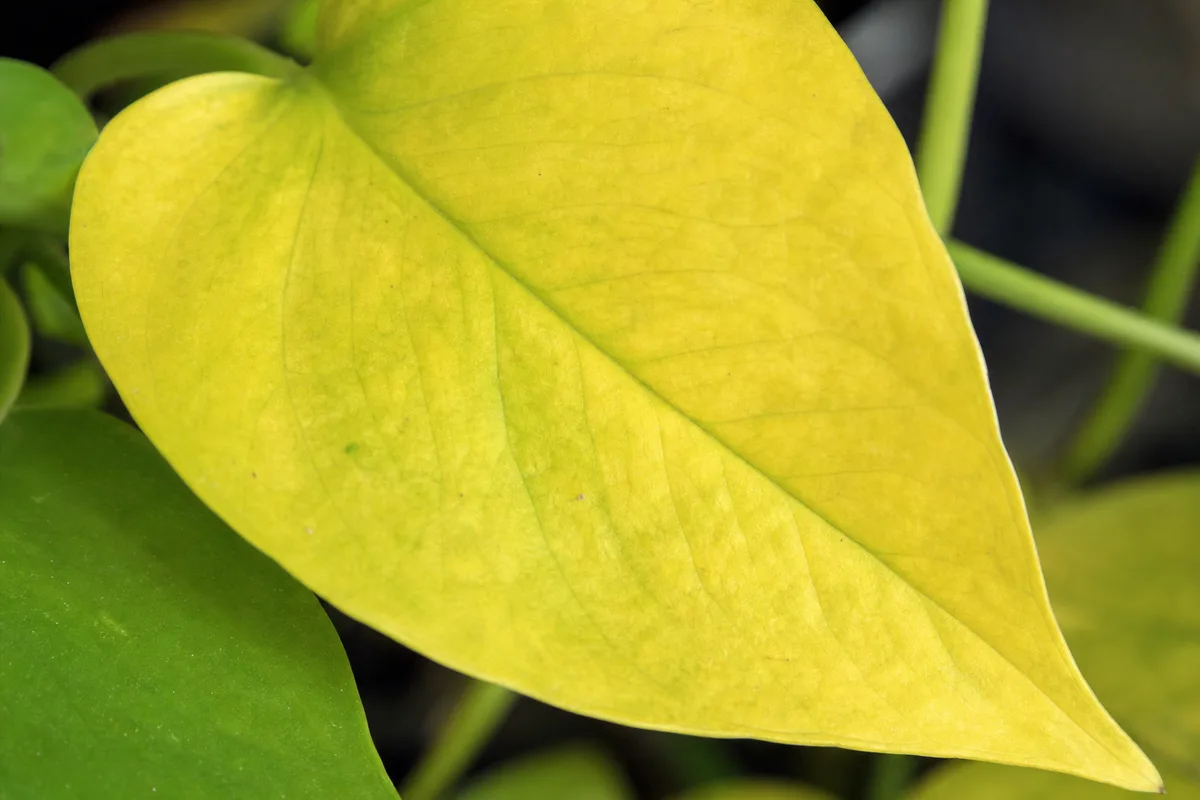
Yellow Leaves symptoms on Neon Pothos - compare with healthy tissue on the same plant.
1. Chartreuse fade before yellow (low light) - New leaves unfurl olive or forest green instead of electric chartreuse. Long gaps between nodes appear on the same vine. Older chartreuse leaves may still look fine while the growing tip loses glow. Full yellowing often follows on the oldest leaves once the plant cannot maintain pigment balance.
2. Soft yellow lower leaves on wet soil (overwatering) - Yellowing climbs from the proximal nodes near the soil line while newer chartreuse tips still look bright for a while. The pot feels heavy days after watering. Vines hang limp even though mix is dark and moist. Fungus gnats or a sour smell from drain holes often appear together.
3. Crisp yellow leaves on a light dry pot (underwatering) - Leaves turn yellow-tan and papery, sometimes with brown edges, while the mix pulls away from the pot wall. The container feels noticeably light. Vines may wilt, then perk after a thorough soak-unlike wet-soil wilt that does not recover with more water.
4. Single yellow leaf at one old node (normal senescence) - On a long trailing vine, one leaf at the node closest to the soil yellows and drops over weeks while apical nodes keep producing firm new chartreuse leaves. The stem stays green and firm. This is normal aging on a vining Epipremnum, not root rot.
5. Overnight yellowing after cold exposure - Leaves yellow or dull suddenly after the pot sat near a cold window, AC vent, or drafty door when outdoor temperatures dropped. Growth stalls. This pattern traces to temperature stress, not nutrient deficiency.
Sun scorch lookalike (opposite fix): Bleached white or tan patches and crisp brown edges on the window-facing side mean too much direct sun on chartreuse tissue-not the soft yellow of overwatering. Move back or diffuse light instead of watering less.
Real-world example: chartreuse fade before yellow
A trailing Neon Pothos in a north-facing corner lost its glow over about six weeks: new leaves unfurled olive-green, internodes stretched, and one older chartreuse leaf at a proximal node yellowed. Soil moisture and pot weight were normal-ruling out overwatering. Moving the basket to roughly 60 cm (2 ft) from an east window and changing nothing else brought lime-green chartreuse back on the next two apical leaves within three weeks. The single yellow node leaf was snipped; no repot or fertilizer was used. That pattern matches low-light fade preceding stress yellowing, not root rot.
Why Neon Pothos gets yellow leaves
Neon Pothos shares pothos biology with every Epipremnum aureum cultivar-a tropical climbing vine that prefers bright filtered light, a wet-dry watering rhythm, and warm stable air. Yellow leaves mean one of those balances failed, or the vine is shedding an old node leaf.
Overwatering and root stress - The most common indoor cause. Chronic dampness suffocates roots before chartreuse color fully fades. Calendar watering, oversized pots, heavy peat mix, and saucers left full all keep the root zone wet while the vine still trails normally for weeks. Dim corners slow transpiration and make the same summer watering interval lethal in winter.
Underwatering - Less common but real when owners fear root rot. Pothos tolerates brief drought better than chronic soggy soil, yet repeated dry cycles yellow and crisp leaves on fast-growing Neon vines in bright windows that dry out in three to four days.
Insufficient light for a color cultivar - Neon Pothos needs more light than Jade or Golden Pothos to stay chartreuse. Clemson HGIC notes that lower light causes specialty cultivars to lose their distinctive coloring. In shade, the plant produces more chlorophyll; new growth greens, then older leaves yellow as the vine reallocates resources. This is the signature Neon problem absent from solid-green pothos pages.
Normal nodal senescence - A long trailing vine naturally drops the oldest leaf at proximal nodes while apical nodes extend. Because Neon holds many leaves along one stem, occasional lower yellowing is more common than on compact upright houseplants-but it should stay one leaf at a time, not a cluster climbing the vine in a week.
Cold drafts and temperature swings - Clemson recommends 60–70°F (15–21°C) nights and 70–85°F (21–29°C) days for pothos. Sustained temperatures below about 55°F (13°C) slow growth and yellow leaves on this tropical species. Winter window sills and AC blasts are frequent triggers.
Direct sun scorch - Chartreuse leaves have less pigment protection than darker pothos types. Hot afternoon sun through glass can bleach or yellow tissue on the exposed side within hours.
Low-light overwatering trap - A Neon Pothos in a dim corner transpires slowly; owners who keep a bright-window watering rhythm see yellow leaves on wet soil-labeled overwatering that starts when light slowed metabolism. Fix both light and dry-down; see not enough light when dull new growth accompanies slow dry-down.
Lookalike symptoms to rule out
Use this table before changing multiple care variables at once:
| Pattern | Soil / pot | Leaf texture | New growth at apical nodes | Likely cause | Start here |
|---|---|---|---|---|---|
| Soft yellow climbing from soil line | Wet, heavy | Limp, soft | Still chartreuse briefly | Overwatering / root stress | Overwatering |
| Crisp yellow, tan edges | Dry, light | Papery, crisp | Slow or wilted | Underwatering | Underwatering |
| Olive new leaves, long internodes | Variable | Firm | Greenish, not chartreuse | Not enough light | Not enough light |
| One leaf at oldest node only | Normal dry-down | Firm yellow leaf | Firm chartreuse | Normal senescence | Remove leaf; watch tip |
| Sudden yellow after cold night | Normal | Firm to limp | Stalled | Cold draft / low temp | Move away from draft |
| Bleached patches, brown crisp edges | Normal | Crisp, sun-side | May scorch at tip | Too much direct sun | Diffuse or move back |
When several rows match: Overwatering plus dim light is the most common pair indoors. Fix dry-down and drainage first if soil is wet; add brightness if new leaves stay olive-green after the pot cycles correctly.
How to confirm the cause
Work through these six checks in order. Stop when one branch clearly fits-do not stack fertilizer, Neon Pothos repotting guide, and light moves on the same day.
-
Moisture at depth - Insert a finger or dry skewer 1–2 inches into the mix. Cool, clinging soil on a heavy pot with soft yellow lower leaves strongly suggests overwatering. Dusty dry mix on a light pot with crisp yellow leaves suggests drought. NC State recommends letting well-drained medium dry between waterings.
-
Pot weight test - Lift the container after watering once to learn what “heavy” feels like, then lift again when you suspect a problem. Heavy + limp leaves = wet-soil stress. Light + wilt = thirst. This split is more reliable on Neon Pothos than leaf color alone because chartreuse can stay bright while roots fail underground.
-
Which nodes yellow - Trace the vine from soil line to growing tip. Yellowing only at the oldest proximal node while apical leaves stay firm and chartreuse fits normal senescence. Yellowing climbing multiple nodes within a week on wet soil needs root inspection.
-
New-leaf color at apical nodes - Compare the youngest unfurling leaf to nursery chartreuse stock. Olive or forest green new growth means light is the primary limiter even if older leaves have not yellowed yet. See the light guide for placement targets.
-
Location and temperature history - Did the pot move to a darker room, sit on a cold sill, or land under an AC vent in the last week? Sudden yellowing with firm roots and normal moisture often traces to temperature or light change, not fertilizer.
-
Root spot-check (wet-soil branch only) - If steps 1–2 confirm soggy mix and multiple leaves yellow, slide the plant partway out of the pot. Firm white roots may recover from dry-down alone. Brown, mushy roots and sour smell mean escalate to the root rot guide before repotting into fresh mix.
First fix for Neon Pothos (by confirmed cause)
Pick one branch. The first fix is always a single clear action-not a bundle of shower, feed, repot, and prune.
Overwatering (wet, heavy pot, soft yellow lower leaves)
Stop watering until the top 1–2 inches of mix are completely dry and the pot feels noticeably lighter-often one to three weeks for a saturated pot in a cool dim room. Empty saucers. Do not fertilize. If stems stay firm and no sour smell appears, recovery from dry-down alone is likely. Multiple yellow leaves in one week or mushy stem base → inspect roots per overwatering and root rot.
Underwatering (light pot, crisp yellow leaves, dry mix)
Water thoroughly until a small amount runs from the drainage hole, then empty the saucer within 30 minutes. Water pothos when the soil is dry-not on a fixed calendar. Resume checking the top 1–2 inches every few days; bright windows dry Neon Pothos faster than dim corners. Full branch: underwatering guide.
Not enough light (olive new growth, chartreuse fade, long internodes)
Move the pot within 12–36 inches of your brightest suitable window-or add a full-spectrum grow light 12–18 inches above the top leaves for 12–14 hours daily-and change nothing else for two weeks. Do not increase watering in a dim corner; fix light first. Chartreuse returns only on new apical leaves, not on tissue that already yellowed. Full workflow: not enough light.
Normal nodal senescence (one old node leaf, firm vine, healthy apical growth)
Snip the fully yellow leaf at the node and discard it. No repot, no fertilizer, no watering change. Watch the growing tip for the next two leaves. If only one node yellows over months, you are done.
Cold draft (sudden yellow after cold exposure)
Move the pot away from the window edge, AC vent, or drafty doorway and keep the room above 60°F (15°C) consistently. Hold watering steady until new apical growth resumes. Do not mist or feed a chilled vine.
Sun scorch (bleached or crisp sun-side patches)
Move back from direct glass or add a sheer curtain. Trim fully damaged leaves. Acclimate over 7–14 days if moving from shade to brighter filtered light.
Recovery timeline
| Stage | What to expect |
|---|---|
| Days 1–3 | Stop the wrong habit (dry-down, soak, move from draft, or improve light)-no visible reversal yet |
| 1–2 weeks | Wet-soil cases: mix cycles dry; apical nodes hold green chartreuse if roots stayed firm |
| 2–4 weeks | Light correction: next one to two leaves emerge brighter; overwatering recovery: yellow leaves drop, no new yellowing |
| 1–2 months | Trailing vine looks stable; occasional single node senescence may continue normally |
| 3+ months | Full display recovery if light and watering stay aligned; old yellowed blades never re-green |
Judge success on new leaves at apical nodes along the lead vine-not on lower nodes that already yellowed. Fully yellow leaves will not turn chartreuse again; they drop or you remove them.
What not to do
- Do not fertilize yellow leaves by default - Salt buildup from overfeeding can also yellow foliage, and stressed roots cannot use nutrients. Feed only after moisture and light are stable and new growth looks firm for two weeks.
- Do not increase watering when leaves look pale in a dim corner - Fix light first; extra water on a slow-transpiring Neon Pothos worsens root stress.
- Do not repot on day one unless roots are mushy or mix is clearly failing. Repotting a wet stressed plant without drying and trimming rot spreads damage.
- Do not judge recovery by “center growth” - Neon Pothos is a vine. Watch the apical node at the longest trailing tip (or the most active stem if you have several).
- Do not assume chartreuse will return on old yellow tissue - Only new growth re-chartreuses after a light fix.
- Do not ignore wet soil + multi-leaf yellowing - That combination needs root inspection before any other treatment.
Pet note: All Epipremnum aureum cultivars contain insoluble calcium oxalate crystals toxic to cats and dogs if chewed. Discard removed yellow leaves where pets cannot reach them-fallen foliage on the floor is a common ingestion risk on trailing displays.
How to prevent yellow leaves on Neon Pothos
- Water on dry-down, not calendar - Check the top 1–2 inches of mix; see the watering guide for seasonal rhythm. Stretch intervals in winter and dim rooms.
- Keep enough light for chartreuse - Neon is a color cultivar, not a dim-hall survivor. Budget bright indirect light or a grow light before the vine greens and yellows from shade.
- Match pot size and mix to a fast vine - Well-draining aroid mix with perlite; avoid oversized decorative pots that hold excess wet soil around roots.
- Empty saucers within 30 minutes after every soak so the root zone is not re-saturated from below.
- Remove spent node leaves promptly - Reduces pest hiding spots and clarifies whether new yellowing is stress or normal senescence.
- Avoid cold sills and AC blasts - Keep sustained exposure above 55°F (13°C); move baskets off winter glass at night if the room drops cold.
When to worry
Yellow leaves alone are rarely fatal on pothos. Escalate quickly when:
- Several chartreuse leaves yellow within one week on wet, heavy soil-inspect roots before repotting or feeding
- Stem base at the soil line feels soft or soil smells sour-see root rot
- Wilt persists on wet soil after you stopped watering for two weeks-roots may be gone even though stems still hold water
- No firm chartreuse new growth at apical nodes after six weeks of corrected light and watering-verify roots and rule out advanced rot
A single yellow leaf at the oldest node on a firm trailing vine with bright apical growth is not an emergency-remove it and monitor.
When to use this page vs other Neon Pothos guides
- Neon Pothos watering guide - Use for routine moisture checks before assuming yellow leaves is the main issue.
- Neon Pothos problems hub - Browse all 5 common issues on this species.
- Root Rot on Neon Pothos - Different entry point when symptoms overlap with yellow leaves.