Best Soil for Neon Pothos: Aroid Mix & Drainage
Best Soil for Neon Pothos: Aroid Mix & Drainage
Best Soil for Neon Pothos: Aroid Mix & Drainage
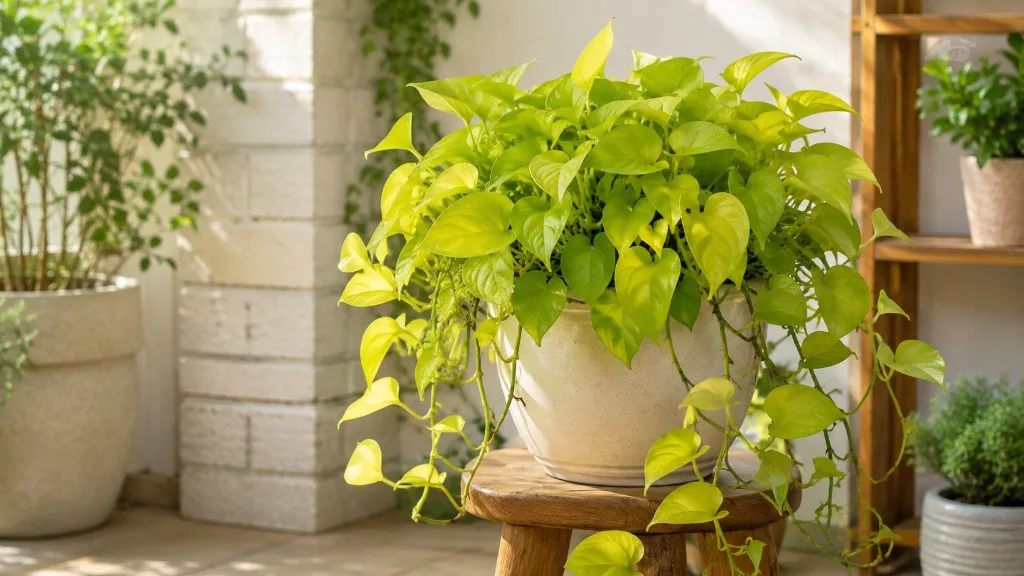
Neon Pothos (Epipremnum aureum ‘Neon’) is grown for one thing above all else: those electric chartreuse leaves that glow against a bookshelf or trail from a hanging basket. That vivid color is surprisingly sensitive to what happens below the soil line. Heavy, waterlogged mix suffocates the fine roots that feed those leaves. Compacted peat collapses after a year of watering and turns a forgiving plant into a yellowing mess. The right neon pothos soil is not a luxury upgrade - it is the foundation that makes every other care decision easier.
Neon pothos is an aroid, the same plant family as philodendrons, monsteras, and anthuriums (Araceae). Aroids evolved with roots that cling to bark and organic debris in tropical forests, where water passes through quickly and oxygen reaches roots between rain events. Your living room is not a rainforest, but the root biology is the same. Neon pothos needs a well-draining aroid mix with visible air pockets, enough organic matter to hold moisture for several days without going swampy, and a container setup that lets excess water exit freely. Perlite is the single most important amendment for achieving that balance indoors, and container drainage - a hole in the bottom, the right pot size, and no standing water in a saucer - is non-negotiable for long-term health.
This guide covers what neon pothos roots actually need, how to build or amend a mix, how much perlite to use, how to test drainage before you repot, and the container mistakes that undo even a perfect soil recipe.
What Neon Pothos Needs From Soil
Soil for neon pothos has one job: give semi-epiphytic roots a stable, breathable environment that dries down predictably between waterings. That sounds simple until you open a bag of standard indoor potting mix and realize it was formulated for dozens of unrelated houseplants, not for a fast-growing tropical vine whose roots rot quietly when oxygen runs low.
The three properties that matter most are drainage speed, aeration structure, and moderate moisture retention. Drainage speed determines how long the mix stays wet after you water. Aeration structure - the chunky gaps created by perlite, bark, and pumice - determines whether roots can breathe while the mix is still damp. Moisture retention keeps the plant from drying out so fast that you are watering every other day and stressing the root zone with constant wet-dry swings. Neon pothos tolerates a wider range than fussier aroids, but it still performs best when all three properties are balanced rather than maximized in one direction.
Semi-Epiphytic Roots and Why Drainage Matters
Epipremnum aureum is native to the tropical Pacific, including Mo’orea in French Polynesia, where it climbs trees and spreads across forest floors as a ground cover and epiphyte. According to the Missouri Botanical Garden, pothos thrives in Neon Pothos light guide, average household humidity, and well-drained potting mix - conditions that mirror its ability to root into loose, organic debris rather than dense, waterlogged earth.
Those roots are adventitious and fibrous, emerging from nodes along trailing stems and spreading through whatever substrate they contact. In nature, that substrate is a mix of decomposed leaf litter, bark chips, and open pockets of air. Indoors, if you substitute straight peat-heavy potting soil with no amendments, the roots lose access to oxygen within days of a thorough watering. Anaerobic bacteria multiply in those low-oxygen zones, and root rot follows - often before the chartreuse leaves show more than a slight dulling or a few yellow spots.
Neon pothos is more forgiving than many aroids because it can tolerate lower light and occasional overwatering, but forgiveness has limits. A plant sitting in soggy mix for weeks will decline even if you reduce watering later, because damaged roots cannot recover quickly enough to support the vine’s fast growth habit. Prevention through soil structure is far easier than rescue after rot sets in.
The Moisture-Aeration Balance for Chartreuse Foliage
The central tension in neon pothos soil is holding enough moisture for steady growth while keeping enough air in the root zone that roots never sit in stagnant water. Pure peat or straight coco coir absorbs water beautifully but compacts and suffocates roots without coarse amendments. Pure perlite drains fast but dries so quickly that you end up watering constantly and the plant loses the stable moisture rhythm it prefers.
The goal is a blend that holds moisture in the middle and lower root zone while letting the top 3–5 cm (1–2 inches) dry within a few days and excess water exit from the bottom within minutes of a thorough pour. When you squeeze a handful of properly mixed neon pothos soil, it should barely clump and fall apart easily when you open your hand - not form a tight mud ball and not crumble like dry sand.
Chartreuse color intensity is partly genetic, but pale, washed-out new growth on an otherwise healthy vine sometimes traces to a root zone that swings between too wet and too dry. Stable moisture in a well-aerated mix supports the consistent nutrient uptake that keeps neon leaves bright. If your plant’s color has faded and you have already ruled out too much direct sun and nutrient deficiency, inspect the mix texture before reaching for fertilizer.
If your current soil either stays visibly wet on the surface for four or more days after watering in a typical indoor climate, or shrinks and pulls away from the pot walls within 24 hours, the balance is off. Adjust the recipe before you chase the problem with a stricter watering calendar.
Best DIY Aroid Soil Mix for Neon Pothos
A reliable DIY mix is almost always better than unamended bagged soil for neon pothos because you control the drainage channels yourself. You do not need exotic ingredients or a specialty nursery order. You need the right ratios, a few minutes of thorough blending, and a pot with a drainage hole.
Core Recipe by Volume (Perlite-First Blend)
Here is a tested percentage-by-volume recipe that works well for most indoor neon pothos setups in plastic or glazed ceramic pots with drainage holes:
- 50–55% quality peat-based or coco-based potting soil - structural base and nutrient anchor
- 20–25% perlite - primary aeration and drainage channels
- 10–15% orchid bark or pine bark fines - long-term structure; prevents compaction
- 5–10% worm castings or finished compost - slow, gentle nutrition (optional but helpful)
For a single 6-inch pot refresh, that translates roughly to 2½ cups potting base + 1 cup perlite + ½ cup bark + ¼ cup worm castings. Scale up proportionally for larger batches and store the extra in a sealed tub labeled with the date.
Simpler two-part ratio if you want the minimum effective blend: mix 3 parts quality potting soil with 1 part perlite (75% potting soil, 25% perlite). That matches the baseline recommendation used across LeafyPixels neon pothos care guides and works well for most beginners in moderate indoor conditions. It is not as ideal as the fuller aroid blend above, but it is dramatically better than straight bagged mix and takes thirty seconds to combine.
Chunkier “experienced grower” aroid variant for homes that run humid, for plants in lower light where evaporation is slow, or for growers who tend to overwater: use 40% potting soil, 25% perlite, 25% orchid bark, 10% worm castings. You will water slightly more often because the mix dries faster, but the root zone stays safer in conditions where soggy soil is the main risk.
Avoid using cactus or succulent mix as the sole substrate. It drains too aggressively for a tropical vine that evolved in moisture-rich forest debris. You can borrow perlite or pumice from a cactus blend as an amendment, but do not pot neon pothos straight into it unless you are prepared to water every few days and monitor closely.
How to Adjust the Mix for Your Home
No single recipe works in every room. The right blend depends on how fast your environment pulls moisture out of the pot.
Increase perlite or bark (bump either component by 5–10%) if:
- the mix stays wet on top for more than 3–4 days after watering
- you see fungus gnats hovering around the soil surface
- new leaves yellow while older leaves stay green
- the pot sits in a cool, low-light corner or a humid bathroom
Increase peat or coco coir (add 5–10% more organic matter) if:
- the mix dries so fast you are watering every 3–4 days in a moderate indoor climate
- leaves droop between waterings even when your schedule is consistent
- the plant sits in bright, warm light near a south- or west-facing window
- you use a terracotta pot that wicks moisture aggressively
Keep the standard blend unchanged if:
- the top 3–5 cm dries in roughly 5–7 days during active growth
- new chartreuse leaves emerge firm and brightly colored
- roots look white or pale tan - not brown and mushy - when you inspect at Neon Pothos repotting guide
Write down which variant you used and the date you potted. When troubleshooting six months later, that label saves you from guessing whether the problem is the mix or the Neon Pothos watering guide.
Mix dry ingredients in a large tub or clean bucket until the color and texture look uniform - no streaks of pure perlite or pure peat. Wear a dust mask when working with dry peat and perlite; both are fine irritants when airborne. Moisten the blend slightly before repotting so you are not packing powder-dry mix around live roots, but do not saturate it. The goal is damp and crumbly, like a wrung-out sponge.
Store unused mix in a sealed container away from pests. Open bags of peat and coir attract fungus gnats when they sit half-open under a bench for months. A tight lid and a dry storage spot keeps your batch clean until the next spring repot.
Perlite’s Role in Neon Pothos Soil
Perlite is expanded volcanic glass - lightweight, sterile, and pH-neutral. In a neon pothos mix, it does three jobs that no other single amendment handles as well: it creates air pockets that persist even when the organic components compress, it accelerates drainage so water moves through the pot rather than pooling around the lower roots, and it prevents compaction over months of watering and root growth.
Without perlite, peat-based potting soil gradually collapses. The particles settle, the air spaces close, and the mix behaves more like dense mud with each passing season. Neon pothos roots that were healthy in fresh mix begin struggling in that collapsed substrate long before the plant looks obviously unwell. Adding perlite is the lowest-effort, highest-return change you can make.
How Much Perlite to Add and When to Increase It
The practical minimum for neon pothos is 20–25% perlite by volume - roughly 1 part perlite to every 3–4 parts potting soil. That is enough to keep a typical indoor setup draining well through the first year. If you are mixing in a bucket, measure by scoops: three scoops of potting soil, one scoop of perlite.
Push perlite to 30–40% when:
- your home averages above 50% humidity
- the plant lives in a bathroom or kitchen with limited air movement
- you tend to water on a schedule rather than checking the soil first
- the pot is plastic with only one small drainage hole
At 40% perlite, the mix feels noticeably lighter and dries faster. That is intentional. You trade a slightly more frequent watering rhythm for a much lower root-rot risk.
Pumice substitutes for perlite at a 1:1 ratio if you prefer a heavier amendment that does not float to the top when you water aggressively. Rice hulls and horticultural charcoal appear in some specialty aroid blends; they add structure and microbial surface area but are optional, not required, for a healthy neon pothos.
Do not confuse perlite with vermiculite. Vermiculite holds water and is useful for seed-starting mixes. In a pothos blend, it increases moisture retention rather than drainage. A small amount will not ruin a mix, but vermiculite is not a perlite substitute when your goal is more airflow.
Commercial Potting Mix Options That Work
Not everyone wants to batch-blend on a weekend. Store-bought options can work well if you treat them as a starting point, not a finished product.
Store-Bought Mixes Worth Amending
Standard indoor potting soil - including popular lines like Miracle-Gro Indoor Potting Mix or FoxFarm Ocean Forest - is usually too dense for neon pothos straight from the bag. These mixes are formulated for general foliage plants and often contain a high proportion of fine peat fines that compact under repeated watering. The fix is straightforward: for every 4 parts commercial mix, stir in 1 part perlite and, if you have it, ½ part orchid bark. That single amendment dramatically improves both drainage speed and long-term structure.
Pre-mixed aroid or tropical blends from specialty houseplant sellers are often closer to ideal out of the bag because they already include bark and perlite. Still run the drainage test described below before assuming any bagged product suits your specific room. A mix that works in a humid bathroom may stay too wet in an air-conditioned office with the same watering schedule.
African violet mix and orchid bark blends can serve as partial ingredients. African violet mix is finer and more moisture-retentive than ideal on its own, but it makes a good organic base if you cut it with equal parts perlite. Straight orchid bark is too coarse alone; use it as 10–25% of a blend, not the entire substrate.
Never use unamended garden soil, topsoil, or raised-bed mix indoors for neon pothos. These products are too heavy, may carry pathogens and weed seeds, and almost always compact within a single growing season. They also lack the consistent porosity that container culture demands.
Container Drainage: Holes, Size, and Material
Soil mix and container setup work as a system. The best aroid blend in the world will fail in a pot with no exit for water.
Drainage Holes and Cachepot Setup
Yes - neon pothos needs at least one drainage hole in the grow pot. No exceptions for long-term indoor care. A hole at the bottom lets excess water leave the root zone after a thorough watering and pulls fresh air in as the mix dries. Without it, water accumulates at the bottom of the pot even if the top looks dry, and roots suffocate in that hidden reservoir (Clemson HGIC).
Decorative cachepots - the outer ceramic sleeve with no hole - are fine as display pieces if the plant lives in a plain nursery pot or inner pot with drainage that lifts above any collected water. After watering, empty the cachepot saucer within 30 minutes. Never let neon pothos sit in standing runoff.
The gravel-at-the-bottom trick does not fix poor drainage. It actually reduces the volume of soil available to roots while creating a perched water table where the fine soil above the gravel stays wetter than you expect. If drainage is slow, fix the mix and the hole size - do not add a false bottom layer.
Mesh or coffee-filter paper over the drainage hole prevents soil from washing out on the first few waterings without blocking flow. A single stone or pot shard over the hole achieves the same thing. Avoid sealing the hole with anything that impedes water movement.
Matching Pot Size to Root Ball
Pot size controls how fast soil dries as much as the mix recipe does. Choose a pot only 2–5 cm (1–2 inches) wider in diameter than the current root ball when repotting. Neon pothos grows fast, but an oversized pot surrounds a small root system with a large volume of mix that stays wet for days after each watering. That mismatch is one of the most common causes of root rot in otherwise attentive homes.
Plastic and glazed ceramic pots retain moisture longer and suit most neon pothos growers. Terracotta wicks water through its walls and dries the mix faster - useful if you chronically overwater, but stressful if you already run a dry home or use a high-perlite blend. Match the pot material to your watering tendencies, not just to aesthetics.
Hanging baskets need the same drainage discipline. Line them with coco fiber or sphagnum if you like, but ensure water can exit and the basket is not catching its own drip tray indefinitely.
Depth matters less than width for pothos, which roots relatively shallowly along the soil surface. A pot that is too deep with a small root ball creates a wet basement zone at the bottom. When in doubt, choose a wider, shallower upgrade over a tall, narrow one.
Testing Soil Drainage Before You Repot
Do not wait until your neon pothos yellows to find out whether a mix drains well. A one-minute percolation test takes less time than repotting and saves you from discovering a problem after the roots are already stressed.
Step 1: Fill a small cup or 10 cm (4-inch) nursery pot with your dry mix. Do not pack it down.
Step 2: Pour 120 ml (½ cup) of water onto the surface in one steady pour.
Step 3: Watch the bottom. In a pot with a drainage hole, water should begin exiting within 10–30 seconds and finish draining within 2–3 minutes. The surface should darken evenly, not pool for more than a few seconds.
Step 4: After 24 hours, poke a finger 3 cm deep. The mix should feel lightly cool and barely damp, not wet and not bone dry.
If water pools on top for more than 10 seconds, add more perlite. If the cup is dusty dry at 24 hours, add a bit more peat or coco coir. If the mix slumps into a solid wet block, your organic component is too fine or too high a proportion - rebuild with bark and perlite before repotting a live plant.
The squeeze test complements the percolation check. Grab a handful of moistened mix and squeeze firmly. It should hold together briefly then crumble apart when you prod it with a finger. A tight, shiny mud ball means too little perlite and bark. A mix that will not hold together at all means too much drainage material for a moisture-loving tropical vine.
Run both tests whenever you switch brands of potting soil or move the plant to a noticeably different room. Humidity, temperature, and pot material all change how the same mix behaves in practice.
pH, Minerals, and Root Zone Health
Neon pothos prefers a slightly acidic pH between 6.0 and 6.5. In that range, nitrogen, phosphorus, potassium, and trace elements remain chemically available for root uptake. Most quality peat-based and coco-based potting mixes land near 5.5–6.5 out of the bag, which is close enough that hobbyist growers rarely need to adjust pH chemically.
If you want confirmation, inexpensive pH test strips or a meter on a slurry of mix and distilled water will tell you whether you are in range. Soil consistently above 7.0 (alkaline) can cause interveinal yellowing even when you fertilize on schedule. Soil below 5.5 (very acidic) can slow growth and wash out leaf color over time.
Salt buildup appears as a white or tan crust on the soil surface and along the pot rim. It comes from fertilizer, hard tap water, and the natural mineral content of peat. A light crust after a year is normal. A heavy crust that returns within weeks of scraping means you should flush the pot - water slowly and deeply until twice the pot volume runs from the drainage hole - or refresh the mix entirely at the next repot.
Fluoride and chlorine in municipal tap water affect some sensitive plants; pothos is relatively tolerant, but if leaf tips brown despite good drainage and conservative feeding, try rainwater or filtered water for a month and see whether margins improve. The fix is often water quality rather than soil chemistry.
Do not add lime or sulfur to adjust pH unless you have a test result showing you are out of range. Blind adjustment creates more problems than it solves in a container with a single plant.
When to Repot and Refresh the Mix
Neon pothos does not demand annual repotting, but it outgrows degraded mix faster than slow-growing succulents. Plan to refresh soil every 1–2 years, or sooner if you see clear signals that the root zone is failing.
Repot in spring or early summer when the plant is entering active growth. Roots repair faster, new shoots fill the pot quickly, and you are less likely to trigger prolonged transplant stress. Avoid repotting in late fall or winter unless the situation is urgent - visible root rot, a completely collapsed mix, or a plant that is root-bound to the point where water runs straight through without moistening anything.
Signs it is time to repot or refresh the mix:
- roots circling the bottom of the pot or emerging from drainage holes
- water runs down the sides without absorbing (hydrophobic, degraded peat)
- the mix smells sour, swampy, or stagnant
- the soil surface stays wet for a week despite conservative watering
- growth has stalled and leaves are smaller or paler than last season
How to repot with fresh aroid mix:
- Water lightly the day before so roots are flexible, not brittle.
- Choose a pot 2–5 cm (1–2 inches) wider with a drainage hole.
- Gently slide the plant out. Tease circling roots apart with your fingers; trim only mushy brown rot, not healthy white roots.
- Add fresh mix to the bottom so the root ball sits at the same depth as before. Do not bury stems or nodes deeper than they were - that invites stem rot on trailing pothos.
- Fill around the sides with mix, tapping the pot to settle without compacting.
- Water thoroughly until runoff exits the hole. Empty the saucer.
Skip fertilizer for 4–6 weeks after repotting while roots establish. The worm castings or compost in a fresh mix provide enough gentle nutrition for that window.
Common Soil Mistakes and Quick Fixes
Even experienced growers slip on soil basics because neon pothos looks fine until it suddenly is not. These are the failures that show up most often indoors.
Using straight bagged potting soil with no perlite. Fix: empty the pot, blend the existing mix with 25–30% perlite and 10% bark, or replace entirely with a fresh aroid recipe.
Oversized decorative pot with no drainage. Fix: move the plant to a nursery pot with a hole that fits inside the decorative sleeve, or drill a hole if the material allows. Empty standing water after every watering.
Bottom gravel layer instead of better mix. Fix: remove the gravel, rebuild with proper perlite content. Gravel does not create the air pockets roots need.
Repotting into a pot three sizes too large after seeing fast summer growth. Fix: step up one size only. A 10 cm pot goes to 12–15 cm, not 20 cm.
Letting degraded mix ride for three years because the vine still trails attractively. Fix: refresh the mix even if you return the plant to the same pot - trim circling roots lightly, replace at least the bottom third of substrate, and top-dress only if the rest still passes the squeeze test.
Burying trailing stems too deep at repotting to stabilize a floppy vine. Fix: use a stake or moss pole for support; keep nodes at or above the soil line unless you are deliberately propagating.
Ignoring sour smell because leaves still look green. Fix: repot immediately into fresh mix, trim any brown mushy roots, and water sparingly for two weeks. Sour smell means anaerobic conditions - rot is already underway.
Pet exposure. The ASPCA lists pothos (Epipremnum aureum) as toxic to cats and dogs due to calcium oxalate crystals, causing oral irritation, drooling, vomiting, and difficulty swallowing if chewed (ASPCA - Pothos). Soil and fertilizer are not safe for pets to ingest either. Keep pots on high shelves or in hanging baskets out of reach.
How Soil Connects to Watering and Light
Soil does not operate in isolation. The same aroid mix that dries in five days under a bright east window may stay wet for ten days in a north-facing corner. Light intensity drives transpiration - how fast the plant pulls water from roots and releases it through leaves. Brighter, indirect light speeds dry-down and rewards a slightly more moisture-retentive blend. Lower light slows the whole system and demands more perlite or bark to compensate for slower evaporation.
Watering rhythm should follow the mix, not a calendar. Check the top 3–5 cm with your finger or a dry chopstick before every pour. If the deeper mix is still cool and damp, wait. If the top is dry and the pot feels light, water until runoff exits the drainage hole, then empty the saucer. A well-draining neon pothos soil makes that check reliable because moisture distributes evenly rather than hiding a wet basement under a dry surface crust.
When troubleshooting yellow leaves or faded chartreuse color, inspect in this order: soil moisture and drainage first, then light level, then fertilizer. Most indoor pothos problems trace to the root zone long before nutrient deficiency becomes the limiting factor. Fixing soil and container drainage often resolves symptoms that look like a watering mistake or a light problem on the surface.
Conclusion
Neon pothos soil succeeds when three elements work together: a well-draining aroid mix with enough organic matter to buffer moisture, perlite (and ideally bark) to keep that mix open and airy through months of watering, and a container with real drainage sized close to the root ball. The baseline recipe - 3 parts quality potting soil to 1 part perlite, upgraded with bark and worm castings when you want a fuller aroid blend - handles most indoor homes well. Push perlite higher in humid or low-light rooms; add a bit more organic matter in bright, dry setups.
Test your mix before repotting with a quick percolation check and a squeeze test. Refresh the substrate every 1–2 years or when it smells sour, drains poorly, or collapses. Fix the root zone first when leaves yellow or growth stalls - not light, not fertilizer, not a bigger pot - because neon pothos rewards good soil with the bright chartreuse vines that made you choose Neon Pothos overview in the first place.
When to use this page vs other Neon Pothos guides
- Neon Pothos overview - Start here for whole-plant context before deep-diving this topic.
- Neon Pothos problems hub - Jump to symptom-specific fix guides when this care topic does not resolve the issue.
- Root Rot on Neon Pothos - Escalate here when soil adjustments are not enough.
Related Neon Pothos guides
- Neon Pothos overview
- Neon Pothos watering
- Neon Pothos light
- Neon Pothos propagation
- Neon Pothos fertilizer
- Neon Pothos repotting
- Root Rot on Neon Pothos
- Neon Pothos problems
Related tool
Try the Soil Mix Calculator with neon-pothos pre-selected to estimate needs for your setup.