Root Rot on Neon Pothos: Causes, Checks & Fixes
Quick answer
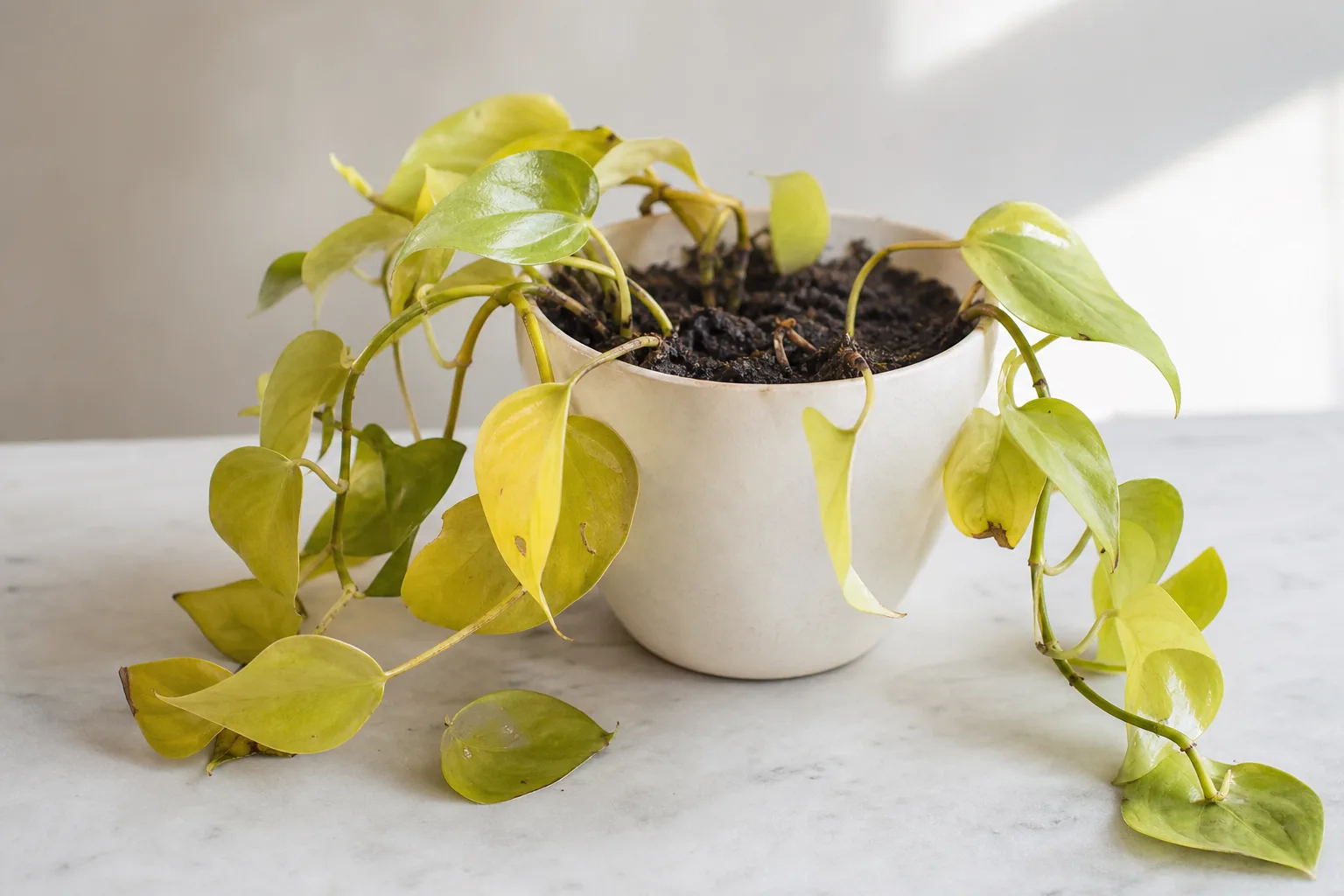
Root rot on Neon Pothos (*Epipremnum aureum* 'Neon') follows soil that stays wet too long. First step: stop watering, lift the pot, and check whether chartreuse leaves wilt while the mix is still heavy-then unpot and inspect roots before repotting.
Root Rot on Neon Pothos: Causes, Checks & Fixes
This guide covers root rot on Neon Pothos. See also the general Root Rot guide, watering, and light pages for this plant.
Root Rot on Neon Pothos: Causes, Checks & Fixes
Quick answer
Root rot on Neon Pothos (Epipremnum aureum ‘Neon’) is almost always a watering and drainage failure-not a mysterious disease that strikes healthy vines. This trailing tropical aroid wants a full soak followed by a real dry-down at the surface. When mix stays saturated, roots lose oxygen and decay while the chartreuse vines may still look passable for days because pothos stores water in its stems.
First step: stop watering and lift the pot. If leaves are limp but the container feels heavy and the top inch of mix is cool and damp, you are likely facing root failure-not thirst. Confirm by unpotting: firm pale roots mean another problem; brown, slimy roots mean rot. For the full dry-down rhythm that prevents recurrence, see the Neon Pothos watering guide.
Root rot vs. other Neon Pothos problems - why wilt on wet soil matters
The diagnostic trap on Neon Pothos is wilt on wet soil. Owners see drooping chartreuse heart-shaped leaves and reach for the watering can-the opposite of what rotting roots need. When fine roots decay in oxygen-poor mix, they cannot absorb water even though the pot holds plenty. Leaves droop while soil stays dark and heavy.
Compare three common lookalikes before you act:
| Pattern | Soil / pot | Leaves & vines | Likely cause |
|---|---|---|---|
| Root rot | Heavy, wet, sour smell | Limp chartreuse leaves on wet mix; yellow lower leaves; soft stem at soil line | Chronic overwatering, poor drainage |
| Underwatering | Light, dry top 3–5 cm | Wilt that firms within hours after a soak; firm stems | Missed watering, fast dry-down in bright heat |
| Low light stress | Moist but not sour; slow dry-down | Dull olive new growth; leggy stretch; mild droop without rapid collapse | Dim placement-see not enough light |
| Natural aging | Normal moisture rhythm | Only oldest leaves near soil yellow; vine tips still glossy lime | Senescence-not rot |
For the wet-vs-dry wilt split in detail, see wilting on Neon Pothos. For early overwatering before roots fail, see overwatering.
What root rot looks like on Neon Pothos
Early signs
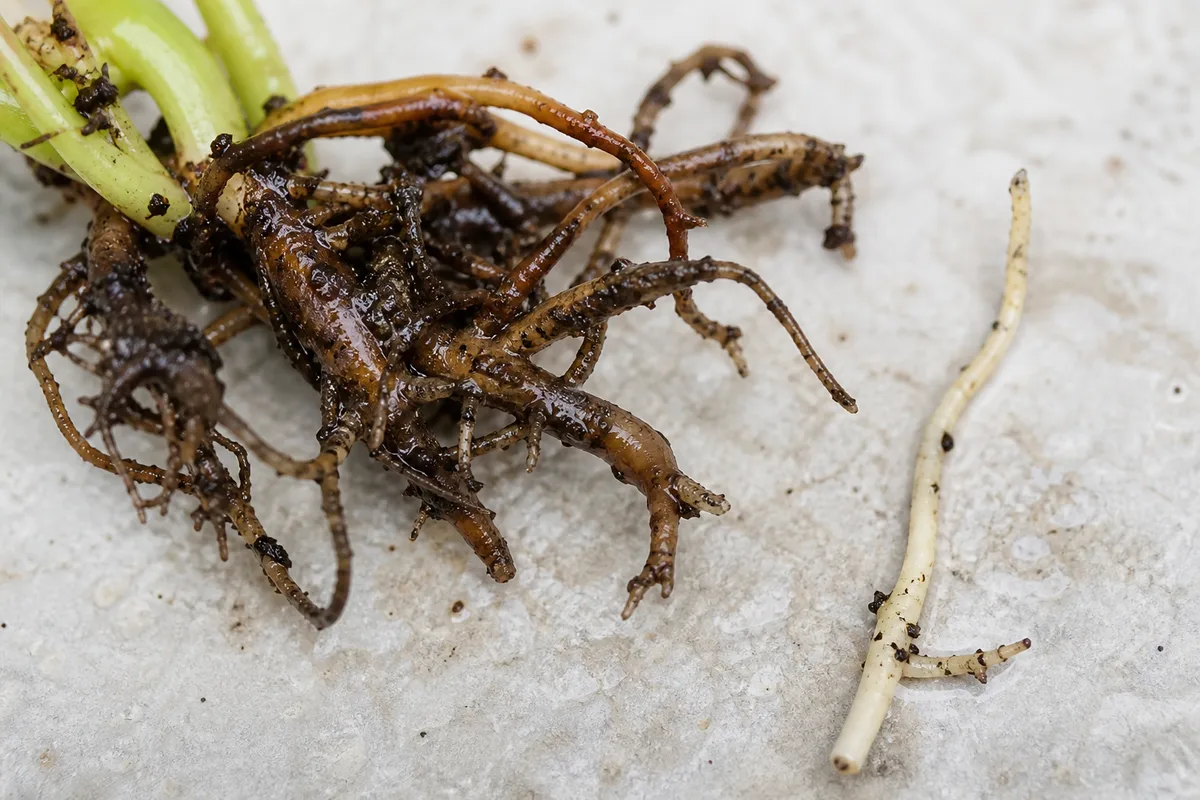
Root Rot symptoms on Neon Pothos - compare with healthy tissue on the same plant.
On a trailing Neon Pothos, rot often starts at the roots while lower vines still hang normally. Watch for:
- Yellowing lower leaves while newer chartreuse tips still look bright-damage climbs from the soil line up the vine
- Limp foliage despite moist mix-the classic wet-wilt mismatch
- Sour or musty smell when you lift the pot or disturb the surface
- Fungus gnats hovering near damp soil-wet mix habitat; see fungus gnats if pests appear with chronic moisture
- Mix that stays cool and heavy at the surface for a week or more after watering
Neon Pothos has slender, thinner leaves than golden or jade types. Stress can show as faded chartreuse or gray-green tones before widespread yellowing.
Advanced signs
- Soft, dark stems at the soil line where the vine meets the mix
- Blackening or mush climbing nodes on lower sections of trailing vines
- Leaves turning brown and collapsing in clusters-not a single dry edge
- Roots that brown, turn translucent, or slip apart when touched
- Whole-plant collapse while saucers still hold water
Pothos is a vining houseplant that grows from nodes along trailing stems-not from a central rosette. Judge early recovery by firm new leaves emerging at vine tips and nodes, not by old damaged leaflets re-greening.
Why Neon Pothos gets root rot
Overwatering, poor drainage, and pot mechanics
Root rot follows soil that stays wet too long combined with mix that does not drain freely. Calendar watering, oversized pots, heavy peat blends, blocked drainage holes, and saucers left full all keep the root zone anaerobic.
Neon Pothos is marketed as easy and tolerates lower light than variegated marble types-but dim rooms slow evaporation. The same weekly watering that works in a bright kitchen will overwater a neon pothos in a north-facing hallway. Hanging baskets expose more soil surface to air and often dry faster than squat shelf pots; a heavy ceramic cachepot without drainage traps moisture at the bottom.
For mix texture and perlite ratios, see the soil guide. For pot sizing and transplant timing, see repotting.
Low light and cool rooms slowing dry-down
Winter heat plus short days means roots use less water and transpiration drops. Maintaining summer watering frequency in a cool dim room is one of the most common ways Neon Pothos develops rot. The cultivar may also lose some of its bright lime coloring in low light-do not compensate for dull foliage by watering more often. Light and dry-down work together; see the light guide.
Stem water storage masking early damage
Pothos stores water in stems and leaves. That resilience is why root damage can progress underground before vines look obviously sick-and why firm leaves alone are not proof of healthy roots when soil has stayed wet.
How to confirm the cause
Work through these checks in order so you do not repot a thirsty plant or water a rotting one.
- Top-inch moisture - Insert a finger 3–5 cm into the mix. Wet surface with limp leaves strongly suggests root failure. Bone-dry mix with wilt points to underwatering instead.
- Pot weight - Lift the container. A heavy, cool pot days after watering confirms slow dry-down or chronic saturation.
- Smell and saucer check - Sour odor, water standing in saucers or cachepots for days, or fungus gnats confirm a wet habitat.
- Leaf pattern - Yellowing from the bottom up on wet mix fits rot better than isolated tip crisping from dry air.
- Stem firmness at soil line - Press the lowest inch of vine where it enters the mix. Firm is recoverable; soft or squishy means decay is climbing the stem.
- Drainage holes - Confirm holes are open and not sealed by roots or pebble layers that create a perched water table.
- Root inspection - Slide the plant from the pot. Healthy roots are firm and pale; rotted tissue is brown, slimy, or hollow.
Confirmed root rot: mushy roots plus wet sour mix and wet-wilt symptoms. Suspected early stress: wet mix and yellow lower leaves but mostly firm white roots-dry-down and drainage fixes may be enough before full repot. Not rot: dry light pot, firm roots, wilt that recovers after one thorough soak.
First fix for Neon Pothos
Stop watering immediately and empty all standing water from saucers and cachepots. That single pause prevents more oxygen loss while you decide whether roots need surgery or only a dry-down.
Make one primary correction next-do not stack repotting, heavy pruning, and fertilizer on the same day.
Stop watering and stabilize environment
Set the pot on folded paper towels to wick excess moisture from drain holes. Move the plant to bright indirect light if it sits in deep shade-slow evaporation worsens wet soil. Hold all fertilizer until new growth proves roots are working again.
If stems are still firm, roots are mostly pale, and the mix smells flat rather than sour, a careful dry-down per the watering guide may stabilize mild early stress. If smell is sour, lower leaves are widely yellow on wet mix, or roots are mushy on inspection, proceed to trim and repot.
Trim, air-dry, and repot steps
- Unpot and rinse roots under lukewarm water so you can see true color and texture.
- Trim all mushy, brown, or hollow roots back to firm tissue with clean scissors or pruners wiped with rubbing alcohol between cuts. Wear gloves-pothos sap can irritate skin.
- Remove soft lower leaves the reduced root system cannot support; they rarely recover anyway.
- Let cut root surfaces air-dry 30–60 minutes on paper towels so fresh cuts callus slightly before repotting.
- Repot into fresh well-drained mix-standard indoor potting soil amended with 20–25% perlite is a sound baseline for neon pothos-in a pot with open drainage holes sized to the remaining root mass, not dramatically larger.
- Water once lightly to settle mix, drain fully, then wait until the top inch dries before the next soak.
Full repot mechanics and shock avoidance are covered in the repotting guide.
When to try node propagation salvage
If more than half the root mass is mush but upper vines are still firm and green, repot what you can and take backup cuttings. Cut stems into sections with at least one node each-the small bump where leaves and aerial roots emerge. Root in water or moist mix while the parent plant recovers. Stem cuttings root readily when nodes stay intact. Step-by-step timing lives in the propagation guide.
If black mush has reached multiple nodes along most vines, salvage only the firmest tips above the damage. Severe stem rot through the lower vine often means starting fresh from cuttings rather than saving the original root ball.
The generic pothos root rot guide covers the same species (Epipremnum aureum) with additional Epipremnum-wide rescue context.
Recovery timeline
Mild rot caught with firm stems and substantial healthy root remaining may stabilize within one to two watering cycles after trim-and-repot, once the top inch of fresh mix dries properly between drinks.
Moderate damage often needs two to four weeks before you see confident new chartreuse leaves at vine tips or fresh white root tips near the drain holes.
Severe cases with soft stems at multiple nodes may not recover the original plant-judge success by rooted cuttings and new node growth, not by saving every old leaf.
Yellow or brown leaves rarely re-green; they drop as the vine redirects energy. Recovery means new glossy lime growth at nodes and branch tips plus firm stems when you gently twist the lowest vine section.
What not to do
Do not keep watering because chartreuse leaves look wilted when soil is already wet-that accelerates rot. Do not fertilize a stressed plant before new growth appears. Do not repot into dense garden soil, a pot without drainage, or an oversized decorative cachepot. Do not leave the plant in the same sour mix hoping it will dry out while roots are actively decaying.
Wear gloves when trimming rotted tissue and wash hands after handling-all parts of pothos contain calcium oxalate crystals irritating to skin, and the plant is toxic to cats and dogs if chewed. Keep cuttings and trimmed debris away from pets during rescue work.
How to prevent root rot next time
Match watering to soil dryness, not the calendar. Allow the soil to dry between each watering-let the top 1–2 inches of mix dry before the next thorough soak, then empty saucers within thirty minutes. Use perlite-amended mix, pots sized to the root ball, and open drainage holes.
In low-light or winter rooms, stretch intervals and rely on pot weight plus the finger test-Neon Pothos dries slower when growth slows and tolerates dry periods better than chronic wet feet. Pair honest watering with enough bright indirect light that the plant uses water predictably.
After travel or a repot, resume the top-inch rule rather than flooding repeatedly. For yellowing that appears before rot advances, see yellow leaves and drooping leaves.
When to worry
Treat as urgent if the stem base turns soft, black mush spreads up the vine, most roots are slimy on inspection, or the whole plant collapses within days while mix stays soggy. Salvage firm tip cuttings immediately if the base is failing.
You can observe briefly if only lower leaves yellow, stems stay firm, and you have already stopped watering and emptied saucers-improvement shows as new upright chartreuse leaves at vine tips within one to two weeks.
Neon Pothos care cross-check
| Check | Healthy baseline | Root rot red flag |
|---|---|---|
| Top inch of mix | Dry before next soak | Wet 7+ days while vines limp |
| Pot weight | Light when dry, moderate after watering | Stays heavy and cool between drinks |
| Stem at soil line | Firm green vine | Soft, dark, or collapsing |
| Lower leaves | Occasional natural drop | Yellow clusters on wet mix |
| New growth | Glossy chartreuse at vine tips | Stunted or absent on wet soil in bright light |
| Smell | Neutral earthy | Sour or musty from drain holes |
Related Neon Pothos guides
- Watering - top-inch dry rule, wilt-on-wet-soil FAQ, perlite mix
- Soil - drainage and perlite ratios
- Repotting - pot sizing and transplant timing
- Propagation - node salvage when roots fail
- Overview - full care hub
- Overwatering - early wet-soil rescue before rot
- Wilting - dry vs wet wilt diagnostics
- Yellow leaves - lower-leaf yellowing patterns
- Pothos root rot - same species, Epipremnum-wide rescue steps