Brown Tips on Golden Pothos: Causes, Checks & Fixes
Quick answer
Brown tips on Golden Pothos usually mean dry winter air, drought crisp edges, salt or fertilizer buildup, hard tap water, direct sun scorch, or spider mites-not one generic humidity problem. First step: check pot weight and soil moisture at 4–5 cm depth, then note whether leaves are firm or limp and whether a white salt crust sits on the soil surface.
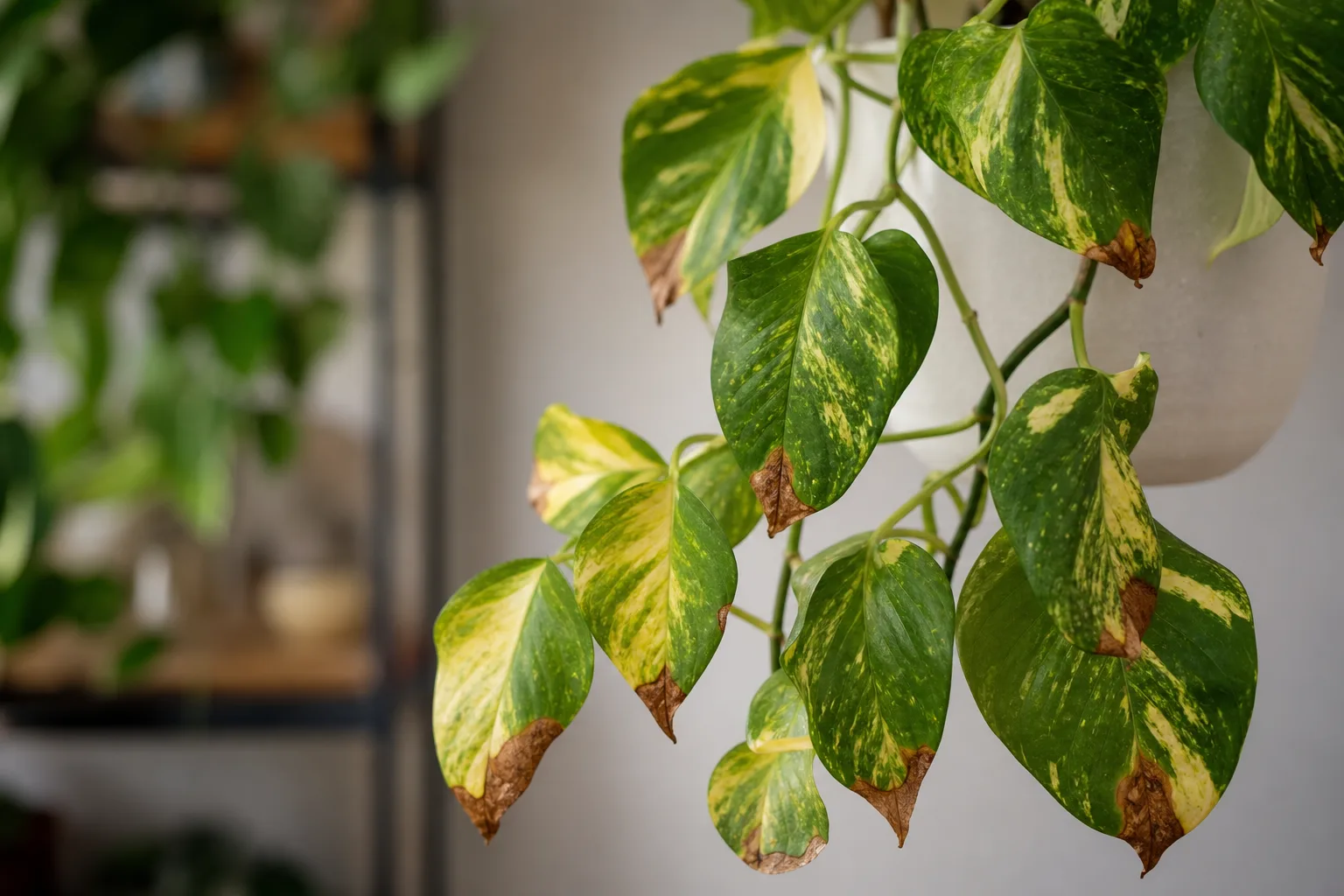
Brown Tips on Golden Pothos: Causes, Checks & Fixes
This guide covers brown tips on Golden Pothos. See also the general Brown Tips guide, watering, and light pages for this plant.
Brown Tips on Golden Pothos: Causes, Checks & Fixes
Quick answer
Brown tips on Golden Pothos (Epipremnum aureum) are almost always an environmental stress signal, not a mysterious disease. On heart-shaped pothos leaves, damage usually starts at the very tip or along the outer margin and turns dry and papery-distinct from soft brown spots that often mean overwatering or bacterial issues.
The most common causes on this plant are dry winter air below about 30% humidity, drought crisp edges on a light dry pot, salt or fertilizer buildup, hard tap water minerals, direct sun scorch on window-facing leaves, spider mites in dry air, and normal aging of the oldest lower leaves. Golden Pothos handles average home humidity reasonably well but prefers 50 to 70% for optimal performance and tolerates 30 to 60% in typical homes-winter heater air can still crisp margins on otherwise healthy vines.
First step: lift the pot and push your finger 4–5 cm into the mix before changing anything. A light dry pot with limp vines means drought-see underwatering. Firm turgid leaves with crisp tips on moist soil near a heating vent usually means humidity or water quality. White crust on the soil points to salt flush, not more fertilizer. Full species context: Golden Pothos overview.
What brown tips look like on Golden Pothos
Golden Pothos leaves are glossy, slightly heart-shaped, and often splashed with gold variegation. Tip burn shows up in recognizable patterns:
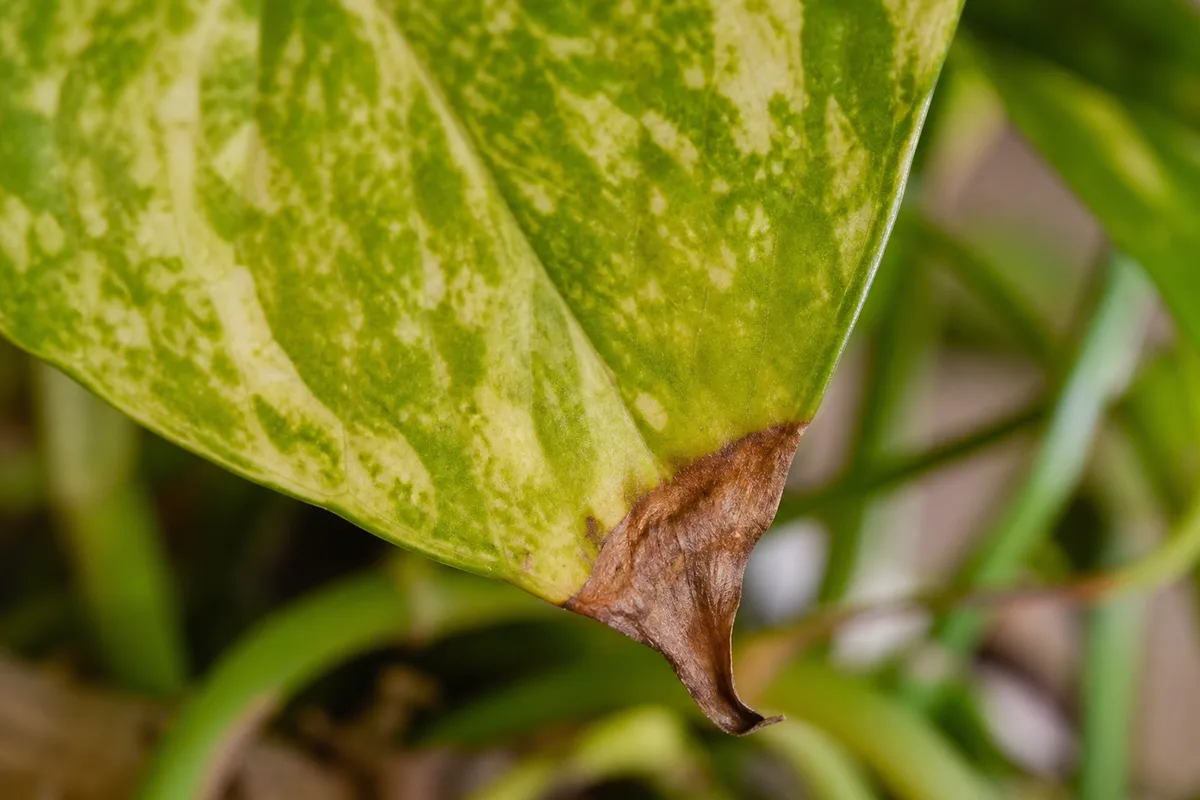
Brown Tips symptoms on Golden Pothos - compare with healthy tissue on the same plant.
Winter humidity crisp tips (firm leaves, moist soil):
- Dry tan-to-brown tips or margins on otherwise firm, turgid leaves
- Often worst on leaves closest to heating vents, radiators, or drafty winter windows
- Soil feels appropriately moist 4–5 cm down; pot weight is normal
- Newest leaves at vine tips may show crisp edges while the rest of the plant looks healthy
- Leaf scorch and tip dieback often follow low humidity or intense light on pothos
Drought crisp edges (light dry pot):
- Crisp brown edges on thin, limp, or papery leaves-often oldest foliage on long hangers first
- Very light pot; mix pale, dusty, or pulled away from the pot wall
- Differs from humidity burn because leaves lack turgor and soil is dry at depth
- Vines may perk after watering; tips on damaged leaves stay brown
Salt or fertilizer burn:
- Brown margins that spread inward from tips or edges on multiple leaves
- White or grey crusty deposits on soil surface or pot rim-a sign of salt accumulation from fertilizer or hard water
- Persists even when watering rhythm seems correct
- Blackening of leaf margins can occur with excess fertilizer buildup in pothos
Sun scorch patches:
- Bleached yellow zones turning crisp brown on leaves facing a south or west window
- Damage often on the sun-exposed side of the leaf, not uniform tip-only browning
- Direct sun leads to yellowing and leaf damage on pothos
- Soil may be wet or dry; light direction is the key clue
Spider mite stippling:
- Fine pale dots on leaf surfaces with bronze or brown patches that follow vein lines
- Fine webbing on leaf undersides or between stems in very dry air
- Tips may brown as damage advances; humidity alone will not fix active mites
Normal lower-leaf aging:
- One or two oldest leaves at the base of a long vine turn yellow-brown at the tip, then drop
- Rest of plant vigorous with glossy new growth at nodes
- No salt crust, no widespread new-leaf damage
Variegated cultivars with more white tissue-‘Marble Queen’, ‘Pearls and Jade’, ‘Snow Queen’-often show tip stress sooner than solid-green ‘Jade’ pothos in the same conditions because they transpire more per leaf area and require more light to maintain variegation.
Why Golden Pothos gets brown tips
Pothos is a tropical understory vine that loses water from leaf edges fastest when air is dry, roots are stressed, or minerals concentrate at transpiring tissue. Several pothos-specific factors drive tip burn:
Winter low humidity. Central heating routinely drops indoor air below 30% in cold months. Golden Pothos survives average home humidity, but very dry air encourages tip dieback-especially when combined with hot air blasting from vents. The plant keeps firm leaves while tips desiccate because roots still supply water; the bottleneck is air moisture, not soil moisture.
Inconsistent drought. Pothos is better kept slightly too dry than too wet, which makes it easy to let a hanging basket go too long between drinks. When the whole root ball dries, the most vulnerable tissue-leaf tips and oldest margins-browns first. Long trailing vines exaggerate this: lower leaves on a forgotten hanger crisp while the top still looks fine.
Salt and fertilizer buildup. Regular feeding without periodic leaching leaves soluble salts in the mix. Brown leaf tips and margins can result from salt accumulation, and excess fertilizer can blacken pothos leaf margins even when you water on schedule. Aroid roots are sensitive to mineral-loaded old mix.
Hard tap water. Municipal water carries chlorine, chloramine, and dissolved minerals. Some houseplants are sensitive to fluoride or chlorine in tap water. With repeated watering, minerals travel up the transpiration stream and concentrate at leaf tips. Hard water plus fertilizer creates a double mineral load.
Direct sun scorch. Pothos wants bright indirect light. Avoid direct sun, which yellows and damages leaves. A pothos pushed against a hot south window can show bleached then brown patches on sun-facing foliage within days.
Spider mites in dry air. Low humidity plus dusty leaves invites spider mites and mealybugs on indoor pothos. Stippling and webbing precede widespread bronzing; this is a pest problem, not a water-quality fix.
Natural senescence. Older leaves at the base of mature vines yellow and brown at the tips before dropping-normal for a plant that concentrates growth at the vine ends.
Brown tips vs. yellow leaves vs. sun scorch
Readers often confuse these pothos symptoms. Use this quick vocabulary:
| Symptom | Typical pattern on Golden Pothos | Soil / leaf clue | Likely cause |
|---|---|---|---|
| Brown tips or dry margins | Crisp tan-brown at tip or edge | Firm leaves + moist soil = humidity or minerals; limp leaves + dry soil = drought | Low humidity, salt, drought, tap water |
| Yellow leaves | Whole leaf or lower leaf yellowing | Wet soil + soft yellow leaves = overwatering; dry soil = drought | Watering imbalance, low light, aging |
| Sun scorch | Bleached then brown patches on window-facing side | Hot direct sun; soil either wet or dry | Too much direct light |
| Spider mite damage | Fine dots, bronze patches, webbing | Dry air; leaves may be firm | Pest infestation |
Yellow leaves on pothos with wet mix usually mean overwatering-see yellow leaves and overwatering. Brown tips with firm leaves and moist soil rarely mean “water more.” Light issues are covered on the Golden Pothos light page.
How to confirm the cause
Work through this checklist in order so you do not treat drought with a humidifier or salt burn with more fertilizer:
- Pot weight - Lift the container. A light pot signals dry soil; heavy means moisture remains. Light + crisp edges = drought branch. Normal weight + crisp tips = humidity, minerals, or light.
- Soil moisture at 4–5 cm - Push your finger or a skewer deep. Bone dry with limp leaves supports underwatering. Evenly moist with firm crisp tips supports humidity or water quality.
- Leaf firmness - Firm turgid blades with only tip damage point away from thirst. Thin papery leaves point to drought.
- Humidity and placement - Is the plant within a metre of a heating vent, radiator, or cold drafty window in winter? Dry heater air is the top humidity-burn clue.
- Salt crust check - White or grey deposits on soil surface or pot rim? Suspect fertilizer or hard-water buildup; flush salts from the potting soil.
- Fertilizer history - Monthly or stronger feeding without leaching raises salt-burn risk. Pause feeding if crust is present.
- Light direction - Do damaged leaves face a south or west window with hot afternoon sun? Sun scorch shows as patches, not uniform winter tips.
- Pest inspection - Hold leaves to the light and check undersides for stippling and fine webbing. Tap a leaf over white paper; moving specks confirm mites-see spider mites.
- Age pattern - Only the lowest one or two leaves on an otherwise vigorous vine? Likely normal senescence.
Make one care correction at a time and watch new growth for two to three weeks before stacking a second fix.
First fix for Golden Pothos
Your first action depends on which branch the checklist confirmed:
If firm turgid leaves with crisp tips in dry winter air
Raise humidity around the plant-do not increase watering.
Move the pot away from heating vents, set the container on a pebble tray with the pot base above the water line, or run a small humidifier nearby. Clemson HGIC recommends supplementing humidity with a humidifier when home air is very dry. If you use hard tap water, switch to filtered, distilled, or rainwater for the next month-letting tap water stand 24 hours helps off-gas some chlorine. See also low humidity for winter-specific guidance.
If crisp edges on a light dry pot with limp vines (drought)
Give one slow, thorough watering-not misting, not daily splashes.
Water until drainage runs freely, or bottom-water 20–30 minutes if mix channels through dry soil. Do not fertilize on day one. Full drought recovery steps are on the underwatering page.
If white salt crust on soil with tip burn despite good moisture
Flush the pot and pause fertilizer.
Place the pot in a sink and run plain water through at two to three times the pot volume until drainage runs clear-drench periodically to leach salts. Scrape surface crust if needed and top with fresh mix. Hold feeding six to eight weeks; see Golden Pothos fertilizer before resuming at half strength.
If bleached or brown patches on sun-facing leaves
Move to bright indirect light out of direct sun.
Pull the plant back from the window or add a sheer curtain. Pothos prefers bright indirect light and avoids direct sun. Trim fully scorched leaves only after the plant is in stable light. Details: Golden Pothos light.
If stippling and fine webbing (spider mites)
Isolate and rinse leaf undersides, then confirm active pests before spraying.
Spider mites thrive in dry air; humidity helps prevention but does not replace pest treatment. Follow the spider mites guide for pothos-safe control.
Recovery timeline
Mild humidity or water-quality tip burn: New leaves emerging over the next two to four weeks should show clean tips once humidity rises or water source changes. Old brown tips stay brown permanently.
Drought crisp edges: Vines firm up within hours to one day after proper rehydration. Damaged margins remain crisp; judge success by turgid leaves and undamaged new growth.
Salt flush: Tip spread should stop within one to two weeks after leaching and pausing fertilizer. Persistent crust or inward-spreading margins may need Golden Pothos repotting guide into fresh mix.
Sun scorch: New leaves after relocation should be unblemished within three to four weeks. Scorched tissue does not recover.
Spider mites: Recovery depends on breaking the pest cycle-often two to three weeks of consistent treatment before clean new growth.
Signs recovery is working: Newest leaves at vine tips unfurl fully green and gold without crisp edges; overall leaf turgor is firm.
Signs the problem is worsening: Browning spreads inward on new leaves, multiple vines collapse on wet soil, stippling increases despite humidity fixes, or soft stems appear-escalate to root inspection or pest treatment.
What not to do
Do not water more when tips are brown on firm leaves with moist soil-that worsens overwatering risk without fixing dry air or minerals.
Do not fertilize a stressed pothos to “green up” tips-salts worsen margin burn on recovering roots.
Avoid stacking repotting, flushing, pruning, and pesticide on the same day-make one correction, wait two weeks, read the plant’s response.
Do not mist instead of addressing soil or humidity-brief leaf wetting does not replace a pebble tray or humidifier in dry winter rooms.
Skip trimming every brown tip immediately if you are still diagnosing-old damage is cosmetic; focus on stopping spread on new leaves first.
Do not assume all brown tips mean one cause-winter humidity on a moist pot and drought on a light pot look similar but need opposite first fixes.
How to prevent brown tips on Golden Pothos next time
Build prevention around how this plant actually dries and transpires in your home:
- Check the top half of the mix before watering-roughly every 7–10 days in bright light, slower in winter-per Golden Pothos watering.
- Raise winter humidity near heater-season plants with a pebble tray or humidifier; target 50 to 70% when possible.
- Flush salts every few months if you fertilize regularly or use hard tap water.
- Feed at half strength during active growth only; pause in winter and after stress-see fertilizer.
- Keep pothos in bright indirect light, not hot direct sun.
- Wipe leaves monthly to discourage spider mites in dry air.
- Weigh the pot weekly during problem seasons so drought crisp edges are caught before widespread tip burn.
- Repot when white crust persists after flushing or roots displace soil-old mineral-loaded mix keeps burning new leaves.
Inspect newest leaves at vine tips every week while conditions are stressful. Tips that already browned will not green again; undamaged new foliage is your scorecard.
When to worry
Treat as urgent if brown patches spread with fine webbing and stippling-active spider mites can defoliate a trailing pothos in dry air. See spider mites the same week.
Escalate if brown margins spread inward on new leaves despite flushing, humidity changes, and corrected watering-persistent mineral load or root stress may need repotting.
Seek root inspection if tips brown alongside yellow limp leaves on wet soil-that pattern overlaps overwatering or root rot, not humidity alone.
Golden Pothos is toxic to cats and dogs if chewed-keep trailing vines out of reach when trimming brown tips near the floor.
If more than half the foliage is crisp with a failing root ball, take healthy stem cuttings from firm upper growth as backup while you correct the parent-propagation guidance is on the overview.
Related Golden Pothos problems
- Golden Pothos overview - full care hub and brown-tip troubleshooting context
- Underwatering - drought crisp edges on a light dry pot
- Low humidity - winter heater air and firm-leaf tip burn
- Golden Pothos fertilizer - salt burn and flush protocol
- Golden Pothos light - sun scorch vs. bright indirect needs
- Yellow leaves - wet-soil yellowing vs. dry crisp margins
- Spider mites - stippling and webbing with bronzing
Conclusion
Brown tips on Golden Pothos reward a short diagnostic pause. Pot weight, soil moisture at depth, leaf firmness, salt crust, light direction, and pest signs separate humidity burn on firm winter leaves from drought crisp edges on a dry hanger, salt buildup, sun scorch, and mite damage. Match the first fix to the branch you confirmed-humidity and water quality, one thorough soak, salt flush, light adjustment, or pest treatment-and judge recovery by clean new leaves, not old brown margins. The species is forgiving once the real stressor stops.
When to use this page vs other Golden Pothos guides
- Golden Pothos watering guide - Use for routine moisture checks before assuming brown tips is the main issue.
- Golden Pothos problems hub - Browse all 16 common issues on this species.
- Low Humidity on Golden Pothos - Different entry point when symptoms overlap with brown tips.
- Underwatering on Golden Pothos - Different entry point when symptoms overlap with brown tips.
- Overwatering on Golden Pothos - Different entry point when symptoms overlap with brown tips.