Spider Mites on Golden Pothos: Causes, Checks & Fixes
Quick answer
Spider mites on Golden Pothos cause fine stippling on heart-shaped variegated leaves and delicate webbing at leaf bases along trailing vines-especially in hot dry rooms. First step: isolate the plant and shower-rinse leaf undersides from soil line to growing tips before applying any spray.
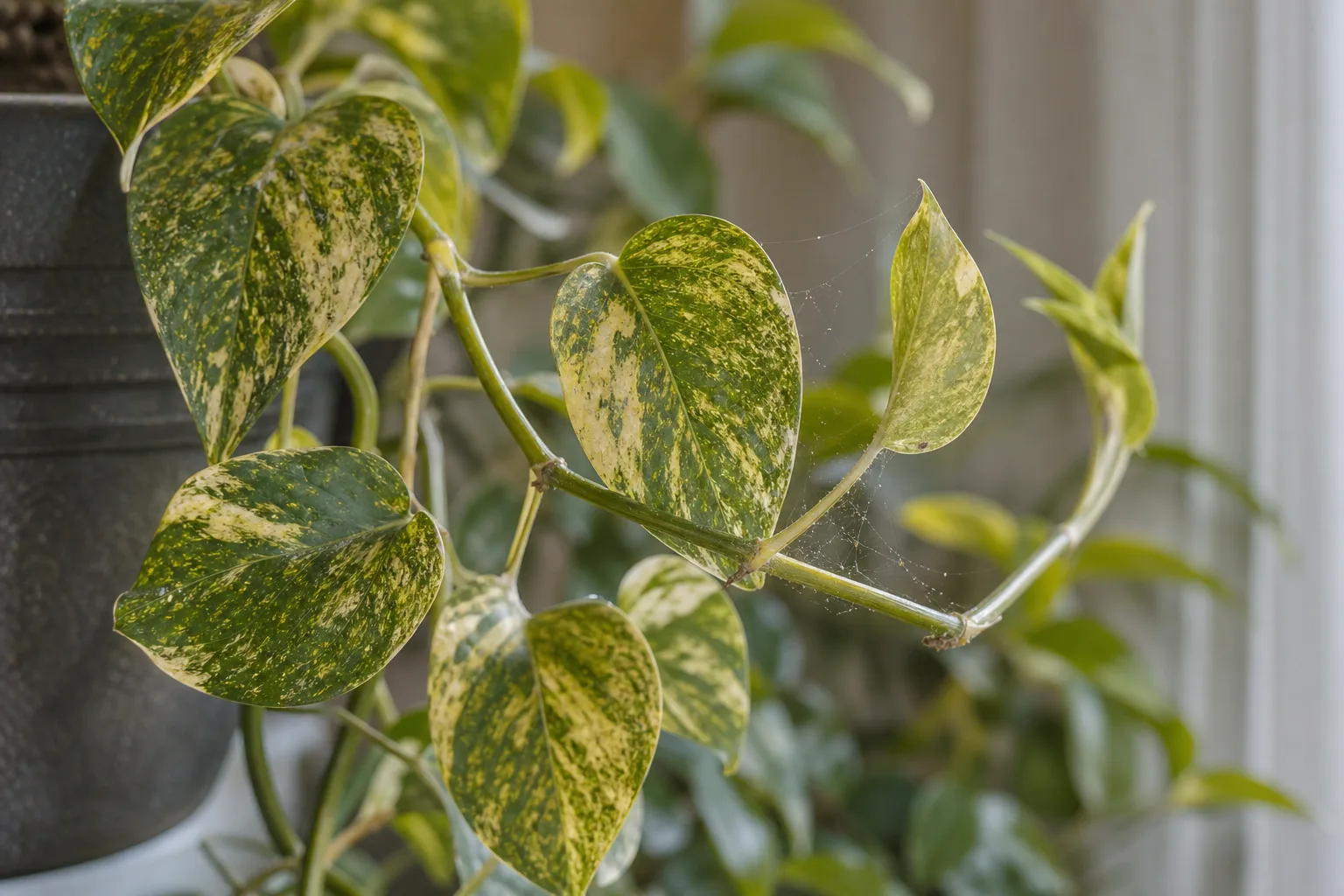
Spider Mites on Golden Pothos: Causes, Checks & Fixes
This guide covers spider mites on Golden Pothos. See also the general Spider Mites guide, watering, and light pages for this plant.
Spider Mites on Golden Pothos: Causes, Checks & Fixes
Quick answer
Spider mites on Golden Pothos (Epipremnum aureum) show up as fine yellow or white stippling on heart-shaped variegated leaves, dull bronzing, and delicate silk webbing at leaf bases along trailing vines-especially in hot dry rooms during winter heating season. They are not insects but tiny sap-feeding arachnids that thrive when warm air and low humidity stress foliage.
First step: isolate the plant the same day you spot stippling or webbing. Move it away from other houseplants before you rinse or spray anything. Then shower-rinse leaf undersides thoroughly with lukewarm water along the full length of every trailing vine, from soil line to growing tips. Do not reach for miticides or oils until you have confirmed moving specks with a white-paper tap test and finished at least one full-vine rinse.
For baseline humidity targets and how dry winter air differs from mite damage, see the Golden Pothos overview and low humidity guide. If crisp leaf edges appear without stippling or webbing, check brown tips for water-quality overlap before treating for pests.
What spider mites look like on Golden Pothos
Early mite damage is easy to miss on pothos because trailing vines drape downward and hide leaf undersides from casual top-down watering. Check these patterns together:
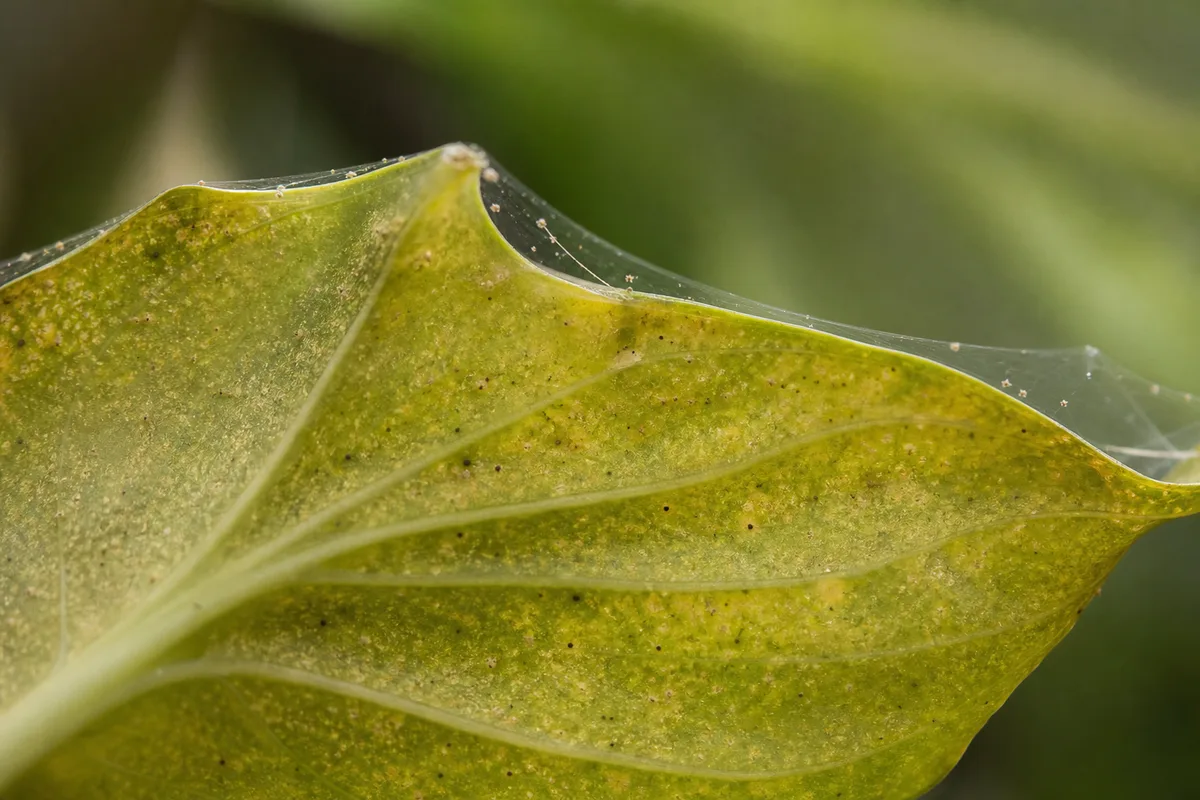
Spider Mites symptoms on Golden Pothos - compare with healthy tissue on the same plant.
- Fine yellow or white pinprick stippling scattered across heart-shaped leaves-the result of mites puncturing individual leaf cells
- Stippling that stands out against gold variegation patches before it spreads into solid green tissue; the contrast makes early damage easier to spot on Golden Pothos than on all-green cultivars
- Dull, dusty, or bronzed leaves that lose their healthy waxy sheen before obvious webbing appears
- Fine silk threads at leaf bases where petioles meet vines, between overlapping leaves on crowded trailing stems, or at node joints
- Tiny moving specks on leaf undersides; a 10× hand lens makes identification much easier
- Crisp bronzed leaves that drop after heavy feeding, while stems may still feel firm and roots stay healthy
Do not mistake normal aerial root bumps along pothos vines for pest webbing. Golden Pothos produces brown aerial roots along trailing stems as part of its climbing habit-that rough tissue is healthy anatomy. Mite silk is thread-like and bridges between leaf bases, not firm woody bumps along the vine.
Because pothos grows fast from apical tips, even moderate stippling can make a long trailing display look sick for months after the mites are gone-judge recovery by new leaves, not old marked foliage.
Why Golden Pothos gets spider mites
Spider mites are a common houseplant pest, but they become a Golden Pothos problem when care conditions overlap with mite-friendly microclimates-especially dry winter air that also triggers low humidity browning on the same plant.
Dry winter air near bright windows and heat sources. Golden Pothos tolerates average indoor humidity, yet pots hung above radiators, on sunny winter sills, or near forced-air vents lose leaf moisture faster than plants in stable corners. That is exactly the warm, low-humidity environment spider mites prefer. Mites reproduce faster as temperatures rise and humidity drops.
Trailing architecture hides colonies. A mature pothos may carry dozens of heart-shaped leaves on one vine draping two or three feet below its hook. Each leaf underside faces away from overhead view, and overlapping foliage creates sheltered feeding sites mites exploit. Top-down watering wets upper surfaces while lower vine sections stay dry and dusty-conditions that favor mite buildup along the full vine length.
Year-round indoor warmth. Golden Pothos grows continuously in heated homes without a cold dormancy break. Spider mites complete many generations indoors, so a small colony on one node can spread along trailing stems within weeks.
Crowded shelf and basket culture. Pothos is often grouped with other tropicals on plant walls or hung in clusters. Touching foliage and shared warm air pockets let mites crawl between pots. An outbreak on a nearby croton or ficus can reach a shelf-grouped pothos within days.
Philodendron-family susceptibility. As an Araceae vine, Golden Pothos shares pest pressure with philodendron and related houseplants. Stressed vines-whether from chronic overwatering, weak light, or drought-recover more slowly once mites take hold.
Lookalike symptoms to rule out
| What you see | Likely cause | How to tell apart |
|---|---|---|
| Crispy brown margins and tips, no stippling dots | Low humidity | Edge-first browning; no webbing; tap test shows no moving specks |
| Evenly scattered pinprick dots plus fine silk | Spider mites | Webbing at leaf bases; moving specks on white paper |
| Sticky shiny residue, soft pear-shaped clusters on vine tips | Aphids | Honeydew and insects on new growth-not stippling pattern |
| White cottony tufts in leaf axils, sticky honeydew | Mealybugs | Fluffy wax clusters smear pink; no uniform stippling |
| Silver streaks or black specks, no fine silk webbing | Thrips | Scrape test differs from mite tap; no thread-like bridging |
| Tip-only browning, firm leaves, no dots across blade | Brown tips from salts or fluoride | No stippling across leaf surface; no webbing |
The stippling versus dry-air browning question is the one Golden Pothos owners search most during heating season. Low humidity damages margins and tips first in a gradual pattern without scattered dots across the blade face. Mites create evenly distributed pinpricks and often leave silk at leaf bases where petioles meet vines. If your hygrometer reads below 40% and edges crisp without stippling, fix air moisture before assuming pests-details in the low humidity guide.
How to confirm the cause
Work through these checks before spraying anything:
- Stippling pattern - Mite feeding creates evenly scattered pinprick dots across heart-shaped leaves. Edges-only browning without dots usually points to low humidity or salt stress, not mites.
- Webbing test - Pull a trailing vine toward a window. Fine silk strands between leaf bases or at petiole joints strongly suggest spider mites. Mealybugs leave cottony white clumps, not thread-like webbing.
- Tap test - Hold white paper under a suspect leaf and tap sharply. Mites fall as pale moving specks. Scale stays fixed; mealybugs appear as waxy blobs.
- Full-vine underside pass - Start at the soil line and follow each trailing stem to its growing tip. Lift draping leaves and inspect undersides at every node. Mites colonize lower vine sections hidden from casual top-down view.
- Variegation check - Early stippling often shows first against gold patches on variegated leaves before green tissue bronzes. Uniform edge crisping without dots across the blade face fits dry air, not mites.
- Neighbor scan - Inspect every plant sharing the shelf, window, or hanging hook. Mites often start on one pot and spread to pothos later.
If you find stippling plus webbing or moving specks on white paper, spider mites are confirmed. If leaves look bronzed but the tap test is clean after two careful searches a few days apart, reconsider thrips lookalikes, mineral residue, or low humidity alone.
First fix for Golden Pothos
Isolate the plant and shower-rinse leaf undersides along every trailing vine with lukewarm water.
Move the pothos away from other plants-ideally to a bathroom or kitchen sink for small pots, or the shower for large hanging baskets. Wrap the pot in a plastic bag secured with a rubber band so soil stays contained. Wash plants with lukewarm water to knock down spider mites, angling spray upward from below so undersides get direct contact. Separate tangled trailing vines with one hand while you rinse with the other, working from soil line to apical tips.
This one step is the right first response because it removes live mites without chemical risk to smooth waxy pothos leaves, lets you see how large the colony actually is along the full vine length, and buys time before oils or soaps. Mites knocked off by water may return within days-plan on repeats, not a single splash.
Do not spray horticultural oil or insecticidal soap on day one if you have not confirmed mites. Do not increase humidity with misting alone as a substitute for rinsing-while higher humidity discourages mites, wet foliage overnight in stagnant corners can encourage other problems on dense hanging baskets.
Step-by-step recovery
After the initial rinse, continue in this order based on severity:
Light infestation (stippling on a few leaves, minimal webbing)
- Repeat shower rinses every three to five days until tap tests stay clean
- Raise room humidity toward 40–50% if winter heating keeps air very dry-see the Golden Pothos overview for context
- Monitor the same vine sections each time you water
Moderate infestation (stippling along multiple vines, visible webbing)
- Complete two thorough rinses three to five days apart
- Then apply horticultural oil or insecticidal soap labeled for mites, coating leaf undersides, stem crevices, and leaf bases thoroughly
- Repeat oil or soap every five to seven days for three cycles-miticides generally do not kill eggs, so multiple applications interrupt the life cycle
- Test one variegated leaf in bright indirect light and wait 24 hours before treating the whole plant-oils can burn sun-stressed foliage
Heavy infestation (webbing across most vines, bronzing, neighbors affected)
- After initial rinse reduction, treat every five days until no new webbing appears for two full weeks
- Trim only heavily bronzed vine sections that cannot be cleaned-dispose of cuttings in sealed bags, not indoor compost
- Inspect and treat neighboring plants on the same shelf before returning the pothos
- If more than half the foliage is bronzed and new growth has stopped for weeks, discarding the plant may be less risky than spreading mites across your collection
Throughout recovery, water Golden Pothos on its normal schedule from the watering guide-allow the top half of the mix to dry between drinks-and hold nitrogen fertilizer until new growth looks clean.
Recovery timeline
Spider mites do not disappear after one treatment because eggs hatch over several weeks. Expect visible stippling to stop spreading within one to two weeks of consistent rinse-and-oil cycles when colonies are moderate. A full course with weekly repeats typically takes three to four weeks before you can call the plant clear.
Judge recovery by new growth at vine tips, not old damaged leaves. A stippled heart-shaped leaf will not revert to full variegation, but the next unfurling leaf should emerge clean and firm. Webbing that stops appearing for two consecutive weeks is a stronger recovery signal than bronzing alone fading.
If live mites reappear at the same nodes after four weeks of consistent treatment, check neighboring plants and lower vine sections you may have missed during rinsing-you may be reinfesting from a reservoir you never treated.
Mistakes to avoid
Do not treat only upper leaf surfaces on trailing pothos. Mites feed on undersides along the full vine length hidden from top-down watering.
Do not confuse winter edge crisping from low humidity with mite stippling. Fix air moisture if edges brown without scattered dots and a clean tap test.
Do not use insecticides labeled for insects only-mites need miticides, horticultural oil, or insecticidal soap formulated for mite control.
Do not let dense hanging baskets stay wet overnight after rinsing. Smooth waxy pothos leaves dry quickly in bright indirect light the same day; avoid soaking crowns in pots with poor drainage where water pools at the soil surface.
Do not apply horticultural oil to sun-stressed variegated leaves in hot direct windows without a spot test-phytotoxicity shows as pale scorched patches.
Do not return an isolated pothos to a crowded shelf after one rinse. Mites you missed will spread to neighbors within days.
Do not ignore reinfection from untreated neighbor plants on shared shelves.
Because Golden Pothos is toxic to cats and dogs and often hangs at pet height, keep trailing vines out of reach during oil or soap treatment until sprays have dried completely-typically until the next day.
Golden Pothos care cross-check
Spider mites are a pest problem first, but weak or stressed pothos recovers more slowly. Confirm the basics while you treat:
- Light - Bright indirect light supports steady growth without the ultra-dry microclimate that develops when a hanging basket bakes against a sunny window above a heating vent.
- Water - Water when the top half of the mix dries. Chronically wet soil will not cause mites, but it stresses roots and slows the new growth you are using as a recovery signal.
- Humidity - Target 40–50% relative humidity in winter if heating runs constantly. Dry air alone can crisp edges; dry air plus mites compounds damage-see low humidity for differentiation.
- Airflow - Trailing vines pressed against walls or other plants create stagnant pockets where webbing builds faster. Give branches space to dry after rinsing.
- Fertilizer - Hold feeding until new growth emerges clean. Resume monthly half-strength fertilizer only after at least two weeks without live mites.
How to prevent spider mites next time
Scout leaf undersides weekly along the full length of trailing vines when Golden Pothos is actively extending-warm indoor months produce constant new leaves mites can colonize before you notice stippling on upper surfaces.
Quarantine new pothos and cuttings for at least two weeks before placing them near other plants. Inspect lower vine sections and pot drainage holes before introduction.
Raise humidity slightly during heating season if hygrometers read below 40%. A pebble tray or grouped plants help-avoid soaking crowns in dense hanging baskets.
Wipe dust from smooth waxy leaves during regular care so stippling stands out against green and gold variegation.
Keep airflow between crowded shelf plants. Stagnant warm pockets behind draping foliage favor mite buildup.
Check plants coming indoors from summer patios. Outdoor pothos often looks clean on top while mites hide on undersides of lower trailing sections.
When to worry
Treat as urgent when webbing spans multiple vines within days, new leaves emerge distorted or fail to unfurl, or matching stippling appears on neighboring pots on the same shelf.
Escalate if three weekly rinse-and-oil cycles fail after isolation and neighbor treatment. Predatory mites are an option for enclosed indoor collections but require stable humidity and are a later step-not a first fix.
Replace severely declining plants rather than fighting endless reinfestation on a stressed specimen. A heavily bronzed pothos with no clean new growth after a month of consistent treatment is often cheaper to discard and replace from a clean cutting than to risk your whole collection.
A few stippled leaves on one lower vine section are not an emergency-methodical rinsing and scheduled oil follow-up usually control them if you inspect the full trailing length early.
Related Golden Pothos guides
Use this page as the spider mite diagnostic hub; branch to deeper guides once you know the cause:
- Golden Pothos overview - full care, humidity targets, and troubleshooting hub
- Low humidity - dry-air edge browning vs mite stippling
- Brown tips - water-quality overlap with dry edges
- Aphids - honeydew vs stippling; trailing-vine rinse protocol
- Mealybugs - shared pest treatment patterns on trailing vines
- Watering - soil moisture rhythm during recovery
Conclusion
Spider mites on Golden Pothos hide on the undersides of heart-shaped leaves along trailing vines that drape out of casual view. Inspect the full vine length from soil line to growing tips, isolate before you treat, and shower-rinse undersides before reaching for oils or soaps. Repeat on a schedule until new leaves emerge clean and webbing stops for two weeks. That diagnostic path stops a small stippling patch on one lower leaf from becoming a collection-wide problem without damaging the forgiving vine you brought home to enjoy.
Related tool
Use the Pest Identifier Tool to narrow causes for spider mites on this plant before changing multiple variables at once.