Calathea Peacock Plant Pruning: When, How, and Mistakes
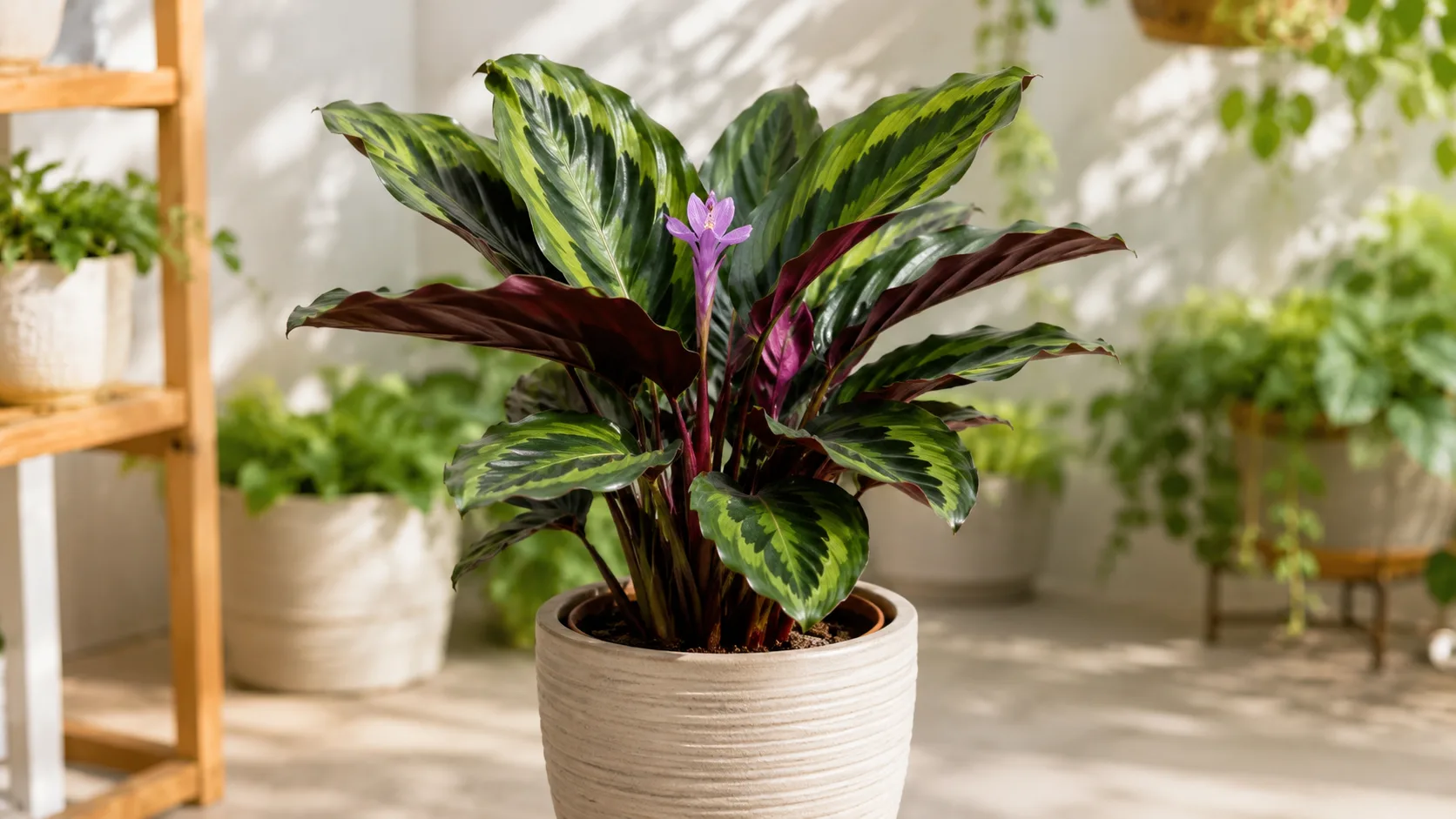
Calathea Peacock Plant Pruning: When, How, and Mistakes to Avoid
Calathea Peacock Plant Pruning: When, How, and Mistakes to Avoid
Quick Answer - First Cut First
First, remove only fully brown, collapsed, or clearly diseased leaves - trace each failing petiole to the soil line and cut at the base with clean sharp scissors. Calathea makoyana (Peacock Plant) grows from underground rhizomes, not branching stems, so your opening move is sanitation, not shaping. Once dead tissue is out, decide whether cosmetic brown-tip trimming or spring division is actually needed.
Peacock Plant is a clump-forming prayer plant valued for feathered green patterning on oval leaves. Missouri Botanical Garden lists it as a rhizomatous tropical perennial grown for patterned foliage indoors. NC State Extension notes it needs Calathea Peacock Plant light guide, consistent moisture, distilled or rain water, and about 60% humidity - conditions that matter more than scissors for leaf quality.
What Pruning Does for Peacock Plant
Peacock Plant pruning covers three distinct jobs:
- Sanitation - Remove leaves that are fully brown, rotting, or pest-damaged so they do not decay against the rhizome crown
- Cosmetics - Trim stable dry tips on otherwise green blades when the feather pattern is still worth keeping
- Rejuvenation - Divide overcrowded rhizome clumps in spring when Calathea Peacock Plant repotting guide, the only way to reduce pot size or create new plants
Pruning does not make Peacock Plant bushier the way pinching a pothos would. New leaves emerge from rhizome shoots - upright petioles crowned with patterned blades - not from random cuts along a vine. University of Vermont Extension describes calatheas as rhizomatous plants that do not respond to stem cutbacks like vining houseplants.
Peacock differs from bolder cultivars like Medallion in one grooming-relevant way: its softer, clump-forming mound can hide minor older-leaf wear inside the plant. You can remove dead outer leaves without stripping the whole display - a useful trait when you want prayer-plant movement without every blemish dominating the view.
What to Check Before You Cut
Before reaching for scissors, inspect:
- Newest rolled spears at the crown center - stuck or torn unfurling leaves signal humidity problems, not a pruning shortage
- Leaf undersides for spider mite stippling - Peacock is prone to mites in dry air per NC State Extension
- Petiole bases for softness or foul odor - mush at the crown suggests rot; unpot before removing more foliage
- Water and light - brown tips on new growth often follow tap-water fluoride, uneven drying, or direct sun that washes out pattern before obvious scorch
If multiple leaves yellow or crisp at once, fix culture first. Pruning removes symptoms; it does not restore humidity or remove minerals from tap water.
When to Prune Calathea makoyana
Anytime: Fully brown, collapsed, or rotting leaves; blades with spreading soft spots; heavily pest-infested tissue beyond spot treatment.
Late spring through early summer: Removing several stressed but attached leaves, cosmetic cleanup of multiple tips, or division when the clump is overcrowded. NC State Extension recommends dividing rhizomatous roots in late spring, roughly every two years, to maintain vigor.
Cosmetic brown-tip trimming: Any time for appearance, but pause if tips keep appearing on new leaves - that pattern means the care routine needs adjustment.
Avoid heavy live-leaf removal in late fall and winter when indoor humidity drops and remaining leaves crisp faster after any insult. RHS emphasizes stable warmth and humidity for calatheas; timing cuts to that stability reduces secondary damage.
Do not prune heavily on the same day you repot, move homes, or correct a watering crisis. Stack one stress at a time.
Tools and Sterilization
Use sharp scissors or fine snips for petioles and tip trimming. For division, use a clean knife to separate rhizomes.
Sterilize blades with 70% isopropyl alcohol before starting and between cuts on spotted or mushy tissue. Iowa State University Extension advises sanitized tools to limit disease spread among houseplants.
Work over newspaper - wet Calathea debris can mark surfaces. The ASPCA lists Calathea as non-toxic to cats and dogs, but sap may irritate sensitive skin; wash hands after handling cut tissue.
The First Cut: Remove Dead Leaves at the Base
Where exactly to cut
Trace the failing leaf’s petiole to the soil line or rhizome crown. Cut in one clean motion where the petiole meets the rhizome - flush, without leaving a stub. Stubs stay wet in humid crowns and brown at the base.
Do not cut a healthy petiole halfway up expecting new growth. Prayer-plant leaves do not branch from mid-stem points; cutting green tissue leaves a permanent damaged stub.
If a fully dead leaf releases with almost no resistance, you may pull it gently while supporting neighboring petioles - stop if you feel twisting force on healthy shoots.
Yellow leaves - wait or remove?
Partly yellow leaves with firm green tissue: leave them unless disease or pests demand removal. Lower-leaf yellowing is normal senescence on a healthy clump; the remaining green area still photosynthesizes while the plant reassigns resources.
Fully yellow, soft, or collapsing leaves: remove at the base promptly.
Many leaves yellowing at once: do not strip the plant bare - inspect watering, light, and roots first. Aggressive defoliation on a stressed Peacock often worsens decline.
Trimming Brown Tips Without Ruining the Pattern
Peacock’s translucent feather pattern shows every cosmetic cut clearly. When a leaf is mostly green with dry margins:
- Identify only the dead brown tissue
- Follow the natural leaf curve with sharp scissors
- Leave a thin brown margin at the edge rather than cutting deep into green cells - a fresh wet cut across green tissue can brown further in dry air
If more than half the blade is crisp, spotted, or repeatedly re-browning, remove the whole petiole at the base instead of chasing tips. Repeated deep trimming permanently alters the leaf outline; Peacock’s value is the clean alternating markings on intact blades.
Brown tips commonly follow tap-water minerals, humidity below about 60%, or inconsistent moisture - NC State Extension specifically recommends distilled or rain water because fluoride in tap water can cause leaf browning. Trimming alone will not stop new damage if the cause remains.
How Much You Can Safely Remove
Remove all clearly dead or diseased tissue - it does not count toward a foliage limit.
For green or partly green leaves, remove no more than one-third of living foliage in one session during active growth. Each Peacock leaf is a major photosynthetic investment; Calatheas recover slowly from heavy defoliation.
After major cleanup, hold fertilizer briefly and keep humidity high while the rhizome redirects energy to new rolled spears.
Division - The Only Major Prune
When the pot holds multiple crowded rhizome shoots and outer leaves chronically fail despite good care, spring division renews vigor. This is propagation pruning, not hedge trimming.
Steps:
- Water the day before to reduce stress
- Unpot and gently shake off excess mix
- Identify natural clumps with distinct rhizomes and healthy roots
- Tease apart by hand or cut with a sterilized knife - each section needs at least one shoot and a healthy root system
- Repot at the same depth in fresh well-draining mix; keep warm and humid while divisions settle
NC State Extension recommends division in late spring about every two years. Limit major division to once every two to three years unless the mix has failed or rot requires emergency separation.
What Not to Cut
- Healthy green petioles hoping for bushier growth - Peacock does not activate lateral buds from shear cuts
- Still-rolled central spears unless clearly rotted - give stuck leaves better humidity first
- The clump like a hedge - shearing destroys the upright feather-patterned display
- More than one-third of green foliage in a single session during stress or winter slowdown
There is no useful “cut above a node” rule on individual leaves; the growth point is the rhizome crown.
Aftercare and Recovery
After any pruning session:
- Maintain medium indirect light - direct sun fades Peacock pattern before obvious scorch
- Keep humidity at 60% or higher and use filtered or rain water if tap water causes tip burn
- Keep soil evenly moist but not waterlogged - a plant with fewer leaves uses water slightly slower
- Hold fertilizer briefly after removing multiple live leaves; resume when a new spear opens cleanly
Recovery timeline
Single dead-leaf removal needs no special wait. Removing several leaves or dividing a clump shows replacement spears in four to eight weeks during active growth if humidity is adequate. Off-season grooming may show little new growth until spring - focus on stable care rather than repeated trimming.
Signs pruning worked
- New rolled leaves emerge from the crown center without sticking or tearing
- Remaining blades hold color and pattern without spreading edge burn
- No new softness at petiole bases after base cuts
- Divided sections produce fresh growth rather than continued wilt
Signs pruning was too aggressive or badly timed: widespread leaf curl, multiple spears aborting, petiole bases turning mushy, or continued crisping on nearly every remaining blade within two weeks - stabilize humidity and water before cutting again.
Mistakes to Avoid
Stripping every yellow leaf immediately - wastes partial photosynthesis and weakens the rhizome.
Shearing the clump for neatness - Calathea does not fill in from shear wounds.
Pruning without fixing water quality - mineral burn returns on every new leaf until water changes.
Division in winter - slow recovery and elevated rot risk in cold, dry conditions.
Composting diseased leaves indoors - fungal spores spread in humid rooms; discard in trash.
Pruning during repot shock or shipping recovery - let the plant settle before cosmetic grooming beyond obvious dead tissue.
When Not to Prune
Skip planned live-leaf removal when:
- The plant arrived within the last two weeks and is still acclimating
- You just repotted or divided within the past month
- Soil is waterlogged or the rhizome feels soft - diagnose rot first
- Winter indoor humidity is low and edges crisp faster after any cut
- A pest outbreak is active - treat mites or mealybugs before opening the crown further
Emergency removal of rotting or pest-covered leaves is always appropriate.
Bottom Line
Calathea Peacock Plant pruning is gentle grooming for a rhizome-based prayer plant: dead leaves out at the petiole base, brown tips trimmed conservatively on green blades, and clumps divided in late spring when overcrowded. Respect Peacock biology - crowns and rhizomes, not vine nodes - and pair every cut with the filtered water and humidity Calathea Peacock Plant overview requires. Scissors tidy the feather-patterned display; stable culture keeps new leaves worth showing.
When to use this page vs other Calathea Peacock Plant guides
- Calathea Peacock Plant overview - Start here for whole-plant context before deep-diving this topic.
- Calathea Peacock Plant problems hub - Jump to symptom-specific fix guides when this care topic does not resolve the issue.
- Leggy Growth on Calathea Peacock Plant - Escalate here when pruning adjustments are not enough.
- Slow Growth on Calathea Peacock Plant - Escalate here when pruning adjustments are not enough.
- Brown Tips on Calathea Peacock Plant - Escalate here when pruning adjustments are not enough.
Related Calathea Peacock Plant guides
- Calathea Peacock Plant overview
- Calathea Peacock Plant watering
- Calathea Peacock Plant light
- Calathea Peacock Plant soil
- Calathea Peacock Plant propagation
- Calathea Peacock Plant fertilizer
- Leggy Growth on Calathea Peacock Plant
- Slow Growth on Calathea Peacock Plant
- Brown Tips on Calathea Peacock Plant
- Calathea Peacock Plant problems