Aphids on Calathea Peacock Plant: Causes, Checks & Fixes
Quick answer
Aphids on Calathea Peacock Plant feed on soft new leaf rolls and stems, causing curl, stickiness, and faded pattern on fresh growth. First step: isolate the plant and rinse the crown and leaf undersides with lukewarm filtered water before applying any spray.
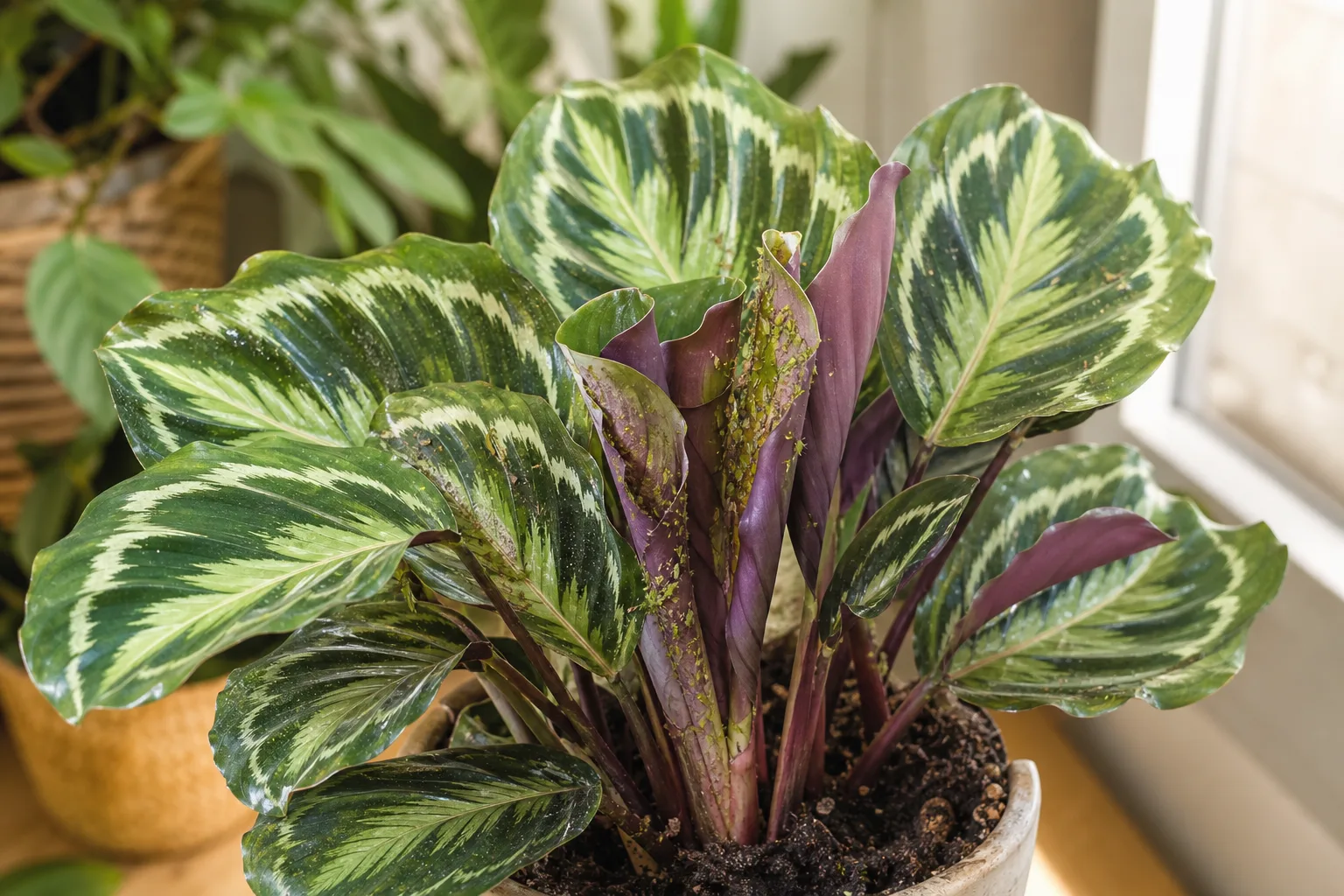
Aphids on Calathea Peacock Plant: Causes, Checks & Fixes
This guide covers aphids on Calathea Peacock Plant. See also the general Aphids guide, watering, and light pages for this plant.
Aphids on Calathea Peacock Plant: Causes, Checks & Fixes
Quick answer
Aphids on Calathea Peacock Plant (Calathea makoyana, also sold as Goeppertia makoyana) are small sap-sucking insects that colonize the softest new growth-the rolled leaf tips in the crown and tender petiole joints. They drain fluid from tissue that should develop the plant’s feathered green pattern, leaving leaves curled, sticky, or dull before they fully open.
First step: isolate the plant and rinse the crown thoroughly. Move it away from other houseplants, then shower or spray the undersides of new leaves and stems with lukewarm filtered or rainwater. You need to knock off live aphids and confirm the infestation before reaching for soap or oil. Peacock Plant leaves are papery thin; blasting dry foliage with pesticides on day one often causes more damage than the pests themselves.
What aphids look like on Calathea Peacock Plant
On Peacock Plant, aphids usually show up where growth is newest and most vulnerable:
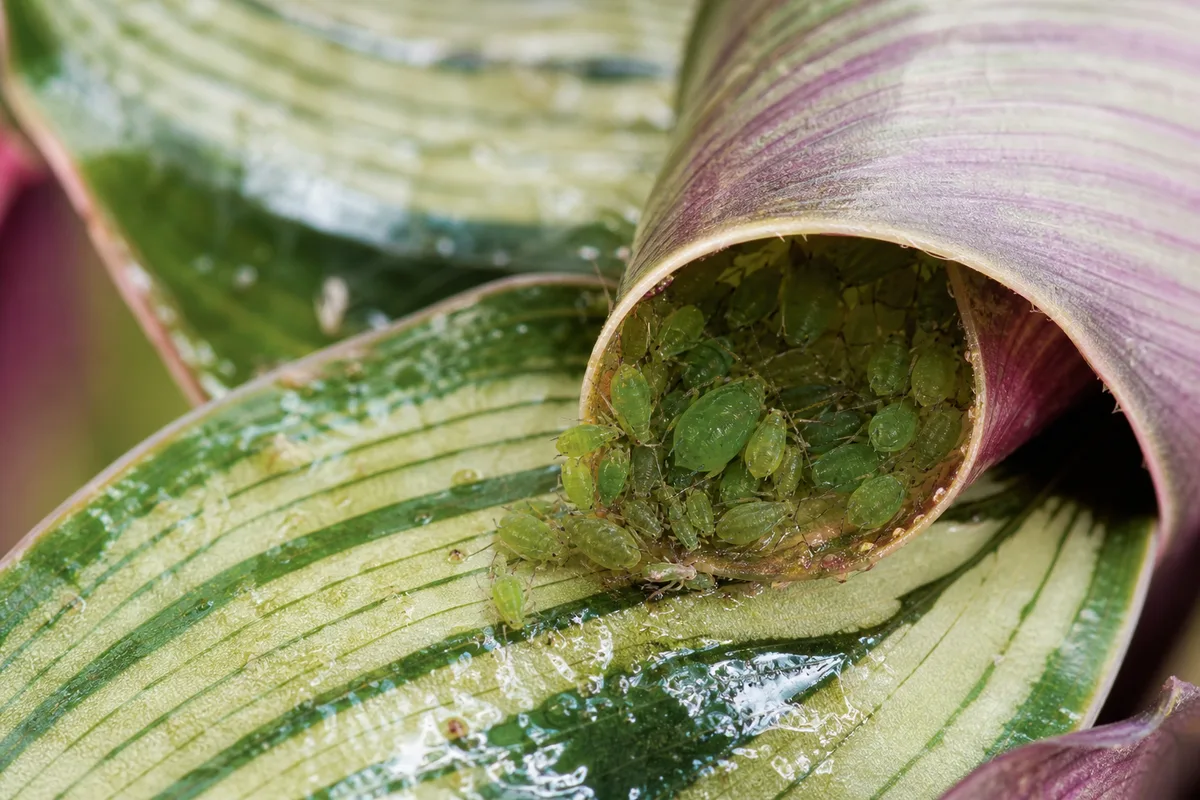
Pear-shaped aphids clustered inside a partially rolled Peacock Plant leaf tip with shiny honeydew on the feathered pattern - inspect the crown weekly.
- Clusters inside or around rolled leaf tips in the central crown
- Green, black, yellow, or pink pear-shaped insects about 1/16 to 1/8 inch long along petioles and leaf undersides
- Shiny, sticky honeydew on the patterned upper leaf surface or nearby pot rim
- Black sooty mold growing on honeydew, which dulls the peacock feather markings
- Curling or puckering of young leaves before they fully unfurl
Because new Calathea leaves emerge rolled with pinkish-red undersides, aphids can stay hidden until several leaves look distorted. The damage often appears on the top third of the plant first, not evenly across older lower foliage.
Heavy feeding makes fresh leaves look pale, twisted, or weakly patterned. That pattern loss is easy to misread as a light problem, but check for insects and stickiness before moving the pot.
Why Calathea Peacock Plant gets aphids
Aphids rarely appear from nowhere indoors. The usual entry points on Peacock Plant:
New or recently moved plants. Aphids hitchhike on nursery stock and spread when pots sit close together on a shelf. Peacock Plant’s dense clump hides colonies under overlapping leaves.
Soft, fast new growth. Aphids feed on tender stems and developing leaves. Peacock Plant pushed with frequent fertilizer or strong spring light produces exactly the soft shoots aphids prefer.
Stressed but still growing plants. Low humidity, inconsistent watering, or root stress do not cause aphids directly, but they weaken foliage and slow recovery after feeding damage. NC State Extension notes that Peacock Plant should be monitored for aphids along with scale, mealybugs, and spider mites.
Open windows and outdoor summer breaks. Winged aphids can drift in from garden plants. If you move Peacock Plant outdoors for summer, inspect carefully before bringing it back to a humid indoor spot.
Unlike spider mites, aphids are not mainly a dry-air pest-but honeydew plus high humidity can encourage sooty mold on Calathea leaves, which makes the cosmetic damage worse even after the insects are gone.
How to confirm the cause
Work through these checks before treating:
- Look at the crown first. Peel back or lift the newest rolled leaves gently. Aphids cluster on soft tissue just below the unfurling tip.
- Check for movement. Disturb the colony with a cotton swab. Aphids move slowly; scale stays fixed and mealybugs look cottony.
- Feel for stickiness. Honeydew makes leaf surfaces tacky and may drip onto lower leaves or the pot saucer.
- Inspect neighbors. Check other prayer plants and soft-leaved houseplants within a few feet.
- Rule out humidity curl. Low humidity makes Calathea leaf edges crisp and can cause general curl without insects or stickiness. If the crown is clean and only old leaf tips are brown, humidity or water quality may be the real issue.
- Rule out mechanical damage. Torn or bruised new leaves from handling can look distorted but will not have live colonies or honeydew.
If you find pear-shaped insects plus sticky residue on new growth, aphids are confirmed. Proceed with isolation and rinsing before any chemical step.
First fix for Calathea Peacock Plant
Isolate the plant and rinse aphids off the crown and leaf undersides.
- Move the pot to a sink, shower, or outdoor shade area away from other plants.
- Use lukewarm filtered or rainwater-consistent with normal Peacock Plant care and gentler on sensitive leaf tissue than cold tap water.
- Angle the spray at leaf undersides, petiole bases, and the central crown where leaves roll open.
- Let the plant drain fully. Do not return it to its usual spot until you have checked nearby pots.
This single step removes a large share of the colony and shows you how heavy the infestation is. If only a few aphids remain after rinsing, repeat the rinse in three to four days before adding sprays.
Step-by-step recovery
After the first rinse, work through treatment in this order:
1. Prune only when necessary
If one or two new leaves are heavily infested and curled shut, cut them at the base with clean scissors rather than repeatedly soaking the whole crown. Do not compost infested clippings indoors.
2. Apply insecticidal soap to contact pests
When live aphids remain after rinsing, spray insecticidal soap labeled for houseplants, covering stems, leaf undersides, and the crown until the solution runs off lightly. Soaps kill on contact only; they do not leave residual protection, so missed insects survive.
Repeat every five to seven days for at least three cycles to catch nymphs that hatch from eggs left behind.
3. Add neem or horticultural oil only if needed
If colonies persist after two soap cycles, neem oil or horticultural oil can supplement control. Test one leaf first and avoid spraying stressed, wilted, or sun-exposed plants. Apply in the evening so leaves dry before cooler night temperatures.
4. Wipe honeydew off open leaves
Once aphids are gone, gently wipe sticky residue from patterned foliage with a damp cloth and filtered water. Sooty mold on the leaf surface often clears as honeydew stops, but heavily coated leaves may need several wipes over a week.
5. Stabilize care while the plant recovers
Hold off on fertilizer until new growth looks clean. Keep humidity near 60% or higher, maintain filtered light without direct sun, and water when the top 2 cm of mix begins to dry-Peacock Plant recovers faster when root moisture and humidity stay steady.
Recovery timeline
Expect visible improvement within one to two weeks if rinsing and soap sprays are consistent:
- Days 1–3: Fewer live aphids after the first rinse; stickiness stops spreading.
- Week 1–2: No new colonies on rolled leaves; existing honeydew dries and wipes away.
- Week 3–6: New leaves emerge with normal peacock patterning if light and humidity are stable.
Older leaves that curled tightly under heavy feeding usually stay misshapen. Judge success by clean new crown growth, not by older blemished foliage flattening out.
Lookalike symptoms
| What you see | More likely cause | How to tell apart |
|---|---|---|
| New leaf curl without stickiness | Low humidity or dry air | No insects under rolled leaves; edges may crisp |
| Pale, washed-out pattern on new leaves | Too much direct light | Fading across whole leaf face; no honeydew |
| White cottony clusters in crown | Mealybugs | Static white wax; alcohol dab smears pink |
| Fine stippling and webbing | Spider mites | Specks move on white paper tap test |
| Yellow lower leaves, wet soil | overwatering on Calathea Peacock Plant | Roots/mix issue; no sap-sucking colonies on new growth |
Mistakes to avoid
- Spraying pesticides before rinsing. Contact products cannot reach aphids hidden inside curled Calathea leaves.
- Using dish soap mixes. Homemade detergents can burn plants. Use products labeled for plants.
- Treating in hot direct sun. Soap and oil on warm, sunlit leaves increase phytotoxicity risk on thin prayer-plant foliage.
- Returning the plant to the group too soon. One week without new aphids is not enough; wait until you have completed the full repeat-spray cycle.
- Fertilizing to “help recovery.” Soft new nitrogen-rich growth attracts the next wave of aphids.
- Ignoring ants. Ants farm aphids for honeydew. If ants reach the pot, control them or elevate the plant so predators can access colonies.
Calathea Peacock care cross-check
While treating aphids, keep the baseline care stable:
- Light: Medium indirect light. Direct sun scorches pattern and stresses rinsed leaves.
- Water: Filtered or rainwater when the top 2 cm of mix is beginning to dry.
- Humidity: Target 60% or higher so new leaves unfurl cleanly after feeding damage.
- Airflow: Gentle air is fine; avoid heat vents that dry rinsed foliage within hours.
A plant sitting in soggy mix, dark corners, or heavy tap water may keep producing weak new growth that looks “sick” even after aphids are gone.
How to prevent aphids
- Quarantine new plants for at least two weeks before placing them near Peacock Plant.
- Inspect the crown weekly during active growth, especially spring and summer.
- Rinse or wipe leaves with filtered water during routine care-clean foliage makes early colonies easier to spot.
- Avoid over-fertilizing. Steady quarter-strength feeding during active growth is enough; flushes of soft tissue invite aphids.
- Check plants after outdoor time. Rinse before returning indoors if the plant spent summer outside.
When to worry
Aphids alone rarely kill an established Peacock Plant, but escalate care when:
- Colonies cover most new growth and persist after three soap cycles
- Winged aphids appear on multiple plants in the same room
- Sooty mold covers large sections of foliage and blocks light to lower leaves
- The plant stops producing new crown leaves for more than a month after treatment
At that point, consider discarding severely infested plants rather than risking the rest of a Calathea collection, especially if multiple prayer plants share one humid shelf.
Conclusion
Aphids on Calathea Peacock Plant are manageable when you catch them on rolled new leaves before honeydew spreads across the patterned foliage. Isolate first, rinse the crown with lukewarm filtered water, then follow with repeated insecticidal soap on contact. Recovery shows up in clean new growth, not repaired old curls-keep humidity, light, and watering steady while the crown produces fresh peacock-marked leaves.
When to use this page vs other Calathea Peacock Plant guides
- Calathea Peacock Plant watering guide - Use for routine moisture checks before assuming aphids is the main issue.
- Calathea Peacock Plant problems hub - Browse all 16 common issues on this species.
- Mealybugs on Calathea Peacock Plant - Different entry point when symptoms overlap with aphids.
- Spider Mites on Calathea Peacock Plant - Different entry point when symptoms overlap with aphids.
- Yellow Leaves on Calathea Peacock Plant - Different entry point when symptoms overlap with aphids.