Slow Growth on Calathea Dottie: Normal Pace vs Stalled
Quick answer
Slow growth on Calathea Dottie is often seasonal or light-related—Goeppertia roseopicta is a clumping prayer plant that may sit visually unchanged through a cool dim winter while roots stay firm. Worry when no new spear unfurls through two warm seasons, pink vein contrast fades on the youngest leaf, or mix stays wet for weeks. First step: audit crown spear activity and brightness at the plant (not room-wide ambient light) before repotting or feeding.
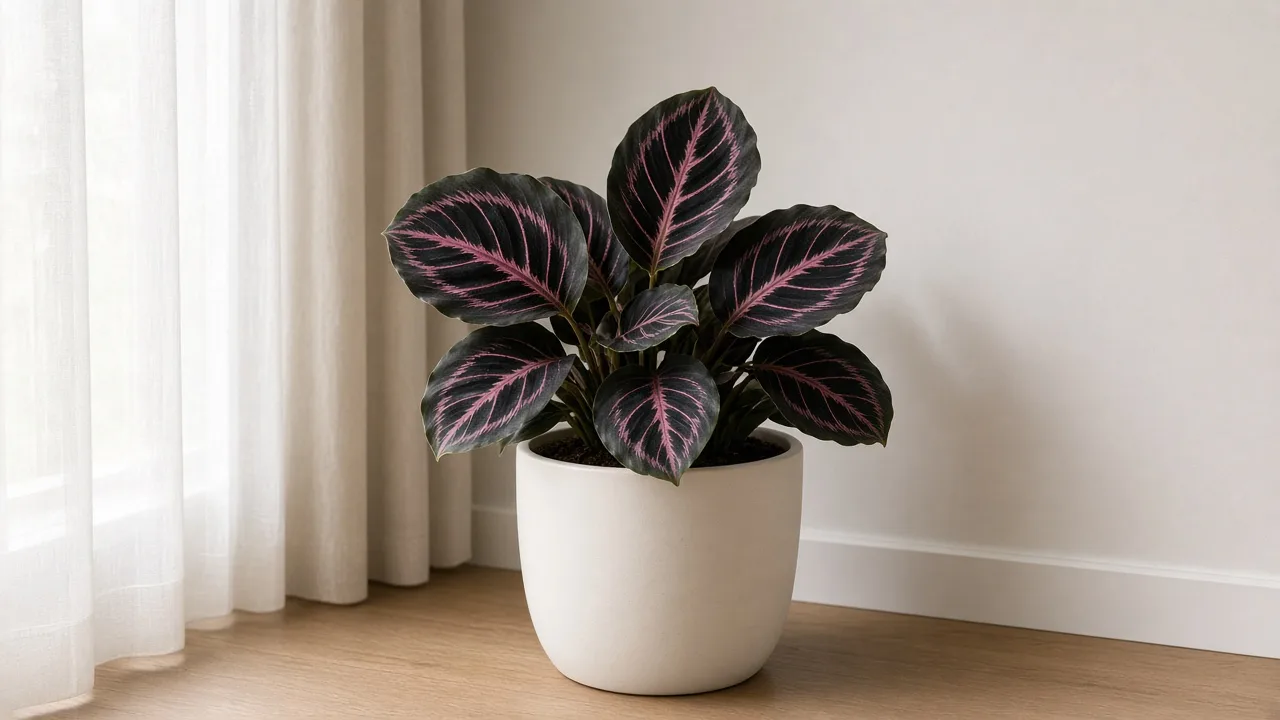
Slow Growth on Calathea Dottie: Causes, Checks & Fixes
This guide covers slow growth on Calathea Dottie. See also the general Slow Growth guide, watering, and light pages for this plant.
Slow Growth on Calathea Dottie: Causes, Checks & Fixes
Quick answer
Goeppertia roseopicta ‘Dottie’ is a clumping prayer plant that often looks frozen for weeks while it quietly manages fine roots and painted foliage. Mature rose-painted calatheas typically reach about 1–2 feet tall and wide in containers—indoor pots may add only one or two new blades per warm season when conditions are good, not a monthly leaf flush like a pothos.
For how chronic stagnation works across houseplants in general, see our slow growth hub. On Calathea Dottie, the decisive question is whether a central leaf spear appears and unfurls with strong pink midrib contrast—not whether the pot looks the same size on a shelf.
First step: audit crown spear activity and light at the plant before repotting, fertilizing, or watering more. Mark the highest unfurled leaf, check for a central spear, and confirm the newest blade still shows vivid pink feathering on near-black tissue. If spears arrive each warm season and nighttime leaf movement still happens, your Dottie may simply be on prayer-plant time. If spears fail through two warm seasons while mix stays damp or pink veins wash out on new leaves, fix light and watering first.
When to use this page vs other Calathea Dottie guides
This page is the pace-and-vigor entry for Dottie—owners who wonder why their rose-painted calathea “never grows,” whether winter silence is normal, or when slowness signals a real bottleneck.
| Pattern | Read next |
|---|---|
| Pink veins fade; plant sits far from glass | Not enough light |
| Long gaps between leaves; stems stretch | Leggy growth |
| Soft yellow lower leaves on a heavy wet pot | Overwatering or root rot |
| Crisp pink edges on new unfurling leaves | Brown tips or low humidity |
| Leaf curl at dusk; pot very light | Underwatering or wilting |
| White fuzz or stippling sapping vigor | Mealybugs or spider mites |
| Placement, grow lights, filtered water | Light guide and watering guide |
| Full problem index | All Calathea Dottie problems |
What slow growth looks like on Calathea Dottie
Healthy Dottie holds glossy near-black blades with hot-pink central veins and pink feathering along the midrib—NC State describes rose-painted leaves with showy pink and cream brushwork on deep green. On this cultivar the display is darker, so progress is measured at the crown: a tight central spear that unfurls into the next painted leaf, not by overall bushiness.
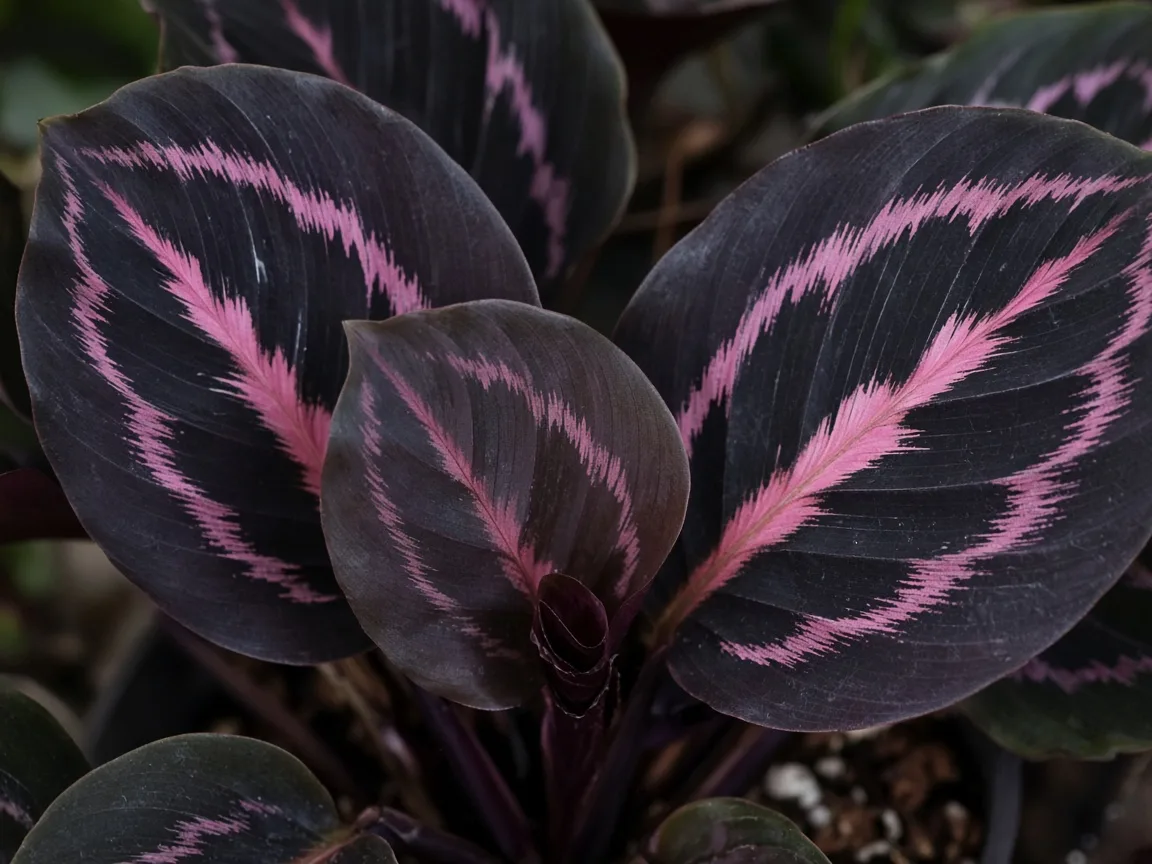
A stalled crown: the youngest blade looks smaller or duller than older siblings, and no central spear is visible—compare spear photos month to month, not day to day.
Normal slowness (usually fine):
- One new leaf every few months indoors — Clumping Goeppertia adds leaves from the crown, not side branches; a single unfurl per warm season can be healthy
- Quiet winter with firm leaves — RHS advises reducing water in autumn and winter while allowing the surface to dry slightly; zero spears in short cool days is common
- No flowers for years — Houseplants rarely flower; lack of bloom is not a growth failure
- Stable pink pattern on older leaves — Mature blades keep their paint even while the crown pauses
Stalled growth (needs action):
- No spear through two warm seasons — Central crown stays flat while lower leaves slowly age out
- New leaves smaller with washed-out pink — Pattern loss on the youngest blade often tracks not enough light before total leaf count drops
- Mix wet three weeks after a modest drink — Dim light plus soggy peat stalls metabolism and overlaps overwatering
- Spears brown or stick half-open — Often humidity, fluoride in tap water, or root stress—not “just slow”
- Whole plant dull while a brighter sibling thrives — Dottie is especially prone to yellowing on the same water schedule as other calatheas when mix stays too wet
Pink vein contrast: Dottie’s growth stress meter
On most houseplants you judge vigor by leaf count alone. On Dottie, the youngest unfurled leaf is the report card. Vivid pink on near-black means the plant had enough light, humidity, and clean water to finish the last spear. Faded, narrow, or partially bleached pink on that same blade—while older leaves still look dramatic—usually means the bottleneck hit during the last unfurl, not years ago.
Compare the newest leaf to one two positions lower. If the older blade shows crisp feathering and the younger looks muddy, do not wait for yellowing to confirm trouble. Fix brightness and air moisture before the next spear tries to open.
Crown spear audit: the prayer-plant growth clock
Unlike vining plants, Dottie tells time at the center of the rosette. Growth means a rolled spear visible above the last unfurled blade, then a clean unfurl over one to three weeks in warm humid air.
| Crown pattern | Season | What it usually means |
|---|---|---|
| Spear visible; unfurl completes with strong pink | Spring–summer | Healthy pace |
| No spear; leaves firm; cooler short days | Fall–winter | Often normal pause |
| No spear two warm seasons in a row | Spring–summer | Light, roots, water chemistry, or pests |
| Spear present but stalls half-open | Any | Low humidity, fluoride, or wet roots |
| Night fold weak or absent on new leaves | Any | Chronic stress—check light and roots |
Photograph the crown from the same angle in May and again in August. Prayer plants including rose-painted types may twitch upward at dusk rather than fully folding when wide leaves are healthy but not perfect—movement alone does not prove fast growth, but total loss of nyctinastic habit on new blades is a warning.
Rhizome firmness without day-one repotting
Dottie grows from rhizomes that store starch for short dry spells—Sumo Gardener notes rhizomatous roots on Goeppertia roseopicta. Slow growth rarely requires immediate unpotting. Instead, slide the plant partway out of the cachepot and sniff the drainage hole: sour peat suggests root trouble; earthy damp smell with firm stems usually means the stall is above the rhizome (light, humidity, water quality).
If stems are firm, spears fail, and mix dries on schedule, suspect light before digging up the rhizome. If stems soften while mix stays wet, pivot to root rot—slowness is a symptom, not the diagnosis.
Why Calathea Dottie stalls (plant-specific causes)
Insufficient bright indirect light is the most common indoor bottleneck. RHS lists poor, weak growth due to low light levels, especially with Goeppertia species. UF IFAS notes calatheas tolerate as low as 75 foot-candles but maintain better appearance at 150–200 foot-candles indoors—a dim corner that feels “bright” to your eyes may not deliver enough photons for new painted leaves.
Chronic damp mix in low light is the second trap. Dottie shares a bench with Medallion but often yellows on the same watering routine when surface dry-down is skipped. Wet peat in a dim room keeps roots cool and oxygen-poor; the plant survives on rhizome reserves while the crown goes quiet. That overlaps mold on soil and fungus gnats.
Low humidity during unfurl stalls spears. NC State tags Goeppertia roseopicta as humidity tolerant in favorable conditions, but indoor heating without a humidifier often leaves new blades stuck or crisp at the pink margins—mistaken for slow genetics when the spear actually aborted.
Fluoride and mineral tap water damage margins on expanding leaves. UF IFAS links dead spots near leaf margins to fluoride toxicity. A spear that opens with brown pink edges may never size up to match older leaves, so the plant looks like it stopped growing.
Feeding at the wrong time wastes effort. RHS recommends monthly liquid feed during the growing season (April–September) and avoiding feed in autumn and winter. Fertilizer on a stressed, wet, dim plant does not force new spears—it can worsen salt stress per IFAS leaf-margin necrosis notes.
Pest drain at leaf axils and new growth reduces vigor before obvious spotting. Clear spider mites or mealybugs before chasing fertilizer.
How to confirm the cause
Work in order so you change one variable at a time:
- Season check — Short cool days with firm leaves and no spear may be normal winter rest.
- Crown spear audit — Any spear since last spring? Did the last unfurl finish cleanly?
- Pink contrast on youngest leaf — Vivid vs washed out compared to older blades.
- Light honesty — Bright filtered at the plant, not across the room; compare with light guide.
- Top-2-cm dry-down — Partial dry-down per watering guide; note days until mix feels barely dry at depth.
- Water type — Tap with fluoride vs rainwater or distilled on recent unfurls.
- Humidity context — Heated air without humidifier during last unfurl?
- Pest scan — Stippling, webbing, or white fuzz at the crown.
Confirmed diagnosis before treatment: if two warm seasons pass with no spear and the pot sits more than a few feet from usable window light, light and humidity lead the fix list—not repotting.
The first fix to try
Move the pot to the brightest filtered-light spot you can offer (no direct hot midday sun on the leaves), then log crown spear activity and top-2-cm dry-down for three weeks without repotting or feeding.
East or bright north windows, or a filtered south exposure, match partial shade preferences on Goeppertia roseopicta. Acclimate over seven to ten days if it lived in deep shade—sudden harsh sun bleaches pink bands first. Pair the move with a humidifier target of 60%+ RH near the crown if heated air is dry, and switch the next drinks to rainwater or distilled if tap water browned recent unfurls.
Do not increase watering to “wake it up,” and do not repot on the same week as the light move.
Step-by-step recovery (after the first fix)
Weeks 1–3: Track spear visibility, pink contrast on the newest leaf, and dry-down only. No fertilizer.
Weeks 4–8: If a spear appears, keep humidity steady through unfurl—mist does not replace a humidifier for wide Dottie blades. Water when the top 2 cm begins to dry per your watering schedule.
Growing season only: If a spear unfurled cleanly and roots are healthy, one diluted balanced feed per month may support the next flush—follow fertilizer guide and RHS seasonal feeding guidance, never on a stressed winter plant.
If stems soften: Stop treating this as slow growth alone; use overwatering and root rot protocols.
Recovery vignette: the “frozen” Dottie on a side table
A Dottie sat six feet from a west window behind a sofa. The owner saw no new leaves in fourteen months and planned a larger pot and weekly feed. Crown audit showed no spear for two summers, the youngest leaf was smaller with dull pink, and mix stayed damp nineteen days after watering. Stems were firm. The plant moved to a filtered east windowsill, gained a small humidifier, and switched to distilled water. A spear appeared eight weeks later—not fast by pothos standards, but normal for a rose-painted prayer plant pushing one painted blade at a time.
Mistakes to avoid
- Repotting or feeding because the plant “looks small” — Oversized pots stay wet; fertilizer on dim, soggy Dottie worsens margin burn.
- Watering more to force growth — Damp peat in low light is why Dottie stalls while siblings look fine.
- Judging progress weekly — Use monthly crown photos; prayer plants improve across seasons.
- Ignoring water chemistry — Fluoride damage on the last unfurl mimics permanent slow genetics.
- Stacking repot, prune, and feed on one weekend — You will not know which change helped.
Recovery timeline
Dottie recovery is measured in spears and unfurls, not days:
- Three to six weeks after light and humidity correction: Night movement may strengthen on new blades; dry-down becomes predictable
- One warm season: One completed unfurl with improved pink contrast is real progress
- Two warm seasons: Steady spear rhythm confirms the bottleneck cleared
Old leaves keep their size and paint; they do not enlarge retroactively. Judge success by the next spear, not by transforming existing blades.
How to prevent it next time
Run bright filtered light, stable high humidity, filtered water, and partial dry-down from the overview hub. Repot when roots circle—not on a calendar panic—and refresh soil before peat collapses. Feed only in active months per fertilizer guide.
Photograph the crown each June. Align expectations with forest-floor biology: Goeppertia roseopicta evolved in shaded Amazon understory, where growth is deliberate and every new leaf is expensive to paint.
Related Calathea Dottie guides
Rose-painted prayer plants reward patience: filtered light, humid unfurls, clean water, rare feed.
- Light guide — foot-candles, windows, and grow lights
- Watering guide — top-2-cm checks and fluoride-safe water
- Low humidity — when spears stick or pink edges crisp during unfurl
- Not enough light — when pink fades before the crown stops entirely
- Overview — species pace, pet safety, and first-month quarantine
Related tool
Use the Why Is My Plant Dying Tool to narrow causes for slow growth on this plant before changing multiple variables at once.