Not Enough Light on Calathea Dottie: Pink Fade & Fixes
Quick answer
Calathea Dottie in too little light washes out its pink midrib contrast, stretches on thin petioles, and slows growth while potting mix stays wet longer. First step: move the pot one to two feet from the brightest north- or east-facing window and run the hand-shadow test at the leaf crown before changing water or fertilizer.
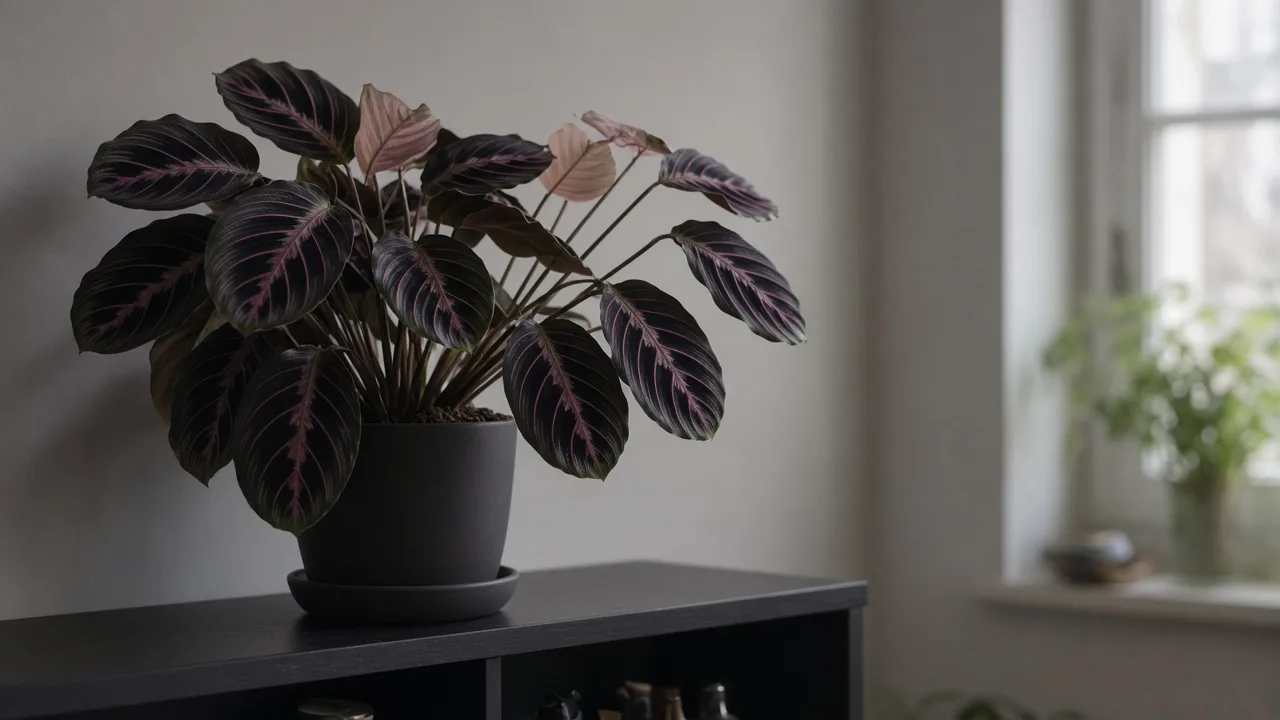
Not Enough Light on Calathea Dottie: Causes, Checks & Fixes
This guide covers not enough light on Calathea Dottie. See also the general Not Enough Light guide, watering, and light pages for this plant.
Not Enough Light on Calathea Dottie: Causes, Checks & Fixes
Quick answer
Goeppertia roseopicta ‘Dottie’ is sold for one reason: near-black leaves with a hot-pink central vein. In too little light, that display dulls first—pink washes to muddy rose, new spears arrive on long thin stems, and the clump leans toward whatever photons reach the room. The plant can look “fine” for months because prayer plants tolerate shade longer than succulents, which is exactly why Dottie often lands on decorative shelves far from glass.
For how chronic low light limits houseplant growth in general, see our not enough light hub. On Calathea Dottie, the decisive signal is pink contrast on the newest unfurling leaf—not whether the pot still matches your bookshelf.
First step: move the pot one to two feet (30–60 cm) from the brightest north- or east-facing window where direct midday or afternoon sun never strikes the leaves. Run the hand-shadow test at the crown (details below). Do not repot, fertilize, or stack humidity fixes until placement is corrected.
When to use this page vs other Calathea Dottie guides
This page is the symptom-first entry for shade-stressed Dottie—faded pink veins, stretch, and slow unfurl without pest webbing or sour wet roots.
| Pattern | Read next |
|---|---|
| Extreme bare stem with tiny leaves far apart | Leggy growth |
| Growth stalled but stems still fairly compact | Slow growth |
| Lower leaves yellow while mix stays wet | Overwatering or root rot |
| Margins crisp on multiple sides, veins still vivid | Low humidity or brown tips |
| Daytime limp with dry surface, no stretch | Underwatering or drooping leaves |
| Long-term window placement and grow lights | Light guide |
| Full problem index | All Calathea Dottie problems |
What not enough light looks like on Calathea Dottie
Healthy Dottie in adequate filtered light holds glossy dark blades with a vivid pink midrib and pink feathering along the vein—NC State Extension describes the ‘Dottie’ cultivar exactly that way. Shade stress attacks that contrast before the plant collapses.
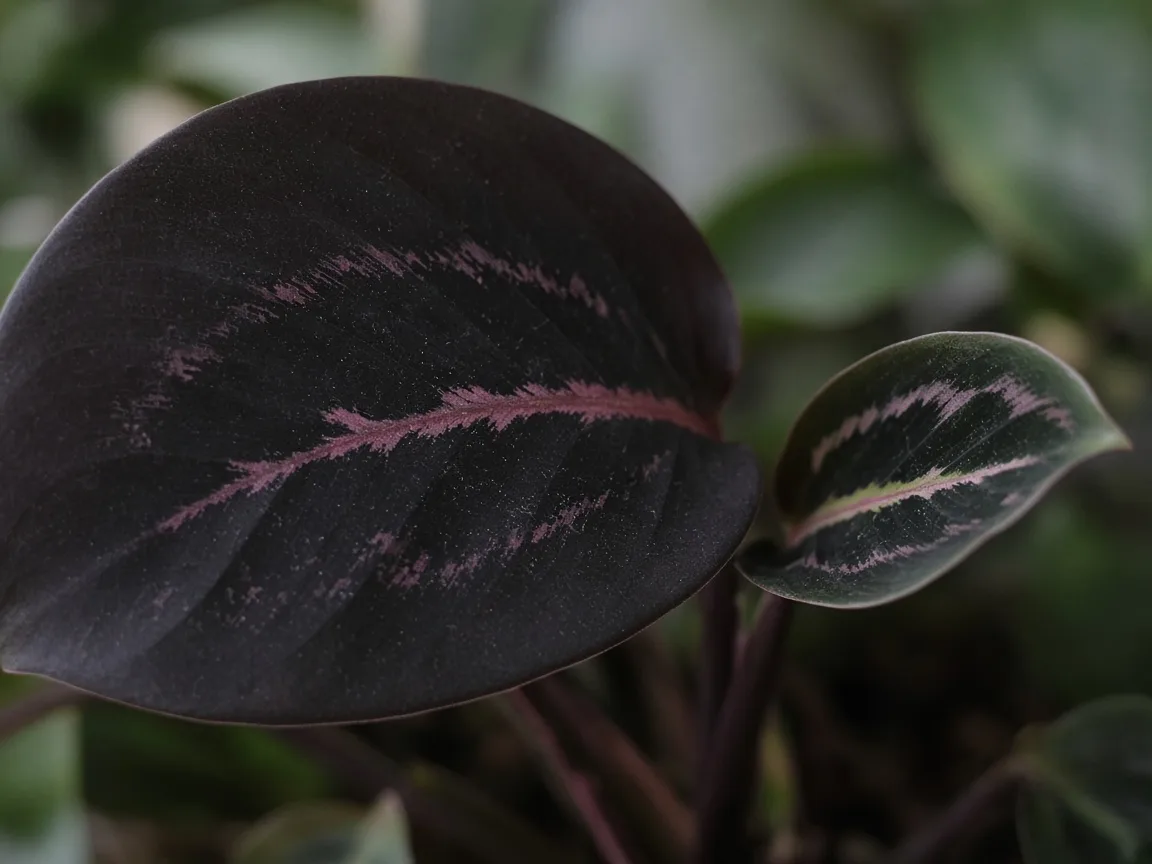
Pink vein fade on Dottie: central midrib and feathering look dull gray-pink instead of hot pink—compare with an older leaf that formed closer to the window.
- Washed-out pink veins — the central stripe and feathering turn dull rose or brown-pink while the leaf base stays dark; extension notes bright coloring fades with inadequate light on rose-painted calatheas
- Smaller new spears — rolled leaves open shorter and narrower than the previous pair, with weaker pink paint
- Longer petioles and wider spacing — new leaves sit on thin stems with bigger gaps between nodes, matching the spindly stretch low-light houseplants develop
- Lean toward the brightest gap — the clump tilts toward one window, lamp, or hallway opening
- Sluggish unfurl — new leaves take weeks to open; night folding may look weak or inconsistent compared with a well-lit prayer plant rhythm
- Slow dry-down — top mix stays cool and damp for days because photosynthesis slowed, a common pairing with overwatering stress if you keep a bright-season watering calendar
Bleaching on only the window-facing side is too much direct sun, not too little. Uniform fade plus stretch points to shade.
Pink midrib fade check (Dottie-only)
Other calatheas lose silver stripes or peacock rings; Dottie fails on pink saturation. Use this quick audit on the two newest fully opened leaves:
- Compare pink intensity to a leaf from when you bought the plant (or a photo). If the midrib lost saturation but margins are not uniformly crisp-brown, suspect light before fluoride or dry air.
- Look at the still-rolled spear at the crown. If the tip peeking out already looks olive-green with little pink, the next leaf will not “snap back” without brighter filtered light.
- Hold white paper behind the blade. True low light fades the whole pattern; low humidity often crisps pink edges first while the midrib still reads vivid.
This check would be meaningless on a snake plant or ZZ—only variegated rose-painted cultivars like Dottie use pink loss as an early light gauge.
Evening fold vs daytime limp
Calathea Dottie folds leaves upward at night when temperature and light change—nyctinasty. In dim rooms, owners often confuse weak or absent folding with thirst or dry air.
| Observation | Likely cause |
|---|---|
| Leaves flat all night, stretch toward window, pink fade | Not enough light |
| Leaves curl down in daytime, soil dry, no new stretch | Underwatering |
| Crisp pink margins, veins still bright, folding OK | Low humidity or tap-water fluoride (brown tips) |
| Yellow lower leaves, sour wet mix | Overwatering |
Track one week at dusk: if folding never returns after you move closer to glass, light was probably the missing piece—not another misting session.
Why Calathea Dottie runs out of usable light indoors
Goeppertia roseopicta evolved as an understory rainforest plant in northwestern South America. It needs bright, indirect light at the leaf surface—NC State lists bright indirect light and partial shade for rose-painted calatheas—not open-sky sun and not a hallway table six feet from glass.
Indoors, human eyes misread brightness. Light intensity drops sharply with distance from the window. Many back-shelf spots sit in the 25–75 foot-candle range while commercial Calathea production targets roughly 150–200 foot-candles for best indoor appearance. Dottie survives below that band longer than it thrives; pink contrast is the first casualty.
Common triggers for Dottie:
- Decor placement — the pot matches furniture but the crown receives almost no window light
- Winter day-length drop — a July placement fails by January without moving closer or adding a lamp
- Retail-to-dim-shelf shock — nursery stock grown under bright benches fades two to six weeks after home placement
- Sheers, tint, and dirty glass — cut transmitted light more than growers expect
- Competing “low-light tropical” advice — Dottie is not a cast iron plant; RHS notes calatheas want a bright spot out of direct sun
Low light also slows water use. Keeping the same Calathea Dottie watering interval from a brighter season leaves mix wet too long—a direct path to yellow leaves and root stress.
How to confirm the cause
Work through these checks before changing water, fertilizer, or pot size.
- Hand-shadow test. At midday, hold your hand one inch above the crown between plant and window. You want a soft, blurred shadow—not almost none (too dim) and not a sharp dark shadow (direct sun on the blade).
- New spear quality. Compare the last two opened leaves. Each smaller, duller pink, or on a longer stem than the last implicates light.
- Lean direction. Rotate the pot a quarter turn; if it re-leans toward the same window within days, phototropism confirms uneven brightness.
- Soil dry-down. Press the top 2 cm. If it stays wet four to five days after watering with firm stems and no sour smell, low photosynthesis may be slowing uptake—especially if the same pot dried faster last summer.
- Rule out lookalikes. Soft stems and sour mix → root rot first. Uniform bleaching on one side → move back from direct sun per the light guide.
Confirmation test: Move to brighter filtered light and change nothing else for two weeks. If the next leaf opens with hotter pink on a shorter petiole, not enough light was the limiter.
First fix for Calathea Dottie
Move the pot one to two feet from an unobstructed north- or east-facing window—the brightest place where hot midday or afternoon sun never hits the leaves.
That single placement change fixes the most common cause without stacking stress. RHS guidance places calatheas in a bright spot shaded from direct sunlight; east or north glass usually matches Dottie’s pink-on-black display best in the Northern Hemisphere.
If the brightest opening is south- or west-facing, set Dottie four to six feet back or behind a sheer curtain so you gain brightness without scorching dark foliage. When no window passes the hand-shadow test, hang a full-spectrum LED grow light 12–18 inches above the tallest leaf and run it 10–12 hours on a timer.
After moving, hold watering steady for the first week, then adjust to the new dry-down speed. Do not fertilize a stressed clump to “wake it up.”
Step-by-step recovery
Recovery is judged by new spears, not old faded blades.
Week 1–2: Rotate the pot a quarter turn every few days. Wipe dust from leaves with a soft damp cloth—dust blocks light from an already marginal window. Skip repot and feed.
Week 3–4: Watch the newest rolled leaf. Success is shorter petiole, faster unfurl, and sharper pink midrib versus the leaf before the move. Night folding should look more consistent.
Week 5–8: Optional trim of the most stretched old leaves once two good new leaves open. Etiolated petioles never shorten—they remain as history of the dim period.
If no improvement: Move six inches closer, add a grow light, or verify blinds and neighboring buildings block more light than assumed. If pink stays dull in confirmed bright indirect light, inspect for spider mites on undersides before blaming light alone.
Recovery timeline
Expect clearer pink on new growth within two to four weeks after a meaningful light increase. The first leaf after a move may still show some stretch if the plant was severely etiolated—judge the second and third spears for the trend.
Old washed-out veins and long petioles do not revert. That permanent tissue is normal, not proof the fix failed.
Months on a dark shelf can leave a sparse clump even after light improves. Repotting and division in spring can reshape a healthy rhizome—but only after several weeks of stable new growth confirm light is solved.
Mistakes to avoid
Do not jump a dim Dottie onto an unfiltered south sill to “fix pink” in one afternoon. Sudden intense sun bleaches dark leaves faster than shade weakened them. Increase brightness gradually over seven to fourteen days when moving substantially closer.
Do not over-fertilize shade-stressed plants. Without enough light, Dottie cannot use extra nitrogen efficiently; salts yellow foliage and compound stress.
Do not keep a calendar watering rhythm after a light change. Brighter filtered light increases transpiration; dim corners need longer dry intervals. Calendar watering without checking soil is how low-light Dottie ends up with wet roots.
Do not confuse survival with health. Dottie can linger with slowly dulling pink for months. Move it before stretch and root stress accumulate.
Do not rely on room lamps. Standard bulbs help human eyes, not leaf-level photosynthesis. Use a dedicated grow light over the canopy if windows fail the shadow test.
How to prevent it next time
Place Dottie where light hits the leaf crown, not where the pot fits the shelf. The hand-shadow test takes thirty seconds and prevents months of pink fade.
Rotate weekly during active growth so stems do not lock into a permanent lean. Clean window glass seasonally.
Track seasons: move closer or extend grow-light hours when autumn shortens days; pull back or filter when spring sun strengthens against south or west glass—before bleaching, not after.
Pair light with water. When you move Dottie brighter, expect faster dry-down per the watering guide. When winter reduces light, let the surface dry slightly longer before rewetting—RHS warns against overwatering when growth slows.
Keep humidity and filtered water in the background once light is adequate. Pink-edge crisp from fluoride or dry air is easier to fix when new leaves already receive enough brightness to show the pattern.
When to worry
Low light alone rarely kills Dottie quickly. Escalate when stretch pairs with chronic wet soil, multiple yellow leaves, soft stems, or a sour smell—inspect roots and reduce watering while improving light in the same week.
If no new spears appear for three or more months in a confirmed dim spot despite careful watering and humidity, the rhizome may be exhaustively weak. Improve light immediately, hold fertilizer, and reassess in four weeks. A clump with no new growth after light correction may need division of firm rhizome sections in spring.
When the only location fails the hand-shadow test year-round, commit to a grow light on a timer rather than accepting slow pink loss. Dottie is not a snake plant—weak growth from insufficient light will not self-correct on leftover room brightness.
Related Calathea Dottie guides
- Overview — full care profile and what makes Dottie’s pink contrast unique
- Light requirements — window map, grow lights, and safe sun limits after you confirm shade stress
- Watering — dry-down timing once photosynthesis matches your placement
- Soil — moisture-retentive mix that still drains when light increases water use
- Problems hub — full cluster when symptoms overlap
Related tool
Use the Plant Problem Diagnosis Tool to separate light stress from watering and pest patterns before you change multiple variables at once.