Drooping Leaves on Calathea Dottie: Causes, Checks & Fixes
Quick answer
Drooping on Calathea Dottie is usually lost turgor from dry mix, soggy roots, or low humidity—not thirst every time. First step: at midday (not dusk), push your finger 2 cm into the mix and lift the pot before you pour more water.
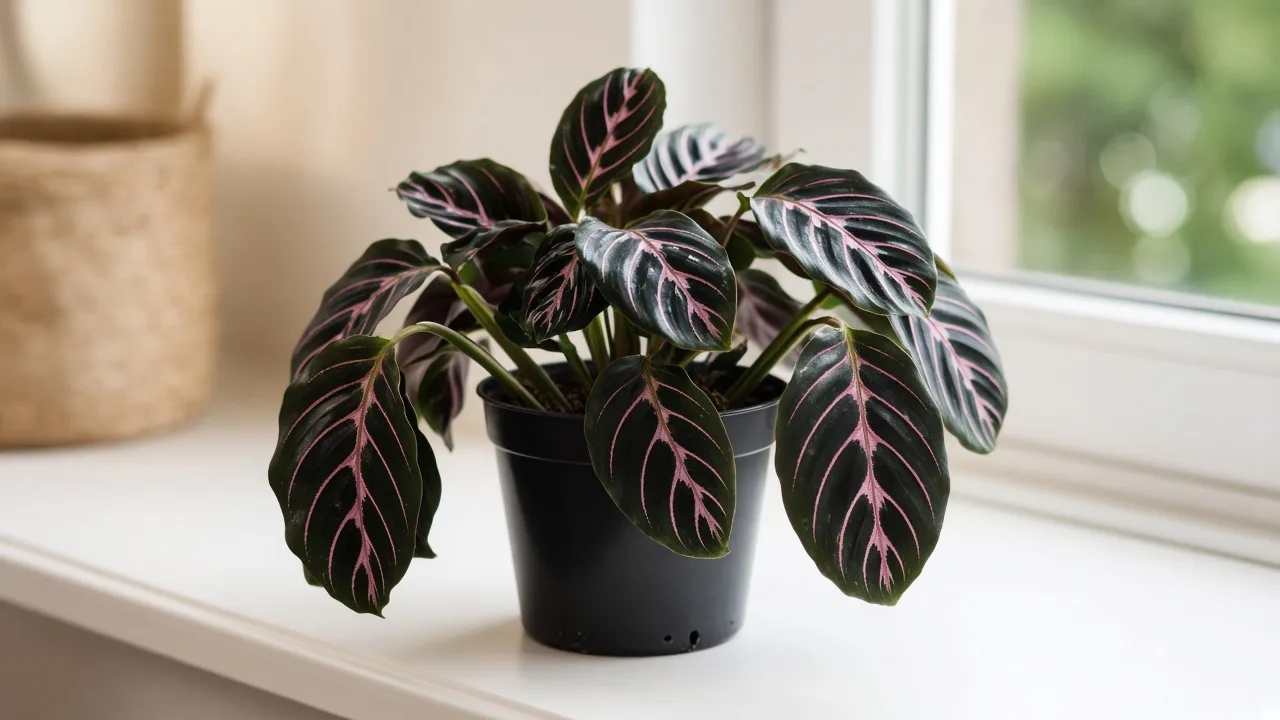
Drooping Leaves on Calathea Dottie: Causes, Checks & Fixes
This guide covers drooping leaves on Calathea Dottie. See also the general Drooping Leaves guide, watering, and light pages for this plant.
Drooping Leaves on Calathea Dottie: Causes, Checks & Fixes
Quick answer
Healthy Calathea Dottie holds glossy near-black blades on stiff petioles, with a vivid pink stripe along the midrib and pink feathering toward the edges. Drooping means those petioles lose rigidity and the leaves hang at a lower angle than usual—sometimes with pink veins that look dull or washed out on the newest foliage.
Goeppertia roseopicta ‘Dottie’ stores little drought tolerance compared with succulents; it expects moist but not soggy peaty mix, high humidity, and rain or distilled water. For how turgor loss works on houseplants in general, see our drooping leaves hub. On Dottie, the split is top-2-cm moisture plus pot weight at midday—not leaf posture at bedtime.
First step: push your finger about 2 cm into the mix and lift the pot. Do not repot, fertilize, or move the plant to a new window until you know whether the root zone is wet or dry.
When to use this page vs other Calathea Dottie guides
This page is for limp, downward-hanging foliage through the day, while you still decide whether water, humidity, roots, or pests are involved.
| Pattern | Read next |
|---|---|
| Rapid collapse, soft stem, sour wet mix | Wilting or root rot |
| Limp leaves on damp mix for days | Overwatering |
| Light pot, dry top 2 cm, curled edges | Underwatering |
| Crisp pink margins on new leaves, no full droop | Brown tips or low humidity |
| Faded pink pattern, stretched stems | Not enough light |
| Care rhythm and filtered water | Watering, light, soil |
What drooping leaves look like on Calathea Dottie
On a well-grown Dottie, elliptical leaves sit at a confident angle from the crown, dark green above and reddish-purple beneath, with the pink midrib reading clearly from across the room. Drooping changes that silhouette: petioles soften, blades point toward the floor, and the plant can look smaller even though no leaves fell off.
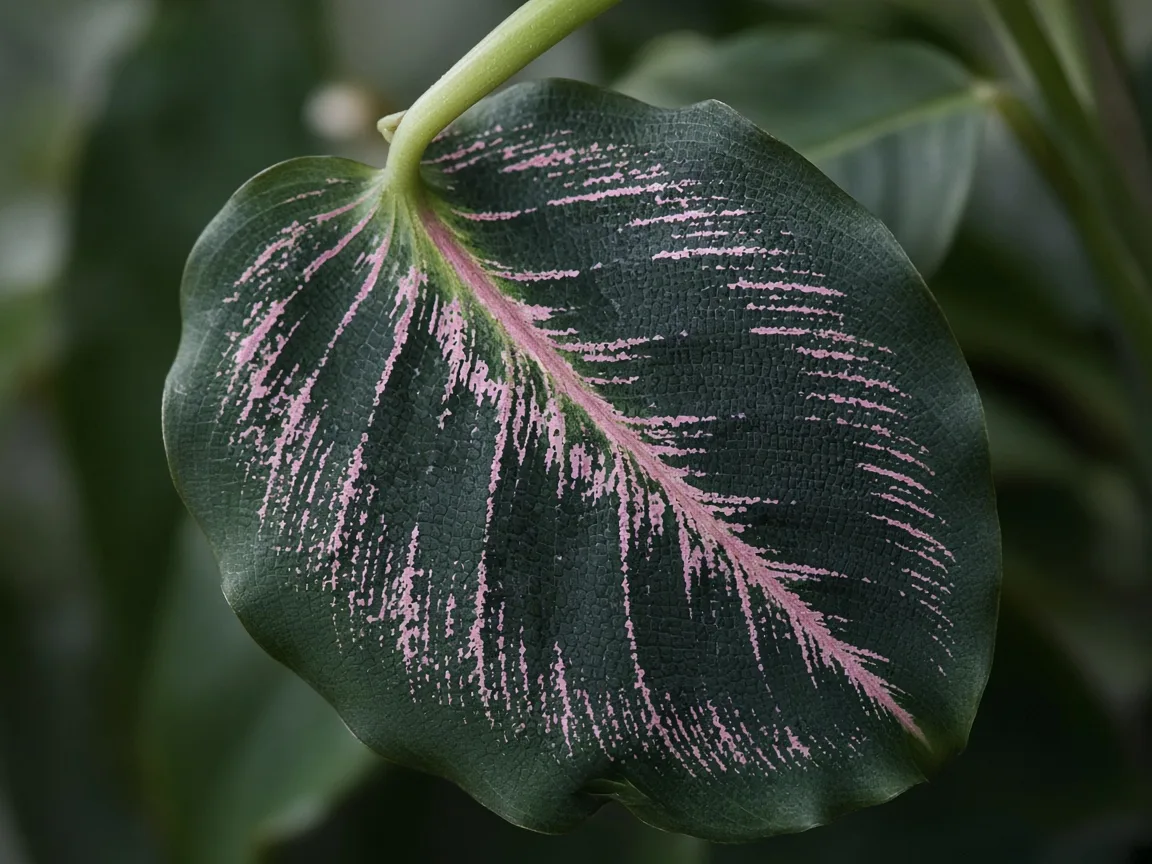
Drooping on Dottie—a soft petiole and hanging blade; compare with leaves still holding angle on the same plant and check whether pink veining looks vivid or washed out.
Patterns that narrow the cause:
- Whole plant limp midday; top 2 cm crumbly dry; pot feels light — typical dry stress after a missed watering or an overly airy mix in dry air (underwatering).
- Lower leaves yellow first; mix stays cool and damp; pot heavy — overwatering or failing roots; damaged roots cannot refill leaves even when the mix is wet (Missouri Botanical Garden).
- New spear stuck half-open, edges crisp, plant otherwise watered on schedule — often low humidity or fluoride in tap water, not a calendar underwatering event (NC State Extension).
- Fine webbing on undersides, stippled blades — check spider mites before you increase watering.
Evening leaf fold vs true droop on Dottie
Dottie belongs to the prayer plant family. NC State notes that rose-painted calatheas fold leaves in the evening and reopen them in the morning as light and temperature change. That upward fold can look like the plant is “drooping” if you only glance at it after work.
Use this rule: photograph or inspect Dottie at lunch, not at 9 p.m. True droop shows limp, downward-hanging blades when the plant should be fully open in bright indirect light. If leaves stand tall at noon but fold vertically at night, you are seeing normal nyctinastic movement—not a watering emergency.
If morning arrives and blades stay limp on the floor while neighbors on the same windowsill have reopened, treat that as real droop and start with the top-2-cm check from the watering guide.
Pink veins as an early stress signal
The ‘Dottie’ cultivar is defined by dark green leaves with a pink central vein and pink feathering. That contrast fades when the plant is stressed—often before every leaf fully collapses.
Watch new growth:
- Vivid pink on firm spears — root zone and humidity are probably in range.
- Washed-out pink on limp new leaves — suspect dry air, tap water minerals, or light that is too dim; droop may follow if you only chase soil moisture.
- Bleached or scorched patches with droop — direct sun on dark foliage; move to filtered light per the light guide before watering harder.
Pink vein fade alone is not a diagnosis, but on Dottie it is a useful early flag paired with petiole stiffness and pot weight.
Top 2 cm dry-down and filtered water
LeafyPixels Dottie watering follows a practical trigger: water when the top 2 cm begins to dry, then drain fully. That depth matches how quickly a 15–20 cm nursery pot dries in air-conditioned rooms—and how slowly the same pot dries in a humid bathroom.
Before you water a drooping Dottie:
- Probe 2 cm deep near the pot rim. Crumbly dry surface with a light pot confirms dry droop.
- Lift the pot. Heavy weight plus limp lower leaves on damp mix points to oversaturation—stop watering.
- Pour with rainwater, distilled, or filtered water at room temperature. NC State warns that fluoride in tap water browns foliage and can crisp unfurling leaves even when moisture timing is correct.
The Calathea Dottie watering guide covers skewer checks along the pot wall and counting winter slow-down. Drooping during active spring growth usually means your dry-down rhythm drifted—not that Dottie suddenly needs daily floods.
Cachepots, stale runoff, and winter slow-down
Container Dottie in a decorative cachepot faces a common trap: runoff sits in the outer pot while the upper mix looks merely damp. Roots in the bottom third stay saturated; leaves droop even though the calendar says you “watered last week.” Roots in waterlogged soil lose oxygen and uptake fails.
Signs you are in this trap:
- Mix feels cool and heavy while blades hang limp
- Fungus gnats appear after weeks of gentle watering
- Lower leaves yellow on wet soil
- Pot weight barely changes between waterings
Empty the cachepot after every soak. In winter, when growth slows, extend the interval between checks so you are not watering on a summer schedule into cold, dim weeks—RHS guidance for calatheas emphasizes keeping compost evenly moist in the growing season without letting it become waterlogged.
Humidity, unfurling spears, and limp blades
NC State lists leaf curling from low humidity or inadequate watering on rose-painted calatheas. On Dottie, those stresses often show together: a new spear creases instead of unfurling, edges brown at the pink margin, and older blades droop because transpiration outpaces what roots can supply in dry air.
Misting alone rarely fixes this; a humidifier targeting 60% relative humidity or higher matches the species’ tropical understory niche (Missouri Botanical Garden Plant Finder). Grouping with other plants helps slightly, but do not let that trick replace a moisture check—dry soil droop and humid-air droop need different first fixes.
If humidity is adequate and the top 2 cm is dry, one soak-and-drain is the right first response. If humidity is low and soil is wet, raising humidity comes before another drink.
Lookalike symptoms on Calathea Dottie
| What you see | Likely cause | Next step |
|---|---|---|
| Downward limp blades midday; dry top 2 cm | Dry stress | One soak-and-drain; review underwatering |
| Limp on wet mix; yellow lowers | Wet roots | Stop water; see overwatering |
| Vertical fold at night only | Normal prayer-plant movement | Re-check at noon |
| Half-unfurled spear, crisp pink edge | Humidity or water quality | Humidifier + filtered water |
| Stippling + fine webs | Spider mites | Spider mites page |
| Soft stem base, sour smell | Advanced root failure | Root rot |
First fix to try
At midday, probe the top 2 cm and lift the pot—then act on what you find, not on leaf drama alone.
- If dry and light: water thoroughly with filtered or rainwater until a little runs from drainage holes; discard cachepot runoff and wait 24 hours before judging.
- If wet and heavy: withhold water, improve airflow, empty standing water, and inspect the stem base for softness before any repot.
Do not fertilize a drooping Dottie to “perk it up.” Do not repot on day one unless the stem is mushy or roots are clearly failing—see repotting after the plant stabilizes.
Recovery timeline and what improves first
Mild dry droop often shows firmer petioles within 24–48 hours after one proper watering if the stem base stayed solid. Leaves that hung for days on wet soil may stay limp until new roots form—sometimes several weeks in cool weather.
Judge recovery by:
- New spears emerging without creasing
- Pink veining returning on fresh leaves
- Drooping that stops spreading to additional blades
Older yellow leaves rarely revert to deep green; trim only after the plant holds steady new growth. Dottie is non-toxic to cats and dogs per ASPCA Calathea listings, so you can inspect and rinse foliage without a toxicity emergency—but sap may irritate skin; wash hands after handling damaged tissue.
Mistakes to avoid
- Watering because leaves folded at night without checking midday posture
- Using tap water on limp new growth while blaming “underwatering” only
- Leaving the nursery pot in a full cachepot after every soak
- Moving to direct sun to “ strengthen” a droopy plant—dark Dottie leaves scorch quickly
- Stacking repot, pruning, humidifier placement, and pest spray on the same day
Change one variable, then watch new spears for a week.
How to prevent drooping next time
Align care with Dottie’s rainforest understory habit: bright indirect light, moisture-retentive but airy soil, filtered water, and stable humidity. Weigh or lift the pot on the same day each week during growing season so dry-down speed stays visible.
After travel or a new HVAC season, expect a one-week adjustment period—probe the top 2 cm more often until weight feels familiar again. Browse the full Calathea Dottie problems hub if droop keeps returning with different side symptoms.
Related Calathea Dottie guides
- Calathea Dottie overview — pink vein contrast, humidity, and filtered water basics
- Calathea Dottie watering — top 2 cm trigger, skewer checks, winter rhythm
- Calathea Dottie light — bright indirect without scorch on dark blades
- Calathea Dottie soil — peat or coir base with perlite for drainage
- Underwatering on Calathea Dottie — light pot, dry surface, curled edges
- Overwatering on Calathea Dottie — limp leaves on wet mix, gnats, yellow lowers
- Root rot on Calathea Dottie — mushy roots, soft crown
- Wilting on Calathea Dottie — faster collapse vs slower droop
- Calathea Dottie problems — all species-specific issue pages
Conclusion
Drooping leaves on Calathea Dottie tell you turgor dropped somewhere in the water–humidity–root chain—not that the fix is always more water. Check at midday, probe the top 2 cm, lift the pot, and match one correction to one cause. Evening prayer-plant folding is normal; limp blades that stay down all day are not. Recovery shows up first on firm new spears with strong pink veining, not on every older leaf returning to a perfect angle.
Related tool
Use the Plant Problem Diagnosis Tool to narrow causes for drooping leaves on this plant before changing multiple variables at once.