Mealybugs on Anubias: Causes, Checks & Fixes
Quick answer
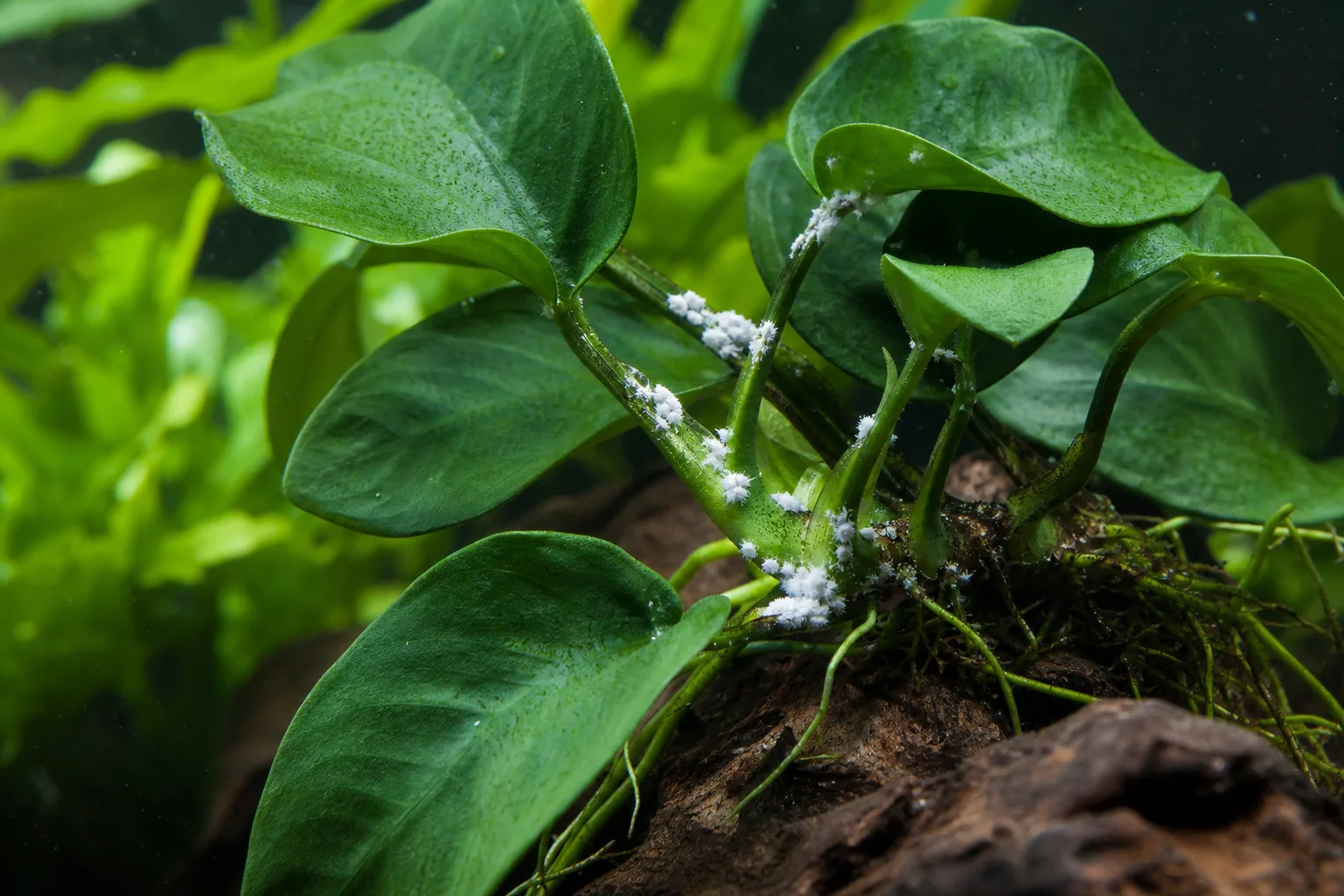
Mealybugs on Anubias hide in rhizome crevices, leaf axils, and petiole bases-especially on emerged or quarantine growth. First step: remove the plant from the tank and inspect those tight joints with a magnifier before treating.
Mealybugs on Anubias: Causes, Checks & Fixes
This guide covers mealybugs on Anubias. See also the general Mealybugs guide, watering, and light pages for this plant.
Mealybugs on Anubias: Causes, Checks & Fixes
Quick answer
Mealybugs on Anubias (Anubias barteri and related species) show up as white, cottony clusters in the sheltered spots this slow-growing aroid naturally creates: rhizome crevices, leaf axils, petiole bases, and the undersides of thick leaves. They suck sap and secrete honeydew, and they spread to other plants in quarantine or on nearby shelves if you wait.
First step: remove the Anubias from your main tank or pond and inspect every rhizome joint and leaf base with a magnifier in a quarantine container. You need to know how far the infestation reaches before dabbing alcohol or rinsing foliage-blind treatment in occupied turtle water misses hidden colonies and risks exposing animals to chemicals that do not belong in the aquarium.
What mealybugs look like on Anubias
On Anubias, mealybugs rarely sit in plain view on the glossy leaf surface. They aggregate where the plant’s architecture creates cover:
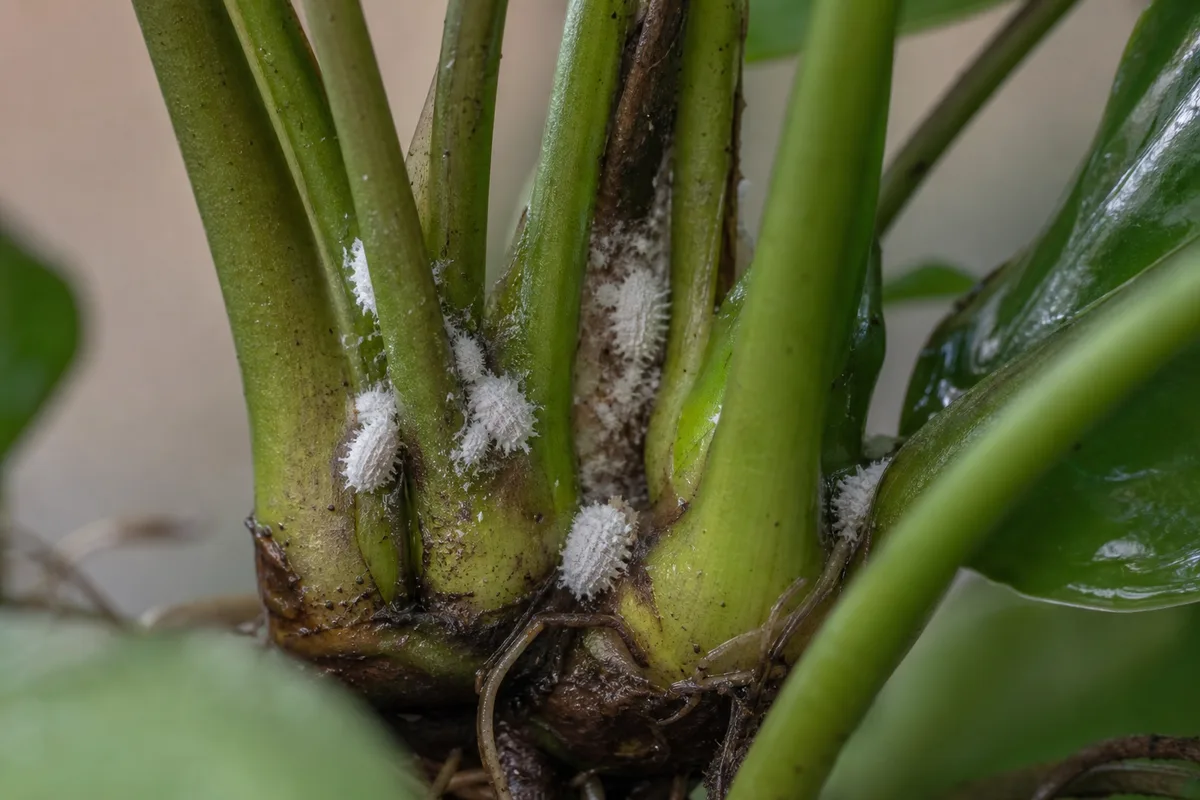
Mealybugs symptoms on Anubias - compare with healthy tissue on the same plant.
- White or grayish cottony masses in leaf axils and along the rhizome
- Slow-moving oval insects under the wax if you part the fluff with a swab
- Sticky honeydew on leaves, driftwood, or tank glass below infested growth
- Black sooty mold growing on honeydew if the colony has been ignored on emerged portions
- Yellowing or stunted leaves on heavily fed parts of the plant
Anubias is usually grown attached to rock or driftwood with the rhizome exposed, not buried in substrate. That exposed rhizome gives mealybugs a horizontal runway of tight crevices between leaf petioles-easy to miss during a quick glance at tank water clarity.
Mealybugs need air-breathing, above-water or emersed tissue to thrive long term. You most often see them on emerged leaves, plants in quarantine tubs, nursery stock kept damp but not fully submerged, or paludarium growth above the waterline. Fully submerged colonies are uncommon but emerged tips and floating mats are worth checking.
Root mealybugs are possible when roots sit in gravel or when the rhizome was mistakenly buried-some mealybugs feed below the soil line. If leaf joints look clean but growth stalls, gently lift the rhizome and inspect root crowns and substrate contact points for white wax.
Why Anubias gets mealybugs
Mealybugs are introduced pests, not something Anubias develops from dirty water alone. The most common entry routes in aquatic setups:
- New plants without quarantine - nursery Anubias often arrives emersed or in damp bags; hidden colonies sit in rhizome crevices before the plant ever reaches your turtle tank
- Contact spread - crawlers walk to touching leaves, nets, scissors, or hands moving between quarantine tubs and display tanks
- Emersed growth in warm rooms - plants held in propagation trays or paludariums behave like houseplants; indoor conditions without natural predators let populations persist year-round
- Stressed tissue - melting leaves after a tank move, rhizome damage from burying, or copper exposure weaken the plant and slow recovery after feeding damage (stress does not create mealybugs, but it makes a colony harder to shake)
Anubias’s slow growth means a mealybug colony can sit on one rhizome section for weeks before you notice yellowing on just a few leaves. That delay is why rhizome inspection matters more than watching overall tank algae.
Poor water quality does not cause mealybugs directly. However, honeydew plus organic film on emerged leaves can invite sooty mold that blocks light to slow-growing Anubias-clean sticky residue once insects are controlled.
How to confirm the cause
Work through these checks before treating:
- Location of white material - Mealybugs cluster in joints and crevices along the rhizome and petiole bases. Flat diatom algae or hard-water film sits evenly on leaf faces and wipes off without a pink smear.
- Crush test - Dab a cluster with a damp cotton swab and crush it. Mealybugs leave a pink or reddish smear (some species release a reddish defensive secretion when disturbed); mineral deposits and most algae do not.
- Movement - Part the cottony mass with a toothpick. Slow legs or a waxy body confirm live insects; static fluff may be old wax from a dead colony.
- Honeydew - Sticky residue on leaves or hardscape below the infestation points to sap feeders, not melting tissue from acclimation alone.
- Scope - Count how many leaf axils and rhizome sections are affected and whether other quarantined or nearby plants show the same pattern.
- Root and rhizome check - If above-water tissue looks clean but new leaves stay small, inspect where roots meet gravel or where the rhizome touches substrate.
Lookalikes to rule out first:
- Snail eggs - Clear or gelatinous jelly clumps on leaves or glass; not cottony wax with legs inside
- Diatom or filamentous algae - Flat brown-green or stringy growth on leaf surfaces; does not smear pink when crushed
- Mineral deposits - Hard white crust from hard water; does not cluster only in axils
- Scale insects - Flat brown or tan disks glued to petioles; not fluffy wax tufts
- Normal acclimation melt - Translucent brown tissue on older leaves after a tank move; no cottony clusters and no honeydew
First fix for Anubias
Remove the plant from the main tank and dab every visible mealybug with 70% isopropyl alcohol on a cotton swab.
Place the Anubias in a fish-free quarantine tub or bucket with clean dechlorinated water and adequate light. Work systematically along the rhizome from the oldest leaf bases to the growing tip-lift each petiole and press alcohol directly onto every white cluster until the wax dissolves and insects turn light brown. Colonies tucked under the rhizome where it meets rock or wood must be touched individually; spraying tank water does nothing.
Before a full pass, test alcohol on one older leaf and wait 24 hours-UC IPM recommends testing on a small area first to check for leaf burn. Anubias foliage is tough but can show phytotoxicity if alcohol pools on the surface. If the test leaf marks, dab insects only and keep liquid off the blade.
Never dump alcohol, insecticidal soap, or terrestrial pesticides into a tank occupied by turtles, fish, or shrimp. Treat the plant out of the display system, rinse treated emerged portions with clean dechlorinated water, and only return the plant after you see no new wax for at least two weeks.
Do not bury, fertilize, or split the rhizome on day one unless you confirm root mealybugs at substrate contact points.
Step-by-step recovery
After the first alcohol pass, continue on a weekly cycle until you see no new cottony wax for at least two weeks:
- Repeat alcohol dabs weekly - Newly hatched crawlers are mobile and easy to miss. Hit every leaf axil, rhizome crevice, and petiole base each session.
- Rinse emerged foliage - Gently spray leaf undersides with dechlorinated water in the quarantine tub to knock down crawlers. Let leaves air-dry before returning to high-humidity cover.
- Wipe honeydew - Clean sticky leaves and hardscape with a damp cloth so sooty mold does not block light to slow-growing tissue.
- Escalate for heavy infestations - If colonies cover multiple leaves, follow alcohol dabs with insecticidal soap labeled for houseplants, applied only in quarantine with emerged portions treated outside the main tank. Repeat every five to seven days for two to three cycles, then rinse before any return to animal water.
- Check the collection - Inspect every plant that shared quarantine space, nets, or tools. Treat any new wax immediately.
- Address root mealybugs if present - When wax appears on roots or buried contact points, trim affected roots, rinse the rhizome, and remount with the rhizome above substrate on rock or wood-never buried.
Hold aquarium fertilizer until new growth looks clean for two weeks. Feeding a stressed Anubias during active pest pressure pushes soft tissue that sap feeders prefer, and adds unnecessary nutrients to quarantine water.
Recovery timeline
Visible colonies should shrink within one to two weeks of consistent weekly alcohol dabs in quarantine. Expect three to four weekly passes minimum before calling the plant clear-eggs and crawlers hatch on staggered schedules.
Clean new leaves emerging from the rhizome are the best recovery markers. Old Anubias leaves with yellow stippling or feeding scars will not fully revert; trim them for hygiene once the plant is insect-free and the rhizome stays firm.
If wax reappears in the same axils after four diligent weeks, look for missed rhizome colonies, root mealybugs, or reinfection from an untreated neighbor-not a need for more tank fertilizer.
Worsening signs: sooty mold spreading on emerged leaves despite cleaning, softening rhizome tissue at heavily infested joints (rare secondary decay when honeydew and moisture combine), or crawlers on every new leaf within days of treatment.
What not to do
Do not treat inside an occupied turtle or community tank with alcohol, soap, or pesticides-those products are not formulated for animal water and can harm turtles, fish, and invertebrates.
Avoid burying the rhizome while fighting pests; buried Anubias rots easily and gives mealybugs more hidden substrate contact.
Do not return the plant to the display tank after one treatment. Two weeks with no new wax in quarantine is the minimum before reintroduction.
Skip copper-based algaecides or random pond chemicals on infested Anubias-Anubias overview is already sensitive to copper, and chemicals will not replace manual mealybug removal.
Do not compost infested trimmings indoors where crawlers can walk to other pots or quarantine tubs.
Avoid assuming submerged leaves are clean because you cannot see axils-inspect emerged portions and rhizome joints every time you thin old growth.
How to prevent mealybugs next time
- Quarantine new Anubias two to four weeks in a separate container before adding it to a turtle tank or community aquarium-inspect new plants thoroughly before introducing them
- Inspect rhizomes and leaf axils at each quarantine water change-this plant’s exposed rhizome hides pests by design
- Keep quarantine tools separate from nets and scissors used in display tanks
- Treat only in fish-free tubs; rinse emerged tissue with dechlorinated water before reintroduction
- Avoid burying the rhizome in gravel-attach to rock or driftwood as intended
- Check emersed nursery stock especially hard before it enters any warm propagation tray
Stable clean water, moderate light, and an unburied rhizome keep Anubias resilient. A plant melting after a tank move is not more likely to attract mealybugs from nowhere, but it recovers more slowly once they arrive.
When to worry
Escalate immediately if multiple quarantined plants show cottony wax, if crawlers reach emerged leaves above a turtle basking area, or if ants appear near the aquarium feeding on honeydew from nearby houseplants.
Consider discarding and replacing the plant only when most rhizome joints are infested, wax packs crevices you cannot reach without destroying the mount, and four or more weeks of careful quarantine treatment fail-especially if the rhizome is already soft from being buried or rotting.
For a single cluster on one leaf axil on an otherwise firm Anubias, quarantine plus weekly alcohol is usually enough. The urgency is stopping spread to your tank collection and neighboring plants, not panic.
Conclusion
Mealybugs on Anubias are a contact pest that hides along the exposed rhizome and in leaf joints, not a mystery aquarium disease. Confirm them with cottony wax in axils and a pink smear crush test, remove the plant from animal water first, then dab every colony with alcohol on a weekly schedule until new wax stops appearing. Prevent reinfestation by quarantining new Anubias and inspecting rhizome crevices every time you thin old leaves-on this species, the bugs hide exactly where the petioles meet the rhizome.
When to use this page vs other Anubias guides
- Anubias watering guide - Use for routine moisture checks before assuming mealybugs is the main issue.
- Anubias problems hub - Browse all 16 common issues on this species.
- Yellow Leaves on Anubias - Different entry point when symptoms overlap with mealybugs.
- Slow Growth on Anubias - Different entry point when symptoms overlap with mealybugs.
- Spider Mites on Anubias - Different entry point when symptoms overlap with mealybugs.