Brown Tips on Alocasia Dragon Scale: Causes, Checks & Fixes
Quick answer
Brown tips on Alocasia Dragon Scale usually trace to low humidity below 60%, fluoride or mineral buildup in tap water, or root stress from wet substrate while margins look dry. First, read humidity at leaf level with a hygrometer, poke the top 2–3 cm of mix with a chopstick, and note whether you use unfiltered tap water before trimming or repotting.
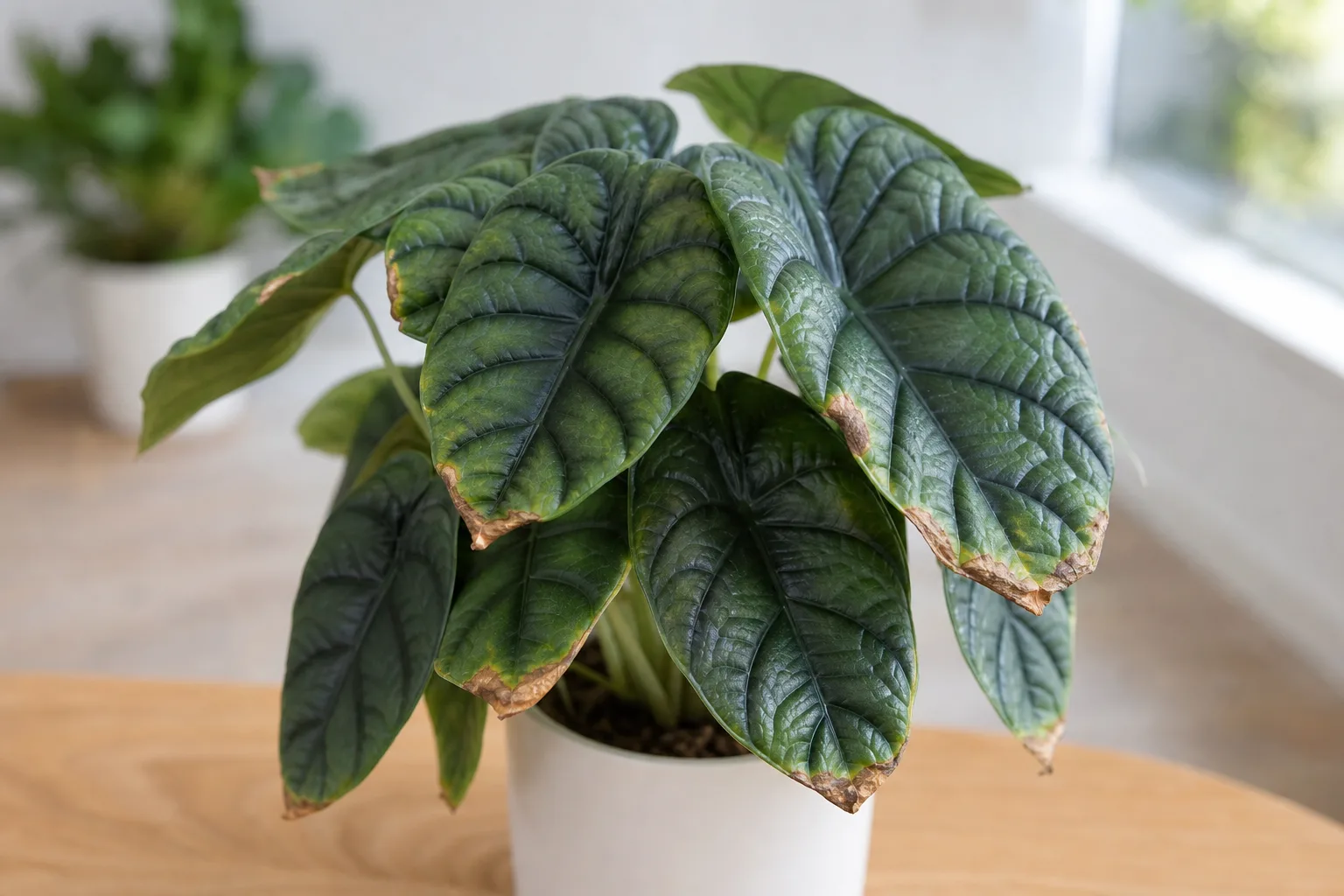
Brown Tips on Alocasia Dragon Scale: Causes, Checks & Fixes
This guide covers brown tips on Alocasia Dragon Scale. See also the general Brown Tips guide, watering, and light pages for this plant.
Brown Tips on Alocasia Dragon Scale: Causes, Checks & Fixes
Quick answer
Brown tips on Alocasia Dragon Scale (Alocasia baginda ‘Dragon Scale’) are a localized stress signal on this Jewel Alocasia-not a death sentence. The thick, ridged leaf margins are the last cells to receive water and the first to show damage when room air is dry, tap water carries fluoride, or roots cannot move moisture despite how the soil feels.
First step: measure humidity at leaf level and check substrate moisture at the same time. Place a hygrometer beside the foliage for a day. Push a chopstick into the top 2–3 cm of mix-the same depth used in the Alocasia Dragon Scale watering guide. Note whether you water with unfiltered tap water. Those three readings usually separate dry-air burn, fluoride accumulation, and wet-corm root stress before you trim leaves or change pots.
For baseline watering rhythm, water quality, and dormancy cuts, see the watering guide.
What brown tips look like on Alocasia Dragon Scale
On healthy Dragon Scale foliage, tip burn appears as dry, tan-to-dark-brown crispy tissue along leaf margins or points while the center of the textured blade stays green and firm. Damage often starts on older leaves near heating vents or cabinet fans first, because they have been transpiring longest in the driest microclimate.
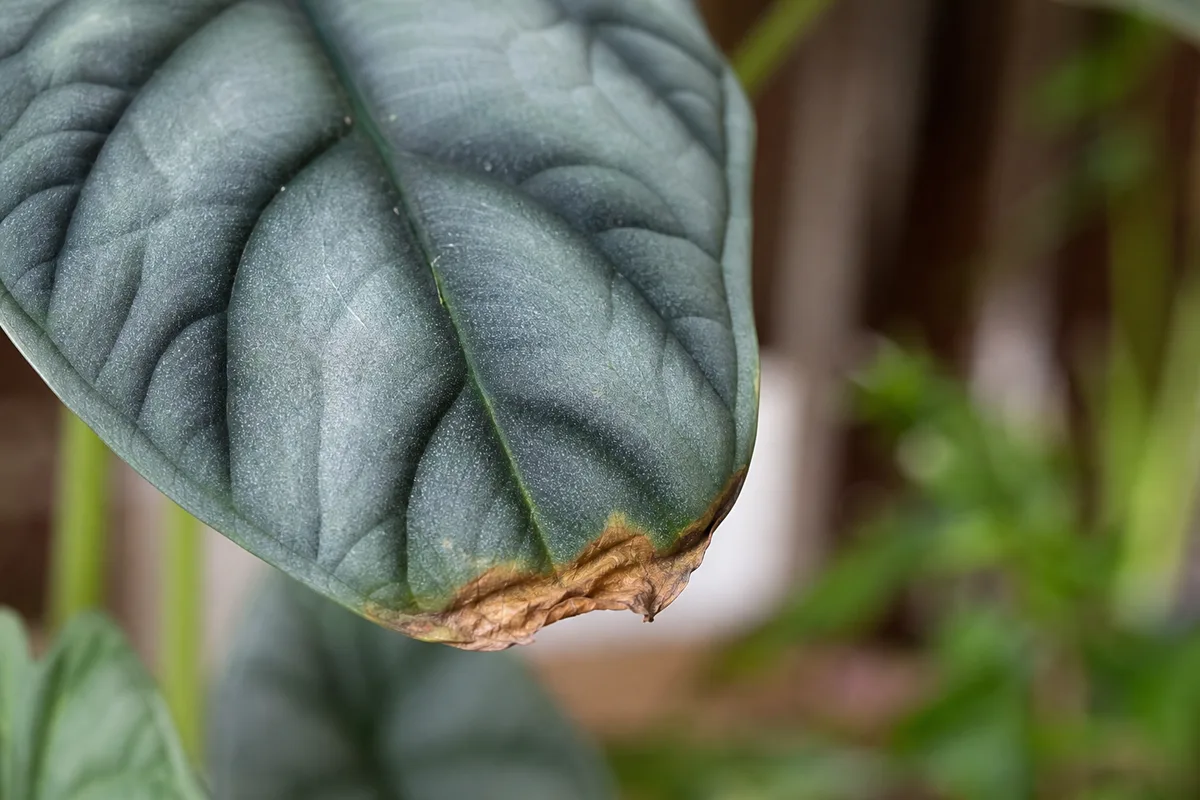
Brown Tips symptoms on Alocasia Dragon Scale - compare with healthy tissue on the same plant.
Typical patterns:
- Brown only at the tip or along the ridged outer edge; interior tissue remains green
- Paper-dry texture you can crumble between fingers
- Slow creep inward over weeks, not overnight spread across the whole leaf
- Newest spears may show edge browning before fully unfurling if stress is ongoing
- Margins on textured “scale” ridges brown before the flat center of the blade
Dragon Scale leaves are smaller than a Monstera but thicker and more heavily textured. That cuticle holds moisture differently: margins still desiccate first, but fluoride and salt damage also concentrates in those ridged edges because transpiration pulls dissolved minerals outward.
Not tip burn: Soft brown patches with yellow halos (often fungal leaf spot in humid cabinets with poor airflow), uniform scorch on the sun-facing side only (direct-light burn on dark scaled foliage), stippling with fine webbing (spider mites), or gradual yellowing of whole lower leaves on wet soil (overwatering). Tip burn from humidity or water chemistry is usually symmetrical along dry margins and papery, not wet or oily.
Why Alocasia Dragon Scale gets brown tips
Alocasia baginda evolved in Borneo’s humid forest understory, where rain is frequent, air stays moist, and water is naturally soft. Indoors, Dragon Scale still wants warm air, Alocasia Dragon Scale light guide, steady root-zone moisture, and humidity at the leaf surface. When those drift apart, margins burn before the crown fails.
Low humidity - the most common indoor trigger
Heated and air-conditioned homes often sit at 25–40% relative humidity. Alocasia need medium to high humidity through the growing season, with 60% or more preferred for pristine foliage. When air stays dry for weeks-especially in winter-leaf edges lose water faster than the vascular system can replace it. Brown leaf tips and edges are a classic sign of low air humidity.
Dragon Scale is often grown in humid aroid cabinets or grouped shelves targeting 65–70% RH. A vent blowing on the enclosure, a radiator beside the cabinet, or an open winter window can create a pocket far drier than the hygrometer reading at the center of the shelf. The textured ridges on each leaf amplify edge drying because more surface area sits at the margin.
Fluoride and minerals in tap water
Water quality is the second most common killer of crisp margins on this cultivar. Fluoride in municipal water can cause tip and margin necrosis on sensitive plants, and dissolved salts from hard water add the same margin burn over time. Dragon Scale’s textured leaves show chemistry damage before roots fail: brown, crispy margins that get blamed on humidity but persist even when RH reads above 60%.
Standard carbon-filter pitchers remove chlorine taste but often leave fluoride behind. Reverse-osmosis filters, distilled water, and rainwater avoid the buildup. If you have been on tap water for months and new spears keep emerging with burned tips, water chemistry is a stronger suspect than another humidity boost.
Inconsistent watering and corm stress
Dragon Scale should be watered when the top 2–3 cm of substrate dries, then allowed to drain fully-the rhythm detailed in the watering guide. Long droughts followed by heavy soaking stress fine feeder roots on the corm; damaged roots cannot hydrate distant leaf tips reliably.
The opposite pattern also causes margin symptoms: chronic overwatering suffocates roots so leaves cannot pull water despite wet soil-the “wet wilt” trap. On Dragon Scale, crispy tips on wet mix with a still-firm corm often means roots are impaired, not that the plant needs more water. See overwatering if lower leaves yellow while substrate stays damp.
Salt and fertilizer buildup
As you water and feed, salts accumulate in potting mix. At high levels, leaf tips and margins brown and die back-often with white crust on the soil surface. Jewel Alocasias are light feeders; excess nitrogen or full-strength doses on dry mix add to the salt load quickly.
Drafts, direct sun, and cabinet placement
Dragon Scale wants bright indirect light. Afternoon sun on dark scaled leaves can scorch margins on the window-facing side only-a different pattern from symmetrical dry-air burn. Hot dry air from heating registers or cold drafts from frequently opened doors stress margins the same way low humidity does. Keep the plant off radiator tops and away from AC vents that strip moisture from enclosed cabinet air.
Normal aging and dormancy
In fall and winter, Dragon Scale often slows growth or drops older leaves while the corm rests. Brown tips on the lowest, oldest foliage while the corm stays firm and you have cut watering for dormancy may be normal senescence-not an active stress event. If new spears still unfurl with burned edges during rest, look at humidity and water quality instead of watering more.
How to confirm the cause
Work through these checks in order. The goal is one primary cause, not five simultaneous fixes.
- Humidity at leaf level - Place a hygrometer beside the foliage for 24 hours, not across the room. Below 50% strongly favors dry-air tip burn. Above 60% with ongoing browning on new growth shifts suspicion to water chemistry or roots.
- Water source - Note tap vs. filtered vs. rainwater. Persistent margin burn despite adequate humidity points to fluoride or hard-water minerals.
- Soil moisture rhythm - Push a chopstick into the top 2–3 cm. Does the pot go bone-dry for days, then get soaked? Does it stay wet for a week in normal light? Match against the dry-down targets in the watering guide.
- Corm firmness - Press the side of the pot gently or unpot slightly if soil smells sour. A firm corm with wet mix supports a root-stress diagnosis; a soft or mushy corm means escalate to root inspection.
- Salt signs - White crust on soil, or browning that worsened after regular fertilizing without flushing.
- Placement - Note heaters, cabinet fans, vents, and direct afternoon sun on the affected side.
- New growth - Inspect the newest unfurling spear. Clean margins on new growth mean an old environmental spell; browning on fresh leaves means stress is still active.
- Pests - Magnify leaf undersides for stippling and webbing (spider mites) before treating humidity alone.
If humidity is low and soil swings between desert-dry and soggy, fix humidity first, then stabilize watering. Changing both at once makes it hard to see what worked.
First fix for Alocasia Dragon Scale
Raise ambient humidity to at least 60% near the foliage.
A cool-mist humidifier running several hours daily is more reliable than misting, which wets textured leaves briefly without changing room air and can encourage fungal spotting in enclosed cabinets. Grouping plants or using a pebble tray adds modest support but rarely closes a large winter humidity gap on its own. Move the pot away from heat vents and cabinet fans while you test.
Run this for two weeks before trimming, Alocasia Dragon Scale repotting guide, or increasing fertilizer. Dragon Scale margins stop getting worse once transpiration stress eases; existing brown tissue will not turn green again.
If humidity is already above 60% and tips keep browning on new spears, your first fix shifts to water quality: switch to rainwater, distilled water, or filtered water labeled for fluoride removal for four to six weeks and judge the next unfurling leaf.
If humidity is adequate, water is filtered, and tips still crisp while mix stays wet, stop watering until the top 2–3 cm dries and inspect root firmness-see overwatering before adding more moisture.
Step-by-step recovery by cause
After the first fix is in place:
Dry-air margin burn
- Keep humidifier running to hold 60–70% RH at leaf height.
- Move the plant off radiator tops and away from drafty windows.
- Wait two weeks, then trim cosmetic damage following the natural leaf curve with clean scissors-leave about 1 mm of brown margin.
- Monitor the next unfurling spear for clean edges.
Fluoride or mineral burn
- Switch water source immediately; flush salts if white crust is visible.
- Place the pot in a sink and run lukewarm water through the mix at roughly three times the pot volume. Let it drain fully.
- Resume watering only with low-mineral water.
- Skip fertilizer until two clean new leaves unfurl.
Root stress from wet substrate
- Stop watering until the top 2–3 cm dries.
- Move to bright indirect light with good airflow; do not fertilize.
- If lower leaves keep yellowing or the corm softens, unpot within 48 hours and follow the root rot path.
- Do not water more because tips look dry-that worsens the cycle on jewel alocasias.
Salt buildup from fertilizer
- Flush the pot as above.
- Skip feeding until new growth looks stable.
- When you resume, use half-strength balanced liquid fertilizer every four to six weeks during active growth only-not on dry mix.
Do not repot solely for brown tips. Repot only if roots are circling tightly, water runs straight through in seconds, or rot is confirmed.
Recovery timeline
Existing brown tissue does not heal. Plan on two to four weeks to judge success by new growth, not old leaves.
| Timeframe | What to expect |
|---|---|
| 1–2 weeks | Browning on older leaves should stop spreading once humidity, water, or watering stabilizes |
| 2–4 weeks | Next unfurling spear should show cleaner margins if the fix matched the cause |
| 4–8 weeks | Two or three new leaves with clean edges confirm the routine is sustainable |
If every new spear still emerges with burned tips after a month of corrected humidity and filtered water, inspect roots and consider whether cabinet airflow or fertilizer timing is still off.
Lookalike symptoms
| What you see | Likely cause | Quick check |
|---|---|---|
| Crispy dry tips only; center green | Low humidity or uneven watering | Hygrometer below 50%; irregular dry-down |
| Brown on sun-facing side only | Direct-light scorch | Window with afternoon sun on that face |
| Yellow halos around brown spots | Fungal leaf spot | Soft or spreading patches, not dry margins |
| Lower yellow leaves + wet soil | Overwatering / root stress | Sour smell; mushy roots on inspection |
| Stippling + fine webbing | Spider mites | Magnify undersides of newest leaves |
| Tips brown after heavy feed | Fertilizer burn / salts | White soil crust; recent full-strength dose |
| Oldest leaf tips only in winter | Dormancy aging | Firm corm; sharp watering cutback already in place |
For overlapping humidity guidance, see low humidity on Dragon Scale.
Mistakes to avoid
- Misting as your only humidity plan - Brief leaf wetting does not raise room humidity meaningfully on textured Alocasia foliage and can encourage fungal issues in humid cabinets.
- Watering more because tips are brown - Without checking soil and corm firmness first, extra water worsens root rot risk on Dragon Scale.
- Cutting deep into green tissue - Aggressive trimming wounds healthy cells and can brown further along the margin. Dragon Scale contains calcium oxalate crystals typical of the Araceae family; wear gloves when handling sap during pruning and keep the plant away from pets.
- Feeding a stressed plant - Fertilizer on dry or damaged roots adds salt stress.
- Ignoring winter dryness - The same watering schedule that worked in summer may leave roots too wet or air too dry when growth slows and furnace air drops humidity.
- Stacking repot, flush, and fertilizer on one day - Make one care correction at a time so you can read the plant’s response over the next week.
Dragon Scale care cross-check
Use this table against your current setup. Targets align with the watering guide and overview hub.
| Factor | Healthy target | Brown-tip warning sign |
|---|---|---|
| Humidity | 60–70% RH at leaf height | Crispy ridged margins; spears stick unfurling |
| Water source | Rainwater, distilled, or fluoride-filtered | Burned tips despite good RH on new growth |
| Watering | Top 2–3 cm dry before next drink | Wet mix + crispy tips; or dusty dry pot + papery edges |
| Light | Bright indirect; no hot afternoon sun | One-sided scorch on window-facing margins |
| Fertilizer | Half-strength, active growth only | White crust; burn after feeding on dry mix |
| Corm | Firm when pot is squeezed gently | Soft corm with yellow lower leaves on wet soil |
How to prevent brown tips next time
- Run a humidifier or keep the plant in a room or cabinet that holds 60–70% humidity during heating season.
- Water when the top 2–3 cm dries, not on a fixed calendar. Cut frequency sharply through dormancy.
- Use low-mineral water if your tap is hard or fluoridated; flush the pot every four to six weeks during active growth if you fertilize regularly.
- Keep Dragon Scale in bright indirect light without direct sun that can scorch dark scaled leaves.
- Place cabinet fans so they do not blow dry air directly across foliage.
- Inspect new spears weekly during active growth; clean margins on the newest leaf confirm the system is working.
When to worry
Brown tips alone rarely kill Alocasia Dragon Scale if the corm stays firm. Escalate your response if:
- Most new spears emerge with burned margins within two weeks despite humidity above 60% and filtered water
- The corm softens, soil smells sour, and lower leaves yellow while the mix stays wet (possible root rot)
- Browning races inward on multiple leaves overnight after a pesticide or fertilizer application (possible chemical burn)
- The plant produces no new growth for two months in warm bright conditions after you corrected care
- Fine webbing and stippling spread across textured leaves-switch to the spider mite path
Cosmetic tips on a few older leaves while new growth stays clean is normal maintenance, not an emergency.
Conclusion
Brown tips on Alocasia Dragon Scale are the plant telling you its water balance at the ridged leaf edge is off-usually from dry indoor air, tap-water fluoride, salt buildup, or roots that cannot hydrate margins despite how the soil feels. Measure humidity at leaf level, confirm substrate moisture with a chopstick, and note your water source before you reach for scissors, fertilizer, or fresh soil. Old damage stays brown; success is clean margins on the next spears your Dragon Scale unfurls.
For the full Alocasia Dragon Scale overview, see baseline light, soil, and humidity targets. Related problems: low humidity, overwatering, wilting, and spider mites.
When to use this page vs other Alocasia Dragon Scale guides
- Alocasia Dragon Scale watering guide - Use for routine moisture checks before assuming brown tips is the main issue.
- Alocasia Dragon Scale problems hub - Browse all 16 common issues on this species.
- Low Humidity on Alocasia Dragon Scale - Different entry point when symptoms overlap with brown tips.
- Underwatering on Alocasia Dragon Scale - Different entry point when symptoms overlap with brown tips.
- Overwatering on Alocasia Dragon Scale - Different entry point when symptoms overlap with brown tips.
Related Alocasia Dragon Scale guides
- Alocasia Dragon Scale overview
- Alocasia Dragon Scale watering
- Alocasia Dragon Scale light
- Alocasia Dragon Scale soil
- Low Humidity on Alocasia Dragon Scale
- Underwatering on Alocasia Dragon Scale
- Overwatering on Alocasia Dragon Scale
- Yellow Leaves on Alocasia Dragon Scale
- Alocasia Dragon Scale problems