How to Grow and Care for Yarrow Plants: A Complete Guide
Learn how to grow yarrow in sun and well-drained soil, choose a manageable cultivar, encourage blooms, divide clumps, and control spreading in your garden.
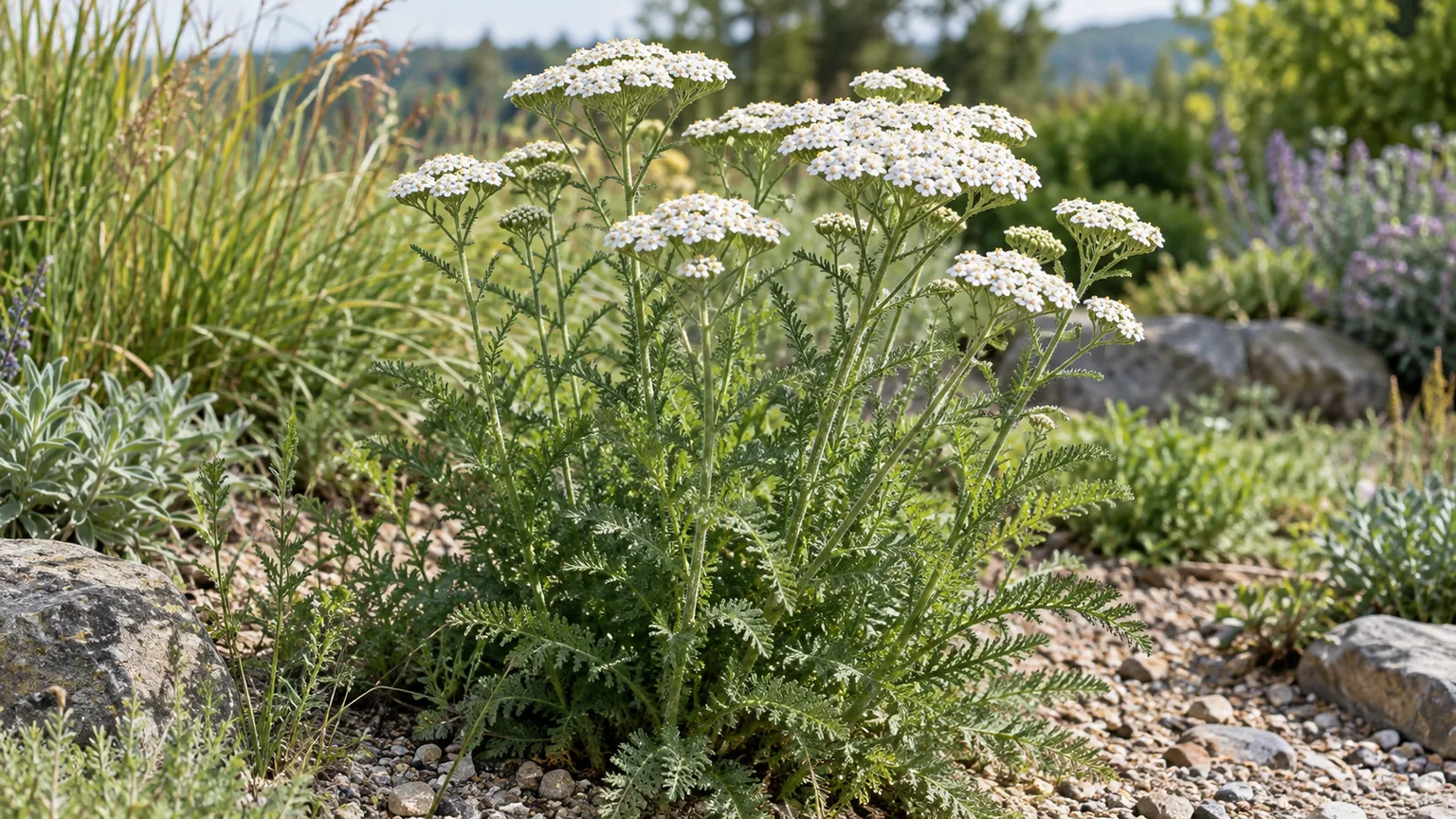
Yarrow is a good fit for the part of a garden that gets hot sun, dries between rains, and needs a long-lived perennial that can feed visiting insects. It is a poor fit for a tiny, tightly edited border if you expect one clump to stay exactly where you planted it. Common yarrow spreads underground as well as by seed, and rich, wet conditions tend to make it lanky instead of better behaved.
Start with the plant name on the label, not just the color in the catalog. “Yarrow” covers several Achillea species and hybrids with different heights, soil preferences, and habits. Once you know which one you are buying, give it sun and drainage, water it through its first season, and decide early whether you want it to spread, stay in a pot, or remain inside a defined patch.
Choose yarrow for the space you actually have
Before buying yarrow, decide how you want it to work. A patch of species common yarrow can knit into a naturalized planting or low-traffic meadow, while a named compact cultivar is usually easier to place in a mixed perennial bed. Either may outgrow its allotted footprint over time, but knowing the goal helps you choose between an expanding ground layer and a clump you will divide or edge.
Yarrow thrives in sunny, open sites and tolerates dry, lean ground after establishment. Its strong points are also the source of its main maintenance issue: rhizomes let it move sideways, and the flower heads can produce seedlings if allowed to mature. If your garden is small, shared with neighbors, or planted in a formal border, start with one labeled cultivar or keep yarrow in a large container rather than scattering a seed mix across the bed.
Think about safety before you choose the location, too. The ASPCA lists common yarrow as toxic to dogs, cats, and horses, with gastrointestinal and skin-related signs possible after exposure. That does not mean every casual brush against a garden plant causes harm, but a yard where pets graze plants is a reason to select another perennial or physically separate the planting.
Recognize common yarrow and distinguish its relatives
Common yarrow is Achillea millefolium, a herbaceous perennial in the daisy family. Look for finely divided, fernlike leaves—often aromatic when crushed—and upright stems topped with dense, flat or gently domed clusters made of many tiny flower heads. The white or pale pink wild-type look is familiar, but selected cultivars can flower in shades of pink, red, salmon, cream, or yellow.
Garden labels often simplify the genus. Achillea filipendulina, for example, tends to be taller and more upright and spreads less aggressively than A. millefolium, according to Mississippi State University Extension. Some popular golden-flowered plants sold as yarrow are hybrids or other species, not simply yellow forms of common yarrow. This matters if you are choosing for spread, local habitat, or a specific mature size.
Native status is not a simple yes-or-no label for common yarrow across North America. The USDA Forest Service describes native and introduced phases that can hybridize and are difficult to tell apart by appearance. If supporting local wildlife or restoring habitat is the priority, buy seed or plants from a reputable regional native-plant source that identifies provenance or a local ecotype; a species name on a big-box pot does not guarantee local origin.
Give yarrow enough sun for sturdy stems
Plant yarrow in a spot that receives full sun for most of the day. Strong light encourages flowering and a tighter, sturdier habit, while shade often gives you fewer flower stems and more stretching toward the brightest side. A bit of afternoon shade can be helpful in unusually hot climates, but a shaded, damp corner usually works against the plant’s natural strengths.
Watch the way light changes across the season. A spot that seems sunny before nearby trees leaf out may become shaded by early summer, just as yarrow begins building flower stalks. If an established plant leans, has floppy stems, and produces little bloom despite healthy leaves, observe the site for a full day before adding fertilizer or staking; insufficient sun is a common underlying cause.
Choose soil that drains between rains
Yarrow is adaptable to many textures, including sandy and clay soils, as long as water does not sit around the crown and roots. Aim for soil that drains freely and dries somewhat between waterings. The RHS notes that free drainage is essential for most Achillea and warns that cold, heavy, waterlogged soil can cause failure.
If your clay soil stays saturated after rain, improve the growing situation rather than trying to fix it with a handful of sand in the planting hole. A raised bed, a sunny slope, or a broad planting area amended with organic matter can improve drainage more evenly; do not create a small, loose pocket surrounded by dense clay, where water may collect. In a wet climate, give plants extra spacing for airflow and avoid mulch piled against the crown.
Do not make the bed overly fertile. In rich soil, yarrow can grow fast, spread faster, and produce soft stems that fall outward. A small amount of compost can improve a very poor planting area, but you do not need to build a deeply amended, high-nitrogen bed to make this perennial flower.
Plant yarrow without overbuilding the bed
Plant nursery starts in spring after the soil is workable, or in early fall where the plant has enough time to root before the ground freezes. In hot-summer regions, spring planting gives the roots more time to establish before heat; in mild areas, fall planting can reduce watering pressure. Follow your local planting calendar and the cultivar’s label, since timing varies by climate.
Set the plant at the same depth it was growing in its pot. Loosen circling roots gently, place the crown level with the surrounding soil, backfill, and water to settle the root ball. Do not bury the crown under compost or mulch, and do not put high-nitrogen fertilizer in the hole.
Spacing depends on the cultivar and the amount of spread you are willing to manage. For a mixed bed, leave enough room for the plant’s mature width and for air to move between stems; a compact variety may fit a tighter pattern than a vigorous species plant. If the label gives only height, look up the cultivar’s expected spread before planting, then add a little more room if you plan to let the patch expand.
Water for establishment, then step back
Water a new yarrow plant deeply after planting, then keep the root zone evenly moist—not soggy—while it grows roots through its first season. How often that means watering depends on rainfall, temperature, soil, pot size, and wind. Check the soil several inches below the surface; if it is dry there and the plant is still establishing, water slowly at the base rather than sprinkling the foliage.
Once established, yarrow tolerates dry spells and usually needs supplemental water only during prolonged drought. If leaves wilt briefly in afternoon heat but recover by morning, wait and check the soil before watering. If they remain limp and the soil is wet, more water will worsen the problem; inspect drainage and the crown instead.
Container plants are the exception to the “step back” rule. A pot holds less soil and heats up faster than a garden bed, so check it more frequently during hot weather and water when the upper layer has dried. Choose a pot with drainage holes, use a free-draining mix, and move the container to a sheltered spot in wet winter climates so roots do not sit in cold, saturated compost.
Skip routine fertilizer
Established yarrow in the ground rarely needs added fertilizer. If your soil is reasonably healthy and the plant is making normal leaves and flowers, a yearly feeding is more likely to create extra foliage and weak stems than to solve a real problem. Illinois Extension warns that highly fertile soil can accelerate spread and produce an open, floppy habit.
If the plant is genuinely stunted, first rule out shade, standing water, root competition, and a crowded, aging crown. A soil test can tell you whether a nutrient is actually deficient; it is more useful than applying a balanced fertilizer on guesswork. For a container, follow the potting mix’s instructions and use a restrained, label-rate feed during active growth because repeated watering leaches nutrients from pots faster than from beds.
Select cultivars and related Achillea wisely
Named cultivars let you choose color and often a more predictable height, but the label should include the botanical name as well as the cultivar. Common A. millefolium selections include ‘Paprika’ with brick-red flowers and yellow centers, ‘Cerise Queen’ with magenta-pink blooms, ‘Red Velvet’ with deep red flowers, and ‘Salmon Beauty’ with salmon flowers that fade toward cream. Their exact size and color intensity can vary with climate, soil, and the particular stock sold under a name.
The popular yellow ‘Moonshine’ is a useful example of why a name matters: Cambridge University Botanic Garden identifies it as a hybrid of A. clypeolata and A. taygetea, rather than a standard A. millefolium cultivar. A yellow color on its own does not tell you which species or hybrid you are growing. If you need to keep a plant within a specific height, verify the cultivar’s mature dimensions from the grower and local extension recommendations.
Match flower color, height, and spread to the site
For a naturalistic patch, choose regionally sourced common yarrow or a seed-grown local selection and accept variation in bloom color and habit. If you need a uniform border, buy a named cultivar propagated vegetatively; seed-grown offspring may not retain the parent’s color or compact shape. To select for pollinators, favor open, single flower heads and a range of locally native flowering plants rather than assuming every ornamental cultivar provides the same habitat value.
The UMass Amherst Pollinator Program explains that cultivar effects vary by plant and trait: some altered cultivars offer less floral reward, while others still attract pollinators. A cultivar is not automatically harmful, but a conservation planting should prioritize local wild-type plants when practical. In a home garden, you can combine a compact cultivar with regionally native species to balance appearance and habitat goals.

Prune, deadhead, and leave useful seedheads
Deadhead individual flower clusters as they fade if you want to limit self-seeding or encourage the plant to produce another flush. Follow the spent cluster’s stem down to the next healthy leaf or side shoot and cut just above it with clean pruners. Removing only the faded head keeps the rest of the plant in bloom; cutting every stem hard at once can remove flowers that are still fresh.
If the plant becomes leggy in midsummer, shear it back by roughly one-third to one-half after the first flowering flush, then water only if the soil is dry. In late spring, you can shorten some stems before buds form to create a shorter, later set of flowers, leaving other stems untouched for an earlier display. This staggered approach is more useful than cutting every stem at the same height because it keeps flowers available while new growth develops.
At the end of the season, decide whether you want seed or a tidier bed. Leave upright seedheads through winter if they add structure or feed wildlife, then cut dead stems near ground level in early spring as fresh growth appears. If seedlings are a problem, remove the heads before they dry and shed seed; deadheading will reduce seed spread, but it will not stop the separate underground rhizomes.
Divide mature clumps and propagate by cuttings
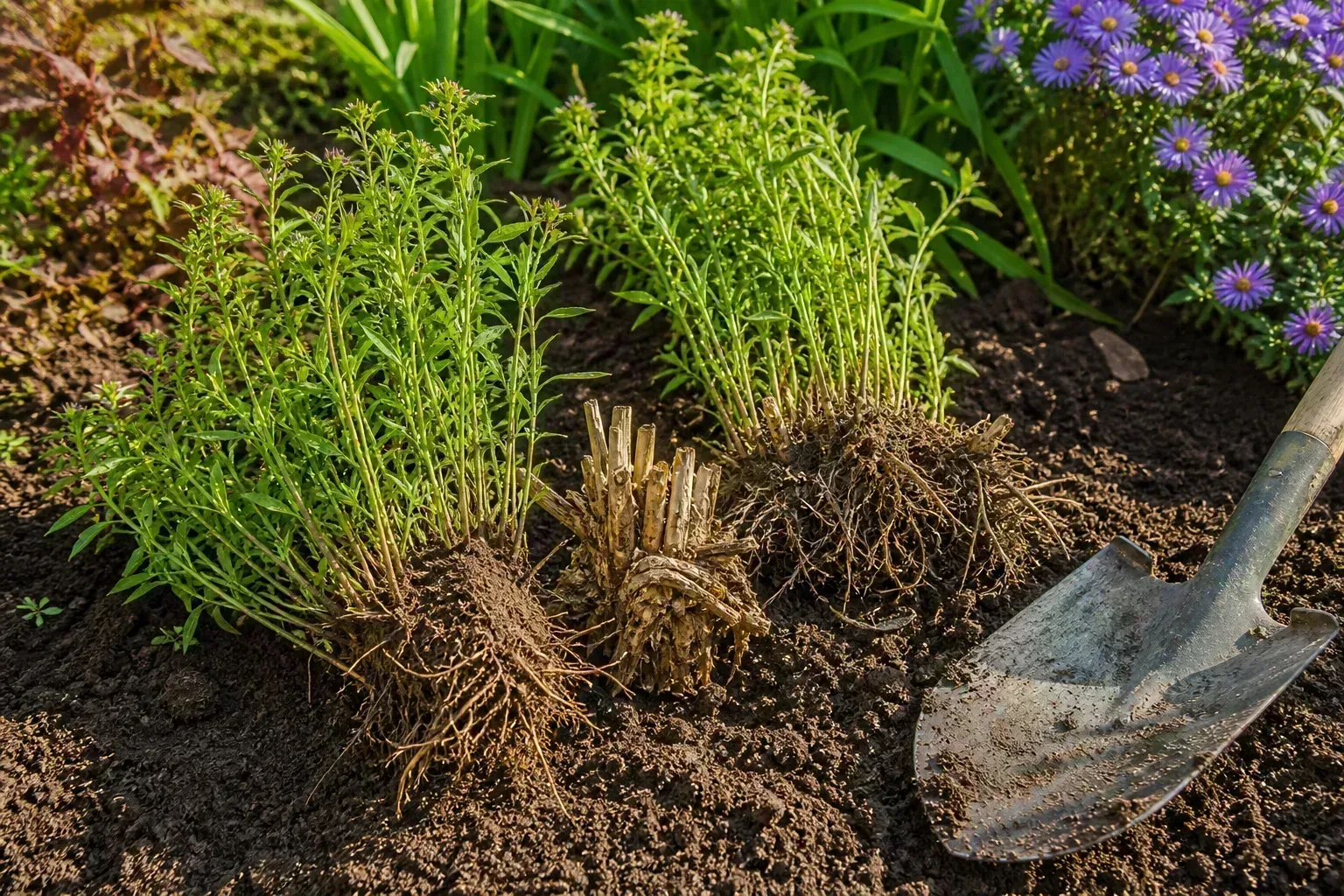
Divide yarrow in spring when new growth is starting, especially when the center turns woody, flowering declines, or the clump has grown beyond its boundary. Dig around the plant wide enough to lift a useful section of roots, shake or rinse away enough soil to see the crown, and separate healthy outer pieces with roots and several shoots. Discard dead or badly woody centers rather than trying to make every fragment into a viable division.
Replant divisions promptly at their original depth, water them in, and keep them from drying out while new roots establish. Division also gives you an immediate way to reduce spread: replant only the amount you want to keep and compost the rest, checking that discarded root pieces are not left where they can reroot. A few years is a useful point to inspect a yarrow clump, not a deadline: Fine Gardening’s guidance on dividing perennials recommends using crowding and poor performance, rather than a rigid calendar, as the cue. Divide sooner if yarrow is encroaching or flowering weakens, but let a vigorous clump remain undisturbed.
You can also root basal or soft stem cuttings, although division is simpler for most home gardeners. Take clean, non-flowering shoots during active growth, remove lower leaves, and insert the cut end into a moist, airy propagation medium; keep it bright but out of harsh direct sun until roots form. Because timing and success vary by cultivar, try a few cuttings rather than relying on one, and keep the parent plant intact until new starts are established.
Start yarrow from seed
Yarrow seed is small, so use a fine seed-starting mix and avoid burying it deeply. Iowa State University Extension gives a germination range of 65–70°F and says yarrow seed can be lightly covered or left exposed to light; Mississippi State Extension likewise recommends pressing seed into the surface and keeping the medium evenly moist. Sow indoors several weeks before your local last frost if you want transplants, or direct-sow in a prepared bed once spring weather is settled.
Keep the surface moist with a gentle mist or bottom watering, and provide bright light after germination. If seedlings emerge densely, thin or prick them out before roots tangle; crowded seedlings are harder to transplant and more vulnerable to damping-off. Harden indoor starts off gradually, then set them outside at the same depth they were growing in the tray and water them until established.
Seed is an economical way to fill a naturalized area, but it does not reliably reproduce every named cultivar. Flower color and plant shape may vary among seedlings, and seedlings can arrive beyond the original patch. For a specific cultivar, buy a plant or divide a true-to-type parent; for a local native planting, buy seed with documented regional provenance rather than a generic color mix.
Keep yarrow from taking over
Manage the two spread routes separately. Rhizomes expand outward underground, while mature flower heads produce seed that can germinate elsewhere. Deadheading handles much of the seed problem; it does nothing to halt established roots. If you want yarrow to form a patch, set its boundaries before it fills the bed and inspect the edge once or twice during the growing season.
Pull small outside shoots when the soil is moist, removing the connected root or rhizome when you can. For a larger patch, lift the edge with a spade and remove the unwanted roots, then check again for regrowth; Utah State University Extension notes that removing the aboveground growth will not kill underground plant parts. Do not rototill a spreading patch unless you are prepared to collect fragments and monitor the area, because disturbing roots can make cleanup harder.
A physical edge can help define a garden bed, but a shallow border is not a permanent underground barrier for every root system. The lowest-effort long-term approach is often to keep yarrow in a large pot or a contained bed with room to divide it. If you choose a lawn alternative, understand that mowing may keep flower stems down but will not necessarily remove the rhizomes; choose it only where a soft, mixed, low-traffic ground layer is acceptable.
Diagnose flopping, sparse blooms, and weak growth
When yarrow flops, check the growing conditions before adding a stake. Too little sun, consistently wet soil, excessive fertilizer, crowding, or a naturally tall cultivar can all produce stems that lean or collapse. Move a badly sited young plant, reduce unnecessary feeding, improve drainage, and divide an overcrowded clump; staking is a short-term support, not a correction for a soft, overfed planting.
Sparse flowering usually points to insufficient light, an immature plant, competition, or a plant that has become congested. A new division may spend its first season rebuilding roots before it makes a full show of flowers. Check that the cultivar is not still in its establishment period, clear shading competitors, and avoid a late, high-nitrogen feed that rewards leaf growth instead of strengthening the stems.
If an established plant dies in the middle while its outer ring remains vigorous, lift and divide it in spring. If the whole crown is declining in wet soil, inspect for soft, darkened roots and correct the drainage before replanting healthy sections. A plant that is dry, crisp, and wilted is different: water it deeply, then watch whether the soil drains and the leaves recover by the next morning.
Prevent mildew and wet-soil decline
Powdery mildew appears as a white, dusty coating on leaves and stems and is more likely when plants are crowded, shaded, or stressed by poor airflow. Thin or divide dense clumps, water at the soil rather than repeatedly wetting foliage, and remove badly affected stems at the end of the season. Powdery mildew rarely requires dramatic intervention on an otherwise healthy perennial; avoid spraying a pesticide or fungicide unless you have identified the problem and the product label permits that use.
Root or crown rot is the more consequential problem because yarrow resents prolonged saturation. Wilting despite wet soil, yellowing lower foliage, and a soft or dark crown are reasons to stop watering and inspect drainage. If the crown is mushy, remove affected material and replant only firm, healthy divisions in a better-drained location; a fungicide cannot compensate for soil that stays waterlogged.
Aphids may cluster on new growth or flower stems, but they rarely justify broad-spectrum treatment. Check whether beneficial insects are already feeding, then use a strong water stream or hand removal for a small infestation. Keeping the planting diverse and avoiding unnecessary pesticide use protects the pollinators and other insects that visit yarrow flowers.
Use yarrow well and handle it safely
Yarrow works especially well in gravel gardens, sunny meadow-style plantings, pollinator beds, and as a cut flower. Pair it with other sun-loving plants that appreciate lean soil—such as ornamental grasses, salvia, or other drought-tolerant perennials—rather than moisture-loving neighbors that need frequent irrigation. Leave enough visual breathing room for its flat flower clusters; planting every companion at the same height can hide the yarrow’s distinctive horizontal bloom shape.
Harvest flowers when most small florets in a cluster are open for fresh arrangements, or when the heads are fully open but not yet browning if you plan to dry them. The sturdy stems can be cut in the morning after dew dries, then placed in water or hung upside down in a dry, shaded, ventilated space. Keep the vase or drying area out of reach of pets, and do not assume that a plant used traditionally as an herb is safe to eat or use medicinally; garden cultivars may be misidentified, and individual health conditions and medications matter.
Wear gloves and long sleeves if your skin reacts to the foliage or sap, and wash exposed skin after pruning. The North Carolina Extension Gardener Plant Toolbox advises gloves to reduce contact-dermatitis risk. Keep clippings and seedheads away from grazing pets; if an animal chews the plant and shows symptoms, contact a veterinarian or animal poison-control service promptly rather than waiting for symptoms to worsen.
Conclusion
Yarrow is easiest to grow when you choose the right Achillea for the space, plant it in full sun and draining soil, and resist the urge to pamper it with constant water and fertilizer. Water new plants while they establish, then let the soil dry between rain and irrigation; divide a crowded crown, deadhead when you want fewer seedlings, and leave healthy seedheads if winter structure matters.
The decision that prevents most regret is deciding how much spread you can accept before planting. Common yarrow can be a useful, resilient patch, but a named cultivar, a contained bed, or a pot is a better choice where boundaries are tight. Check the botanical name, choose regional stock when local habitat matters, and treat pet and skin safety as part of the site-selection decision.