How to Grow and Care for Mortgage Lifter Tomatoes
Learn when to plant Mortgage Lifter tomatoes, how to manage vigorous vines and heavy fruit, and what to do about cracking, blossom-end rot, and slow ripening.
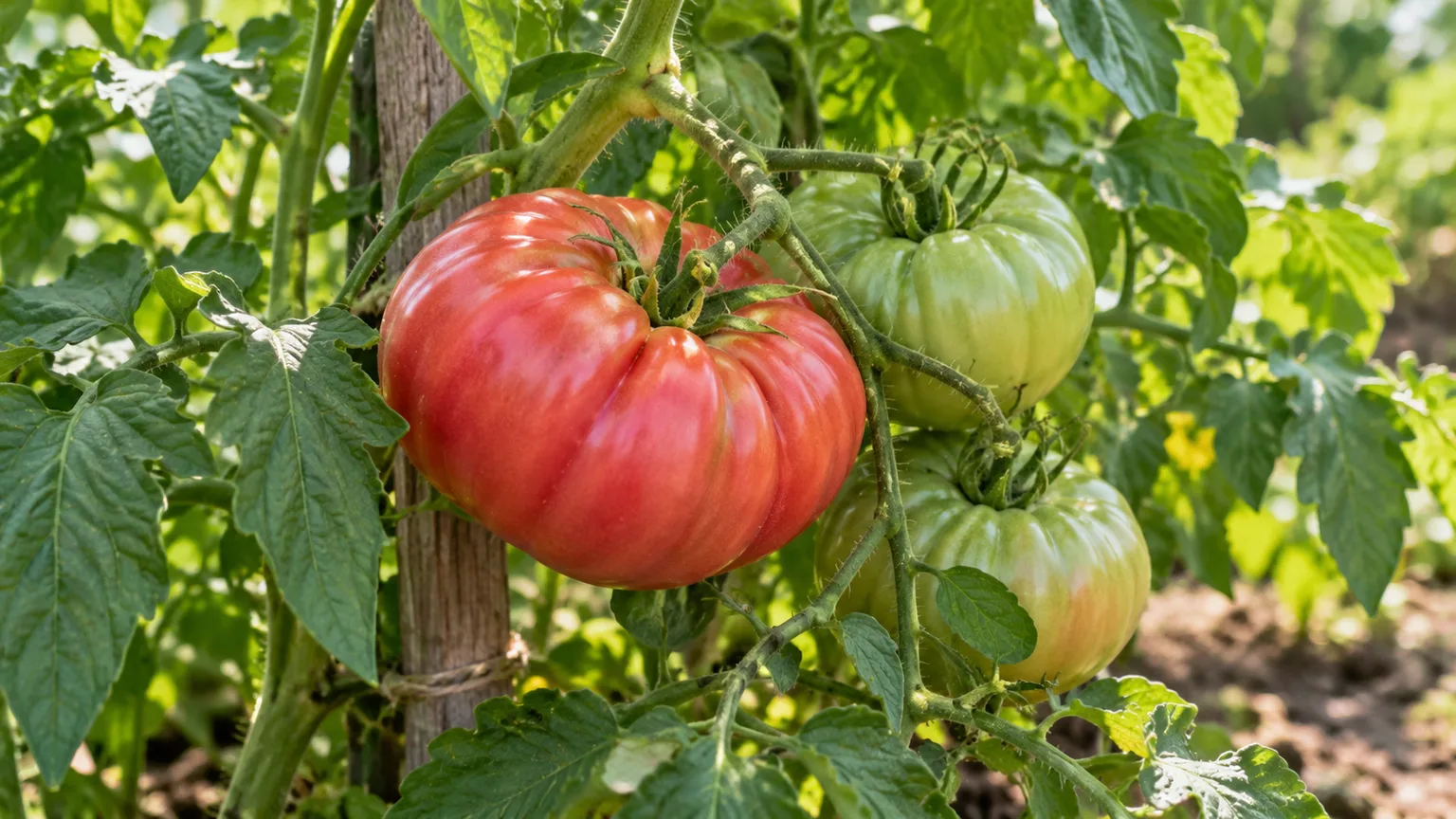
Mortgage Lifter is an indeterminate heirloom tomato grown for large, pink-red beefsteak fruit and a long harvest season. Give it a warm, sunny site, room for a tall vine, strong support installed at planting, and steady moisture. Those basics matter more here than chasing a record-size tomato: heavy fruit and vigorous growth make a neglected plant harder to manage than a smaller, compact variety.
Most seed descriptions put first harvest roughly 80 to 85 days after transplanting, but a cool start, a short season, or a heat wave can shift that window. The number is a planning estimate, not a promise. The care targets below help you grow the crop you have room and time to support.
| Care decision | Practical starting point |
|---|---|
| Growth habit | Indeterminate, continuously growing vine |
| Light | At least 6 hours of direct sun; 8 is a stronger target |
| Planting | After frost danger, once soil and nights are warm |
| Spacing | About 36 inches between plants; widen toward 48 inches in humid or crowded gardens |
| Support | Tall, sturdy cage, stake, or trellis installed at transplanting |
| Water | Deep, regular root-zone watering; adjust to rain, soil, heat, and container size |
| First harvest | Often around 80–85 days from transplant, depending on conditions |
What Makes Mortgage Lifter Different
Mortgage Lifter is a pink or reddish-pink beefsteak tomato with a meaty texture and relatively few seeds. It is an open-pollinated, indeterminate cultivar, so a healthy vine can continue flowering and setting fruit while the weather remains suitable. Gardening Know How describes plants as reaching roughly 7 to 9 feet, with fruit often listed at 80 to 85 days; expect variation in height, size, and timing among seed lines and gardens rather than treating any catalog figure as a guarantee. Gardening Know How’s Mortgage Lifter profile and Morning Chores’ variety guide provide practical cultivar-specific context.
The name is tied to a familiar story about M.C. Byles, a radiator mechanic in Logan, West Virginia, who developed and sold seedlings during the 1930s and 1940s. Gardening accounts repeat details about the parent varieties and a home loan, but those details are not as useful to a grower as the plant’s dependable traits: a vigorous vine, large fruit, and the need for a long, warm stretch to ripen it. Treat exact fruit weights and the origin story as context, not a promise about what one plant will produce in your yard.
Large tomatoes are not automatically more productive. A plant carrying several heavy fruit clusters may need stronger ties and closer inspection than a compact slicer, and a few very large fruits can take longer to ripen than smaller tomatoes. If your season ends early, start plants on time and be ready to harvest fruit at the first color break before cold or disease becomes a problem.
Is Mortgage Lifter Right for Your Garden?
Choose Mortgage Lifter if you want a large, flavorful slicing tomato and have a bright garden bed, greenhouse border, or genuinely roomy container. It suits gardeners who enjoy checking vines, tying new growth, and harvesting repeatedly through the season. Its open-pollinated status also makes it a candidate for seed saving, provided you accept that nearby tomato varieties can cross-pollinate.
Choose another variety if you need a small plant that stays upright without support, a tomato that ripens quickly, or a predictable crop in a very short summer. Mortgage Lifter is not hard to grow, but its height and fruit weight leave little margin for a flimsy cage or an inconsistent watering routine. Gardeners who want a more compact harvest can compare it with determinate tomatoes or use the guide to determinate tomato varieties.
The flavor is best judged at full ripeness, when the fruit has developed its mature pink-red color and yields slightly to gentle pressure. The fruits are excellent sliced fresh, but a large beefsteak may be too soft for long storage or transport once fully ripe. Plan to use or cook them soon after picking; do not grow this variety expecting firm, shelf-stable fruit.
Choose a Site for a Long, Productive Season
Tomatoes need warmth and sun more than a particular calendar date. Pick a site with at least six hours of direct light, preferably closer to eight, and shelter from strong wind without trapping humid air around the leaves. A south-facing bed or greenhouse can help in a cool region, while a heat-reflective wall may make afternoon temperatures too intense in a very hot climate.
Wait until frost risk has passed and the soil has warmed before planting outdoors. A seedling set into cold, wet ground can sit still for weeks, losing the head start it gained indoors. The RHS tomato growing guide describes tomatoes as tender warm-season plants that need frost protection and steady moisture; local frost dates still matter because a warm afternoon does not protect a plant from a cold night.
Use loose, well-drained soil and check fertility before adding amendments. Utah State University Extension recommends soil testing and warns that excessive fertilizer can harm yield, earliness, or fruit quality; its general tomato guidance places suitable soil around pH 6.5 to 7.5. Tomatoes are part of the nightshade family, so rotate them away from recent tomato, pepper, eggplant, and potato beds when possible. If space is tight, remove old diseased foliage and volunteer plants, and rotate as far as the garden allows. USU Extension’s soil and fertility guidance gives the useful distinction: test first, then feed according to the result.
Start Seeds and Select Strong Transplants
You can start Mortgage Lifter from seed or buy a transplant. Seed gives you more choice of open-pollinated lines and makes it easier to start early, while a nursery plant saves indoor space and time. For either route, choose a compact, sturdy plant with healthy leaves and no dark lesions, sticky pests, or roots circling tightly around the pot.
Sow Indoors Without Getting Leggy Seedlings
Start seeds about six to eight weeks before your expected outdoor planting window. Sow them in clean cells filled with seed-starting mix, keep the mix evenly moist, and give emerging seedlings strong light. Too little light makes a seedling tall and thin; an overgrown transplant may look impressive but can be difficult to handle and slower to establish.
Pot up seedlings when their roots fill the starter cell, keeping them in bright light and watering before the mix dries completely. Do not start them so early that they sit in a small pot for a month after outgrowing it. Utah State University Extension recommends six to eight weeks for tomato transplants and a week of gradual hardening before planting; use your local frost calendar and the seed packet to adapt that schedule. USU’s transplant production guidance explains how light, steady watering, and hardening produce a stronger start.
Harden Off Before Moving Outside
Over about a week, expose seedlings to outdoor conditions for increasing periods. Begin in a sheltered spot with bright shade, then add more direct sun and wind exposure as the plant adjusts. Bring the seedling back in or protect it when nights are cold, winds are strong, or the midday sun is suddenly intense.
Hardening is not optional acclimation theater. A seedling raised behind glass has soft leaves that can scorch or wilt when moved straight into full outdoor sun. If leaves bleach or droop during the first days, give the plant gentler light and more time rather than assuming it needs fertilizer.
Plant Deeply and Support the Vine From Day One
Plant after frost danger has passed and the soil is warm enough for active root growth. Remove leaves from the lower section of the stem and set the plant deeper than it sat in its pot, leaving the upper leaves above ground. Tomatoes can form roots along a buried stem, which helps anchor a tall vine; avoid burying foliage or placing the root ball in a waterlogged pocket.
Give each plant about 36 inches of space, widening toward 48 inches if the vines will be allowed to sprawl, the garden is humid, or you need easy access for harvest and inspection. Leave roughly 3 to 4 feet between rows so you can reach the center of the plants without brushing through wet foliage. A little more space can be worth more than squeezing in an extra plant: it makes tying, scouting, and picking large fruit safer.
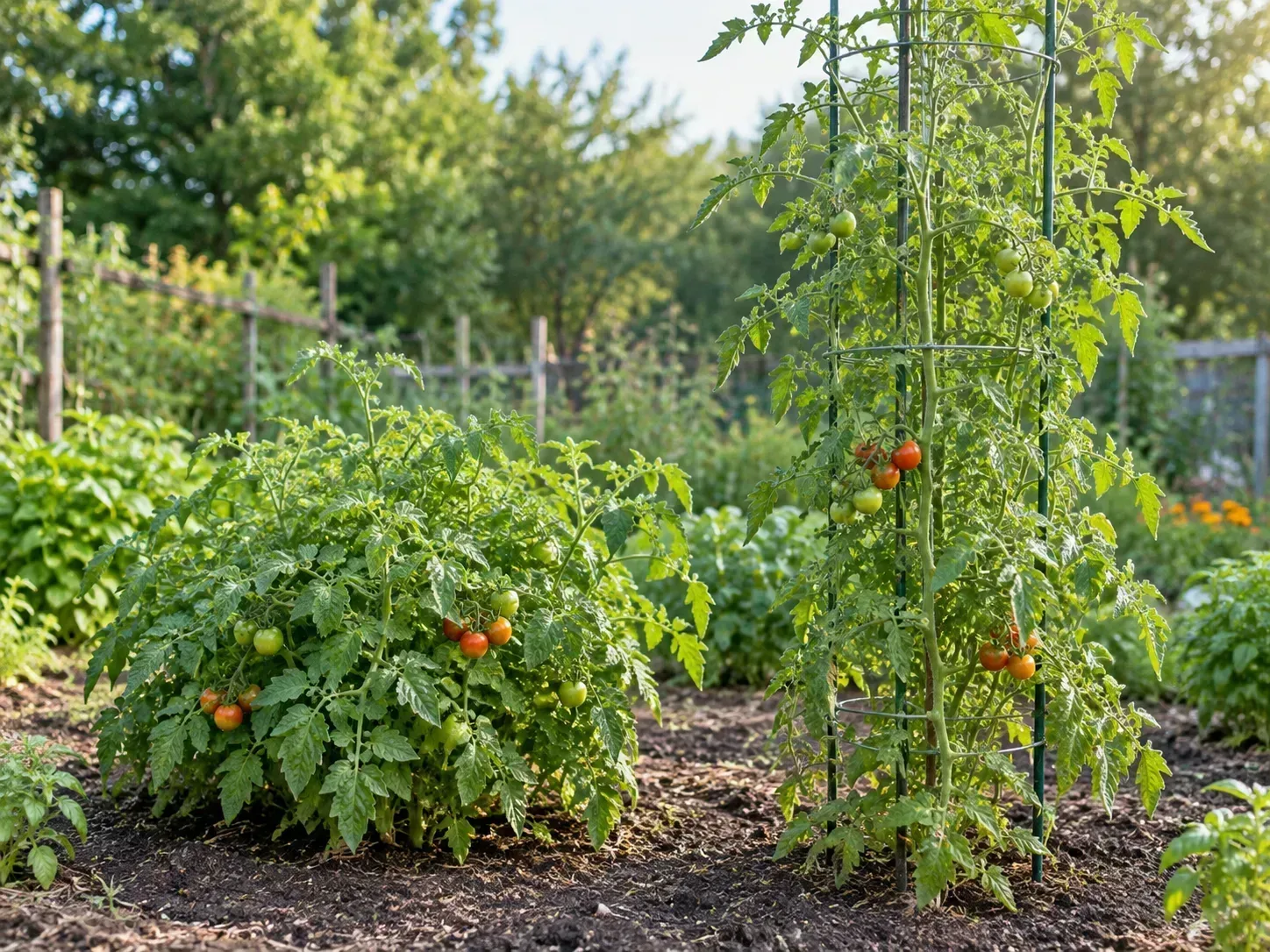
Install the cage, stake, or trellis while transplanting. Mortgage Lifter’s branches become awkward to lift once they are carrying heavy fruit, and forcing a mature vine through a small cage can snap stems or loosen roots. Choose a tall, rigid support designed for a vigorous indeterminate tomato, anchor it firmly, and use soft ties that do not cut into the stem. Morning Chores recommends putting support in place before the plant sprawls; the RHS also describes training vigorous cordon tomatoes along tall supports and tying growth in as it develops.
Water for Steady Growth and Sound Fruit
Water deeply enough to wet the root zone, then let the soil surface begin to dry before watering again. A weekly total around 1 to 1½ inches is a useful starting point in a garden bed, but rainfall, soil type, temperature, mulch, and plant size all change what the plant needs. Check the soil rather than following the calendar blindly; containers often need daily checks in hot weather because their mix dries faster.
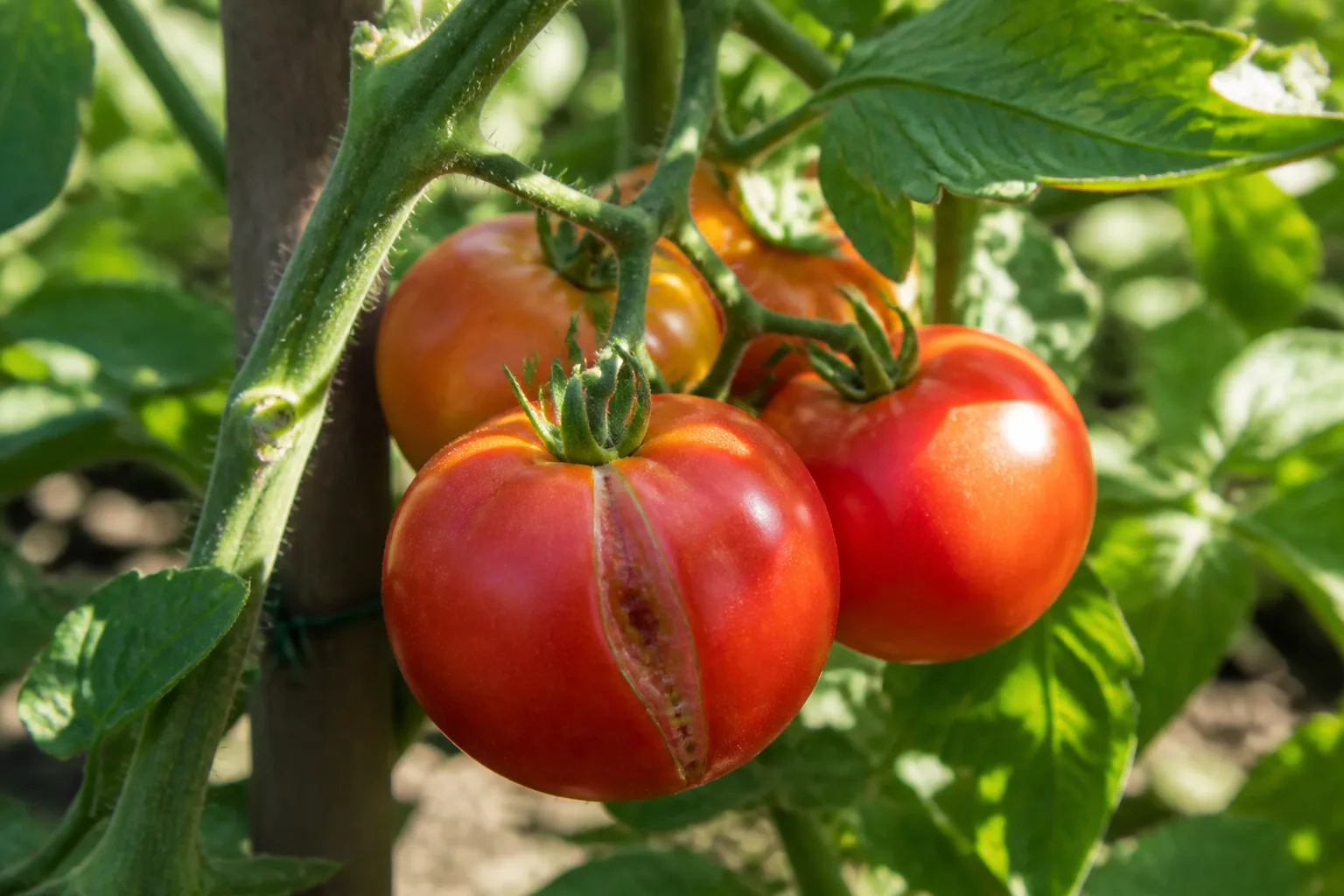
The main goal is consistency. A plant that swings from dry soil to a sudden drenching can take up water faster than its fruit skin expands, causing cracks. Irregular moisture can also contribute to blossom-end rot by interrupting calcium movement into developing fruit; adding calcium without correcting the watering pattern is often the wrong first response. The RHS notes that fluctuating moisture can contribute to both splitting and blossom-end rot, and that container-grown plants may need daily watering in hot weather. Its tomato growing guide is a useful reference for this routine.
Water at soil level in the morning when practical. Drip irrigation or a soaker hose helps keep leaves dry, while a gentle hand-watering stream can work if it lands at the base instead of splashing soil onto foliage. Once the soil is warm, add a few inches of organic mulch to slow evaporation, leaving a small open ring around the stem. If a large fruit is already starting to crack, pick it at the first mature color and use it promptly; watering more evenly helps prevent the next fruit from splitting but cannot close an existing crack.
Feed by Soil Need, Not by Guesswork
A fertile soil with compost incorporated before planting may need little additional feeding in the garden. A soil test is a better guide than the phrase “heavy feeder”: too much nitrogen can push lush leafy growth, shade flowers, and delay fruiting without making the plant more productive. Utah State University Extension recommends testing the soil before fertilizing and notes that excessive fertilizer can reduce yield or fruit quality.
If a soil test or container mix calls for fertilizer, follow the product label and the timing for tomatoes. Use a balanced preplant amendment only when the soil needs it; once fruit begins to swell, a tomato fertilizer with proportionate potassium may be more appropriate than repeating a high-nitrogen lawn or foliage feed. Container plants use nutrients faster because repeated watering drains the mix, but that is a reason to follow a measured feeding schedule, not to pour on extra fertilizer after every yellow leaf.
Look at growth before you add anything. Deep green leaves and fast-growing stems with few flowers usually point toward excess nitrogen, shade, heat, or a plant that is still establishing. Pale older leaves can have several causes, including nutrient shortage, wet roots, or disease. Correct light and watering first, then use a soil test or label directions to decide whether fertilizer is warranted.
Prune Only to Manage the Plant
Mortgage Lifter is indeterminate, so it keeps making stems and fruiting clusters while the season allows. You can train it to one or two main stems on a narrow trellis, or retain more stems on a larger cage. A one-stem plant is easier to tie and inspect but carries fewer fruiting branches; a multi-stem plant may yield more fruit but needs stronger support and wider spacing.
Remove only growth that serves a clear purpose: suckers that make the vine too crowded for its support, leaves touching soil, or diseased foliage. Snip small shoots with clean fingers or pruners while they are easy to remove, and avoid stripping the plant bare. Leaves feed the fruit and shade it from sunscald, so pruning is a management choice rather than a way to force giant tomatoes. For more detail on choosing a pruning style, see the guide to whether to prune tomato plants.
As the season winds down, remove new flowers only if there is not enough frost-free time for them to mature into usable fruit. Cutting the growing tip can redirect the plant from new growth toward existing clusters, but do it only when cold weather is approaching and there is a healthy fruit set to finish. A premature hard cut can remove productive growth without improving the harvest.
Improve Flower Set Without Chasing Fertilizer Fixes
Tomato flowers contain the parts needed for self-pollination, and ordinary outdoor air movement usually helps move pollen within a flower. In a greenhouse with still air, gently tapping a flowering truss can help pollen move; opening vents also improves airflow. Pollinators may visit but a second tomato plant is not required for fruit set.
If flowers drop without setting fruit, check the weather first. Cold nights, prolonged heat, a dry root zone, or a plant struggling after transplant can interrupt fruit set. Mortgage Lifter’s larger fruit also takes time to develop, so a plant that flowers late may not produce ripe fruit before a short-season frost. Restore even moisture, avoid high-nitrogen feeding, and wait for a stretch of more suitable temperatures before making several changes at once.
Diagnose Problems Before Changing Your Routine
Mortgage Lifter is not immune to tomato diseases just because a seed catalog or garden account calls it resilient. The most useful first distinction is between a fruit disorder, which often follows stress or uneven growing conditions, and a spreading pattern of lesions or wilt that may signal disease. Check whether the problem affects one fruit, the newest leaves, the lower leaves, or the whole plant, and note how quickly it is spreading.
Keep lower leaves off the soil, avoid wetting foliage late in the day, and remove diseased plant material from the garden. Rotate tomatoes with crops outside the nightshade family when you can. Maine’s tomato problem guide shows how early blight, late blight, bacterial spot, and other diseases can look different on leaves, stems, and fruit; compare symptoms before treating rather than applying a spray to every spot. Maine DACF’s tomato disease and disorder guide is useful for visual triage.
Cracking and Blossom-End Rot
A split that opens near the stem after rain or a heavy watering often points to a sudden change in water uptake. Keep soil evenly moist with deep watering and mulch, then harvest fruit as soon as it starts to color if a heavy rain is coming. A small, fresh crack on otherwise firm fruit can be cut away generously and the remainder used promptly; discard fruit that is soft, leaking, moldy, or smells fermented.
Blossom-end rot is different: it starts as a dark, sunken patch on the blossom end, opposite the stem. It is a calcium-related disorder often triggered by inconsistent moisture or damaged roots, not a contagious infection. Remove badly affected fruit, keep the root zone evenly moist, and avoid adding calcium unless a soil test or local guidance indicates the soil lacks it. The Maine Department of Agriculture’s tomato guide describes the characteristic sunken lesion and its relationship to moisture fluctuation. For more on the water pattern behind splits, use the tomato cracking guide.
Yellow Leaves, Spots, and Poor Fruit Set
One or two old leaves at the bottom of a large plant can yellow as the canopy ages, especially after fruiting begins. Remove them if they touch soil or have lesions, but do not assume every yellow leaf needs fertilizer. If yellowing moves upward, appears with stunting, or follows persistently wet soil, examine roots and drainage before feeding.
Leaf spots that enlarge, develop dark centers, or spread from the lower canopy deserve closer attention. Avoid handling healthy plants after touching suspect leaves, do not compost heavily diseased material in a home pile, and check a local extension diagnosis before applying a pesticide. Severe heat can cause flowers to drop even when the plant is well watered; shade the root zone with mulch and keep the plant’s water supply stable rather than spraying flowers with fertilizer.
Can You Grow Mortgage Lifter in a Container?
Yes, but choose the container for the mature vine, not the size of the transplant. Use one plant in a large, stable pot—around 15 gallons or more is a practical target—with open drainage holes, quality potting mix, and a cage or trellis anchored before the plant gets tall. A smaller pot may grow a plant, but the mix dries quickly, nutrients run out sooner, and the plant can tip under a heavy crop.
Put the container where it receives at least six hours of direct sun and where you can reach it to water and tie stems. Avoid setting a dark pot on pavement that becomes intensely hot in the afternoon; a hot root zone and rapid drying can stress the plant even when its leaves look lush. Check moisture daily during warm weather, watering thoroughly until some drains from the bottom rather than adding a small splash to the surface.
Container growing trades bed space for more frequent care. If you travel often or want low-maintenance tomatoes, a determinate patio cultivar is a better fit. If you want Mortgage Lifter, start with one plant, choose the largest manageable pot, and use a support system that can withstand the full vine. The container tomato guide covers the same tradeoffs for other varieties.
Harvest at the Right Stage and Use Fruit Promptly
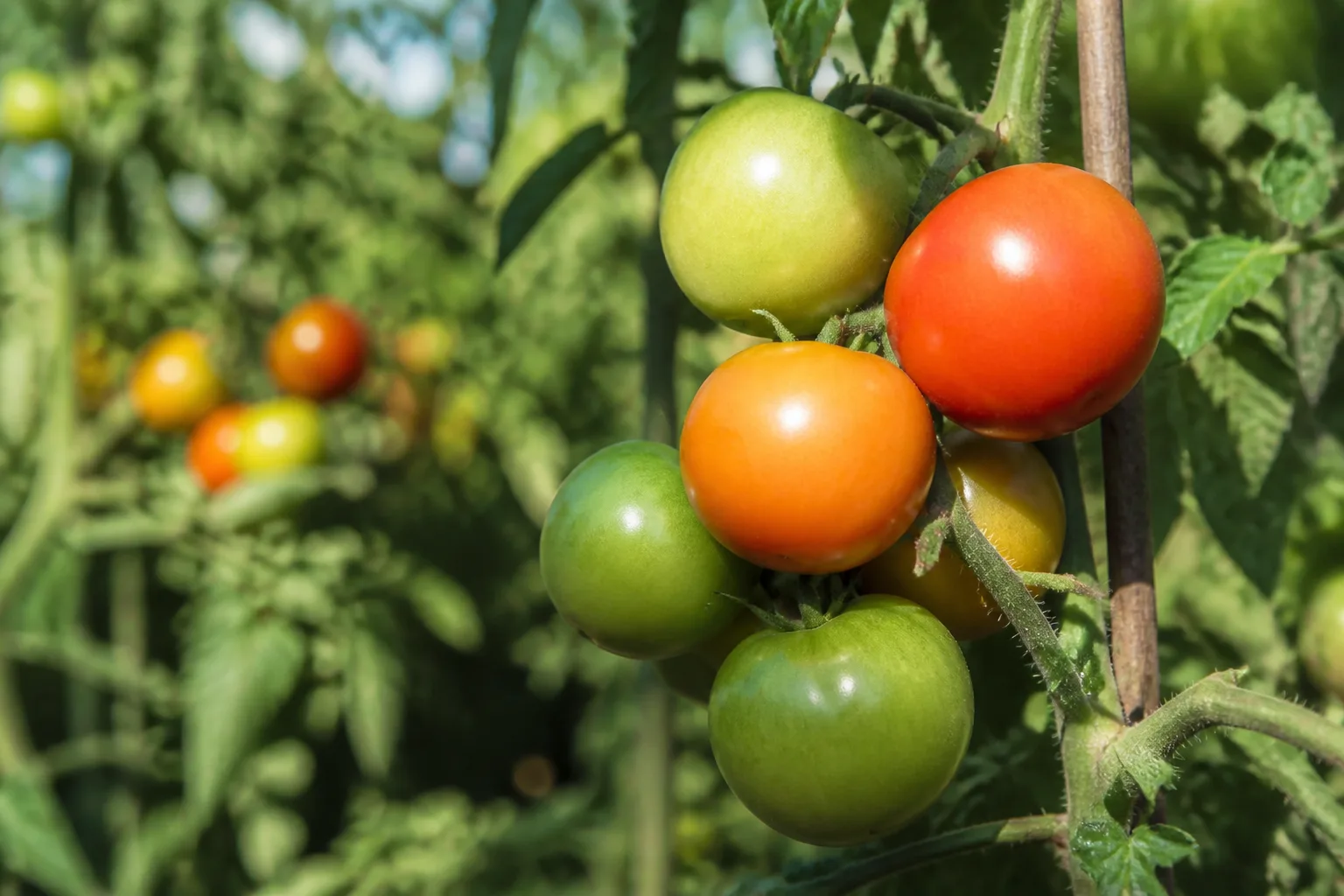
Start checking fruit as the maturity estimate approaches, but judge the tomato by color and feel. A ripe Mortgage Lifter should have its characteristic pink-red color over most of the fruit and yield slightly to gentle pressure. Because beefsteaks ripen more slowly than small-fruited tomatoes, remove a ripe tomato with hand pruners or a clean twist that does not tear the main vine.
Pick fruit before it becomes very soft or begins splitting, especially when rain is expected. Tomatoes that have reached the mature-green stage and begun to change color can usually finish ripening indoors in a warm place out of direct sun; fully green, immature fruit is less dependable. The RHS recommends checking plants regularly and picking ripe tomatoes individually, while Gardening Know How places Mortgage Lifter maturity near 80 to 85 days from transplant. Use those estimates to plan inspections, not to override what the fruit is showing.
Bring large fruit indoors in a shallow container so the weight of one tomato does not crush another. If the skin has a small crack, use that fruit first; if the crack is deep or the flesh has begun to decay, discard it. Eat ripe Mortgage Lifters fresh, slice them for sandwiches, or cook extra into sauce while the fruit is at its best rather than expecting an oversized, soft tomato to store for weeks.
Save Seeds Without Losing the Variety
Mortgage Lifter is open-pollinated, so seed from a properly maintained plant can come true to type. The catch is neighboring varieties: tomato flowers often self-pollinate, but bees can carry pollen between cultivars, and a cross may show up in the next generation rather than changing the fruit you are eating now. N.C. Cooperative Extension suggests separating tomato varieties by 20 to 30 feet when possible and explains that cross-pollination can create unexpected traits in saved seed. Its seed-saving guide also provides a simple fermentation method.
Choose a healthy, fully ripe fruit from a plant with the flavor and growth you want to repeat. Scoop the seed gel into a labeled jar, add a little water, and leave it at room temperature for several days, stirring once daily. When the gel loosens and seeds settle, rinse them in a fine strainer and spread them in a thin layer to dry completely before storing in a labeled envelope or jar.
Do not save from a plant sold as a hybrid or from fruit whose variety you cannot identify if you need predictable plants next year. The ASPCA lists tomato plants as toxic to dogs, cats, and horses, while ripe fruit is non-toxic; keep pets from chewing foliage and unripe fruit, and ask a veterinarian or poison-control service for advice if an animal eats plant material. ASPCA’s tomato plant profile distinguishes the ripe fruit from the plant’s toxic parts. For a step-by-step cleaning and storage routine, see how to save tomato seeds.
Conclusion
Mortgage Lifter grows best when you plan for its vine before it grows and for its fruit before it begins to swell. Start it early enough for your frost-free season, wait for warm soil, give it space and sturdy support, and water the root zone consistently. Use pruning to keep stems manageable, not to strip away the leaves that feed and protect fruit.
The largest tomatoes are never guaranteed, and a record-sized fruit is not the only sign of success. A supported plant with evenly ripened, sound fruit and a harvest you can use is a better result than an overloaded vine with cracks and soft spots. If you can provide the room and regular attention an indeterminate beefsteak needs, Mortgage Lifter is a rewarding heirloom to grow and save seed from.