20 Determinate Tomato Varieties for Your Garden
Compare 20 determinate tomato varieties for sauce, slicing, containers, and tough climates—plus how to pick, space, and prune bush tomatoes without losing fruit.
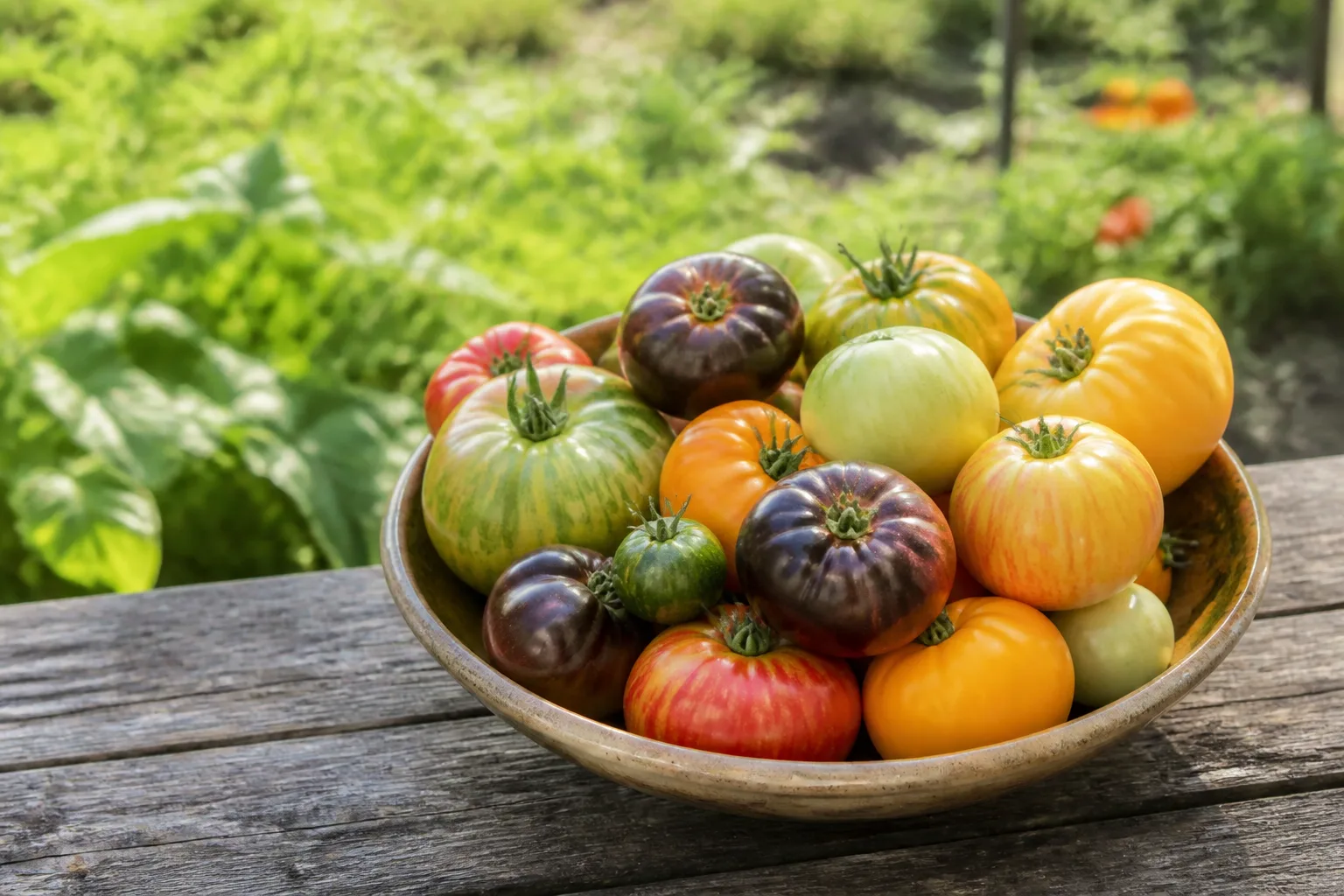
Determinate tomatoes—often called bush tomatoes—grow to a set size, set most of their fruit in a few weeks, and then wind down. That concentrated harvest is exactly what sauce makers, apartment gardeners, and anyone with a short vacation window want. It is the wrong choice if you dream of slicing tomatoes from July through frost from one vine. Know which job you are hiring the plant for, and the variety list shrinks from overwhelming to obvious.
The twenty cultivars below cover paste, slicers, cherries, containers, heat, cold, and oddball colors—all in determinate form. Before the names, a quick growth-habit primer saves you from the most expensive mistake: pruning a bush like a vine and wondering where the fruit went.
What Makes a Tomato Determinate?
A determinate tomato stops extending its main stems once it forms a terminal flower cluster. Side branches also terminate in fruit clusters rather than climbing indefinitely. Most of the crop ripens within a two-to-four-week window, though a few varieties push a smaller second flush before the plant declines.
NC State Extension describes determinate types as compact bushes that flower and fruit on stems between each leaf, with each stem ending in a cluster. They excel in tomato cages, small beds, and any plan that needs one big harvest rather than steady dribbles. Early-maturing cultivars skew heavily determinate—which is why short-season gardeners reach for them first.
Semi-determinate varieties such as Celebrity stretch the harvest window without becoming full-season vines. If a tag says “compact” but the plant keeps setting fruit for months, read the fine print; when in doubt, treat unknown bushes with light sucker pruning only.
Determinate vs Indeterminate at a Glance
Indeterminate tomatoes are vines. They grow, flower, and ripen fruit until frost or disease stops them, often topping six feet on a trellis. They need regular sucker removal and sturdy support. Determinate tomatoes cap out between 18 inches and six feet depending on cultivar, set a defined crop load, and ask for cages or a short stake—not aggressive stripping.
Neither habit is inherently more flavorful. Soil, water consistency, and ripeness at pick matter more than the label. What changes is calendar and labor: determinates front-load work at harvest; indeterminates spread it across months. If you are still choosing between habits, our things to know before growing tomatoes guide walks through the full decision.
How to Pick a Determinate Variety Fast
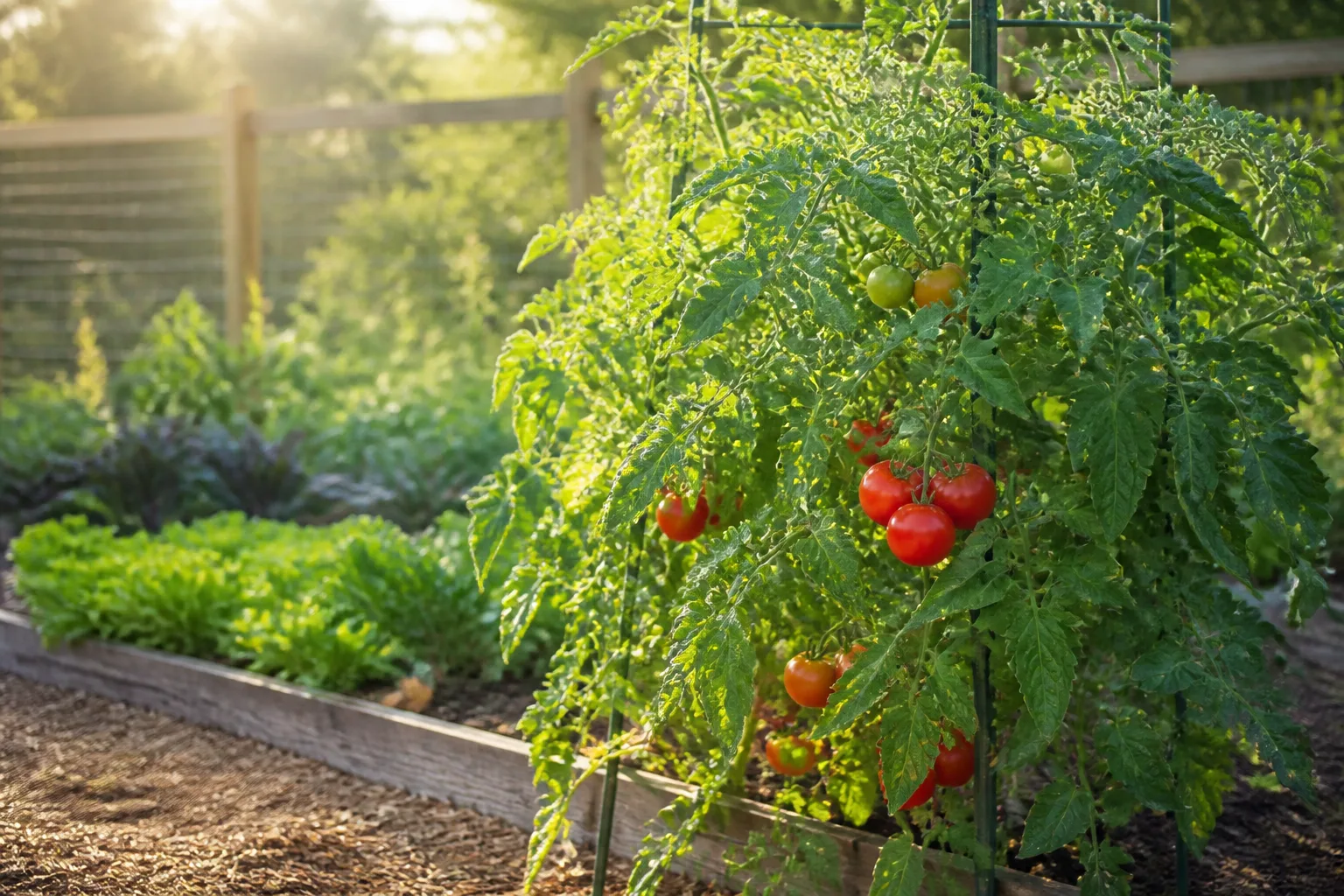
Start with three questions: What will you do with the fruit? How much vertical space and root room do you have? What limits your season—heat, cold, or days to first frost? Paste jobs favor meaty plums; sandwich eaters need slicers; patios need true dwarfs; canners planting multiple bushes should stagger transplant dates two weeks apart so twenty pounds do not land the same Saturday.
Check days to harvest from transplant, not from seed. A 54-day Bush Early Girl and an 90-day Dixie Red may both be determinate but occupy different calendar slots. Match support to height: 18-inch basket types need only a hook; 5-foot Dixie Red wants a heavy cage—see our best tomato cages guide for load ratings.
Read Disease Codes Before You Buy
Tags print resistance abbreviations worth decoding before you checkout. NC State Extension lists common codes:
- V — Verticillium wilt
- F — Fusarium wilt
- N — Root-knot nematodes
- EB — Early blight
- LB — Late blight
- TSWV — Tomato spotted wilt virus
- ToMV — Tobacco mosaic virus
Marglobe Improved VF wears its Fusarium and Verticillium resistance in the name. Resistance is not immunity—spacing, mulch, and rotation still matter—but codes buy time in humid soils. For more on feeding without triggering splits, pair resistant picks with our guide to fertilizing tomatoes.
Paste and Canning Determinates
Determinate paste tomatoes carry dense flesh, fewer seeds, and lower water content—traits that cut cook-down time for sauce and salsa. They are the backbone of water-bath canning weekends when you want every jar from one synchronized pick.
Roma, Oregon Spring, and Health Kick
Roma is the classic plum determinate: 2–4 feet tall, 2–3 ounce red fruits, about 75 days from transplant. Meat walls and mild balanced flavor made it the home-canning default for decades. It is the cultivar people mean when they say “Roma type,” even when the seed packet says something else.
Oregon Spring targets the same pantry shelf with medium 4–5 ounce fruits, few to no seeds, and 65-day maturity on 2–3 foot plants. Tart, full-bodied flavor suits ketchup and thick sauce. Health Kick shrinks the format to 4 ounce salad plums with high lycopene and bright red color—72 days, good disease resistance, excellent for fresh salsa you might also freeze.
For spacing paste rows, allow 18–24 inches between plants and 3–4 feet between rows per NC State recommendations. Mulch immediately after transplant to keep moisture even; paste types still split when irrigation swings—see why tomatoes split before ripening if cracks appear at harvest.
Slicers and Sandwich Tomatoes
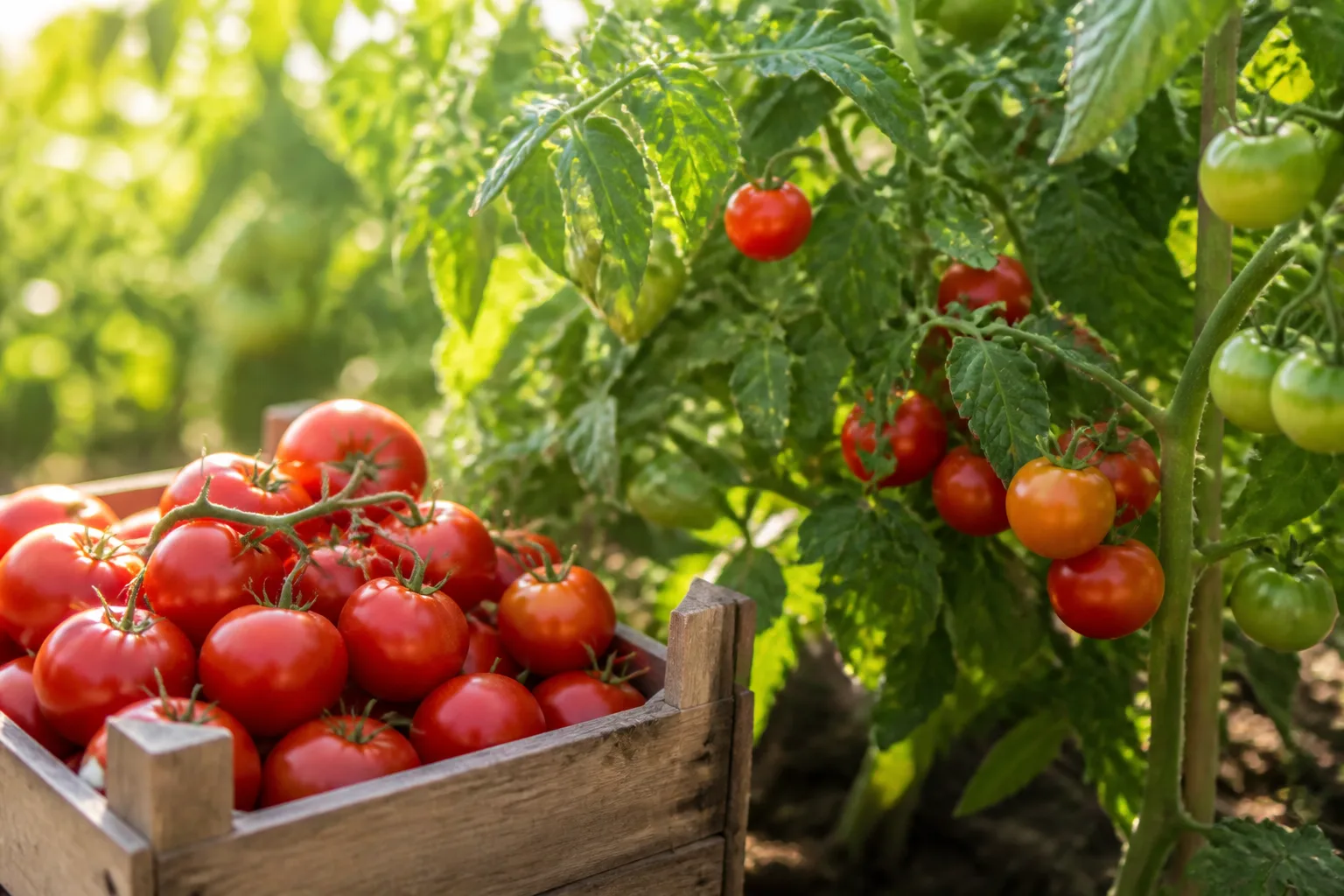
Not every determinate is a sauce machine. Several bush slicers deliver thick walls and sandwich-sized fruit without indeterminate sprawl.
Rutgers, Dixie Red, and Carolina Gold
Rutgers is the heirloom workhorse introduced in 1934: 6+ foot semi-vining habit on some sites, 7 ounce bright red fruit, 75 days, rich flavor fresh or canned. It continues producing until frost in many gardens—closer to semi-determinate behavior—so use a stake or cage and prune lightly. Marglobe Improved VF (covered below) is the more strictly bush-shaped alternative when you need predictable height.
Dixie Red Hybrid was bred for Southern heat and humidity: 4–5 feet, 10–12 ounce juicy fruits, 80–90 days, sweet flavor, solid disease package. Stake or cage it; a flimsy ring will fold under fruit load.
Carolina Gold Hybrid delivers 10 ounce golden slicers on 4-foot plants in 70 days. Mild, sweet, low-acid flavor suits gardeners who find red tomatoes sharp. Crack-resistant skin helps in rainy spells.
Space large bush slicers at 24 inches minimum in-row; tighter spacing invites early blight when lower leaves stay wet. Our tomato plant spacing guide maps cage vs stake layouts.
Compact Bush Tomatoes for Pots and Baskets
Determinate container tomatoes need at least 12–15 inches of pot depth, drainage holes, and full sun—six to eight hours on the leaves. Shallow window boxes cook roots on hot decks; oversized tubs hold moisture better. Read should you grow tomatoes in pots or in the ground before you repurpose a decorative planter without holes.
Bush Early Girl, Tumbler, and Micro-Tom
Bush Early Girl Hybrid is the determinate sibling of the famous Early Girl: 18 inches tall, 6–7 ounce fruits, 54 days—one of the fastest big bush slicers for short seasons and large patio pots.
Tumbler Hybrid was bred for hanging baskets: 12–18 inches, trailing stems, 1–1½ ounce cherries, 45 days, up to 6 pounds per plant in good light. Use a 14-inch basket minimum and water daily in summer heat.
Micro-Tom pushes dwarf genetics to the extreme: 6–8 inches tall, 1 ounce fruits, 50–60 days. It is a windowsill experiment, not a family food supply—sharp, bold flavor from a plant smaller than a coffee mug. Supplement light if winter sills dip below six hours.
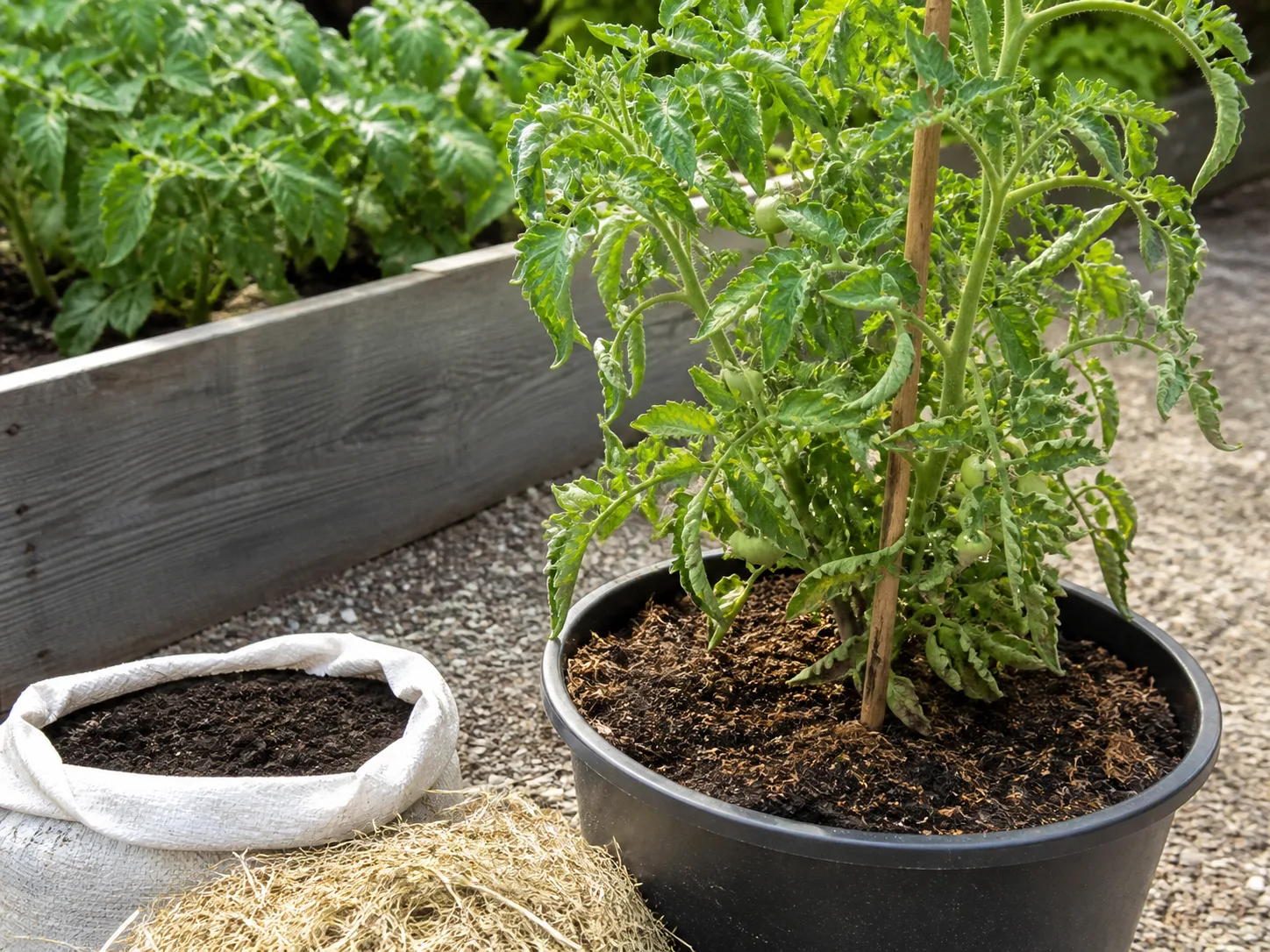
For more vertical tricks—balcony trellises, upside-down kits, and pot size math—see tips for growing tomatoes in small spaces.
Beefsteak Determinates for Raised Beds
Full-size beefsteak flavor usually rides indeterminate vines, but a handful of determinate beefsteaks prove the rule wrong for gardeners who want one or two big fruits per cluster without a ten-foot trellis.
Bush Beefsteak and Tasmanian Chocolate
Bush Beefsteak stays near 3 feet, producing 8–12 ounce solid red fruits in 62 days—fast for a big slicer. Clusters ripen together; plan supports before fruit weights bend stems.
Tasmanian Chocolate is the showpiece: 2–3 feet, 8–12 ounce mahogany beefsteaks, 70 days, rugose foliage, robust balanced flavor. It is ornamental enough for front-yard edible beds yet still determinate—do not strip suckers aggressively.
Both fit raised beds and large tubs. Cage diameter should reach 18–24 inches so heavy fruit does not rest on soil where slugs and splashing fungi wait.
Determinates Built for Heat, Cold, or Altitude
Climate stress separates pretty catalog photos from harvest reality. These bush types were bred—or selected—for temperature edges generic slicers tolerate poorly.
Homestead, Subarctic Plenty, and Mountain Delight
Homestead (University of Florida, 1954) keeps setting in hot summers: 4–6 feet, 8 ounce meaty red fruit, 80 days. Stake it; Florida heat plus fruit load demands support.
Subarctic Plenty targets cool short summers: 18–24 inches, 2–2½ ounce cherries, 45–50 days—often ripe while indeterminate types still flower. Tart flavor; tremendous yields for its size.
Mountain Delight comes from the North Carolina Mountain series for high-elevation gardens: 3–5 feet, 10 ounce fruits, 70 days, strong flavor and disease resistance. Stake or cage; “Mountain” types assume harsher UV and cooler nights than lowland hybrids.
If your summer runs cool, pair Subarctic Plenty with Bush Early Girl two weeks later for a staggered fresh-eating window without indeterminate sprawl.
Heirloom Bush Tomatoes Worth the Space
Heirloom flavor does not require indeterminate vines—though many heirlooms are vines for a reason. These determinate or bush heirlooms trade some yield for story and taste.
Black Sea Man and Campbell’s 33
Black Sea Man is a Russian heirloom rarity: determinate 4–6 foot plants, 8 ounce fruits with brown-black skin and pink shoulders, 75 days, robust tangy flavor best eaten fresh—guests always ask the name. Staking recommended.
Campbell’s 33 was developed by the soup company for reliable production in mediocre soil: 3 feet, 7 ounce red fruits with green shoulders, 69 days, crack and disease resistance, sweet-acid balance famous in tomato soup recipes. Marglobe Improved VF belongs in the same conversation: 4–6 feet (sprawling unless woven), 5–8 ounce uniform fruits, 72 days, very sweet fresh flavor, VF resistance, equally good canned or sliced. Marglobe and Campbell’s 33 rank among the easiest determinates for imperfect conditions—similar adaptability, different flavor emphasis. When catalog paralysis hits, default to Marglobe for general gardens, Roma for sauce, Bush Early Girl for pots, and Subarctic Plenty or Homestead when temperature is the limiting factor.
Save seeds only from open-pollinated heirlooms like Black Sea Man; hybrids such as Dixie Red will not breed true next year.
Cherry and Snack-Sized Determinates
Determinate cherry tomatoes pack snack-sized harvests into baskets, railing planters, and kid-height beds. They ripen fast and forgive beginner watering slips better than large slicers—though all tomatoes hate soggy roots.
Gold Nugget, Zebra Cherry, and Patio Plum
Gold Nugget is the yellow cherry benchmark: 2 feet, 1 ounce fruits, 55 days, thin skin, sweet juice, few seeds—excellent cool-climate performer.
Zebra Cherry adds burgundy-red and green stripes, 15-inch plants, 3–4 ounce fruits (large for a “cherry”), 70 days, complex tangy flavor—salad garnish that photographs itself.
Patio Plum is a dwarf grape type: 18–24 inches, 3–4 ounce clustered fruits, 60 days, balanced flavor, no staking required. Some gardeners report late-season fruit into fall in mild climates—treat that as a bonus flush, not guaranteed indeterminate behavior.

For broader cherry options—including indeterminate super-sweet types—browse our tomato varieties to try roundup and filter by your space budget.
Pet note: Green tomato plant stems and leaves contain solanine and tomatine toxic to dogs, cats, and horses per the ASPCA. Ripe fruit is the safe part for humans; keep curious pets away from fenced beds and fallen prunings.
How to Grow Determinate Tomatoes Without Wasting Fruit
Transplant after soil warms and nights stay above 50°F—same as indeterminate types. Bury leggy stems shallowly unless the plant is grafted; keep graft unions above soil. Space 1½–2 feet between bush plants in-row, 3–4 feet between rows, widening to 3–4 feet between plants when using large wire cages per NC State Extension.
Pruning determinates is minimal. Remove suckers below the first flower cluster when they are 2–4 inches long—once per plant is usually enough. Stripping upper suckers on determinates removes future fruit clusters; this is the opposite of indeterminate vine management. Full walkthrough: how to prune a tomato plant.

Support early. Set cages at transplant so you do not speared roots later. Florida-weave string between stakes works for 4–6 foot bush rows if you prefer open centers to cages. Determinates rarely need 7-foot stakes unless you grow tall heirlooms like Rutgers at the upper end of their range.
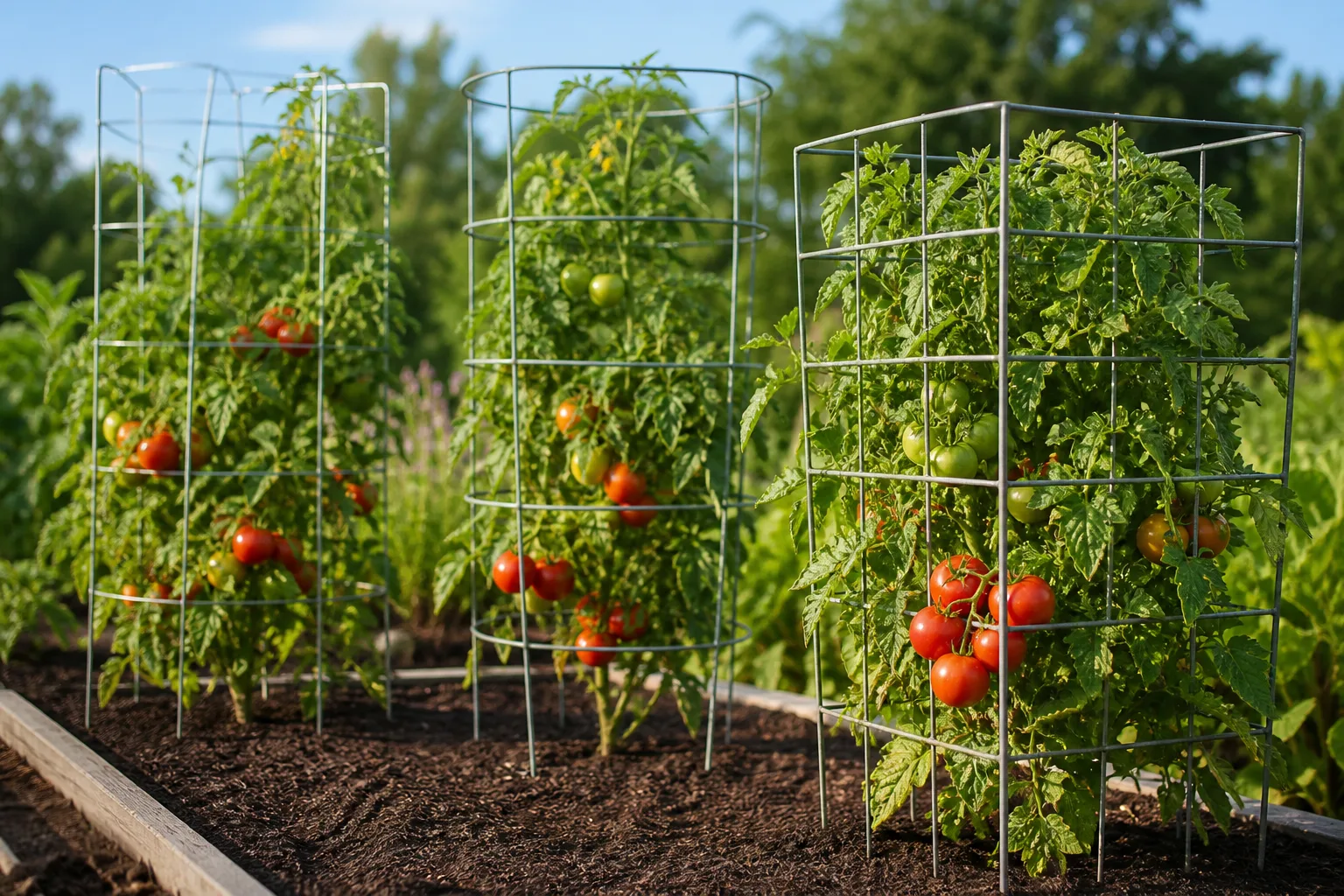
Water deeply—about 1½ inches per week during fruiting—including rain. Mulch with straw or compost to buffer swings that cause blossom end rot and cracking. Side-dress with balanced fertilizer after first fruit set, then every four to six weeks at half the rate you would use on hungry indeterminate vines.
Harvest at breaker stage—partial color at the blossom end—if birds or splits threaten; fruit finishes ripening indoors at 68–77°F. For canning, wait until fully colored on the vine when possible so pH and flavor peak.
Rotate nightshades (tomatoes, peppers, eggplants, potatoes) on a three-year minimum cycle. Even VF-labeled plants lose ground when verticillium loads build in tired soil.
Conclusion
Determinate tomato varieties earn their bed space when you want one coordinated harvest, manageable height, or containers that actually fit on a patio. Roma and Oregon Spring anchor the pantry; Bush Early Girl and Tumbler cover tight spaces; Homestead and Subarctic Plenty handle temperature edges; Marglobe and Campbell’s 33 forgive imperfect soil; Black Sea Man and Tasmanian Chocolate supply conversation-worthy plates.
Pick two or three names that match your calendar—not twenty. Stagger transplant weeks if you need sequential flushes. Read the tag for determinate and disease codes, cage before fruit weights arrive, and prune sparingly. Do that and bush tomatoes stop feeling like the “lesser” habit and start feeling like the right tool for the job you actually have this season.