Monstera adansonii Yellow Leaves: Causes and Fixes
Diagnose yellow Monstera adansonii leaves by pattern and soil moisture. Learn when to wait, inspect roots, change light, or treat pests without guessing.
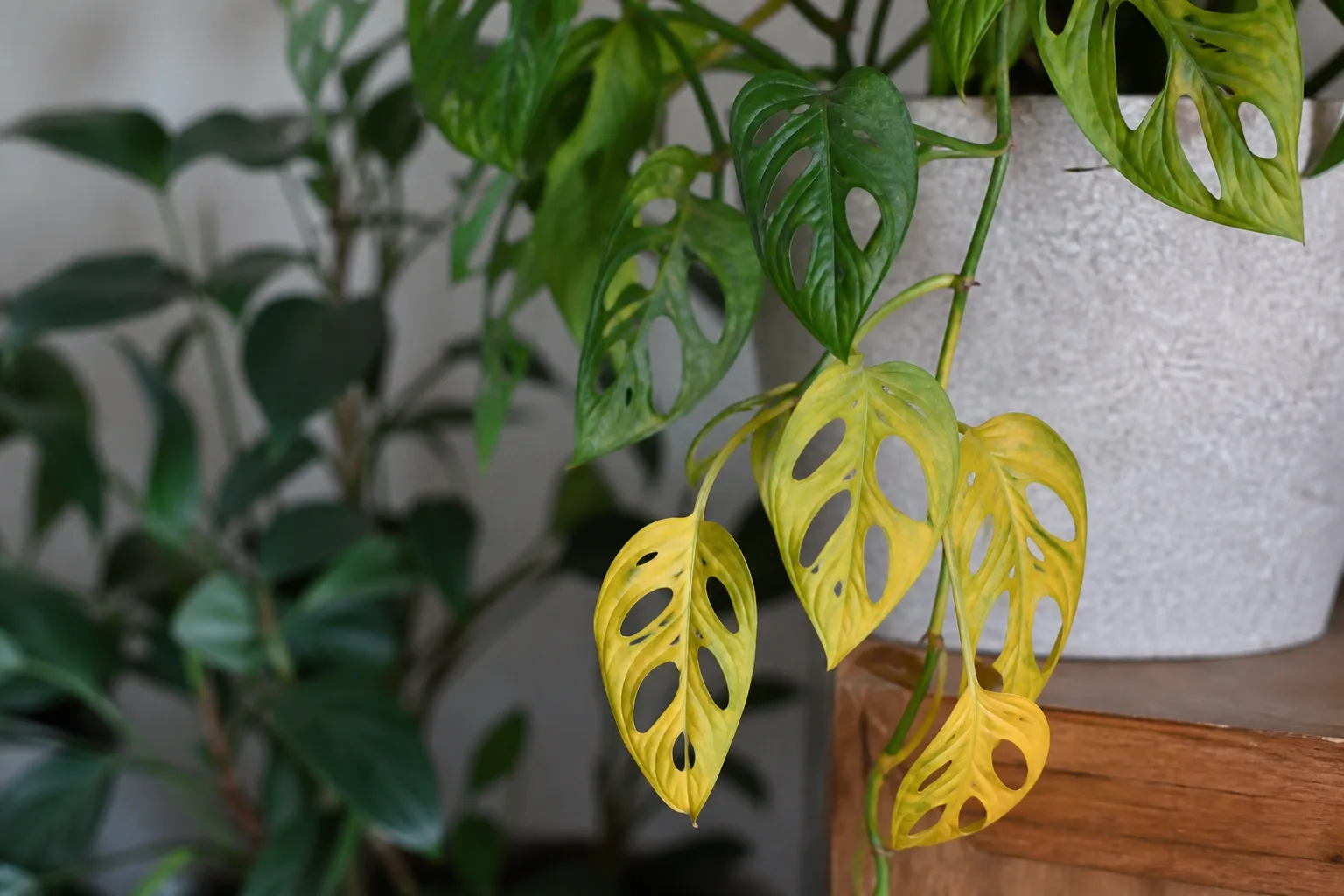
A yellow leaf on Monstera adansonii is a clue, not a diagnosis. The same color can follow a root ball that stayed soggy, a vine that dried too far, dim winter light, a pest feeding underneath the leaves, or one old leaf reaching the end of its life. The fastest way to avoid making the problem worse is to compare the pattern on the plant with what is happening inside the pot before changing its routine.
This guide is for the smaller, thin-leaved Swiss cheese vine with closed oval holes, not just any plant sold as “Swiss cheese plant.” Monstera adansonii is a tropical climber that prefers bright indirect light and moist but well-drained mix; it is especially vulnerable to prolonged wetness in a slow-drying container. North Carolina State Extension describes its light, drainage, temperature, and pest needs, while Penn State Extension gives practical indoor guidance for Monstera watering and placement.
Start with the pattern, not the watering can
Before watering, feeding, moving, or repotting, note which leaves are yellow and how quickly the change is spreading. One oldest leaf fading gradually while the vine keeps making firm, green growth is a different situation from several leaves turning yellow in a week, pale new leaves, or a plant wilting in wet mix. Snap a quick photo now; a photo taken a few days later makes it easier to tell whether yellowing is stable or advancing.
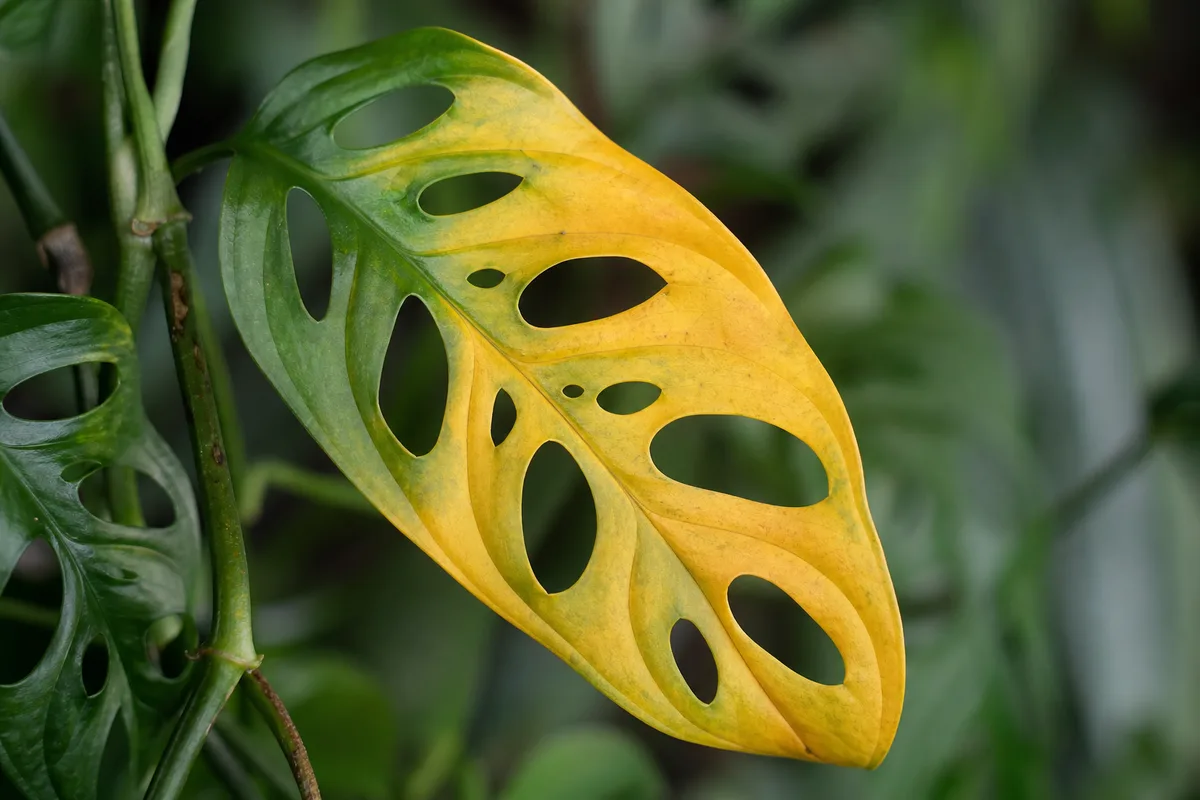
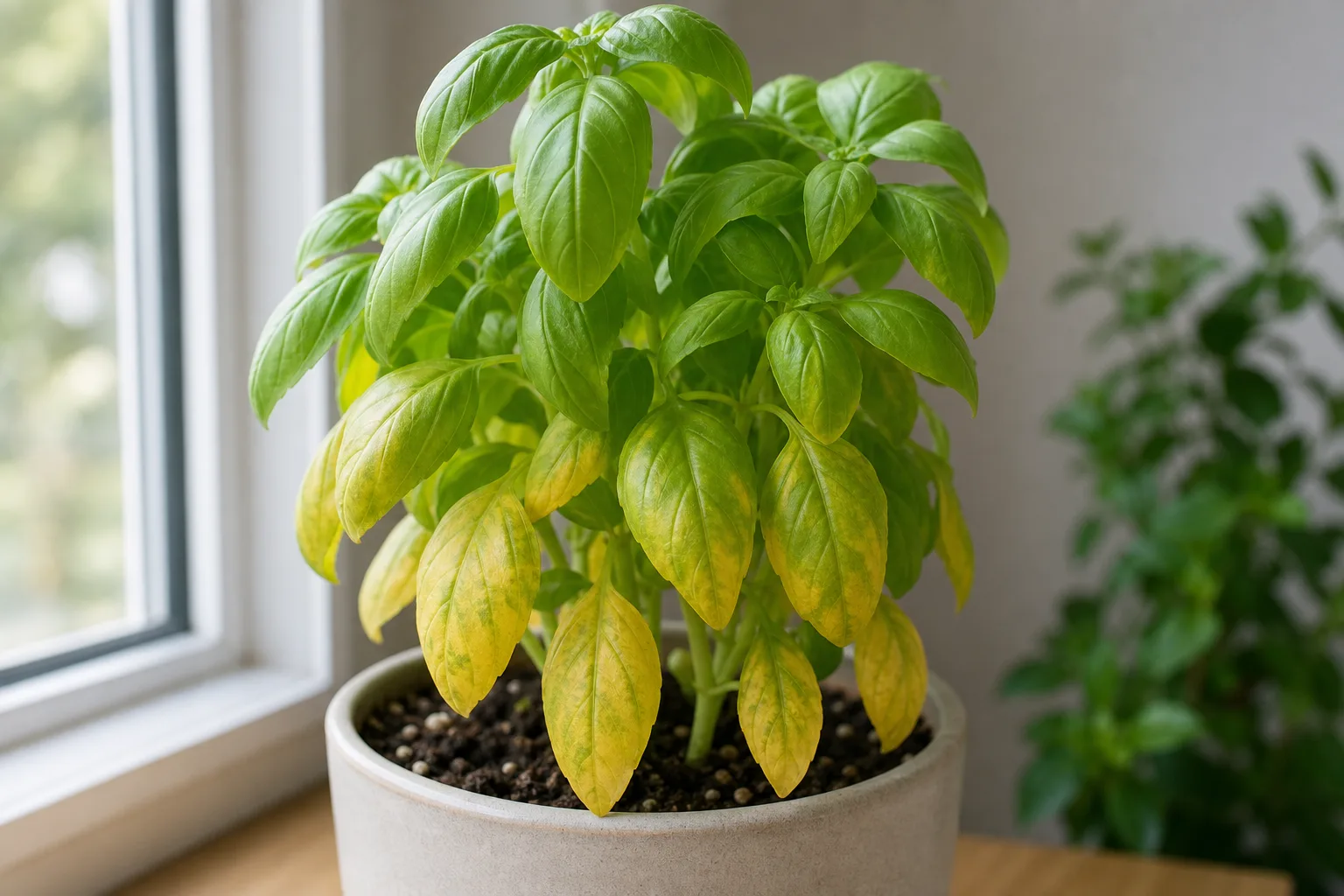
Yellowing is a symptom shared by several stresses; compare the leaf with the roots and the rest of the vine before choosing a fix.
Next, feel a leaf and check the pot. Soft, floppy foliage paired with a heavy container and damp mix points toward a root-zone problem; curled leaves with dry, crisp edges and a lightweight pot point toward a dry root ball. These signs overlap, so neither a yellow leaf nor a single finger test should decide the whole treatment.
Check the mix below the surface rather than judging the dusty top layer. Push a clean wooden skewer a few centimeters into the root zone, then compare the pot’s weight with how it feels after a full watering. Record whether the pot has drainage holes, sits inside a cachepot holding runoff, or has been moved near a vent or sunny window. These simple observations often narrow the possibilities before you disturb the roots.
When one lower leaf is normal
A single older leaf at the bottom of a mature vine may fade and drop as part of ordinary leaf turnover. It is less concerning when the leaf changes slowly, the stem stays firm, the remaining leaves look normal, the pot dries at a predictable pace, and new growth continues. The RHS guidance on houseplant leaf damage distinguishes an occasional lower leaf from widespread yellowing; a general yellow-leaf guide for pothos from Gardening Know How makes the same useful distinction between ordinary aging and broader care problems, though the species-specific clues still need to come from your adansonii itself.
Do not write off every bottom leaf as aging, though. Several lower leaves yellowing together can indicate that roots are short of oxygen in wet mix, while older leaves can also show stress when a plant is chronically dry or light-starved. A healthy plant should not steadily lose leaves faster than it replaces them. Watch the newest growth and the trend across the whole vine, not just the first leaf you noticed.
Overwatering and root rot
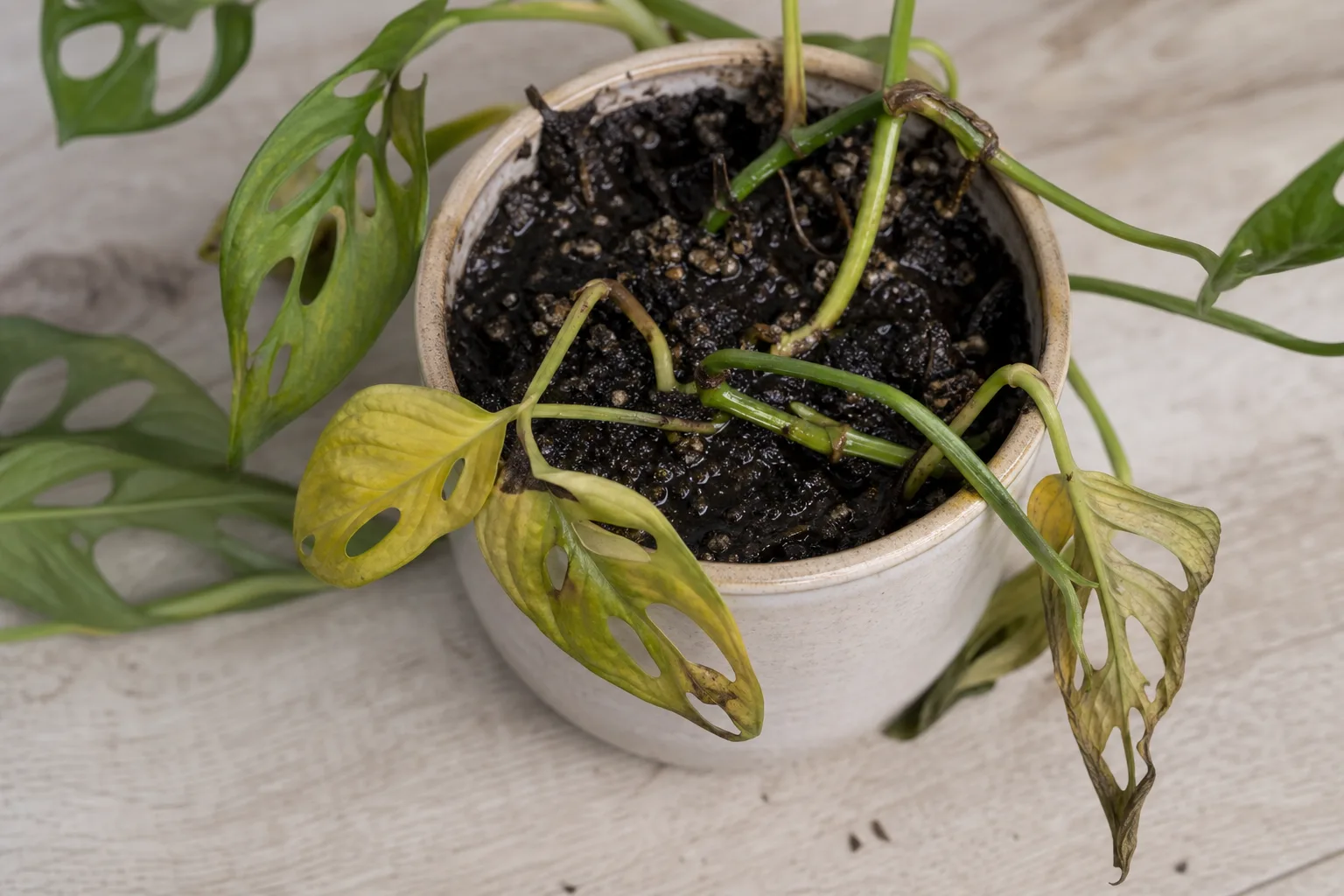
“Overwatering” usually describes a root zone that remains wet for too long, not one generous drink. If the mix is dense, the pot is oversized, drainage is blocked, or runoff remains in a decorative outer pot, the lower root ball can stay saturated even while the surface looks dry. Roots need oxygen as well as moisture; when air spaces remain water-filled, roots can weaken and begin to rot, leaving foliage yellow or limp.
Look for a combination of clues: the pot stays heavy several days after watering, multiple leaves become yellow and soft, the plant wilts even though the mix is wet, a sour or swampy odor comes from the pot, or the stem base feels soft. A few fungus gnats alone do not prove root rot, and one yellow leaf is not enough reason to unpot a plant. If yellowing is spreading and wetness persists, checking roots is more useful than adding a fungicide or another watering.
What wet-root stress looks like
Slide the root ball out carefully only when the evidence points to persistent wetness or decline. Healthy roots are generally firm; roots affected by rot are often dark, soft, and damaged, sometimes with outer tissue slipping away. If the root ball is mostly firm and simply wet, improve the drying conditions rather than stripping healthy roots. The RHS recommends checking roots when houseplant leaves yellow because both excessively wet and dry roots can cause discoloration.
Underwatering or a hydrophobic root ball
A vine that has dried too far may yellow, curl, droop, and develop crisp edges. The pot often feels unusually light, and the mix may pull away from the sides. Thin M. adansonii leaves lose firmness quickly when the root ball is dry, but leaf curl can also accompany heat or low humidity, so confirm the mix before pouring in water.
Water thoroughly when the upper layer has dried and the pot is noticeably lighter, allowing excess to flow through drainage holes. If water rushes down the sides without wetting the center, the mix may have become water-repellent after repeated deep drying. Set the nursery pot in shallow water briefly so the mix can rehydrate from below, then lift it out and let it drain fully. Do not leave the plant standing in water overnight.
There is no dependable “every Sunday” interval for every adansonii. A small hanging basket in a warm, bright room can dry much faster than a large floor pot in lower winter light. Gardener’s Path’s houseplant-watering guide explains why dry-down, drainage, and the condition of the medium matter more than a fixed schedule; use that principle while checking your own pot.
Light stress: a dim corner versus direct sun
Too little light can make growth sparse and pale as well as reduce the plant’s ability to use water. A vine gradually stretching toward a window, producing long gaps between leaves, or making smaller leaves is more consistent with inadequate light than a sudden yellow patch on one leaf. In a darker location, the mix also dries more slowly, which means keeping a bright-season watering schedule can compound root stress.
Move the plant nearer a bright window where it can see daylight, but keep it out of hot direct afternoon rays. Abruptly shifting a shade-grown adansonii to strong sun can bleach or scorch the exposed leaves; those damaged areas may start yellow and later turn tan or brown. North Carolina State Extension notes that direct sun can scorch this species and recommends bright, indirect light.
Change exposure gradually over several days, using a sheer curtain or a spot slightly back from the glass if necessary. Then reassess watering because improved light can shorten the drying interval. Existing stretched stems will not become compact again; judge the adjustment by healthy new leaves and more balanced spacing over time.
Pests behind speckled yellow leaves
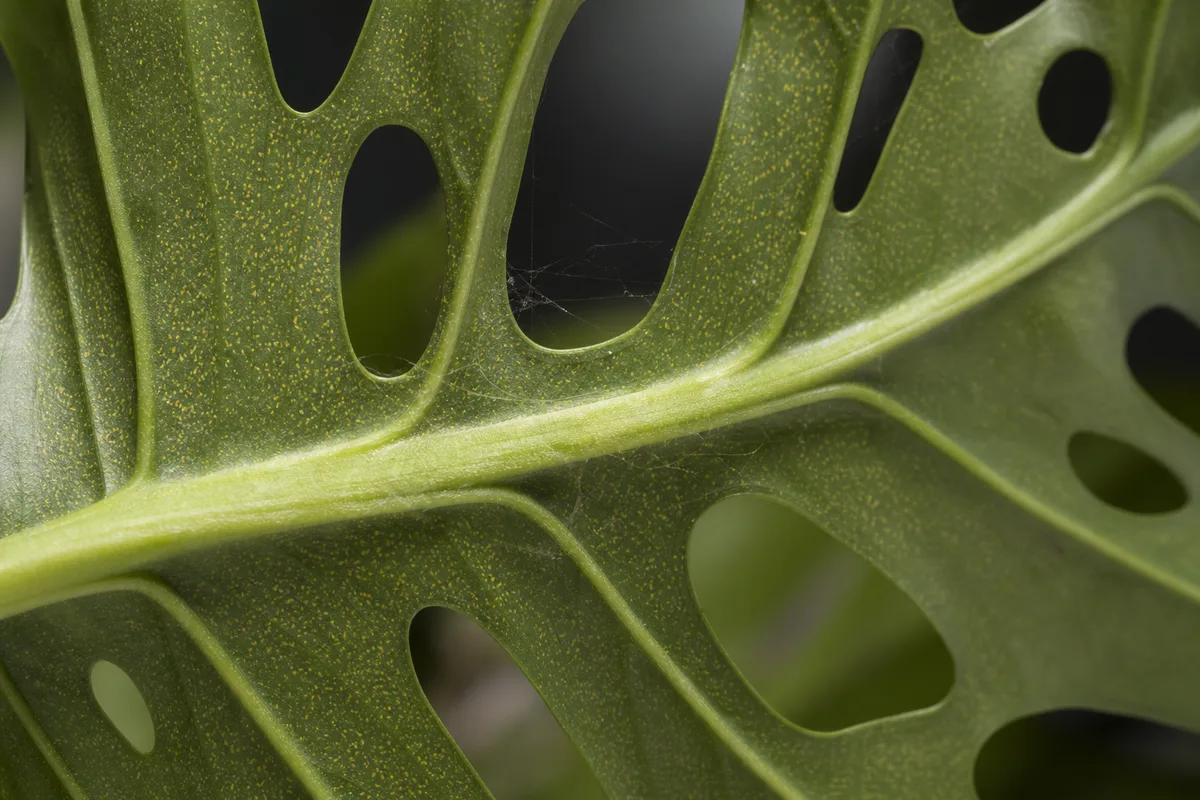
Pest damage often begins as many small pale dots, stipples, or mottled patches rather than a whole leaf turning evenly yellow. Spider mites are particularly easy to miss: inspect leaf undersides and the narrow crevices where petioles meet stems for tiny moving specks, fine webbing, and progressively bronzed foliage. Mealybugs, scale, aphids, and thrips can also weaken leaves, distort new growth, or leave sticky residue.
Isolate the vine from nearby houseplants if you find insects, webbing, or fresh feeding damage. Rinse the foliage and wipe accessible leaves, including undersides, then identify the pest before choosing a treatment. University of Minnesota Extension’s indoor-plant pest guide recommends matching management to the pest; any insecticidal soap or other pesticide must be labeled for the plant and pest and used exactly as directed. Do not spray an entire collection with an untested homemade mixture.
Nutrient deficiency, salts, and pH
Nutrient problems are possible, but they are easy to misdiagnose from color alone. General paling across older leaves can be consistent with low nitrogen, while yellowing between green veins on newer growth can suggest a micronutrient uptake issue. Yet waterlogged, damaged, or pot-bound roots may fail to absorb nutrients that are already present, so adding fertilizer to an unhealthy root zone can make the stress worse.
Look for supporting context: has the plant been in the same depleted mix for a long time, is it actively growing in bright light, and have you skipped feeding through a long growth season? A pale crust on the pot rim or mix surface, recent heavy feeding, or crisp brown margins can instead point to soluble salts. The RHS notes that root stress itself can contribute to nutrient symptoms and that excess fertilizer can create additional imbalances.
If roots are firm and the plant is actively growing, use a balanced houseplant fertilizer at the label rate and frequency for indoor foliage plants. Do not double the dose to “green it up,” feed dry mix, or fertilize a plant you are about to root-prune. When hard tap water or fertilizer buildup is plausible, flush a well-drained pot with plain water and let it drain fully; switch to rainwater or another suitable low-mineral source only if local water is very hard and leaf symptoms persist.
Cold, drafts, and recent changes
Yellowing can follow a sudden change even when watering has not changed. A pot beside an air-conditioning outlet, heater, cold pane, or frequently opened exterior door experiences temperature swings that a tropical vine does not need. Penn State describes Monstera as preferring warm conditions and avoiding cold drafts; North Carolina State notes that adansonii should be protected from cold and temperature drops.
Think back to the week or two before symptoms started. A move to a new room, repotting, delivery in cold weather, a window left open overnight, or a sharp seasonal drop in daylight can explain why the leaves changed. One older leaf after a recent move may be temporary adjustment; a sequence of yellow leaves with wet soil still requires a root check. Keep conditions steady while the plant settles instead of changing its location, watering, fertilizer, and pot all in one day.
Repotting stress is not a diagnosis that should excuse continuing decline. If yellowing began after repotting, check that the new pot has drainage and is not much larger than the root ball. A plant may lose an older leaf after root disturbance, but limp growth in persistently wet mix suggests the new container or medium is holding too much water.
Quick diagnosis table for yellow adansonii leaves
Use this table to choose what to inspect next, not to label the plant from one symptom. When clues conflict, check the root-zone moisture and recent care changes first.
| Leaf pattern or plant condition | First check | Likely direction |
|---|---|---|
| One slowly fading oldest leaf; rest of vine looks firm | New growth and soil moisture | Normal turnover is plausible |
| Several soft yellow leaves; pot stays heavy | Drainage, mix, and roots if decline continues | Excess moisture or root injury |
| Curling, limp leaves; light pot and dry mix | Whether water wets the center of the root ball | Underwatering or water-repellent mix |
| Small, pale leaves and stretched stems | Window distance and seasonal light | Low usable light |
| Bleached or crispy patches on window-facing leaves | Recent move or direct sun exposure | Sun scorch |
| Fine stippling, webbing, sticky residue, or visible insects | Undersides and stem joints | Mites or other sap-feeding pests |
| General pale color after long growth in old mix | Root health and feeding history | Possible nutrient shortage |
| New leaves yellow between veins while veins stay green | Root condition, water source, and mix | Possible nutrient-uptake problem |
| Yellowing after a cold night or move beside a vent | Temperature exposure | Cold or draft stress |
How to help the plant recover without adding stress
Choose one likely cause and correct that condition first. Do not water, repot, fertilize, prune, and move the plant simultaneously; if it improves or worsens, you will not know which change mattered. A brief written note—date, moisture at depth, pot weight, and the next leaf’s condition—turns recovery into a manageable observation rather than guesswork.
If the root system is healthy, keep the plant in bright indirect light, water after the mix has partly dried, and empty all runoff. Leave pale or partly yellow leaves in place while you watch for continued change; they can still support the plant while some green tissue remains. A completely yellow leaf is unlikely to return to solid green, so success means stable remaining foliage and healthy new growth, not repainting old damage.
If the mix is staying wet
First uncover the drainage path: remove the pot from a water-filled cachepot, clear blocked holes, and stop watering until the root ball begins to dry. If the pot has no holes, move the plant into a draining nursery pot and an airy mix; simply adding gravel below the soil does not create a drainage hole. If the plant continues to decline and roots are soft or dark, trim only the clearly rotted portions with clean scissors and repot in fresh, appropriately sized mix.
Do not move a small plant into a much bigger pot as a rescue. Extra unused mix can stay wet around the roots for longer, especially when the plant is already losing leaves. After repotting, give it stable light and warmth and wait for the medium to begin drying before watering again. Avoid fertilizer until new growth or root recovery is evident.
If the root ball is too dry
Rehydrate a water-repellent root ball evenly, then let the pot drain. If the plant is root-bound and dries extremely fast despite proper watering, wait until it is stable and repot one container size larger rather than leaping to a much larger planter. For a basket with a dense root mass, check that water reaches the center rather than escaping along the sides.
After a severe dry spell, remove leaves that are fully crisp or detached, but do not strip every leaf just because the plant looks uneven. Keep the root ball from swinging between bone dry and continuously wet by checking it regularly during active growth and less often in darker, cooler months. The correct interval will change with room conditions.
Should you cut yellow leaves off?
You can remove a fully yellow leaf once you have checked the cause, but you do not have to cut it off immediately. Use clean, sharp scissors and cut the petiole near the stem without nicking the vine or nearby nodes. If a leaf is only partly yellow and still has firm green tissue, leaving it temporarily gives the plant time to keep using what remains.
Pruning makes the plant look tidier; it does not cure soggy roots, pests, poor light, or fertilizer injury. If several leaves need removal, avoid taking a large share of the healthy foliage at once. The goal is to stop the cause and preserve viable growth points, not to make the plant appear symptom-free overnight.
Prevent new yellow leaves
Build a care rhythm around the container rather than the calendar. Check the upper few centimeters of mix and lift the pot; water thoroughly when that layer has dried and the container is lighter, then discard runoff. A hanging basket, a plastic pot, a dense peat mix, and a terracotta pot will all dry at different speeds, even when they sit in the same room.
Keep the vine in bright, indirect light and turn the pot occasionally for even growth. Protect thin leaves from hot direct sun and cold drafts, and give the plant enough space for airflow around crowded foliage. A trellis or moss pole can organize long stems, but support does not replace good drainage or appropriate watering.
Feed only during active growth and follow the fertilizer label. If the plant is losing leaves, first ask whether roots are healthy and whether there is enough light for it to use nutrients. Inspect leaf undersides during routine watering, especially after bringing a new plant home, and quarantine any plant with suspected pests before it shares a shelf.
When healthy cuttings are the safer backup
If the base of the vine is mushy or root rot has destroyed much of the root system, preserve healthy sections before the decline reaches every node. Take cuttings only from firm, green stems with at least one healthy node; a detached leaf without a node cannot grow into a new vine. Use a clean tool and keep the cuttings away from the infested or rotting parent until you are sure they are healthy.
Root the cuttings in clean water or a lightly moist, airy propagation medium in bright indirect light. Change water when it becomes cloudy, or keep propagation mix just damp rather than saturated. Once roots are established, pot the new plant in a container with drainage and avoid repeating the wet conditions that damaged the original. North Carolina State Extension identifies stem cuttings as a way to propagate this climbing species; propagation is a backup, not a reason to discard a plant whose roots still have healthy sections.
Conclusion
Yellow leaves on Monstera adansonii are best diagnosed by combining where they appear, how the tissue feels, whether the pot is wet or dry below the surface, and what changed recently. One older leaf can be normal; several soft leaves with a heavy pot call for a root-zone check; crisp edges on a light pot suggest drying; stippling, webbing, or residue calls for pest inspection. Treat those patterns as evidence rather than certainty.
Make the smallest correction that addresses the strongest clue, then monitor the next few days and the next new leaf. The damaged yellow tissue may never turn green again, but stable roots and healthy growth show that the plant is recovering. If the vine keeps declining despite a corrected cause, recheck the roots, drainage, and pests before adding more changes.