Basil Leaves Turning Yellow: Causes and Fixes
Diagnose yellow basil leaves by checking soil, new growth, leaf undersides, and roots. Learn which fixes work and when disease means removing the plant.
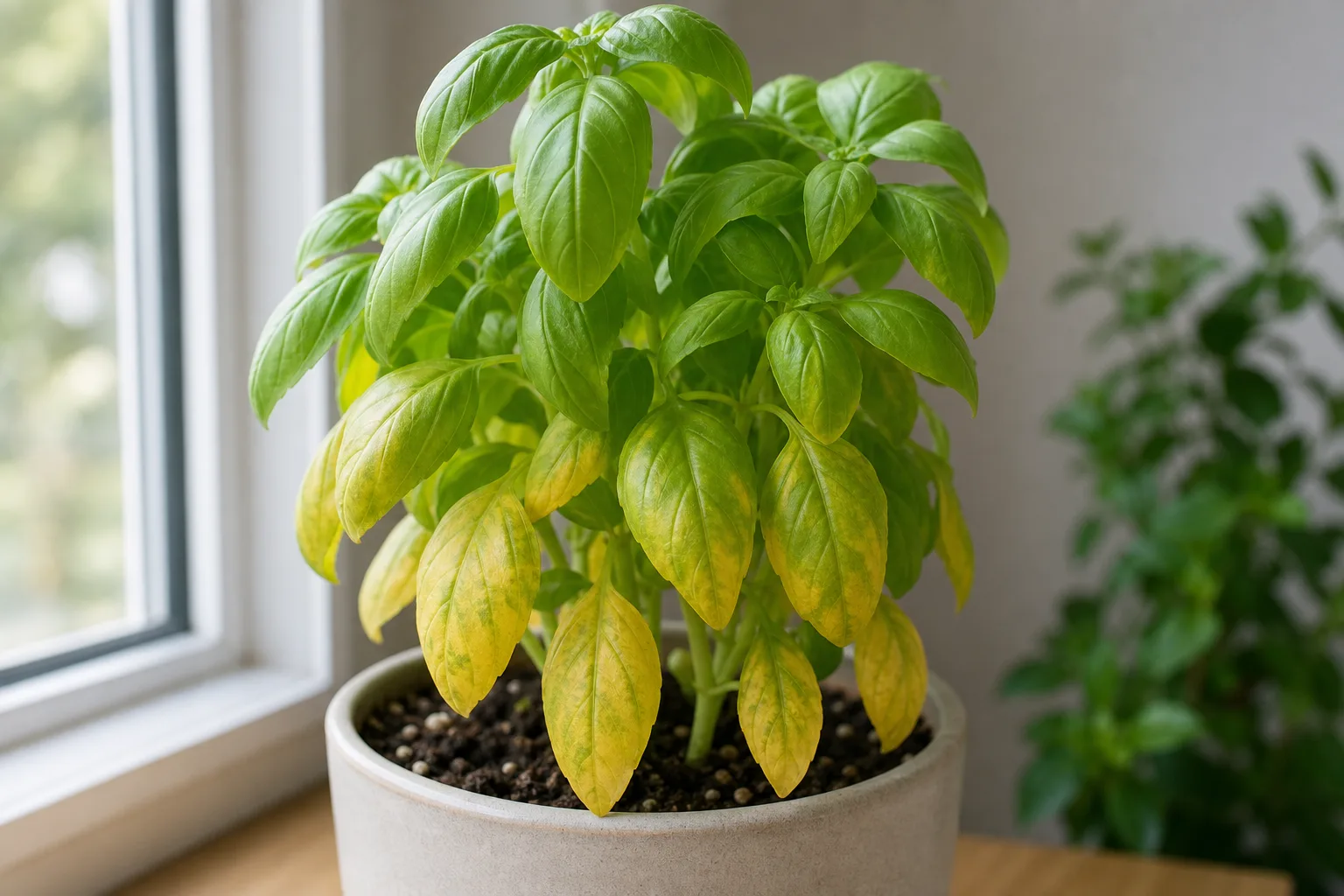
Start with the pattern, not the fertilizer bottle. A single yellow leaf low on a mature basil plant may be an aging leaf; several soft yellow leaves above damp soil point toward a wet root zone; yellow patches bounded by veins deserve an immediate look underneath for downy mildew. Those clues are more useful than the color alone because several unrelated problems can produce yellow basil leaves.
Check the soil about an inch or two below the surface, look at whether new or old leaves are affected, and turn over a few leaves in good light. Then change one condition at a time. A damaged leaf usually stays damaged, so judge the fix by whether new growth comes in healthy and the yellowing stops spreading.
Diagnose the pattern before changing care
Basil leaves turn yellow when the plant is stressed, but yellowing does not identify the cause by itself. Before you water, feed, or repot, compare what you see with the plant’s recent conditions: Did the weather turn hot or cold? Did you move an indoor pot outside? Has rain kept the bed wet? Did you recently fertilize, transplant, or bring home a crowded grocery-store herb pot?
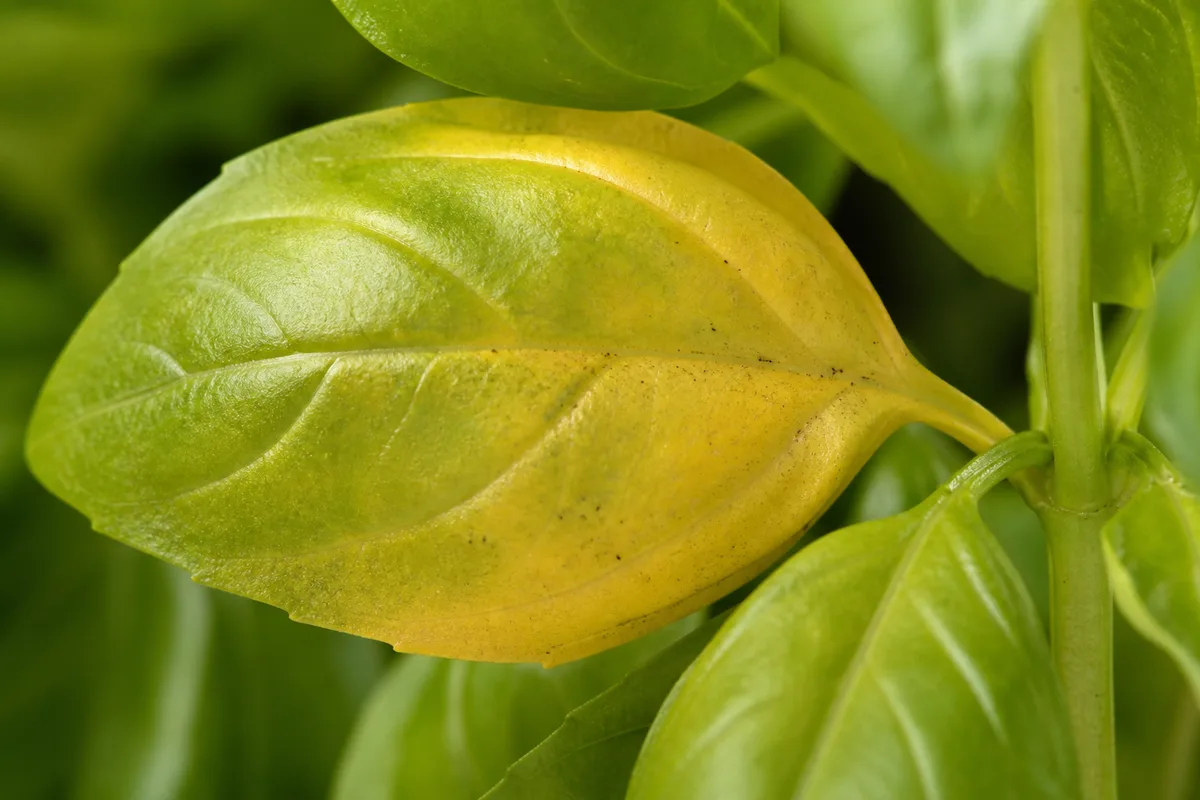
Yellowing is a symptom, not a diagnosis; check the soil and underside before choosing a cause.
| What you notice | Check next | Likely direction |
|---|---|---|
| Older leaves yellow evenly while newer growth stays green | Soil moisture, drainage, and whether the plant is simply replacing a few old leaves | Normal aging or root-zone stress |
| Leaves are yellow and soft, and the pot stays wet | Drainage holes, standing water, and the roots if the plant is collapsing | Overwatering, poor drainage, or root rot |
| Leaves are dry or crisp and the mix is dry well below the surface | Water the root ball slowly and check how quickly the pot dries | Underwatering or heat stress |
| Yellow areas follow the leaf veins; dark gray-purple growth is underneath | Inspect several lower leaves early in the day | Basil downy mildew |
| New leaves are pale, growth is weak, or yellowing follows recent feeding | Fertilizer history, white crust on the pot, and soil condition | Low nutrients, salt buildup, or damaged roots |
| Fine pale stippling, distorted tips, sticky patches, or webbing appear | Inspect leaf undersides and stem joints with a hand lens | Sap-feeding pests |
Use the table to choose a test, not to make a diagnosis from one leaf. For example, a wilted basil plant can be thirsty, but waterlogged roots also fail to supply the foliage; feel the soil before adding more. If a plant is declining quickly or disease signs are spreading, isolate it from nearby herbs while you inspect it.
1. Watering swings and root stress
Basil needs consistent access to moisture while it is actively growing, but its roots still need air. A plant can wilt and yellow in both wet and dry soil, which is why “it looks thirsty” is not enough to justify watering. Check the root zone first, then water thoroughly only when it has begun to dry.
Too much water keeps roots oxygen-starved
When potting mix stays saturated, air spaces around the roots fill with water. Roots can then lose the ability to take up water and nutrients efficiently, so foliage may look limp, pale, or yellow even though the soil is wet. The lower leaves often show the first symptoms, but severe root damage can affect the whole plant.
Press a finger into the mix rather than judging its surface. If it feels wet several centimeters down, pause watering and make sure the pot drains freely; empty its saucer after excess water runs through. Do not water again simply because a wilted plant looks droopy. Give a slightly wet pot time to dry in bright, warm conditions, and improve drainage if it remains wet for days.
If the plant keeps declining, slide it from the pot and inspect the roots. Healthy roots are generally firm; brown, soft, or water-soaked roots and a mushy stem base support root or crown rot. The Connecticut Agricultural Experiment Station describes wilt, collapse, and brown water-soaked roots as warning signs of root and crown rot in basil. If most roots are damaged, replacing the plant is often more realistic than trying to nurse it back; if only a few are affected and the stem is firm, repotting into clean, free-draining mix may give it a chance.
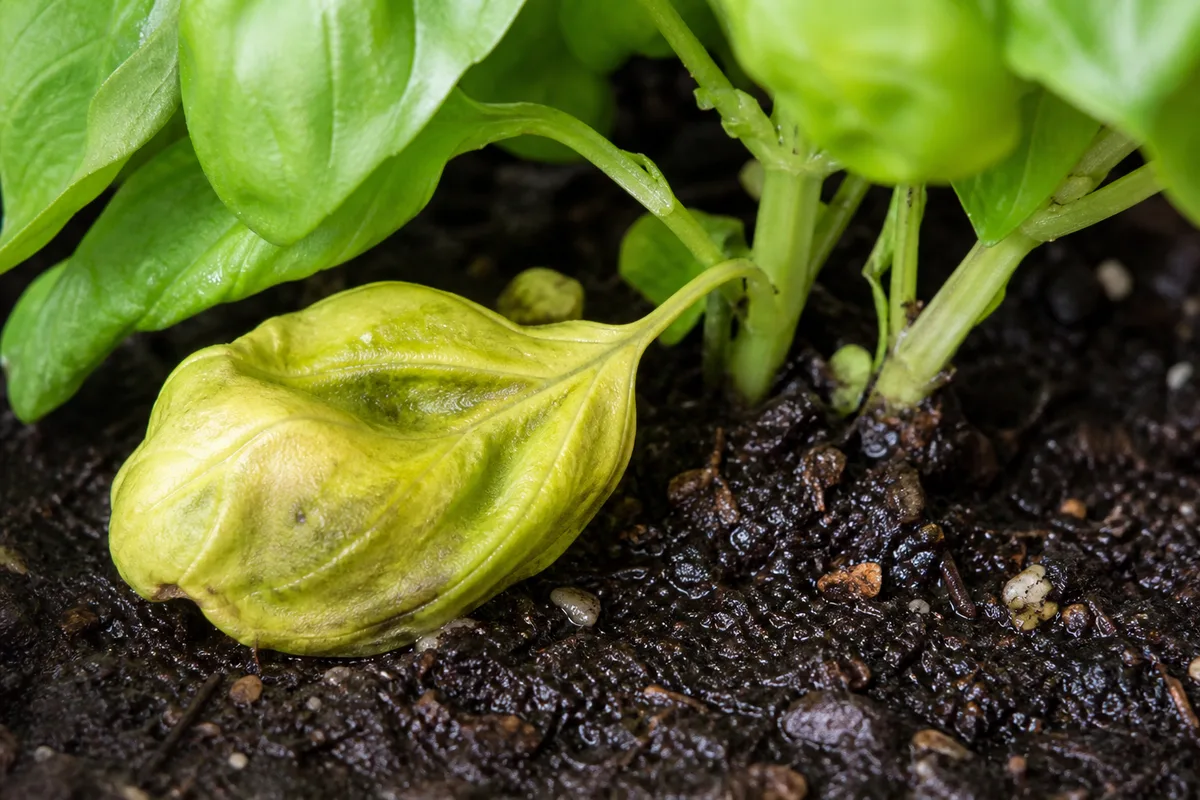
Wet soil plus soft yellowing points toward a root-zone check; the leaf color alone cannot confirm root rot.
Too little water dries leaves from the edges inward
A dry basil plant may have drooping stems, leaves that feel thin or papery, and brown, crisp margins. The pot is often unusually light, and the mix may pull away from the sides. On a hot patio, a small container can dry much faster than a garden bed, so a fixed weekly schedule can leave it parched between checks.
Water slowly at the soil line until the root ball is evenly moist and water begins to leave the drainage holes. If very dry mix repels water, apply a little, wait several minutes, and water again rather than letting a fast stream run down the gap beside the root ball. Afterward, let excess drain; basil should not sit in a permanently full saucer.
A finger test at roughly the top inch or two is a practical starting point, not a universal timetable. Epic Gardening’s basil troubleshooting likewise distinguishes soft yellowing in wet soil from crisp decline after a dry spell. Sun, wind, container size, root fill, and rainfall all change how quickly a plant uses water, so repeat the check instead of watering by the calendar.
2. Poor drainage or a crowded pot
Watering frequency and drainage are related but not identical. If water cannot leave the container or the soil is dense and compacted, even careful watering can keep roots wet too long. A basil pot needs open drainage holes, and its mix should hold some moisture without turning into a dense, airless mass.
Check that the pot is not standing in runoff and that its holes are not blocked by roots or compacted soil. A decorative cachepot can hide water at the bottom, so lift out the nursery pot after watering and pour away collected water. In a garden bed, repeated puddling after rain is a sign to improve the site or use a raised bed, not to keep adding water-soluble fertilizer.
Crowding can create two problems at once: multiple seedlings compete for water and nutrients, while dense foliage slows air movement around leaves. If a grocery herb pot contains a tight cluster of stems, do not assume every stem is one plant; it may be many seedlings packed together. Divide or thin a crowded clump carefully while it is actively growing, or move the strongest plants to a larger container with fresh, well-draining potting mix.
A plant that has become root-bound may dry rapidly yet still show yellowing because the root ball has little room to expand. Roots circling densely at the pot’s edge, water running straight through without wetting the center, or a pot that dries again soon after a deep watering are stronger clues than leaf color. Move it one pot size up rather than jumping to an oversized container that stays wet around a small root system.
3. Nutrient deficiency—or fertilizer salt buildup
A pale plant with slow growth may lack nutrients, especially if it has grown for a long time in a small container or in depleted soil. Nitrogen shortage often affects older leaves first because the plant can move nitrogen toward young growth; some other deficiencies show differently, and nutrient symptoms overlap with root damage, low light, and disease. The Connecticut Agricultural Experiment Station warns that excess soluble salts from fertilizer can injure roots and resemble root rot, with white crystalline deposits on the pot or soil surface serving as a clue.
Before feeding, ask whether the basil is actually growing in lean or exhausted mix, and whether its roots are healthy enough to absorb nutrients. A container with crusty deposits, a history of repeated feeding, or wet damaged roots is not a good candidate for another dose. In a garden bed, a soil test is more reliable than guessing a nutrient from a leaf pattern.
If the plant is healthy but the growing medium is depleted, use a complete fertilizer labeled for edible herbs and follow its rate and timing. Compost can improve garden soil before planting, while a fresh potting mix may be the simpler correction for an old, compacted container. Do not add Epsom salt, iron, or a high-nitrogen product just because leaves are yellow; correcting the wrong deficiency can add salts without solving the cause.
For a small amount of surface fertilizer residue on a freely draining pot, a thorough watering may carry some salts out; keep the pot out of the runoff and do not do this in a container with blocked drainage or rotting roots. If the mix is heavily crusted and the plant is declining, repotting into clean mix is a clearer reset. The goal is steady, healthy growth, not the fastest possible flush of tender foliage.
4. Light, heat, or cold stress
Basil grows best in warmth and strong light, so a sudden change in either can show up as pale or yellow leaves. Indoor plants may stretch toward a window and lose color when light is weak; outdoor plants can scorch after an abrupt move into intense sun. The question is not simply whether the plant receives “full sun,” but whether the amount and intensity changed before symptoms appeared.
Too little light weakens new growth
If stems are long and sparse, leaf pairs are far apart, and new leaves look small or pale, the plant may not be getting enough light. Move a pot to a brighter location gradually, or use a grow light at the distance and duration its manufacturer recommends. A sunny window can still provide less usable light than an outdoor location, especially in winter or when the glass is shaded by trees or buildings.
Most basil does well with around six or more hours of direct sun, but hot afternoon exposure can be harsh for a recently moved plant or a pot that heats up against masonry. Epic Gardening and Gardening Know How both note that basil needs bright sun, while reduced light can contribute to pale or yellow growth. Acclimate outdoor transplants over several days instead of taking a plant from a sheltered room straight into all-day sun.
Heat and chill can mimic disease
Cold nights and frost can damage basil quickly. Chilled leaves may turn pale, then darken, droop, or develop water-soaked patches; a plant moved outdoors before nights are reliably warm may yellow despite correct watering. Bring container basil under cover during cold spells and remove only tissue that becomes fully damaged after the plant has had time to show what is still alive.
Hot, dry conditions can cause rapid water loss, crispy leaf edges, and wilt, particularly in small pots. Give the root zone a thorough drink when it is dry and consider light afternoon shade during extreme heat, but do not move the plant into deep shade as a reflex. Recheck the pot’s moisture and temperature the next day; heat stress and overwatering can coexist when a grower responds to hot weather with frequent shallow watering.
5. Crowded foliage and persistent leaf wetness
Basil can grow into a dense mound, and leaves tucked in the center may yellow when they are shaded, stay wet, and receive little airflow. The problem is more likely in a humid, crowded bed or an indoor pot pressed against other plants than in an open plant with dry leaves and good light. Thinning is useful when foliage is packed tight, but heavy pruning will add stress to a plant that is already weak.
Harvest or pinch a few stem tips just above a leaf pair to encourage branching and open the canopy. Keep enough healthy leaves for the plant to keep growing, and avoid removing more than about a third of its foliage at one time. Space garden plants so air can move between them, and water the soil rather than showering the leaves late in the day.
Airflow is also disease prevention, not a cure. If yellowing is paired with distinctive spots, fuzzy growth, or rapid spread, pruning alone will not remove an established pathogen. Use those signs to decide whether the plant needs isolation and removal rather than a cosmetic trim.
6. Bolting, transplant shock, or natural aging
Basil naturally shifts from leaf production toward flowering as it matures, especially during hot weather or after it has been growing for a while. Flower spikes at stem tips are a clear sign of bolting; the plant may become woodier and produce fewer tender leaves. Pinch young flower buds above a leaf pair if you want to keep harvesting foliage, or let the plant flower if pollinators and seed collection matter more than a long supply of soft leaves.
A few yellow leaves at the base of an otherwise vigorous plant can also be ordinary turnover. Remove them if they are fully yellow, damaged, or touching wet soil, but do not strip the whole lower canopy when only one or two old leaves are changing. Widespread yellowing, rapid leaf drop, or symptoms that move into fresh top growth call for a closer diagnosis.
Transplant shock has a different timing clue: yellowing begins soon after a move, repot, or hardening-off change. Keep the root ball evenly moist but not saturated, protect the plant from harsh midday conditions while it adjusts, and avoid adding fertilizer immediately to a plant whose roots have just been disturbed. New leaves are the best sign of recovery; existing yellow leaves may not regain green color.
7. Pests and diseases that yellow basil
Inspect the lower leaf surfaces, stem joints, and the soil line before treating a plant. Pests often leave visible evidence such as tiny moving insects, sticky honeydew, fine stippling, silvery scars, or webbing; disease may create a repeatable patch pattern or fuzzy growth. Separate the basil from neighboring herbs if you suspect a spreading problem, and take a clear photo or sample to a local extension diagnostic service when the pattern remains uncertain.
Downy mildew has a telltale underside
Basil downy mildew can begin with yellowing that resembles a nutrient problem. The strongest field clue is yellowing in areas between major veins together with dark gray or purplish sporulation on the underside of affected leaves. Inspect in the morning, when the underside growth can be easier to see; do not diagnose the disease from yellow leaves alone.
NC State Extension and Cornell Cooperative Extension describe the same key pattern: chlorosis on the upper surface and dark sporulation largely on the lower surface, with humid, wet conditions favoring disease. This basil-specific pathogen, Peronospora belbahrii, spreads by spores and can also be seedborne. If you find the characteristic underside growth, remove the affected plant from the basil planting, avoid keeping it among healthy herbs, and do not rely on a general-purpose “yellow leaf” fertilizer or household remedy to cure it. Cornell notes that the pathogen needs living host tissue to persist, but a home grower should still remove infected basil promptly and clean tools before handling healthy plants.
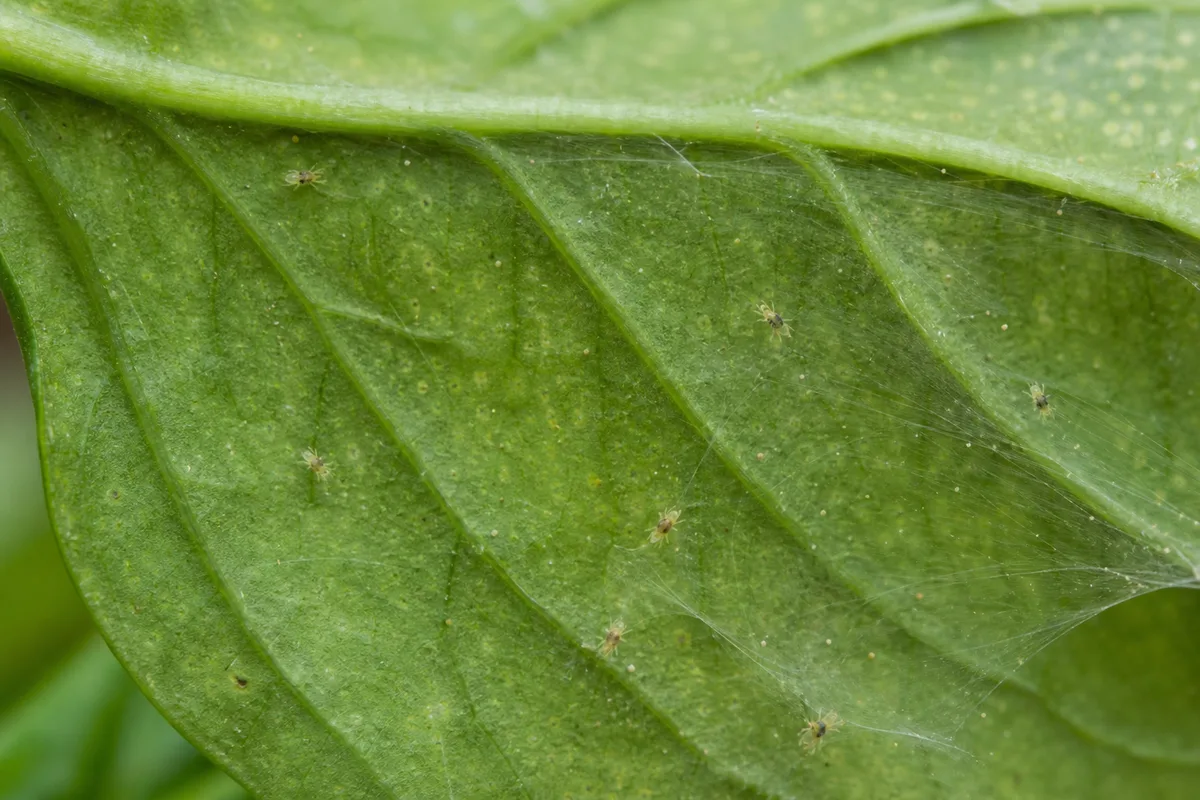
Turn leaves over: spider mite stippling and webbing are different clues from the dark sporulation of downy mildew.
Fusarium wilt and root rot need a different response
Fusarium wilt can produce yellowing, wilting, stunting, and dark discoloration inside the stem’s water-conducting tissue. The Connecticut Agricultural Experiment Station notes that the pathogen can be carried on seed and persist in soil after it is established. If one side or branch collapses while the soil is not dry, or the stem shows dark streaking, stop trying to correct it with extra water or fertilizer; remove the affected plant and avoid reusing its soil for basil.
Root or crown rot is more closely tied to persistently wet media and damaged roots. Unpotting is useful only when the basil is collapsing and the root zone is suspect; otherwise, disturbing a plant just to inspect it may cause extra stress. Brown, soft roots and a dark, wet stem base support rot, while firm, pale roots and merely damp soil point you back to light, temperature, or another cause.
Sap-feeding pests leave stippling or webbing
Spider mites can leave fine pale speckles and delicate webbing, often underneath leaves or between stems. Aphids tend to cluster on tender growth and stem joints; they may leave sticky honeydew. Whiteflies flutter up when foliage is disturbed, while thrips can leave silvery scarring and tiny dark specks. These marks are more informative than a uniform yellow cast.
First isolate the pot and rinse small pest populations from both sides of the leaves with a gentle stream, preferably early enough for foliage to dry. Remove badly infested leaves and inspect neighboring plants over the next several days. If you use a pesticide, choose one whose current label specifically allows use on edible herbs and follow its application and harvest instructions; “natural” does not mean automatically safe for a harvest-ready plant or beneficial insects.
A 10-minute check to choose your first fix
Work through these checks in order so you do not stack several treatments on top of each other. A single lower leaf with no other symptoms is a different situation from a whole plant yellowing in wet soil or leaves developing vein-bounded patches.
- Look at where yellowing starts. Oldest lower leaves suggest normal turnover, watering stress, or a mobile nutrient issue; fresh top growth suggests light, root, or other stress.
- Feel the root zone. Wet, heavy mix means wait and check drainage. Dry mix means water slowly until the full root ball is moist.
- Turn over leaves. Look for dark fuzzy growth, webbing, tiny insects, sticky residue, or damage that follows veins.
- Check the stem and pot. Look for a dark, soft stem base, white salt crust, blocked holes, or water standing in the cachepot.
- Make one correction, then watch new growth. Write down what you changed and check the plant again in a few days. Old yellow leaves rarely turn green again, so recovery means the spread stops and the next leaves are healthier.
If two clues point in different directions, start with the least disruptive reversible fix: empty standing water, move the pot out of cold, or give a dry root ball a thorough drink. Do not repot, fertilize, prune heavily, and spray all on the same afternoon; if the plant worsens, you will not know which change helped or added stress.
How to prevent repeat yellowing
Use a container with drainage holes and a potting mix that drains while holding some moisture. Water at the soil line when the root zone begins to dry rather than following a fixed number of days; check container basil more often during heat and wind, and less often when growth slows or rain has soaked the bed. Empty saucers and cachepots after watering so roots are not left in runoff.
Give basil strong light, warm conditions, and enough room for air to pass through the plant. Pinch or harvest regularly to keep a bushy plant from becoming a sealed, damp clump, but leave enough leaves for growth. Water in the morning when possible and avoid routine overhead irrigation, especially when humid weather or downy mildew has been a problem.
Feed according to the potting mix and product label, not the leaf color alone. A healthy garden bed amended before planting may need little added fertilizer, while an older container may eventually need fresh mix or a modest feed. If yellowing repeats in the same bed, use a soil test and rotate basil away from the affected site rather than repeating an unverified treatment.
When to remove the plant
Remove basil when you find convincing downy mildew sporulation, severe Fusarium-like wilt or stem discoloration, or a root system that has largely collapsed. Bag and discard diseased plants rather than leaving them beside healthy herbs, and wash soil from reusable pots before planting again. When symptoms are limited to a few aging leaves or one correctable watering mistake, removal is unnecessary; stabilize the growing conditions and judge the next flush of growth.
If disease symptoms are unfamiliar or several plants are affected, contact your county or regional extension office with clear photos of both sides of a leaf, the whole plant, and the stem base. A diagnosis matters because downy mildew, nutrient stress, and root damage can overlap in appearance but require different decisions. A local diagnostic service can help distinguish them before you discard a large planting or apply any treatment to an edible crop.
Conclusion
Yellow basil leaves are a warning to inspect, not an instruction to water or fertilize automatically. Read the pattern, feel the soil, check drainage, and inspect leaf undersides before choosing a fix. Most small, correctable stresses can be addressed by restoring steady moisture, light, warmth, and airflow; distinctive mildew growth, severe wilt, or rotted roots call for prompt removal and a reset. Keep one change at a time and use healthy new growth—not the old yellow leaves—as your measure of recovery.