How to Keep Cats Out of Flower Beds
Protect flower beds from cats without poison or painful traps. Compare mesh, mulch, ground cover, sprinklers, and humane next steps for repeat visits.
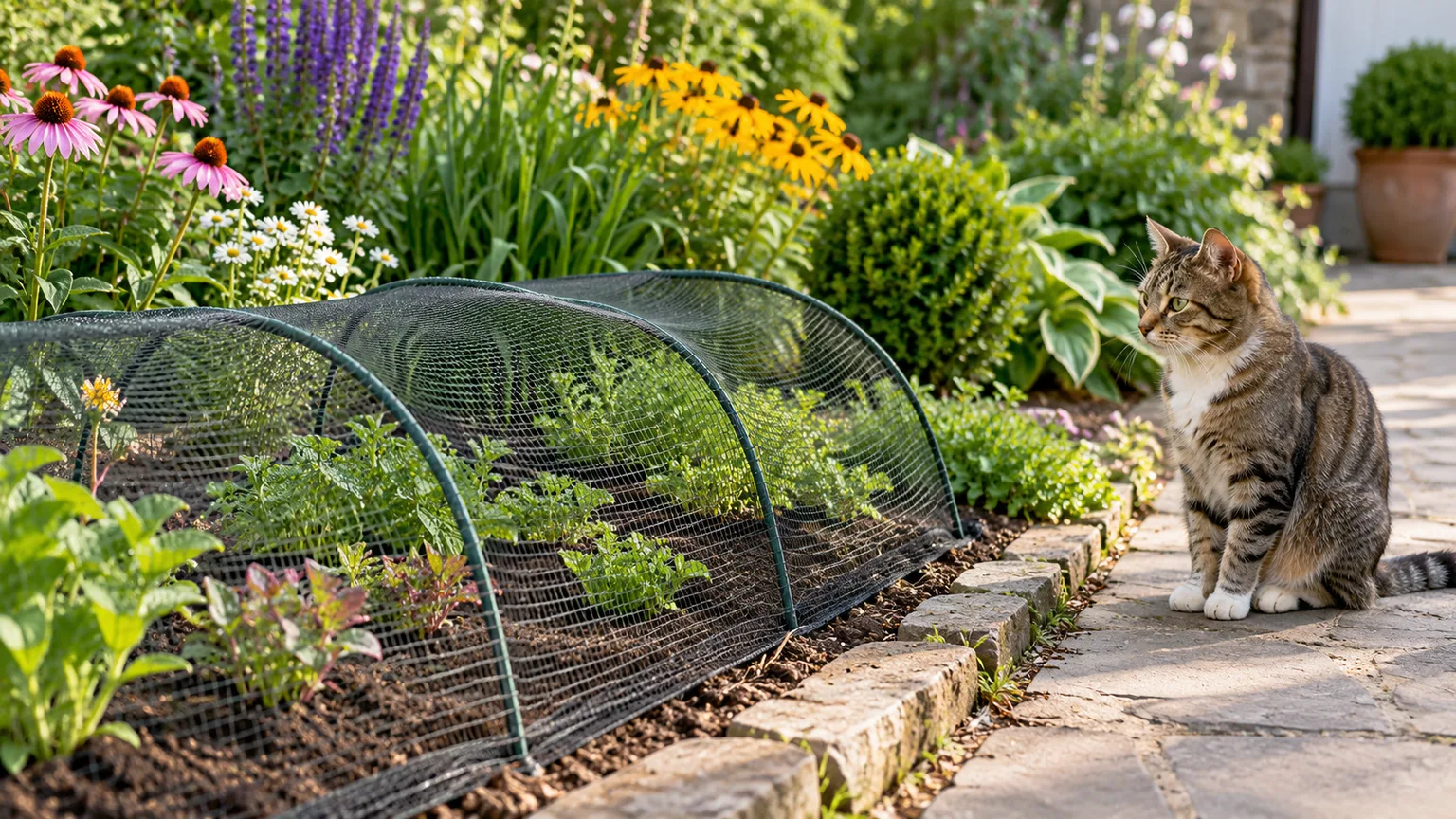
The most dependable non-toxic way to keep cats out of a flower bed is to make the exposed soil difficult to reach. Cover fresh plantings with a secure, taut barrier, or replace broad patches of bare ground with mulch, stones, or living ground cover. Scent sprays and “cat-repelling” plants may affect some cats, but they are too variable to be the only plan.
Start by noticing what the cat is doing. Digging in loose soil calls for a cover over the soil; lounging on a plant calls for a physical boundary or protected growing space; repeated visits from a cat that is attracted to food or shelter may need a broader yard or neighborhood solution. A practical plan blocks access first, then adds a second layer only if the problem continues.
Start with the behavior, not a repellent
Cats do not visit beds for one single reason. A newly loosened patch is easy to dig in, so it may be used as a toilet or explored for insects; a warm, quiet bed may be a place to rest; tender seedlings can invite play or chewing. Look for paw prints, scraped soil, flattened plants, or droppings before choosing a fix, because the right barrier depends on the damage.
If the problem appears after planting or weeding, cover the newly exposed soil immediately. If the cat repeatedly crosses the same bed, focus on a border or an enclosure instead of scattering products around the whole garden. If the cat is your own, management can include supervision and a more appealing outdoor area; if it belongs to a neighbor or is free-roaming, use passive barriers and local humane resources rather than trying to catch or punish it.
A useful test is to ask whether the cat can still reach the specific surface it wants. If it can land on loose earth between plants, a perimeter of scented herbs will not remove the attractive landing spot. If the soil is completely covered and the animal still rests on flowers, shift from a soil texture fix to a taller, stable protective structure.
The fastest safe fix for exposed soil
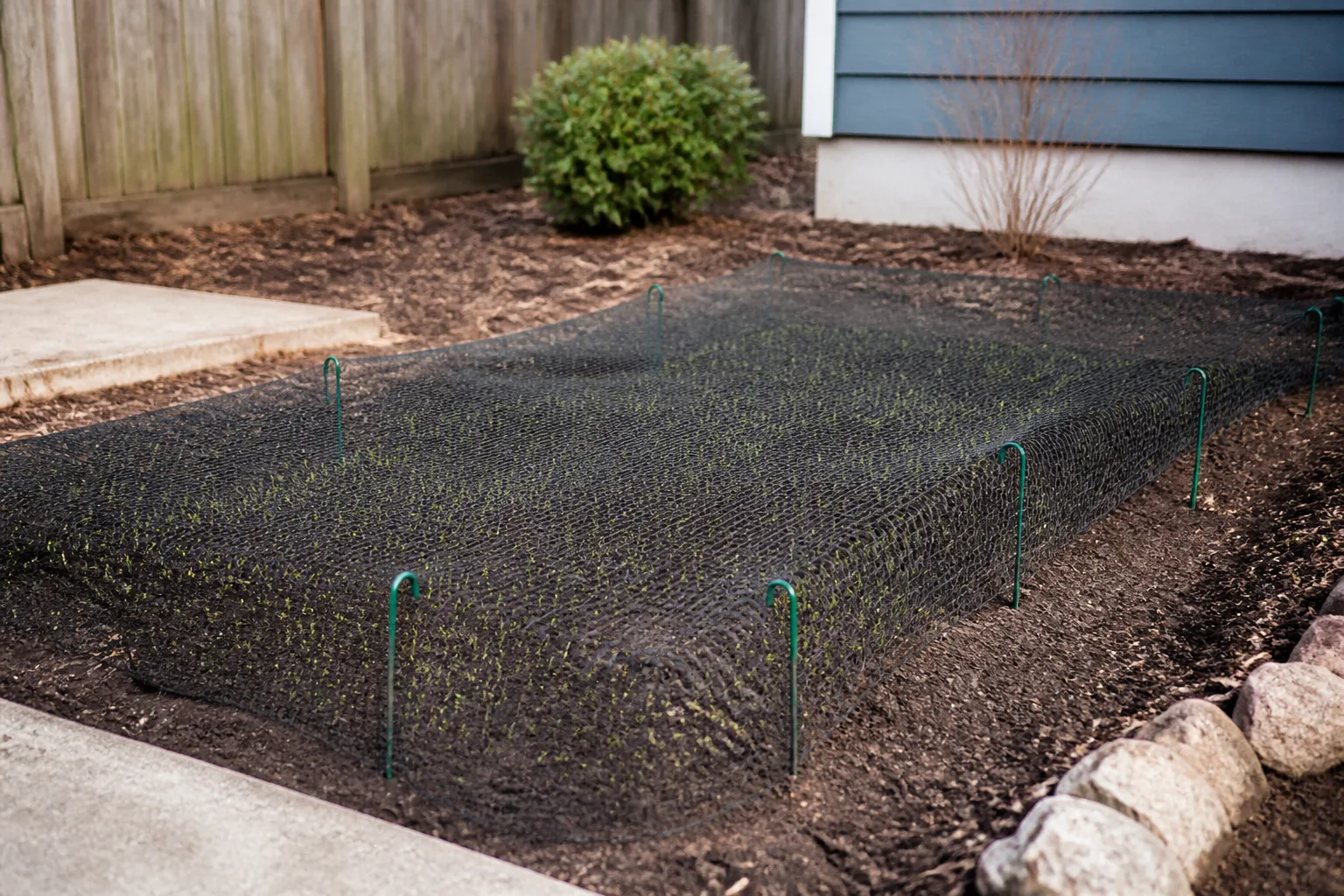
For a small bed or a fresh planting, protect the soil the same day. Use a rigid, garden-safe mesh panel or a supported cover that lets rain and light through while keeping paws off the soil; secure every edge so it cannot flap, lift, or become a loose net. Keep the mesh away from stems that could be constricted as they thicken, and open or lift it only when you need to weed, plant, or harvest.
If you have no cover ready, use clean, broad, stable objects to interrupt the smooth digging surface temporarily, such as several large flat stones between plants. Arrange them so they cannot roll onto stems or block irrigation. This is a short-term patch rather than a complete solution for a large bed, but it can make an exposed corner less attractive while you install a better cover.
Avoid pointed skewers, barbed wire, thorny branches, glue boards, or anything designed to frighten or hurt the cat. A humane cover should block access without trapping toes, catching claws, hiding a cat under it, or creating a sharp edge for children and wildlife. Check it after wind, heavy rain, or routine garden work, since a barrier that shifts can become a hazard or leave a new gap.
Choose a soil cover that fits the planting
There is no single material that suits every bed. Seedlings need light and room to grow; a mature perennial border can accept a more permanent surface; and an edible bed needs a cover that does not make routine picking and cleaning difficult. Choose for the plants first, then check whether the finished surface still leaves an easy route for a cat to dig.
Use taut mesh for seedlings and open beds
A low frame or hoop system with a secured garden cover works well while seeds germinate and young plants are small. Fine Gardening’s garden-protection guidance favors physical barriers as a nontoxic way to protect plantings while still allowing water and sun through. Fit the cover snugly around the bed, keep it taut rather than baggy, and close openings at the sides; loose netting can snag paws, birds, or other wildlife. The mesh should not press down on foliage, and the structure should be easy for you to lift so watering and thinning do not turn into a daily wrestling match.
For a permanent ground-level grid, use smooth, intact garden mesh made for outdoor beds and fasten it flat with garden staples or weights. Leave generous openings around plant stems, and fold or cap cut edges so no wire end points up. Inspect the area frequently, especially after plants spread: a grid that was safe over bare soil can pinch a stem or be hidden by foliage later.
A cover also has to work with pollination and maintenance. Lightweight fabric row covers can help at the seedling stage, but remove or open them when pollinators need access to flowers, and do not let hot weather build up under a cover. If you want season-long protection for a crop or an entire raised bed, choose a framed enclosure with a door or liftable top rather than a loose sheet that you must keep re-tucking.
Use mulch, stones, or ground cover around established plants
A permeable mulch can cover the open soil around established flowers without enclosing the bed. BBC Gardeners’ World. Choose a material that stays in place, does not mat into a hard layer, and will not smother crowns or stems; top it up when gaps reappear. Coarse bark or a mix of larger, rounded stones can make the surface less comfortable to dig in, but the effect depends on the cat and the material, so add a physical cover if digging persists.
Large, smooth river stones or pavers can work around individual plants or in narrow borders where mesh is awkward. Set stones firmly, leave enough breathing room around stems, and avoid covering the root crown or packing stones so densely that water runs away from the roots. Small loose grit may simply become another diggable surface, and heat-sensitive plants can suffer if dark stone is used in a very hot, exposed site.
Ground-cover plants are a longer-term fix for sunny or shady areas where you do not want recurring bare patches. Select a low-growing plant suited to the bed’s light, soil, and climate, then allow it to establish before relying on it; newly planted plugs still leave gaps. This is a design solution rather than an instant repellent. In the first season, protect the open spaces between young plants with a temporary, well-secured cover.

Protect one bed without fencing the whole yard
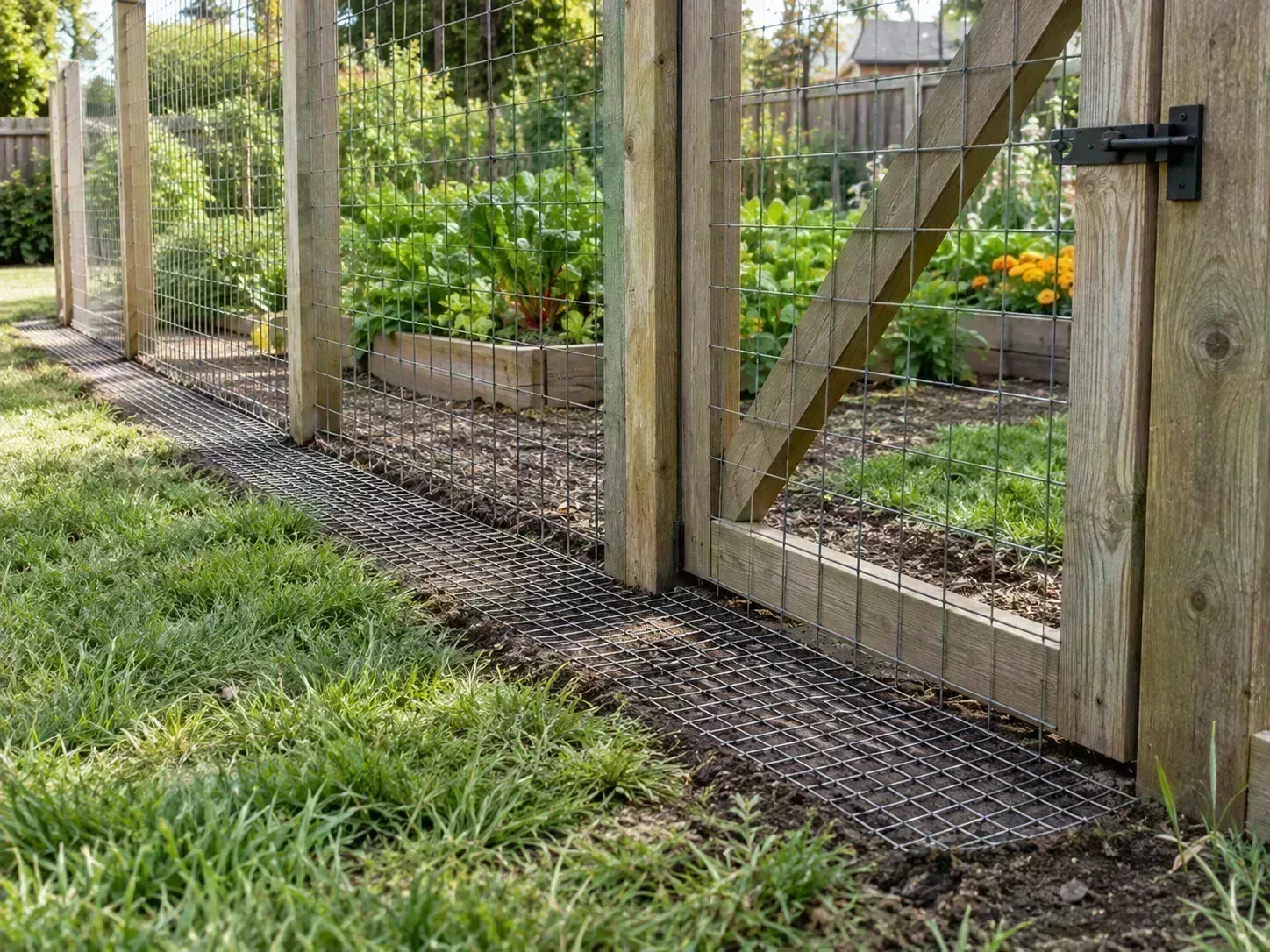
A whole-yard fence is expensive and may not stop a determined cat that can climb or jump. A bed-scale enclosure is often the better choice when one prized patch is repeatedly disturbed: build a simple frame from hoops, light stakes, or a low bed cage, then cover the sides and top with a durable mesh or netting designed for garden use. Anchor it on all sides and make the opening convenient enough that you will actually close it after every visit.
The height and design should match the behavior. A flat grid works when the cat is digging; a cat that hops onto the bed may need a supported cover that keeps the landing zone away from fragile flowers. Do not build a narrow, closed box in which an animal could become trapped, and do not use a barrier with a gap that creates a tight loop around the neck or legs. Check the structure from the cat’s approach side: branches, chairs, retaining walls, and nearby ledges can function as launch points.
For containers and window-height planters, move the container to a less accessible ledge or use a fitted, rigid surface cover with plant openings rather than adhesive tape or sticky strips. Tape can catch fur or irritate skin, and loose loops of wire can snag. A stable cover should be easy to remove without damaging stems or leaving a residue where the cat might groom.
Use a motion-activated sprinkler as a temporary layer
A motion-activated sprinkler can be useful when a cat keeps entering one area and a physical cover is impractical. It delivers a short burst of water when movement triggers its sensor; Orange County Animal Services includes this type of device among humane deterrent options. Set it to protect the target bed rather than the route you take to work, and test the range while standing outside the spray zone.
Treat the sprinkler as a temporary training aid, not an invisible fence or permanent guarantee. A cat may approach from a blind spot, the device may run out of water or batteries, or the animal may become accustomed to it. Aim the spray away from neighboring paths, doors, electrical outlets, and places where children play, and turn it off before gardening so you do not trigger it yourself.
Also consider who else shares the garden. A sprinkler can soak a visitor, a dog, or wildlife such as hedgehogs and birds, and it uses water each time it activates. If that would create a nuisance or a non-target hazard, skip it and rely on the bed cover. The same animal-services guidance also describes ultrasonic devices, but a sound-based unit is a less visible option whose effect may vary by location and animal; it should not replace a secure cover over vulnerable soil.
Treat scented plants and sprays as uncertain extras
Strong scents are often proposed as cat repellents, but a smell that deters one cat may not bother another, and outdoor scents fade or wash away. BBC Gardeners’ World notes that scent-based plants are not guaranteed to deter all cats. Orange County Animal Services lists several scents and plants people try, but its guidance also makes clear that scent diminishes and must be reapplied. If you experiment with a scent, treat it as a low-confidence extra around a bed that is already protected, not as your main defense.
The same caution applies to “scaredy-cat” plants, lavender, rosemary, rue, citrus peels, coffee grounds, or commercial repellent products. A plant may look attractive in a border without producing a dependable boundary, and introducing a plant solely to deter cats can create a new maintenance or safety problem. Do not choose a plant because someone calls it cat-repelling; check its botanical identity and pet-safety information before planting where a cat can chew it.
The ASPCA Animal Poison Control plant database explains that it is not exhaustive and that even plants listed as non-toxic may cause vomiting or gastrointestinal upset if eaten. That is a useful reason to avoid relying on toxic ornamentals or unidentified herbs as a deterrent. Never apply concentrated essential oils or homemade mixtures of irritants to soil or foliage around pets. The ASPCA Animal Poison Control Center says that concentrated essential oils can harm pets: cats that walk through them or get them on their coat can develop health concerns, and ingestion may also cause symptoms. If a commercial product is your only practical option, read its full label, confirm it is intended for the specific outdoor setting, and ask a veterinarian or local animal service about pet exposure rather than assuming “natural” means safe.
If it is your own cat, offer a better-designated spot
If your cat is the visitor, make the protected bed unavailable and give the cat an acceptable place to explore under your supervision. Some gardeners use a shallow sand or loose-soil area as an outdoor toilet for their own cat; BBC Gardeners’ World describes it as an alternative when the goal is to keep cats out of selected parts of a garden. Place any designated area away from vegetable beds, children’s play spaces, and water sources, and do not treat it as maintenance-free.
A designated spot only works if it is actually more convenient than the flower bed. Keep it sheltered enough to use but visible enough that you can inspect and clean it, and scoop waste promptly with gloves. If you do not want a toilet area outdoors, offer supervised time in a secure enclosure or redirect the cat indoors with play and an appropriate litter tray. A sudden change in toileting habits can also have a medical or stress-related cause; speak with a veterinarian if your cat’s behavior changes or it strains to urinate or defecate.
Avoid putting catnip beside a bed you are trying to protect. It may attract some cats rather than repel them, so use it only near a deliberately chosen alternative zone and monitor whether it changes the cat’s route. If it pulls the cat back through the flowers, remove it and rely on a physical barrier instead.
Handle cat waste safely in edible beds
If you find feces in a vegetable bed, keep children and pets away from the spot, put on disposable or washable gloves, and remove the waste without bare-hand contact. Clean any tools afterward and wash your hands thoroughly. The CDC’s toxoplasmosis prevention guidance advises wearing gloves when gardening or touching soil or sand that could be contaminated with cat feces, then washing with soap and water; it also recommends rinsing fruits and vegetables under running water.
The concern is a parasite that can be present in contaminated soil, not a reason to panic whenever a cat walks through the yard. The CDC notes that Toxoplasma in cat feces does not become infectious until one to five days after it is shed. Removing waste promptly and preventing repeat access are sensible steps, particularly for people who are pregnant or have a weakened immune system; anyone at higher risk should ask a healthcare provider about personal precautions.
Do not use the bed’s produce as a reason to scatter chemical or spicy deterrents over edible leaves. Instead, physically cover the open soil, check the bed before harvest, remove visible waste, and rinse harvested produce under running water. If the bed is used for root crops or low-growing leafy vegetables, keep the soil cover accessible enough that you can inspect the surface and clean it without damaging plants.
Avoid deterrents that can injure cats or wildlife
A humane plan should make the bed inconvenient, not make the animal sick or afraid. Do not use poison, antifreeze, mothballs, glue boards, snares, sharp wire, barbed material, hot-pepper or chili powder, or concentrated essential oils. These approaches can expose a cat, a child, a dog, or wildlife to irritants or dangerous substances, and they do not solve the reason the soil remains easy to reach.
Be skeptical of home recipes made with ammonia, bleach, strong vinegar, tobacco, garlic, or other household materials. Mixing cleaners can create additional hazards, and putting irritating substances outdoors can expose animals through paws, fur, or ingestion. A “natural” label does not tell you how a product behaves after rain, how much an animal might lick, or whether it is appropriate near edible plants.
Avoid any net or mesh that hangs loose in loops or has sharp cut ends. Taut, supported, inspectable covers are safer and easier to maintain. If a cover traps a bird, cat, or other animal, release it only if you can do so safely; otherwise contact local animal services or a wildlife rehabilitator for help.
Troubleshoot by what the cat keeps doing
If the cat keeps digging, inspect the barrier at paw level. Look for an edge that lifted, an uncovered strip between plants, or a loose corner that still gives the cat a place to start. Close the gap first, then watch whether the surface stays intact after rain and ordinary garden work; reapplying a scent will not help if the soil remains reachable.
If the cat walks through but no longer digs, identify whether your remaining concern is crushed stems, chewing, or waste. For damaged stems, use a supported cage around the specific plant rather than adding a whole-bed cover that blocks pollinators. For droppings, combine a soil cover with daily checks during the active period and clean promptly using gloves.
If the solution seems to work for a few days and then stops, check whether the barrier moved, new growth opened gaps, or the cat found a different entry point. Weather washes away loose scent material and can shift lightweight covers; a repeat visitor may also learn to go around an obstacle. Photographing paw prints or the bed before and after a week can help show whether the problem is still digging, a new route, or another animal altogether.
If the cat still lands or rests in the bed
A cover that blocks digging may not prevent a cat from sitting on top of the plants or a mesh canopy. For resting or crushing, protect the bed with a stronger frame that keeps the cover above the foliage, or use temporary garden fencing around the small area while plants recover. Ensure the top is supported and does not sag onto blooms, and avoid a design that forms a closed pocket with no easy way for an animal to leave.
For a cat that uses a path through the garden, separate the route from the vulnerable bed with a sturdy border or container arrangement rather than a dangerous obstacle. A decorative edging alone may not stop a cat that can jump it, so combine it with a secured cover where the soil is most attractive. If the cat is eating plants, check the plant identification and remove access to any species that may be toxic; the ASPCA database is a starting point, not a complete substitute for veterinary advice.
Keep the solution working as the garden changes
A spring barrier may need a summer redesign. Seedlings outgrow low mesh, perennials fill the gaps, mulch thins, and new bare soil appears after dividing or replacing plants. Recheck the bed after each planting session and after storms; protect each freshly disturbed patch before the cat discovers it.
Make the barrier easy to use. Keep clips, garden staples, or a liftable cover near the bed so you can close it after watering or weeding. If a cover is frustrating to remove, you may leave it open more often than planned, so a light framed panel or hinged lid can be a better long-term choice than loose netting.
Inspect for plant health as well as cat access. The soil still needs water and air, and plant stems need room to thicken. Clear debris that has collected beneath a cover, remove a piece that is rubbing foliage, and make sure stones do not trap water around crowns. Replace a temporary cover with dense ground cover or a durable bed frame if the same gap keeps reopening.
When the visitor is a neighbor or community cat
If you know whose cat it is, start with a calm, practical conversation. Explain which bed is being disturbed and that you are adding a barrier; the owner may be willing to keep the cat indoors at certain times or help address a recurring problem. Avoid leaving food, water, or shelter near a protected bed if your goal is to reduce visits, but do not remove a shelter that may contain an animal.
For an unidentified free-roaming cat, contact a local animal-services department or humane organization for guidance on community-cat resources. Orange County Animal Services recommends humane deterrents and provides information for caregivers, including spay-and-neuter resources. Local programs differ, so ask what is available before attempting to trap, transport, or relocate an animal.
Keep records if the issue affects several gardens or keeps returning despite barriers. A clear description of the time, location, and kind of damage helps animal services or a neighborhood cat caregiver suggest a realistic next step. In the meantime, a secure cover over the vulnerable bed is the most direct way to protect the plants without making the cat a target.
Conclusion
For most flower beds, the safest reliable starting point is to cover the soil the cat is trying to reach. Use taut, supported mesh for seedlings and freshly worked earth; use mulch, stable stones, or established ground cover when you want a less visible surface; and build a bed-scale enclosure if cats are also crushing plants or resting among them.
Treat scents and repellent plants as optional experiments, not guarantees, and avoid anything toxic, sharp, sticky, or likely to entangle. If the bed is edible, wear gloves when removing feces, wash hands, rinse produce, and reduce access before the next visit. A barrier matched to the behavior protects the garden while leaving the cat unharmed.