How to Grow and Care for Japanese Rose
Grow Japanese rose in the right light, water it through establishment, prune after spring bloom, and manage its suckers without losing next year’s flowers.
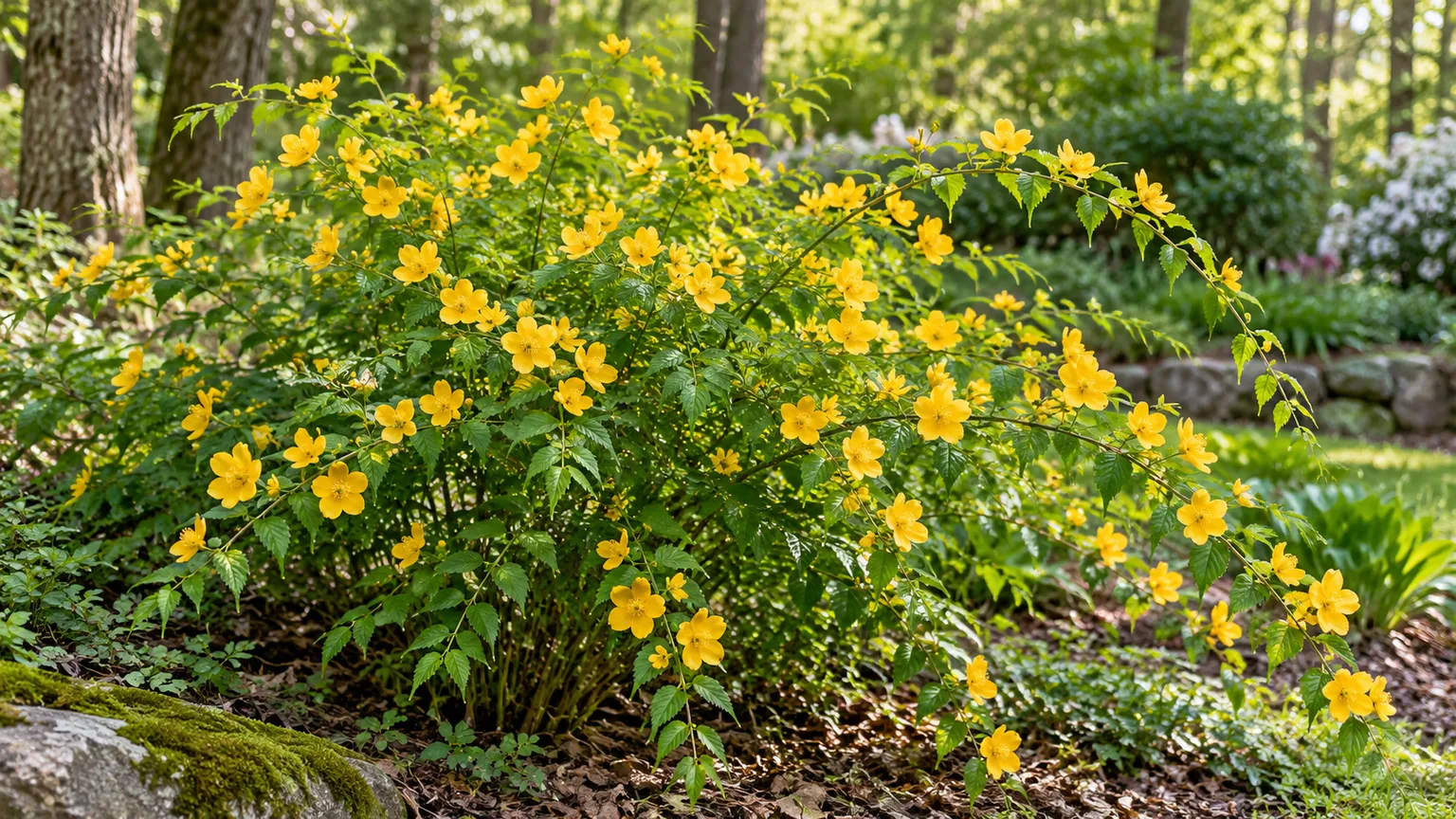
Japanese rose is a tough, graceful shrub with arching green canes and bright yellow spring flowers. Its name can mislead new gardeners: Japanese rose is Kerria japonica, not a true rose in the genus Rosa. It belongs to the rose family, but its growth, pruning, fruit, and propagation are different from the roses most people grow in beds.
For reliable flowers, plant it in bright shade or dappled light, give it soil that drains, water through its first growing season, and prune only after the spring bloom. Its canes flower on the previous year’s growth, and the shrub spreads by suckers, so both pruning timing and site choice affect how well it fits your garden.
Quick Answer: Give Kerria Light Shade, Drainage, and Post-Bloom Pruning
Kerria japonica grows in USDA hardiness zones 4–9 and usually forms a deciduous, arching shrub about 3–7 feet tall and 6–9 feet wide, with variation by cultivar and conditions. Choose partial shade or bright dappled light, where flowers tend to hold their color; a little more sun can be tolerated when the soil remains evenly moist, but hot afternoon sun can fade blooms. Use moist but well-drained soil, water regularly while the shrub establishes, and avoid heavy feeding.
After flowers fade, remove dead or crowded canes at the base and trim back stems only as much as needed. Avoid fall or early spring shearing: Japanese rose blooms on old wood, so pruning before it flowers can remove the buds. Expect new suckers and make room for the clump to spread, or remove the shoots regularly.
Know What Japanese Rose Is Before You Plant It
Japanese rose, Japanese kerria, or Easter rose is a deciduous flowering shrub native to central and southern China, southern Korea, and Japan. It is the only species in the genus Kerria, which sits in the Rosaceae family alongside roses, apples, and many other plants. The shared family does not make it a Rosa; it has its own habit and care needs.
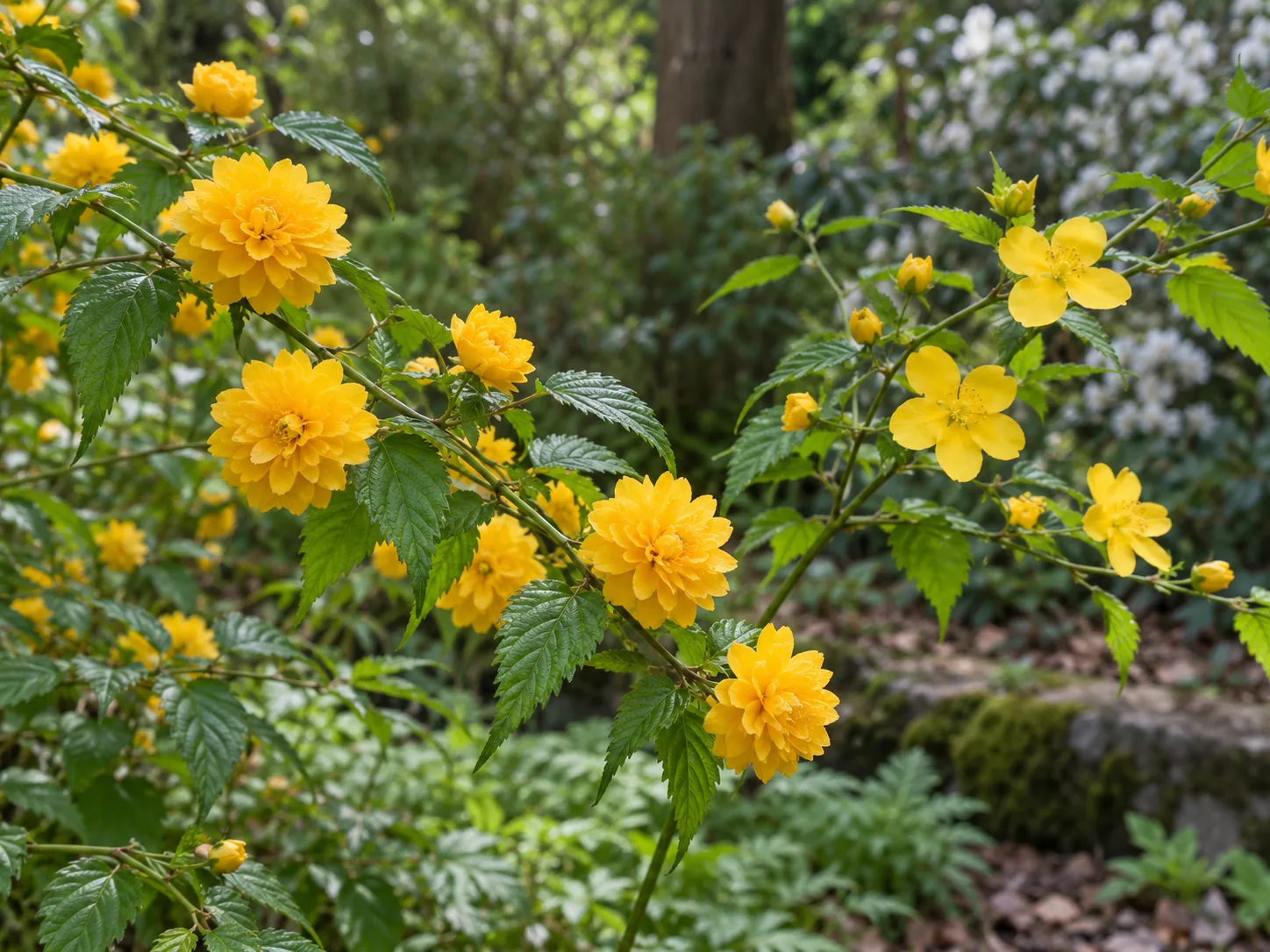
Look for slender, often zigzagging green stems that stay green in winter, alternate simple leaves with toothed edges, and yellow flowers that appear in spring. The typical species has five-petaled single flowers, while some cultivars have rounded double blooms. Mature size depends on the selection: the species can reach about 7 feet tall and 9 feet wide, while compact forms stay much smaller. The NC State Extension Plant Toolbox describes the shrub’s cane-like growth, spring flowers, suckering habit, and old-wood bloom cycle.
Despite the common name, don’t use advice written for rose bushes without checking the plant. Japanese rose does not make rose hips; NC State describes its fruit as an achene and lists division, seed, and stem cuttings among propagation methods. If you want a named cultivar to stay true, use vegetative propagation such as cuttings or division rather than expecting seed-grown offspring to match the parent.
Choose a Site That Matches Its Light and Soil Needs
Kerria is a useful choice for a woodland border, north- or east-facing bed, or other place where many flowering shrubs receive only filtered light. It can tolerate substantial shade, but “shade tolerant” does not mean that every dark corner will produce abundant flowers. The shrub may survive and grow there while flowering less freely or stretching toward light.
Balance Shade, Flowering, and Hot Sun
A location with morning sun or dappled shade is a reliable starting point. In cooler regions, Japanese rose may bloom in more sun if the soil does not dry out. In hot climates or exposed west-facing beds, give it afternoon shade; flowers can bleach or fade quickly in strong sun, and leaves can show stress if roots dry out at the same time. The Better Homes & Gardens Kerria guide likewise recommends partial shade because it helps flowers last longer, while White Flower Farm notes that the plant can handle sunnier locations if soil moisture stays even.
If you have a very deep shade site, treat Kerria as a foliage-and-stem shrub first and a flower shrub second. If blooms are the priority, shift it toward brighter filtered light rather than compensating with heavy fertilizer. A few hours of gentle morning sun can improve flower display without the intense afternoon exposure that fades the yellow petals.
Prioritize Drainage Over Fertile Soil
The ideal soil is moderately fertile, holds some moisture, and drains freely. Kerria tolerates a range of soil pH, but do not plant it in a persistently waterlogged spot. Heavy clay is not automatically disqualifying if it drains, but clay that stays saturated after rain increases the risk of root problems. If water stands for a long time, choose another spot or improve the broader bed before planting rather than digging a small pocket of loose soil inside a wet clay basin.
Avoid placing the shrub where roof runoff pours directly onto its crown or where compacted soil stays slick. A thin layer of organic mulch helps reduce moisture swings, but mulch cannot correct poor drainage. The shrub’s vigorous habit also matters: give it room to reach its likely width instead of squeezing it under a window or into a narrow strip that will need constant shearing.
Plant and Establish Kerria Japonica
Plant a nursery-grown shrub in spring or early fall, when moderate temperatures make it easier to keep the root ball from drying. Spring planting is a straightforward choice in cold regions because the plant has a full growing season to establish before winter. In mild climates, fall can work if the soil remains workable and you can water during dry spells.
Dig a hole about as deep as the root ball and wider than it. Set the shrub so the top of its root ball sits level with the surrounding soil, backfill with the soil you removed, and water thoroughly to settle it. Do not bury the crown under an amended planting mix. If several shrubs are going into a border, leave enough room for the cultivar’s mature spread; a small plant can fill a surprising amount of space after a few seasons.
Apply a shallow layer of mulch over the root area to conserve moisture, keeping it away from the stems. Newly planted roots need more consistent moisture than established shrubs. Check the root ball and surrounding soil separately because a nursery mix can dry at a different rate from the native soil around it.
Water Deeply While Roots Establish
During the first growing season, water when the root ball and surrounding soil begin to dry rather than relying on a fixed calendar. Give the water time to soak into the root zone; frequent shallow sprinkling encourages roots to stay near the surface. If planting during warm weather or in a dry shade bed where tree roots compete for water, inspect more often and adjust to conditions.
Once established, Japanese rose can tolerate short dry periods, but it will perform better with even moisture during prolonged heat or drought. A wilted shrub in dry soil needs a deep drink; a shrub with yellowing leaves in soggy soil may need better drainage rather than more water. Do not keep the root zone constantly wet to compensate for afternoon sun. It is usually more effective to provide shade and improve mulch coverage.
Feed Lightly and Mulch Without Overdoing It
Japanese rose usually needs little fertilizer in ordinary garden soil. If growth is pale and weak or soil is genuinely poor, start with a thin layer of compost around the root zone in spring. Do not mound compost against the canes, and do not add a high-nitrogen lawn fertilizer by the shrub just to force growth.
Overfeeding can create lush, sprawling growth and more suckers instead of a better flower display. NC State Extension cautions against high fertility for Kerria because it can make the shrub weedy. The BHG guide also recommends a restrained approach, noting that compost may be enough in organically rich soil. If your plant is healthy and puts on normal growth, skip routine fertilizer and spend effort on pruning and moisture instead.
Refresh mulch only as it breaks down. A few inches of leaf mold or bark spread over the root area is enough to reduce evaporation and temperature swings. Keep the mulch from touching the canes so the base remains open to air and can be inspected for dead or diseased stems.
Prune After Spring Flowers Fade
The safest routine is to prune soon after the main spring bloom ends. Kerria flowers on the previous season’s canes, so pruning in autumn, winter, or before spring flowering removes growth that carries the next display. A light trim immediately after flowers fade gives the shrub time to produce new canes that can mature before the next bloom cycle.
Start by removing dead, damaged, or diseased stems at their base. Then thin a few of the oldest or most crowded canes to open the middle of the shrub and encourage fresh growth. Avoid shearing the outside into a tight box; that cuts across future flowering stems and encourages a dense, tangled surface with a crowded center. If a cane leans into a path, shorten it after flowering or remove it at ground level rather than repeatedly clipping its tip.
For an old, leggy clump, renewal pruning is possible. After flowering, remove some of the oldest canes low to the ground. If the shrub is badly overgrown, you can cut it back severely after bloom, but expect fewer or no flowers the following spring while replacement canes grow. Do not do a drastic cut before the spring bloom if you want to keep that year’s flowers. Tools should be sharp and clean; remove clippings from the bed if they show signs of blight.
Keep Suckers From Taking Over a Border
Kerria spreads by suckers that emerge from the base or nearby roots. This can be an advantage when you want a loose informal screen or a naturalized patch. It becomes a problem when stems invade a narrow bed, cross into lawn, or crowd smaller neighboring plants. The shrub is often described as well behaved in a spacious site, but that description assumes you have room for its clump to widen.
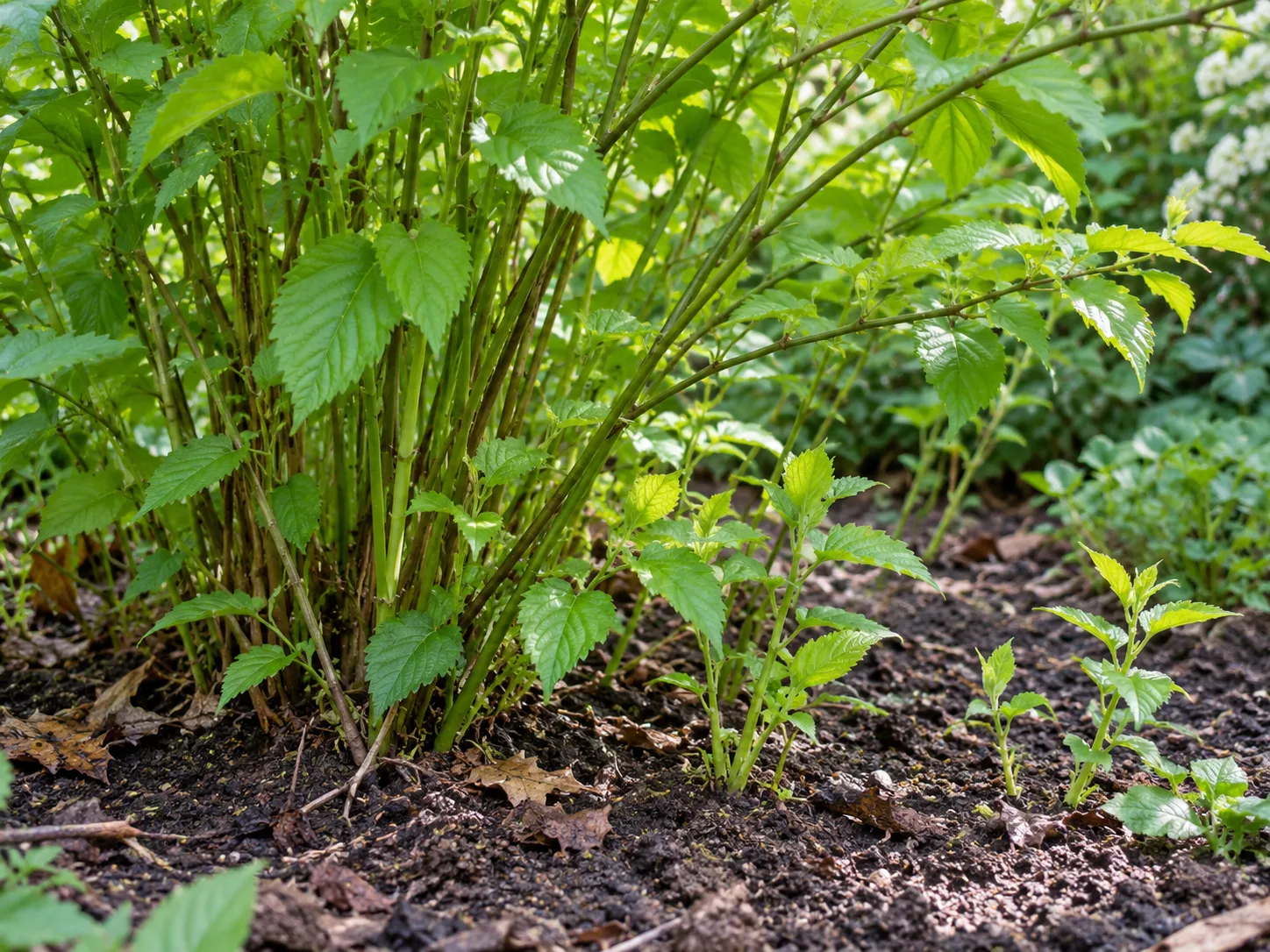
Inspect around the outside of the clump each spring and during summer growth. If you want to keep the shrub in place, sever unwanted suckers where they connect to the parent plant and remove them with as much root as practical. Cutting a shoot at soil level may control its appearance temporarily, but it can return if the root remains alive. Repeat checks through the growing season instead of trying to remove every underground root at once.
For small, newly emerging shoots, work a sharp spade down beside the sucker and sever its connection to the parent instead of repeatedly mowing the top. The Nature & Garden Kerria guide also recommends removing unwanted young shoots at their origin, which is easier before the clump has spread farther.
If the clump is in the wrong place, lift and divide it while dormant or in cool weather, retaining roots with the portion you keep. You can also relocate the shrub or replace it with a less spreading choice. A root barrier can help in some settings, but installation disturbs soil and may not stop every sucker; it is not a substitute for choosing a suitable site.
Choose a Japanese Rose Cultivar for Your Space
Select the cultivar by its mature footprint and flower form, not just the nursery photo. NC State and BHG list several useful selections. Sizes are approximate and can vary with climate, light, and pruning.
| Cultivar | What it offers | Size and tradeoff |
|---|---|---|
| ‘Pleniflora’ | Rounded, double yellow flowers; the familiar pompom form | Vigorous and tall, about 6–10 feet depending on source and conditions; allow room for suckers |
| ‘Golden Guinea’ | Large, single yellow flowers with a simpler open form | Often about 6–8 feet tall; better for a broad border than a narrow foundation strip |
| ‘Picta’ (also sold as ‘Variegata’) | Compact growth and gray-green leaves edged in cream | Roughly 2–3 feet tall and 2–4 feet wide in BHG’s profile; slower-growing, but still needs occasional spread control |
| ‘Albescens’ | Creamy yellow flowers rather than the typical bright yellow | Around 4–5 feet tall in NC State’s profile; useful where a softer flower color fits the scheme |
‘Picta’ is the easiest of these choices to fit into a small garden, but it is not a miniature houseplant. It still needs outdoor light, drainage, room for roots, and periodic sucker control. Larger double-flowered selections look dramatic in spring but can outgrow tight spaces. If you are choosing a shrub for a small foundation bed, check the mature width before buying and consider a more compact cultivar or a different species.
Follow a Simple Seasonal Care Calendar
Spring: Check for winter-damaged or dead canes before growth fills in. Enjoy the flowers before pruning; after bloom, remove dead stems, thin crowded growth, and cut back any cane that has outgrown its space. Add a light compost layer only if the soil needs it.
Summer: Water newly planted shrubs when the root zone dries. Established plants generally need supplemental water only during extended dry weather. Take softwood cuttings after flowering if you want to propagate a plant, and inspect the clump edges for suckers.
Fall: Let the leaves color and drop naturally. Avoid routine pruning because next spring’s flowers form on existing stems. Water a new planting before the ground freezes if autumn has been dry, and maintain a modest mulch layer over the roots.
Winter: Leave the green canes standing; they provide structure and are part of the shrub’s winter appeal. In zone-appropriate sites, established Kerria is cold hardy and generally needs no elaborate wrapping. If stems are damaged by snow or wind, wait until you can distinguish dead wood from living canes and remove the damage after the bloom period when practical.
Propagate Kerria by Cuttings, Division, or Seed
Japanese rose can be propagated by stem cuttings, division, or seed, but cuttings and division are the more reliable routes when you want a new plant like the parent. The NC State profile lists all three methods. Because Japanese rose is not Rosa, do not follow generic instructions about collecting rose hips and cold-stratifying them as if this shrub were a rose bush.
To take a softwood cutting, use a healthy young stem after flowering while it is still flexible. The BHG method uses a 4- to 5-inch piece with a leaf node, removes the lower leaves, and places the cut end in damp potting mix. Keep the medium lightly moist and the cutting in bright, indirect light away from hot sun. New growth can indicate rooting, but give the cutting time to form a useful root system before transplanting it outdoors.
Division is practical when a mature clump has produced rooted shoots. In cool weather, loosen soil around a sucker and follow it toward the parent until you can separate a piece with roots attached. Replant promptly at the same depth, water it in, and keep it evenly moist while it re-establishes. A bare shoot without roots may survive, but it is less dependable than a division with a healthy root section.
Seed is possible but takes more patience and may not reproduce a named cultivar exactly. If you want to experiment, use correctly identified Kerria seed from a reliable source rather than rose hips from a Rosa. Follow a regional seed-starting protocol for the seed lot; do not assume the cold-stratification period or germination rate used for another species will apply.
Recognize Blight, Dieback, and Root Problems
Japanese rose is generally low maintenance, but it can develop twig and leaf blight, cankers, leaf spots, or root problems. NC State notes that twig and leaf blight can be caused by Blumeriella kerriae and may be associated with wet weather. Look for leaf spots, damaged or dying canes, and lesions rather than assuming every yellow leaf is a disease.
Remove dead or clearly diseased canes with clean pruners, cutting below affected tissue and disposing of the clippings rather than leaving them in the shrub. Thin crowded stems after flowering to improve airflow. Water the soil rather than repeatedly wetting the leaves, and do not overwater a poorly drained bed. If symptoms spread despite sanitation or you are unsure whether the problem is blight, frost injury, or drought stress, ask a local extension office for a diagnosis before using a fungicide.
Root rot risk rises when soil stays saturated. If several stems decline together and the bed remains wet, check drainage and planting depth before adding fertilizer. A plant with dry, crispy leaves in a hot site needs a different response from one with yellow leaves in waterlogged clay; look at soil moisture and recent weather before choosing a fix.
Troubleshoot a Japanese Rose That Will Not Bloom
When a Kerria has healthy leaves but few flowers, check the following in order:
- Was it pruned before flowering? Fall or early spring pruning may have removed the previous year’s flowering stems. Wait until after the next bloom to shape it.
- Is the site too dark or too exposed? Deep shade can reduce flowers, while hot full sun may fade them quickly. Bright shade or dappled light is a good compromise.
- Is the shrub still establishing? A recently planted or transplanted shrub may spend a season building roots before it flowers well.
- Is it receiving too much fertilizer? Excess fertility can drive lush, suckering growth. Pause routine feeding and use compost only if the soil needs it.
- Are canes dying back? Inspect for blight, winter injury, or poor drainage, then remove damaged stems after bloom when possible.
A second flush of flowers may occur in some gardens, but it is not a dependable substitute for the main spring bloom. Do not keep pruning or feeding to force another flowering cycle; match the care to the shrub’s natural spring schedule and let new canes mature for the next year.
Conclusion
Japanese rose is an adaptable flowering shrub when you give its arching canes enough space, protect flowers from harsh afternoon sun, and keep roots moist but not waterlogged. It is Kerria japonica, not a true Rosa, so use Kerria-specific advice for propagation and pruning. Most of all, wait until after the spring flowers fade to prune: the plant blooms on old wood. With a suitable cultivar, light feeding, and periodic sucker checks, it can bring spring color and green winter stems to a shade garden without becoming a constant maintenance project.