How to Keep Rats Out of the Garden: 15 Ways
Learn how to keep rats out of the garden with 15 practical fixes for food, compost, shelter, entry points, and safe trapping around pets and wildlife.
A rat sighting calls for a measured inspection and response. Rats settle where reliable food, shelter, and a safe route overlap, so remove those advantages to make the yard less attractive. If they are already established, prevention still matters, but you may also need targeted trapping or professional help.
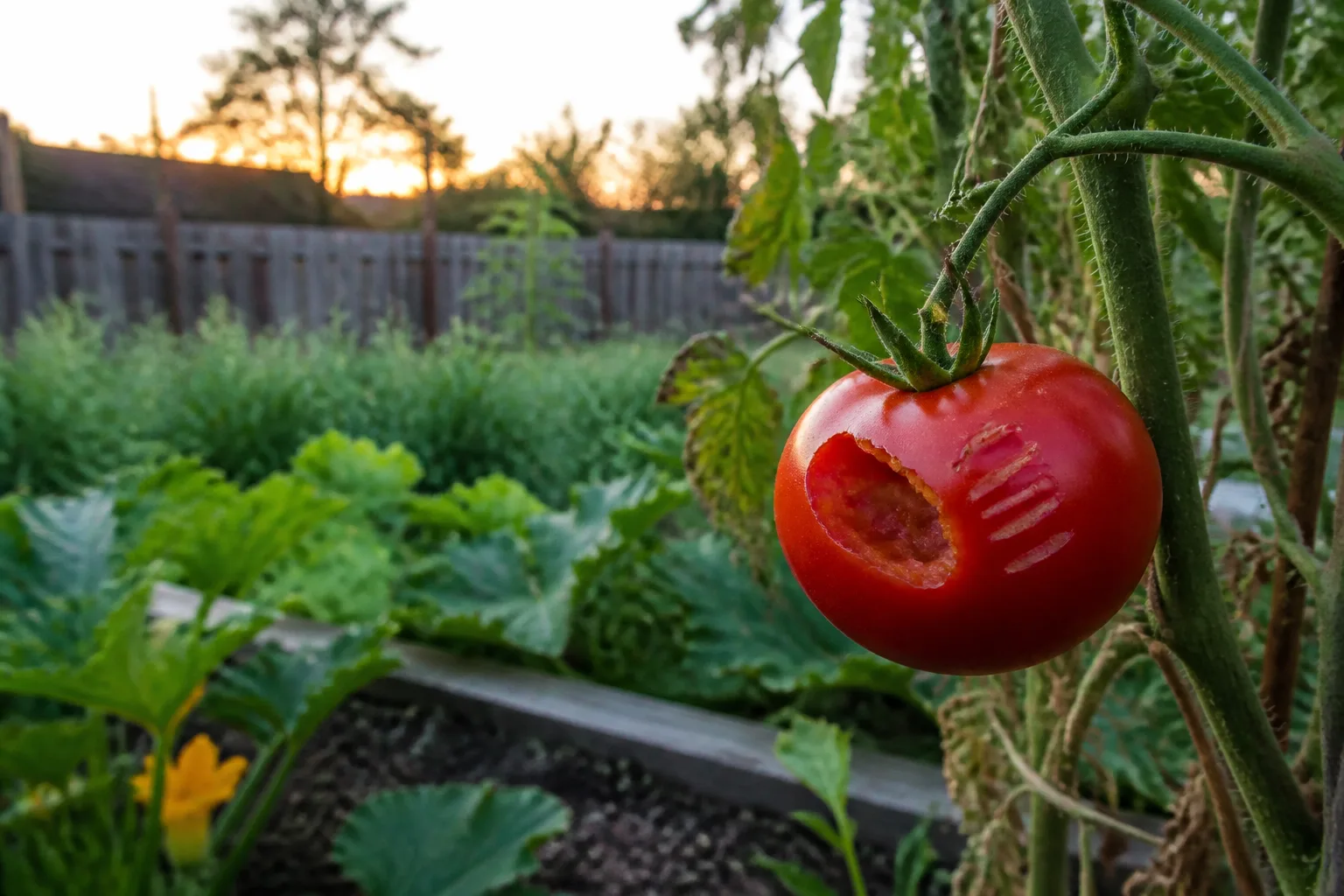
Start by looking for evidence in one place at a time: droppings near feed or compost, gnawed produce, burrow openings, greasy rub marks along a fence, or movement after dusk. Then fix the source that is easiest to correct. A garden with one rat passing through needs a different response from a compost corner with repeated droppings and fresh digging.
Start with the fixes that match the evidence
Rat control works best as a sequence: remove accessible food and water, reduce protected nesting and travel routes, seal access to structures, then use a targeted control if fresh signs continue. UC IPM describes sanitation, structural exclusion, and population control as the core parts of successful management; a trap or bait station cannot compensate for an open compost bin and nightly bowls of kibble (UC IPM).
| What you find | Start here |
|---|---|
| Gnawed ripe fruit or vegetables | Harvest on time, pick up fallen produce, and check the nearest cover. |
| Activity at a compost bin or trash can | Secure that container and clean food residue from its outside. |
| Burrows or repeated travel marks | Map the route, remove nearby shelter, and consider protected traps. |
| Rats on fences, vines, or tree branches | Address climbing routes and inspect roof edges and sheds. |
| Fresh signs inside a shed or home | Protect the building and contact a qualified pest professional if activity persists. |
A single sighting does not reveal where the animal nests or how many are present. Clean up any droppings safely, then revisit the spot; fresh signs after cleanup tell you more than an isolated glimpse. Use the fifteen ideas below as layers, choosing the ones that match what your inspection shows.
1. Confirm rat activity before choosing a control
Rats and mice share food and habitat, but they do not use identical traps or gaps. Norway rats tend to be stockier and closer to the ground, often using burrows under sheds, compost, or debris; roof rats are more agile climbers and may travel through vines, shrubs, fences, or tree canopies. Young rats can be mistaken for mice, and UC IPM cautions that a mouse or juvenile rat may not trigger a rat-sized snap trap (UC IPM).
Look for several clues together rather than diagnosing from one dropping or hole. Rat droppings are generally larger than mouse droppings; a larger tunnel entrance, gnawing on produce, tracks, or a well-used path along a wall strengthens the case. Photograph the evidence with a ruler for scale and note whether activity is at ground level or overhead.
If you are unsure, ask your local extension service or pest professional to identify it before buying traps or applying a pesticide.
When you find droppings or nesting debris, do not brush or vacuum it dry. Wear disposable or rubber gloves, thoroughly wet the waste with an EPA-registered disinfectant or a bleach solution prepared according to current CDC instructions, allow the product’s stated contact time, and wipe it up with paper towels. CDC specifically advises against sweeping or vacuuming rodent waste because it can put contaminated particles into the air; use extra caution or professional cleanup for heavy infestations or contaminated enclosed spaces (CDC cleanup guidance).
2. Harvest crops and pick up fallen fruit
Ripe produce is a predictable food source. Pick tomatoes, squash, peppers, berries, and tree fruit as soon as they reach the stage you would normally harvest them; remove split, overripe, or fallen produce promptly. The Royal Horticultural Society reports rats feeding on garden vegetables, stored crops, seeds, and fruit, so moving a harvest into a shed is not enough if the shed is open or the produce sits in a flimsy bag (RHS rat guidance).
For fruit trees, collect fallen fruit during routine garden work rather than waiting for a weekly cleanup. If a crop must remain on the plant to ripen, use a physical barrier where practical, such as a properly supported crop net that does not entangle birds or other wildlife. Netting is a crop-protection tool, not a whole-yard rat barrier; inspect it often and remove any damaged material that could trap animals.
3. Secure trash, recycling, and outdoor food waste
A tight-fitting lid matters only if the can is difficult to tip and the lid stays closed. Use a sturdy, lidded receptacle for barbecue scraps, picnic waste, and food-contaminated packaging; rinse recyclables when local rules allow and wash residue from bins. Replace cracked containers and avoid leaving tied garbage bags beside the can overnight, even if collection is the next morning.
Place the bin on a clear, stable surface where you can inspect the base and surrounding ground. Rats can exploit waste residue on the container itself, so wipe grease and food drips from the outside as well as securing the contents. The aim is a routine that holds after a cookout or busy evening, not a special cleanup only after you see a rat.
4. Make compost harder to enter
Composting does not have to stop, but the bin should not function as a warm, sheltered feeding station. A rigid container with a secure lid and a gnaw-resistant base is more dependable than a loose pile beside a shed. If you use an open pile, keep it away from the house, avoid adding meat, dairy, fats, or cooked scraps unless your local composting system specifically handles them, and cover fresh food material with dry leaves or other brown material.
A plastic tumbler can still be chewed or bypassed underneath, so inspect the base and the ground around it. Where rats are active, attach small-aperture metal mesh beneath or around a bin in a way that still allows drainage and aeration; secure loose edges and check for gaps. Turn compost as your method requires, and cover exposed scraps again after turning.
Guidance differs on how attractive a plant-only compost pile is: some sources emphasize scraps and shelter, while Oregon State notes that even garden-only piles can offer insects and nesting conditions. A closed, inspectable design is more reliable than relying on a specific “safe” ingredient list (Oregon State University; Brooklyn Botanic Garden).
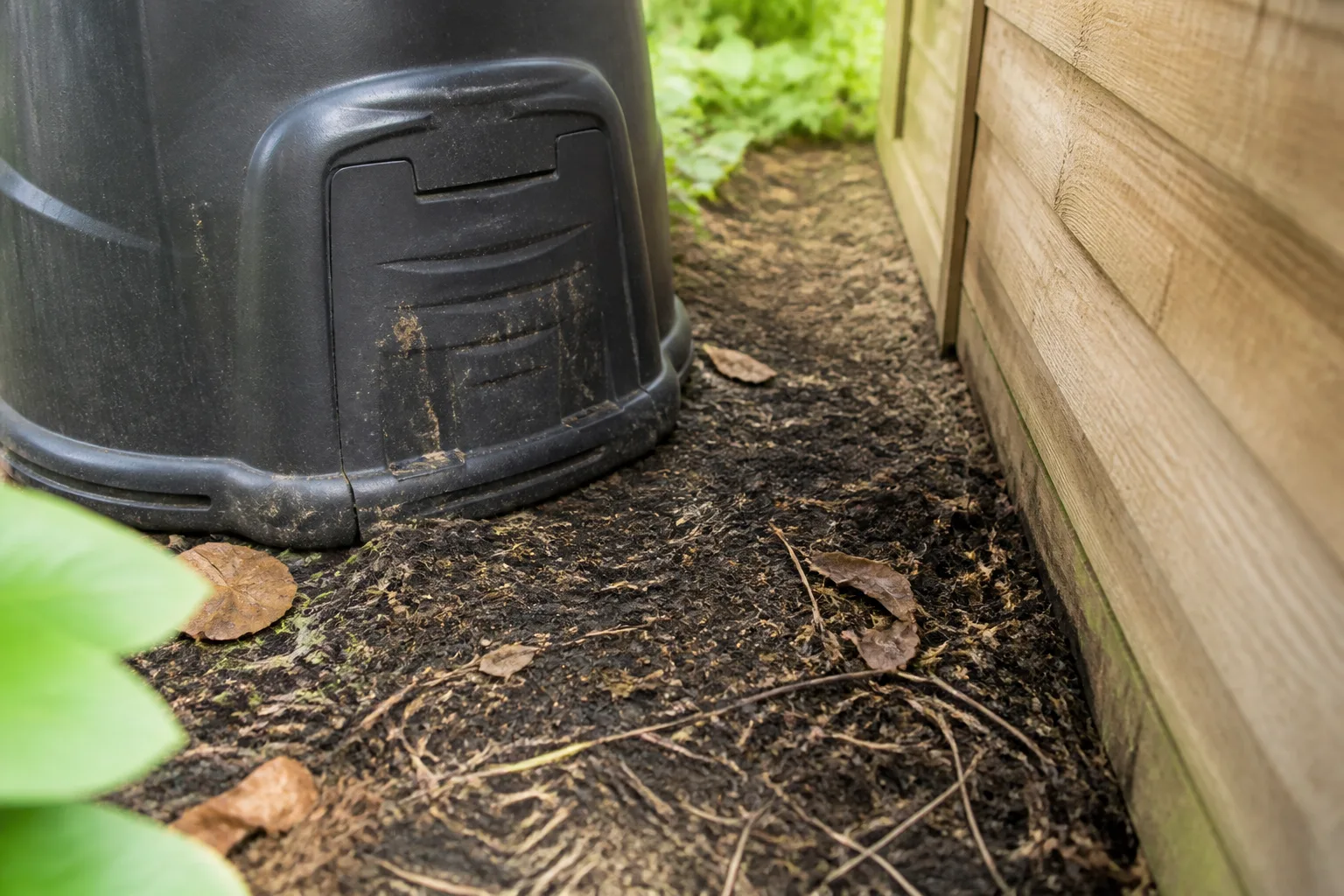
If you find a nest or repeated droppings inside the compost, avoid digging into it bare-handed or moving loose contaminated material around the garden. Keep children and pets away, secure new food inputs, and use gloves and wet-cleaning precautions for waste. The RHS also advises that compost from a heap where rats have lived should not be placed on edible crops that may be eaten raw while in contact with the soil or compost; follow local public-health and compost guidance if the pile has been actively contaminated (RHS rat guidance).
5. Keep bird feeding from becoming rodent feeding
You do not necessarily need to remove a bird feeder permanently. Reduce the seed that reaches the ground: use a feeder that limits spillage, add a catch tray suited to its design, avoid overfilling, and sweep or rake spilled seed regularly. Store bulk seed in a sealed, gnaw-resistant container rather than the original sack in a shed.
A feeder mounted high is not automatically out of reach. Roof rats climb poles, fences, and branches, so use an appropriate pole baffle and position the feeder away from launch points and dense cover. During an active rat problem, stop feeding temporarily if seed keeps accumulating on the ground; resume with smaller portions after the spill is under control.
UF/IFAS recommends locating feeders away from the house and considering rodent-resistant feeder designs, while UC IPM advises minimizing accessible outdoor food sources (UF/IFAS; UC IPM).
6. Bring pet and poultry food in after meals
Feed pets on a schedule and pick up leftovers when the meal ends. Do not leave a bowl of kibble on a porch overnight: it is concentrated, easy-to-reach food, and the bowl can sit beside the very wall or shrub that gives rats cover. Store dry food in a rigid container with a tight lid, and clean food dust from the storage area.
If you keep chickens, rabbits, or other animals outdoors, manage feed as carefully as the animals themselves. Use a rodent-resistant feeder, collect spilled grain, and store feed in a metal or similarly gnaw-resistant container.
Rats can enter a coop through gaps and may harm young birds; inspect doors and corners and use properly installed small-aperture hardware cloth where an opening needs screening. Chicken wire contains poultry but is not a dependable rodent barrier. Keep people from handling droppings with bare hands, and do not attract predators as a control strategy around livestock or pets.
7. Remove easy water without disrupting wildlife
Fix dripping hose connections, irrigation leaks, and outdoor taps, and empty containers that collect rainwater. Move saucers, buckets, and unused pots where they do not hold stagnant water. These changes improve drainage and reduce convenient drinking spots, especially when a leak keeps one corner wet every night.
Do not drain every birdbath or water feature as a universal rat solution. Wildlife needs water, and a garden cannot be made moisture-free; keep water features clean, avoid placing food beside them, and remove standing water that serves no useful purpose.
If a rat keeps visiting a pet bowl, move the bowl indoors overnight or supervise outdoor access. The Brooklyn Botanic Garden recommends eliminating pooled water as part of a broader rat-reduction plan, alongside attention to food and shelter (Brooklyn Botanic Garden).
8. Clear sheltered clutter and nesting sites
Rats prefer protected routes and quiet places to nest. Keep lumber, firewood, empty pots, spare irrigation pipe, tarps, and garden equipment orderly and raised enough that you can see beneath them. Move stored materials away from foundations, compost bins, and animal-feed areas, and avoid leaving a dense pile pressed against a fence where a rat can travel unseen.
Place wildlife features away from buildings, play areas, and food storage, and maintain a clear inspection strip near structures. This preserves habitat farther from the house while making new digging, droppings, and runways easier to spot. Both UC IPM and the RHS identify clutter removal and less accessible shelter as practical parts of rat management (UC IPM; RHS).

9. Thin dense ground cover near active routes
Ivy, low branches, tall weeds, and tightly packed shrubs can hide travel paths or a nest. Thin the vegetation along fences, sheds, and foundations where you have found signs, and keep the base of shrubs open enough to inspect. Avoid stripping the entire garden: focus on cover that touches buildings, hides a burrow, or connects a food source to a shelter.
UC IPM suggests keeping roughly a 2-foot space between shrubs and between shrubs and buildings in relevant landscaping, while noting that dense plantings can provide shelter. Treat that as a useful starting point rather than a universal design rule; mature size, climate, fire risk, pollinators, and plant health still matter (UC IPM). Do not use broad herbicide or indiscriminate clearing to solve what is usually a targeted cover problem.
10. Cut back routes to roofs and buildings
Roof rats can move overhead, so an immaculate vegetable bed will not help much if branches touch the roof or vines climb a shed wall. Prune branches that contact the roof or provide an easy bridge, remove climbing plants from siding and vents, and keep dense shrubs from forming a continuous covered path to the house. Do not make risky cuts from a ladder; hire an arborist for high or heavy limbs.
Inspect both ground-level and overhead routes at dusk. A roof-rat path may follow a fence top, utility line, or trellis, while Norway rats are more likely to use low routes and burrows. Never interfere with power lines; call the utility company if a line appears to provide access.
UF/IFAS explains that limbs touching a structure can act as a route for rodents, and UC IPM recommends removing overhanging branches near roofs and separating dense canopies (UF/IFAS; UC IPM).
11. Protect vulnerable beds, crops, and coops with mesh
A physical barrier is useful where rats repeatedly target a defined resource, such as a raised bed, fruit storage area, or poultry enclosure. Use sturdy, corrosion-resistant hardware cloth with openings small enough to exclude the target animal; attach it firmly so rats cannot lift an edge, squeeze around a corner, or dig underneath. Burying or turning the edge outward can reduce burrowing access, but depth and design depend on the site and may not stop every determined rat.
For individual crops, a well-fitted cage or enclosure can protect a small planting more practically than fencing the whole yard. Leave room for plant growth, airflow, pollinators, and watering, and check frequently for trapped wildlife.
For a coop, screen openings and protect feed storage as a connected system; a mesh skirt cannot fix a door left open or spilled grain inside. Hardware cloth provides a barrier, so keep sanitation and monitoring in place too.
12. Seal sheds and the route into your home
Inspect door sweeps, foundation cracks, crawl-space vents, utility penetrations, and the gap where a shed or garage meets the ground. UC IPM recommends sealing openings larger than about 1/4 inch to help exclude rats and mice; use metal mesh, sheet metal, or another gnaw-resistant material where rodents can reach it, not exposed foam as the only barrier (UC IPM). Keep required vents functional and use a suitable screen rather than blocking airflow.
Before closing a hole, make sure no animal is trapped inside and that you have a plan for active signs. Sealing an occupied void can shift the problem into another wall, shed corner, or crawl space. Work from visible evidence outward: repair the route to the building, remove food nearby, then monitor the repaired area for new gnawing or droppings.
13. Use rat-sized snap traps on confirmed runways
When fresh signs continue after attractants are removed, snap traps can provide a targeted, monitorable option. Choose a rat-sized model, follow its instructions, and place it on a confirmed travel route—typically close to a wall or protected edge rather than in the middle of an open bed. Norway rats use ground-level paths; roof rats may need an elevated trap location, but only where it can be secured and kept inaccessible to children, pets, birds, and other wildlife.
A trap left in an exposed, busy spot creates risk and may be ignored. Put it inside a secured, purpose-built trap box or barrier where non-target animals could reach it, anchor it against movement, and check it at least daily. Do not set traps where a pet can nose or paw them, and do not handle a captured or dead rodent bare-handed.
UC IPM notes that trapping is effective but labor-intensive and emphasizes placing traps along natural travel routes; it also advises identifying rats versus mice before choosing trap size (UC IPM).

Live-catch traps are not a simple humane shortcut. A trapped rat may bite, suffer from heat or exposure, and pose a disease risk; moving and releasing wildlife may also be restricted by local rules or simply shift the problem to another property. If you do not want to kill an animal, consult local animal control or a licensed professional about lawful options rather than assuming that releasing it far away is safe or permitted.
14. Treat rodenticide as a carefully controlled last resort
Poison is not a garden repellent and should never be scattered around plants, compost, or a fence line. Rodenticides can harm children, pets, and non-target wildlife; a predator or scavenger may also be exposed after eating a poisoned rodent. EPA consumer guidance says to follow the product label, keep bait inaccessible to children and pets, secure bait in the supplied station, and promptly dispose of carcasses to reduce secondary exposure (EPA rodent-bait safety).
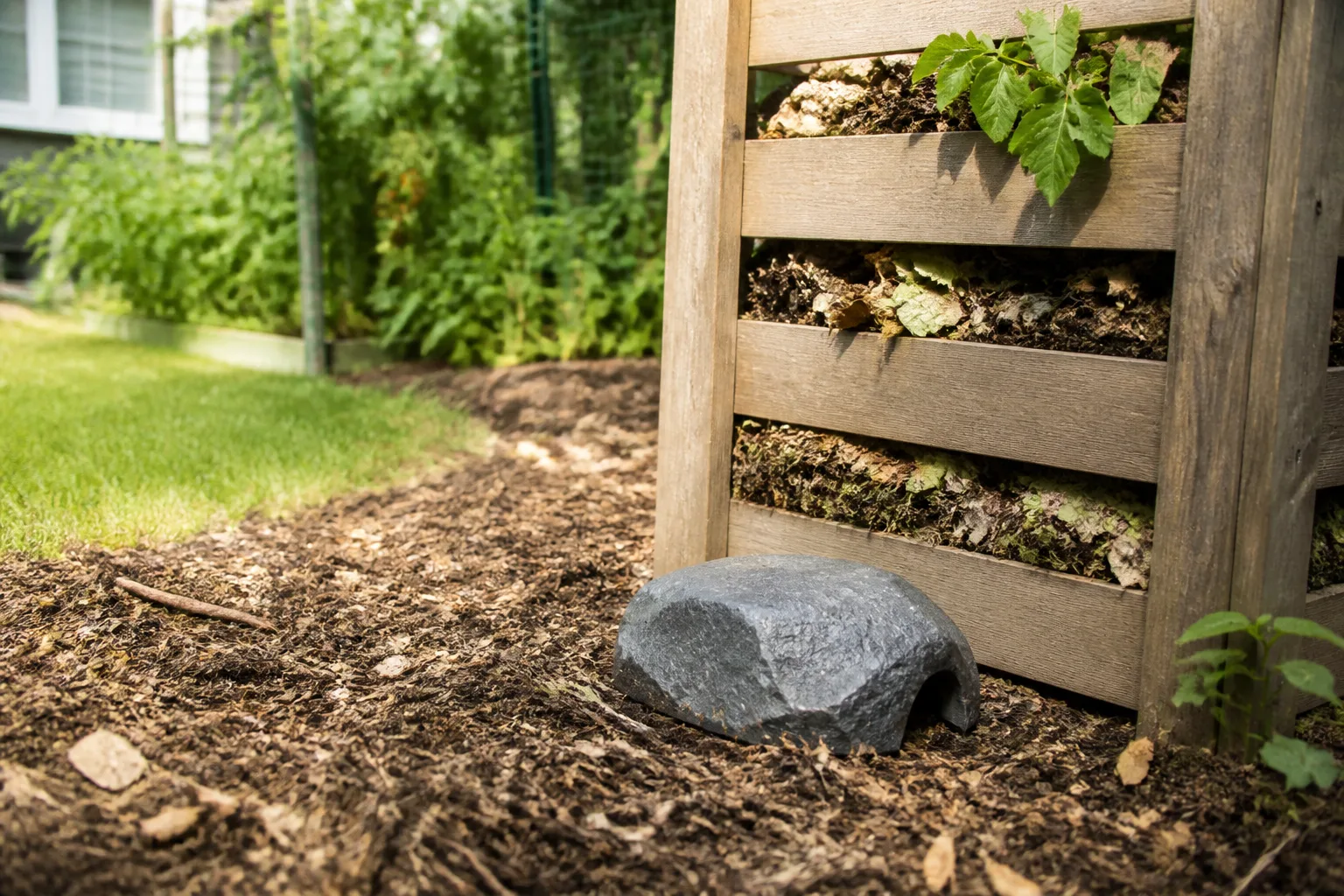
If you and a qualified professional decide bait is warranted, use only a product whose label permits the exact site and use, and follow every placement, inspection, storage, and disposal direction. Laws and product restrictions vary by jurisdiction and can change.
Keep bait away from edible crops and water, never improvise a homemade poison, and do not use loose bait or a station where wildlife or a curious pet can get access. If you cannot monitor the station and carcasses, do not use that approach yourself.
15. Bring in a professional when prevention is not enough
Call a licensed pest-management professional when fresh activity continues despite a consistent sanitation and exclusion routine, there are multiple active burrows, rats are inside a building, or safe trap placement is not possible. Also seek help when you see repeated roof-rat activity at heights you cannot access safely, contamination is extensive, or an attached neighbor property, sewer, or public space may be involved. In a community garden or dense neighborhood, coordinating with neighbors and local public-health or vector-control staff can prevent a treated plot from being recolonized by the next food source nearby.
Ask the professional to identify likely species and entry routes, explain how children and pets will be protected, and give a follow-up monitoring plan. A one-time treatment with no explanation of attractants or exclusion is unlikely to stay effective if the conditions that drew rats remain. Keep a simple record of dates, photos, locations, and whether signs return after cleanup; that history helps the technician target the problem.
Do not count on peppermint oil, pungent scraps, mothballs, ultrasonic plug-ins, a cat, or a dog to control an established population. Strong odors fade outdoors, sound does not remove a food source, and pets should not be tasked with confronting rats that may bite or carry disease. Some deterrents may change where a rat travels briefly, but durable control comes from making the yard harder to feed in, hide in, and enter.
Conclusion
To keep rats out of a garden, start with the reason they return: accessible food, shelter, water, and a protected route. Harvest and clean up produce, secure trash and compost, manage bird and animal feed, open up the most concealed routes, and seal structures with gnaw-resistant materials. If fresh activity remains, use protected rat-sized traps or get professional help; treat rodenticide as a regulated last resort, never as loose garden bait.
There is no single scent, plant, or fence that makes a yard permanently rat-proof. A steady weekly check of compost, feed, fallen fruit, and building edges is more useful than a dramatic one-day cleanup. If you find droppings, wet-clean them safely, remove the nearby attractant, and check that exact spot again for fresh evidence.