How to Choose the Right Petunia
Find the right petunia for your garden: compare compact, spreading, and trailing types, plus color, weather tolerance, care, and seed vs. cutting-grown plants.
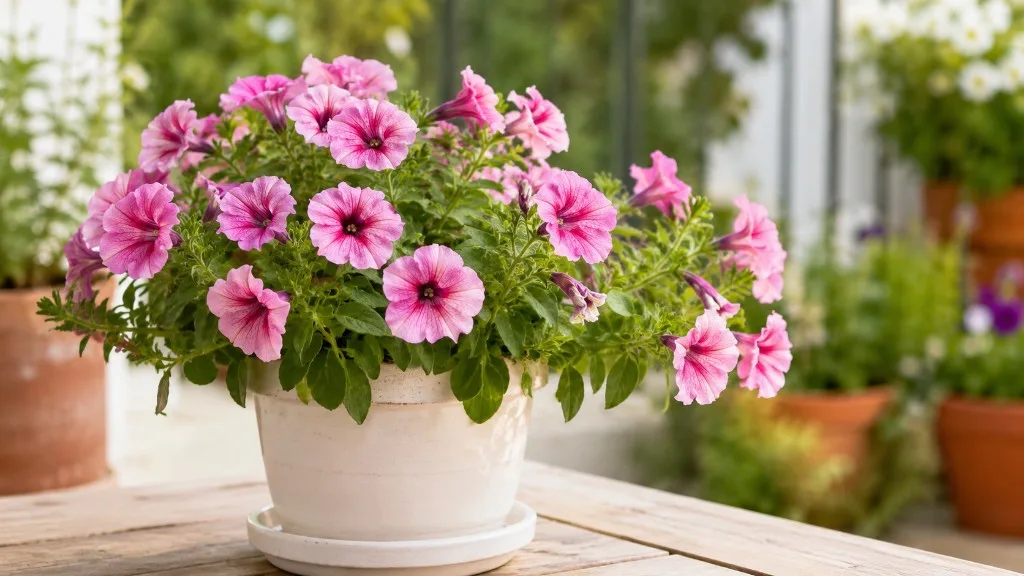
The best petunia is the one whose mature shape suits the place you have, whose flowers can handle your weather, and whose upkeep fits your routine. A plant that cascades beautifully from a hanging basket may sprawl across a narrow bed; a large-flowered showpiece may look tired after repeated summer downpours. Start with those practical constraints, then choose the color and flower form you like.
Most garden-center petunias are hybrids selected for a particular flower size, growth habit, or display. The old labels—grandiflora, multiflora, floribunda, and milliflora—still help, but modern series names such as Wave and Supertunia describe branded groups with many individual cultivars. The useful information is on the whole tag: mature height and spread, sun needs, whether the plant is self-cleaning, and how it is expected to perform in your climate.
Start with the site, not the flower color
First decide where the plant will grow and what job it must do. A front-of-border planting needs a compact mound or low spreader; a hanging basket needs stems that travel over the rim; a large container can support either a full upright mound or a vigorous cascade. For a narrow window box, the mature width matters more than the plant’s size when it is in a nursery cell.
Count direct-sun hours at the actual planting spot rather than estimating from the garden as a whole. Petunias generally flower most heavily in full sun, although they can perform in partial shade; Colorado State University Extension notes that too much water or low light can also produce leggy growth. A hot, reflected west-facing balcony is a different environment from an open bed with the same sun exposure, because the pot and its limited root zone heat and dry faster. (Colorado State University Extension)
Then set a realistic maintenance ceiling. If you can water a basket on hot days, remove tired stems, and feed containers according to their fertilizer label, a vigorous trailer may reward you with a long cascade. If you want a neat planting that largely takes care of its own spent flowers, look for a compact, self-cleaning cultivar and avoid buying a large-flowered variety simply because its blooms look impressive in the shop.
Read the growth habit before you buy
The shape of the plant controls where it fits. “Upright,” “mounding,” “spreading,” and “trailing” are more useful than a color name when you are deciding between a border, patio pot, or basket. Some modern cultivars combine these habits, so use the stated height and spread as the final check rather than assuming every variety in a series grows identically.
Upright and mounding
Upright and mounding petunias grow into a defined cushion of foliage and flowers. They suit edging, small beds, mixed containers, and any place where you want the plant to stay inside a visual boundary instead of sending stems far over an edge. Compact multiflora and milliflora types often make practical choices here, but the cultivar’s tag should still give a mature width or spacing recommendation.
Use a mound when you need a repeated rhythm—such as matching plants along a path—or want petunias to fill gaps between more permanent shrubs. Choose several plants of one cultivar for a more unified bed. Mixing many colors in a small area can make the pattern look busy, especially when each plant has a different growth speed and one variety overtakes its neighbors.
Spreading and trailing
Spreading petunias cover ground horizontally; trailing petunias send stems down over a pot, wall, or basket. Both can spill from raised beds and containers, but a groundcover habit is not automatically a long cascade: check the height and spread, and look for language such as “trailing” if the stems must hang below the rim.
Vigorous spreading types can cover a broad area in a season, which makes them useful for a large sunny bed or a single statement basket. The same vigor can crowd neighboring plants and increase water demand in a small container. A compact “spiller” may be a better partner for an upright centerpiece than the most aggressive series on the bench.
For baskets, boxes, and elevated pots, trailing forms are usually the simplest starting point. Gardeners’ World likewise recommends trailing petunias for hanging baskets, raised pots, and window boxes, while upright forms suit bedding schemes. (Gardeners’ World)
Use flower size as a weather and maintenance clue
Flower size changes the visual effect, but it can also hint at how a plant will look after rough weather. Large blooms make a strong focal point and show veining or ruffled edges clearly. Smaller flowers often appear in greater numbers and can make a more even, resilient-looking display, especially in beds exposed to rain.
Grandiflora: large flowers, higher weather risk
Grandiflora petunias are known for some of the largest flowers, commonly several inches across, in single or double forms. They are the pick when a few oversized blooms, dramatic stripes, deep veins, or ruffled petals matter more than a uniformly tidy plant after a storm. Use them in a sheltered sunny container or a place where you can remove weather-damaged flowers.
The trade-off is that broad petals can become battered or waterlogged in prolonged rain, and damaged flowers are more noticeable against the foliage. This is a tendency, not a rule: breeders have introduced weather-tolerant grandiflora cultivars, and some older selections perform better than their category alone suggests. Clemson Cooperative Extension describes rain-tolerant examples within the large-flowered group, while also noting that other grandifloras can struggle in hot, humid conditions. Read the cultivar name and regional trial notes before rejecting or choosing the whole class. (Clemson Cooperative Extension)
Multiflora and floribunda: a useful middle ground
Multiflora petunias usually have smaller flowers than grandifloras and produce them in greater numbers on compact plants. They are often a dependable choice for beds and exposed containers where you want a mass of color rather than a handful of large blooms. Nebraska Extension describes multifloras as free-flowering and better suited to difficult hot or wet spells than the more delicate large-flowered types, though individual cultivar performance still varies. (Nebraska Extension)
Floribundas sit between the two: they combine a larger flower with the prolific flowering associated with multiflora types. They can be a useful compromise for a container or border that needs more bloom presence than a compact bedding petunia but cannot be protected from every shower. The category can be less visible on retail tags now than series and cultivar names, so do not wait for that label; choose by mature habit, flower diameter, and stated weather performance.
Milliflora: compact plants, small flowers
Milliflora petunias carry many miniature blooms on a compact plant. Their scale works well in small pots, tabletop planters, front-of-border edging, and mixed containers where full-sized petunias would dominate. They can also be easier to combine with upright plants because the smaller flowers provide texture without taking over the composition.
Do not mistake “small flower” for “small workload” in every setting. A container still dries as fast as its volume and exposure dictate, and any petunia can become sparse or untidy if stressed. Choose a milliflora for its compact proportions and plentiful small flowers, not because you expect a pot to need no water or attention.
Treat series names as clues, then inspect the cultivar
Series names are useful shortcuts, but they are not interchangeable categories. A series can include several colors and cultivars with different heights, spreads, and flower sizes. Look up the exact name when you need a specific behavior, and compare its information with the amount of space and care you can provide.
Wave, Supertunia, Surfinia, and Cascadia
Wave petunias are associated with a spreading habit and are often used to carpet a sunny bed or spill from a container. The Wave family includes selections such as Easy Wave, Tidal Wave, and Shock Wave, but they do not all make the same-sized plant. Tidal Wave can grow taller and more upright when planted close, while a small-flowered selection can suit a tighter arrangement. The spacing on the label helps determine whether you should use one plant as a focal point or repeat several across a bed.
Supertunia is another branded group with compact, mounding, or vigorous spreading cultivars. A large Vista selection may be too much for a narrow border, while a smaller selection can work in a mixed container. Mississippi State University Extension has highlighted Supertunias for summer landscapes and baskets, including their response to warm, rainy conditions in Mississippi; that is useful regional experience, not a guarantee for every cultivar or climate. (Mississippi State University Extension)
Surfinia is known for trailing, cascading plants, while Cascadia cultivars are often selected for unusual color patterns and a trailing-to-mounding form. These group names can help you shortlist candidates, but a cultivar description is what tells you whether a specific plant fits a 10-inch pot, a long window box, or a broad bed. A comparison from Epic Gardening also emphasizes that Wave and Supertunia selections overlap in use while differing cultivar by cultivar in vigor and form. (Epic Gardening)

Calibrachoa and petchoa are not interchangeable petunias
Calibrachoa—often sold as Million Bells or Superbells—looks like a tiny-flowered petunia and is popular in hanging baskets, but it belongs to a separate genus. Petchoa is a hybrid of petunia and calibrachoa. These plants may offer a similar spilling effect, but their growth and care can differ from a true petunia, so read the botanical or product name on the tag rather than assuming “mini petunia” tells you everything.
This distinction matters most when you are trying to match an existing plant, repeat a particular cultivar, or compare performance. A petunia guide may not describe calibrachoa precisely, and a label that says “trailing petunia” may be a common-name reference rather than the botanical genus. If a small-flowered cascade is the main goal, compare the actual plant size, sun needs, and maintenance instructions for both options.
Choose a color scheme for the viewing distance
Color is easier to select once you know how many plants you need and how far away people will see them. A single deep-purple basket can read clearly from a porch or path, while a mix of small color differences may blur together at a distance. For a bed viewed from across a lawn, repeat a simple palette in groups; for a close-up patio pot, detailed veining, picotee edges, or bicolor patterns can reward a nearer look.
Use one of three simple schemes. A single-color planting looks bold and calm; related colors such as rose, magenta, and purple create a softer transition; a contrasting pair such as purple and white is easy to read. White flowers can brighten a shaded edge or remain visible at dusk, while saturated colors tend to hold attention in a sunny display. These are design choices, not plant-health differences.
Petunia colors and patterns include solids, stripes, contrasting throats, star patterns, veining, and picotee edges. Nebraska Extension notes the range of single, double, ruffled, striped, and edged forms available in modern petunias. Color can also appear different under nursery lighting and at home, so compare the plant tag’s photo with the actual bloom when possible. If you want a uniform mass, buy enough plants from the same named cultivar rather than relying on a broad “mixed colors” pack to create a precise palette.
Match the plant to heat, rain, and wind
Weather tolerance should be a deciding factor if your summers are hot, humid, rainy, or windy. Broad flower classes provide clues, but a named cultivar may be bred for a specific stress. Search the exact cultivar name alongside local extension trial notes or ask a nearby nursery what has held up in your area. A claim such as “heat tolerant” does not mean a plant will flower equally well through every heat wave, especially in a small pot with hot roots.
In a frequently rainy garden, consider multiflora or floribunda forms, or a named cultivar described as rain tolerant. Their smaller flowers and abundant bloom can make weather damage less conspicuous and often allow the display to recover more quickly. Large, frilled flowers can still be worth growing if you can place them under an eave or accept a round of cleanup after a storm.
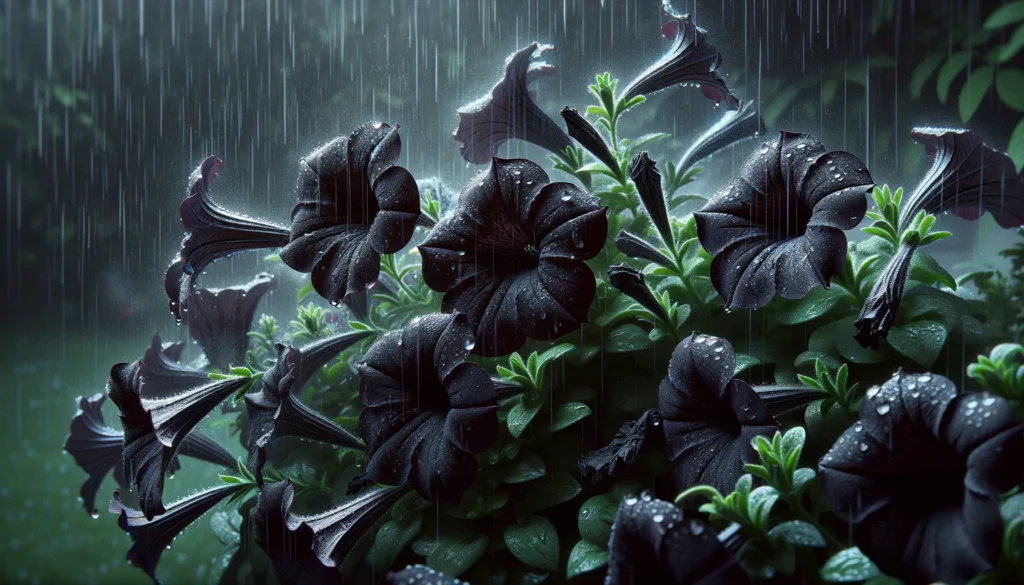
In hot, humid weather, favor cultivars with a documented record in similar conditions, then provide room for airflow and a container large enough to hold moisture. A vigorous plant may tolerate heat but still wilt in a root-bound basket left dry. In dry, windy weather, spreading varieties can cover quickly, but their long stems and exposed containers may increase water demand. Water the root zone according to how quickly the pot dries rather than applying a fixed schedule to every petunia.
Sun exposure is also local. Full sun generally supports the heaviest bloom, but a container on a paved west-facing balcony may benefit from some afternoon relief during extreme heat. If that location gets only a few hours of light, however, shade is unlikely to be solved by switching to another petunia series; look for a different plant better suited to the site.
Decide how much grooming fits your routine
Some petunia labels describe a plant as self-cleaning, meaning spent flowers drop without regular hand-deadheading. This can save time, particularly on cascading plants with many small blooms. It does not mean the plant is maintenance-free: long stems can thin out, a crowded bed can trap humidity, and containers still need regular water and nutrients.
Large-flowered or older selections often look better when faded flowers are removed. If a plant becomes leggy midseason, trim the longest stems back to a leafy branching point instead of plucking flower petals one at a time. That resets the silhouette and encourages branching; expect a short pause while new growth develops. Colorado State Extension recommends removing dead flowers and periodically trimming plants to keep them compact and blooming, while Gardeners’ World notes that trailing petunias can be lightly trimmed when they become straggly. (Gardeners’ World)
Use upkeep as a filter before purchase. If reaching a hanging basket is inconvenient, choose a variety that drops spent blooms and put the basket where you can water it safely. If you want a tightly manicured edge and enjoy regular grooming, a larger flower may be worthwhile. If weekly pruning sounds like too much, avoid the most vigorous types in a small pot and choose a compact cultivar with a self-cleaning habit.
Choose seed-grown plants or vegetative starts
Seed is a practical choice when you want many plants, a wider color mix, or the satisfaction of raising your own starts. The seed packet should name the variety or series; some petunias are sold as F1 hybrids selected for uniform growth and color. Growing the seeds in the packet can give a predictable crop, but saving seed from a hybrid plant is different: the next generation may vary in flower color, form, and habit.
Vegetatively propagated starts are produced from cuttings and usually preserve the characteristics of the named cultivar. That is useful when you want the exact trailing habit or color shown on the label. These starts commonly cost more than a seed packet and are sold as established plants rather than as seed. Washington State University Extension explains that plants grown from hybrid seed rarely resemble the parent exactly, whereas vegetative propagation closely reproduces the parent plant. (Washington State University Extension)
Do not assume every petunia is cutting-grown or every seed-grown plant is variable. Many commercial petunias are bred and sold as seed cultivars with consistent traits when grown from the purchased seed; the unpredictability concern is strongest when you collect seed from a hybrid. If repeatability matters, keep the cultivar tag, buy from a reputable supplier, and use the propagation method specified for that selection.
Use petunias as color, not the whole pollinator plan
Petunias can add nectar and flowers to a garden, but a petunia-only display is not a strong substitute for a diverse pollinator planting. Flower shape, nectar access, and timing affect which insects visit. A 2001 field study of ornamental flowers found few daytime insect visits to Petunia × hybrida despite nectar being present, and double petunia flowers produced little or no nectar in the study. The results came from a particular set of plants and a British garden setting, so they should not be treated as a measurement of every current cultivar. (PubMed, Annals of Botany study)
If wildlife value is a major goal, choose a simpler single flower rather than a heavily doubled bloom and add regionally appropriate native flowers with different shapes and bloom seasons. Keep petunias where their color and habit serve the design, and let plants with stronger local pollinator value provide the main food supply. This approach avoids overstating what a mass of ornamental hybrids can do while still letting you enjoy them.
Quick matches for common garden setups
| Your setup | Start with | Why it fits | Main trade-off |
|---|---|---|---|
| Front of a sunny border | Compact multiflora or milliflora | Neat mound, plentiful color, manageable scale | Check spacing so it does not disappear behind taller plants |
| Large sunny bed that needs coverage | Spreading petunia, including a suitable Wave selection | Quickly fills open ground with flowers | Vigorous growth can crowd neighbors and use more water |
| Hanging basket or tall patio pot | Trailing or cascading cultivar | Stems are bred or selected to spill over the edge | Baskets dry quickly; mature trail length varies |
| Small tabletop container | Compact mound or milliflora | Keeps the plant in proportion to the pot | Small pots need close moisture checks |
| Garden with frequent heavy rain | Multiflora, floribunda, or a named rain-tolerant cultivar | Smaller flowers or proven cultivar traits can keep the display looking better | No class or series is immune to prolonged rain |
| Sheltered focal pot with showy blooms | Grandiflora, including a weather-tolerant named selection | Large flowers show patterns and ruffled edges well | Damaged petals are conspicuous and may need cleanup |
| Limited time for grooming | A self-cleaning compact or trailing cultivar | Spent blooms drop without constant deadheading | Watering, feeding, and occasional reshaping still matter |
| Exact cultivar color from year to year | A labeled vegetative start or fresh seed of the named seed cultivar | The propagation method matches the desired traits | A cutting-grown plant may cost more; saved hybrid seed may vary |
Use this as a shortlist, not a substitute for the tag. A strong choice for a raised bed may be a poor choice for a tiny hanging basket, even if the flower color is perfect. For pot-specific sizing and watering trade-offs, see the container petunia guide; for species-level growing information, see the petunia plant guide.
Three checks before you leave the nursery
Turn the label over or look up the cultivar before buying several plants. A compact tray of seedlings can conceal a plant that will spread several feet, and a “trailing” description may mean a modest spill rather than a long basket cascade. The mature measurements and recommended spacing tell you how many plants to buy and whether that variety can share a container.
Check three things: where it grows (height, width, and upright versus trailing habit); how it handles your weather (full sun, rain, and heat notes for the cultivar); and what care it asks for (self-cleaning, deadheading, trimming, and container feeding). If one of those answers is missing, ask the grower or look for a named variety with clear growing information rather than guessing from the bloom photo.
Finally, imagine the plant at midsummer size, not at checkout. A single vigorous petunia can fill a basket, while several compact plants may be needed for the same immediate fullness. Buying fewer plants with enough room often produces a stronger display and easier watering than crowding a container to make it look finished on day one.
Conclusion
Choose a petunia in this order: match its mature habit to the space, choose a flower size that suits your weather and the look you want, then check the cultivar’s sun, spread, and maintenance notes. Trailing and spreading forms fit baskets and broad beds; compact multiflora and milliflora types suit edging and smaller pots; grandifloras offer the largest visual impact when they have some shelter.
Series names can narrow the search, but the exact cultivar is what makes the plant right for your garden. Check its label against your sun, rain, heat, container size, and available care time, and you will be choosing for the whole season rather than for the few flowers visible at the nursery.



