How to Plant Flowers and Ground Cover Under Trees Safely
Learn how to plant flowers and ground cover under trees without burying roots, with safe site prep, shade-tolerant choices, watering, and mulch advice.
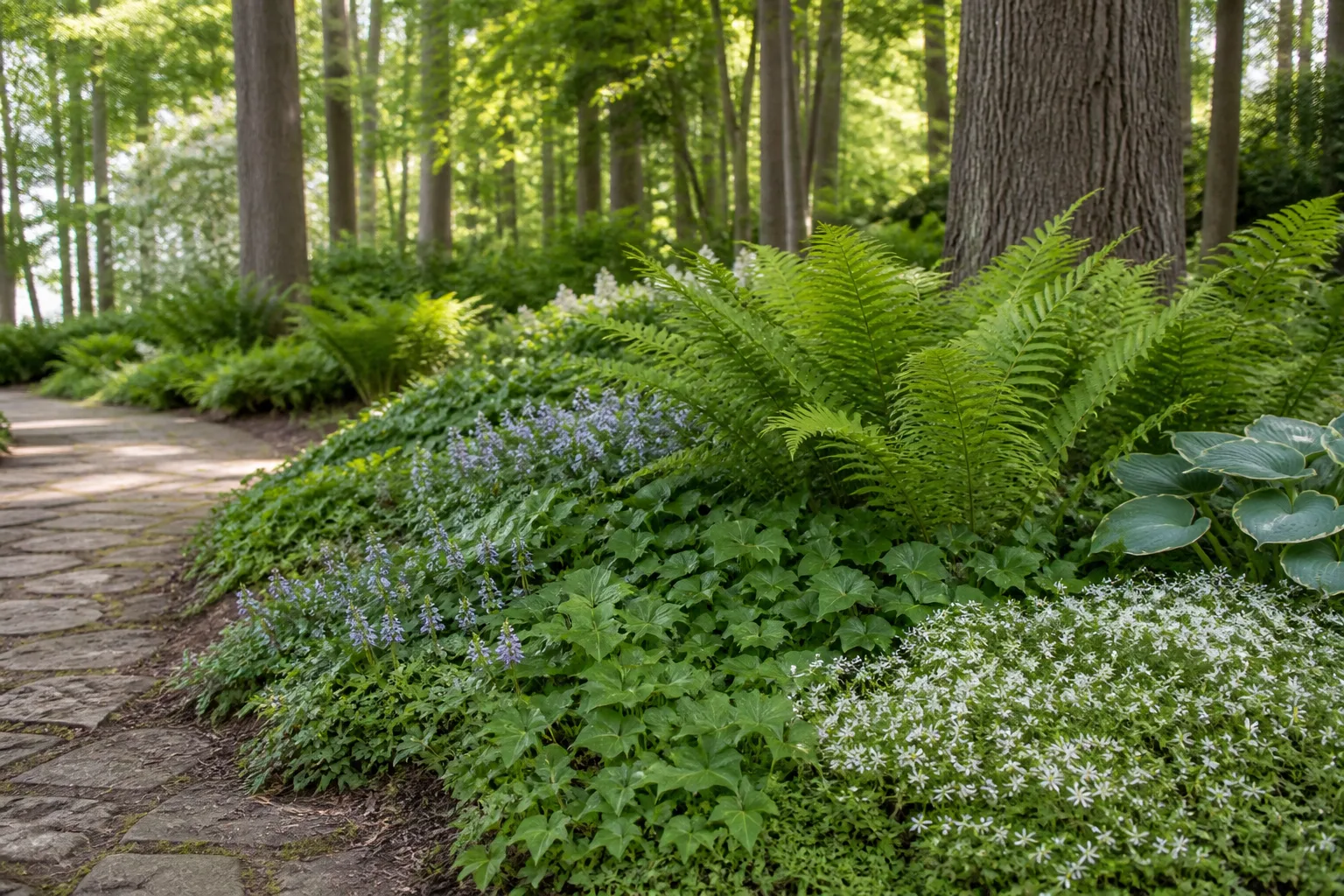
You can plant flowers or ground cover under many trees, but the safest approach is to fit small plants into the existing soil instead of rebuilding the area around the trunk. Keep the root flare visible, remove turf by hand, make only small planting holes, and choose plants for the actual light and moisture at the site. If roots fill the surface so tightly that you cannot make a hole without cutting them, stop and use a mulch bed instead.
The ground beneath a tree is not simply a shady flower bed. Its canopy changes the light and intercepts some rain, while the tree’s roots compete for water and nutrients. A successful underplanting works with those conditions, protects the tree first, and treats the young plants as a small establishment project that needs watering.
Can you safely plant under a mature tree?
Often, yes. A modest planting of small, shallow-rooted perennials can fit among existing roots, particularly when the tree is healthy and the site has a few open pockets of soil. The risk comes from preparing the area as if it were an empty garden bed: digging a broad trench, chopping through roots, piling soil against the trunk, or creating a deep raised ring changes conditions the tree depends on.
Tree roots anchor the tree and absorb water and nutrients; fine roots also exchange gases with air in the soil. Penn State Extension’s guide to underplanting trees explains why adding a large volume of soil over roots can compact the surface and interfere with that exchange. Its practical limit is to add no more than about two inches of soil or compost, avoid covering exposed roots, and keep new soil at least a foot away from the trunk. This is a conservative ceiling, not a target: if the grade is already high or the roots are exposed, add nothing.
The tree’s age and condition matter. Give a newly planted or visibly stressed tree time to establish before adding competitors around its base. Some species also react poorly to root disturbance. Penn State lists beech, dogwood, larch, magnolia, pine, cherry and plum, oak, linden, hemlock, sugar maple, and buckeye among trees sensitive to root disturbance. If you are unsure what kind of tree you have, or you find large roots near the surface, keep the project to surface mulch or ask a certified arborist before digging.
Check light, soil moisture, and roots first
Spend a few days looking at the site before buying plants. Notice where direct sun lands in the morning and afternoon, whether the canopy is deciduous or evergreen, where rain runs off, and whether the soil under the branches stays damp after a dry spell. Conditions can change sharply from the trunk to the canopy edge, so do not assume the whole area is uniformly “shade.”
Map the light beneath the canopy
Deciduous trees allow more spring light through before their leaves open, then cast deeper shade in summer. This brief bright window suits many spring bulbs and woodland ephemerals that flower and gather energy early, then go dormant as the canopy closes. Evergreen trees block light throughout the year; the ground beneath them generally offers fewer options for flowering plants that need brighter conditions.
The outer edge of a canopy often receives more light and rainfall than the area near the trunk. Use that edge for plants that flower more freely, and reserve the deepest shade for foliage plants or a simple mulch surface. Plant tags and regional extension references can help distinguish “part shade,” which usually means several hours of sun or bright filtered light, from deep shade, where direct sunlight is scarce.
Look for dry soil and sensitive roots
Tree canopies intercept rainfall, and established roots draw water from a broad area. A site can look cool and shady while its soil dries quickly, especially under a dense evergreen or a large tree with a full crown. Check the soil with your fingers before and after a dry period; do not assume shade means moisture.
Look at the ground surface, too. A wide root that is already exposed is a signal to plant around it, not cover it. Avoid probing with a long stake or digging several test holes. If the tree has a broad flare where the trunk widens into roots, preserve that transition and keep mulch and soil off the bark. Where the root pattern is dense, choose plugs or small nursery pots that need little space, or leave the area unplanted.
Choose plants for the conditions you have
Start with the plant label’s light, moisture, mature spread, and regional hardiness information, then compare those needs with the site you observed. “Shade tolerant” describes light, not a plant’s ability to live without water; “drought tolerant” usually applies after establishment. Even tough plants need supplemental water while their roots grow into the surrounding soil.
For a natural look, repeat two or three well-matched plants in broad drifts instead of mixing a different species into every opening. Penn State Extension recommends dry-shade perennials for the difficult conditions beneath mature trees. BBC Gardeners’ World Magazine’s shade ground-cover guide and Epic Gardening’s under-tree plant overview offer additional examples, but climate, soil, and local plant behavior still determine which selections will work in your yard.
Dry-shade ground covers
For dry shade, look at barrenwort (Epimedium spp.), Pennsylvania sedge (Carex pensylvanica), wild ginger (Asarum canadense), and bigroot geranium (Geranium macrorrhizum) where they are suitable for your region. These create low, spreading or mounded foliage rather than demanding a lush, constantly damp lawn-like carpet. Pennsylvania sedge and wild ginger are North American woodland choices in their native ranges; ask a local native-plant nursery for regional alternatives if you garden elsewhere.
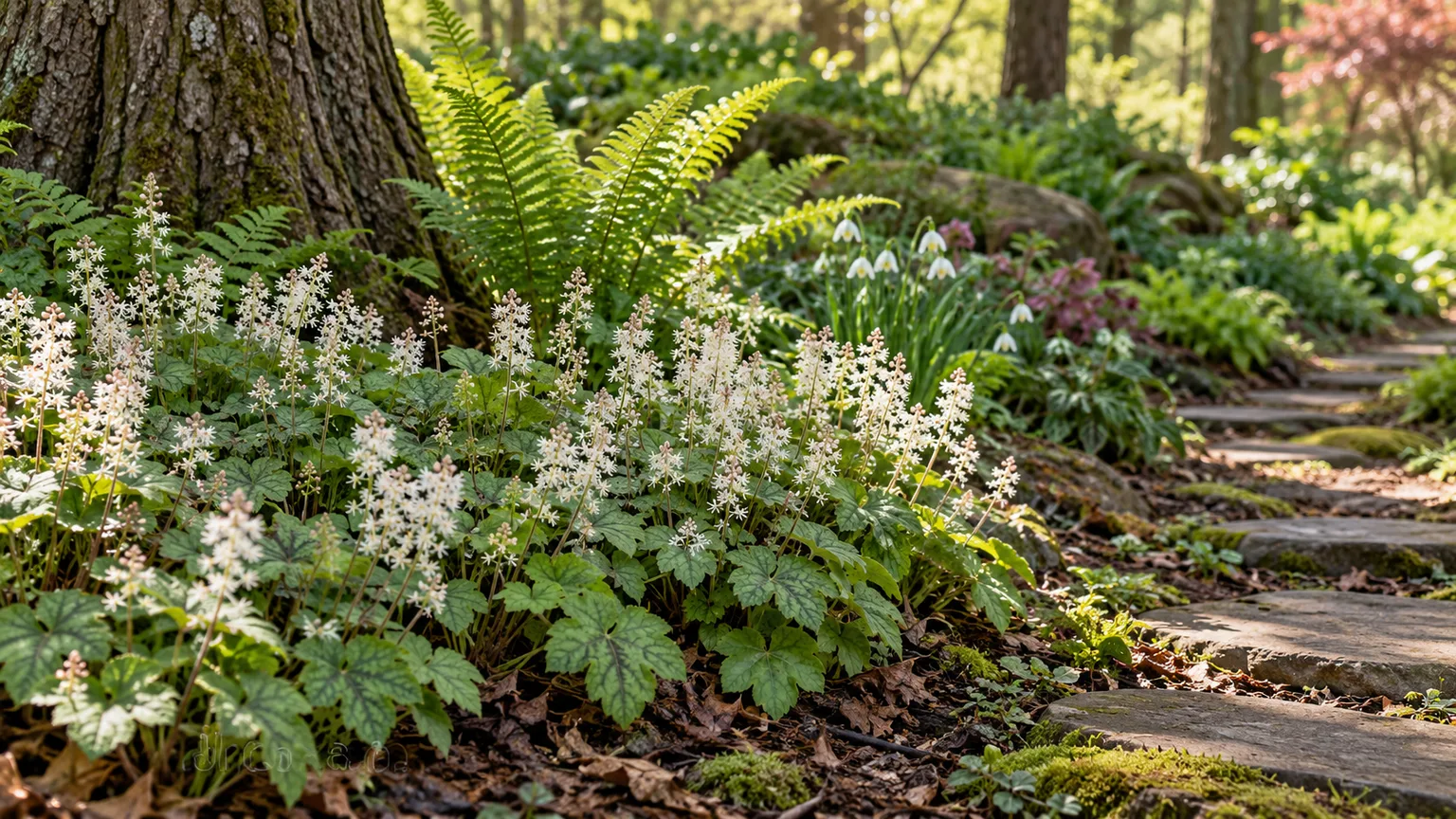
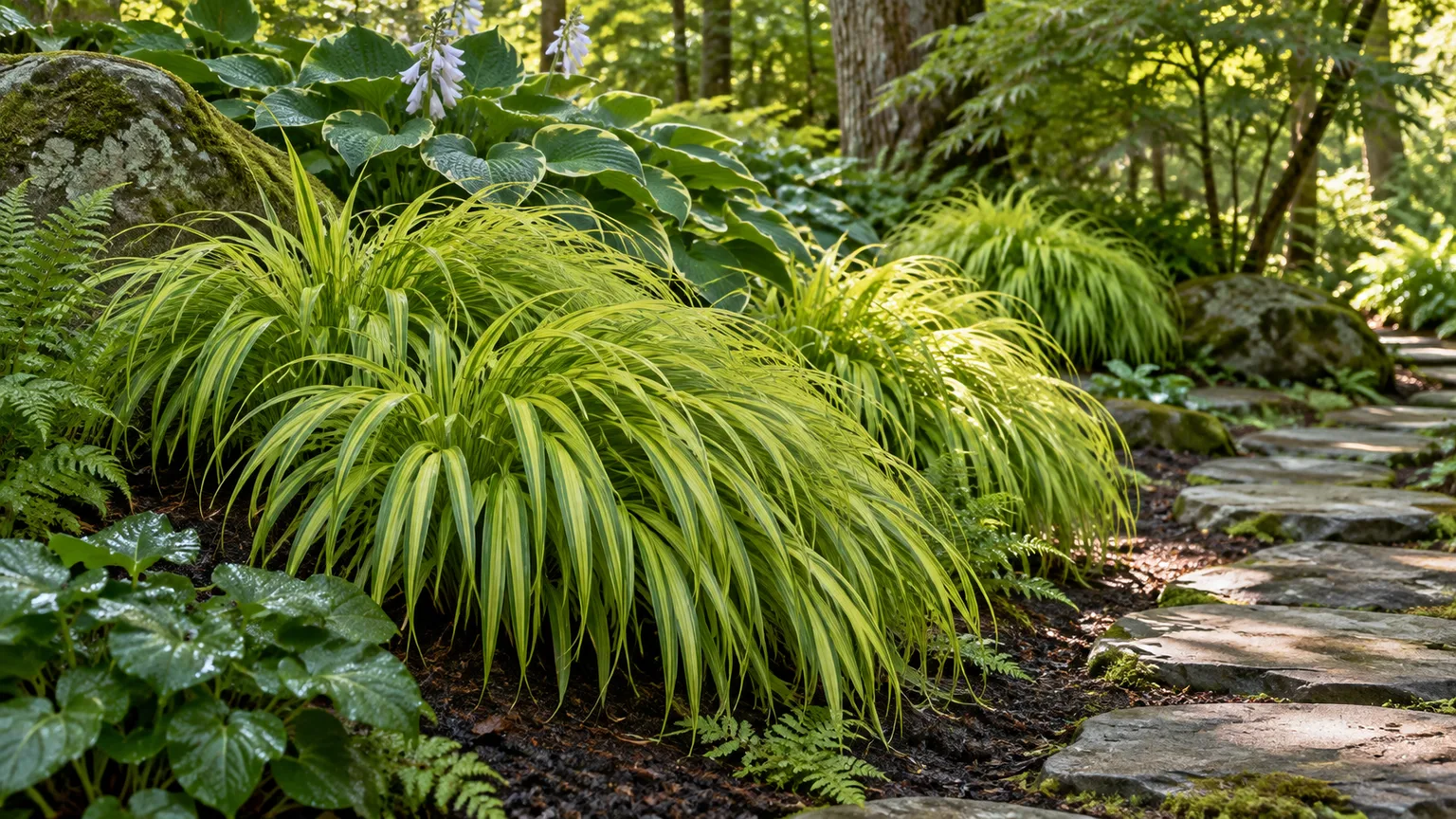
Coral bells (Heuchera spp.) and Christmas fern (Polystichum acrostichoides) can add long-lasting texture, though their success depends on local heat, soil, and how dry the root zone becomes. Hosta and foamflower (Tiarella spp.) can work in many shaded beds, but they generally need more reliable moisture than the toughest dry-shade selections. Match plants to the driest part of the bed rather than planting thirsty species close to the trunk and hoping shade will compensate.

Flowers and foliage for shade
Flowers under trees do not need to bloom continuously to make the planting feel full. Pair plants with different seasons and rely on foliage for the long stretch after spring flowers fade. Foamflower, coral bells, lungwort (Pulmonaria spp.), wild ginger, and some ferns offer combinations of leaf shape, color, and small seasonal blooms; use the mature size on the label so the planting does not crowd its own paths or the tree trunk.
For a small patch of color in a dry location, a clumping perennial is often easier to control than a fast-running ground cover. In a more consistently moist woodland edge, plants such as Virginia bluebells (Mertensia virginica) or bleeding heart (Lamprocapnos spectabilis) can provide spring interest, but they may fade or go dormant later. Make sure the site actually has the moisture they need; their names do not make them universally suitable under every tree.
Ground covers can spread beyond their intended boundary. Vinca, lily-of-the-valley, ajuga, and some forms of pachysandra or sweet woodruff may become difficult to contain in favorable conditions, and the plants considered invasive differ by region. Check your state or local invasive-plant list before buying; where containment is important, choose a clumping native perennial or a slower-growing species instead.
Spring bulbs and woodland ephemerals
Small spring bulbs and native woodland ephemerals can flower before a deciduous canopy leafs out. Depending on your region, examples include snowdrops, crocus, daffodils, bloodroot, and Virginia bluebells. Their early timing lets them use brighter spring conditions, but most disappear or become less noticeable as summer shade deepens, so combine them with foliage plants if you want the bed to look finished all season.
Bulbs still require a hole deep enough for the particular species, which can be a poor fit where tree roots occupy the soil. Plant only where you can open a pocket without cutting a major root; do not force bulbs into a root mat or bury large surface roots. Small corms or bulbs may fit more easily than large bulbs, but the package’s planting depth still applies.
Plan a loose, natural-looking bed
Use a garden hose to sketch the bed’s edge before touching the soil. A broad, irregular shape usually looks more natural around an established tree than a perfect raised circle. Keep the trunk flare visible, leave a practical strip for mowing or walking where needed, and avoid an edging that requires digging a deep trench through roots.
Place plants on the ground in their nursery pots first. Put taller foliage toward the outside or the side where it will not block a path, and group small ground covers where they can spread. Read mature width rather than spacing every plant close enough to look full on planting day; generous spacing means fewer holes and less competition while the plants establish. A few open mulched spaces are healthier than an overfilled bed that needs constant watering.
Remove grass without cutting roots
Grass competes with new plants and can grow through a thin layer of mulch, but removing it under a tree needs restraint. Water the site the day before if the soil is hard, then wait until it is workable rather than sticky. Use a hand trowel to lift small patches of turf from the surface. Work from the outside inward and stop if the grass is tightly woven among large roots; preserving the tree is more important than making a perfectly clean bed in one session.
Avoid a rototiller, mattock, spade, or broad shovel around the trunk. A deep cut can sever roots or scrape bark, and repeated chopping creates more disturbance than the small planting justifies. Penn State Extension advises removing grass and weeds by hand and avoiding herbicide for this task. If a patch cannot be cleared without cutting roots, leave it as lawn temporarily, expand the bed from a safer edge, or accept a simple mulch area instead of digging harder.
Plant small starts in pockets between roots
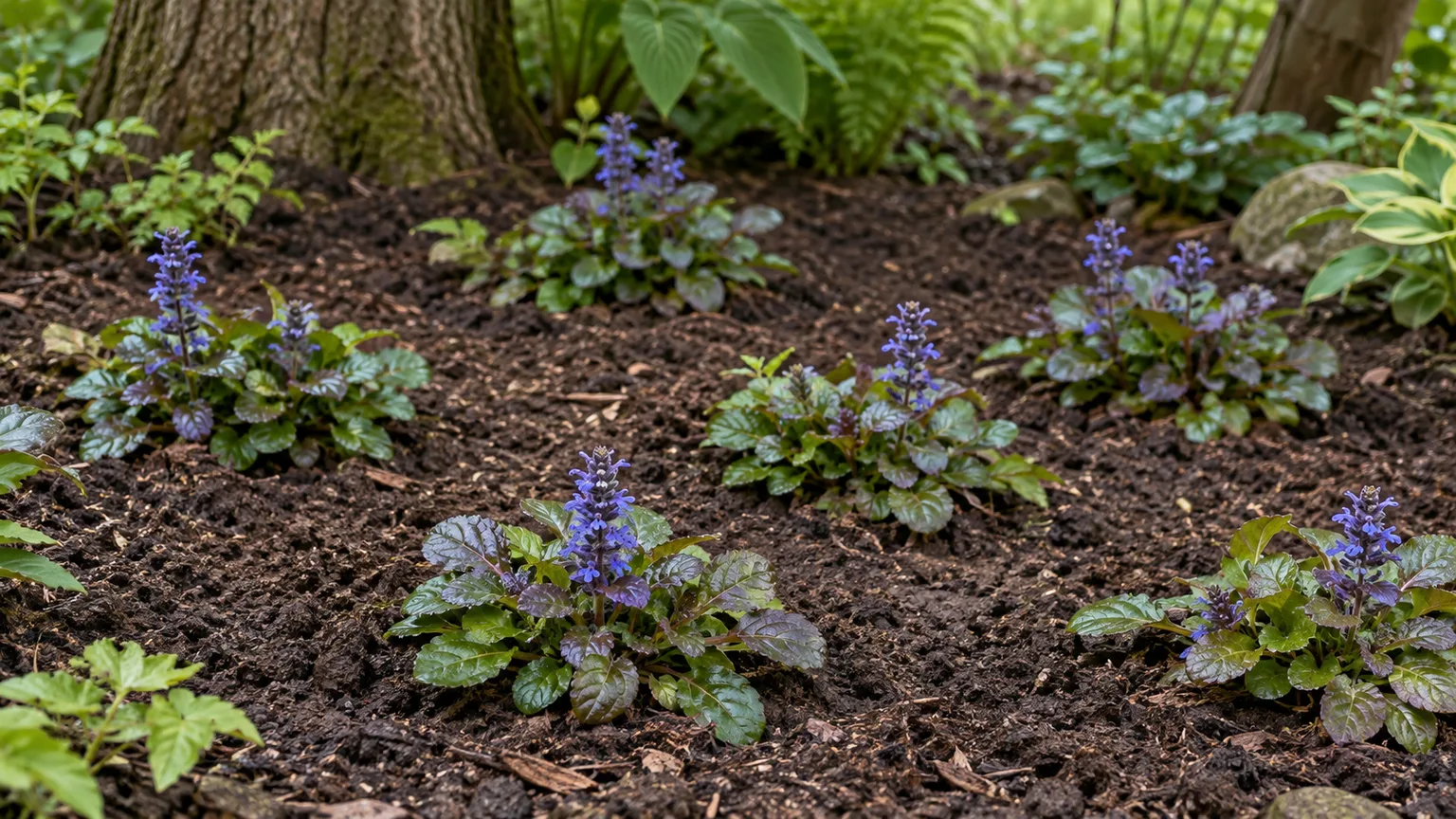
Small plugs, divisions, and young plants in modest containers are easier to fit between roots than large, root-bound specimens. Their smaller root balls need less excavation, and a grouping of young plants can fill in over time. Arrange the plants first, then make one hole at a time with a narrow hand trowel, only slightly wider and deeper than the root ball.
When the trowel meets resistance, do not lever it against a root or chop through. Move the plant a few inches and try again. Penn State Extension recommends refilling the hole and relocating the plant if you uncover a root about two inches or more in diameter. Even when you encounter only fine roots, keep cuts to an absolute minimum; if no planting pocket exists, change the plan rather than sacrifice a root for one perennial.
Set each plant at the same soil depth it had in its container, backfill with the soil you removed, and firm it gently so there are no large air gaps. Better Homes & Gardens’ flower-planting guide likewise recommends using the container soil level as the planting-depth cue for nursery plants. Do not bury crowns or stems under extra soil or compost. Water each root ball thoroughly after planting, then add mulch around it without covering the crown.
Water deeply while new plants establish
The tree will compete with new perennials for water, so do not assume a shade garden is self-watering. Soak the root balls and the surrounding soil after planting. During the first growing season—and often into the second—check soil moisture regularly and water slowly when the root zone begins to dry. Penn State Extension recommends consistent watering for the first year or two, with deep watering rather than a quick sprinkle.
The right interval depends on rain, temperature, soil texture, canopy density, and plant size. Check near the new plant’s root ball, not just in a sunny spot outside the canopy. If the soil is dry several inches down, water long enough to moisten that zone; if it is still wet, wait. A slow hose trickle or soaker hose can help water infiltrate without runoff, but position it so water reaches the young plants rather than only the trunk.
Once established, many dry-shade perennials need less attention, but a long drought can still stress them. Yellowing, wilting, or early dormancy is not automatically a sign that fertilizer is needed. First check whether the soil is dry, whether the plant is receiving enough light, and whether a tree root has crowded its planting pocket. Correct the limiting condition before adding fertilizer.
Mulch thinly and keep the root flare open
Mulch slows evaporation and makes the bed easier to maintain, but too much mulch creates another buried layer that plants and tree roots have to deal with. In the newly planted area, Penn State Extension suggests about one to two inches of finely shredded bark or compost between plants. Keep mulch away from the trunks and crowns of perennials, and leave the tree’s root flare visible.
Guidance for a bare tree mulch ring may specify a different depth: Morton Arboretum’s tree and shrub mulching advice gives three to four inches for medium-to-coarse mulch around trees and shrubs, while recommending only a couple of inches for perennial beds. The material and the planting purpose matter. Do not apply a thick tree-ring layer on top of young ground covers, and never pile mulch against the trunk in a “volcano.”
If roots are already exposed, do not cover them with a deep layer of soil or try to make the ground level. A light surface layer of organic mulch can protect the soil while leaving the roots and trunk flare uncovered. Penn State’s mulching guidance explains that excessive mulch can trap moisture at the trunk and interfere with gas movement; a neat, open ring is safer than a mound.
Maintain the planting with low-impact care
Let a light layer of fallen leaves remain if it does not smother small plants. Leaf litter protects the soil surface and gradually breaks down, but a wet, matted blanket can shade evergreen ground covers or bury tiny seedlings. Lift or thin only the parts that are actually smothering plants, and avoid raking hard against exposed roots.
Weed by hand while weeds are small, using shallow movements. Do not hoe or cultivate deeply between plants; the same roots you protected during planting remain close to the surface. If you need to feed the bed, use a soil test or the plant label to guide the decision, and avoid routine heavy fertilizer. Extra nutrients will not solve deep shade, a dry site, or a tree that occupies every available planting pocket.
Keep lawn equipment and string trimmers away from the trunk. If branches make the site too dark for the plants you want, do not top or heavily prune the tree to accommodate the bed. Ask a qualified arborist whether selective pruning is appropriate for the tree’s health and structure, then choose plants for the light that remains.
What to do when roots leave no planting space
Sometimes the right answer is not to plant. If a dense mat of roots covers the surface, the tree has exposed roots, or every trial hole meets a large root, keep the area as a mulch bed and add color at the canopy edge where there is more soil. This protects the tree and avoids spending money on plants that cannot establish.
Do not solve the problem by piling eight or twelve inches of loam around the trunk or building a raised bed that hides the root flare. Penn State Extension cautions against that approach because the added soil can compact over roots and alter gas exchange. You can set a few lightweight pots nearby for seasonal color if they sit on stable ground without covering the trunk flare or resting on vulnerable exposed roots; do not build up soil under them.
If you want the area to feel finished without more roots to manage, use a defined mulch surface, natural leaf litter, or a path made without excavating into the root zone. A wider planting at the drip-line edge can still frame the tree and connect to the rest of the garden. The most successful design may be an open, healthy root zone rather than a continuous carpet.
Troubleshoot a struggling under-tree garden
If newly planted flowers wilt, check the root ball and nearby soil before assuming they need fertilizer. Dry pockets under a canopy can remain dry even after a short shower, so water slowly and recheck. If soil stays wet, stop watering until it drains and make sure mulch is not pressed against stems or crowns.
If plants survive but grow slowly, compare the site with their labels. Deep evergreen shade may not provide enough light for spring-flowering plants that do well under deciduous trees. Move those plants to a brighter edge, and use foliage-focused dry-shade species closer to the trunk. If the plants are continually crowded by roots, removing them and switching to mulch is more sensible than repeatedly replacing them.
If one plant spreads much farther than expected, remove runners or seedlings while they are young and check whether the species is considered invasive in your region. Avoid using a fast-spreading ground cover as a shortcut to instant coverage; it can become hard to remove without disturbing the tree’s roots. Under a black walnut, also account for juglone and select plants known to tolerate the conditions rather than assuming every shade perennial will thrive.
Conclusion
Planting under trees can work when you choose small plants for dry shade and fit them into existing soil with minimal digging. Keep the root flare visible, add no more than a thin surface layer of soil or compost when truly needed, and move a planting hole instead of cutting a large root. Water new plants through establishment, mulch the gaps without burying stems or roots, and choose a simple mulch bed whenever the tree’s root zone leaves no safe space.