When and How to Fertilize Strawberries
Find the right strawberry fertilizer timing for June-bearing and day-neutral plants, with practical guidance for soil tests, containers, and safe application.
The reliable rule: test first, then feed for the crop stage
Strawberries do not need a heavy, identical feeding routine every few weeks. Their nutrient needs depend on what is already in the soil, whether the plants are newly established or bearing, whether the variety produces one concentrated crop or fruits over a long season, and whether roots are in a garden bed or a pot.
For most home gardeners, the most dependable sequence is simple: test the soil before planting or renewing a bed, correct only what the results call for, then time any additional fertilizer around the plant’s growth pattern. A high-nitrogen dose can produce impressive leaves while reducing the balance between foliage and fruit, and fertilizer cannot solve a pollination, sunlight, water, disease, or cultivar problem.
A “balanced” 10-10-10 or 20-20-20 product is not automatically the best strawberry fertilizer. Those numbers describe the fertilizer’s nutrient analysis, not the strawberry variety, the amount your soil needs, or the safe dose for a particular bed; use the soil-test recommendation and the product label to decide.
Start with a soil test before choosing a fertilizer
If you have an established strawberry bed, remember what went into it in the last year or two. Compost, aged manure, granular fertilizer, and slow-release products all count toward the bed’s nutrient history, even if they were added for a different crop.
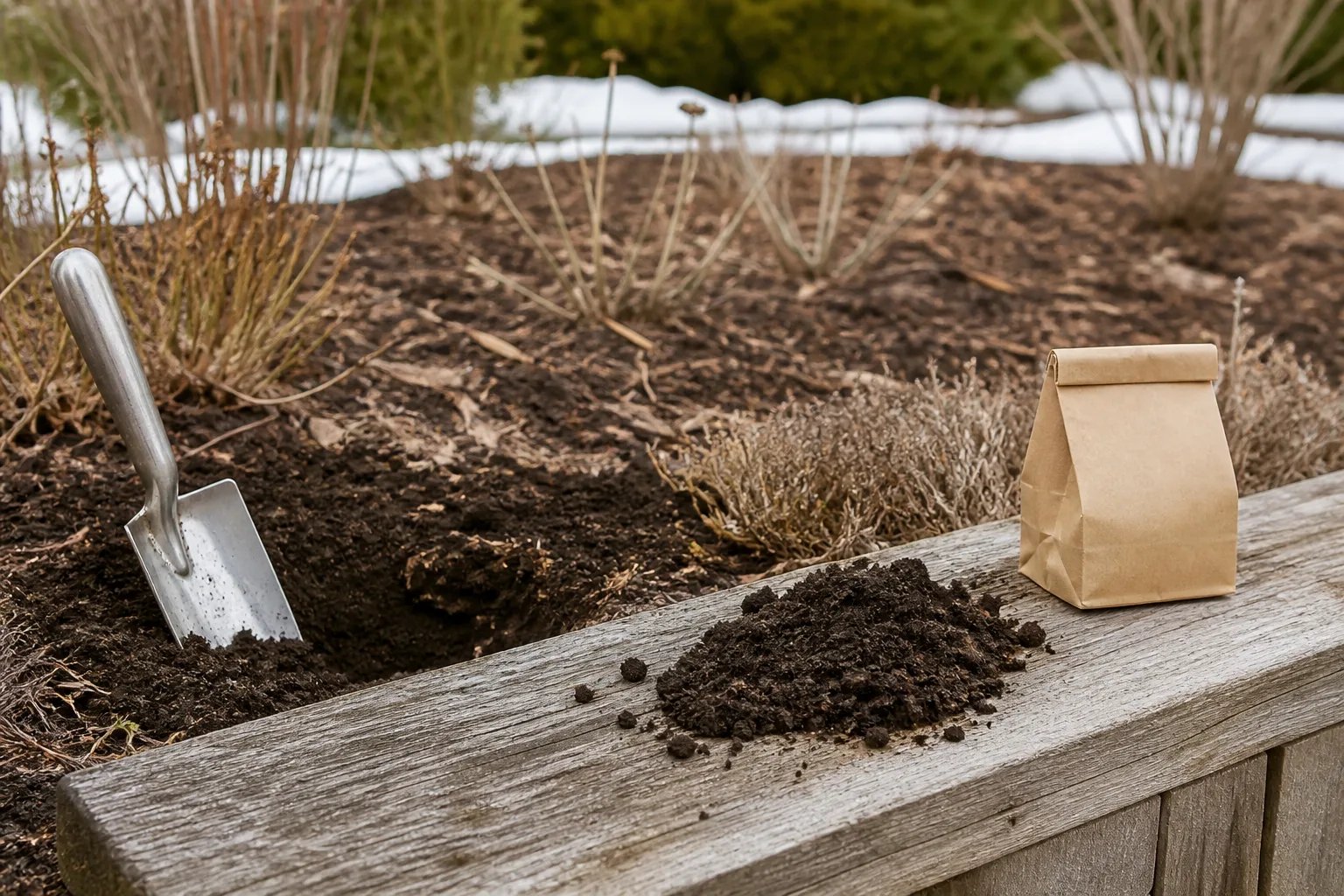
Take a representative soil sample before adding anything. Follow your local laboratory’s directions for sampling depth and the number of subsamples, and avoid taking soil right beside a fertilizer band, compost pile, or visibly unusual patch. A cooperative extension laboratory can test pH and nutrients and provide recommendations calibrated for local soils; consumer pH strips or a leaf-color guess cannot tell you whether phosphorus or potassium is already abundant.
What the test can tell you
A soil report helps separate three different decisions: whether the pH needs adjustment, whether a major nutrient is low or already sufficient, and how much of any recommended nutrient to apply to the measured area. This is more useful than choosing a fertilizer first and then trying to make the soil fit it.
Penn State Extension explicitly describes its strawberry fertilizer figures as rules of thumb and says the amounts may need to be reduced when soil is rich or amended with compost. That regional caveat matters: recommendations from a commercial production system or a different state may not translate to a small backyard bed, a raised bed filled with purchased mix, or a pot.
Keep the report with your planting notes. If you add manure or compost, record roughly how much and when; if you use a slow-release fertilizer, write down the product analysis and application date. That history helps explain a future result and prevents an automatic repeat application from stacking on top of nutrients that remain available.
Check pH and organic matter separately from N-P-K
Strawberries generally grow best in slightly acidic soil. Horticulture references commonly give a working pH range around 5.3 to 6.5, but use the range and lime or sulfur recommendation on your local soil report rather than trying to hit a single number by guesswork. A pH correction usually takes planning; adding lime or sulfur shortly before planting is not a reliable way to fix an untested bed.
The pH reading and the N-P-K numbers answer different questions. A bed can have adequate nitrogen, phosphorus, and potassium yet still have a pH that limits nutrient availability, while a low pH does not prove the soil needs a complete fertilizer. The soil-test-first guidance from Savvy Gardening and BHG’s strawberry fertilizer guide both emphasize testing before amendments and place strawberries in a mildly acidic range.
Organic matter is another separate consideration. Mature compost can improve soil structure and water-holding capacity, but its nutrient content varies; it is not a precise substitute for a test-based fertilizer recommendation. The practical advice to start with a test and use organic matter to improve the bed’s condition is also covered in Little Yellow Wheelbarrow’s home-garden discussion.
Choose a fertilizer by the nutrient your bed needs
The three numbers on a fertilizer label report its N-P-K analysis: nitrogen, phosphate, and potash. Gardeners often call the last two phosphorus and potassium, but the label expresses them in conventional fertilizer units; the important point for choosing a product is to compare the guaranteed analysis and the amount the test recommends.
A 10-10-10 and a 20-20-20 product have the same proportion among those three nutrients, but the latter is more concentrated. The numbers do not say how much to apply, how quickly nutrients become available, or whether that particular formula is appropriate for strawberries. If a soil report calls for nitrogen but says phosphorus is already high, repeatedly using a complete fertilizer may add nutrients the bed does not need.
Look for a product whose label permits use on edible crops and matches the nutrient recommendation. A strawberry or berry fertilizer can be convenient, but the name on the package does not make it universally correct; formulations vary, and a specialty product can still be too rich for soil that already has adequate nutrients.
Organic and synthetic products can both work
You can use a manufactured fertilizer or an organic product if its analysis and label fit the job. The plant responds to available nutrients, not to a marketing category; the useful comparison is the nutrient source, concentration, release pattern, handling instructions, and whether the soil needs those nutrients at all.
Compost and fully aged manure can contribute nutrients and improve soil structure, but their nutrient ratios are variable. Blood meal is relatively nitrogen-focused, so it is a poor “fruit booster” when plants already have vigorous foliage; bone meal should not be added just because a plant is flowering if a soil test does not call for phosphorus. Kelp products and compost teas can be supplements, but do not assume they supply a complete, predictable N-P-K dose.
A liquid product can make it easier to feed container strawberries or apply a measured dose through irrigation, while a granular product can be practical for an open bed. In either case, follow the label rather than combining multiple products “for insurance.” Savvy Gardening’s overview of fertilizer choices and timing distinguishes these application forms, while the Penn State Extension growing guide emphasizes that soil test results should inform the amount used.
Time feeding around the strawberry type and harvest
“June-bearing,” “day-neutral,” and “everbearing” describe fruiting patterns that change how a plant grows through the season. A June-bearing bed channels much of its next spring’s crop through flower buds formed later in the previous growing season, while day-neutral plants can make flowers and fruit in repeated flushes as conditions allow.
Use those patterns to decide when to check the bed, but let local climate and soil-test recommendations set the actual application. Calendar dates vary with latitude and season; the condition of the plants and the local harvest window are more transferable signals than a fixed month.
Newly planted June-bearing strawberries
A new June-bearing patch needs to establish roots, crowns, and healthy leaves before it can support a full crop. In many home-garden systems, gardeners remove first-year flowers so the young plants can put growth into establishment; if the planting was prepared from a soil test and the plants are growing steadily, that does not mean they need repeated fertilizer doses.
At planting, work only the soil-test-recommended amendments into the bed before the crowns go in. Do not place concentrated fertilizer against roots or crowns, and do not use high nitrogen to force quick leaf growth in a young plant. If the bed was filled with compost-rich soil or a pre-fertilized mix, count those nutrients before applying more.
Check establishment problems before reaching for fertilizer. A plant that wilts in dry soil, sits in waterlogged soil, has exposed roots, or has a buried crown may look weak even when nutrients are adequate. Correct planting depth and moisture first, then ask the lab or a local extension office whether a nutrient correction is warranted.
Established June-bearing beds after harvest
For an established June-bearing patch, the usual home-garden window for any needed feeding is after the main harvest, often as part of bed renovation. The goal is to help maintain an orderly bed and support the growth that sets up the next season, not to push a flush of tender foliage while berries are ripening.
Renovation generally means removing weeds, thinning crowded plants, and keeping the row narrow enough for light and air to reach the foliage. If a soil test supports fertilizer, apply the recommended amount after the crop is finished and renovation is underway; do not copy a rate per 100 feet of row unless your bed dimensions, soil, product, and local recommendation all match that rate.
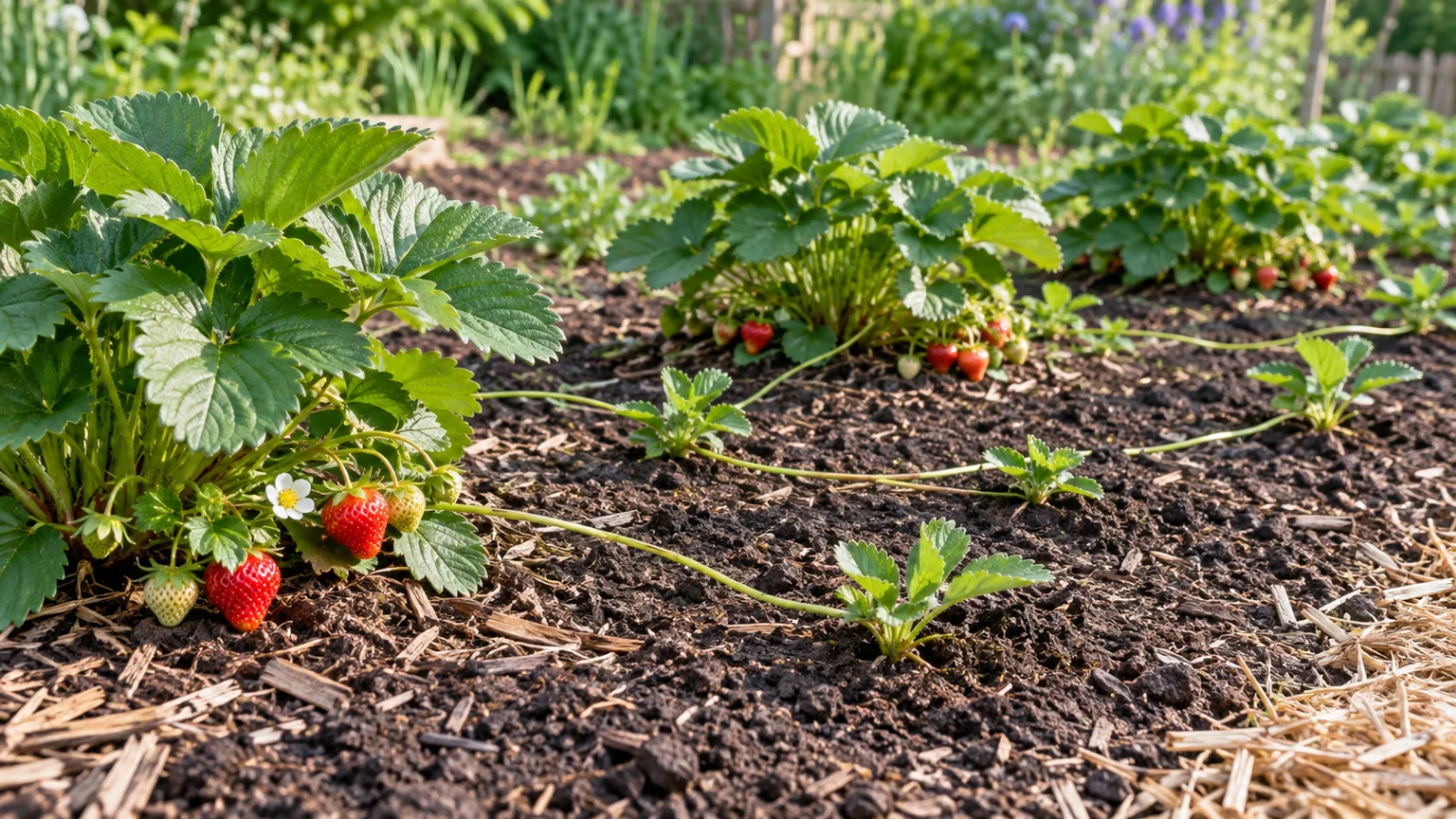
Avoid routine nitrogen applications in spring to an established June-bearing bed unless a local recommendation or diagnosis specifically calls for one. Early excess can favor leaves and runners over a balanced crop and may create a dense canopy that stays damp; the BHG timing guidance and Savvy Gardening’s cultivar-specific schedule both point gardeners away from spring feeding for established June-bearing plants.
Day-neutral and everbearing plants
Day-neutral strawberries can flower and fruit repeatedly through the growing season, so their nutrient demand is spread across more of the season than that of a single-crop June-bearing bed. Some everbearing varieties produce distinct flushes instead; check the plant label, because the names are sometimes used loosely in garden retail.
Start with the soil test and the crop’s vigor, then use a label-listed rate appropriate for strawberries during active growth. A modest, spaced application may be more suitable than one large dose for a plant producing through summer, but there is no schedule that fits every mix, climate, and fertilizer. If growth is already lush and flowers are scarce, pause the nitrogen and investigate light, heat, cultivar, water, and runner growth before feeding again.
For new day-neutral plants, transplant establishment still comes first. Remove early flowers or runners only when the variety and your local growing system call for it; recommendations differ with planting date and production goal. BHG’s current guide describes a first-year feeding window after the second bloom set and later-season intervals, while Penn State Extension’s guide distinguishes day-neutral management from June-bearing renovation. Treat those as context for local advice, not as permission to add fertilizer regardless of soil results.
Prepare a new bed without over-amending it
Before planting, remove perennial weeds and loosen the bed without working saturated soil. Strawberries have a shallow root system, so a friable soil with good structure and reliable moisture helps the crop use nutrients; Penn State Extension notes that many strawberry roots occupy the upper six inches, which is one reason drought and excess water both matter.
Add compost only if the bed needs organic matter or the soil test and local guidance support it. Mix a modest, mature material into the future root zone rather than making a concentrated pocket beneath each crown. Fresh manure can be too strong and uneven, and repeated manure or compost additions can contribute enough phosphorus and salts to complicate later feeding decisions.
If you are growing through plastic mulch or in a raised production bed with drip irrigation, follow the system-specific plan from an extension service. Fertilizer rates for commercial plasticulture, fertigation, or petiole-tested crops are not general backyard recipes; Georgia Extension, for example, discusses daily nitrogen rates and petiole sampling for commercial strawberry production in its grower fertility note. That article is useful for understanding monitored nutrient management, but its per-acre schedule should not be converted into a home-pot or garden-bed dose.
Apply fertilizer safely to crowns and shallow roots
Measure the amount for the actual bed area or row length specified on the label. If the directions give a rate by area, measure the bed rather than estimating from how many plants it holds; spacing changes, and a crowded row can contain more plants without having more soil area to support them.
Apply around the root zone, not on top of the crown, into the center of a leaf cluster, or directly against stems. Strawberry roots are shallow, so aggressive hoeing or deep incorporation after planting can cut roots just where you want nutrients to remain available. If the soil is bone dry, water lightly before application, then water afterward as the label directs.
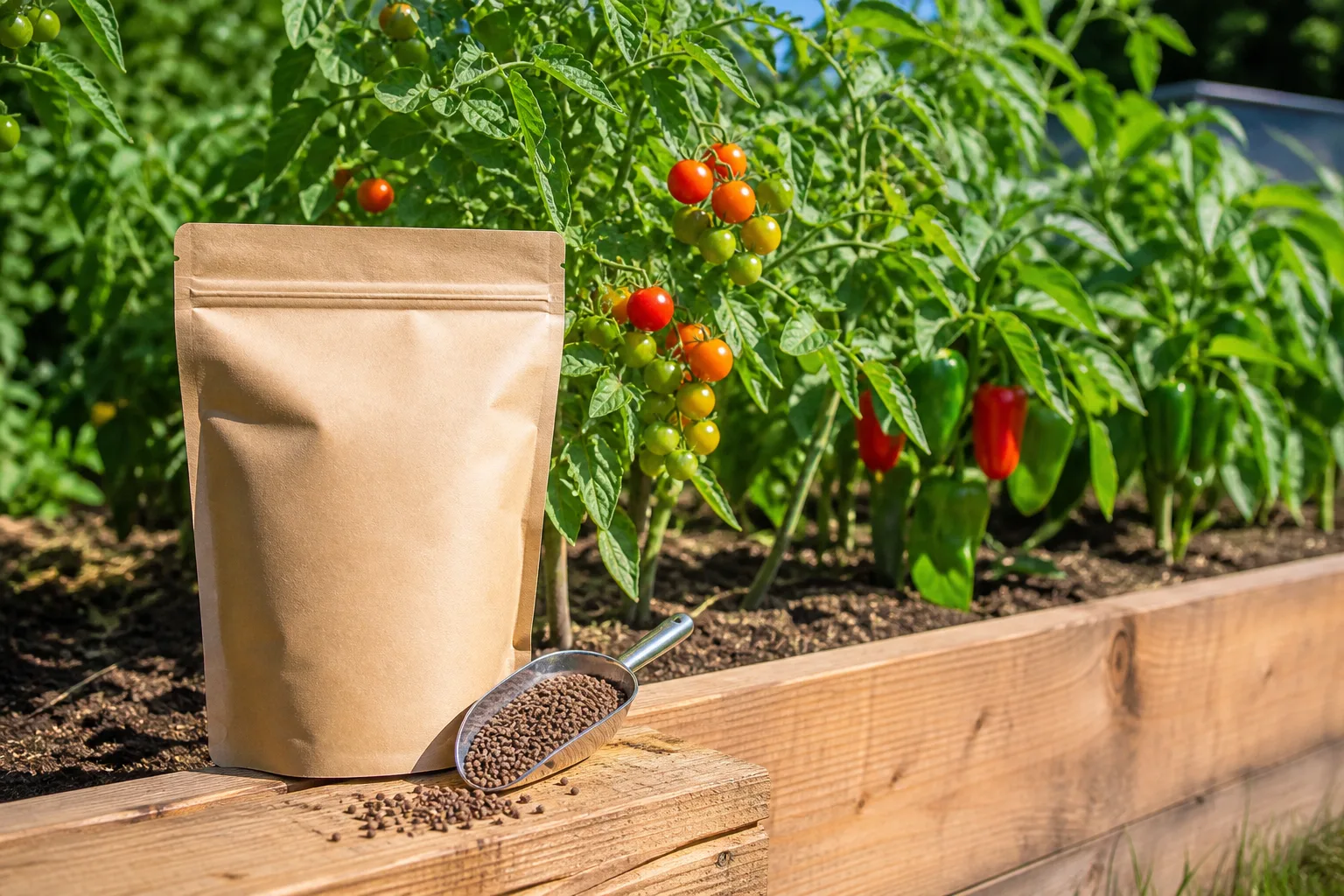
Keep granules off leaves, open flowers, and ripening fruit, and sweep spilled product from pavement before it washes toward a drain. Do not apply immediately before heavy rain or to saturated ground. Runoff wastes nutrients and can pollute waterways, while salts concentrated near the crown can injure the plant.
Granular versus water-soluble fertilizer
Granular fertilizer is convenient for an open bed when the label provides a clear area-based rate. Distribute it evenly rather than dropping a handful beside each crown, and water it into the soil if the label calls for that; a thick mulch layer can intercept granules, so move the mulch aside or apply to the exposed soil and replace it afterward.
Water-soluble fertilizer can be useful for pots, drip systems, or a small, measured application. Mix it exactly as labeled, and do not assume that a more concentrated solution will work faster without risk. Foliar fertilizer is not a replacement for root-zone nutrition; leaves are not a shortcut around the soil test, and spraying flowers or fruit adds handling without correcting the bed’s underlying fertility.
Adjust the plan for strawberries in containers
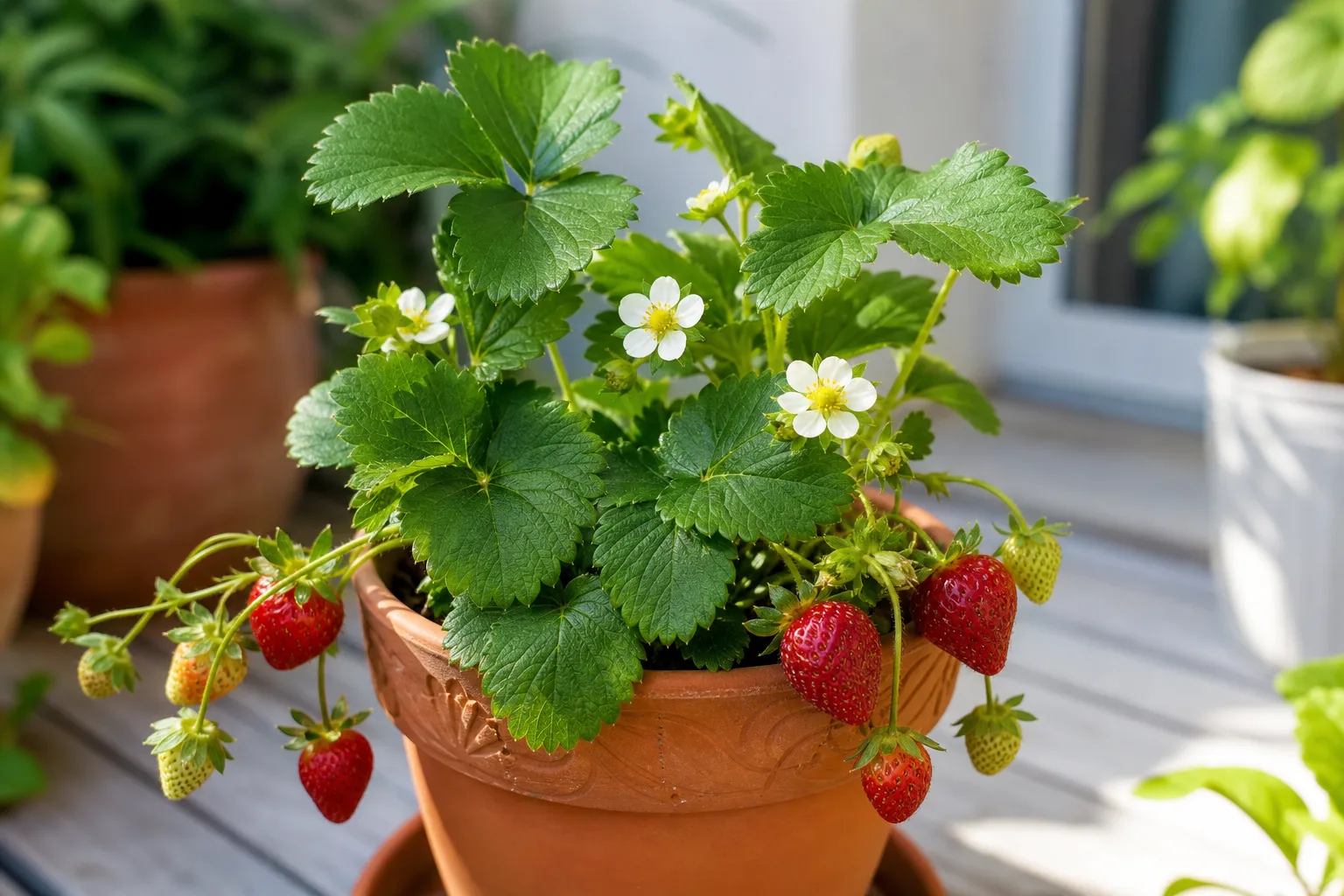
A pot contains a much smaller nutrient reservoir than a garden bed. Frequent watering can carry soluble nutrients out through drainage holes, while a slow-release charge in a new potting mix may still be feeding the plant for weeks or months. Those two conditions are why “every two weeks” or another fixed frequency can be too much in one pot and too little in another.
Start by checking the potting-mix bag for starter fertilizer and any stated feeding window. For an established plant, choose a complete fertilizer labeled for edible container crops and follow its container rate; do not add a second product before the first one’s release period ends. If the mix has no fertilizer and the plant is actively growing, a labeled liquid feed can be easier to portion than a granular product packed into a small pot.

Water the pot first if the mix is very dry, then apply the diluted product to the soil rather than soaking the crown and leaves. Let excess water drain freely and never leave the pot sitting in a full saucer. If pale crusts form at the soil surface or pot rim, growth stalls, or leaf edges brown after feeding, stop fertilizing and review the mix, drainage, and watering pattern before adding more.
Container strawberries often benefit from regular attention, but their small root volume also makes overfeeding easier. BHG’s guidance on container strawberries notes the convenience of liquid fertilizer and its tendency to wash out; the practical takeaway is to use a measured product-label routine, not to substitute a stronger dose for a smaller pot.
Read growth symptoms before adding more fertilizer
A leaf color or berry-size change is a clue, not a diagnosis. Nitrogen deficiency can cause weak, pale growth, but so can cold soil, dry roots, waterlogging, compacted mix, excessive pH, root or crown damage, and disease. Before applying fertilizer, compare several plants and check whether the problem follows a pattern: one plant, one corner, the whole bed, or only plants in pots.
If the entire patch is weak and the soil is moist but not soggy, the next step is a soil test or an extension diagnosis, not a handful of a “complete” fertilizer. If only one plant is stunted, inspect its crown, roots, planting depth, drainage, pests, and neighboring competition; broadcasting fertilizer across a healthy bed to fix one damaged plant can create a second problem.
Lush leaves with few berries
Very dark, vigorous foliage and a rush of runners can mean nitrogen is excessive, especially when the bed received fresh manure, repeated compost, or a high-nitrogen product. Stop additional nitrogen while you review the label and soil history. More fertilizer will not force fruit and can deepen the imbalance.
But foliage alone cannot prove overfertilization. Young June-bearing plants are expected to prioritize establishment, while mature plants can produce poorly because of insufficient sun, heat stress, frost-damaged blossoms, overcrowding, weak pollination, drought at fruit enlargement, or a variety that is not suited to the local climate. Thin and renovate a crowded bed at the appropriate time, remove runners only if they are taking over the production area, and assess the growing conditions before changing the nutrient plan.
Common fertilizing mistakes to avoid
The first mistake is choosing a ratio before checking what is in the soil. A balanced product may add phosphorus and potassium that are already sufficient; a specialized berry fertilizer may still include more nitrogen than a lush patch needs. Use the report to select the nutrient and rate, not the package front.
The second is treating compost, manure, fertilizer, and liquid supplements as separate from one another. They all contribute to the nutrient history, though at different rates and release speeds. Record applications, use only well-aged manure, and avoid layering several products in the same season because each one was recommended in isolation.
The third is using fertilizer to compensate for poor watering or a planting mistake. Penn State Extension describes the strawberry root system as shallow, and notes the crop’s sensitivity to both water deficit and excess. Keep moisture even, provide drainage, and leave the crown at the soil surface; nutrients cannot be taken up properly if roots are dry, oxygen-starved, or damaged.
Finally, do not assume that organic means risk-free or that a liquid feed cannot burn roots. Concentrated organic meals, soluble salts, and overapplied compost can all create problems. Label directions, local soil recommendations, and careful measurement matter regardless of the product’s marketing category.
A practical seasonal decision calendar
Use the calendar as a decision sequence rather than a rigid monthly prescription. If your growing season begins later or earlier, follow the same plant stage and shift the timing to your climate.
| Crop stage or setup | First decision | Fertilizer action |
|---|---|---|
| Before planting or renewing a bed | Review a soil-test report and nutrient history | Adjust pH or nutrients only at the recommended rate; add compost only if useful |
| Newly planted June-bearers | Are roots establishing, and were flowers removed if local guidance recommends it? | Avoid repeat feeding when the bed already has adequate nutrients |
| Established June-bearing bed | Has the main harvest ended, and is renovation due? | Apply a soil-test-supported dose after harvest, not as an automatic spring feed |
| Day-neutral or everbearing bed | Is the plant actively flowering and fruiting, and is growth balanced? | Use a label-listed crop rate at a measured interval; pause when growth is overly lush |
| Strawberry container | Does the mix contain starter or slow-release fertilizer? | Count that charge, then use a labeled container dose only when its feeding window ends |
| Any plant showing stress | Is the soil dry, saturated, or the crown damaged? | Correct the growing condition and diagnose before adding fertilizer |
This sequence helps prevent the most common waste: feeding a plant because a date arrived, not because the bed needs nutrients. Keep a simple record of variety, harvest end, soil-test date, amendment, product analysis, measured amount, and visible response; one season of notes can make the next year’s decision far more accurate.
Conclusion
The best way to fertilize strawberries is to match the nutrient supply to the soil, the type and age of the plant, and the growing system. Test before amending, time established June-bearing beds after harvest when a recommendation supports it, and manage day-neutral plants according to their longer fruiting season without defaulting to a high-frequency schedule.
Choose a fertilizer by its analysis and label, measure it for the real bed or container, and keep it away from crowns, leaves, and fruit. When plants look weak or leafy, check water, light, spacing, pH, and the nutrient history before reaching for another dose; sometimes the most productive fertilizer decision is to wait.